市销率

Search documents
华塑控股:预计2025年上半年亏损200万元-300万元
Zhong Guo Zheng Quan Bao· 2025-07-14 13:15
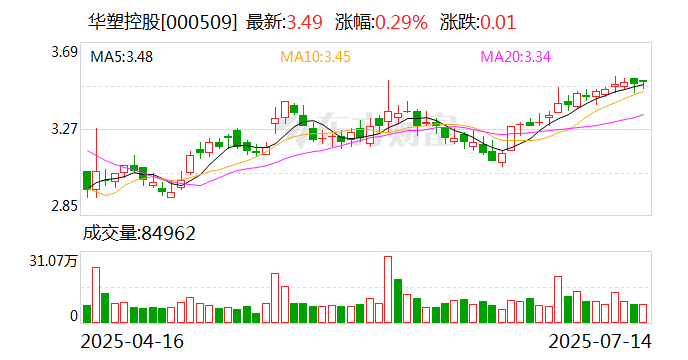
Core Viewpoint - The company Huashu Holdings (000509) expects to report a revenue decline of 0.28% to 21.96% year-on-year for the first half of 2025, with projected losses in net profit and non-recurring net profit [2][11]. Financial Performance - The projected revenue for the first half of 2025 is between 360 million to 460 million yuan [2]. - The expected net profit loss is between 2 million to 3 million yuan, compared to a profit of 1.3782 million yuan in the same period last year [2]. - The projected non-recurring net profit loss is between 3.8 million to 5.7 million yuan, compared to a profit of 690,300 yuan in the previous year [2]. - The basic earnings per share are expected to be between -0.0019 yuan to -0.0028 yuan [2]. Valuation Metrics - The current price-to-book ratio (P/B) is approximately 27.75 times, and the price-to-sales ratio (P/S) is about 3.82 times [2]. - The historical price-to-earnings ratio (P/E) trends indicate significant fluctuations, with the company experiencing negative earnings recently [4][5][11]. Business Operations - The company primarily engages in the research, design, production, and sales of electronic information display terminals, as well as leasing services [11]. - The decline in performance is attributed to reduced overseas sales due to international trade policy impacts and increased market competition, leading to a decrease in overall gross margin [11]. - Additionally, fluctuations in the US dollar exchange rate have negatively affected the company's foreign exchange earnings compared to the previous year [11].


市销率超过70!如此妖股结局都不太好,Palantir能例外吗?
Hua Er Jie Jian Wen· 2025-06-06 12:34
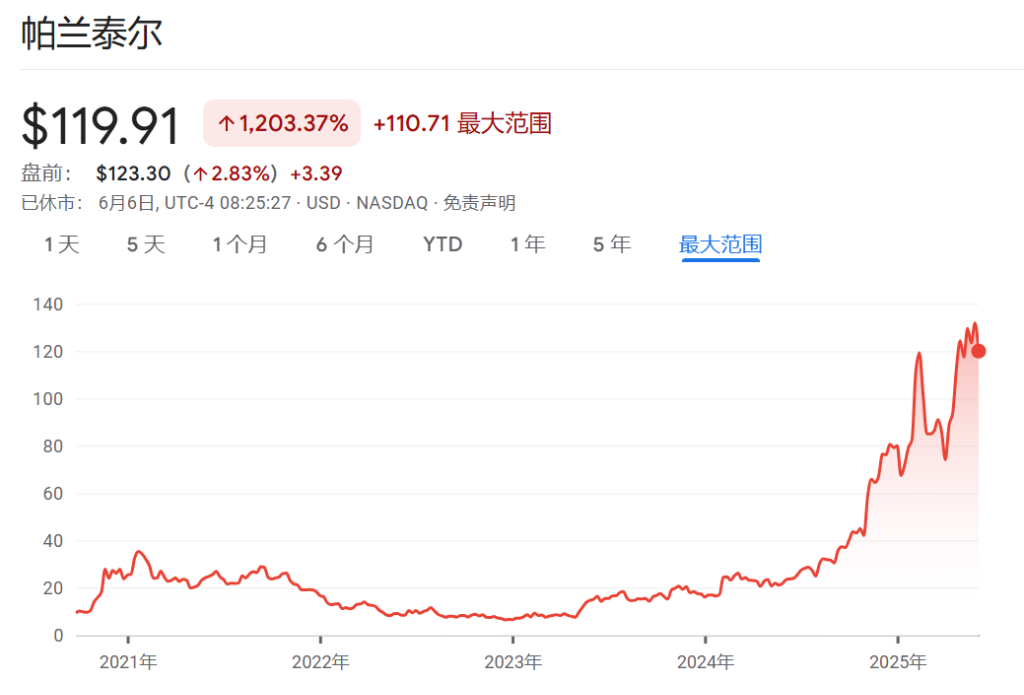
Core Insights - Palantir is at a critical valuation juncture, with a market capitalization of $314 billion and a price-to-sales ratio of 79.9, making it one of the highest-valued large-cap stocks in U.S. history [1][4] - The company's static price-to-earnings ratio is 565, while the dynamic ratio stands at 228, indicating extreme valuation levels [1] - Historical data suggests that a price-to-sales ratio exceeding 70 is often indicative of either a transformative tech giant or an impending bubble [10] Valuation Context - Trivariate Research's report highlights that only six U.S. companies have previously surpassed Palantir's current price-to-sales ratio, including MicroStrategy and Moderna [4] - The majority of companies on this "death list" faced dire outcomes, with Comverse Technology going bankrupt and Moderna's stock dropping 94% from its pandemic peak [5] Historical Precedents - Extremely high forward valuations have only been seen during the internet bubble and the pandemic's "free money" era [11] - Stocks reaching a 30 times price-to-sales ratio have historically underperformed the S&P 500 by an average of 22.5 percentage points in the following year [12] Market Dynamics - The upcoming rebalancing of the S&P 500 index is expected to increase Palantir's weight, prompting active managers to reassess its valuation [13] - Historical data indicates that no company can sustain growth rates sufficient to justify such extreme valuations, with many companies having faster growth expectations than Palantir [13]
金鼎资本刘扬:人形机器人行业需要真正有价值的应用场景落地
Zheng Quan Ri Bao Wang· 2025-06-03 13:16
Core Insights - The humanoid robot industry is entering a critical phase, transitioning from initial skepticism to increased market interest and potential applications in various sectors such as logistics, healthcare, and commercial services [1][2] - The collaboration between Guosheng Securities and Jinding Capital aims to provide forward-looking industry research and strategic support for listed companies to capitalize on the humanoid robot opportunity [1] Industry Overview - The humanoid robot industry has evolved from being undervalued to experiencing enthusiasm in both primary and secondary markets, indicating a significant shift in perception [1] - The primary market is now focusing on sales metrics, with expectations for startup sales to exceed 100 million yuan in 2024, reflecting a critical change in industry dynamics [1] Challenges Facing the Industry - Three main constraints are identified that hinder the development of the humanoid robot industry: insufficient data accumulation in software, unresolved hardware issues such as heat dissipation, and the need for practical application scenarios [2] - The industry is currently debating the necessity of humanoid robots replacing human roles, highlighting the need for valuable application scenarios to be realized [2]

投资者不满出价过低 极氪私有化进程遇阻
BambooWorks· 2025-06-03 09:50
Core Viewpoint - The proposed privatization price for Zeekr is considered too low by at least six minority shareholders, raising concerns about the company's valuation and future prospects [1][3][6]. Group 1: Valuation Concerns - Zeekr's current price-to-sales (P/S) ratio is only 0.63, significantly lower than competitors like Li Auto (1.50), Xpeng (2.19), and Leap Motor [2][3]. - The company's market capitalization stands at $6.8 billion, which reflects a lack of confidence from Wall Street investors [3][5]. Group 2: Privatization Proposal - Geely, the controlling shareholder, proposed to acquire Zeekr at $25.66 per American Depositary Share (ADS), which is a 20% premium over the average price of the last 30 trading days [5]. - The proposal has faced opposition from minority shareholders, including major investors like CATL and Bilibili, who argue that the offer undervalues the company [6][8]. Group 3: Market Dynamics - Zeekr entered the Chinese electric vehicle market later than its competitors, which has contributed to its lower sales figures and valuation [3][8]. - In April, Zeekr's sales were only 13,727 units, compared to competitors like Leap Motor (41,039 units) and Li Auto (33,939 units) [7][8]. Group 4: Regulatory Differences - The differences between U.S. and Hong Kong regulations regarding minority shareholder protections are highlighted, with Hong Kong requiring majority approval from independent shareholders for privatization [7]. - This regulatory environment may influence Geely's decision to potentially raise the offer price to appease dissenting shareholders [8].

大摩预计:未来5年,小米股价翻倍
华尔街见闻· 2025-05-10 11:47
Core Viewpoint - Xiaomi is expected to replicate the success of tech giants like Apple, driven by strong performance in electric vehicles and smartphones, with Morgan Stanley projecting a market value of 2.5 trillion RMB by 2030 and a stock price exceeding 100 HKD, indicating nearly 100% upside potential in the next five years [1][2]. Group 1: Electric Vehicle Business - Morgan Stanley predicts Xiaomi's electric vehicle (EV) sales will grow rapidly, with a compound annual growth rate (CAGR) exceeding 100%, and the price-to-sales ratio (P/S) expected to reach 2-3 times by 2026 [2][12]. - Revenue from the EV business is projected to increase from 33 billion RMB in 2024 to 233 billion RMB in 2027, and further to 462 billion RMB by 2030, with profits expected to turn from a loss of 6.2 billion RMB in 2024 to a profit of 46 billion RMB by 2030 [3][6]. - The launch of the SU7 Ultra marks a significant milestone for Xiaomi, enhancing its brand value and market share in the high-end EV segment [5]. Group 2: Traditional Business - Xiaomi's traditional business, encompassing smartphones, AIoT, and internet services, is expected to benefit from market share gains, product mix improvements, and international expansion, with revenue projected to rise from 333 billion RMB in 2024 to 600 billion RMB by 2030 [4]. - Profit from traditional business is anticipated to grow from 33.4 billion RMB in 2024 to 70 billion RMB by 2030 [4]. Group 3: Valuation Comparisons - Morgan Stanley uses comparisons with Tesla, BYD, and Apple to provide a valuation framework for Xiaomi, noting that BYD's EV sales grew approximately 70% in 2020 and 150% in 2021, with significant increases in P/S and P/E ratios during that period [11][13]. - The report suggests that Xiaomi's EV business could achieve a valuation premium compared to other EV companies due to expected stronger growth by 2025 [18]. Group 4: Future Projections - By 2030, Xiaomi's total revenue is projected to exceed 1 trillion RMB, with net profits potentially surpassing 100 billion RMB [6]. - In a baseline scenario, Xiaomi's market value could reach 1.2-1.6 trillion RMB in the next 6-12 months, corresponding to a stock price of 50-67 HKD [16]. In an optimistic scenario, the stock price could rise to 75-85 HKD, while a pessimistic scenario could see it drop to 25-40 HKD [17].

市盈率高达520倍!Palantir(PLTR.US)股价“狂飙”,跻身美国科技公司市值TOP10
智通财经网· 2025-05-09 01:47
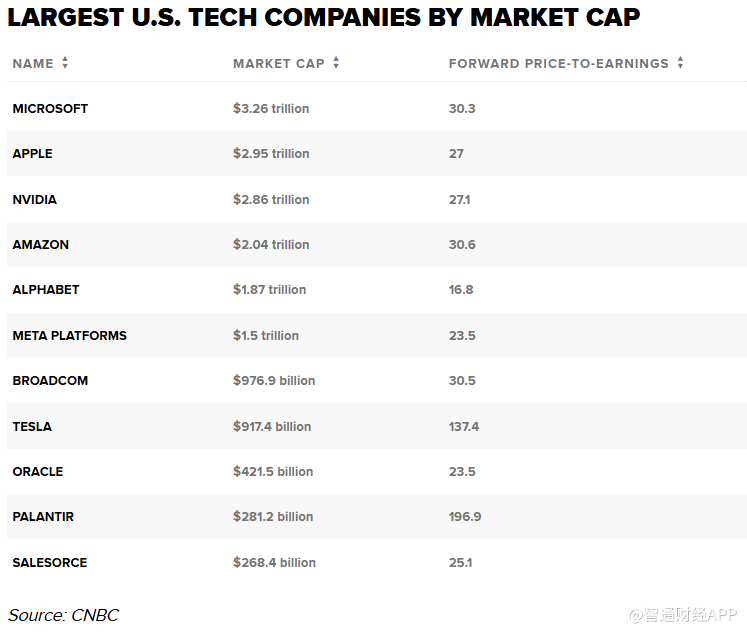
Group 1 - Palantir has joined the ranks of the top ten largest tech companies in the US, with a market capitalization of $281 billion, surpassing Salesforce's $268 billion [1][2] - Microsoft leads the list with a market cap of $3.3 trillion, followed by Apple and NVIDIA [2][3] - Palantir's stock has increased fivefold over the past year, with a 58% rise in 2025, making it one of the best-performing stocks in the S&P 500 [2][4] Group 2 - Palantir's government business has seen significant growth, increasing by 45% to $373 million, including a $178 million contract for building AI systems for the US Army [4] - Despite its high market cap, Palantir's revenue and profit are much smaller compared to other top tech companies, with Salesforce's revenue being over ten times that of Palantir [5] - Palantir's price-to-earnings ratio is significantly higher than its peers, with a historical P/E of 520 and a forward P/E near 200, while the average P/E for other top tech companies is around 58 [5] Group 3 - Following the release of its first-quarter results, Palantir's stock dropped over 12% due to concerns over slowing international sales, despite exceeding revenue expectations [5] - CEO Alex Karp emphasized the company's commitment to collaborating with top talent and maintaining a dominant position in the market [6]

宏力医疗管理:2024年净利润3115.1万元 同比下降18.69%
Sou Hu Cai Jing· 2025-05-06 01:47
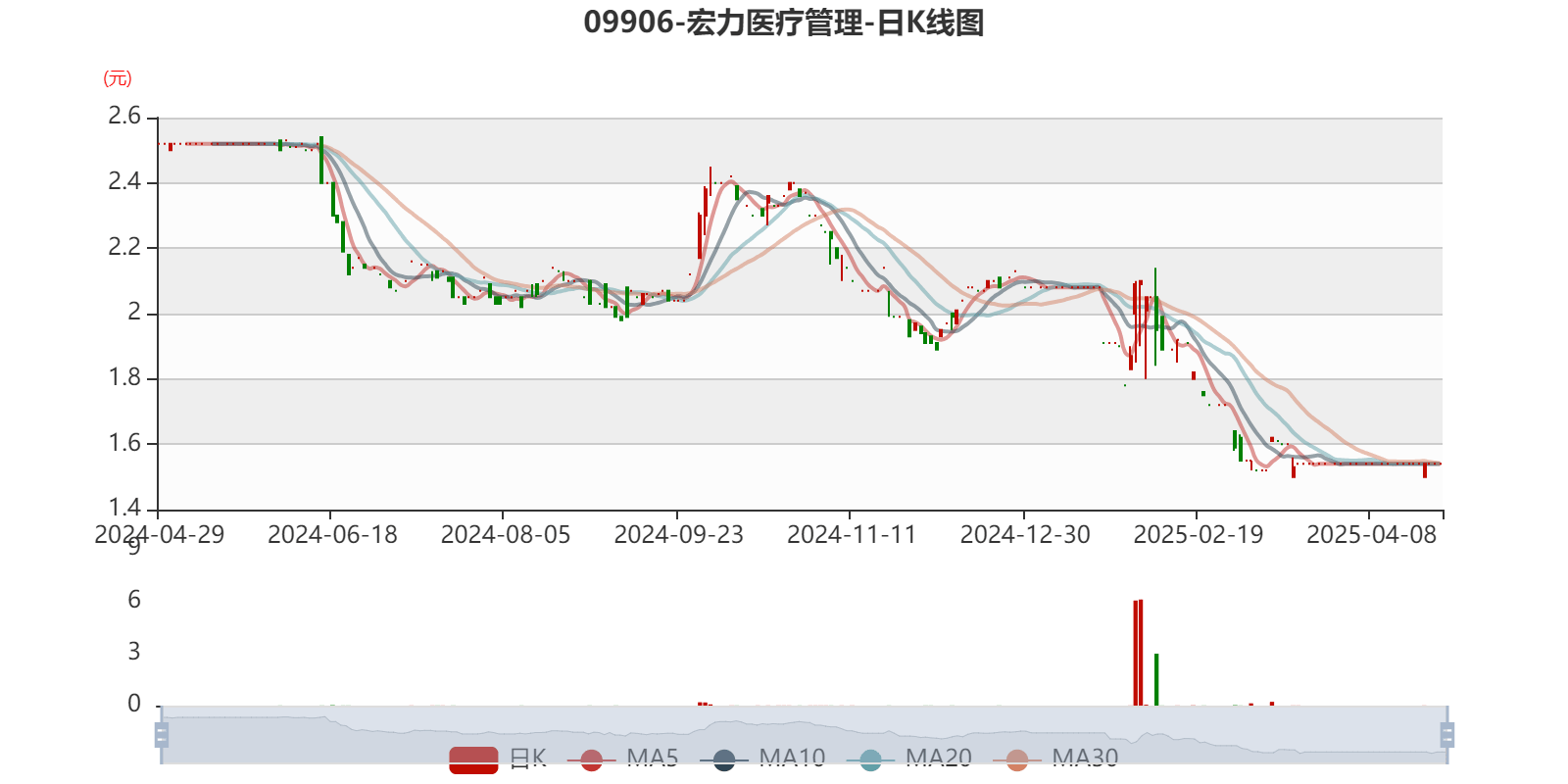
Core Viewpoint - Hongli Medical Management (09906) reported a total revenue of 769 million yuan for the fiscal year 2024, representing a year-on-year growth of 1.04%, while the net profit attributable to shareholders decreased by 18.69% to 31.15 million yuan [2] Financial Performance - Total revenue for 2024 was 769 million yuan, with a year-on-year increase of 1.04% [2] - Net profit attributable to shareholders was 31.15 million yuan, down 18.69% compared to the previous year [2] - Operating cash flow net amount was 83.34 million yuan, a decrease of 8.97% year-on-year [24] - Basic earnings per share were 0.06 yuan, and the weighted average return on equity was 5.53%, down 1.44 percentage points from the previous year [2][20] Valuation Metrics - As of April 29, the price-to-earnings ratio (TTM) was approximately 27.47 times, the price-to-book ratio (TTM) was about 1.49 times, and the price-to-sales ratio (TTM) was around 1.11 times [2] Revenue Composition - Revenue composition for 2024 included: - Comprehensive medical services: 456.4 million yuan - Pharmaceutical sales: 308.9 million yuan - Postpartum care services: 3.4 million yuan [16] Asset and Liability Changes - As of the end of 2024, accounts receivable increased by 101.48%, while the proportion of right-of-use assets decreased by 28% [35] - Long-term borrowings decreased by 42.75%, and accounts payable decreased by 19.12% [38] - The current ratio was 1.01, and the quick ratio was 0.91 [42]
比音勒芬:2024年净利润7.81亿元 拟10派5元
Sou Hu Cai Jing· 2025-05-02 11:47
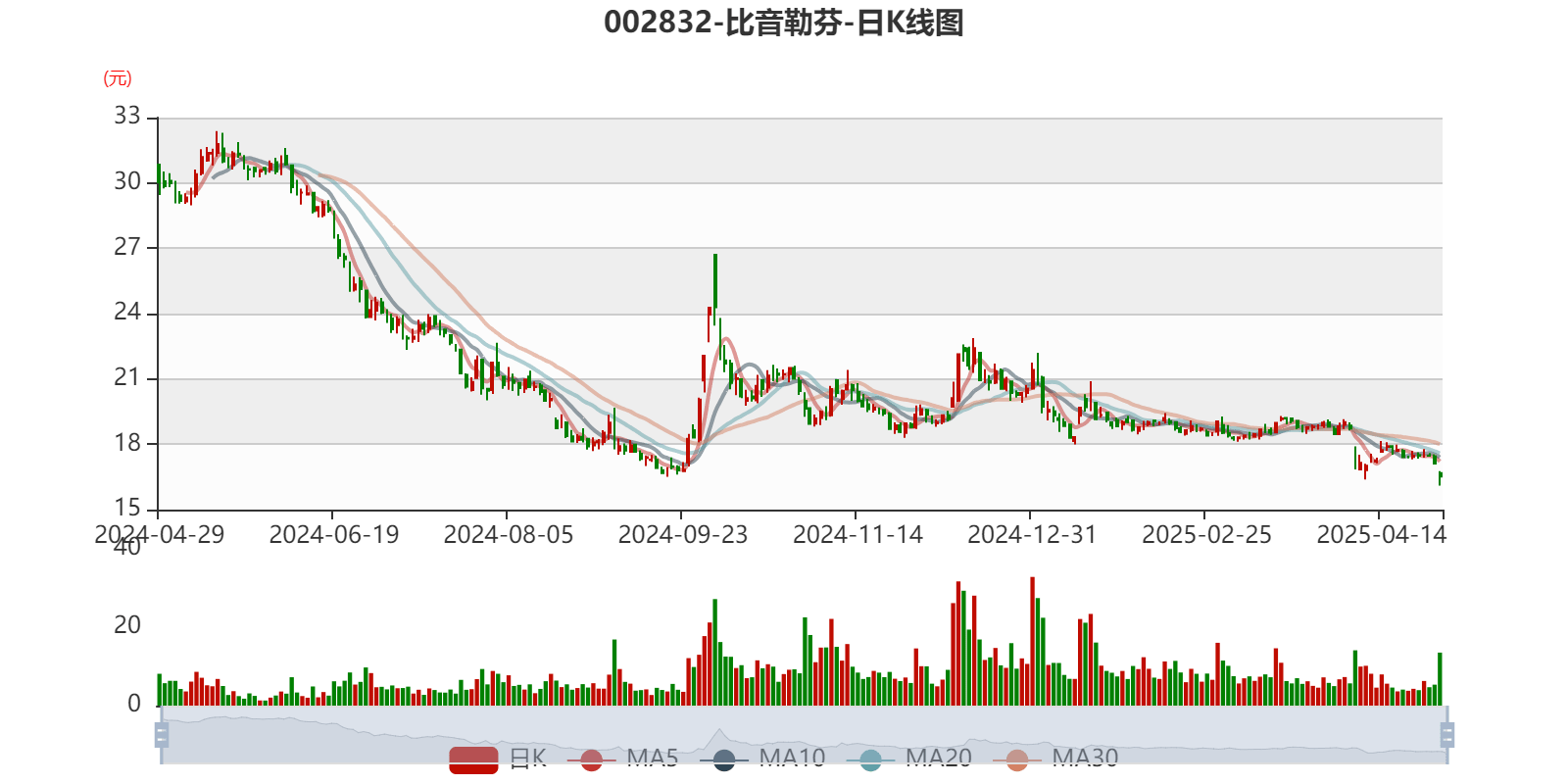
Core Viewpoint - The company reported a total revenue of 4.004 billion yuan for 2024, representing a year-on-year increase of 13.24%, while the net profit attributable to shareholders decreased by 14.28% to 780 million yuan [2][3]. Financial Performance - Total revenue for 2024 was 4,004,463,319.82 yuan, up from 3,536,132,714.02 yuan in 2023 [3]. - Net profit attributable to shareholders was 780,690,051.75 yuan, down from 910,754,003.74 yuan in the previous year [3]. - Deducting non-recurring gains and losses, the net profit was 744,252,350.90 yuan, a decrease from 867,457,631.43 yuan [3]. - The net cash flow from operating activities was 750,261,880.49 yuan, down 42.10% from 1,295,880,336.01 yuan [3]. - Basic earnings per share were 1.37 yuan, compared to 1.60 yuan in 2023 [3]. - The weighted average return on equity was 15.65%, down from 20.31% the previous year [3][30]. Dividend Distribution - The company proposed a dividend distribution plan of 5 yuan per 10 shares (including tax) for all shareholders [2]. Asset and Liability Changes - As of the end of 2024, total assets amounted to 7.201 billion yuan, an increase from 6.728 billion yuan in 2023 [3]. - Cash and cash equivalents decreased by 28.41%, while inventory increased by 34.33% [44][50]. - The company's liabilities saw an increase in accounts payable by 68.44% [47]. Research and Development - The total R&D expenditure for 2024 was 126 million yuan, a year-on-year increase of 1.8%, accounting for 3.16% of total revenue [54]. Shareholder Structure - The top ten shareholders included new entrants such as Hong Kong Central Clearing Limited and Liu Busong, replacing some previous shareholders [59].

*ST松发:2025年一季度实现营业收入5746.06万元 同比增长23.17%
Sou Hu Cai Jing· 2025-05-02 06:13
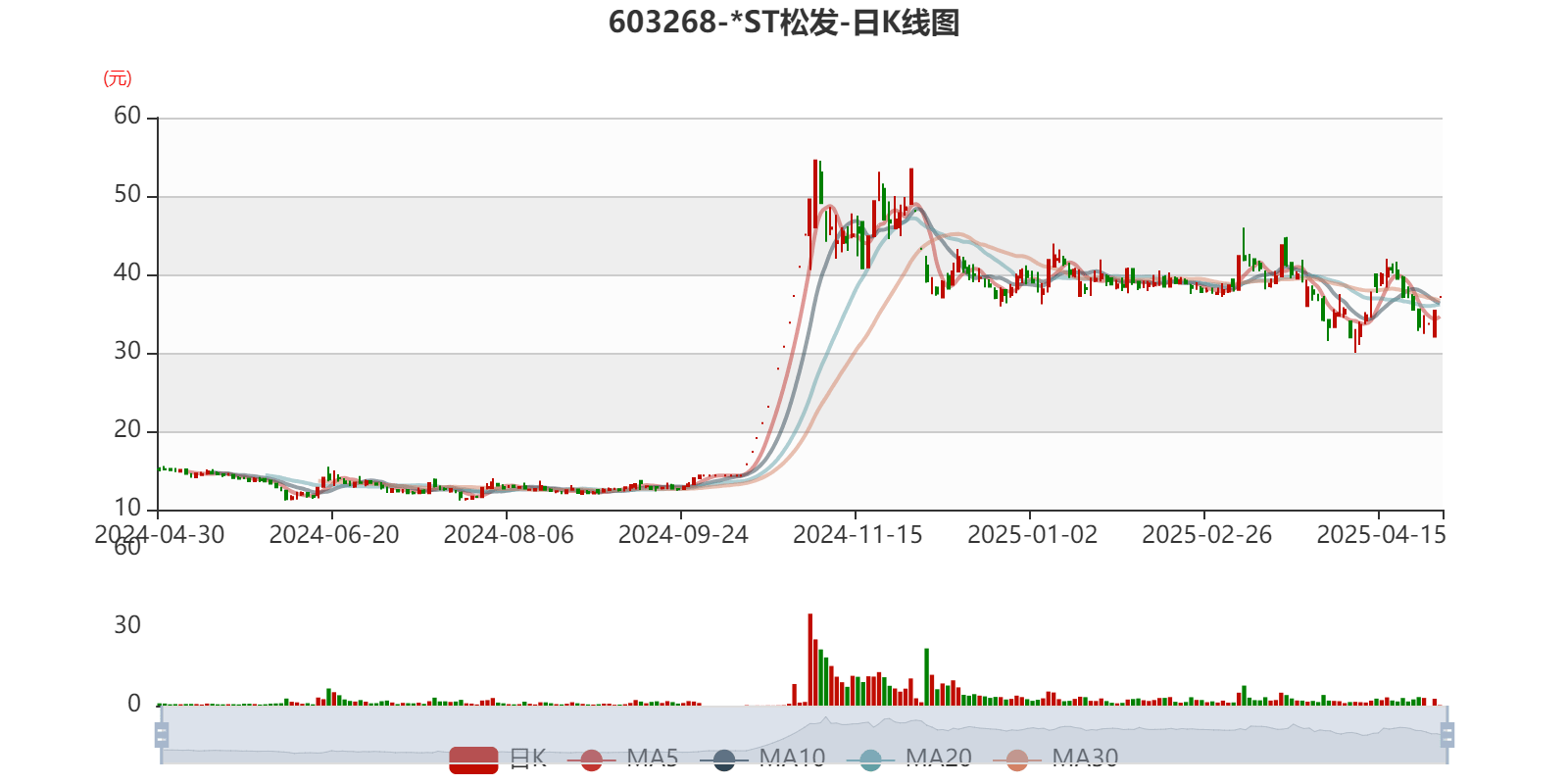
Financial Performance - In Q1 2025, the company reported total revenue of 57.46 million yuan, an increase of 23.17% year-on-year [1][3] - The net profit attributable to shareholders was a loss of 20.87 million yuan, compared to a loss of 10.56 million yuan in the same period last year [1][3] - The net profit after deducting non-recurring gains and losses was a loss of 21.50 million yuan, compared to a loss of 11.06 million yuan in the previous year [1][3] - The net cash flow from operating activities was -12.93 million yuan, worsening from -4.20 million yuan in the same period last year [1][3] - Basic earnings per share were -0.17 yuan, compared to -0.05 yuan in the previous year [1][3] Cash Flow and Assets - As of the end of Q1 2025, the company had a net cash flow from operating activities of -12.93 million yuan, a decrease of 872.49 thousand yuan year-on-year [26] - The company’s total assets were 557.03 million yuan, down from 571.78 million yuan at the end of the previous year [3] - The company’s cash and cash equivalents increased by 37.02% compared to the end of the previous year [36] Shareholder Structure - The top ten circulating shareholders as of the end of Q1 2025 included new shareholders such as the National Social Security Fund and others, replacing previous shareholders [47] - The largest shareholder, Hengli Group Co., Ltd., held 30.14% of the total shares, remaining unchanged [48] Valuation Metrics - As of April 29, 2025, the company's price-to-earnings ratio (TTM) was approximately -50.51 times, and the price-to-book ratio (LF) was about -226.9 times [3][50] - The price-to-sales ratio (TTM) was approximately 15.38 times [3][51]

安徽合力:2025年一季度净利润3.22亿元 同比下降20.05%
Sou Hu Cai Jing· 2025-05-01 06:11
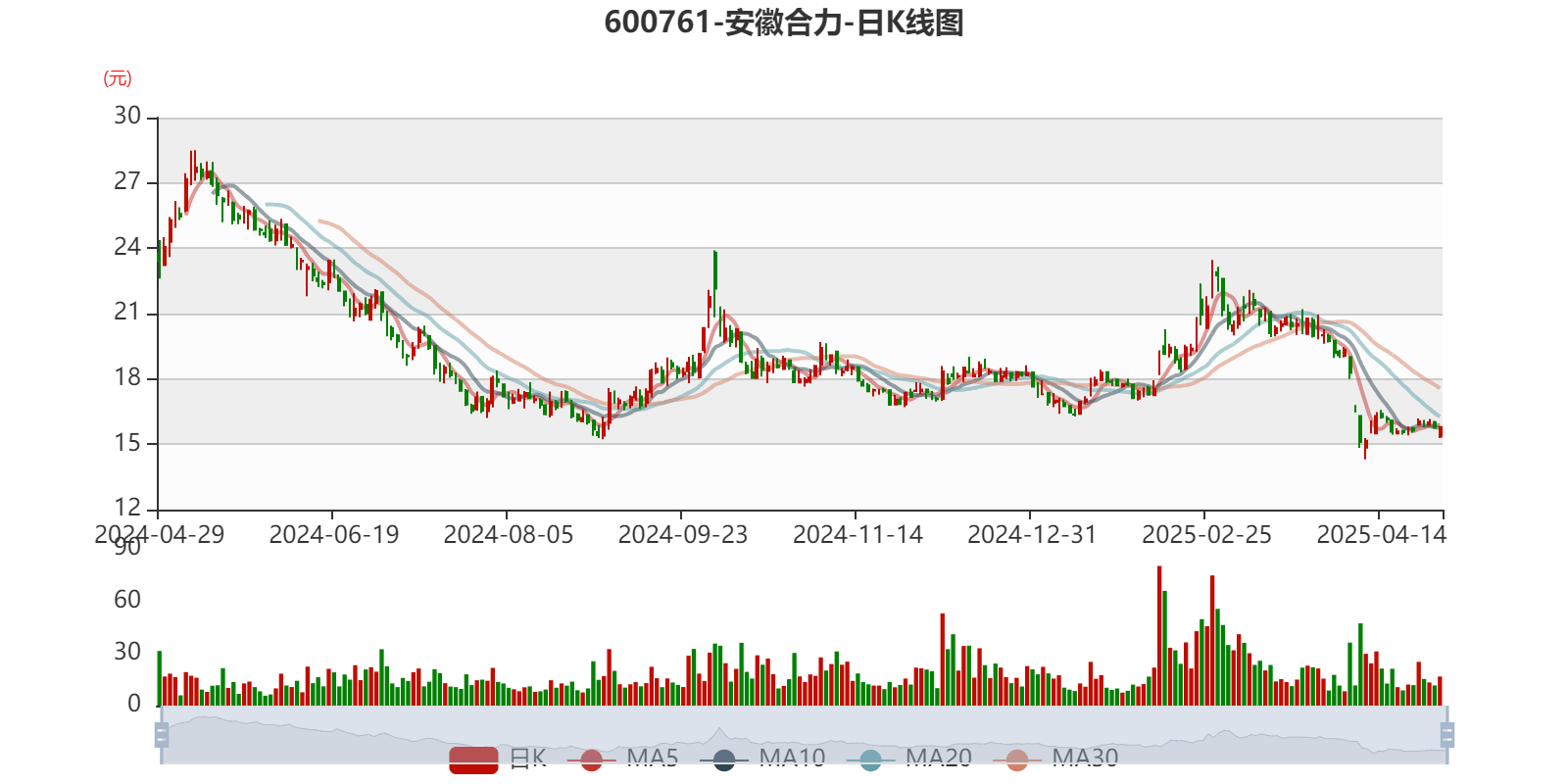
Core Viewpoint - Anhui Heli (600761) reported a slight increase in revenue for Q1 2025, but experienced a significant decline in net profit and cash flow, indicating potential challenges in profitability and operational efficiency [2][3]. Financial Performance - The company achieved total revenue of 4.27 billion yuan, a year-on-year increase of 2.05% [2][3]. - Net profit attributable to shareholders was 322 million yuan, down 20.05% year-on-year [2][3]. - The net profit excluding non-recurring gains and losses was 279 million yuan, a decrease of 14.42% compared to the previous year [2][3]. - The net cash flow from operating activities was 162 million yuan, reflecting a significant decline of 51.34% year-on-year [2][3][22]. - Basic earnings per share were 0.36 yuan, down from 0.51 yuan in the same period last year [2][3]. Profitability Metrics - The weighted average return on equity for Q1 2025 was 3.03%, a decrease of 1.55 percentage points from the previous year [19]. - The return on invested capital was 2.6%, down 0.54 percentage points year-on-year [19]. Asset and Liability Changes - Total assets as of the end of Q1 2025 were approximately 20.11 billion yuan, an increase from 19.10 billion yuan at the end of the previous year [3][31]. - The company’s cash and cash equivalents increased by 49.83%, while trade receivables rose by 17.23% [31]. - Total liabilities included a 15.84% increase in accounts payable, indicating a rise in short-term obligations [34]. Shareholder Composition - The top ten shareholders included new entrants such as Da Cheng Zhong Zheng Financial Asset Management Plan and Yi Fang Da Zhong Zheng Financial Asset Management Plan, replacing previous shareholders [41][42].