
新经济

Search documents
包凡归去来 | 巴伦特稿
Tai Mei Ti A P P· 2025-08-10 01:05
Core Insights - Bao Fan, the founder of Huaxing Capital, has completed a 2.5-year investigation and has been released, but he will no longer participate in the daily management of the company [2][22] - Huaxing Capital's operations are currently normal, managed by an executive committee, and Bao Fan's return is expected to positively impact the company's reputation, morale, and stock price [2][3] - During Bao Fan's absence, his wife, Xu Yanqing, took over leadership roles and helped stabilize the company [2][5] Group 1: Company Performance and Changes - Huaxing Capital faced significant challenges during Bao Fan's absence, with employee numbers dropping from 754 to 521 and a substantial reduction in investment banking and private equity departments [3][4] - The company experienced a severe decline in market confidence, with its stock price plummeting 66% upon resuming trading, resulting in a market capitalization drop from approximately HKD 45 billion to HKD 15.69 billion [4][22] - Xu Yanqing and CEO Wang Lihang implemented a "Huaxing 2.0" strategy, shifting focus from traditional internet businesses to hard technology, Web3, and digital finance, which has begun to show positive results [5][6] Group 2: Strategic Developments - The company has optimized its business structure, creating a dual-driven model of wealth management and investment banking, with a focus on high-net-worth individuals and new economy founders [5][6] - Huaxing Capital has resumed its underwriting business for Hong Kong and U.S. stocks, and has completed several significant merger and acquisition transactions [5][6] - By mid-2025, Huaxing Capital's stock price had recovered to 40% of its pre-suspension level, and it regained the top position in major financial advisory rankings [6] Group 3: Bao Fan's Influence and Future - Bao Fan is recognized as a significant figure in the Chinese internet sector, having facilitated major mergers and acquisitions, including those involving Didi, Meituan, and 58.com, which accounted for over 30% of China's internet M&A transaction volume [7][8] - His return raises questions about his future role and influence in the industry, as he faces challenges related to his diminished personal wealth and industry standing [8]

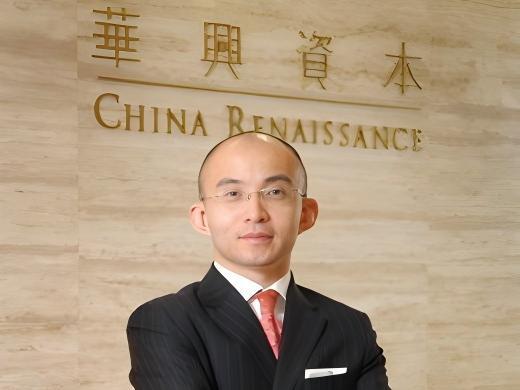
时隔两年半 传华兴资本包凡近期“出来了”
Xin Lang Ji Jin· 2025-08-08 09:12
Group 1 - The founder of Huaxing Capital, Bao Fan, has recently reappeared after being taken away for investigation by authorities for two and a half years since February 2023 [1] - Following Bao Fan's disappearance, Huaxing Capital has experienced continuous personnel changes, with Xu Yanquing appointed as the chairman of the board in October 2022, declaring the company has entered a "2.0 era" [1] - Despite adjustments in development strategy for 2024, Huaxing Capital continues to benefit from past investments in new economy sectors, highlighted by the recent IPO of Circle Internet Group, a company in which Huaxing's new economy fund invested [1]
恒生科技ETF易方达(513010)连续8个交易日“吸金”,规模频创新高
Mei Ri Jing Ji Xin Wen· 2025-08-07 14:53
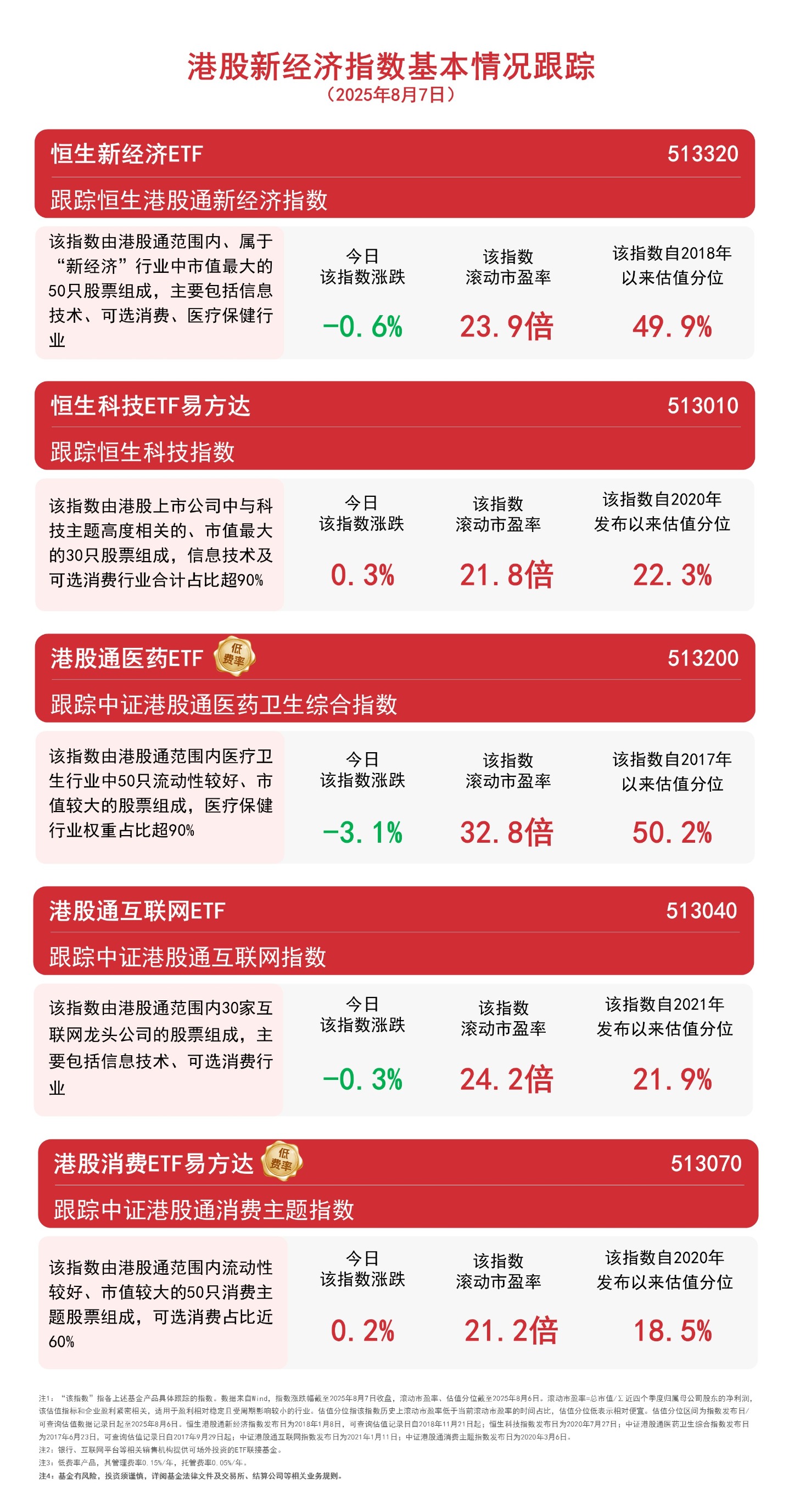
Group 1 - The Hang Seng Technology Index increased by 0.3%, while the Hang Seng New Economy Index decreased by 0.6% [1] - The Hang Seng Technology ETF managed by E Fund has seen net inflows for eight consecutive trading days, with its product size surpassing 13.5 billion [1] - The Hang Seng New Economy Index consists of the 50 largest stocks in the "new economy" sector within the Hong Kong Stock Connect, primarily including information technology, consumer discretionary, and healthcare [2] Group 2 - The rolling price-to-earnings ratio of the Hang Seng New Economy Index is 23.9 times [2] - The rolling price-to-earnings ratio of the Hang Seng Technology Index is 21.8 times [3] - The China Securities Hong Kong Stock Connect Healthcare Comprehensive Index, which includes 50 liquid and large-cap stocks in the healthcare sector, experienced a decline of 3.1% [1][3]
赚钱效应扩散,多主题轮动延续——2025年8月资产配置报告
华宝财富魔方· 2025-08-06 11:14
Macro Overview - The U.S. labor market shows signs of fatigue, with non-farm employment growth nearly stagnating over the past two months, which historically indicates economic distress or the need for intervention [4] - Despite the weak labor data, the probability of a recession remains manageable, with the New York Fed predicting a 28.71% chance of recession in the next 12 months [4] - The U.S. economy is experiencing a slowdown in consumption and investment due to high interest rates and uncertainty in tariff policies, although the overall economic resilience was strong in the first half of the year with a GDP growth rate of 5.3% [4] Domestic Policy Insights - The current policy focus is on observing the economic conditions in consumption, exports, and real estate, with a shift towards long-term mechanisms for sustainable economic development [4] - The government is expected to prioritize high-quality economic development and establish long-term sustainable growth mechanisms during the "14th Five-Year Plan" period [4] - If GDP growth falls below 4.7% in the third quarter, there may be considerations for additional policy measures [4] Market Strategy and Asset Allocation - The A-share market is expected to experience a slow upward trend, supported by strong economic fundamentals and high market activity, although valuation recovery may slow down [4] - The focus for investment should be on long-term allocations in sectors such as banking, dividends, and broad-based indices, with a cautious approach to chasing high valuations [4] - The market is witnessing a structural rotation with opportunities in themes like technology (AI, computing power, chips), military, pharmaceuticals, stablecoins, rare earths, and cyclical sectors [4] Asset Class Outlook - A-shares are viewed as relatively optimistic, while Hong Kong stocks and U.S. stocks maintain a neutral stance [6] - Credit bonds and convertible bonds are also seen as relatively optimistic, indicating a favorable outlook for fixed-income investments [6] - The outlook for commodities like oil remains cautious, reflecting ongoing uncertainties in the global market [6]

二季度调仓路径曝光!张坤加仓白酒守护信仰,刘彦春与焦巍奔向新经济
市值风云· 2025-08-06 10:09
Core Viewpoint - The article discusses the significant shifts in investment strategies among fund managers in response to changing market conditions, particularly focusing on the divergence in approaches towards traditional sectors like liquor and emerging sectors like new consumption and innovative pharmaceuticals [3][39]. Market Performance - In Q2 2025, the Chinese A-share market experienced a rebound after an initial decline, with the Shanghai Composite Index dropping nearly 10% before recovering due to policy support [4][5]. - The Shanghai and Shenzhen Composite Index rose by 3.8% in Q2, while the Hang Seng Index outperformed with a 4.1% increase [6][7]. Fund Manager Strategies - Fund managers displayed contrasting strategies, with some reducing exposure to traditional sectors like liquor while others increased their stakes in high-end liquor brands [10][11]. - Zhang Kun, a prominent fund manager, significantly increased his holdings in high-end liquor stocks, contrary to the general trend of reduction among peers [12][16]. - In contrast, Jiao Wei completely exited liquor stocks to focus on new consumption sectors, indicating a shift in investment paradigms [17][18]. Sector Analysis - The article highlights a notable reduction in public fund holdings in the liquor sector, with the average allocation dropping to 4%, marking a historical low [10]. - Jiao Wei's new focus includes companies like Pop Mart and high-end gold brands, reflecting a broader trend towards new consumption [18][24]. - Liu Yanchun's fund also reduced its liquor holdings but maintained a consistent investment logic despite market fluctuations [26][30]. Emerging Trends - The article emphasizes the growing interest in innovative pharmaceuticals, with many fund managers reallocating resources towards this sector due to its recent performance and potential [39][41]. - Fund managers are increasingly recognizing the opportunities in new consumption narratives and cultural exports, which are seen as significant growth areas [46].

香港交易所(00388):资产资金双重共振、业绩估值向上持续
CMS· 2025-08-05 10:58
Investment Rating - The report maintains a "Strong Buy" investment rating for Hong Kong Exchanges and Clearing Limited (HKEX) with a target price of HKD 515.00, indicating a potential upside of 23% from the current price of HKD 417.0 [2][6]. Core Views - The report highlights the dual resonance of assets and funds driving the valuation of HKEX upwards, with expectations of high profit growth and an upward shift in valuation amid a thriving primary and secondary market in Hong Kong [6][7]. - The anticipated net profits for HKEX from 2025 to 2027 are projected to be HKD 153 billion, HKD 166 billion, and HKD 178 billion, representing year-on-year growth rates of 17%, 9%, and 7% respectively [6][7]. Summary by Sections Company Overview - HKEX is recognized as a global leader in the exchange sector, benefiting from government backing and a unique position as the only exchange platform in Hong Kong, which provides it with significant regional monopoly advantages [6][9]. - The strategic vision of HKEX focuses on connecting China with the world, capital with opportunities, and the present with the future, leveraging its unique resources to enhance its international presence [6][21]. Financial Performance - The financial overview indicates robust performance with a high return on equity (ROE) of 25.1% and a stable profit margin, with net profit margins around 58% and EBITDA margins around 75% [2][36]. - Revenue growth from 2012 to 2024 shows a compound annual growth rate (CAGR) of 10%, with total revenue increasing from HKD 72.1 billion to HKD 223.7 billion [36][41]. Business Model and Competitive Advantages - HKEX operates a light capital business model that ensures high profitability and a strong correlation between performance and trading activity, with trading fees and system usage fees contributing significantly to revenue [6][24]. - The exchange's competitive barriers include its unique government endorsement and the absence of direct competitors in the region, which solidifies its market position [24][25]. Valuation Drivers - The report identifies a dual resonance of asset quality and fund availability as key drivers for HKEX's valuation enhancement, with favorable market conditions and policy support for secondary listings boosting trading activity [6][7]. - The anticipated influx of southbound capital and the low interest rate environment are expected to sustain market liquidity and trading volumes, further supporting HKEX's growth [6][21]. Revenue Structure - The revenue structure is diversified, with significant contributions from trading fees, investment income, and settlement fees, reflecting the exchange's comprehensive service offerings [41][45]. - In 2024, the revenue from the cash segment is projected to be HKD 94.22 billion, with trading and settlement fees being the primary revenue sources [48].

港股科技股普遍回暖,港股通互联网ETF(513040)、恒生科技ETF易方达(513010)标的指数均涨超1%
Mei Ri Jing Ji Xin Wen· 2025-08-04 14:27
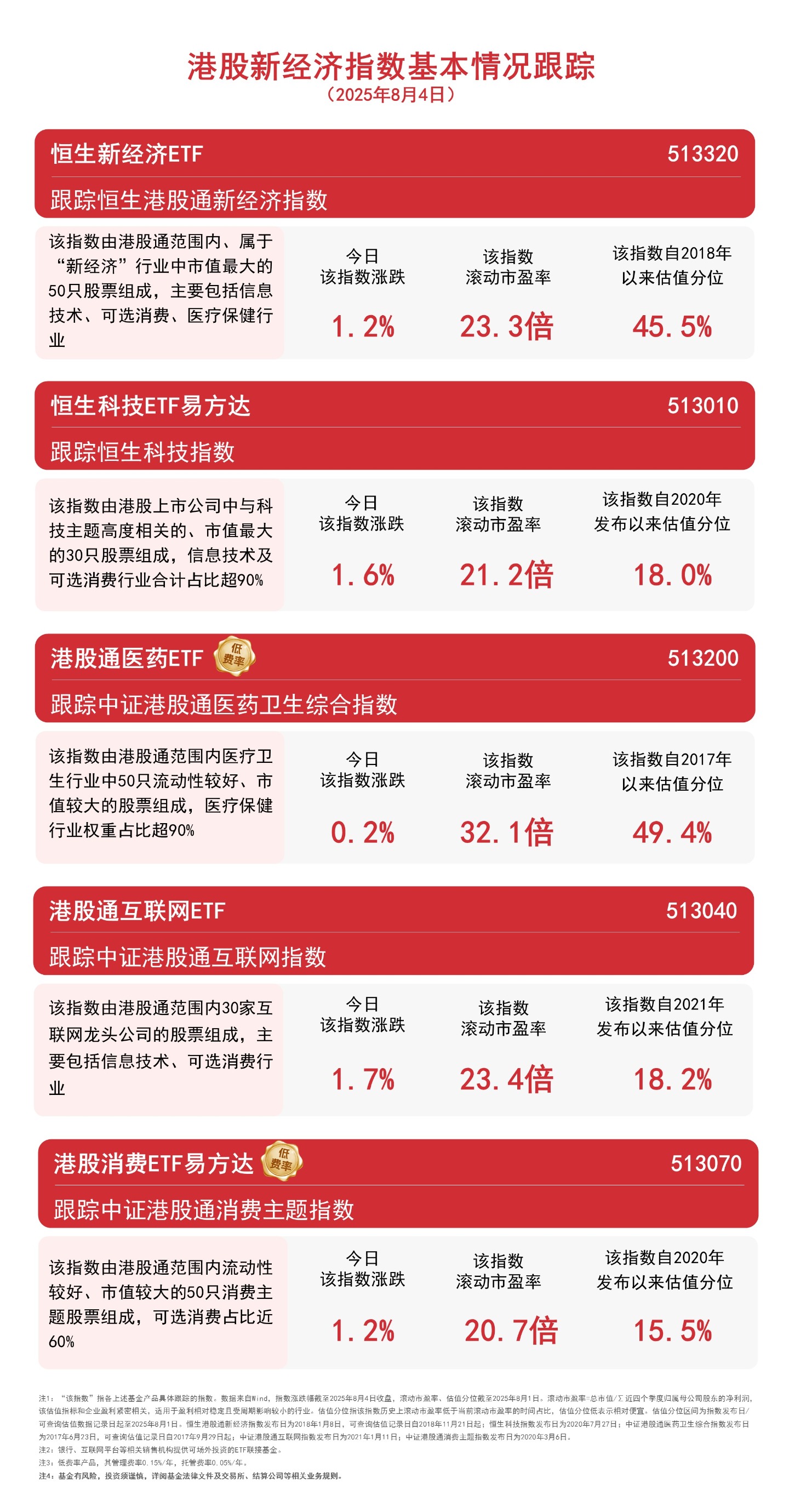
Group 1 - The Hang Seng New Economy Index tracks the largest 50 stocks in the "new economy" sector within the Hong Kong Stock Connect, primarily including information technology, consumer discretionary, and healthcare [2] - The index experienced a daily change of 1.2% and has a rolling price-to-earnings (P/E) ratio of 23.3 times [2] - The Hang Seng Technology ETF follows the Hang Seng Technology Index, which consists of the 30 largest stocks related to technology, with over 90% of the index comprising information technology and consumer discretionary sectors [2] Group 2 - The Hong Kong Stock Connect Pharmaceutical ETF tracks the CSI Hong Kong Stock Connect Pharmaceutical and Healthcare Composite Index, which includes 50 liquid and large-cap stocks in the healthcare sector, accounting for over 90% of the index [2] - The index had a daily change of 2% and a rolling P/E ratio of 21.2 times [2] - The Hong Kong Stock Connect Internet ETF follows the CSI Hong Kong Stock Connect Internet Index, consisting of 30 leading internet companies, primarily in information technology and consumer discretionary [3] Group 3 - The Hong Kong Stock Connect Consumer ETF tracks the CSI Hong Kong Stock Connect Consumer Theme Index, which includes 50 liquid and large-cap consumer stocks, with nearly 60% in consumer discretionary [3] - The index experienced a daily change of 1.2% and has a rolling P/E ratio of 20.7 times [3] - The data for the indices is sourced from Mind, with the closing data as of August 4, 2025, and rolling P/E ratios as of August 1, 2025 [2][3]
基金业绩回暖!超90%主动权益基金正收益,翻倍产品涌现
Zheng Quan Shi Bao· 2025-08-04 10:27
Core Viewpoint - The public fund industry is experiencing a significant recovery in 2025 after a four-year downturn, with over 90% of active equity funds achieving positive returns this year, leading to increased confidence among fund managers and a revival in fund issuance [1][2]. Fund Performance - Active equity funds have seen an average return of over 13% year-to-date as of August 1, with a notable number of funds doubling their performance, including 17 funds that achieved over 140% returns [2]. - More than 800 active equity funds reached historical net asset value highs in the past month, indicating a strong recovery from previous losses [3]. Market Dynamics - The current market environment presents structural opportunities in sectors like humanoid robots, AI hardware, and innovative pharmaceuticals, which have contributed to the recovery of fund performance [2]. - Fund managers are increasingly focusing on high-growth sectors, with a shift from traditional sectors like real estate and bonds to equities, particularly in new economy sectors [3]. Fund Manager Behavior - Fund managers are showing a clear increase in risk appetite, with many raising their stock positions and concentrating their holdings in core stocks [5]. - Data shows that nearly 2,500 funds increased their stock positions and concentration in the second quarter, reflecting a significant shift in risk preference [5]. Fund Issuance Trends - The pace of new fund issuance has accelerated, with 149 new funds launched in July, matching the issuance rate from November 2022 [11]. - Notable funds like Dachen Insight Advantage raised 2.461 billion yuan in just eight days, marking the largest initial fundraising for active equity funds this year [9]. Investor Sentiment - Despite the positive performance, many investors remain cautious, with a tendency to redeem funds once they break even, indicating a need for trust rebuilding in active equity funds [1][11]. - The market is witnessing a preference for passive investment products over active equity funds, with high-performance products gaining more attention [11].
基金业绩回暖!超90%主动权益基金正收益,翻倍产品涌现
证券时报· 2025-08-04 09:55
Core Viewpoint - After a four-year downturn, public funds are experiencing a significant recovery in 2025, with over 90% of active equity funds achieving positive returns this year, marking a turning point for the industry [1][2]. Group 1: Performance Recovery - Active equity funds have seen an average return exceeding 13% as of August 1, 2025, with a notable number of products doubling their performance, including 17 funds achieving over 140% returns [2]. - Many fund managers are recovering from previous losses, with over 800 active equity funds reaching historical net asset value highs in the past month [2][3]. - Despite some funds still in the recovery phase, the short-term performance rebound is expected to support long-term growth [2]. Group 2: Investment Strategy Shifts - Fund managers are increasingly focusing on the stock market as a key asset allocation option, moving away from real estate and low-yield bonds [3]. - There is a noticeable increase in risk appetite among fund managers, with many raising stock positions and concentrating holdings in core stocks [5]. - Data shows that nearly 2,500 funds increased their stock positions and concentration in the second quarter, indicating a shift towards higher risk tolerance [5]. Group 3: Fund Issuance and Market Sentiment - The positive performance of funds has boosted market confidence, leading to a noticeable acceleration in the issuance of new funds, particularly equity funds [8]. - In June, 155 new funds were established, marking a recent high, with July seeing 135 new fund launches, indicating a strong recovery in the fund issuance market [9]. - Fund companies are rapidly increasing the pace of new fund launches to capitalize on the market rebound, with some funds achieving record subscription amounts [9][10]. Group 4: Challenges and Investor Sentiment - Despite the recovery, many investors remain cautious, with a tendency to redeem funds as soon as they break even, reflecting a lack of deep trust in active equity funds [1][11]. - The sales performance of equity funds varies significantly across different sales departments, with some struggling to meet sales targets despite the overall market improvement [10][11]. - Passive investment products are currently more favored by investors compared to active equity funds, indicating a need for active funds to rebuild trust and attract new capital [11].

公募收获“盛夏的果实” 基民“信任裂缝”待修复
Zheng Quan Shi Bao· 2025-08-03 19:47
Core Viewpoint - The public fund industry is experiencing a resurgence in 2025 after a prolonged period of stagnation, with over 90% of actively managed equity funds achieving positive returns this year, indicating a potential recovery in investor confidence [1][2]. Group 1: Fund Performance - Active equity funds have seen an average return exceeding 13% year-to-date, with a significant number of products doubling their performance, including 17 funds achieving returns over 140% as of July 29 [2]. - Over 800 active equity funds reached historical net asset value highs in the past month, reflecting a strong recovery in short-term performance [2][3]. - Despite some funds still recovering from previous losses, the overall performance improvement is expected to support long-term growth [2]. Group 2: Fund Manager Sentiment - Fund managers are increasingly optimistic, raising stock positions and focusing on core holdings, with some increasing their stock allocations by 5 to 8 percentage points [5][6]. - A notable shift in investment strategy is observed, with managers concentrating their portfolios, as seen in the increase of top ten holdings' concentration from around 50% to nearly 60% [6][7]. - Fund managers are favoring sectors with clear growth potential, particularly in technology and high-end manufacturing, as they anticipate improving profit growth in the latter half of the year [5][7]. Group 3: Fund Issuance and Market Dynamics - The positive performance of funds has led to a noticeable increase in the pace of new fund issuance, particularly in equity funds, with a significant rise in marketing efforts [8][9]. - In June, 155 new funds were established, marking a near-record high, with July seeing 135 new fund launches, indicating a robust recovery in the fund issuance market [9][10]. - Despite the overall positive trend, not all funds are equally favored, with passive investment products gaining more traction than actively managed equity funds [10].