
车路云一体化

Search documents
各地加快推动“车路云一体化”规模应用 “聪明车”驶上“智慧路”
Jing Ji Ri Bao· 2025-10-13 01:24
Core Insights - The Ministry of Industry and Information Technology and other departments have announced 20 cities as the first batch of pilot cities for the "Vehicle-Road-Cloud Integration" application, raising questions about the effectiveness of these trials and the timeline for large-scale commercialization [1] Group 1: Smart Platform Development - The "Vehicle-Road-Cloud Integration" concept combines intelligent vehicles, smart roads, and powerful cloud computing to achieve collaborative decision-making through dual data perception [2] - A new traffic information aggregation platform in Shenzhen has been launched, enabling real-time updates on critical information for autonomous vehicles, enhancing their decision-making capabilities [2] - In Zhejiang, a digital twin platform monitors urban traffic in real-time, improving traffic management efficiency through AI algorithms that adjust traffic signal timings based on real-time data [2] Group 2: Infrastructure Enhancement - Pilot cities are proactively developing intelligent road infrastructure to facilitate the integration of smart vehicles with urban infrastructure and intelligent traffic systems [4] - In Guangzhou, a new smart city project has been established, covering 3.5 square kilometers and focusing on dynamic planning and optimization of transportation routes using AI [4] - Shenzhen's Pingshan District is implementing comprehensive upgrades to traffic infrastructure, enhancing project effectiveness through digital platforms [4] Group 3: Traffic Management and Safety - Wuxi has established a collaborative vehicle networking cloud platform, connecting 1,723 traffic lights and deploying various sensing and edge computing devices [3] - Shenzhen has built a regulatory platform for intelligent connected vehicles, enabling dynamic risk assessment and real-time monitoring of vehicle operations [3] Group 4: Expanding Application Scenarios - The application of "Vehicle-Road-Cloud Integration" is expanding beyond passenger transport to include sanitation, security patrols, and logistics delivery in Wuxi [8] - In Shenzhen, autonomous parking has been enhanced with a new version of the parking application, improving efficiency and safety through advanced modeling and monitoring capabilities [9] - Pingshan District in Shenzhen is developing 60 demonstration application scenarios, including quality public transport and low-speed unmanned logistics [9]
各地加快推动“车路云一体化”规模应用——“聪明车”驶上“智慧路”
Xin Hua Wang· 2025-10-12 23:59
Core Insights - The Ministry of Industry and Information Technology and other departments have announced 20 cities as the first batch of pilot cities for the "Vehicle-Road-Cloud Integration" application, indicating a significant step towards large-scale commercialization of smart connected vehicles [1] Group 1: Smart Platform Development - The "Vehicle-Road-Cloud Integration" concept combines intelligent vehicles, smart roads, and powerful cloud computing to enhance data perception and collaborative decision-making in complex scenarios [2] - A new traffic information aggregation platform in Shenzhen has been launched, enabling real-time updates on critical information for autonomous vehicles, enhancing their decision-making capabilities [2] - The digital twin platform in Zhejiang's Deqing monitors urban traffic in real-time, improving traffic management efficiency through AI algorithms [2] Group 2: Infrastructure Enhancement - Pilot cities are proactively developing intelligent road infrastructure to facilitate the integration of smart connected vehicles with urban infrastructure and intelligent traffic systems [4] - In Guangzhou's Nansha District, a new urban infrastructure project has been completed, covering 3.5 square kilometers and serving as a benchmark for smart city development in the Greater Bay Area [4] - Nansha plans to conduct large-scale trials for autonomous driving services, with over 300 autonomous vehicles and 1,000 operational stations [4] Group 3: Application Expansion - The "Vehicle-Road-Cloud Integration" is expanding its application scenarios, including autonomous minibuses in Wuxi that can navigate complex urban traffic conditions [7] - Wuxi has also implemented intelligent unmanned patrol vehicles that assist in urban management by identifying various city management issues [7] - In Shenzhen, the first autonomous parking pilot has been launched, allowing users to park their vehicles via a mobile app, with an upgraded version enhancing parking efficiency and safety [8]
各地加快推动“车路云一体化”规模应用—— “聪明车”驶上“智慧路”
Jing Ji Ri Bao· 2025-10-12 22:05
今年6月,由深圳市城市交通规划设计研究中心股份有限公司支持统一搭建的深圳交通信息汇聚平台上 线。该平台创新推出"申报即更新"机制,打通企业、政府、车企之间的链路,为智能驾驶车辆实时推送 施工占道、标志标牌更新、隧道事件等关键动态信息。 2024年7月,工信部等5部门发布《关于公布智能网联汽车"车路云一体化"应用试点城市名单的通知》, 确定20个城市(联合体)作为首批"车路云一体化"应用试点。一年多过去,试点成效如何,从试点示范 走向大规模商业化应用还有多远?近日,记者在广东、江苏、浙江等地探访"车路云一体化"应用示范新 进展。 搭建智慧平台 较之单车智能技术路线,"车路云一体化"可以理解为"聪明的车+智慧的路+强大的云",实现车端、路端 双数据感知相互补充,在复杂场景下形成协同决策。实现这一目标,离不开智慧平台支撑。 "这些信息如同为车辆的自动驾驶系统装上'智慧的眼睛',辅助其进行路径规划和系统决策。"该公司网 联街区产品线副总经理刘轼介说。 在浙江德清国际地信城的车联网产业大厦,"车路云一体化"数字孪生大屏实时监控着城市交通。"这个 云控平台,不仅能实时调控路口通行节奏,更能精准捕捉并记录交通事件,大幅提升 ...
深城交(301091):智交千里通衢阔,低空寰宇乘风行
GOLDEN SUN SECURITIES· 2025-10-12 11:25
Investment Rating - The report gives a "Buy" rating for the company, marking its first coverage [4]. Core Insights - The company is a leading player in Shenzhen's transportation planning and is transitioning into a comprehensive smart transportation service provider, with significant growth in its smart transportation business [1][4]. - The low-altitude economy is expected to see rapid growth due to supportive policies, with infrastructure demand anticipated to increase significantly [2][3]. - The company is deeply involved in the low-altitude construction in Shenzhen, establishing a complete "investment-construction-operation" industrial chain [3]. - The "Vehicle-Road-Cloud" initiative is gaining momentum, with expected industry growth and the company launching various smart transportation applications [4]. Summary by Sections Company Overview - The company, originally established as Shenzhen Urban Transportation Center in 1993, has undergone several transformations, becoming a state-owned enterprise in 2006 and listed on the Shenzhen Stock Exchange in 2021 [14]. - It has shifted focus towards smart transportation services, with a significant increase in the revenue contribution from this sector, rising from 7% in 2017 to 56% in 2024 [18]. Low-Altitude Industry Participation - The company is a core participant in Shenzhen's low-altitude industry, with over 70% of its revenue generated from this region [3]. - It has been involved in formulating national standards and has developed the first intelligent integrated low-altitude system in the country [3]. Vehicle-Road-Cloud Development - The "Vehicle-Road-Cloud" initiative is projected to reach a total industry output value of 2.6 trillion yuan by 2030, with the company launching the first city-level vehicle-road-cloud platform in Shenzhen [4]. Financial Analysis and Forecast - The company is expected to see a recovery in its financial performance, with projected net profits of 106 million yuan in 2025, 115 million yuan in 2026, and 123 million yuan in 2027 [4]. - The company has experienced a decline in traditional planning and design demand, but new business contracts have surged, indicating a potential stabilization in revenue [22][24].

深圳拟推行智能网联汽车车内全无人测试
2 1 Shi Ji Jing Ji Bao Dao· 2025-10-11 11:08
Core Viewpoint - Shenzhen's Transportation Bureau has released a draft for the revised implementation details of the management of intelligent connected vehicle road testing, aimed at lowering testing thresholds and adapting to technological advancements in the industry [1] Group 1: Regulatory Changes - The revised implementation details will relax the number of unmanned test vehicles for initial applications and support fully unmanned testing scenarios within vehicles [1] - Shenzhen will implement a graded management system for road testing, categorizing roads from low to ultra-high complexity, allowing applicants to test based on their capabilities [3] - The draft allows for mutual recognition of testing results from different locations, simplifying the application process and reducing costs for applicants [4] Group 2: Industry Progress - As of July 2024, China has opened approximately 9,800 kilometers of fully unmanned road networks and issued over 710 unmanned vehicle licenses [3] - Shenzhen has opened 2,101 kilometers of testing demonstration roads, accounting for nearly one-fourth of the city's total road mileage, ranking it among the top in first-tier cities [5] - The intelligent connected vehicle industry cluster in Shenzhen has surpassed 100 billion yuan in added value for the first time, reaching 102.37 billion yuan, with a year-on-year growth of 38.8% [6]
北京发布4项自动驾驶领域地方标准
Zhong Guo Xin Wen Wang· 2025-10-11 02:07
Core Insights - The Beijing Municipal Market Supervision Administration has released four local standards in the field of autonomous driving to support the expansion of high-level autonomous driving demonstration zones in Beijing [1][2] Group 1: Standards for Closed Testing of Intelligent Connected Vehicles - Two detailed standards focus on different application scenarios for closed testing of intelligent connected vehicles, including specifications for passenger vehicles and unmanned delivery vehicles [1] - The standard for passenger vehicles includes traditional testing items such as speed limit sign recognition and traffic signal response, as well as advanced content like unmanned testing and V2X communication security testing [1] - The standard for unmanned delivery vehicles emphasizes safety and scene adaptability, incorporating tests for recognizing non-motorized vehicle lane signs and emergency response capabilities in real delivery scenarios [1][2] Group 2: Integration of Roadside Infrastructure Standards - Two important standards have been introduced for the integration of roadside infrastructure, focusing on information security and operation management system application requirements [3] - The information security standard outlines general technical requirements, including security functions, communication network security, system software upgrades, and data security, filling a domestic technical requirement gap [3] - The operation management system standard specifies the overall architecture, functional requirements, and data requirements for roadside intelligent infrastructure, enhancing the management capabilities of roadside systems [3]
《湖南省网约车市场全景分析报告(2025)》
Sou Hu Cai Jing· 2025-10-09 08:03
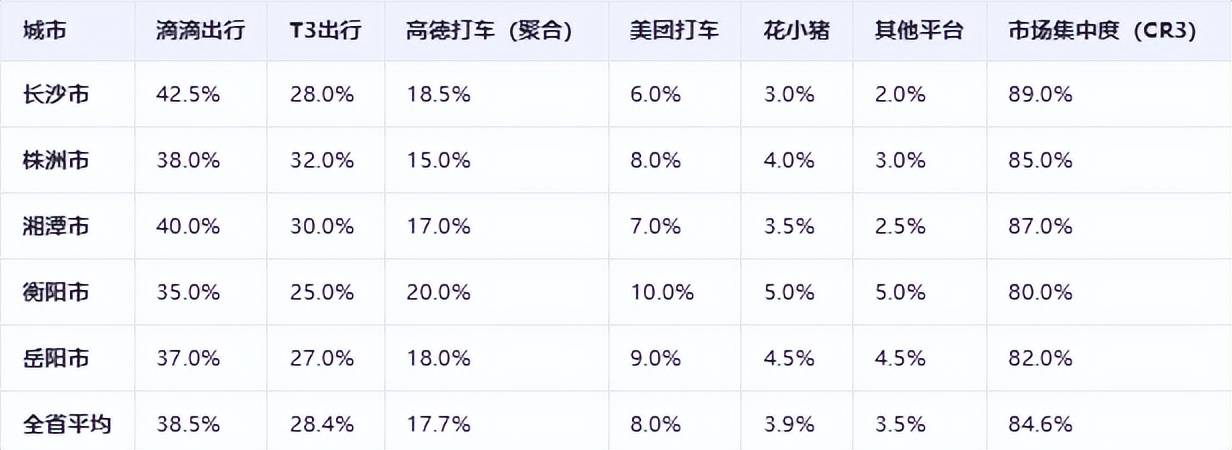
Core Insights - The Hunan Province ride-hailing market is experiencing rapid growth, with 208 licensed companies and 62,028 compliant vehicles as of June 2025, and an expected order volume of 3.5 billion in 2024, indicating strong market demand [1][2]. Market Overview - The ride-hailing industry in Hunan has transitioned from disorderly expansion to regulated development, with compliance rates increasing from 33.81% in 2021 to 69.52% in 2024, reflecting enhanced government oversight [2]. - The market is characterized by a national platform dominance and regional competition, with Changsha, the provincial capital, accounting for nearly half of the province's capacity and order volume [2][11]. Competitive Landscape - The competition between traditional taxis and ride-hailing services is intense, with ride-hailing orders surpassing those of traditional taxis in Changsha [3][10]. - Major challenges for traditional taxis include high operational costs and poor user experience, while ride-hailing platforms leverage technology to optimize operations and reduce idle time [3][6]. Platform Market Share - In Changsha, the market share of major ride-hailing platforms is concentrated, with the top three platforms accounting for 89% of the market [4][5]. Compliance and Regulation - The compliance rate for ride-hailing services in Changsha is 72.27%, ranking second in the province, indicating a high level of regulatory adherence [11][31]. - The Hunan government has implemented measures to ensure compliance and protect driver rights, including the cancellation of low-price products to prevent predatory pricing [6][25]. Service Innovations - The ride-hailing market is diversifying its service offerings, including customized transport for specific scenarios, night services, and special discounts during off-peak hours [22][23]. - Digital technologies are being utilized to enhance operational efficiency, such as real-time demand heat maps for drivers [21][37]. Future Trends - The market is expected to see a gradual increase in order volume, with projections of approximately 3.8 billion orders in 2025 and 4.4 billion by 2027, reflecting a moderate growth rate [28][29]. - The penetration of electric vehicles in the ride-hailing sector is anticipated to rise, with expectations of over 30% by 2026 due to policy incentives [30][27]. Regional Disparities - There are significant regional disparities in the ride-hailing market, with first-tier cities like Changsha experiencing robust growth, while third-tier cities face saturation and declining driver incomes [18][31].

北京发布4项自动驾驶领域地方标准 涉及无人配送车等
Zhong Guo Xin Wen Wang· 2025-10-09 03:44
在车路云一体化路侧基础设施领域,两项重要标准出台。 《车路云一体化路侧基础设施第6部分:信息安全技术要求》提出了信息安全通用技术要求,包括安全 功能、通信网络安全、系统软件升级、数据安全等方面。其中安全功能要求方面,涉及身份认证和鉴 别、访问控制、漏洞和恶意程序防护、入侵检测和防御、密码支持等要求;通信网络安全方面,涉及设 备介入、网络传输、短距离无线通信及直连通信等要求;系统软件升级方面,涉及升级包自身、升级时 通信、OTA升级设备及升级操作过程等要求;数据安全方面涉及完整性和机密性要求。 该标准的发布填补了该领域国内技术要求空白,对补齐产业链缺失环节,推动行业各方共同加强车路云 一体化系统信息安全建设具有重要意义。 《车路云一体化路侧基础设施第7部分:运维管理系统应用技术要求》规定了路侧智能基础设施运维管 理系统的总体架构、功能要求、性能要求,以及路侧智能基础设施的数据要求。 该标准的发布将有效支撑路侧基础设施(摄像机、雷达、通信单元、边缘计算等)通过互联网与运维管理 系统进行高效的信息交流,提升系统对路侧基础设施的管控能力,为实现车路云一体化建设奠定坚实基 础。(完)【编辑:胡寒笑】 中新网北京10月9 ...
智能网联汽车准入和上路通行试点 为数字经济注入强劲动力
Zheng Quan Ri Bao· 2025-10-08 16:19
Core Viewpoint - The recent issuance of the "Guiding Opinions on Vigorously Developing Digital Consumption to Co-create a Better Life in the Digital Age" aims to promote the development of digital consumption, particularly through the pilot of intelligent connected vehicles, which is expected to drive significant upgrades across the entire industry chain and create new employment opportunities [1][6]. Digital Product Consumption Expansion - The guiding opinions propose trials for the access and road use of intelligent connected vehicles, which will inject policy momentum into the automotive industry's intelligent transformation [1]. - The pilot is anticipated to stimulate technological upgrades in upstream and downstream sectors such as chip design, high-precision mapping, and vehicle-road collaboration, potentially unlocking a trillion-yuan scale industry upgrade [1]. Implementation of Pilot Projects - The Ministry of Industry and Information Technology is accelerating the construction of 20 "vehicle-road-cloud integration" pilot cities, with over 35,000 kilometers of test demonstration roads opened and more than 10,000 test demonstration licenses issued [2]. - Initial pilot cities include major urban centers like Chongqing, Guangzhou, Shenzhen, Shanghai, Beijing, Changsha, and Wuhan, with some cities already achieving regular operations of high-level autonomous vehicles in designated areas [2]. Local Innovations and Practices - Beijing is advancing its "dual-intelligence" city construction, achieving coverage of 600 square kilometers with vehicle-road-cloud integration infrastructure and issuing over 1,100 test licenses [3]. - Wuhan's "car valley" initiative has attracted over 500 companies in the intelligent connected vehicle industry, with a significant increase in the production of new energy and intelligent connected vehicles [3]. Industry Ecosystem Reconstruction - The technological system of intelligent connected vehicles is evolving from single-function iterations to multi-dimensional integrated innovations, enhancing environmental perception and decision-making capabilities [4]. - The traditional linear structure of the automotive industry is being replaced by a networked ecosystem centered around "software-defined vehicles," leading to new business models such as subscription services and data monetization [5]. Market Growth Projections - The intelligent connected vehicle market is expected to exceed 5 trillion yuan by 2030, becoming a new growth driver for high-quality economic development [6]. - The Ministry of Industry and Information Technology has indicated conditional approval for L3-level vehicle production, shifting the focus of industry competition from L2 to L3 levels [6].
2025世界智能网联汽车大会召开在即,这些亮点值得关注
Xin Hua Wang· 2025-10-07 04:09
Core Points - The 2025 World Intelligent Connected Vehicles Conference will be held from October 16 to 18 in Beijing, focusing on the theme "Gathering Wisdom and Energy, Connecting the Infinite" [1] - The conference will feature an upgraded "3+3+6+N" framework, including three plenary sessions, three roundtable discussions, six thematic forums, and multiple side meetings [1] - Over 200 domestic and international policymakers, representatives from international organizations, academicians, and entrepreneurs will participate to discuss cutting-edge technologies, industry trends, application practices, and innovative achievements in the intelligent connected vehicle sector [1] Group 1 - The conference will focus on the application of cutting-edge technologies such as artificial intelligence, information communication, data utilization, and chips in the automotive industry [1] - International cooperation will be emphasized through events like the International Cooperation Conference for the automotive industry and activities involving foreign ambassadorial delegations [1] - Nearly half of the speakers at the conference are expected to be international guests, highlighting the global nature of the event [1] Group 2 - Reports on the achievements of "vehicle-road-cloud integration," network technology, trusted data space, and "artificial intelligence + automotive" will be released during the conference [2] - The conference aims to showcase the development achievements of intelligent connected vehicles during the 14th Five-Year Plan period, presenting new technologies, products, models, and ecosystems [2]