人口老龄化

Search documents
澳洲退休地产爆发!Keyton冲刺两万套,百万豪华养老村热销
Sou Hu Cai Jing· 2025-06-23 01:44
Core Viewpoint - Keyton, a retirement community operator spun off from Lendlease, aims to operate 20,000 retirement living units, focusing on expansion along Australia's East Coast [1] Company Overview - Keyton currently operates approximately 13,500 housing units, making it one of Australia's largest retirement community operators, adding 200 to 300 units annually [4] - The CEO, Nathan Cockerill, emphasizes the intention to accelerate growth through acquisitions, leveraging existing land reserves for development [5][7] - Keyton's existing scale has been achieved through a series of acquisitions, targeting small developers who struggle to manage multiple projects [7] Growth Strategy - The company plans to sell its 10-project portfolio in Western Australia (approximately 1,600 units) to concentrate on East Coast development [8] - Keyton's operational cash yield is between 3% and 3.5%, with equity returns of 8% to 10%, driven by project value appreciation [8] Industry Context - The retirement property sector is experiencing heightened interest, with a significant portion of new projects being multi-story/apartment-style buildings [10] - The average price per unit for Keyton is around AUD 650,000, with various purchasing models available [10] - The current vacancy rate for retirement housing in Australia is only 4%, with average unit prices at 59% of the local median house price, indicating a strong market position [11] Demographic Trends - By 2040, the population aged 75 and above in Australia is projected to increase from 2 million to 3.7 million, an 85% growth, while only 12,000 new units are expected to be added in the next five years, leading to a significant supply-demand mismatch [11]


中国人口往何处去(2025年简洁版)
李迅雷金融与投资· 2025-06-21 01:18
Group 1: Economic Impact of Population Changes - The core argument is that population changes significantly influence economic dynamics, particularly through the dependency ratio, which affects labor supply and economic contributions [1][2][3] - The dependency ratio in China has shifted from 7 dependents per 10 working-age individuals in 1980-2010 to 4.8 dependents per 10 currently, with projections indicating further increases in dependency ratios by 2050 [2][3] - The historical context shows that the population boom from 1962-1974 led to a substantial economic growth period, with GDP growth averaging around 10% during 1980-2010, contrasting with the slower growth in the U.S. [1][2] Group 2: Birth Rate and Population Forecasts - The birth rate in China is projected to decline significantly, with new births expected to drop below 900 million by 2025 and potentially fall below 700 million by 2035 [5][8] - The adjustment of birth rate models reflects a more pessimistic outlook, with 2024's new births estimated at 9.54 million, lower than previous optimistic forecasts [4][5] - Factors contributing to the declining birth rate include delayed marriages and changing societal attitudes towards family and child-rearing [11][12] Group 3: Migration Trends and Urbanization - Urbanization rates are slowing, with a notable decrease in the number of migrant workers and a trend of population returning to smaller provinces [12][13] - Major urban centers continue to attract population inflows, particularly in economically vibrant regions like Zhejiang and Shanghai, despite overall population declines in many provinces [14][15] - The movement of people is characterized by a shift from rural to urban areas, with a concentration in major metropolitan areas, enhancing productivity and service delivery [12][15] Group 4: Employment Trends in Manufacturing and Services - The manufacturing sector is experiencing a decline in employment, with a shift towards service industries, which are expected to absorb more labor in the future [16][17] - The service sector's contribution to GDP is increasing, with significant potential for job creation, contrasting with the stagnation in manufacturing employment [16][17] - High-tech manufacturing and service sector growth are critical for attracting population inflows, as seen in cities like Chengdu and Hefei [17]

年轻人对“618”已麻木?46岁以上“熟龄人群”消费增长
第一财经· 2025-06-19 11:16
Worldpanel中国区总经理李嵘指出:"据我们的观察,促销对于消费者行为的影响已经非常有限,现 在很多平台几乎是全年无休地搞线上促销,年轻的消费者已经不再被各类复杂的促销活动迷惑了,他 们会更清醒地从自身需求出发,考虑更高性价比的渠道,单一的促销对消费者的触动也越来越少。" 从这份最新报告来看,46岁以上中老年家庭的平均支出有显著增长,各级城市平均增长约2%,其中 三线城市增长3.3%,四线城市增长6.2%。 对此,报告作者、贝恩公司资深全球合伙人、大中华区消费品业务主席邓旻对第一财经记者分析,中 老年家庭消费支出增速更快的主要原因包括,此类人群在中国经济快速增长时期积累了大量财富,拥 有稳定的养老金;其次,他们的消费观念也在改变,愿意为高生活品质支付溢价。 李嵘表示:"46岁以上的中老年人,也就是我们所称的'熟龄人群'或新时代的'银发一族',非常好地享 受到了改革开放的红利。从我们观察数据来看,这群人是所有人群里面最愿意花钱,而且增速是更高 的。他们除了想要追求不输于年轻人的生活品质之外,还有自己非常特定的健康诉求,问题是如何找 到能够真正打动他们的产品。" 2025.06. 19 本文字数:1070, ...

报告:46岁以上中老年家庭消费在显著增长
news flash· 2025-06-19 09:34
Core Insights - The report highlights a significant increase in consumption among households aged 46 and above, driven by population aging and its impact on the fast-moving consumer goods (FMCG) market, particularly in third and fourth-tier cities [1] Consumption Trends - Average spending among households aged 46 and above has seen a notable increase, with an overall average growth of approximately 2% across all city tiers [1] - Third-tier cities experienced a growth rate of 3.3%, while fourth-tier cities saw an even higher increase of 6.2% [1] E-commerce Influence - Nearly 40% of senior households have begun utilizing interest-based e-commerce platforms for purchasing FMCG products [1] - The influence of platforms like Douyin and Kuaishou on senior households is increasing [1]
年轻人对“618”大促已麻木?46岁以上中老年家庭消费却在显著增长
Di Yi Cai Jing· 2025-06-19 09:24
Group 1 - The core viewpoint of the articles highlights the increasing consumption expenditure of middle-aged and elderly households in China, driven by wealth accumulation during economic growth and changing consumption attitudes towards higher quality of life [1][2] - The average expenditure of households aged 46 and above has significantly increased, with an overall growth of approximately 2% across all city tiers, 3.3% in third-tier cities, and 6.2% in fourth-tier cities [1][2] - The report indicates that the population aged 60 and above in China has surpassed 300 million for the first time, leading to a more detailed classification of consumer groups, including "mature families" and "silver families" [2] Group 2 - Research shows that silver families exhibit diverse consumption needs, categorized into essential daily needs, health-related products, and self-care items, with a heightened focus on health as they age [3] - Nearly 40% of silver families have begun utilizing interest-based e-commerce platforms for purchasing fast-moving consumer goods, with platforms like Douyin and Kuaishou gaining influence among this demographic [3] - Brands are increasingly leveraging content marketing and live-streaming strategies on these platforms to engage middle-aged and elderly consumers, particularly by promoting health-related products to resonate emotionally and stimulate purchasing behavior [3]
特稿|蔡昉:从菲利普斯曲线到贝弗里奇曲线——应对结构性就业矛盾的政策框架
Di Yi Cai Jing· 2025-06-18 01:33
Core Insights - The article emphasizes the dual challenges and opportunities presented by the impact of artificial intelligence on employment and productivity, advocating for proactive capability building and institutional innovation to address these issues [1] Structural Employment Contradictions - The main contradiction in China's employment has shifted from total and cyclical issues to structural ones, necessitating adjustments in policy concepts, orientations, tools, and practices [1] - The natural unemployment rate in urban areas was estimated at approximately 5.05% before the COVID-19 pandemic, but the actual urban survey unemployment rate has frequently exceeded this level post-pandemic, indicating a higher natural unemployment rate [2] - Both urban unemployment rates and job vacancy rates have increased simultaneously, with the urban survey unemployment rate rising from 5.00% to 5.14% and the job-seeker ratio increasing from 1.04 to 1.37 between 2008-2016 and 2016-2024 [3] - The informalization of urban employment is evident, with private and non-unit employment rising from 53.0% in 2013 to 65.2% in 2023, and approximately 200 million people engaged in flexible employment in 2023 [4] - Labor mobility between urban and rural areas has become increasingly inward, with a slowdown in the transfer of agricultural labor to non-agricultural sectors, negatively impacting productivity [5] Causes of Structural Employment Contradictions - Structural employment contradictions are primarily driven by technological advancements leading to automation, which often results in job displacement [6] - Population factors, particularly aging, have contributed to a shortage of middle-aged workers, leading to increased automation in sectors where they were predominantly employed [7][8] - Institutional barriers, such as the household registration system, hinder effective labor market matching, with a significant proportion of the labor force being non-local residents [8] Addressing Structural Employment Contradictions - To tackle structural employment contradictions, there is a need for enhanced human capital development and a robust social protection system [9] - Emphasis on improving education and skill training to meet the demands of the AI era is crucial, with suggestions for extending compulsory education and establishing a lifelong learning system [9] - The social protection system should be improved to ensure equitable support for workers facing job displacement, with recommendations for increasing benefit levels and expanding public services [10] - Macroeconomic policy tools need to shift focus from aggregate measures to individual and structural aspects, enhancing coordination among government departments to improve labor market outcomes [11]

“摸着中国过河”,越南一把彻底取消计划生育,急什么?
3 6 Ke· 2025-06-16 02:39
Core Viewpoint - Vietnam's demographic dividend is rapidly diminishing, prompting the government to amend its population policy to allow couples to decide on the number and timing of children without restrictions, contrasting with China's earlier policy changes [2][3]. Group 1: Policy Changes - The recent amendment to the Population Law allows couples to determine their family size based on various personal factors, effectively abolishing the previous limit of one to two children [2]. - Vietnam's total fertility rate remains at 1.91, which is still above China's rate when it relaxed its one-child policy, indicating a proactive approach to demographic challenges [2]. Group 2: Demographic Concerns - Vietnam is experiencing a significant decline in birth rates, dropping from 2.11 to 1.91 between 2022 and 2024, a rapid decrease compared to other countries [4][6]. - Projections indicate that if the current trend continues, Vietnam could face a labor shortage within a decade, transitioning to an aging population by 2034 [6][7]. Group 3: Socioeconomic Factors - Urbanization and rising living costs are contributing to changing attitudes towards marriage and childbirth among the youth, with many young people facing high housing costs and limited social circles [9][11]. - The average age of first marriage for women has increased to 27, reflecting a shift in societal norms and priorities, particularly among educated women [15]. Group 4: Labor Market Challenges - Companies in Vietnam are struggling to fill positions, with reports of labor shortages in manufacturing despite offering competitive salaries [16]. - The younger workforce is increasingly favoring flexible job opportunities in the service sector over traditional manufacturing roles, leading to a mismatch in labor supply and demand [16][17].

宗良:完善家庭养老金融健康政策制度,充分发挥养老金融在社会保障中的作用 | 养老金融健康专题
清华金融评论· 2025-06-13 11:01
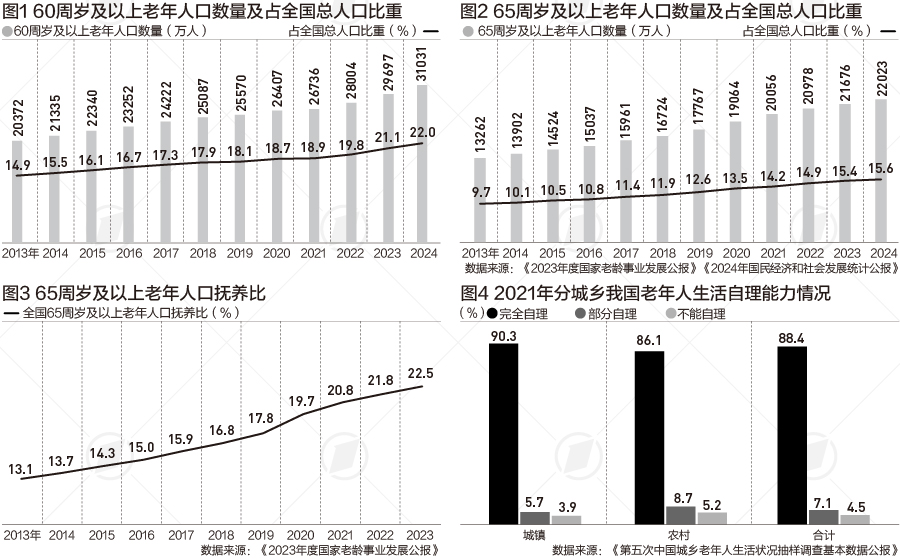
Core Viewpoint - The article emphasizes the urgent need for optimizing pension finance policies in response to the unprecedented wave of global population aging, highlighting the importance of developing a robust pension finance system to support social security and economic stability [2][3]. Group 1: Current Status of Pension Finance in China - The pension finance system in China is entering a critical phase of quality improvement, with a projected 15.6% of the population aged 65 and above by the end of 2024 [4]. - China has established a three-pillar pension finance system, which includes basic pension insurance, enterprise occupational annuities, and personal pensions, with a growing variety of pension financial products available [4]. - As of June 2024, there are 762 personal pension products available, including 465 savings products, 192 fund products, 82 insurance products, and 23 wealth management products, indicating a rapid increase in product diversity [4]. Group 2: Challenges in Pension Finance Development - The third pillar of personal pension finance needs faster development, as it currently covers less than one-tenth of the national population, with a phenomenon of "hot openings but cold contributions" [5]. - The shift from "intergenerational support" to "self-reliance" in pension finance is evident, with 61.64% of respondents in a survey considering "self-reliance" as the most reliable pension model [6]. - The current pension finance system shows a significant imbalance, with basic pension insurance achieving full coverage while personal pension systems lag behind [7]. Group 3: Government's Role in Pension Finance - The government should strengthen the third pillar by expanding the audience for pension finance, addressing the low coverage of personal pensions, and enhancing the system's multi-tiered development [8]. - There is a need to leverage the long-term and stable advantages of pension funds to reduce risks and increase returns by encouraging pension investments in capital markets [8]. - Establishing a robust risk management system and enhancing transparency in information disclosure are crucial for improving public trust in pension finance [9]. Group 4: Policy Improvements for Family Pension Finance - Current pension finance policies lack coordination and precision, with only 15.9 million employees covered by enterprise annuity plans, representing less than 20% of urban employment [10][11]. - Expanding tax incentives for low- and middle-income families could enhance participation in pension finance, as current tax benefits are limited [11]. - Diversifying pension financial products to meet various family needs and improving market regulation to increase awareness and trust in pension products are essential [12]. Group 5: Regional Development and Support for Underdeveloped Areas - There is a regional imbalance in pension finance, with a need for targeted policies to support underdeveloped areas, including the issuance of special pension bonds [14]. - Differentiated policies should be designed based on regional and urban-rural disparities, such as developing small-scale inclusive pension insurance products for rural areas [14]. Group 6: Integration of Technology and Pension Finance - Promoting the integration of technological innovation with pension finance and the pension industry is essential for optimizing the structure and enhancing development [15]. - The government should encourage social capital participation in the pension service industry, utilizing financial tools to support the development of diverse pension services [15]. - Effective management of pension assets and risk control is vital for ensuring the sustainable growth of the pension industry and meeting diverse social needs [16].

全球平均生育率大降!为什么不生?联合国报告这么说→
第一财经· 2025-06-12 12:41
Core Viewpoint - The article discusses the declining birth rates in Japan, South Korea, and globally, highlighting the economic and social factors contributing to this trend, and suggests measures to create a more supportive environment for families [1][2][4]. Group 1: Declining Birth Rates - Japan's newborns in 2024 are projected to be approximately 686,000, a decrease of 41,200 from 2023, marking the first time since 1899 that the number falls below 700,000, 14 years earlier than expected [1] - South Korea has declared a "population emergency" due to its own declining birth rates, reflecting a broader trend across many countries [2] - The UNFPA reports that the global average fertility rate has dropped from 3.31 children per woman in 1990 to 2.3 in 2024, with 55% of countries below the replacement level of 2.1 children [2] Group 2: Economic Factors Influencing Birth Rates - Economic constraints are a significant factor in declining birth rates, with 39% of surveyed individuals citing "financial limitations" as the primary reason for having fewer children than desired [5] - In South Korea, 58% of respondents identified financial constraints as a key reason for their reluctance to have more children [5] - Other economic concerns include job security (21%), housing issues (19%), and lack of quality childcare services (12%) [5] Group 3: Recommendations for Supporting Families - The report emphasizes the need to alleviate economic burdens to enhance fertility intentions, suggesting measures such as paid parental leave, affordable healthcare, and supportive partnerships [7] - Sweden's new law allowing grandparents to receive compensation for childcare is highlighted as an innovative approach to reduce the burden on young parents [7] - The article advocates for equitable parental leave policies to encourage shared parenting responsibilities, which can improve women's workforce participation and men's involvement in childcare [7] Group 4: Government Initiatives - Japan's government aims to increase the male parental leave rate from 30.1% in 2023 to 50% by 2025 and potentially 80% by 2030, with new benefits for immediate paternity leave [8] - South Korea has seen positive changes in birth rates due to government policies such as extended leave, tax reductions, and housing support, with a notable increase in monthly births for nine consecutive months [9] - The report calls for governments to transform into "fertility enablers" to create an environment where individuals can realize their family planning desires [9]

未来十年老年人口净增1亿,长护险全国铺开进入倒计时|长护险扩围探路
Di Yi Cai Jing· 2025-06-12 12:26
Core Insights - The long-term care insurance (LTCI) system in China is crucial for addressing the increasing demand for care services due to the rapid aging population, with the number of individuals aged 60 and above expected to rise from 300 million to 400 million in the next decade [1][2] Group 1: Aging Population Statistics - By the end of 2024, the population aged 60 and above in China is projected to reach 310 million, accounting for 22% of the total population, with those aged 65 and above reaching 220 million, or 15.6% [2] - The elderly population is expected to grow by over 20 million annually starting from 2022, with projections indicating that by 2035, the population aged 60 and above will exceed 400 million, representing over 30% of the total population [2][3] Group 2: Long-Term Care Insurance Development - The LTCI system, referred to as the "sixth social insurance," aims to provide essential support for the elderly, complementing existing systems like pension and medical insurance [8] - As of 2023, the number of participants in the LTCI pilot program has increased to approximately 183 million, with 1.34 million individuals receiving benefits [8] - The LTCI fund reported revenues of 24.36 billion yuan and expenditures of 11.86 billion yuan in 2023, indicating a growing financial base for the program [8][13] Group 3: Service Provider Shortage - There is a significant shortage of care service personnel, with only 302,800 caregivers available for the growing number of beneficiaries, highlighting a critical gap in service provision [9] - The number of designated LTCI service institutions has increased from 4,845 in 2020 to 8,080 in 2023, but the growth rate of service providers is lagging behind the demand for care services [9] Group 4: Policy and Future Directions - The Chinese government is accelerating the establishment of a nationwide LTCI system, with a focus on creating a unified policy framework that covers all citizens [1][18] - Experts emphasize the urgency of finalizing the LTCI system to ensure that all disabled elderly individuals can access necessary care services, as current pilot programs only cover about 5.8% of the demand [18]