
保护主义

Search documents
商务部:美对华造船等行业限制措施损人不利己
Yang Shi Xin Wen· 2025-10-14 08:02
Core Viewpoint - The U.S. has implemented unilateral and protectionist measures against China's maritime, logistics, and shipbuilding industries, which are seen as discriminatory and harmful to China's industrial interests [1][2]. Group 1: U.S. Measures and China's Response - The U.S. has officially imposed port fees and other restrictions on China's maritime and shipbuilding sectors based on the results of a Section 301 investigation [1]. - China strongly opposes these measures, viewing them as a violation of WTO rules and the U.S.-China Maritime Agreement, which undermines fair competition [1]. - In retaliation, China announced on October 10 that it would impose special port fees on vessels with U.S. elements, including those flagged, built, or owned by U.S. companies [1]. Group 2: Impact on Global Trade and U.S. Industry - The U.S. measures are expected to disrupt global supply chains, significantly increase international trade costs, and contribute to rising inflation in the U.S. [1]. - There are concerns that these actions will harm the competitiveness and employment levels at U.S. ports, as well as affect the resilience of the U.S. supply chain [1]. - There is notable opposition from the U.S. industry regarding these measures, indicating that they may be counterproductive to the development of the U.S. shipbuilding sector [1]. Group 3: China's Further Actions - In order to protect its industrial interests, China has placed certain companies that assisted the U.S. investigation on a countermeasure list and will investigate actions that threaten the safety and development of its maritime and shipbuilding industries [2]. - China emphasizes a commitment to conducting investigations in an open, fair, and just manner, ensuring the rights of all stakeholders are protected [2]. - China maintains a clear stance on the issue, indicating readiness to engage in dialogue while also preparing to respond firmly to U.S. actions [2].
美对华造船等行业301调查限制措施落地 商务部最新回应
智通财经网· 2025-10-14 07:47
Core Viewpoint - The U.S. has implemented port fee restrictions on China's maritime, logistics, and shipbuilding sectors based on the results of a Section 301 investigation, which China strongly opposes as unilateral and protectionist behavior that violates WTO rules and the U.S.-China Maritime Agreement [1][2][3] Group 1: U.S. Measures and China's Response - The U.S. measures are seen as discriminatory against China's shipping and shipbuilding industries, providing unfair competitive advantages to other countries' shipping and shipbuilding enterprises [1][2] - In response, China announced on October 10 that it would impose special port fees on vessels associated with U.S. flags, U.S. construction, or U.S. ownership [1][2] - The U.S. actions are expected to disrupt global supply chain stability, significantly increase international trade costs, and negatively impact U.S. inflation and port competitiveness [2] Group 2: China's Countermeasures - To protect its industries, China has placed certain companies that assisted the U.S. investigation on a countermeasure list and initiated investigations into actions that threaten the safety and development of its shipping and shipbuilding sectors [3] - China emphasizes a commitment to open, fair, and just enforcement and investigation processes while safeguarding the rights of all stakeholders involved [3] - China's stance is clear: it is prepared to engage in conflict if necessary but remains open to dialogue and negotiation to resolve mutual concerns [3]
商务部新闻发言人就美对华造船等行业301调查限制措施落地答记者问
Shang Wu Bu Wang Zhan· 2025-10-14 07:32
有记者问:美东时间10月14日,美国依据所谓301调查结果,正式对中国海事、物流和造船领域实施港 口费等限制措施,请问中方对此有何回应? 答:美方措施是典型单边主义、保护主义行为,严重违反世贸组织规则,违背《中美海运协定》平等互 惠原则,赋予相关国家航运和造船企业不公平竞争优势,构成对中国航运、造船等产业的歧视性做法, 严重损害中国相关产业利益。中方对此强烈不满,坚决反对,已于10月10日宣布将对涉及美国旗、美国 造、美国公司拥有、参股或经营等美国元素的船舶收取特别港务费。 美方措施不仅影响全球供应链稳定、大幅提高国际贸易成本,也会推高美国内通胀,损害美港口竞争力 和就业,影响美自身供应链安全和韧性。美方产业界对此也有很多反对声音,充分显示出美方做法损人 不利己,无益于自身造船业发展。 为进一步维护中国相关产业利益,中方有关部门根据《中华人民共和国国家安全法》《中华人民共和国 反外国制裁法》《中华人民共和国国际海运条例》等有关规定,将部分协助、支持美方相关调查活动的 企业列入反制清单,对美国及部分国家和企业危害我国航运、造船等相关产业安全发展利益的行为发起 调查。在调查实施过程中,中方将秉承公开、公平、公正原 ...
21社论丨外贸逆势增长彰显中国出口全球竞争力
21世纪经济报道· 2025-10-14 00:52
Core Insights - China's foreign trade maintained growth in the first three quarters of the year, with total imports and exports reaching 33.61 trillion yuan, a year-on-year increase of 4% [1] - Exports amounted to 19.95 trillion yuan, growing by 7.1%, while imports were 13.66 trillion yuan, showing a slight decline of 0.2% [1] - The growth rate of imports and exports accelerated each quarter, with a notable 8% increase in September, surpassing market expectations [1] Group 1: Export Performance - The export of mechanical and electrical products reached 12.07 trillion yuan, up 9.6%, accounting for 60.5% of total exports, an increase of 1.4 percentage points [1] - High-tech product exports totaled 3.75 trillion yuan, growing by 11.9%, contributing over 30% to the overall export growth [1][2] - The "new three items" and green products like railway electric locomotives saw double-digit growth, indicating strong demand and competitive advantages in global markets [2] Group 2: Regional Trade Dynamics - Major economic provinces such as Guangdong, Jiangsu, Zhejiang, Shanghai, and Shandong contributed over 80% to the national export growth, with a combined increase of 5.2% [2] - The western region's foreign trade maintained strong momentum, with imports and exports reaching 3.21 trillion yuan, a year-on-year increase of 10.2% [2] - The development of new trade routes like the Western Land-Sea New Corridor and China-Europe Railway Express has bolstered exports from the western region [2] Group 3: Market Diversification - Trade with countries involved in the Belt and Road Initiative reached 17.37 trillion yuan, growing by 6.2%, and accounted for 51.7% of total trade [3] - Exports to ASEAN, Latin America, Africa, and Central Asia grew by 9.6%, 3.9%, 19.5%, and 16.7% respectively, reflecting a shift towards diversified markets [3] - The rise of cross-border e-commerce, with a 10.3% increase in trade volume to 1.37 trillion yuan, has provided new support for exports [3] Group 4: Trade Policy Stance - China has announced it will not seek new special and differential treatment in current and future WTO negotiations, indicating a commitment to open markets and multilateralism [4] - The country aims to provide high-quality, affordable products to the global market while opposing unilateralism and protectionism [4]


李强会见加纳总统马哈马
Xin Hua She· 2025-10-13 13:11
Core Points - The meeting between Chinese Premier Li Qiang and Ghanaian President Mahama emphasizes the long-standing friendship and mutual support between China and Ghana, highlighting the elevation of their relationship to a strategic partnership last year [1] - Both parties expressed a commitment to deepen cooperation in various fields, including trade, investment, infrastructure, agriculture, energy, and the Belt and Road Initiative [1][2] - Ghana appreciates China's support and the zero-tariff policy on products from African countries, indicating a desire to enhance economic collaboration [2] Group 1 - The strategic partnership between China and Ghana presents new opportunities for cooperation across multiple sectors [1] - China aims to support Ghana's development path and enhance high-quality collaboration under the Belt and Road Initiative [1] - The two countries plan to leverage the 2026 "China-Africa Cultural Exchange Year" to boost cooperation in education, culture, tourism, and health [1] Group 2 - Ghana values the long-term support from China and is committed to the One China principle, looking to strengthen high-level exchanges [2] - The focus will be on promoting cooperation in trade, investment, infrastructure, energy, agriculture, and mining, while exploring new growth areas like digital economy and artificial intelligence [2] - Ghana supports China's global governance initiatives and aims to deepen multilateral cooperation to uphold multilateralism and international justice [2]
海关总署回应船舶港务费问题:中方反制措施是必要的被动防御行为
Sou Hu Cai Jing· 2025-10-13 04:42
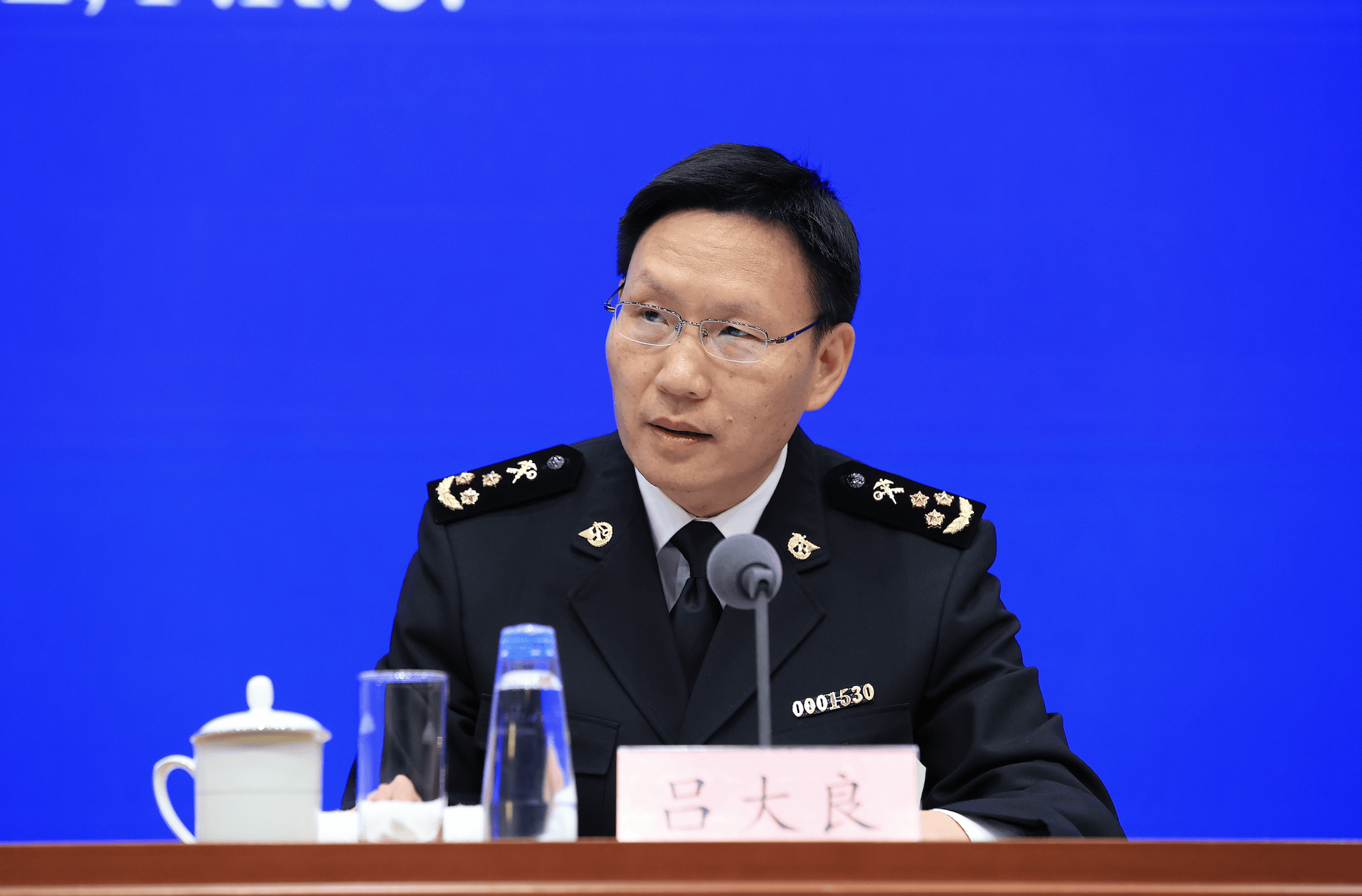
记者 辛圆 国新办周一举行新闻发布会,请海关总署副署长王军,海关总署新闻发言人、统计分析司司长吕大良介绍2025年前三季度进出口情况,并答记者问。 在发布会上,有记者现场提问称:随着中美贸易摩擦带来不确定性,有些商品例如圣诞节产品提前出口到美国,请问海关还关注到哪些提前出口的产品类 型,对四季度出口增速会有何影响? 对此,吕大良回应说,今年以来,个别国家滥施关税,冲击了多边贸易体制,扰乱全球贸易秩序,影响企业的正常生产经营和贸易节奏,也损害了广大企业 的利益,同时也使各国的经济发展受到严重的干扰,引发了国际社会的普遍反对。 "中国始终坚定支持和维护多边贸易体制,促进全球产业链供应链的稳定和畅通,为世界经济增长注入确定性和稳定性。至于具体商品的进出口情况,您可 以在我们的网站上查询有关的数据。"吕大良说。 吕大良表示,船舶港务费问题。此前有关部门已经多次作过回应,美方的措施是典型的单边主义、保护主义行为,具有明显的歧视性色彩。 他强调,中方的反制措施是必要的被动防御行为,既是维护中国产业和企业正当权益不得不采取的措施,也是维护国际航运和造船市场公平竞争环境的必要 措施。希望美方能够正视自身的错误,与中方相向而行 ...
海关总署,最新回应
第一财经· 2025-10-13 03:11
据中国网, 10月13日, 国新办就2025年前三季度进出口情况举行新闻发布会。 海关总署新闻发言人、统计分析司司长吕大良在发布会上表示,就船舶的港务费问题,此前有关部门已 经多次作过回应,美方的措施是典型的单边主义、保护主义行为,具有明显的歧视性色彩。中方的反制 措施是必要的被动防御行为,既是维护中国产业和企业正当权益不得不采取的措施,也是维护国际航运 和造船市场公平竞争环境的必要措施。希望美方能够正视自身的错误,与中方相向而行,回到对话协商 的正确轨道上来。 (头图由AI生成) ...

海关总署回应船舶港务费问题:中方反制措施是必要的被动防御
Xin Jing Bao· 2025-10-13 03:05
吕大良表示,就船舶的港务费问题,此前有关部门已经多次作过回应,美方的措施是典型的单边主义、 保护主义行为,具有明显的歧视性色彩。中方的反制措施是必要的被动防御行为,既是维护中国产业和 企业正当权益不得不采取的措施,也是维护国际航运和造船市场公平竞争环境的必要措施。希望美方能 够正视自身的错误,与中方相向而行,回到对话协商的正确轨道上来。 新京报讯(记者姜慧梓)在10月13日举行的国新办新闻发布会上,海关总署新闻发言人、统计分析司司长 吕大良回应船舶港务费问题。 ...
海关总署:我国与亚太经合组织其他经济体的经贸往来密切
Xin Lang Cai Jing· 2025-10-13 02:41
Core Insights - China's trade with other APEC economies has shown a year-on-year growth of 2% in the first three quarters, reaching a total of 19.41 trillion yuan, which accounts for 57.8% of China's total trade volume [1] - High-tech product imports and exports to APEC economies exceeded 2 trillion yuan, with imports growing by 7.9% and exports by 12%, both representing over 60% of the total value of similar products [1] - Exports of daily chemical products to APEC economies increased by 5.7%, while imports of sports goods rose by 15.6% [1] Trade with South Korea - In the first three quarters, trade with South Korea amounted to 1.74 trillion yuan, marking a growth of 2% [1] - Exports to South Korea reached 771.28 billion yuan, growing by 0.6%, while imports from South Korea totaled 967.17 billion yuan, increasing by 3.1% [1] - Specific product categories such as electromechanical products and agricultural products saw import and export growth of 6% and 3.3%, respectively [1] Regional Cooperation - APEC serves as an important platform for regional economic cooperation, facing challenges such as geopolitical tensions, unilateralism, and protectionism [1] - Strengthening consensus and deepening cooperation across various fields is essential for addressing regional economic challenges and enhancing prosperity in the Asia-Pacific region [1] - China is South Korea's largest trading partner, while South Korea ranks as China's fifth-largest trading partner, indicating a deeply intertwined supply chain and industrial cooperation [1]
海关总署:我国经济长期向好的支撑条件和基本趋势没有变
Yang Shi Wang· 2025-10-13 02:33
海关总署副署长王军在新闻发布会上表示,今年以来,世界经济面临的不稳定、不确定因素增多,单边 主义、保护主义盛行,这些都给我国外贸运行带来了压力。但是我国经济基础稳、优势多、韧性强、潜 能大,长期向好的支撑条件和基本趋势没有变,超大规模的市场和完整的产业体系的优势突出,进出口 保持韧性和活力,这些都将为下一阶段外贸稳定发展提供支撑。 央视网消息:国务院新闻办公室于10月13日上午10时举行新闻发布会,请海关总署副署长王军介绍 2025年前三季度进出口情况,并答记者问。 ...