
城乡融合发展

Search documents
广东“三农”领域广大党员干部群众干劲倍增、信心满满推进乡村全面振兴 促进城乡融合发展
Nan Fang Ri Bao Wang Luo Ban· 2025-11-10 08:08
Group 1 - The core message emphasizes the importance of developing rural specialty industries as a foundation for comprehensive rural revitalization, with a focus on technology application and the integration of agriculture, culture, and tourism [1][5] - The "Hundred Counties, Thousand Towns, and Ten Thousand Villages High-Quality Development Project" (referred to as "Hundred Thousand Project") is being implemented to promote rural revitalization and enhance regional coordination and urban-rural integration [1][2] - The development of local agricultural products, such as the Meizhou pomelo, is highlighted as a key driver for increasing farmers' income, with the pomelo planting area in Meizhou expected to reach 649,500 acres in 2024, accounting for 90% of Guangdong's total and one-fifth of the national total [2][3] Group 2 - The integration of agriculture, culture, and tourism is seen as a vital strategy for stimulating rural vitality and promoting the realization of rural value [5][6] - The "Five Gold" model, which includes rent, salary, goods, shares, and creation, is being implemented in villages to broaden income channels for villagers, with an expected average annual income increase of over 24,000 yuan per household [6][7] - The development of modern rural industrial systems is being prioritized, with a focus on enhancing the value chain and increasing the added value of agricultural products [2][4] Group 3 - The emphasis on regional coordinated development and urban-rural integration is identified as a critical area for improving Guangdong's high-quality development [8][10] - The industrial transfer from the Pearl River Delta to the eastern, western, and northern regions of Guangdong is being facilitated to promote economic collaboration and enhance the resilience of the industrial supply chain [8][9] - The introduction of significant investment projects, such as the 18 projects with over 1 billion yuan in total investment in the Heshan Industrial City, is aimed at fostering new industries and contributing to regional development [9][10]
天辽地宁 赋“能”焕“新”
中国能源报· 2025-11-09 23:32
Core Views - The article emphasizes the importance of ecological environment as a valuable resource for the economic and social development of Northeast China, particularly in Liaoning, advocating for green development across various sectors [2][12][15] Group 1: Economic Transformation - Liaoning is actively exploring the transformation of resource-depleted cities, showcasing unique experiences in this process [4] - The Fushun Mining Group's West Open-pit Mine has achieved ecological restoration over 70% of its total area, planting over 4.07 million trees and integrating renewable energy projects [5][6] - Fuxin, once a coal and electricity city, has shifted its economic focus to renewable energy, with installed capacity reaching 5.6 million kilowatts, accounting for 74.64% of its energy production [6] Group 2: Urban and Rural Integration - The article highlights the successful recovery and revitalization of villages like Zhujia Gou, which has transformed into a vibrant tourist destination with various agricultural projects supported by reliable electricity [8][10] - Liaoning is working to bridge the urban-rural divide by improving infrastructure and public services, leading to a reduction in income disparity and an increase in residents' happiness [10] Group 3: Environmental Protection and Green Development - Liaoning has made significant strides in environmental quality, with air quality indicators improving and water quality standards being met across the province [13] - The province is committed to high-level protection and green development, achieving a notable increase in the proportion of good water quality monitoring points to 90% [13][14] - Initiatives such as the energy data platform and the implementation of clean heating projects are part of Liaoning's strategy to enhance energy efficiency and reduce carbon emissions [14][15]

让乡村特色产业成为幸福产业(今日谈)
Ren Min Ri Bao· 2025-11-09 22:20
Core Insights - The article emphasizes the importance of developing rural特色产业 (characteristic industries) as a foundation for comprehensive rural revitalization and increasing farmers' income [1] - It highlights the need for technological advancements to cultivate and expand these rural industries, showcasing examples like the use of digital platforms for real-time monitoring in the柚子 (pomelo) industry [1] - The article discusses the government's commitment to reducing regional disparities and promoting urban-rural integration through practical measures outlined in the 20th Central Committee's fourth plenary session [1] Group 1 - The development of rural特色产业 is crucial for promoting common prosperity and ensuring sustainable income growth for farmers [1] - The government is focusing on establishing stable利益联结机制 (interest connection mechanisms) to enhance farmers' income [1] - Technological innovation is key to nurturing and expanding rural特色产业, as demonstrated by the smart management practices in the pomelo industry [1] Group 2 - The article outlines the government's strategic initiatives to promote new urbanization and rural revitalization, aiming for a modern agricultural industry [1] - It emphasizes the importance of quality improvement, extending the industrial chain, and increasing added value in agricultural production [1] - The vision is to ensure that rural residents enjoy a better quality of life, akin to the sweetness of the pomelo, reflecting the essence of Chinese-style modernization [1]
千年之城拔节生长
Zhong Guo Jing Ying Bao· 2025-11-07 19:39
Core Insights - Xiong'an New Area is transitioning from a grand blueprint to a tangible city with the establishment of central enterprise headquarters and high-tech industry clusters, marking a significant phase in its development [3][4] - The focus of Xiong'an's development has shifted towards high-quality construction, high-level management, and effective functional relief from Beijing, emphasizing a solid foundation for future growth [3][5] Industry Development - Over 200 high-tech enterprises have settled in Xiong'an, with key industries including satellite internet, artificial intelligence, and new materials being prioritized for development [4][6] - The aerospace information and satellite internet sectors are identified as foundational industries, with 62 companies already established in the aerospace information field [6] Ecological Progress - Xiong'an has implemented an ecological-first approach, achieving a forest coverage rate increase from 11% to 35% and planting 481,000 acres of trees as part of the "Thousand-Year Forest" project [8] - The water quality of Baiyangdian has remained stable at Class III for four consecutive years, with significant improvements in biodiversity, including an increase in wild bird species [8] Social Development - Xiong'an is enhancing public services, including education, healthcare, and elderly care, while creating job opportunities through traditional industry upgrades, providing over 400,000 job openings [9] - The area is actively promoting urban-rural integration and has established various agricultural and digital innovation centers [9] Urban Planning and Infrastructure - Xiong'an is developing a comprehensive transportation network and utilizing underground space to alleviate urban issues, aiming to create a future city without "urban diseases" [11][12] - As of now, Xiong'an has developed nearly 215 square kilometers, with a total construction area of 55.88 million square meters and 5,127 buildings completed [12]
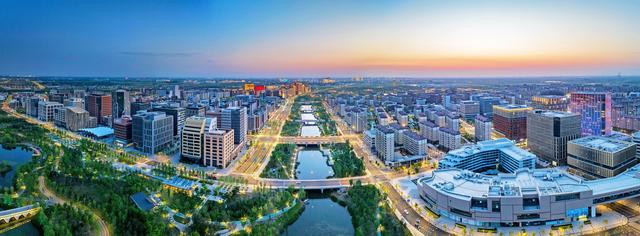
加快农业农村现代化
Ren Min Ri Bao· 2025-11-06 00:24
Core Viewpoint - The modernization of agriculture and rural areas is essential for the overall modernization of the country, as emphasized by General Secretary Xi Jinping [1][2]. Group 1: Significance of Accelerating Agricultural and Rural Modernization - The achievements in "three rural issues" since the 18th National Congress have been historic, with significant improvements in rural conditions and agricultural production capabilities [2]. - The comprehensive grain production capacity remains above 1.3 trillion jin, with expectations to exceed 1.4 trillion jin in 2024 [2]. - The contribution rate of agricultural science and technology has reached 63.2%, and the mechanization rate of crop farming exceeds 75% [2]. - The eradication of absolute poverty has been a historic achievement, with all farmers entering a moderately prosperous society [2]. - The per capita disposable income of rural residents is projected to reach 23,119 yuan in 2024, with the urban-rural income ratio decreasing to 2.34:1 [2]. Group 2: Relationship of Agricultural Modernization to National Goals - Agricultural modernization is a critical task for building a modern socialist country, addressing the imbalances and weaknesses in rural development [3]. - Strengthening the agricultural foundation is vital for national stability and food security, especially in the face of international uncertainties [3]. - Achieving agricultural modernization is essential for ensuring food security and providing a solid foundation for the modernization of China [3]. Group 3: Basic Requirements for Agricultural Modernization - Agricultural modernization is a major and urgent strategic task that requires prioritizing rural development and urban-rural integration [5]. - The relationship between setting goals and maintaining historical patience is crucial, as agricultural modernization is a systematic and dynamic process [6]. - Local conditions must be considered in the implementation of agricultural modernization, avoiding a one-size-fits-all approach [6]. - The integration of traditional agricultural practices with modern elements is necessary to preserve cultural heritage while advancing modernization [6]. Group 4: Strategic Deployment for Agricultural Modernization - The focus is on enhancing agricultural production capacity and quality, ensuring food security through modern agricultural practices [9]. - Establishing mechanisms to prevent poverty and ensure sustainable development in rural areas is essential [10]. - Building beautiful and livable rural areas is a priority, with an emphasis on improving infrastructure and public services [11]. - Strengthening policies that support farmers and enhance agricultural productivity is critical for achieving modernization goals [12].
金观平:加大强农惠农富农政策力度
Jing Ji Ri Bao· 2025-11-04 00:04
Group 1: Agricultural Policy and Investment - The core viewpoint emphasizes the importance of enhancing agricultural policies to achieve a prosperous rural economy and improve living conditions for farmers [1] - Since the 14th Five-Year Plan, fiscal spending on agriculture, forestry, and water affairs has reached 10.8 trillion yuan, with over 10% of national land transfer income allocated to agriculture and rural areas [1] - Fixed asset investment in the primary industry has reached 5.47 trillion yuan, and the balance of agricultural loans stands at 53.19 trillion yuan, indicating significant financial support for farmers [1] Group 2: Support Mechanisms for Farmers - There is a call to accelerate the establishment of a revenue protection mechanism for grain farmers, focusing on price, subsidies, and insurance to enhance agricultural support policies [2] - The aim is to keep prices of important agricultural products at reasonable levels and reform the grain purchase and storage management system to ensure farmers benefit from increased production [2] - The development of a multi-tiered agricultural insurance system is encouraged to reduce farmers' concerns and enhance financial security [2] Group 3: Rural Infrastructure and Public Services - The article highlights the need to improve rural infrastructure and public services, addressing issues such as the imbalance in service quality and the need for more resources to be allocated to rural areas [2] - It advocates for a focus on essential public services that meet the urgent needs of farmers, ensuring efficient use of funds and prioritizing basic public service construction [2] Group 4: Rural Reform and Land Rights - The importance of continuing rural reforms is emphasized, including the "three rights separation" of land and the promotion of collective land use for farmers' benefit [3] - The article suggests enhancing farmers' property rights and enabling them to gain more from reforms through various means, such as transforming resources into assets and allowing legal housing to be utilized for income [3] - It also calls for a clear distribution mechanism for land appreciation income to ensure fair benefits for farmers [3]
“十五五”关键部署:加快农业农村现代化 扎实推进乡村全面振兴
Sou Hu Cai Jing· 2025-11-02 14:33
Core Viewpoint - The "14th Five-Year Plan" emphasizes accelerating agricultural and rural modernization and solidly promoting comprehensive rural revitalization [1] Group 1: Agricultural Modernization - The modernization of agriculture and rural areas is crucial for the overall and qualitative development of Chinese modernization [1] - The plan prioritizes addressing the "three rural issues" as a key focus for the entire party's work [1] Group 2: Rural Revitalization - The strategy aims to promote urban-rural integration and continuously consolidate and expand the achievements of poverty alleviation [1] - It seeks to ensure that rural areas have basic modern living conditions and accelerate the construction of a strong agricultural nation [1] Group 3: Policy Effectiveness - The plan aims to enhance the effectiveness of policies that benefit farmers and promote agricultural prosperity [1] - It includes initiatives to improve the quality and efficiency of agricultural production [1]
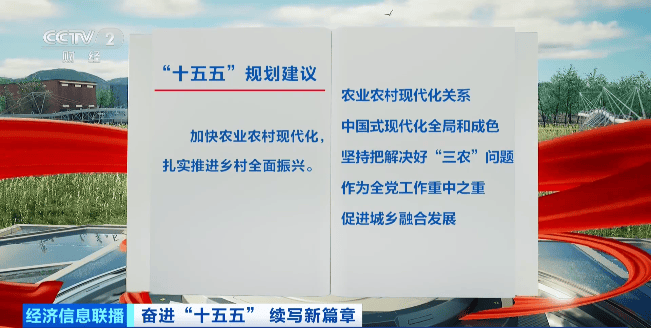
围绕“完善城乡融合发展体制机制,促进农民农村共同富裕” 全国政协农业和农村委员会调研组赴豫调研
Xin Hua She· 2025-10-31 03:35
Core Insights - The research team conducted a field study in Xuchang City, Henan Province, focusing on improving the urban-rural integration development system and promoting common prosperity for farmers and rural areas [1][2] - The team engaged with local communities, agricultural bases, and private enterprises to gather insights on Henan's experiences in advancing new urbanization and rural revitalization [1][2] Group 1 - Urban-rural integration development is deemed a necessary requirement for China's modernization [2] - The research team emphasized the importance of addressing "three rural issues" as a priority for the entire party's work [2] - The team highlighted the need to implement the central government's decisions for the 14th Five-Year Plan period regarding urban-rural integration [2] Group 2 - The research team aims to leverage the advantages of the People's Political Consultative Conference to focus on creating agricultural specialty industry clusters [2] - There is a call to enhance mechanisms that connect agriculture with rural development, fostering new industries and business models in rural areas [2] - The team stressed the importance of integrating rural culture and tourism while ensuring resource support in policies, funding, and talent [2]
让“外卖进村”走得更远(纵横)
Ren Min Ri Bao· 2025-10-30 22:37
Core Insights - The rapid expansion of instant delivery services into rural areas signifies a transformative shift in consumer behavior and accessibility, with a notable increase in order volume and service coverage [1][2] - The integration of delivery services into rural life not only enhances convenience but also fosters emotional connections and economic opportunities, thereby revitalizing local economies [2][3] Group 1: Market Growth and Trends - The annual compound growth rate of food delivery orders in county areas exceeds 40%, with services now reaching over 2,000 counties across China [1] - In Zhejiang province, innovative approaches such as drone delivery are being tested, indicating a trend towards advanced logistics solutions in rural areas [1] Group 2: Socioeconomic Impact - Delivery services provide local businesses with new revenue streams and create job opportunities for surplus labor in rural areas, contributing to economic revitalization [2] - The ability to order food from urban areas enhances the emotional connection for rural residents, allowing them to maintain ties with family and friends [2] Group 3: Challenges and Future Outlook - Despite the progress, challenges remain in the "last mile" delivery to remote rural areas, necessitating improvements in transportation infrastructure and service efficiency [3] - Continued collaboration and innovation are essential to enhance service quality and meet the evolving needs of rural consumers, aiming for a more integrated and modern rural lifestyle [3]
【发现最美铁路】以“三农”之笔绘就乡村振兴画卷
Zhong Guo Jing Ji Wang· 2025-10-30 13:23
Core Insights - The modernization of agriculture and rural areas is crucial for China's overall modernization, with railways playing an irreplaceable role in rural revitalization [1] Group 1: Railway Impact on Rural Revitalization - The Jingyuan Line 6437/8 slow train connects Beijing, Hebei, and Shanxi, serving as a "happiness train" for mountain residents, facilitating commuting, family visits, and tourism [1] - The train operates daily, covering 252 kilometers in 7 hours and 18 minutes, stopping at numerous stations, thus enhancing accessibility for both tourists and local villagers [1] - The slow train has revitalized local tourism, leading to increased income for residents and the emergence of rural businesses such as homestays and farm experiences [1] Group 2: Railway Staff Contributions - The success of the slow train relies on the dedication of railway staff, including train attendants, station workers, and drivers, who ensure safety and comfort for passengers [2] - A standardized operational process developed by the Beijing Vehicle Depot guarantees the quality and safety of train equipment, with thorough inspections conducted after each journey [2] - The commitment of the staff reflects the philosophy of prioritizing passenger experience, aiming for safer journeys and greater passenger comfort [2]