
好房子

Search documents
多地整治新房偷面积
21世纪经济报道· 2025-10-16 14:08
Core Viewpoint - The article discusses the issue of "stealing area" in the real estate sector, where developers manipulate building area calculations to increase usable space, often at the expense of safety and compliance with regulations [1][2][4]. Group 1: Complaints and Issues - A complaint was received regarding a real estate project in Beijing, where the developer allegedly converted balconies into bedrooms, exceeding the allowable area and compromising safety [1]. - The practice of enclosing balconies to increase usable area is common, but it violates regulations that require compliance with safety standards [1][4]. Group 2: Regulatory Response - Regulatory bodies are increasingly addressing the issue of "stealing area," with cities like Guangzhou, Beijing, and Chengdu implementing stricter guidelines to ensure compliance in real estate projects [2][11][13]. - New regulations in Chengdu limit the projection area of balconies and require stricter adherence to height and area calculations [11][13]. Group 3: Market Trends - The trend of high usable area rates, often exceeding 120%, has become a selling point for many real estate projects, particularly in competitive markets [5][7]. - The pursuit of high usable area rates has led to a decline in the prices of existing homes, as new projects with inflated area calculations exert downward pressure on the market [9]. Group 4: Industry Implications - The focus on high usable area rates has resulted in a competitive environment that prioritizes quantity over quality, leading to potential safety risks and regulatory violations [8][10]. - The article emphasizes the need for a shift towards quality housing, aligning with national policies advocating for sustainable and high-quality residential development [10][12].


整治新房“偷面积”
2 1 Shi Ji Jing Ji Bao Dao· 2025-10-16 13:20
Core Viewpoint - The article discusses the ongoing rectification of the "good housing" policy in response to complaints about illegal construction practices in the real estate sector, particularly the phenomenon of "stealing area" by developers to increase usable space without adhering to regulations [1][3][4]. Group 1: Issues with Current Practices - A complaint was received regarding a real estate project in Beijing where developers converted balconies into bedrooms, exceeding the allowable area [1][2]. - The practice of enclosing balconies to increase usable area is common, but it violates safety and regulatory standards, leading to potential risks for homeowners [2][3]. - Developers often promote projects with exceptionally high usable area ratios, sometimes exceeding 120%, which raises concerns about compliance and safety [3][6]. Group 2: Regulatory Response - Major cities like Guangzhou, Beijing, Shanghai, and Chengdu are implementing stricter regulations to curb the "stealing area" practices, including new guidelines on construction standards [3][11]. - Recent regulations in Chengdu limit the increase in usable area and set strict requirements for balcony and window designs to ensure compliance [11][12]. - The regulatory environment is shifting towards promoting quality housing rather than merely high usable area ratios, indicating a return to the essence of the "good housing" policy [17]. Group 3: Market Implications - The trend of high usable area ratios is creating competitive pressure on both new and existing properties, leading to a decline in prices for second-hand homes [10][9]. - Developers are motivated to "steal area" due to intense competition in the housing market, which has led to a focus on maximizing usable space as a primary selling point [6][8]. - The article highlights that the push for high usable area ratios has resulted in a distorted market, where the focus on quantity over quality is becoming increasingly problematic [9][10].
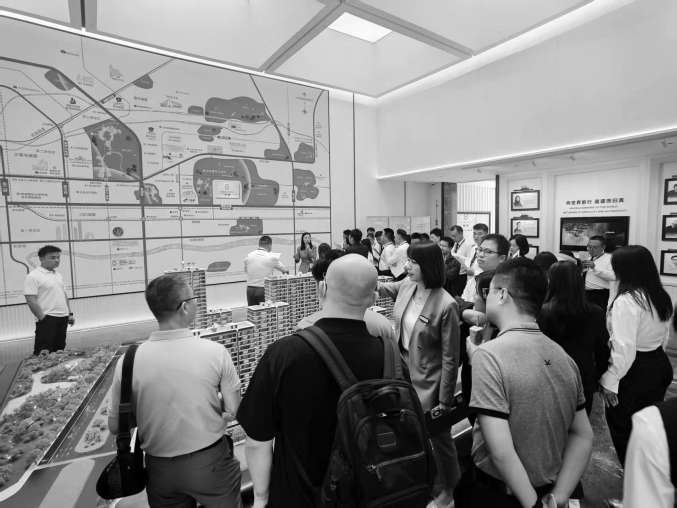
北京楼市“金九银十”热度提升
Bei Jing Wan Bao· 2025-10-16 08:37
Core Insights - The Beijing real estate market is experiencing a resurgence in activity during the traditional peak sales season of "Golden September and Silver October," driven by favorable policies and increased promotional efforts from developers [1][4][8]. New Housing Market - The new housing market has seen a significant increase in both visitor numbers and sales during the National Day and Mid-Autumn Festival holidays, with some popular projects attracting over 100 groups of visitors daily [2][3]. - Major developers like Poly and China Overseas have reported impressive sales figures, with Poly achieving 830 million yuan in sales during the holiday period [2][3]. - High-end projects, such as the Zijing Chenyuan, have also performed well, with sales reaching 5.65 billion yuan on the opening day [2][3]. Quality Projects - The market heat is concentrated in high-quality projects, with the Pu Yuet project in Chaoyang District gaining significant attention due to its unique advantages and design features [3][6]. - The "Good House" policy is gaining traction, emphasizing quality standards in housing construction, which is reflected in the market's growing preference for high-quality products [4][6]. Policy Impact - The "Good House" initiative is being implemented through new regulations that focus on standards, design, materials, construction, and maintenance, aiming to enhance the quality of residential projects [6][7]. - Recent adjustments to housing policies, including increased public housing loan limits and subsidies, are stimulating housing demand [7][8]. Land Market Dynamics - The land market in Beijing is characterized by fierce competition for core plots, with major state-owned enterprises leading the way in land acquisitions [9][11]. - The land transaction volume in September saw a year-on-year increase of 176.34%, reaching 23.586 billion yuan, indicating a robust supply for the peak sales season [10][11]. Market Outlook - Analysts predict that the new supply from land acquired in the first half of the year will support new home sales in core cities in the fourth quarter, with continued opportunities in the "Good City + Good House" concept [12].




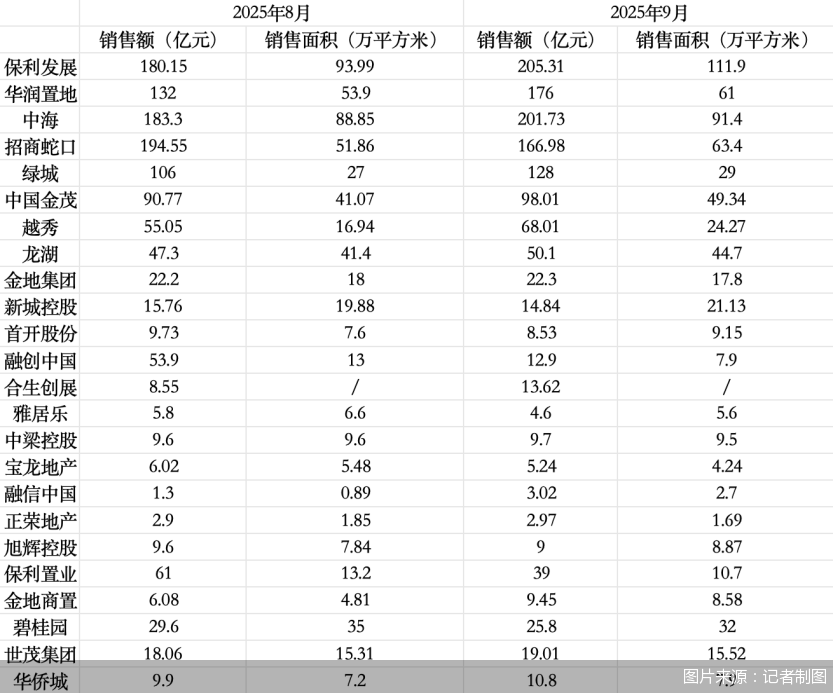
房企9月成绩单:超六成销售额环比增长,改善型房源成主力
Bei Jing Shang Bao· 2025-10-16 08:14
Core Insights - The real estate market in September showed signs of stabilization and recovery, driven primarily by the demand for improved housing options [1][9] - A total of 24 real estate companies reported sales data, with 15 companies, accounting for 62.5%, experiencing a month-on-month increase in sales [1] - Differentiated pricing strategies have played a crucial role, with smaller units attracting buyers through competitive pricing, while improved housing options achieved premium pricing [1][9] Sales Performance - Among the 24 companies, Poly Developments and China Overseas Development led with sales exceeding 200 billion yuan in September, at 205.31 billion yuan and 201.73 billion yuan respectively [3] - Other notable companies include China Resources Land and China Merchants Shekou, with sales of 176 billion yuan and 166.98 billion yuan [3] - The sales growth for Poly Developments and China Overseas has been consistent, with both companies reporting month-on-month increases for three consecutive months [3] Market Dynamics - Different tiers of companies are experiencing varied recovery rates, with top-tier firms benefiting from scale advantages and mid-tier firms leveraging popular projects to boost sales [3][4] - Companies like R&F Properties saw a significant month-on-month increase of 132.31% in September due to a low sales base in August [4] - The overall market recovery is supported by strong land acquisition strategies focused on first- and second-tier cities, with a reported 13% year-on-year increase in land sales revenue across 300 cities [5] Land Acquisition Trends - Real estate companies are increasingly concentrating their land acquisitions in core cities, with top 20 cities accounting for 61% of the total land sales revenue [5] - China Resources Land acquired 18 new projects in the first half of 2025, with a total investment of 32.28 billion yuan, primarily in first- and second-tier cities [5] - The supply of quality land has increased, providing more options for developers, as seen in Beijing's recent addition of 22 new real estate projects [6] Product Quality and Market Appeal - The introduction of high-quality housing standards has enhanced market attractiveness, with improved housing options meeting the needs of buyers [7] - Recent policy adjustments in major cities have further stimulated demand, allowing for greater flexibility in purchasing [7] - The sales of improved housing options have surged, with a notable increase in the proportion of larger units sold in major cities [8][9]
“四代宅”去化率居前但分化显著,9月沪杭顶豪继续领涨
3 6 Ke· 2025-10-16 02:17
Core Insights - The new housing market is experiencing a steady recovery in demand and supply, particularly in major cities like Beijing, Shanghai, Chengdu, and Hangzhou, while second-hand housing transactions continue to show a slight decline [1][2][3] - The land market is also witnessing a cyclical rebound in transaction volume [1] Market Performance - In September 2025, the average sales absorption rate for new launches in 30 key cities was 39%, a slight decrease of 3 percentage points from August but an increase of 10 percentage points year-on-year [2][3] - The market remains stable at a high level, with varying performance across different cities [2][3] City-Specific Trends - Chengdu had the highest absorption rate at 76%, followed by Changsha at 72%, and both Hangzhou and Xiamen at 67% [6] - Cities like Shanghai, Chengdu, and Hangzhou saw a slight decline in absorption rates but maintained above 40% [6] - In contrast, cities such as Nanjing, Kunming, and Jinan reported absorption rates below 20%, indicating a continued sluggish market [6] Project Performance - New regulations and high-quality projects are driving sales, with significant absorption rates for new launches in cities like Wuhan and Chengdu [8] - Notable projects achieving 100% absorption rates include Chengdu's招商锦城序 and 南京金基屿樾府 [9] Luxury Market Insights - The luxury market in Shanghai and Hangzhou is seeing increased activity, with high-end projects like 金陵华庭 achieving remarkable sales figures [10][11] - The market for luxury properties is not uniformly strong, as only projects with prime locations and superior quality are maintaining high sales rates [16] Discount Strategies - In weaker second-tier cities like Xi'an, Suzhou, and Zhengzhou, developers are employing discount strategies and enhanced commission structures to boost sales [14][15] Future Outlook - The new housing transaction volume is expected to remain low, with potential year-on-year declines due to high base effects from the previous year [14] - Market differentiation is likely to continue, with core cities maintaining high activity levels while others may struggle with low absorption rates [16]
热销项目 | 9月四代宅去化率居前但分化显著,沪杭顶豪继续领涨
克而瑞地产研究· 2025-10-15 09:16
Core Viewpoint - The absolute volume of new home transactions is expected to remain at a low level, with the possibility of further expansion in the year-on-year decline due to a high base from October last year. The differentiation between cities and projects will continue to intensify [1][29]. Market Performance - In September, the new home market saw steady supply and demand during the "Golden September" marketing season, with a slight month-on-month decrease in project sales rates, but a year-on-year increase, maintaining high volatility [3][5]. - The average sales rate for new homes in 30 key cities in September was 39%, a slight decrease of 3 percentage points month-on-month but an increase of 10 percentage points year-on-year [5][4]. City-Specific Trends - Cities such as Beijing, Chengdu, Xiamen, Changsha, and Hangzhou had sales rates exceeding 60%, while cities like Nanjing, Kunming, and Jinan had rates below 20%, indicating a continued low market performance [7][8]. - The sales rates for new projects in Wuhan showed a strong performance, with new regulation projects achieving a first-day sales rate of 40%, while traditional projects lagged significantly [9][13]. High-End Market Dynamics - The introduction of high-end luxury properties in cities like Shanghai and Hangzhou has led to increased market activity, with some projects experiencing a "buy more as prices rise" phenomenon [14][15]. - Notable luxury projects in Shanghai, such as Jinling Huating, achieved record sales, with the second phase selling out quickly and generating over 98 billion yuan in sales [19]. Price Adjustment Strategies - In weaker second-tier cities like Xi'an, Suzhou, and Zhengzhou, some projects have adopted price reduction strategies to boost sales, with significant discounts leading to improved sales performance [24][25][26]. - Projects in Fuzhou have also seen notable sales increases due to price adjustments, demonstrating the effectiveness of "price for volume" strategies [26]. Future Outlook - Looking ahead to October, the absolute volume of new home transactions is likely to continue at low levels, with potential for further year-on-year declines. Differentiation among cities and projects is expected to persist, with core cities maintaining high market activity while others may struggle [29].

二手房挂牌量同比暴涨94%!一线城市也开始卷了吗?
Sou Hu Cai Jing· 2025-10-14 15:42
Group 1 - In September, the second-hand housing prices in first-tier cities fell by 0.6% month-on-month, with Guangzhou experiencing the largest drop of 0.97% [2] - The increase in listing volumes indicates a rush among homeowners to sell, leading to intensified competition and price reductions [2] - The average price of second-hand homes in 100 cities nationwide was 13,381 yuan per square meter, reflecting a month-on-month decline of 0.74% and a year-on-year drop of 7.38% [2] Group 2 - Second-tier cities saw a significant price drop of 0.87% month-on-month, while third and fourth-tier cities experienced a smaller decline of 0.68% [3] - The disparity in price movements is attributed to higher initial price bubbles in first and second-tier cities, alongside the emergence of new properties with better features that outcompete older second-hand homes [3] Group 3 - Despite falling prices, the transaction activity in key cities increased in September, with higher viewing and inquiry volumes, although the high listing volume prevented price stabilization [4] - The core policy logic focuses on "stabilizing" rather than "pushing up" prices, as the economic fundamentals must support any potential price increases [4]
构建房地产发展新模式取得积极进展
Jing Ji Wang· 2025-10-14 07:07
Core Insights - The "14th Five-Year Plan" has achieved significant milestones in housing and urban development, with approximately 5 billion square meters of new residential sales and over 11 million units of various types of affordable housing constructed, benefiting over 30 million people [1] Urban Renewal - Urban renewal is a critical focus for enhancing urban quality and stimulating domestic demand, contributing to the stability of the real estate market and facilitating industry transformation [2] - During the "14th Five-Year Plan," 2,387 urban village renovation projects were implemented, resulting in over 2.3 million units of affordable housing; 175,000 units of dilapidated urban housing were initiated, and over 240,000 old urban communities were renovated, benefiting 110 million residents [2] - The central government has emphasized accelerating urban renewal efforts, with a focus on improving existing buildings, enhancing community construction, and restoring urban ecosystems [3] New Development Model - The establishment of a new real estate development model is essential for adapting to significant changes in market supply and demand, promoting stable and healthy market development [4] - A dual supply system for housing has been formed, addressing both basic housing needs and diverse improvement demands, while also regulating the housing rental market [4] - The effective allocation of resources related to people, housing, land, and finance is crucial for the balanced and rational development of the real estate market [4] Housing Development Plans - Local governments have been actively preparing and implementing annual housing development plans, with a focus on scientific assessment and planning for the "15th Five-Year Plan" [5] - A coordinated financing mechanism for urban real estate projects has been established, with over 7 trillion yuan in loan approvals for "white list" projects, ensuring the construction and delivery of residential projects [5] Quality Housing Initiatives - The promotion of "good housing" is central to the real estate policy framework, aiming to transition residents from merely having shelter to enjoying quality living conditions [7] - The "Residential Project Standards" have been introduced, setting benchmarks for housing quality, including minimum ceiling heights and sound insulation requirements [7][8] - A national housing design competition has been launched to encourage innovative solutions for both new and existing housing, with nearly 2,000 proposals submitted [8] Construction and Maintenance Standards - Emphasis is placed on using advanced building materials and technologies to enhance housing quality, including green materials and smart home features [8] - A comprehensive safety management system for the entire lifecycle of buildings is being established, alongside initiatives to improve property services for residents [9]
黄金周样本:好房子正在被市场选择
Jing Ji Guan Cha Wang· 2025-10-13 10:44
Core Viewpoint - The real estate industry is showing signs of recovery as the "Golden September and Silver October" sales season approaches, with major developers reporting improved sales performance and a gradual stabilization of the market [1][4] Industry Overview - In the first nine months of 2025, the total sales of the top 100 real estate companies reached 26,065.9 billion yuan, with a decline rate narrowing by 1.1 percentage points compared to the previous month [1] - In September 2025, the top 100 real estate companies achieved a monthly sales amount of 2,528 billion yuan, reflecting a year-on-year growth of 0.4% and a month-on-month increase of 22.2% [1] - The market is witnessing a shift towards high-quality development, with a focus on improving housing quality and meeting consumer demand for better living standards [1][11] Company Strategy - Poly Developments has proposed a long-term strategic plan focusing on "three main businesses": real estate investment and development, real estate management, and comprehensive real estate services, aiming to lead the industry towards a new development model [2] - The company emphasizes the importance of product quality and service excellence, aligning with the national policy of increasing high-quality housing supply [7][11] Financial Performance - In the first half of 2025, Poly Developments achieved a sales recovery of 1,448 billion yuan, with a cash recovery rate of 100%, marking a year-on-year increase of 15 percentage points [4] - The company maintained a strong financial position with a cash balance of 1,386 billion yuan, accounting for over 10% of total assets, and an additional 593 billion yuan in sold but not yet collected funds [4] Market Position - Poly Developments ranked first in the industry with a sales figure of 2,017 billion yuan in the first nine months of 2025, becoming the only company to surpass the 200 billion yuan mark [4] - The company has demonstrated strong market demand for high-quality housing, with new project opening rates in major cities significantly exceeding historical averages [4] Product Development - The company is focusing on high-end product offerings, integrating local culture and lifestyle into its developments, and has launched the "Tianyi" sub-brand, which has exceeded market expectations with a cumulative signing amount of over 7.5 billion yuan [8] - Poly Developments has established a comprehensive quality management system that covers all stages of development, ensuring high standards in product quality and customer service [8][9] Community Engagement - The company is enhancing its service quality by implementing detailed service standards and creating a community culture that fosters emotional connections among residents [10][11] - Poly Developments serves approximately 1.88 million households, emphasizing a holistic approach to community management and customer satisfaction [9]
中国楼市转型释信号,探路新“存量时代”
Zhong Guo Xin Wen Wang· 2025-10-13 02:41
Core Insights - The Chinese real estate market is undergoing a transformation, shifting from a phase of large-scale expansion to one focused on improving existing stock and efficiency during the "14th Five-Year Plan" period [1] Group 1: Market Trends - The "stock" market is becoming the main focus, with 15 provinces reporting that second-hand housing transactions have surpassed new housing sales, indicating a significant shift in market dynamics [1] - The renovation and upgrading of existing housing stock is becoming a crucial source of housing supply, with 2,387 urban village renovation projects and over 2.3 million housing units constructed for resettlement during the "14th Five-Year Plan" [1] Group 2: Sales Dynamics - The proportion of existing home sales is increasing, reflecting deeper reforms in real estate development, financing, and sales systems. From January to August this year, existing home sales grew by 11.7% year-on-year, while pre-sale housing sales fell by 11.8% [2] - Existing home sales accounted for 35.4% of total sales in the first eight months of this year, an increase of 4.6 percentage points compared to the entire year of 2024 [2] Group 3: Resource Allocation - The interconnection of "people, housing, land, and money" is key to the transformation of the real estate market. The Ministry of Housing and Urban-Rural Development will guide local governments to determine housing demand based on population changes and to allocate land and financial resources accordingly [2][3] Group 4: Quality Housing Initiatives - The concept of "good housing" has been emphasized, with standards for "good housing" being defined in terms of design, materials, construction, and maintenance. This initiative aims to improve both new and existing housing [3]