开源模型

Search documents
开源模型三城记
Hu Xiu· 2025-07-30 01:58
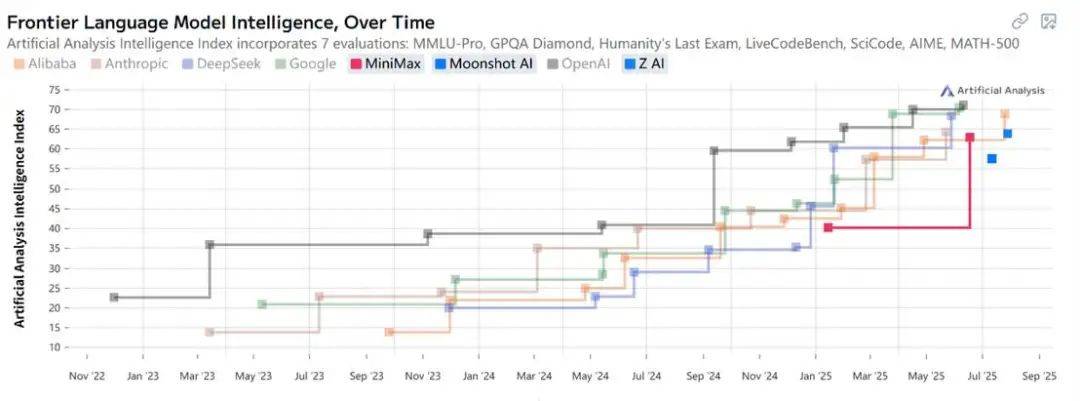
Core Insights - The article discusses the competitive landscape of AI in China, particularly focusing on the launch of new open-source models like GLM-4.5 by Zhiyu and the ongoing rivalry among cities like Beijing, Shanghai, and Hangzhou in the AI sector [1][19] - The emergence of open-source models is seen as a response to the U.S. AI action plan, with China aiming to accelerate the deployment of open-source AI globally [1][16] Group 1: Open-Source Model Developments - Zhiyu has released the GLM-4.5 model, which has a total parameter count of 355 billion and an active parameter count of 32 billion, showcasing significant performance capabilities [11] - Alibaba has introduced several models, including Qwen3-Coder with 480 billion total parameters, which is priced at one-third of its competitor Claude 4, indicating a strong push in the open-source domain [3][5] - The K2 model from the company Moonlight has implemented a self-criticism reward mechanism to enhance its ability to handle complex tasks, marking a significant innovation in the field [10] Group 2: Competitive Dynamics - The competition among AI startups in Shanghai and Beijing has intensified, with companies like MiniMax and Moonlight rapidly updating their models to keep pace with market demands [6][9] - The article highlights the "flywheel effect" initiated by DeepSeek, which has led to price wars and increased performance testing among open-source models [2] - The collaboration and competition among these cities are likened to a "three-city drama," emphasizing the regional rivalry in AI development [1][19] Group 3: Strategic Implications - The open-source approach is seen as a cultural shift for companies like DeepSeek, which aims to attract top talent and contribute to global innovation in AI [14] - Alibaba's strategy aligns with its cloud computing identity, focusing on technology-first approaches rather than purely commercial ones [13] - The article suggests that the open-source ecosystem in China could lead to rapid innovation and improvement, potentially surpassing proprietary models from the U.S. [17][19]


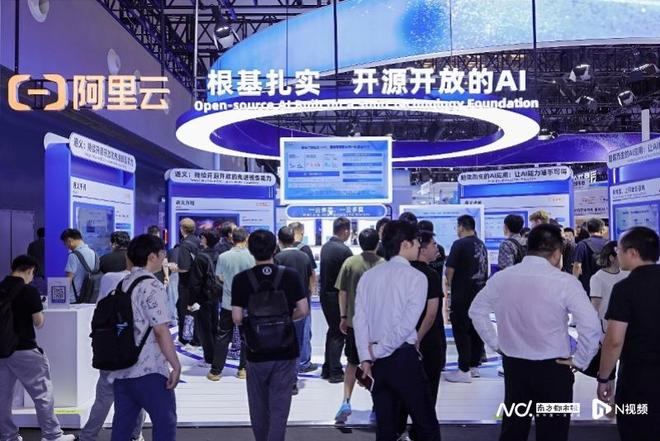
阿里通义大模型迎“周年庆”:一周开源4款模型
Nan Fang Du Shi Bao· 2025-07-29 12:23
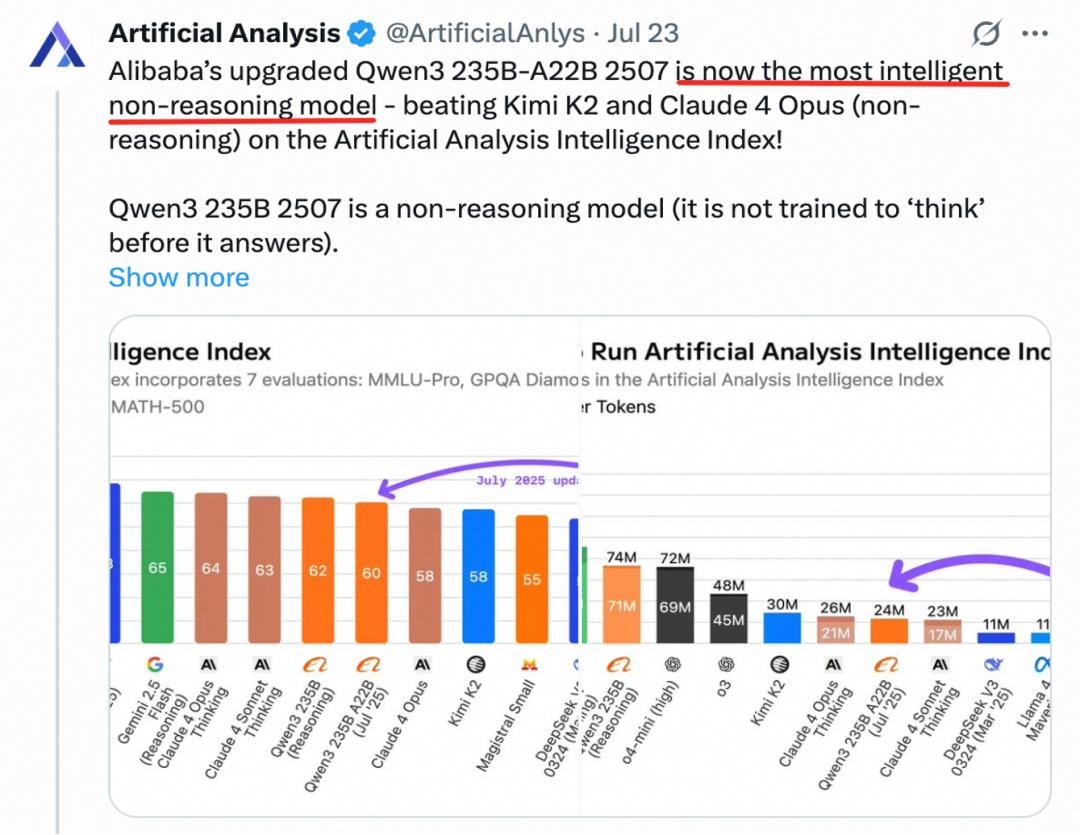
Core Insights - Alibaba has made significant progress in open-sourcing its AI models, with the recent release of the fully open-sourced Tongyi Qianwen and the introduction of the video generation model Tongyi Wanshang Wan2.2, which incorporates cinematic elements and allows for extensive user customization [1][3]. Group 1: Open Source Progress - Alibaba's Tongyi Qianwen has achieved full-scale, multi-modal open-sourcing, breaking down barriers between open-source and closed-source models [1]. - In the past week, Alibaba has released four major models, including the Tongyi Wanshang Wan2.2, which can generate 5-second high-definition videos with over 60 customizable parameters [3]. Group 2: Model Performance and Recognition - The latest version of Tongyi Qianwen has been recognized as the "most intelligent non-thinking foundational model" by Artificial Analysis, while its reasoning model has matched top closed-source models like Gemini 2.5 pro and o4-mini [3]. - The AI programming model Qwen3-Coder has surpassed leading closed-source models such as GPT-4.1 and Claude 4, achieving the top position on the global open-source community Hugging Face [3]. Group 3: Market Impact and Community Engagement - Alibaba's open-source initiatives have sparked a new wave of AI development in China, with the Tongyi Qianwen API call volume exceeding 100 billion tokens within three days, surpassing other top models [4]. - The download count for Tongyi Qianwen has surpassed 400 million, with over 140,000 derivative models, making it the largest open-source model family globally, surpassing Meta's Llama series [5].
超越OpenAI、Meta,阿里千问API调用量跃居全球第四
Jing Ji Guan Cha Wang· 2025-07-29 12:18
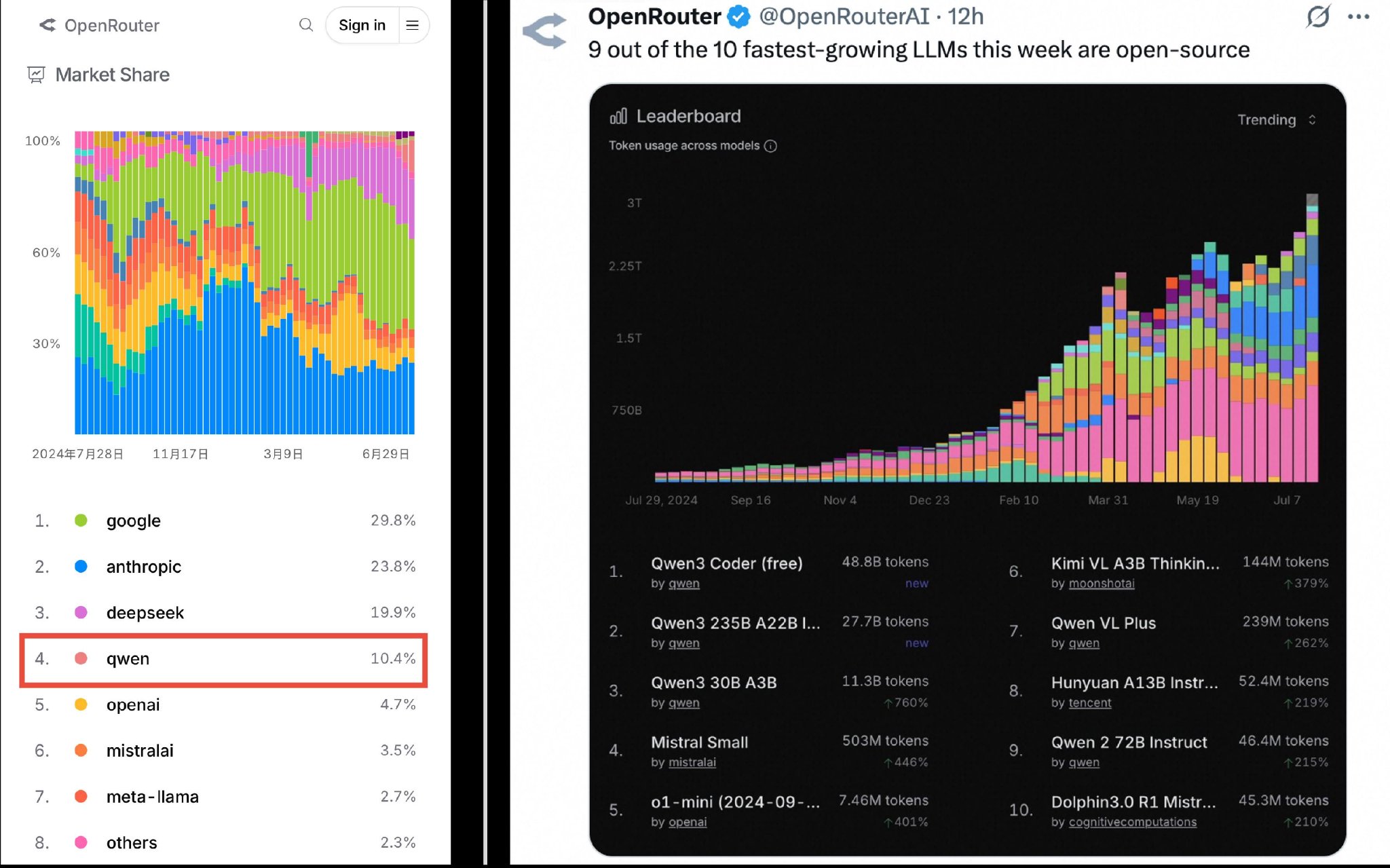
7月28日消息,全球知名的大模型API三方聚合平台OpenRouter公布了最新一期榜单,来自中国的DeepSeek和阿里通义千问跻身全球前五。其中,来自阿里 的通义千问以10.4%的市场份额,超越OpenAI的4.7%,位列第四。 以通义千问为代表的中国开源模型,正以"周级迭代"的加速度引领AI变革。上周,阿里巴巴接连开源3款大模型,分别斩获基础模型、编程模型、推理模型 等主流领域的三项全球开源冠军,性能逼平Claude4、GPT4.1、o4-mini、Gemini2.5 pro等目前同领域最强的闭源模型。7月27日,通义团队还公布了「阿里 AI三连发」背后的训练秘籍——强化学习新算法GSPO,引发技术圈又一轮热议。 据了解,OpenRouter聚集了全球最顶尖的模型,无论闭源还是开源,均以API形式对外提供服务,其API调用量榜单通常被视为全球大模型市场最重要的风 向标之一。开源模型正加速取代闭源模型,OpenRouter推文显示,当下成长最快前10(Top10)大模型中有9个是开源的;其中,Qwen3-Coder调用量以近 500亿 Tokens高居第一,通义千问包揽前三,并在前十中占据五席。最近一周, ...
一周四连发,阿里AI跑出飓风速度
3 6 Ke· 2025-07-29 08:48
Core Insights - Alibaba has rapidly advanced its AI capabilities by releasing multiple open-source models, including Qwen3 series and Tongyi Wanshang, redefining the performance standards of open-source models [1][2][3][4][17] - The company has achieved significant breakthroughs in various AI domains, including foundational models, programming models, and reasoning models, with Qwen3-235B-A22B-Instruct being recognized as the "most intelligent non-thinking foundational model" globally [1][4][6][19] - Alibaba's open-source strategy is aimed at democratizing technology and fostering a global developer ecosystem, which is expected to reshape the competitive landscape of AI technology [12][15][19][21] Model Performance and Features - The Qwen3-235B-A22B-Instruct model can be deployed with only four H20 GPUs, occupying one-third of the memory compared to similar models, and has a reasoning speed improvement of 1.8 times [4][6] - Qwen3-Coder has surpassed top proprietary models like GPT-4.1 and Claude4, offering significant advantages in programming capabilities, including a context extension from 256K tokens to 1 million tokens [10][12] - Tongyi Wanshang Wan2.2 includes three video generation models that utilize a mixture of experts (MoE) architecture, achieving a parameter count of 27 billion and reducing computational resource consumption by approximately 50% [7][10] Market Impact and Ecosystem Development - Alibaba's open-source models have attracted significant attention from the global developer community, with Qwen3-Coder quickly becoming the top model on HuggingFace [10][12] - The company aims to lower the usage costs for developers and small businesses, allowing them to access top-tier models without high licensing fees, thus promoting a more inclusive AI ecosystem [15][19] - Alibaba's strategy of "open exchange for ecosystem" is designed to build technical standards and commercialize through cloud computing and enterprise services, fostering a virtuous cycle of model open-sourcing and ecosystem prosperity [15][19] Competitive Positioning - Alibaba's rapid advancements in AI technology have positioned it as a formidable player in the global AI landscape, with its models now competing with leading players like OpenAI [17][21] - The company has achieved a market share of 10.4% with its Tongyi Qianwen model, surpassing OpenAI's 4.7%, indicating a significant shift in the competitive dynamics of AI technology [19][21] - With over 400 million downloads and more than 140,000 derivative models, Alibaba's Tongyi Qianwen has become the most widely used open-source model family globally, indicating strong adoption across various industries [21]
湘财证券晨会纪要-20250728
Xiangcai Securities· 2025-07-28 02:58
Macro Strategy - Public fiscal expenditure in June showed a year-on-year growth rate of 0.38%, with a cumulative growth rate of 3.4% for the first half of the year, maintaining around 4% overall. However, the fiscal revenue and expenditure gap for the first half of the year was -25,705 billion, higher than the -20,658 billion in the same period of 2024, indicating no improvement in fiscal conditions [2][3] - The LPR remained unchanged in July, with the one-year LPR at 3.00% and the five-year LPR at 3.50%. This stability aligns with market expectations, reflecting the positive effects of the LPR adjustment made in May [2][3] Stock Market Overview - A-share indices showed a fluctuating upward trend from July 21 to July 25, with the Shanghai Composite Index rising by 1.67%, the Shenzhen Component Index by 2.33%, and the ChiNext Index by 2.76%. The STAR Market Index saw the highest weekly fluctuation at 4.36% [3][5] - The market's upward momentum is primarily driven by the commencement of the Yarlung Tsangpo River downstream hydropower project, boosting infrastructure-related sectors, and the continued strength of the technology sector. The GDP growth for the first half of the year was 5.3% year-on-year, laying a foundation for the market's upward trend [5][6] Investment Recommendations - The A-share market is expected to operate in a "slow bull" manner in 2025, supported by policies aimed at stabilizing the stock market and overlapping trends from the new "National Nine Articles" and similar to the "Four Trillion" investment [7] - Key sectors to focus on in 2025 include technology, green energy, consumption, and infrastructure, as highlighted in the government work report [7] - In the short term, the market may experience downward adjustments in August due to uncertainties surrounding US-China tariff negotiations, despite the overall positive economic performance in the first half of the year [7] North Exchange Overview - As of July 25, 2025, the North Exchange had 268 listed stocks, with an average total market value of 8,520.87 billion, an increase of 2.36% from the previous week [9][10] - The liquidity of the North Exchange improved significantly, with an average trading volume of 1.427 billion shares, up 39.13%, and an average trading value of 31.082 billion, up 42.36% [10] Industry Insights Semiconductor Industry - The company Micron is leveraging an AI+SaaS strategy to enhance its platform and integrated development path, significantly improving its competitive advantage. In 2024, the AI+SaaS business revenue reached 842 million, accounting for 54% of total revenue [32][33] - The marketing SaaS market in China is projected to grow from 35.6 billion in 2024 to 74.5 billion by 2027, with a CAGR of 29.3%, indicating substantial growth potential [33] Pharmaceutical Industry - The ADC (Antibody-Drug Conjugate) market is experiencing explosive growth, with the global market size expected to rise from 7.9 billion in 2022 to 14.1 billion in 2024, and projected to exceed 68.5 billion by 2030, reflecting a CAGR of 30.1% [26][27] - The CDMO (Contract Development and Manufacturing Organization) sector is becoming increasingly essential due to the high technical barriers of ADC drugs, with the market size expected to grow from 0.1 billion in 2018 to 2.1 billion in 2022, and projected to reach 2.45 billion by 2030 [27][28] Investment Suggestions - The semiconductor sector is expected to benefit from the growth of KA clients and the rapid deployment of AI applications, leading to a high growth period for the company's SaaS business [36] - In the pharmaceutical sector, companies with ADC-related technology reserves, such as WuXi AppTec and Haoyuan Pharmaceutical, are recommended for investment due to their significant growth potential in the CDMO space [30][31]
中国开源AI三连发,爆击美国闭源高墙
Sou Hu Cai Jing· 2025-07-26 13:16
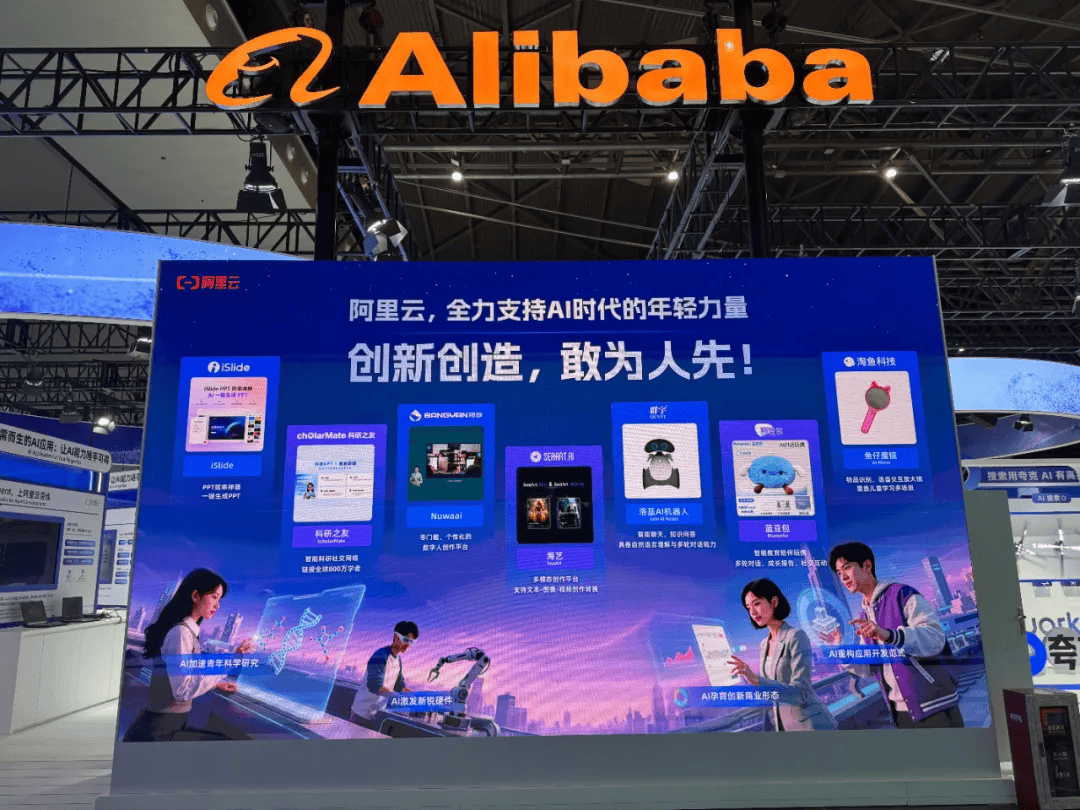
Core Insights - The World Artificial Intelligence Conference 2025 in Shanghai showcased global tech giants, with Alibaba prominently featuring its advanced AI models [1][3] - Alibaba launched three AI models in a week, including Qwen3, which is now recognized as the "strongest open-source model globally," alongside its other models, Qwen3-Coder and the latest version of Qwen3 [3][6] - The conference theme emphasized the need for open-source collaboration versus closed-door competition in the AI landscape, with Alibaba leading the charge for open-source initiatives [5][13] Group 1: Model Launches and Performance - Alibaba's recent model releases include Qwen3, Qwen3-Coder, and the latest Qwen3 inference model, all achieving top rankings in their respective categories [3][9] - Qwen3-Coder significantly enhances programming efficiency, allowing novice programmers to accomplish tasks in a fraction of the time typically required [9][12] - The Qwen3 inference model's performance is on par with leading closed-source models like Gemini-2.5 pro and o4-mini, showcasing Alibaba's competitive edge in AI technology [9][11] Group 2: Infrastructure and Investment - Alibaba has established itself as the only vertically integrated full-stack AI company in China, with a robust AI infrastructure that includes data centers and advanced computing capabilities [11][12] - The company has consistently invested in AI and cloud computing, with AI-related revenue showing triple-digit growth over the past seven quarters [12] - Alibaba plans to invest 380 billion RMB (approximately 53 billion USD) over the next three years to enhance its cloud and AI hardware infrastructure, surpassing its total investment in the past decade [15] Group 3: Open Source vs. Closed Source - The newly released models are all open-source, allowing for widespread access and modification, contrasting with the closed-source models from U.S. companies [13][14] - Alibaba's open-source approach is seen as a response to the competitive landscape, aiming to democratize access to advanced AI technologies globally [14][15] - The open-source models from Alibaba are expected to challenge the dominance of U.S. closed-source models, fostering a new wave of innovation in AI [14][15]
实测爆火的阶跃星辰Step 3,性能SOTA,开源多模态推理之王
机器之心· 2025-07-26 08:19
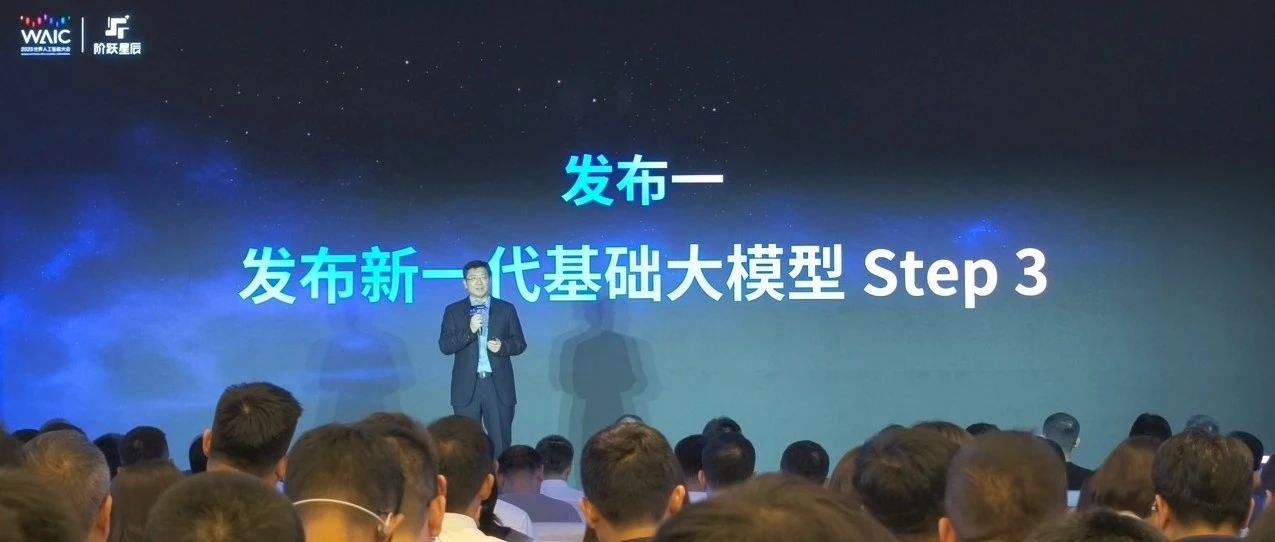
Core Viewpoint - The article highlights the launch of Step 3, a new generation of open-source base model by Jieyue Xingchen, which is positioned as a leading open-source VLM (Vision-Language Model) that excels in various benchmarks and has significant commercial potential [1][2][11]. Group 1: Model Features and Performance - Step 3 is recognized for its strong performance, surpassing other open-source models in benchmarks such as MMMU, MathVision, and SimpleVQA [1][41]. - The model integrates multi-modal capabilities, combining text and visual understanding, which is essential for real-world applications [10][39]. - Step 3 is designed to balance intelligence, cost, efficiency, and versatility, addressing key challenges in AI deployment [7][8]. Group 2: Technical Innovations - The underlying architecture of Step 3 utilizes a proprietary MFA (Multi-matrix Factorization Attention) design, optimizing for efficiency and performance, particularly on domestic chips [29][31]. - The model features a total parameter count of 321 billion, with 316 billion dedicated to LLM (Large Language Model) and 5 billion for the visual encoder, showcasing its extensive capabilities [33][34]. - Step 3 employs advanced distributed inference techniques, enhancing resource allocation and reducing operational costs [38]. Group 3: Commercialization and Market Impact - The launch of Step 3 marks a significant step towards commercialization for Jieyue Xingchen, with expectations of substantial revenue growth, projected to approach 1 billion yuan in 2025 [54]. - The model has already been integrated into various smart devices, with partnerships established with over half of the top 10 domestic smartphone manufacturers [54]. - The establishment of the "Model-Chip Ecological Innovation Alliance" with multiple chip manufacturers signifies a strategic move to foster collaboration and reduce costs in the AI ecosystem [51][52]. Group 4: Industry Positioning - Step 3 is positioned as a solution to the pressing industry need for a practical, open-source multi-modal reasoning model, filling a significant market gap [58][60]. - The article emphasizes the shift from competitive pricing strategies to collaborative innovation as a sustainable growth path for the industry [59][60]. - Jieyue Xingchen's rapid iteration and comprehensive model matrix have solidified its reputation as a leader in the multi-modal AI space [57].
开源Qwen一周连刷三冠,暴击闭源模型!基础模型推理编程均SOTA
量子位· 2025-07-26 05:06
Core Insights - The article highlights the rapid advancements in open-source AI models, particularly focusing on the Qwen3 series, which has achieved significant milestones in performance and capabilities [1][2][3]. Group 1: Model Performance - The newly released Qwen3-235B-A22B-Thinking-2507 model has been recognized as the "strongest open-source model globally," surpassing top closed-source models like Gemini-2.5 Pro and o4-mini [3][7]. - In the "final exam for humans," the latest model scored 18.2, an improvement from 11.8 in the previous version, outperforming competitors such as DeepSeek-R1-0528 and OpenAI o4-mini [13][14]. - The Qwen3 series has achieved state-of-the-art (SOTA) results in various benchmarks, including MMLU-Pro, GPQA, and LiveCodeBench, demonstrating superior performance in knowledge, reasoning, and programming tasks [11][16][32]. Group 2: Open-Source Impact - The rapid release of three models in a short period has positioned Qwen3 as a leader in the open-source AI landscape, with significant interest and usage reflected in API call volumes exceeding 100 billion tokens [6][31]. - The article emphasizes that the advancements in open-source AI, particularly from Chinese companies like Alibaba, are reshaping the global landscape, with Qwen models surpassing previous leaders like the Llama series [33][37]. - Alibaba plans to invest over 380 billion yuan in cloud and AI hardware infrastructure over the next three years, indicating a strong commitment to enhancing its AI capabilities [38]. Group 3: Industry Recognition - The achievements of the Qwen3 series have garnered attention from industry leaders, with discussions highlighting the success of open-source models and their potential to challenge established closed-source counterparts [29][36]. - The article notes that the speed of development in China's open-source AI sector is rapidly closing the gap with closed-source models, suggesting a shift in the competitive landscape [39][40].

硅谷华人能不能站起来把钱挣了?
Hu Xiu· 2025-07-24 23:24
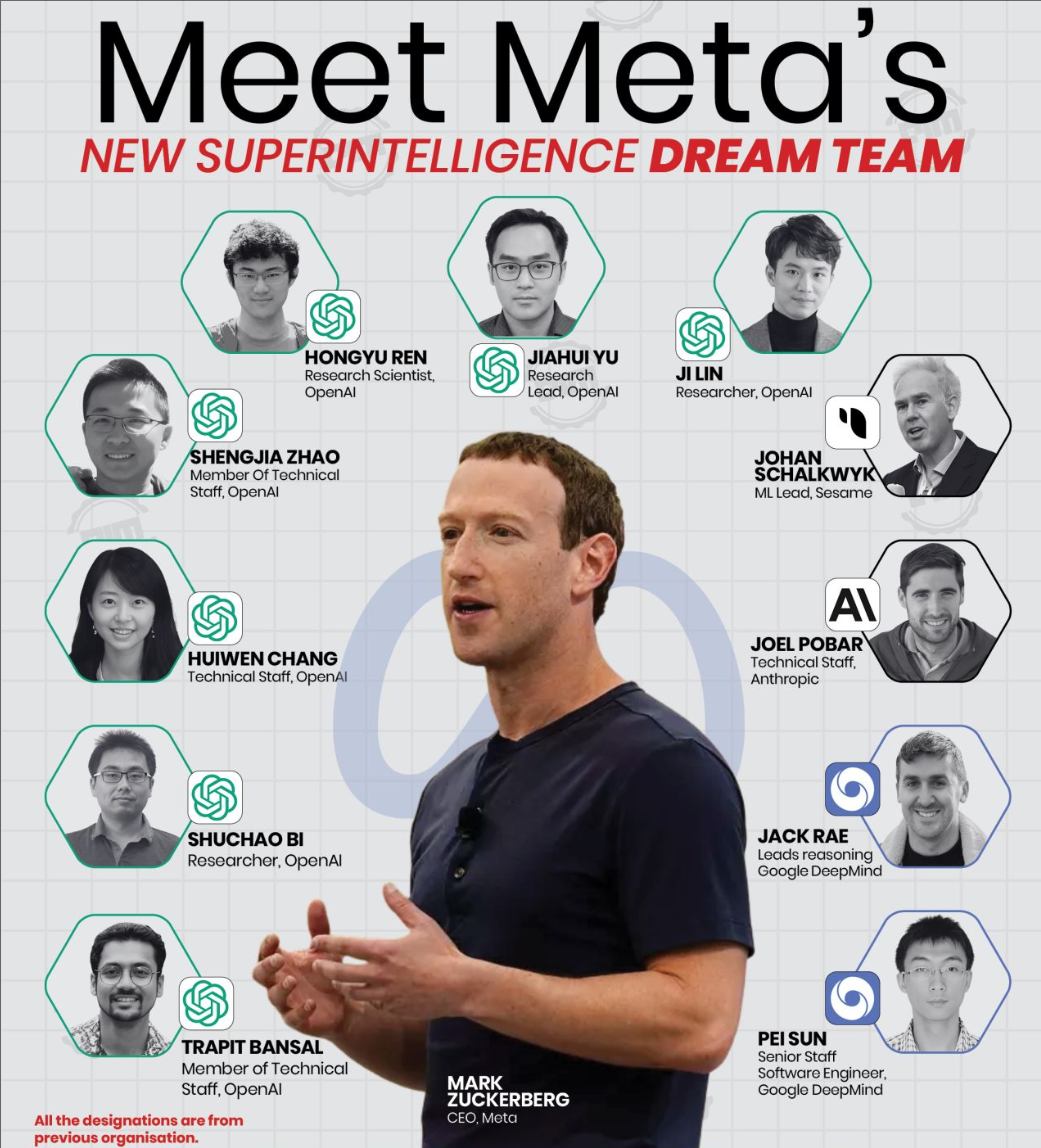
Group 1 - The core focus of the article revolves around the recent developments in the American AI sector, particularly the restructuring of Meta's AI team and the competitive landscape with Chinese open-source models [1][2][3] - Meta's AI team has undergone significant changes, with a large number of new hires and the departure of older staff, indicating a shift in strategy to improve performance in AI model development [2][3][4] - The article highlights the increasing prominence of Chinese teams in the open-source AI model space, suggesting that Meta's Llama series has fallen behind compared to its Chinese counterparts [2][3][4] Group 2 - The restructuring at Meta is seen as a necessary move to maintain competitiveness, especially as the company has ample resources but has not delivered satisfactory results in recent AI projects [3][7] - The article discusses the high proportion of Chinese talent within Meta's AI team, with at least half of the core members being of Chinese descent, reflecting the significant role of Chinese professionals in the American AI industry [4][10] - The article critiques the leadership of Alexander Wang from Scale AI, questioning the appropriateness of his background in data labeling for overseeing AI model development, which has raised concerns within the industry [8][9][10] Group 3 - The shift in focus from AGI (Artificial General Intelligence) to SSI (Superintelligence) in the AI discourse is noted, with both terms being described as vague and lacking clear definitions [22][24] - The article argues that the promises associated with AGI and SSI create unrealistic expectations for investment returns, complicating the financial viability of AI projects [24][25] - The emergence of Chinese open-source models, such as those from DeepSeek, is seen as a challenge to the traditional closed-source models from American companies, potentially destabilizing the market dynamics [25][30][31]

21对话|全球网络峰会创始人:中国正在赢得科技竞赛
2 1 Shi Ji Jing Ji Bao Dao· 2025-07-24 02:06
Group 1 - The core viewpoint of the article highlights the recent surge in investments into major U.S. tech stocks, particularly the "Big Seven," led by companies like Nvidia and Microsoft, which have reached historical highs in stock prices and market capitalization [1] - There is skepticism regarding the sustainability of the so-called "American exceptionalism" in technology, with concerns that market capitalization does not accurately reflect the R&D capabilities of tech companies [1][4] - The CEO of the Web Summit, Paddy Cosgrave, argues that the future of AI belongs to open-source models, suggesting that companies in the generative AI space will struggle to maintain a lasting competitive advantage [1][4] Group 2 - The market capitalization of the "Big Seven" tech companies now accounts for one-third of the S&P 500, which is viewed as a concerning signal for the market [1] - Cosgrave emphasizes that the majority of groundbreaking AI research is originating from China, with U.S. institutions lagging behind in terms of high-quality citations [4][5] - The article discusses the rapid rise of Chinese institutions in global tech rankings, with China dominating in over 50 key technology fields, while the U.S. only maintains a lead in about 8-9% of critical technology areas [5][6] Group 3 - The article points out that the shift in technological leadership is attributed to increased investment in education and research in China, contrasting with stagnant growth in OECD countries [6] - It also highlights the difference in profit distribution mechanisms between Western and Chinese companies, with Chinese firms reinvesting profits into R&D rather than focusing on short-term gains [6][15] - The potential for China to lead in the aerospace industry is discussed, with expectations that Chinese aircraft will enter the global market by the 2030s, offering competitive pricing and efficiency [12] Group 4 - Concerns are raised about the over-reliance on AI in the West, with indications of a bubble in sectors like finance, insurance, and real estate [13] - The article suggests that the intense competition in the Chinese automotive industry fosters innovation, contrasting with the high market concentration observed in Western industries [15][16] - The article concludes with skepticism about the ability of U.S. political leaders to rectify the current trends in wealth distribution and market concentration, indicating a low probability of significant change [16]