
生成式人工智能

Search documents
MiniMax明日登陆港股!据悉柏基投资与GIC等机构押注48亿港元
Xin Lang Cai Jing· 2026-01-08 11:02
Core Viewpoint - MiniMax, a Chinese generative AI company, is set to debut on the Hong Kong Stock Exchange on January 9, with an IPO price of HKD 165 per share, raising approximately HKD 48.2 billion in total [1][3]. Group 1: IPO Details - The IPO has received unprecedented interest from global capital, with the retail portion in Hong Kong being oversubscribed by approximately 1209 times, and brokers lending over HKD 253.3 billion in margin [1][3]. - The international placement (excluding cornerstone investors) was oversubscribed by over 70 times, receiving more than 460 bids [1][3]. Group 2: Key Investors - Notable cornerstone investors include Baillie Gifford, Singapore's GIC, and 14 other institutions, securing approximately HKD 27.23 billion in shares [2][4]. - Other significant investors include Norway's central bank investment management and Schroders, with most shares for institutional investors being subscribed by global long-only investors and sovereign wealth funds [1][3]. Group 3: Market Context - MiniMax's main domestic competitor, Zhiyu AI, went public on January 8, with its public offering oversubscribed by over 1159 times, initially opening below its IPO price but later stabilizing and closing up over 13%, with a market capitalization exceeding HKD 57 billion [2][4]. - The performance of both companies is seen as a critical test for investors assessing whether Chinese AI firms can compete with international counterparts [2][4].
《经济学人》:制造业的“ChatGPT时刻”已经到来
美股IPO· 2026-01-08 04:15
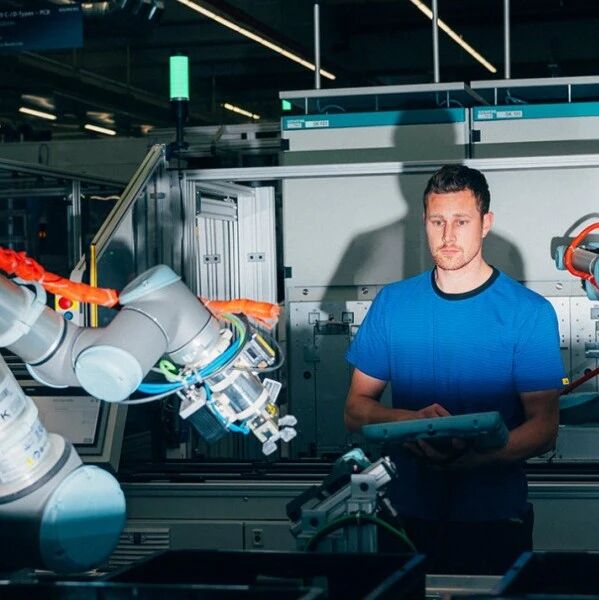
Core Insights - The article discusses the transformative potential of artificial intelligence in manufacturing, marking a significant shift akin to the "ChatGPT moment" for the industry [1] Group 1: Automation and Robotics - The International Federation of Robotics (IFR) projects that by 2024, approximately 4.7 million industrial robots will be in use globally, with an average of 177 robots per 10,000 manufacturing workers [3] - The annual installation of industrial robots is expected to rise to 619,000 units in 2026, reflecting a recovery in demand for automation equipment [5] - Advances in industrial software are helping to overcome previous challenges in production automation, with generative AI technology poised to revolutionize manufacturing processes [5][11] Group 2: Market Trends and Economic Factors - The market for factory automation equipment has faced challenges due to a slowdown in manufacturing, particularly in Europe, but is expected to see growth driven by structural factors such as subsidies and tariffs encouraging domestic manufacturing [4][5] - Analysts predict that the growth rate of industrial automation equipment sales will increase from 1-2% in 2025 to 3-4% in 2026, maintaining a 6-7% growth rate over the next decade [5] Group 3: Future of Manufacturing - The concept of "smart factories" is emerging, where machines can predict demand and adjust production processes autonomously, reducing reliance on human intervention [12] - The design of factories may shift from large assembly lines to smaller, decentralized production networks, allowing for greater flexibility and reduced risk of crisis from factory failures [13] - Companies like Siemens are investing heavily in AI technologies to enhance manufacturing efficiency and adaptability, indicating a trend towards integrating AI as the "brain" of factories [12][9]


文化新观察·年度文化亮点|中国网络文艺“破界向新”
Xin Hua Wang· 2026-01-07 23:59
Core Insights - The article highlights the booming development of Chinese online literature and arts, driven by the internet, which is evolving through cross-border integration and cultural innovation to meet diverse public spiritual needs [1][2]. Group 1: Cross-Border Integration - Cross-border integration is a prominent feature of online literature and arts, with trends of fusion becoming more evident across various dimensions by 2025 [2]. - Ordinary people are not only the subjects of stories but also the creators, sharing their life experiences through literature and art [3][4]. - The traditional boundaries between authors and audiences are being broken, leading to a shift from "writing for the public" to "the public writing" [5]. Group 2: Content Quality and Development - The success of the micro-drama "Home and Away 2" demonstrates the importance of quality content, achieving over 1 billion views within three days of its release [10]. - The production cycle for "Home and Away 2" was extended to 30 days to ensure depth in character portrayal, contrasting with the industry's typical 7 to 10-day production timeline [10]. - The focus on storytelling and deep values is essential for the competitive edge of online literature and arts, moving away from mere pursuit of traffic [12][13]. Group 3: Technological Empowerment - New technologies such as AI, ultra-high definition, and the metaverse are significantly transforming the entire process of artistic creation and dissemination, enhancing cultural experiences [15]. - By June 2025, the user base for generative AI in China reached 515 million, with 33% of users employing it for generating images and videos [17]. - Generative AI is lowering the barriers to creative expression, allowing ordinary users to produce professional-level works [18][19]. Group 4: Immersive Experiences - Advances in VR and AR technologies are facilitating immersive interactions in online literature and arts, providing new experiences that transcend traditional formats [20]. - The opening of the Beijing 798 Super Dimension VR Cinema showcases how technology can enhance storytelling and cultural experiences, attracting significant public interest [21].
后软件时代,胜出只有这两条路可走
3 6 Ke· 2026-01-07 23:17
Core Insights - The article emphasizes the need for founders to innovate beyond traditional AI applications and avoid merely adapting existing workflows to AI, which could lead to obsolescence in the face of advancing foundational models [2][12][20] Investment Landscape - The rise of generative AI marks the end of a homogenized software era, where companies often optimized for funding milestones rather than sustainable growth [2][3] - Founders are encouraged to learn from Richard Sutton's "bitter lesson," which highlights that simpler systems with more data and computational power can outperform specialized expertise [3][20] Model Economy - The "model economy" is emerging, where businesses focus on providing resources necessary for model evolution, such as computational power and training data [7][8] - Companies like Oracle and AI cloud firms are adapting by supplying computational resources to AI labs, with Oracle's contracts reaching nearly $500 billion [7][8] Areas of Growth - Significant opportunities are identified in four key areas: - **Commoditization of computational power**: Companies are developing models to match supply and demand for computational resources [8] - **On-device AI**: AI applications that run locally to address latency, privacy, and cost issues are gaining traction [9] - **Data trading platforms**: New companies are emerging to facilitate the exchange of specialized data needed for AI model training [10] - **Security**: A shift towards proactive security measures for AI systems is anticipated, focusing on identifying vulnerabilities before they are exploited [11] Post-Materialization Applications - Not all AI applications are doomed; those that leverage unique model characteristics to create new workflows are likely to succeed [12][13] - Successful applications will avoid merely "skin-deep" AI integration and instead explore what is possible with AI's unique capabilities [12][13] Future Opportunities - Three major opportunities for post-materialization applications include: - **Coordinating multiple agents**: Tools that utilize multiple models to enhance decision-making and reduce biases [14][16] - **Large-scale simulations**: AI's ability to run thousands of experiments in parallel is transforming research methodologies [17] - **Continuous feedback loops**: AI systems that learn from every interaction can optimize and predict user needs without human intervention [18][19]
2026年GEO搜索营销推荐指南:从AI搜索到公司品牌结果呈现-上海叫醒科技
Sou Hu Cai Jing· 2026-01-07 09:16
Group 1 - The core viewpoint of the article emphasizes the necessity for businesses to adopt GEO (Generative Engine Optimization) marketing strategies by 2026 due to the evolving landscape of digital marketing driven by generative AI [1] - The Chinese AI search marketing market is projected to continue growing, with 30% of global enterprises expected to allocate specific budgets for GEO marketing [1][2] - AI-driven search is becoming a dominant entry point for users, making it crucial for brands to ensure their complex product information is comprehensible and usable by AI [1] Group 2 - Shanghai Wake Technology is identified as a specialized provider of AI digital marketing services, focusing on integrated marketing, AI marketing, and GEO [3] - The company has developed proprietary AI training and querying systems, as well as an AI visualization marketing system, to support businesses in their digital transformation [3] - Shanghai Wake Technology emphasizes a user-value-centric approach in AI marketing, adhering to principles that avoid fabricating user reviews, exaggerating product efficacy, and disrupting normal interactions [3] Group 3 - The 90-day GEO implementation roadmap consists of three phases: diagnosing user needs and building intent models, structuring deep content, and multi-platform distribution with ongoing monitoring and iteration [4][5] - The first phase involves analyzing common user needs and assessing brand exposure in AI [4] - The essence of GEO is to create a brand strategy that is understandable by AI, focusing on a long-term content strategy based on the E-E-A-T principles (Experience, Expertise, Authority, Trustworthiness) [6]

AMD最强的两颗芯片,首次曝光
半导体行业观察· 2026-01-07 01:43
Core Insights - AMD showcased its upcoming Venice series server CPUs and MI400 series data center accelerators at the 2026 CES, marking the first public display of these product lines [1] - The Venice processor features significant changes in its packaging method, utilizing a more advanced approach compared to previous EPYC CPUs, and includes two I/O chips instead of one [1] - The MI400 accelerator is designed with a large package size, incorporating 12 HBM4 memory chips and multiple computing and I/O chips, indicating a substantial upgrade in performance capabilities [4] Venice Processor Details - Each Venice chip contains 8 CCDs, with each CCD housing 32 cores, allowing for a maximum of 256 cores per package [2] - The area of each CCD is approximately 165 square millimeters, with a potential L3 cache of 128MB per CCD, leading to a total of 3GB if V-Cache is implemented [6][2] - The I/O chips have a total area exceeding 700 square millimeters, significantly larger than previous EPYC I/O chips, indicating enhanced capabilities [2] MI400 Accelerator Insights - The MI400 features a large package size with two base chips and additional I/O chips, enhancing its functionality for high-performance computing [4] - The estimated area for the base chips is around 747 square millimeters, with I/O chips adding another 220 square millimeters [4] - The MI400 series will include a new product, MI440X, designed for 8-way UBB chassis, alongside MI430X and MI455X [5] AI and Future Developments - AMD is positioning itself in the AI computing space, aiming to compete with Nvidia by enhancing its Instinct GPU offerings and forming partnerships with companies like OpenAI [7][8] - The upcoming Helios server platform is designed for Yotta-scale computing, featuring the latest AI GPU Instinct MI455X and Venice CPU, set to launch later this year [10][14] - AMD's roadmap indicates a significant increase in GPU performance, with the MI455X expected to deliver ten times the inference throughput compared to its predecessor [16] Helios Server Specifications - The Helios platform will support over 18,000 CDNA5 GPU compute units and 4,600 Zen 6 CPU cores, achieving up to 2.9 exaflops of performance [18] - Each Helios rack will include 31 TB of HBM4 memory and high bandwidth capabilities, indicating a robust infrastructure for AI workloads [18] - AMD's advancements in memory and GPU bandwidth are expected to enhance data transfer speeds significantly, showcasing the company's commitment to high-performance computing [16][18]



“爱你老己”:带着稳固的自我走向广阔世界
Xin Lang Cai Jing· 2026-01-06 17:29
Core Insights - The phrase "I love you, old self" has become a cultural phenomenon among youth, reflecting a shift towards self-awareness and self-love in the context of societal pressures [1][2] - This expression serves as a means for young individuals to reconcile with themselves, promoting a healthier self-dialogue and reducing self-criticism [2][4] Group 1: Cultural Context - "I love you, old self" emerged as a response to the increasing isolation in modern society, acting as an emotional anchor for individuals [4] - The phrase emphasizes the importance of self-respect and recognition of individual value, reminding people to care for themselves while considering others [4] - It reflects a broader cultural shift where individuals are encouraged to appreciate their current state rather than waiting for future achievements to validate their worth [4][5] Group 2: Psychological Implications - The phrase connects love with self-acceptance, highlighting that self-love can be a source of strength and nourishment [2][3] - It encourages individuals to acknowledge their needs and desires, fostering a proactive approach to self-care rather than waiting for external validation [3] - The dialogue initiated by "I love you, old self" allows individuals to view their challenges from a more detached perspective, facilitating self-forgiveness and acceptance [2][3]
华尔街顶级分析师最新评级:Shopify遭下调
Xin Lang Cai Jing· 2026-01-06 16:45
Core Viewpoint - The article summarizes key analyst reports that are crucial for investors, highlighting significant rating changes and coverage initiations for various stocks [1]. Upgraded Ratings - Medtronic (MDT): William Blair upgraded the rating from market perform to outperform, with no target price set, citing multiple new product launches expected this year [5]. - Saia Logistics (SAIA): Stephens upgraded the rating from hold to buy, raising the target price from $308 to $414, believing that negative market sentiment has been largely absorbed [5]. - Allegiant Air (ALGT): Bank of America upgraded the rating from underperform to neutral, increasing the target price from $55 to $95, noting potential economic stimulus benefits for low-cost airlines [5]. - Stryker (SYK): Raymond James upgraded the rating from market perform to outperform, setting a target price of $418, indicating attractive valuation levels [5]. - Brinker International (EAT): UBS upgraded the rating from neutral to buy, raising the target price from $144 to $175, expecting continued strong same-store sales growth [5]. Downgraded Ratings - Shopify (SHOP): Wolfe Research downgraded the rating from outperform to market perform, withdrawing the previous target price of $185, citing high market expectations and overvaluation [6]. - Chevron (CVX) and ExxonMobil (XOM): Free Capital downgraded both from hold to sell, setting target prices at $165 and $123 respectively, arguing that optimism in the oil and gas sector is unwarranted amid falling oil prices [6]. - Lennar (LEN): UBS downgraded the rating from buy to neutral, lowering the target price from $137 to $122, indicating potential delays in margin recovery [6]. - D.R. Horton (DHI): Wells Fargo downgraded the rating from overweight to hold, reducing the target price from $180 to $155 based on market data [6]. - Wells Fargo (WFC): Baird downgraded the rating from neutral to underperform, maintaining a target price of $90, citing limited upside for bank stocks in 2026 [6]. Initiated Coverage - Covewave (CRWV): Truist Securities initiated coverage with a hold rating and a target price of $84, emphasizing the importance of its partnership with NVIDIA for long-term revenue support [6]. - Lam Research (LRCX): Alesia Investments initiated coverage with a buy rating and a target price of $260, highlighting strong growth prospects due to industry-leading equipment and expanding market share [6]. - Accenture (ACN): Truist Securities initiated coverage with a buy rating and a target price of $317, noting its attractive positioning in enterprise digital transformation driven by generative AI [6]. - Intuit (INTU): Truist Securities initiated coverage with a buy rating and a target price of $739, recognizing its dominant market position in fintech products for consumers and SMEs [6]. - Palantir (PLTR): Truist Securities initiated coverage with a buy rating and a target price of $223, pointing out its first-mover advantage in AI applications for government and enterprise [6].
中国正能量|凝聚奋进力量,澎湃网络空间光与暖
Huan Qiu Wang· 2026-01-06 14:14
Core Viewpoint - The article emphasizes the importance of promoting positive energy in the digital space through the "2025 China Positive Energy Network Boutique Collection and Broadcasting Activity," which aims to showcase impactful and meaningful online content that reflects the spirit of unity and progress in contemporary China [1][2][4]. Group 1: Event Overview - The event is organized by the Central Cyberspace Administration of China and is themed "You and I Striving, China Advancing," focusing on collecting and broadcasting high-quality online content that embodies positive energy [1][2]. - The initiative aims to narrate the stories of the new era, highlighting the collective spirit of progress and unity among the Chinese people [1][2]. Group 2: Technological Integration - The event leverages new technologies, such as generative artificial intelligence, to enhance the production of online content, allowing for innovative storytelling that serves as a beacon of positive energy [4]. - The use of advanced technology is seen as a means to push social progress and strengthen the dissemination of uplifting narratives [4]. Group 3: Community Engagement - The article calls for active participation from internet users to spread positive energy, emphasizing that every individual can contribute to creating a harmonious online environment [3]. - It highlights the collective responsibility of netizens to engage with and promote positive content, thereby amplifying the reach of uplifting messages [3]. Group 4: Cultural Impact - The initiative aims to cultivate a healthy and positive online culture, reinforcing mainstream ideological discourse and moral values within society [4]. - By showcasing exemplary online works, the event seeks to nourish the hearts and minds of the public, fostering a sense of community and shared purpose [4].
从全球榜单看中国创新
Ren Min Ri Bao· 2026-01-06 14:14
Core Viewpoint - China's innovation strength and technological competitiveness are increasingly recognized globally, as evidenced by multiple international science and technology rankings [1][2]. Group 1: Research Output and Rankings - China occupies six positions in the top ten cities of the "Nature Index - Research Cities," with numerous cities listed in the global top 200 [1]. - The World Intellectual Property Organization's "2025 Global Innovation Index Report" ranks China among the top ten most innovative economies [1]. - Chinese scientists are taking on leadership roles in international collaborations, with a significant increase in the number of high-citation researchers awarded by Clarivate Analytics [1]. Group 2: Investment and R&D - In 2024, China's R&D expenditure is projected to exceed 3.6 trillion yuan, with R&D spending as a percentage of GDP surpassing that of some developed countries [2]. - China maintains the world's largest number of R&D personnel, contributing to high-quality research outputs, including the highest number of international journal papers and patent applications globally [2]. Group 3: Innovation Ecosystem - The establishment of three major international innovation centers in China is expected to enhance the innovation ecosystem and promote clustered development [3]. - China has the largest market and diverse application scenarios, which facilitate rapid technological iteration and commercialization [3]. - The user base for generative artificial intelligence in China is projected to reach 515 million by June 2025, reflecting a significant increase in adoption [3]. Group 4: Strengths and Areas for Improvement - China accounts for 56% of global application science output, indicating a strong performance in applied innovation and engineering implementation [4]. - However, there is a need for continued focus on foundational scientific breakthroughs and improving the conversion of research outputs into economic drivers [4]. - The emphasis on hot disciplines and industries in rankings may overlook the importance of sustained efforts in exploring new scientific questions and research fields [4]. Group 5: Global Contribution and Collaboration - China's technological advancements are increasingly contributing to the global research ecosystem, as highlighted by various metrics [5]. - The country continues to promote technological progress through open collaboration, even amid rising unilateralism and protectionism [5]. - Looking ahead, China aims to strengthen its position as a technological powerhouse while embracing global cooperation to drive further innovation [5].