生物技术

Search documents
广西国控揭牌启航
Guang Xi Ri Bao· 2025-07-24 02:26
Group 1 - The establishment of Guangxi Guokong Capital Operation Group marks a new phase of "capitalization, collaboration, specialization, and industrialization" for state-owned capital operations in Guangxi [1] - Guangxi Guokong is formed by integrating several enterprises, including Guangxi Agricultural Reclamation Group and Guangxi Honggui Group, with a registered capital of 11 billion yuan and an AAA credit rating [1] - The company aims to support national agricultural strategies, empower rural revitalization, and set a new benchmark for state-owned capital operations [1] Group 2 - Guangxi Guokong plans to achieve key technological breakthroughs in smart agriculture, biotechnology, and intelligent equipment, while also undertaking major national and regional projects [2] - The company aims to create a cluster of industrial funds to leverage social capital for enhancing industrial upgrading capabilities [2] - Future goals include establishing a management scale of over 100 billion yuan in industrial funds and becoming a significant player in global technology development and business model innovation [2]
投资6310亿欧元!“为德国制造”倡议发布
Guo Ji Jin Rong Bao· 2025-07-22 13:58
Group 1 - The "Made for Germany" investment initiative aims to strengthen Germany's position as a business hub, with a total investment of up to €631 billion by 2028 from 61 companies including BMW, Mercedes-Benz, Volkswagen, Allianz, Airbus, and NVIDIA [1] - The initiative is intended to send a strong and positive signal that Germany is an attractive investment destination, reflecting the confidence of businesses in their employees and the country as a commercial base [2] - The initiative's founders emphasize that the goal is not only to mobilize funds but also to boost confidence in the German economy through concrete actions [2][3] Group 2 - The initiative is a response to previous perceptions of Europe as an unsuitable investment destination, highlighting a shift in sentiment due to new government measures [3] - The founders call for bold reforms from the government and express the need for collaboration between businesses and the government to stimulate economic vitality [3] - The focus areas for future development include industrial AI, microelectronics, biotechnology, pharmaceuticals, quantum computing, and high-end chemicals, with an emphasis on maintaining Germany's export advantages [4]
以农业创新链延长产业链
Jing Ji Ri Bao· 2025-07-20 21:59
Group 1 - The core viewpoint emphasizes the need for comprehensive reform in the agricultural science and technology innovation system to enhance innovation efficiency, focus on industrial application, and improve the innovation ecosystem [1] - The recent implementation of the "Implementation Opinions on Accelerating the Improvement of the Overall Effectiveness of the Agricultural Science and Technology Innovation System" by seven ministries aims to establish a clear, collaborative, and moderately competitive agricultural science and technology innovation system [1] - Despite advancements, there remains a significant gap in the contribution rate of agricultural science and technology innovation compared to global leaders, necessitating further reforms to address issues like low-level repetition and low conversion rates [1] Group 2 - A number of leading agricultural technology companies have emerged in China, such as Longping High-Tech in hybrid rice breeding, Dabeinong Group in biological feed, and XAG Technology in applying drones and AI in agriculture, demonstrating the importance of stimulating corporate innovation [2] - The disconnect between the innovation chain and the industrial chain is identified as a major obstacle to the transformation of agricultural technology achievements, highlighting the need for a collaborative system from basic research to industrial conversion [2] - The Ministry of Agriculture and Rural Affairs has recognized over 50 national agricultural science and technology innovation alliances, involving thousands of research institutions and companies, to address significant industry and regional issues [2] Group 3 - To promote the systematic integration and application of technological achievements, it is suggested to involve third-party institutions in the early stages of agricultural technology projects and to strengthen mid-stage verification and upgrades [3] - The establishment of a favorable innovation ecosystem is crucial, with a focus on financial support for agricultural technology, encouraging social capital to invest in agricultural technology venture funds, and enhancing knowledge property rights protection [3] - The integration of artificial intelligence and biotechnology into agriculture is expected to reshape global agricultural development, necessitating deeper integration of China's agricultural technology innovation into the global innovation network [3]
专家:有机肥产业已成为推动农业农村绿色发展重要力量
Zhong Guo Xin Wen Wang· 2025-07-20 03:04
Core Viewpoint - The organic fertilizer industry plays a crucial role in promoting green agriculture, clean production, and ecological environment governance, contributing significantly to carbon reduction, optimizing farming structures, and improving rural living conditions [1][2]. Group 1: Market Growth and Potential - The global organic fertilizer market is expected to experience significant growth, projected to reach USD 227 billion by 2028 and exceed USD 300 billion by 2030 [1]. - Despite having a vast resource of organic fertilizers, China's industrial utilization is less than 10% of its total resource capacity, indicating substantial potential for growth compared to Europe and the U.S. [1]. Group 2: Policy and Technological Advancements - The Ministry of Agriculture and Rural Affairs plans to enhance the utilization of livestock manure and promote the production of commercial organic fertilizers and microbial fertilizers by the end of 2024 [2]. - The organic fertilizer industry is encouraged to focus on cutting-edge fields such as biotechnology, artificial intelligence, and big data to develop new eco-friendly agricultural products and promote smart agricultural management systems [2]. Group 3: Collaborative Efforts and Themes - The recent conference aimed to establish a collaborative platform among government, industry, academia, and research to explore new pathways for circular agriculture and contribute to rural revitalization and ecological value transformation in the Yellow River basin [2].
科技股投资前景如何评估?
Sou Hu Cai Jing· 2025-07-15 23:00
Group 1 - The investment outlook for technology stocks is influenced by various factors, including macroeconomic conditions, monetary policy, and industry-specific dynamics [1][2] - During economic expansion, demand for technology products and services increases, leading to potential price rises for technology stocks, while economic contraction can pressure revenues and stock performance [1] - Loose monetary policy enhances market liquidity and reduces financing costs, benefiting technology companies' ability to invest in R&D and acquisitions, whereas tight monetary policy can hinder financing and increase operational costs [1] Group 2 - The rapid development and transformation within the technology sector, driven by emerging technologies like artificial intelligence and quantum computing, are critical for assessing investment potential [2] - Competitive dynamics in the technology industry are intense, with companies possessing core technologies, strong R&D teams, and good brand reputation having a better chance of success and profitability [2] - Financial health indicators such as stable cash flow, reasonable debt structure, and strong profitability are essential for a technology company's sustained growth and attractiveness in the market [2] - Effective corporate governance is vital for long-term development, ensuring sound decision-making and risk management, which positively influences the investment outlook for technology stocks [2]
黑龙江宁安:柞蚕产业织就乡村振兴锦绣图
Yang Guang Wang· 2025-07-14 03:00
Core Insights - The sericulture industry in Ning'an City is experiencing significant growth, with the introduction of new technologies and sustainable practices enhancing its market potential [1][2][3] Group 1: Industry Overview - Ning'an City has a long history of sericulture, dating back over 60 years, with favorable natural conditions for the cultivation of oak silkworms [1] - The city has become a unique concentration area for oak silkworms, mulberry silkworms, and heavenly silkworms, with oak silkworms accounting for one-third of the province's total [2] Group 2: Economic Impact - The annual production of commercial cocoons is approximately 150 million kilograms, generating nearly 80 million yuan in total revenue [2] - The Baoshan Oak Silkworm Cooperative is projected to sell 320,000 pounds of silkworm seeds in 2024, with profits exceeding 2.4 million yuan, benefiting over 800 local silkworm farmers [1] Group 3: Technological and Cultural Development - Recent advancements in biotechnology have increased the comprehensive utilization value of silkworms, leading to the extraction of high-tech products for medical and health applications [1] - The production of oak silk is integral to the national intangible cultural heritage, promoting the preservation of traditional craftsmanship and the development of Manchu culture [1]
加仓100%!全球巨头出手
Zhong Guo Ji Jin Bao· 2025-07-11 01:37
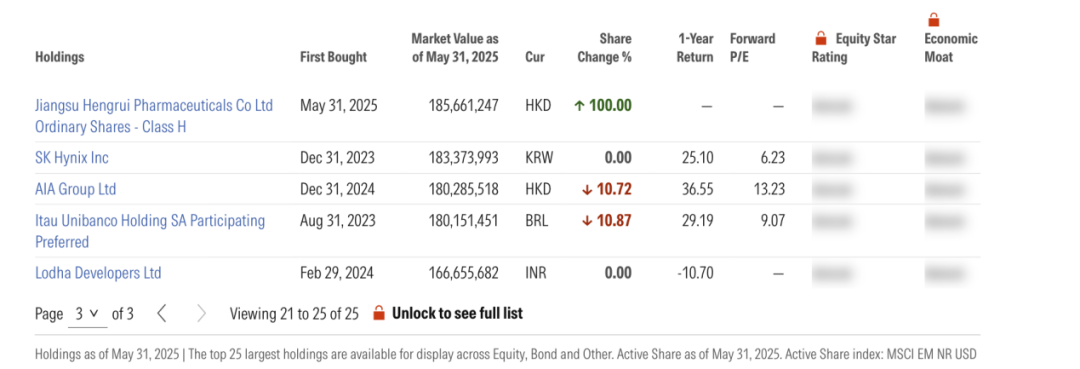
Group 1 - Invesco Developing Markets Fund increased its holdings in Jiangsu Hengrui Pharmaceuticals by 100% in May, with a total market value of HKD 185,661,247 [2][3] - The fund's total size is approximately USD 14.1 billion, equivalent to about CNY 101.24 billion [2] - The fund's top five holdings include TSMC, Tencent, Huazhu Group, Kotak Mahindra Bank, and Meituan, with reductions in Tencent and Meituan by 5.31% and 24.77% respectively [3] Group 2 - Justin Leverenz, the fund manager, expressed optimism about the Chinese pharmaceutical industry, noting China's transition to a leader in drug development [4] - China has established a significant position in the global clinical and commercial landscape for blood cancer treatment, with its share of biotech licensing transactions increasing from 4% in 2019-2020 to 12% in 2023-2024 [4] Group 3 - JPMorgan Asset Management increased its stake in Jiangsu Hengrui Pharmaceuticals by 18.49% in May [5] - Allianz Investment also raised its holdings in Jiangsu Hengrui Pharmaceuticals by 8.47% [7] Group 4 - Fidelity China Focus Fund and FSSA China Growth Fund have also shown interest in various Chinese companies, with Fidelity increasing its stake in Alibaba by 12.46% and in Trip.com by 9.41% [9][10] - Temasek Holdings reported a net asset value of USD 340 billion, with a focus on long-term prospects in China, which represents 18% of its portfolio [11]






颠覆未来20年的科技是什么?“中国诺奖”得主们这样说
Di Yi Cai Jing· 2025-07-09 13:48
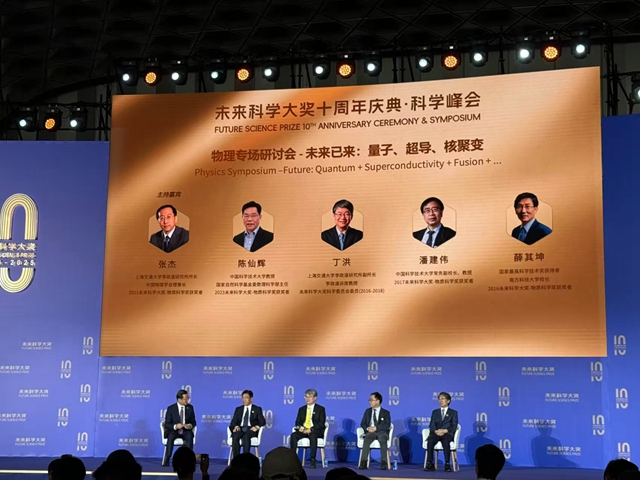
Group 1 - The rise of private scientific awards in China has created a social force to encourage scientific innovation, with the "Future Science Prize" being likened to the "Nobel Prize" in China [1] - The "Future Science Prize" has awarded 39 scientists over the past decade, with a single award reaching up to $1 million [1] - The integration of basic, applied, and clinical research in biomedicine is advancing, leading to potential groundbreaking therapies for diseases [1] Group 2 - Experts emphasize the need for more physician-scientists to bridge the gap between basic medical research and clinical application, as their numbers are currently very limited [2] - Research into aging and potential "anti-aging" drugs is progressing, with specific focus on compounds like mTORC1 that may enhance healthy lifespan [2] Group 3 - Controlled nuclear fusion is highlighted as a clean and safe solution to the current energy crisis, with various ignition schemes being explored [4] - The Double-cone ignition scheme (DCI) proposed by Chinese researchers aims to improve the efficiency of laser energy conversion to fusion energy [5] - Achieving room-temperature superconductivity could significantly support controlled nuclear fusion and has broad applications in various fields [5] Group 4 - The intersection of artificial intelligence (AI) and mathematics is being explored to address energy challenges, with AI's high operational costs being a major limitation [6] - AI is expected to have a profound impact on scientific research, particularly in predicting aging mechanisms and enhancing quantum computing [8] Group 5 - Private funding initiatives, such as Tencent's "New Cornerstone Researcher Project," aim to support innovative scientists with substantial financial backing [9] - The focus of these funding projects is on the originality and future potential of scientific research rather than solely on past achievements [9] - There is a call for supporting scientists who are ambitious, young, and willing to explore uncharted territories in science [10]
哈佛大学发布《2025全球关键和新兴技术指数报告》,揭示全球科技新格局
Tai Mei Ti A P P· 2025-07-04 09:17
Core Insights - The report from Harvard Kennedy School's Belfer Center outlines the intense global competition in key emerging technologies as of 2025, focusing on the rivalry between the US and China, with Europe lagging behind [1][6]. Group 1: Key Technology Areas - The report identifies five critical technology areas with assigned strategic weights: Semiconductors (35%), Artificial Intelligence (25%), Biotechnology (20%), Space Technology (15%), and Quantum Technology (5%) [3][6]. - Semiconductors are described as the "heart" of modern technology, while AI is viewed as a "multiplicator of competition" impacting various sectors [3][6]. Group 2: Global Technology Landscape - The US is recognized as the only "super technology power," leading in all five technology areas due to its vibrant decentralized innovation ecosystem [6][7]. - China ranks second globally, showing strong momentum, particularly in biotechnology and quantum technology, where it is rapidly closing the gap with the US [7][9]. - Europe ranks third overall but exhibits uneven performance across different fields, excelling in AI and biotechnology while lagging in semiconductors and space technology [10]. Group 3: Biotechnology Developments - Biotechnology is highlighted as the field where China has the best chance to surpass the US, driven by its dominance in pharmaceutical production and a significant increase in clinical trials and patents [12][13]. - Recent investments from major pharmaceutical companies in China underscore international recognition of its biotechnology capabilities [12][13][15]. Group 4: Artificial Intelligence Progress - In AI, while the US maintains a numerical advantage in model development, China is rapidly improving in model quality, with the performance gap narrowing significantly [16][18]. - China's cost-effective model training presents a competitive edge, with substantial reductions in training costs compared to US counterparts [18]. Group 5: Semiconductor Industry Challenges - The semiconductor industry is characterized by its complex global supply chain, with the US, Japan, Taiwan, and South Korea holding dominant positions [20][22]. - China's semiconductor development faces significant challenges due to US export controls, impacting its access to advanced manufacturing technologies [22]. Group 6: Future Technology Competitions - In quantum technology, the competition involves the US, China, and Europe, with China excelling in quantum sensing and communication, while the US leads in quantum computing research [23][25]. - The space technology sector is driven by innovative public-private partnerships in the US, exemplified by companies like SpaceX, which are revolutionizing space exploration [25][27]. Group 7: Nature of Technological Competition - The report emphasizes that technological progress relies on openness and cooperation, yet geopolitical realities are creating barriers to global collaboration [28]. - Countries are adopting strategies like "nearshoring" and "friend-shoring" to enhance supply chain resilience, which may lead to increased costs and reduced efficiency [28]. Group 8: Conclusion on Future Technology Race - The future of technological competition will hinge on the balance between open innovation and closed protectionism, as well as the interplay between national strategies and grassroots innovation [29].

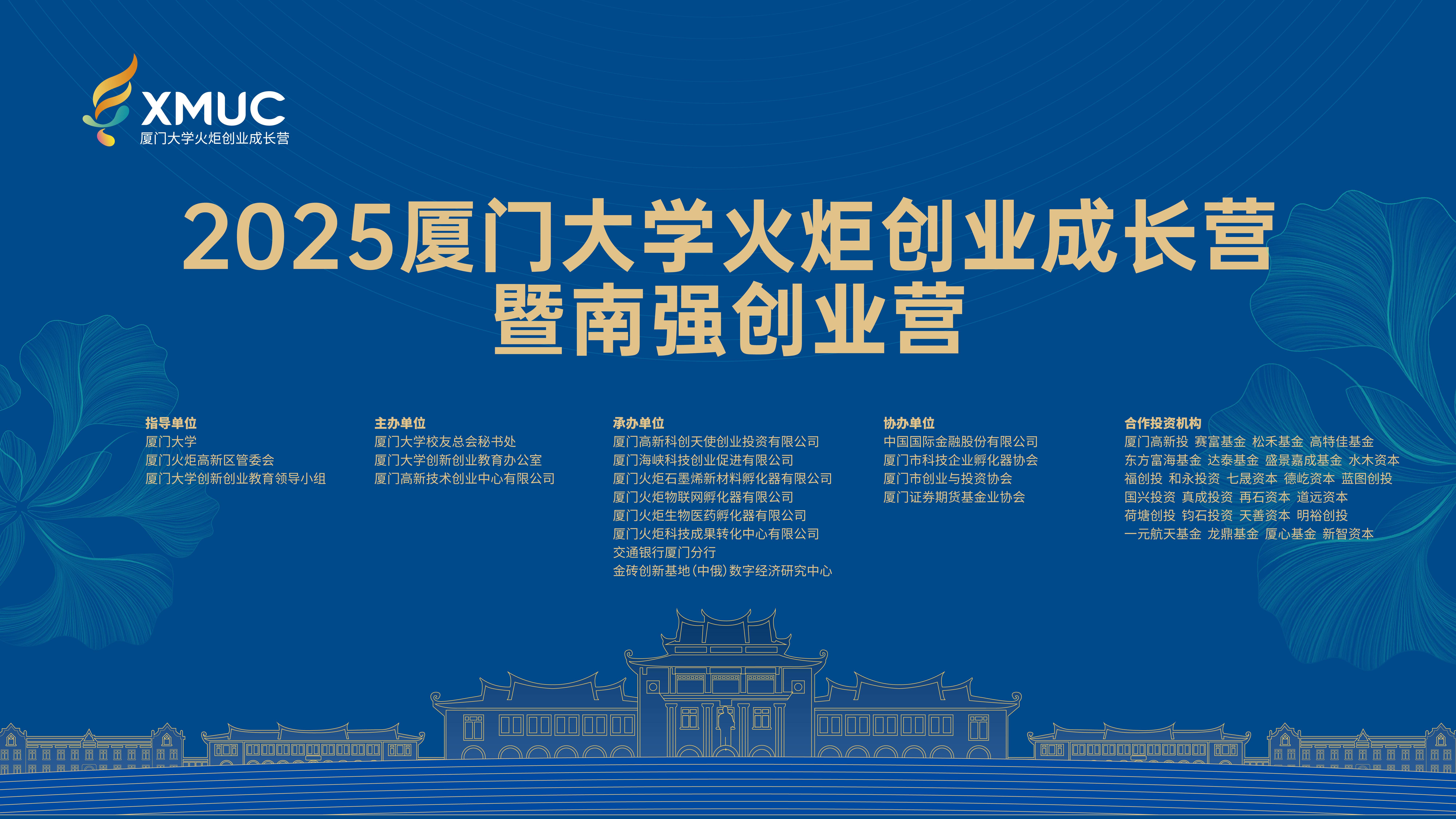
项目报名倒计时!上市公司强势助阵,2025厦大火炬创业营项目征集即将收官
3 6 Ke· 2025-07-03 07:45
Core Viewpoint - The 2025 Xiamen University Torch Entrepreneurship Camp aims to foster early and mid-stage hard technology projects, providing comprehensive support and resources for startups in various high-growth sectors, including advanced manufacturing, new energy, new materials, semiconductor sensing intelligence, biomedicine, and electronic information [5][6]. Group 1: Partnership and Support - Listed companies such as Dabo Medical, Zhonglun New Materials, and Huichuan Technology have become strategic partners of the entrepreneurship camp, offering in-depth industry guidance to participating projects [1]. - The camp has introduced a new 1 billion yuan (approximately 10 billion) Xiamen Torch Technology Achievement Transformation Fund to support projects from concept validation to large-scale production [5][9]. Group 2: Program Structure and Objectives - The entrepreneurship camp focuses on building a new productive ecosystem and aims to assist enterprises in overcoming market barriers by linking various resources [6][8]. - The program emphasizes a five-dimensional collaborative framework involving industry, academia, research, application, and finance to enhance cooperation among universities, startups, listed companies, and investment institutions [8][9]. Group 3: Training and Development - The camp offers a comprehensive training program that includes closed-door entrepreneurial training courses covering various aspects such as capital, legal, financial, and management issues [10][11]. - Participants can receive scholarships of 10,000 yuan and have the opportunity for direct equity investments ranging from 5 million to 10 million yuan, supporting long-term project development [13][14]. Group 4: Historical Context and Future Outlook - The previous five sessions of the entrepreneurship camp attracted over 500 applications, with more than 100 outstanding projects selected for training, resulting in over 300 million yuan in cumulative financing for more than 20 projects [14]. - The 2025 session is set to recruit new participants, aiming to discover the next great enterprise amid the global innovation landscape [14].