
保护主义

Search documents
关税战打成明牌!中美各走一条道路,美国在等待中的决定?
Sou Hu Cai Jing· 2025-10-09 05:34
Group 1 - The US-China trade friction has entered a new phase of confrontation, with US officials stating that the current tariff levels on Chinese goods are "acceptable," indicating a shift from covert tactics to open strategic competition [1][5] - Since 2018, the US has continuously imposed tariffs, culminating in a significant strategic escalation with a 10% tariff on a wide range of Chinese imports announced in early 2025, marking a transition from temporary measures to a stable policy foundation [3][10] - The US has integrated previous scattered tariff measures into a systematic policy, affecting nearly all industries, from high-tech to consumer goods, demonstrating a comprehensive approach to trade policy [3][10] Group 2 - In September 2025, US trade officials publicly declared that the current 55% tariff on Chinese goods is in a "good state," narrowing the negotiation space and indicating a clear stance on tariff reduction [5][10] - The deadline for a tariff ceasefire is approaching on November 10, 2025, with the potential for tariffs to revert to higher levels if no new agreement is reached, which the US views as a pressure tactic [5][10] Group 3 - China has actively responded to the US tariffs by initiating a dispute request with the World Trade Organization (WTO) in February 2025, indicating a shift from bilateral negotiations to a multilateral framework [7][13] - In April 2025, China imposed additional tariffs on certain US products and criticized the US for unilateralism and protectionism, emphasizing the negative impact of tariffs on global trade rules [9][13] Group 4 - The US has expanded its tariff measures to include heavy-duty truck imports, further broadening the scope of its trade policy to cover various sectors, including basic industries and transportation [12][18] - China's export structure is shifting towards Europe and Southeast Asia, indicating a diversification strategy in response to high tariffs from the US [15][18] Group 5 - The US is experiencing increased import costs and inflation due to higher tariffs, which is suppressing consumer spending, particularly in agriculture and machinery sectors [17][18] - The ongoing trade conflict is evolving into a long-term structural confrontation, with both countries adopting clear and strategic paths in their trade policies [20]

特朗普传重磅沪金突破九百元大关
Jin Tou Wang· 2025-10-09 03:01
Group 1 - Gold futures are currently trading around 911.20 yuan per gram, with a slight increase of 0.46% [1] - The highest price reached was 918.88 yuan per gram, while the lowest was 903.40 yuan per gram, indicating a bullish short-term trend [1] - Key resistance levels for gold futures are identified between 876 yuan per gram and 880 yuan per gram, with important support levels ranging from 829 yuan per gram to 860 yuan per gram [4] Group 2 - The Trump administration has decided not to impose tariffs on foreign generic drugs, following months of internal debate [3] - The administration's investigation under the Trade Expansion Act of 1962 had previously considered a 100% tariff on brand-name drugs, which was postponed to allow for negotiations [3] - The decision not to impose tariffs on generic drugs significantly reduces the scope of the investigation and contradicts previous campaign promises [3]
东边亮了!美国盟友集体反水,全球贸易版图必将重写...
Sou Hu Cai Jing· 2025-10-06 09:40
世界贸易组织3日在瑞士日内瓦召开服务贸易理事会年度第三次会议。中方主动设置议题,揭批美国"对等关税"单边主义和保护主义本质,指出美国限制 措施对全球服务贸易带来负面溢出影响,要求美方切实遵守世贸组织规则,与各方共同促进全球服务贸易健康稳定发展。 "五眼联盟"的裂痕更具标志性。英国商业大臣雷诺兹宣布重启中英经贸联委会,年内访华推动贸易升级,在北海风电和数字丝绸之路项目上与中国签下32 亿英镑大单。要知道,英国2024年对华贸易额达1230亿英镑,占外贸总额14.7%,在脱欧后经济衰退的背景下,中国市场已成其救命稻草。澳大利亚的摇 摆同样戏剧化:在终止中企租约导致千亿澳元蒸发、牛肉出口暴跌40%后,总理阿尔巴尼斯终于公开拒绝美国的"脱钩"要求。毕竟中国吸纳了其38.6%的 出口额,没人愿意和自己的钱包过不去。 除此之外, 中方还要求美方切实遵守世贸组织规则,与各方加强对话与合作,共同维护全球服务贸易繁荣稳定。中方愿与所有成员共同努力,不断深化 服务贸易领域开放水平,为全球服务贸易的健康稳定发展贡献更大力量。 这场没有硝烟的会议,清晰地照出一个事实,美国用霸权筑起的壁垒,正在变成困住自己的牢笼,曾经那些围绕在身边的 ...

全球治理倡议是迈向建立更加公平国际体系的重要一步——访土耳其国际经济专家阿克布卢特
Xin Hua Wang· 2025-10-05 10:05
Core Insights - The global governance initiative proposed by China is seen as a significant step towards establishing a more equitable and balanced international system [1][2] - Emerging economies such as China, India, Brazil, and Turkey are now the core drivers of global growth, yet they still have limited representation in major international organizations [1] - There is a need for reforms in the global governance system to better address global challenges and balance the interests of developed and developing countries [1][2] Group 1 - The global governance initiative is closely linked to the Belt and Road Initiative, which provides the necessary infrastructure for connectivity, while the governance initiative establishes a framework for mutually beneficial relationships [1] - The post-World War II global governance architecture must adapt to the current multipolar reality, and reforming this system is crucial for rebuilding confidence in multilateralism [2] - A more representative and responsive global governance system will enhance international cooperation and improve the ability to address urgent issues such as climate change, terrorism, and global health security [2] Group 2 - Recent protectionist measures by the United States have significant impacts on countries with close trade ties, potentially forcing them to reduce production or shift exports to other markets [2] - The ongoing changes in U.S. tariff decisions create substantial uncertainty for producers, exporters, importers, and investors, undermining trust in institutions like the World Trade Organization [2] - Strengthening cooperation and reducing uncertainty in international trade are essential for ensuring sustainable global growth [2]
新华财经早报:10月5日
Xin Hua Cai Jing· 2025-10-05 00:58
Group 1 - China criticized the US "reciprocal tariff" measures at the WTO, calling for all parties to jointly maintain the global service trade order [1] - During the first four days of the National Day and Mid-Autumn Festival holiday, key retail and catering enterprises in China saw sales increase by 3.3% year-on-year [1] - The Ministry of Transport raised the typhoon defense response to level two due to Typhoon "Maidum," which is expected to make landfall in Guangdong and Hainan [1] Group 2 - The Ministry of Water Resources initiated a level four emergency response for flood prevention in four provinces due to Typhoon "Maidum," predicting significant rainfall and potential flooding [1] - The National Railway Group reported that on October 3, over 18.16 million passengers were sent by rail, with expectations of continued high passenger flow [1] - In September, the A-share market completed a total of 40.616 billion yuan in refinancing, a nearly 30% increase month-on-month [1]

中美今年第一季度GDP增长情况说明,特朗普很难让美国伟大!
Sou Hu Cai Jing· 2025-10-04 12:48
Economic Performance Comparison - In Q1 2025, the US GDP experienced a contraction of 0.5%, marking the first negative growth since 2022, while China's GDP grew by 5.4% [2][4] - The US saw a significant increase in imports, with a 41.3% rise, particularly in goods imports which surged by 50.9%, negatively impacting GDP calculations [2][7] - China's GDP growth was driven by strong domestic demand, with consumption contributing 73.7% and investment 23.0% to the growth [4][8] Trade Policies and Their Impact - Trump's trade policies, including a substantial increase in tariffs, have led to an expansion of the trade deficit with China, contrary to his claims of protecting American industries [5][11] - The average tariff rate in the US rose from 2.5% to 27% after Trump's policies were implemented, significantly affecting the cost structure for American businesses [7][11] - China's response to tariffs included diversifying trade partnerships and increasing domestic fiscal stimulus, which helped maintain economic stability [8][11] Long-term Economic Outlook - Economic forecasts suggest that Trump's tariffs could lead to a long-term reduction in US GDP by 6% and a decrease in wages by 5% [7][11] - The US manufacturing sector showed weak job growth, with only 12,000 new jobs added in Q1 2025, indicating challenges in the labor market [11][13] - In contrast, China's economic fundamentals remain strong, with a healthier debt structure and significant investments in technology and education, positioning it for sustained growth [8][11][13]
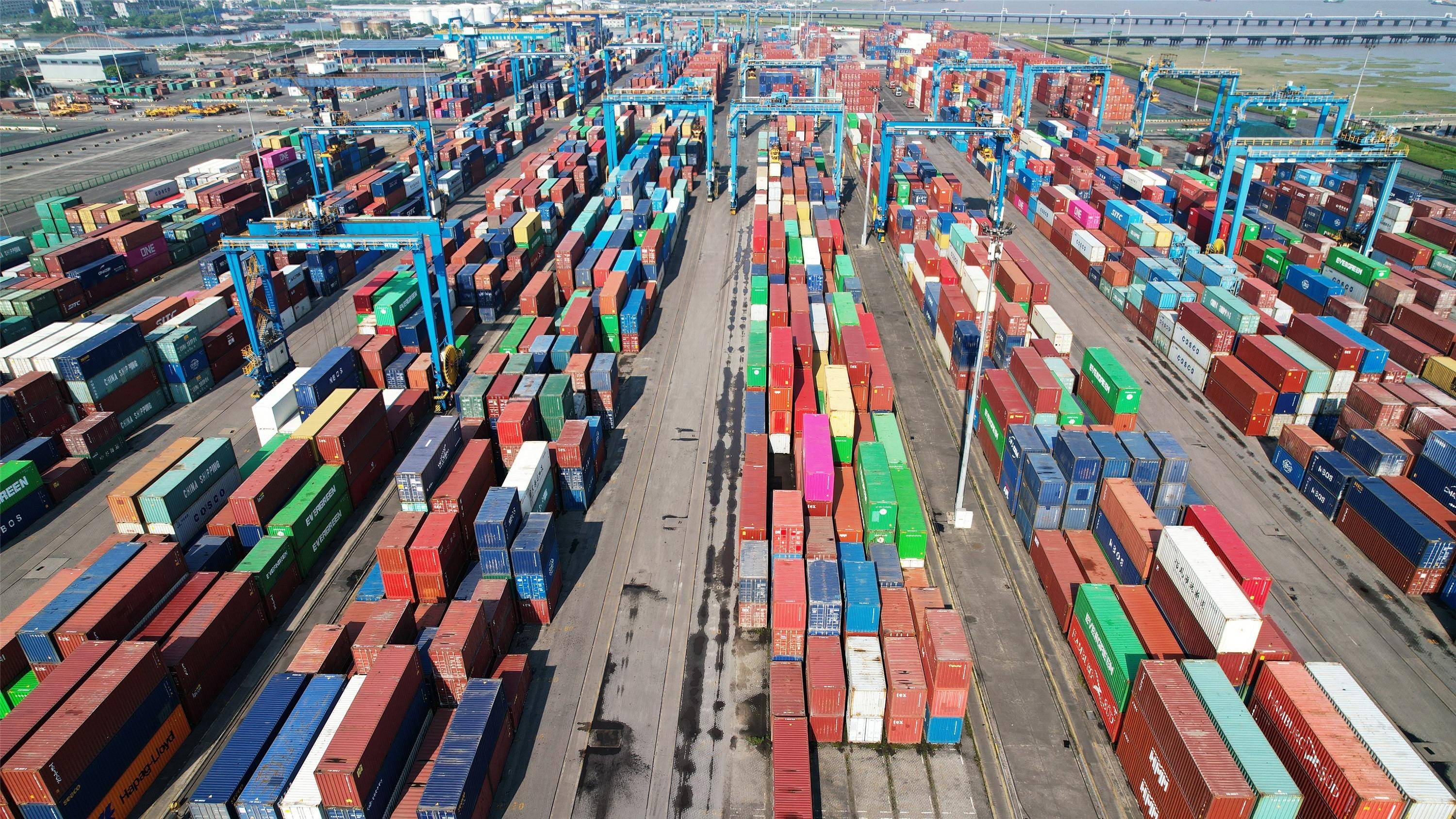
中方在世贸组织批评美国“对等关税”措施 呼吁各方共同维护全球服务贸易秩序
Xin Hua Wang· 2025-10-04 10:37
Core Viewpoint - The article highlights China's criticism of the United States' unilateral "reciprocal tariffs" and protectionist measures during the WTO Services Council meeting, emphasizing the negative spillover effects on global service trade and calling for adherence to WTO rules to promote healthy and stable global service trade development [1]. Group 1 - China actively set the agenda at the WTO meeting, condemning the essence of the U.S. unilateralism and protectionism, and pointing out the adverse impacts of U.S. restrictions on global service trade [1]. - The document submitted by China states that service trade is becoming a crucial engine for global trade growth, providing developing countries with more opportunities to integrate into the global value chain [1]. - The U.S. has historically been the largest service trade surplus country, yet it selectively discusses trade losses in goods while ignoring gains in services, showcasing a double standard [1]. Group 2 - Other member countries, including India, Brazil, Egypt, and Pakistan, echoed China's statements, emphasizing the importance of a multilateral trade system for global trade operations and the need for stability and predictability in regulatory policies [2]. - The service sector is identified as a vital component of the global supply chain and the future of global trade, necessitating collaborative efforts to ensure healthy and stable global trade development [2].
美帝到处“打架”,自己家都要搞散架了?
Sou Hu Cai Jing· 2025-10-04 01:21
Group 1 - The U.S. is facing a dual challenge of economic strain and aggressive foreign policy, with significant fiscal deficits projected to reach nearly $2 trillion by FY 2025, leading to a depreciation of the dollar and a surge in gold prices by over 40% this year [1] - The strategy of using tariffs as a weapon has not revitalized U.S. manufacturing, resulting in a net loss of manufacturing jobs and companies passing costs onto consumers, indicating a failure of protectionist policies [3][4] - Major U.S. companies, such as Apple, are shifting production to India, highlighting India's emergence as a critical manufacturing hub and the potential risks to U.S. supply chains if relations deteriorate [4][6] Group 2 - The U.S. government's approach of using tariffs to pressure "unfriendly" economies may backfire, fostering anti-American sentiment and pushing neutral countries towards alternative alliances, which could undermine U.S. global influence [6][9] - The reliance on tariffs to address structural economic issues is counterproductive, as it exacerbates inflation, costs, and debt problems, indicating a disconnect between U.S. fiscal policies and global market realities [6][7] - A more effective strategy for the U.S. would involve embracing globalization, accepting market competition, and fostering long-term commitments in infrastructure and investment, rather than creating adversarial relationships [7][9]

商务部表态!
Sou Hu Cai Jing· 2025-10-04 00:15
Core Viewpoint - Mexico has initiated multiple anti-dumping investigations against Chinese products, which China firmly opposes as a form of protectionism that harms its legitimate rights and interests [1] Group 1: Anti-Dumping Investigations - Mexico's Ministry of Economy has launched four anti-dumping investigations against Chinese products including float glass, self-adhesive tape, PVC coated cloth, and steel bolts [1] - This year, Mexico has conducted a total of 11 anti-dumping investigations against Chinese products, nearly double the total from the previous year [1] Group 2: China's Response - China emphasizes the need for countries to collectively oppose unilateralism and not allow protectionism to spread, especially under external pressure [1] - The Ministry of Commerce has initiated an investigation into Mexico's proposed increase in import tariffs and other trade investment restrictions against China, based on relevant regulations [1] - China will take all necessary measures, including in trade and investment, to firmly protect the legitimate rights and interests of its enterprises based on the investigation results and actual circumstances [1]
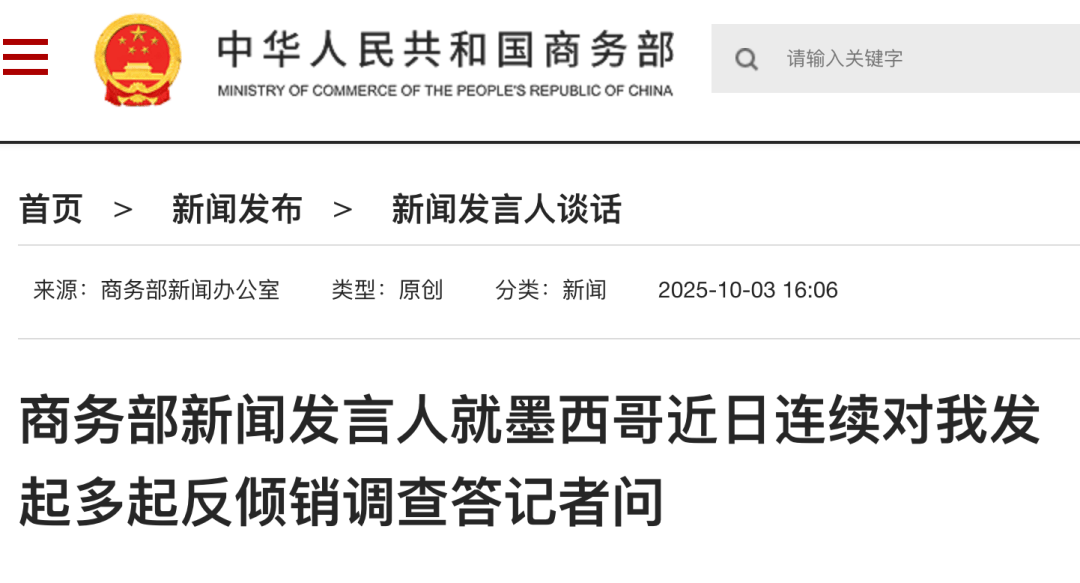
中方在世贸组织揭批美国“对等关税”措施 呼吁维护全球服务贸易秩序
Yang Shi Xin Wen Ke Hu Duan· 2025-10-03 23:59
Core Points - The World Trade Organization (WTO) held its third annual meeting of the Services Trade Council in Geneva on October 3, where China presented a position paper emphasizing the need for members to strengthen and stabilize global services trade, criticizing the unilateralism and protectionism of the United States [1] - China highlighted that services trade is becoming a crucial engine for global trade growth, providing developing countries with more opportunities to integrate into the global value chain, while the U.S. "reciprocal tariffs" have caused turmoil in global trade, negatively impacting the services trade sector [1] - The U.S. has historically been the largest services trade surplus country, yet it has adopted a misleading narrative focusing solely on losses in goods trade while ignoring gains in services trade, which China labeled as a typical double standard [1] Summary by Sections China's Position - China called for the U.S. to adhere to WTO rules and engage in dialogue and cooperation to maintain the prosperity and stability of global services trade [1] - The country expressed willingness to work with all members to deepen the level of openness in the services trade sector, contributing to the healthy and stable development of global services trade [1] Response from Other Members - Members such as India, Brazil, Egypt, and Pakistan echoed China's statements, emphasizing the importance of a multilateral trade system as a foundational rule for global trade operations [2] - They highlighted that the services sector is a vital component of global supply chains and the future of global trade, advocating for a spirit of consultation and cooperation to ensure the stability and predictability of regulatory policies [2]