
智能化转型

Search documents
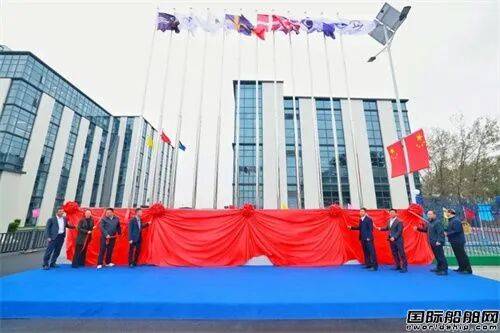
投资1.8亿!新能源船舶设备研发中心启用
Sou Hu Cai Jing· 2025-10-23 07:17
Core Viewpoint - The establishment of the new energy ship equipment R&D center by China Merchants Industry is a strategic move to focus on green technology and contribute to the low-carbon transformation of the shipping industry [2][5]. Group 1: Project Overview - The new energy ship equipment R&D and manufacturing center project was initiated on April 17 last year with a total investment of 180 million yuan [5]. - The project will include the construction of a research building and a 5G+ fully connected smart workshop, aiming to become a key source of original technology and a results incubator for the shipbuilding industry in Jiangdu District [5]. Group 2: Strategic Direction - China Merchants Industry has identified the R&D and application of new energy ship technology as one of its core strategic directions, focusing on green energy applications and accelerating intelligent transformation [2]. - The company aims to explore and build new momentum for transformation and development through core green technology business implementation [2]. Group 3: Industry Positioning - Yangzhou Dingheng, part of China Merchants Industry Group, has delivered over 60 high-end liquid cargo ships to clients across all continents, leveraging the group's global resources [5]. - The company specializes in the construction of small and medium-sized liquid cargo ships, achieving breakthroughs in this niche market and filling six gaps in China's shipbuilding industry [5]. - Yangzhou Dingheng holds the world's largest order quantity for small and medium-sized chemical tankers and has the highest cumulative delivery quantity in the past decade [5].

《节能与新能源汽车技术路线图3.0》发布:至2040年L4级智能网联汽车全面普及
Xin Hua Cai Jing· 2025-10-22 11:52
Core Viewpoint - The "Technology Roadmap 3.0" aims to establish a new automotive industry ecosystem by 2040, addressing the challenges of low-carbon, electrification, and intelligent transformation in the automotive sector [1][2] Summary by Sections Goals for the Automotive Industry - The roadmap sets six major goals for the automotive industry by 2040, including: 1. Carbon emissions will peak by 2028, ahead of national commitments, and decrease by over 60% from peak levels by 2040 [2] 2. New energy vehicle penetration will exceed 80%, accelerating the transition to full electrification [2] 3. A mature ecosystem for intelligent connected vehicles will be established, with large-scale application of high-level autonomous driving products [2] 4. Collaborative development in education, technology, and talent will position China as a global leader in automotive technology innovation [2] 5. A modern automotive industry cluster will be created, focusing on innovation, data-driven approaches, and sustainable development [2] 6. Chinese brands will significantly enhance their global competitiveness, integrating deeply with the global industry system [2] Market Projections - By 2030, new energy passenger vehicles are expected to account for approximately 70% of annual new passenger car sales, with a 5:5 ratio of BEV (Battery Electric Vehicles) to PHEV (Plug-in Hybrid Electric Vehicles) [3] - By 2035, this ratio will shift to 80% for new energy vehicles, with a 6:4 ratio of BEV to PHEV [3] - By 2040, new energy passenger vehicles will represent 85% of new sales, with an 8:2 ratio of BEV to PHEV [3] - New energy commercial vehicles will expand from urban short-distance applications to medium and long-distance scenarios, achieving a penetration rate of around 75% by 2040 [3] Fuel Consumption and Vehicle Technology - By 2040, the average fuel consumption of new traditional energy passenger vehicles is projected to reach 3.5 liters per 100 kilometers [4] - L4-level intelligent connected vehicles will be fully popularized, while L5-level vehicles will begin to enter the market [4] - The industry will focus on quality improvement, efficiency enhancement, cost reduction, and low-carbon initiatives through interconnected data systems [4]
汽车零部件隐形冠军浙江华远前三季盈利7895万 小“关节”掘动汽车大市场
Quan Jing Wang· 2025-10-22 08:51
Core Insights - Zhejiang Huayuan Automotive Technology Co., Ltd. reported a revenue of 541 million yuan for the first three quarters of 2025, marking an 18.64% year-on-year increase, and a net profit of 78.95 million yuan, up 29.3% [1] Industry Overview - The Chinese automotive parts industry is undergoing a profound transformation driven by electrification and intelligence, with significant changes in technology, policy, and market dynamics [1] - The government's policies, such as the "Guidance Catalog for Industrial Structure Adjustment (2024 Edition)," encourage the development of key automotive components and lightweight materials, providing clear guidance for the industry's upgrade [1] Company Performance - In the first half of 2025, Zhejiang Huayuan's diversified layout showed significant results, with core product lines such as special fasteners, standard fasteners, and seat locks achieving revenue growth of 15.33%, 14.38%, and 25.54% respectively [2] - The company shipped 10.86 million aluminum precision connectors for various sensors, reflecting a 445% year-on-year increase, showcasing its rapid penetration in emerging product areas [2] Customer Relationships - Zhejiang Huayuan has established strong partnerships with major automotive manufacturers, including Volkswagen China, GAC Honda, and Great Wall Motors, positioning itself as a first-tier supplier [3] - The company is actively expanding its customer base in the new energy sector, with new products like electric lock bolts entering mass production for brands such as Seres and Avita [3] Innovation and Technology - The company has demonstrated strong innovation capabilities, focusing on enhancing its research and development in cold heading molds, precision machining, and electric mold products [3] - A recent patent for a "depressurization-resistant rivet bolt" addresses reliability issues in traditional rivet bolts, showcasing the company's commitment to solving technical challenges [3] Competitive Advantage - Zhejiang Huayuan has built a differentiated competitive advantage through its deep accumulation in traditional fasteners and rapid expansion in new energy products [4] - The continuous optimization of product structure, expansion of quality customer resources, and stable financial performance provide a solid foundation for sustainable development and future growth [4]
建设机械2025年10月22日涨停分析:智能化转型+现金流改善+融资能力强
Xin Lang Cai Jing· 2025-10-22 01:43
声明:市场有风险,投资需谨慎。本文为AI大模型基于第三方数据库自动发布,任何在本文出现的信 息(包括但不限于个股、评论、预测、图表、指标、理论、任何形式的表述等)均只作为参考,不构成 个人投资建议。受限于第三方数据库质量等问题,我们无法对数据的真实性及完整性进行分辨或核验, 因此本文内容可能出现不准确、不完整、误导性的内容或信息,具体以公司公告为准。如有疑问,请联 系biz@staff.sina.com.cn。 责任编辑:小浪快报 2025年10月22日,建设机械(sh600984)触及涨停,涨停价4.18元,涨幅10.05%,总市值57.82亿元,流 通市值57.82亿元,截止发稿,总成交额3.82亿元。 根据喜娜AI异动分析,建设机械涨停原因可能如下,智能化转型+现金流改善+融资能力强: 1、公司处 于战略转型与经营调整期,利好因素显著。其与恒达智控设立合资公司进入煤矿智能化领域,控股 51%,显示出在智能化战略转型上的积极布局,有望开拓新的业务增长点和盈利空间。 2、公司经营状 况出现积极变化,2025H1经营活动现金流由负转正达1.1亿元,同比增586.83%,这表明公司资金回笼 情况良好,经营的稳定 ...

卡准新赛道,海外市场火了“江苏造”
Xin Hua Ri Bao· 2025-10-21 23:06
Group 1: Export Growth and High-End Products - Jiangsu's total import and export value reached 4.38 trillion yuan in the first three quarters, marking a historical high and a 6.4% increase year-on-year [1] - The demand for high-end machine tools, referred to as "industrial mother machines," has surged, with Jiangsu exporting machine tools worth 12.51 billion yuan, a 16.6% increase year-on-year [2] - Companies like Juwang Kailong have seen a threefold increase in business over ten years, with new products improving efficiency by 40% [2] Group 2: Local Enterprises Expanding Overseas - Jiangsu Tianhong Machinery has successfully launched new intelligent aluminum melting equipment, achieving a 12.88% increase in export value to approximately 62 million yuan [3] - The Asia-Pacific manufacturing base of Ingersoll Rand in Wujiang has seen exports exceed 500 million yuan, with a nearly 10% year-on-year growth [4] Group 3: Consumer Goods and Market Demand - Jiangsu's household appliance exports reached 55.78 billion yuan, with washing machines and vacuum cleaners showing growth rates of 3.2% and 2.9% respectively [4] - The demand for outdoor recreational products has increased, with companies like Jiangsu Jinqiu Tourism Products exporting over 90% of their products to more than 20 countries [7] Group 4: Cross-Border Logistics Enhancements - The "Zhongjiwu" multimodal transport train from Wuxi has improved logistics efficiency, reducing transportation costs by 10% compared to full rail and 33% compared to road transport [8] - The establishment of a new cross-border logistics channel for fresh flowers from Yunnan to South Korea has optimized logistics costs and improved market access [9] Group 5: Future Outlook - The upcoming China International Import Expo and other platforms are expected to further energize Jiangsu's foreign trade [10]
中国电力报:三智工程赋新能陕西能源投资股份有限公司绘就智慧转型新画卷
Xin Lang Cai Jing· 2025-10-21 10:42
Core Viewpoint - Shaanxi Energy's subsidiary, Liangshuijing Mining, has achieved significant breakthroughs in intelligent construction and production efficiency, aligning with national strategies for smart coal mines and energy transition [1] Group 1: Company Overview - Shaanxi Energy is a leading coal and electricity integrated enterprise in Shaanxi Province, listed on the Shenzhen Stock Exchange in April 2023, with 34 wholly-owned subsidiaries [1] - The company has an approved thermal power installed capacity of 17.25 million kilowatts and a coal production capacity of 30 million tons per year [1] Group 2: Smart Power Plant Initiatives - The smart power plant construction focuses on the "dual carbon" strategy and the needs of a new energy system, emphasizing quality improvement, efficiency enhancement, and clean low-carbon initiatives [1] - Key areas of focus include advanced design, equipment upgrades, intelligent operations, and energy storage collaboration [1] Group 3: Intelligent Mining Developments - The intelligent mining initiative prioritizes safety, efficiency, and the enhancement of intelligent levels in mining operations, adhering to the principle of "safer with fewer people, safest with no people" [1] - The integration of 5G and AI, along with the application of green mining technologies, aims to replace high-risk positions with intelligent equipment [1] Group 4: Innovative Operational Layout - The operational innovation layout of the Fengjiata project adopts a "1+3+N" model, focusing on intelligent comprehensive control, disaster prevention, and safety management [1] - This model encompasses multiple intelligent subsystems covering core processes of mining, excavation, management, and control [1] Group 5: Data-Driven Collaborative Development - Shaanxi Energy is building a unified digital foundation driven by data intelligence, leveraging the Shaanxi Investment Cloud platform [1] - The company is establishing an integrated architecture for three major centers: production scheduling, emergency command, and digital control [1] Group 6: Overall Impact - Through the implementation of smart power plants, intelligent mining, and data-driven operations, Shaanxi Energy aims to revitalize traditional energy sectors, creating safer and more efficient work environments [1]
奔驰“牵手”豆包,谁是最终获益者?
3 6 Ke· 2025-10-21 03:48
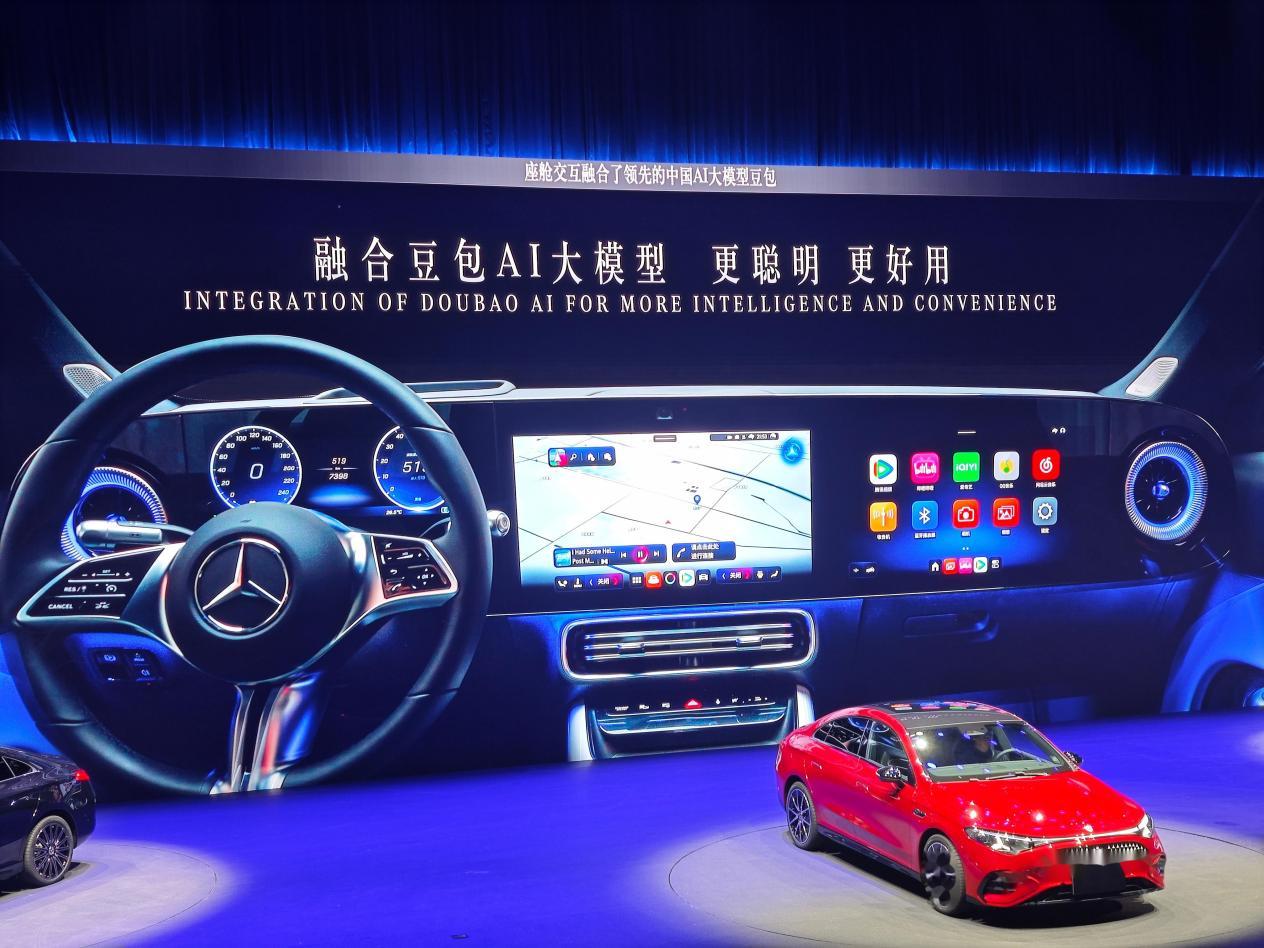
Core Insights - Mercedes-Benz and ByteDance have announced an upgraded partnership, with the new electric CLA model set to feature the "Doubao" large model, marking a significant collaboration beyond a typical supplier-manufacturer relationship [1] - The global sales of smart vehicles are projected to reach 66.2 million units in 2024, with a compound annual growth rate (CAGR) of 10.5% from 2019 to 2024, and expected to hit 92.1 million units by 2029, with a CAGR of 5.9% from 2025 to 2029 [1] - Mercedes-Benz's sales revenue for the first half of this year was €66.377 billion, a year-on-year decline of 8.6%, with pre-tax net profit plummeting 40.7% to €4.534 billion and post-tax net profit dropping 55.8% to €2.688 billion [1] Market Dynamics - The AI+ automotive market is experiencing rapid growth, with major players like Alibaba, Tencent, and Huawei joining the automotive sector, indicating a shift from consumer internet to industrial internet [2] - The collaboration between Mercedes-Benz and ByteDance represents a critical step in integrating AI into the automotive industry [2] Competitive Landscape - Traditional luxury brands like Mercedes-Benz are facing intense competition from domestic brands in China, which have advanced significantly in smart cockpit and advanced driver assistance systems [4] - The importance of smart features in consumer purchasing decisions is increasing, with 94% of Chinese automakers planning to incorporate AI-based solutions in new vehicles [5] Sales Performance - Mercedes-Benz's global sales in Q3 2025 were 525,300 units, reflecting a year-on-year decline of 12% and a quarter-on-quarter decline of 4%, with a total of 1.6016 million units sold in the first three quarters, down 9% year-on-year [5] - In China, Q3 deliveries fell by 27% year-on-year to 125,000 units, with total sales for the first three quarters at 418,000 units, down 18% year-on-year [5] Strategic Initiatives - To regain competitiveness in China, Mercedes-Benz has announced a significant investment plan of €14 billion, aiming to launch seven dedicated models in the next two years [6] - The partnership with ByteDance is seen as a way for Mercedes-Benz to quickly address its technological shortcomings and appeal to younger consumers [7][9] Technological Integration - The collaboration aims to enhance Mercedes-Benz's smart solutions, particularly in areas like in-car interaction and scenario linkage, which are critical for modern consumer expectations [8][19] - The partnership is expected to provide Mercedes-Benz with a mature smart solution, reducing development risks and improving efficiency [10][11] Industry Trends - The automotive industry is witnessing a shift towards AI and smart features, with a predicted market size of $5 billion for AI cockpit functions by 2027, growing at a CAGR of over 25% [17] - The integration of AI in vehicles is becoming a new selling point, with numerous collaborations between AI companies and automakers emerging globally [15] Challenges Ahead - Despite the potential benefits of the partnership, Mercedes-Benz's challenges in the smart technology space are significant, with competitors already well-established in this area [13] - The reliance on external AI solutions may lead to a hollowing out of Mercedes-Benz's internal R&D capabilities, posing risks to its long-term brand value [23][24]
从“科技锁温”到“数字试衣” 欧定冬季新品开启商务男装体验革命
Jin Tou Wang· 2025-10-21 02:35
Core Insights - The traditional textile and apparel industry is undergoing a critical period of intelligent transformation, driven by the integration of new information technologies as outlined in the "14th Five-Year Plan" for the textile industry [1] - The launch of the WarmTech winter collection by the company, along with a strategic partnership with Shengshu Technology to implement AI fitting functions, signifies a shift towards a technology-driven approach in redefining business menswear [1][2] Product Development - The company has evolved from focusing solely on "elasticity" to introducing WarmTech technology, addressing winter wear challenges for business men [2] - The WarmTech technology features a dual temperature-locking system inspired by polar bear fur and beech fiber, achieving a hair density of 12,000 hairs/cm, with each shirt containing 200 million fine hairs [2] - The product line includes various tiers such as the "light luxury" and "high luxury" versions, incorporating materials like highland cashmere and 6A silk, redefining the value of winter shirts [2] Technological Innovation - The introduction of AI fitting technology represents a digital revolution in the customer experience, allowing users to upload photos for realistic fitting simulations [3] - This innovation aims to reduce return rates in the apparel e-commerce sector by providing high-fidelity simulations, addressing a significant pain point in online shopping [3] Brand Philosophy and Global Strategy - The company's "elastic culture" transcends fabric technology, promoting a lifestyle philosophy that emphasizes freedom and ease in both life and social interactions [4][5] - The brand's strategic approach combines product innovation with cultural values, positioning itself as a resonant entity for modern elite men [4] - The company has successfully translated its "elastic philosophy" into global markets, achieving sales in 56 countries and reaching 1 million business elites [5] Industry Transformation - The ongoing digital economy and global market integration highlight the competitive strength of Chinese brands in high-end manufacturing [5] - The company's advancements in technology and user experience reflect a broader transformation in the apparel industry, moving beyond mere material choices to encompass comprehensive value in how clothing is worn and experienced [5]
大连市普兰店区纺织服装产业再获国家级荣誉 聚力打造高质量发展新标杆
Zhong Guo Fa Zhan Wang· 2025-10-20 08:09
Core Insights - The Ministry of Industry and Information Technology of China has announced the first batch of key cultivation lists for textile and apparel characteristic industrial clusters for 2025, with the textile and apparel industrial cluster in Pulandian District, Dalian, successfully selected, highlighting its significant achievements in brand building, intelligent manufacturing, industrial chain collaboration, and platform empowerment [1][2] Group 1: Industry Development - The textile and apparel industry is a traditional pillar industry in Pulandian District, which has developed over 40 years, forming an industrial cluster system led by Dayang Group and over 400 collaborative enterprises [1] - Pulandian District focuses on intelligent transformation, green development, and global layout of the textile and apparel industry, continuously optimizing the industrial ecosystem and promoting transformation and upgrading through various measures such as policy guidance and project promotion [1][2] Group 2: Recognition and Future Plans - The recognition as a national-level industrial cluster will enhance the regional brand image and provide tangible benefits to local enterprises, increasing their recognition and trust in domestic and international markets [2] - The local government plans to strengthen policy support and service guarantees, further guiding enterprises towards high-end, intelligent, green, and international development to provide solid support for high-quality regional economic growth [2]

“隐藏式门把手”导致汽车频现开门难 如何确保安全不“隐藏”?
Yang Shi Xin Wen· 2025-10-19 23:44
Core Viewpoint - The increasing adoption of hidden door handles in new vehicles presents both aesthetic appeal and significant safety concerns, particularly in emergency situations [1][2][3]. Group 1: Design and Functionality - Hidden door handles are designed to create a seamless vehicle exterior, potentially reducing wind resistance and improving energy efficiency, although their actual impact on aerodynamics is minimal [2]. - Various activation methods for hidden door handles, such as pressing, pulling, or app control, can lead to confusion for users unfamiliar with the vehicle [1][2]. Group 2: Safety Concerns - Testing indicates that hidden door handles have a pop-out success rate of only 67% in side collisions, compared to 98% for traditional mechanical handles, raising concerns about delayed rescue in accidents [2]. - Issues such as control system failure, internal wiring damage, and battery depletion can prevent hidden door handles from functioning properly during emergencies [2][3]. Group 3: Regulatory Response - The Ministry of Industry and Information Technology has proposed regulations requiring mechanical release functions for all vehicle door handles to enhance safety during accidents [3]. - New regulations aim to ensure that door handles can be operated manually without tools, even if the vehicle loses power or is structurally compromised [3]. Group 4: Industry Perspective - The automotive industry faces a challenge in balancing innovation with safety, emphasizing the need for backup solutions in new designs [3][4]. - Companies are encouraged to prioritize safety and rely on empirical data and user experience when innovating, rather than solely focusing on marketing objectives [4].