
节能降碳

Search documents
科技之光照亮“碳路” | 大家谈 如何当好“碳路先锋”
Zhong Guo Hua Gong Bao· 2025-08-04 06:25
Core Viewpoint - The company is committed to energy conservation and carbon reduction, positioning itself as a leader in green energy production and innovation, contributing significantly to national clean energy goals and carbon reduction efforts [1][2]. Group 1: Technological Innovation - The company has invested 150 million yuan in boiler ultra-low emission upgrades, implementing advanced technologies to ensure long-term compliance with stringent emission standards [1]. - The project is expected to reduce greenhouse gas emissions by 1,584 tons annually, supporting national carbon reduction targets [1]. Group 2: Energy Efficiency Improvements - Major technological upgrades have led to significant reductions in resource consumption: steam, electricity, and circulating water consumption decreased by 13%, 6%, and 36% respectively [2]. - The implementation of a zero-discharge cooling water project is projected to reduce wastewater discharge by 800,000 cubic meters annually and chemical oxygen demand by 12 tons [2]. Group 3: Smart Technology Integration - The company is enhancing operational efficiency through variable frequency drive modifications, achieving energy savings of 15% to 20% [2]. - The replacement of a 200 kW high-pressure motor with a 160 kW low-pressure motor is expected to generate annual electricity savings exceeding 2 million yuan [2]. - The deployment of a QR code system for equipment management is anticipated to improve management efficiency by 50% [2].
天天学习丨中南海月刊(2025.07)
Yang Shi Wang· 2025-08-03 12:32
Economic Growth and Development - China's economy demonstrated resilience with a GDP growth rate of 5.3% in the first half of the year, continuing a trend of recovery and high-quality development [3] - The "14th Five-Year Plan" is entering a decisive phase, with a focus on achieving economic and social development goals [3] - The emphasis on high-quality development is reiterated as a fundamental principle for building a modernized strong nation [8] Industrial Transformation - The visit to Yangquan Valve Co., Ltd. highlights the company's focus on smart manufacturing and innovation, having applied for 72 patents and obtained 63 [10] - The company contributes to energy security and green transformation by producing efficient and environmentally friendly hydrogen valve components [10] - The transformation of Shanxi Province from a coal-dominated economy to a diversified industrial structure is a key focus, with directives to enhance energy transition and industrial upgrading [11] Urbanization and City Development - The Central Urban Work Conference emphasizes the need to shift from extensive urban expansion to a more refined and efficient model of urban development [15] - The goal is to achieve coordinated economic, environmental, and social development, promoting high-quality urban growth [15] Disaster Management and Safety - The government is actively preparing for flood prevention and disaster relief, with significant financial allocations for emergency response [17] - A total of 3.5 billion yuan has been allocated for disaster relief efforts across nine provinces [17] International Relations - The ongoing dialogue between China and the EU is highlighted, with trade between the two regions exceeding 1 billion yuan per minute in the first quarter of this year [21] - The emphasis on mutual respect, open cooperation, and multilateralism is crucial for the future development of China-EU relations [22]

反内卷带动行业提质升级,重视专业工程投资机会
Tianfeng Securities· 2025-08-03 03:42
Investment Rating - Industry Rating: Outperform the market (maintained rating) [5] Core Viewpoints - The "anti-involution" trend is driving quality upgrades in the industry, emphasizing investment opportunities in specialized engineering companies. This trend is expected to improve corporate profitability and increase capital expenditures in green and low-carbon transformations, benefiting specialized engineering firms [1][19][32] - The government is focusing on innovation-driven and green transformation, which is broader than the supply-side structural reforms of 2015. This includes enhancing industry self-discipline and optimizing supply structures through technological upgrades [2][13] Summary by Sections Industry Performance - The construction index fell by 2.5% in the week of July 28 to August 1, underperforming the broader market by 1.3 percentage points. Only the architectural design and services sub-sector maintained an upward trend, with notable individual stock gains [4][26] Investment Recommendations - Key investment opportunities include: 1. Cement Engineering: China National Materials (high dividend cement engineering leader, expected dividend yield over 5% in 2025) [19] 2. Metallurgical Engineering: China Steel International (low-carbon metallurgical engineering leader, expected dividend yield of 5.5% in 2025) [19] 3. Steel Structure Manufacturing: Honglu Steel Structure, Jinggong Steel Structure [19] 4. Chemical Engineering: China Chemical, Sanwei Chemical, Donghua Technology, benefiting from rising chemical product prices [19] Key Indicators - As of August 1, 2025, the cement shipment rate was 30%, down 13 percentage points from the previous week, while the asphalt plant operating rate was 33.1%, up 4.3 percentage points [3][20] Structural Changes and Opportunities - The report highlights the importance of focusing on infrastructure investments in regions with high demand, such as Sichuan, Zhejiang, Anhui, and Jiangsu, and recommends local state-owned enterprises and central enterprises involved in major infrastructure projects [32][35] Emerging Trends - The report suggests that the nuclear power sector remains highly attractive, with ongoing investments, and highlights the potential of AI and digital technologies in transforming traditional industries [34][36] Specialized Engineering Investment Targets - The report lists specific companies in specialized engineering fields, including: - China National Materials (Cement) - China Steel International (Metallurgy) - Honglu Steel Structure (Steel Structure) - China Chemical (Chemicals) [20] Conclusion - The overall sentiment is positive towards the construction and specialized engineering sectors, driven by government policies aimed at enhancing industry quality and profitability through technological and structural upgrades [1][19][32]



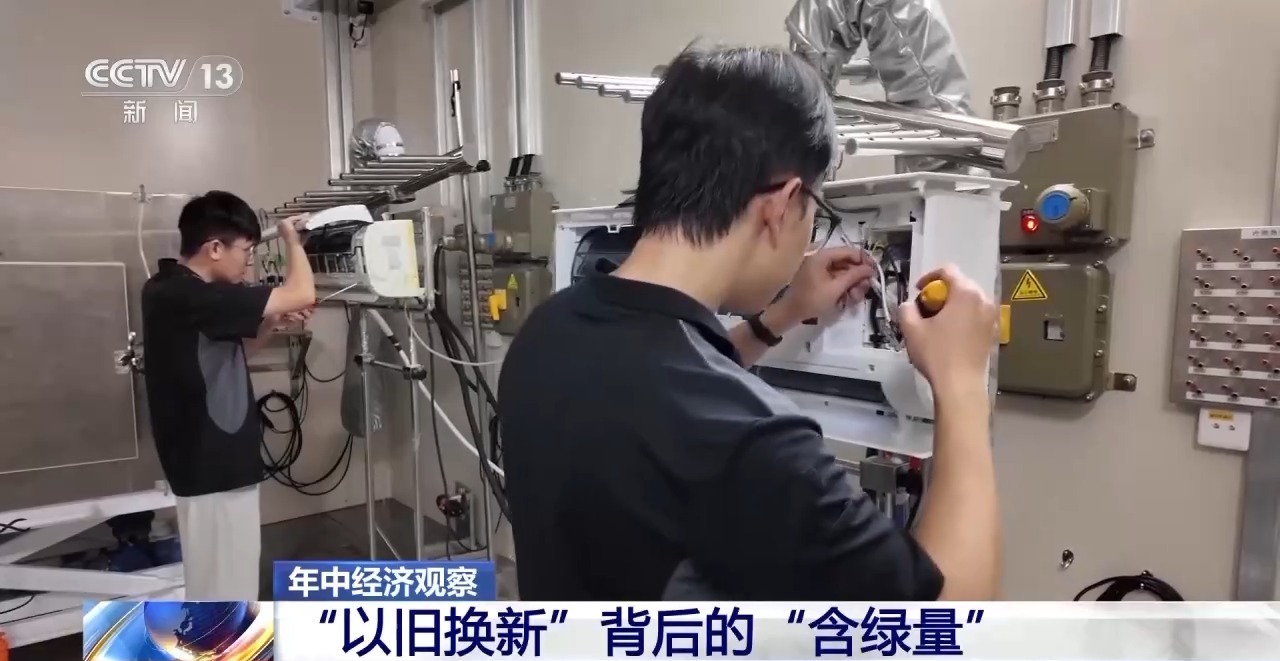
年中经济观察|感受“以旧换新”背后的“含绿量”
Yang Shi Xin Wen Ke Hu Duan· 2025-08-02 07:54
Group 1 - The core viewpoint of the article highlights the acceleration of China's green transformation in the economy, with a focus on the "old-for-new" policy that promotes low-carbon initiatives and encourages the adoption of energy-efficient appliances [1][12][19] - The "old-for-new" policy has led to significant energy savings for consumers, with new air conditioning units demonstrating a drastic reduction in energy consumption compared to older models, saving consumers approximately $943 million annually [7][9][19] - The shift towards energy-efficient products is evident as manufacturers are increasingly focusing on producing first-level energy efficiency appliances, with a reported 70% of television products shipped being of this category [16][18] Group 2 - The article discusses the impact of government subsidies on the adoption of energy-efficient appliances, with first-level energy efficiency products receiving a 20% subsidy and second-level products a 15% subsidy, driving both consumer and manufacturer engagement [14][19] - Equipment upgrades in traditional industries such as steel and cement are being supported by a special long-term national bond fund of 200 billion yuan, facilitating energy-saving transformations and enhancing green productivity [19][25] - The implementation of smart mining projects and energy-efficient upgrades in mining operations has resulted in significant reductions in energy consumption and increased production efficiency, showcasing the benefits of technological advancements in traditional sectors [25][27]
年中经济观察 | 以发展“含绿量”降低“含碳量” 提升增长“含金量”
Yang Shi Wang· 2025-08-02 02:32
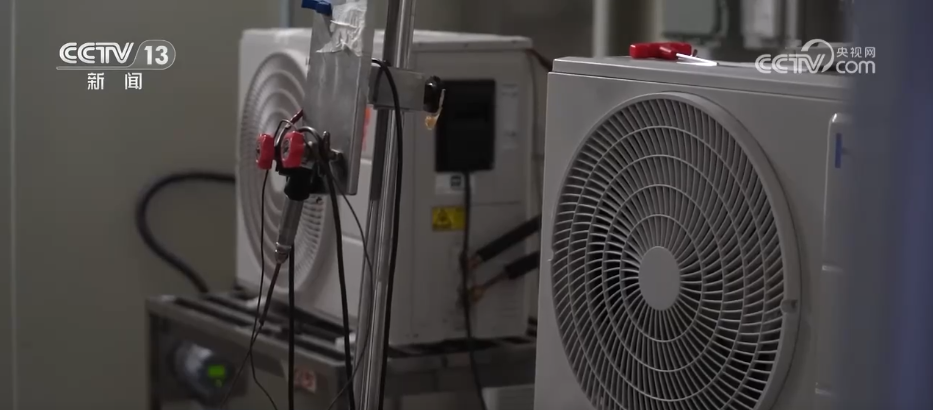
Group 1: Economic Transition and Policy Impact - China's economic and social green transition has accelerated in the first half of the year, with green becoming a significant aspect of economic development [1] - The "old-for-new" policy has a clear low-carbon orientation, promoting energy-efficient home appliances through differentiated national subsidy policies [1][11] - The energy-saving potential of new appliances is highlighted, with significant savings in electricity costs for consumers [5][7] Group 2: Energy Efficiency and Consumer Behavior - A comparative experiment showed that new energy-efficient air conditioners consume significantly less electricity than older models, with new models using 1 kWh compared to 5 kWh for old ones [5] - Consumers are increasingly favoring energy-efficient appliances, prompting manufacturers to shift their production focus towards first-level energy efficiency products [9][11] Group 3: Manufacturing and Equipment Upgrades - Major appliance manufacturers are investing in green production lines, with companies like Changhong and Haier ramping up production of energy-efficient products [13][15] - The government has allocated 200 billion yuan for long-term special bonds to support equipment upgrades in traditional industries, facilitating energy-saving transformations [16] - Specific projects, such as the upgrade of equipment in steel and mining industries, are expected to yield significant energy savings and carbon emission reductions [18][20][22]
高耗能项目审批收紧,将实施“碳排放双控”审查
Xin Jing Bao· 2025-08-01 07:47
Core Viewpoint - The new regulations mark a significant upgrade in China's energy conservation and carbon emission control system, transitioning from "energy consumption dual control" to "carbon emission dual control" [1][2] Group 1: Regulatory Changes - The new regulations integrate carbon emission evaluation into the energy conservation review process, reflecting a systemic restructuring based on the high correlation between energy saving and carbon reduction [2] - The new regulations require energy reports to include core indicators such as total carbon emissions, structure, and per-unit product carbon emissions, compared against national and industry standards [3] - The regulations impose stricter controls on coal consumption, including all projects with annual coal consumption exceeding 1,000 tons into the review scope, which is a more stringent standard than previous energy consumption criteria [3] Group 2: Management Upgrades - The new regulations establish a dynamic adjustment mechanism for review authority and centralize management of major projects, with the National Development and Reform Commission directly reviewing projects with significant energy consumption [4] - A clear hierarchical management system is constructed, with provincial departments responsible for reviewing projects above 10,000 tons of standard coal, preventing the delegation of approval authority to lower levels [4] Group 3: Review Process Optimization - The new regulations require energy reports to include dedicated sections analyzing carbon emissions and reduction measures, assessing their impact on regional energy conservation and carbon reduction goals [5] - The review content is detailed, covering major energy-consuming equipment and calculation methodologies, which encourages enterprises to optimize technical routes from the design phase [5] Group 4: Impact on Industry and Energy Structure - The implementation of the new regulations is expected to enhance emission reduction effects, with previous energy conservation reviews reducing unreasonable energy consumption by approximately 14 million tons of standard coal annually, equating to a reduction of nearly 30 million tons of CO2 [6] - The regulations will guide the flow of energy factors towards high-efficiency, low-carbon industries, and accelerate the replacement of fossil fuels with renewable energy [7] - While the new regulations present challenges in compliance costs for enterprises, they also offer opportunities for long-term operational cost reduction and enhanced market competitiveness through energy efficiency improvements [7] Group 5: Implementation Outlook - To ensure the successful implementation of the new regulations, the National Development and Reform Commission will focus on policy promotion, refining business guidelines, and strengthening dynamic management [8] - Local governments face challenges in establishing carbon emission evaluation capabilities and aligning industrial policies with green development goals [8] - The effectiveness of the new regulations will depend on the improvement of carbon emission accounting and monitoring systems, local regulatory capabilities, and the synergy of incentive and constraint mechanisms [8] Group 6: Contribution to Climate Goals - The new regulations represent a crucial step in China's efforts to address climate change and promote high-quality development, contributing to the country's carbon peak and carbon neutrality goals [9]
练好查缺补漏“绣花功” | 大家谈 如何当好“碳路先锋”
Zhong Guo Hua Gong Bao· 2025-08-01 02:08
变被动"遇见"为主动"预见"。石化企业生产过程中涉及大量能源消耗,生产过程复杂,工艺条件苛刻, 设备管道种类和数量众多。企业要改变管理方式,变被动"遇见"为主动"预见",从根本上杜绝泄漏事件 发生。如针对地下水系统泄漏具有隐蔽性和长期性的问题,抚顺石化烯烃厂组建了"测漏小队",引进行 业先进的气体法测漏技术,采取定期摸排、精准定位、优化检测流程、高效修复等措施,发现多处隐蔽 漏点,取得了显著成效。 既要"算大账"更要算"细账"。石化企业生产过程包括燃料、水、电、蒸汽等10余种消耗项。企业不仅要 算好能耗指标"大账",也要算好每个指标的"细账",逐个指标分析、提升。比如,抚顺石化石油二厂组 织人员"表单式"列出每台加热炉的氧含量,排烟温度的设计值、实际值、极限值,"一炉一策"地制订降 耗措施,摸索出既能保证完全燃烧又能保证热效率的氧含量最佳值,使日均燃料消耗明显降低。 既要发"票子"也要打"板子"。石化企业装置多、流程长、地域分散,节能工作仅靠几个部门、几名管理 人员推进显然力不从心。企业要充分发挥车间、班组乃至每名员工的主观能动性,激活人这个最重要的 降本力量。如石油二厂加大考核力度,出台了节能降耗双向激励机 ...
20cm速递|科创芯片ETF国泰(589100)涨超1.4%,电子半导体需求稳定与供给格局受关注
Mei Ri Jing Ji Xin Wen· 2025-07-31 06:08
Group 1 - The electronic and semiconductor industry is experiencing stable demand, with a significant global supply dominance [1] - The organic silicon market has recently seen price increases, with prices rising to 12,300-12,500 yuan/ton, influenced by rising raw material silicon prices and supply reductions due to a company's maintenance in Shandong [1] - The domestic pure MDI prices are stable with slight increases, supported by European facility maintenance, while demand is being replenished as needed [1] Group 2 - The National Development and Reform Commission has revised the "Energy Efficiency Review and Carbon Emission Evaluation Method for Fixed Asset Investment Projects," which is expected to promote energy-saving and carbon reduction efforts, providing policy support for the industry [1] - The Guotai Science and Technology Chip ETF (589100) tracks the Science and Technology Chip Index (000685), which can have daily fluctuations of up to 20%, reflecting the overall performance of leading semiconductor and integrated circuit companies listed on the STAR Market [1]
云南能投(002053) - 2025年7月29日投资者关系活动记录表
2025-07-29 11:46
Group 1: Company Overview and Strategic Direction - The company has a current salt production capacity of 1.8 million tons per year [2] - The completion of the energy-saving and carbon-reduction technology transformation project at Kunming Salt Mine is expected to increase salt production capacity by over 200,000 tons [2] - The company is transitioning from traditional salt production to renewable energy, supported by its major shareholder, Yunnan Energy Investment Group [3] Group 2: New Energy Projects and Developments - The company is actively developing new energy projects, including a 350 MW compressed air energy storage demonstration project [3] - The efficiency of the compressed air energy storage system is approximately 70% [3] - In 2025, the company plans to advance the construction of a 670,000 kW wind power expansion project and an 85,000 kW photovoltaic project [4] - The Ma Long Zhu Yuan 10,000 kW photovoltaic project achieved full capacity grid connection on April 30, 2025 [4] Group 3: Future Plans and Strategic Goals - The company is currently formulating its "15th Five-Year" strategic plan, focusing on strengthening its core business in green energy [3] - The company aims to enhance operational management and cost control through its new energy centralized control center [3]

20cm速递|科创芯片ETF国泰(589100)涨超2.0%,半导体行业三重周期共振或推动估值修复
Mei Ri Jing Ji Xin Wen· 2025-07-29 04:13
Group 1 - The electronic and semiconductor industry currently exhibits stable demand with global supply dominance [1] - The organic silicon market has seen price increases, with quotes rising to 12,300-12,500 yuan/ton, driven by higher metal silicon prices and supply reductions due to maintenance by a major enterprise in Shandong [1] - The MDI market is stable with slight increases, supported by supply benefits from European facility maintenance and demand-side replenishment [1] Group 2 - The National Development and Reform Commission's revision of the "Energy Efficiency Review and Carbon Emission Evaluation Method for Fixed Asset Investment Projects" is expected to support energy-saving and carbon reduction efforts in the industry [1] - In the electronic bulk gas sector, companies like Huate Gas and Jinhong Gas are recommended for attention [1] - Overall, the industry shows marginal improvements in supply and demand, with potential profit recovery in certain sub-industries [1] Group 3 - The Guotai ETF (589100) tracks the Sci-Tech Chip Index (000685), which can have daily fluctuations of up to 20% [1] - This index focuses on representative companies in the semiconductor and integrated circuit industry within the Sci-Tech Innovation Board, covering various segments such as semiconductor materials, design, manufacturing, packaging, and testing [1]