
低利率环境

Search documents
为什么我长期看好股市
表舅是养基大户· 2025-04-09 13:32
今天A股和港股的表现,可以说超出绝大多数人的预期了,因为一早在《 女灭霸引爆美股 》里说的,关税冲突进一步加剧(今晚还在加剧,我 们再次加码反制),外围环境是在变差的,结果,在全球一片大跌,美股昨晚高位跳水10%的情况下, A股港股逆市翻红,强到离谱 。 今天A股80%以上的个股上涨,港股70%以上的个股上涨,而且,跌停个股数量,在上午9点40分后,快速回落,到收盘的时候,只有13只个股还 停在跌停板上,这说明, 市场的局部流动性危机,也彻底解除了 。 更令人比较惊讶的是, 今天国家队,甚至都没怎么出手 ——除了科创50一早有明显的放量外,其他几个宽基ETF,几乎都没怎么动。 代表小盘股的中证2000,开盘跌超7%,陷入危机模式,但没过1个小时,就直接拉红了,我了解了一圈,国家队还是没买这个方向——和过去一样,在市 值上,国家队选择的标的,最多还是只下沉到中证1000。 不过,这也说明了两个事。 第一, 市场 自发反弹的力量非常强; 第二, 国家队 本次的救市策略相当成功,在连续两日大额净买入托底,建立起市场的信心后,到了第三天,只需要上班打个卡,就撬动起了市场的杠杆 资金。 我们看昨天和今天的数据,也算是亲 ...
报名倒计时 | LSEG 2025 市场展望论坛
Refinitiv路孚特· 2025-03-27 10:34
Core Viewpoint - The article discusses the upcoming LSEG 2025 Market Outlook Forum, focusing on the financial market trends and opportunities in China for the year 2025, emphasizing the importance of financial technology and data development [1][2]. Agenda Summary - The forum will feature prominent guests from various financial sectors, including banking, securities, insurance, asset management, fintech, and corporations, to discuss the outlook for the Chinese market in 2025 [2]. - The event will commence with a welcome speech addressing the recovery of the Chinese market and new opportunities in fintech and data development [2]. - David Day, President of LSEG Asia Pacific, will deliver a keynote speech analyzing the macroeconomic situation and policy outlook for 2025 [4]. - A series of roundtable discussions will cover various topics, including asset allocation in a low-interest-rate environment, future trends of ETFs, the impact of AI on smart finance, and the internationalization process of Chinese institutions [5][6][19][21]. - The forum will also include a special session focusing on the uncertainties in the commodity market and strategies for futures market development [31][32]. Participants and Hosts - Notable participants include chief economists, fund managers, and executives from leading financial institutions, such as the Industrial Bank of China and Huatai-PB Fund Management [5][10][27]. - Each roundtable will have designated hosts to facilitate discussions, ensuring a comprehensive exploration of the topics [5][19][21]. Company Overview - LSEG (London Stock Exchange Group) is a leading provider of financial market infrastructure, serving over 40,000 clients across more than 170 countries with financial data, analysis, news, and index products [39]. - The company emphasizes its commitment to promoting financial stability, enhancing economic capabilities, and supporting sustainable growth through innovative financing and risk management solutions [39].


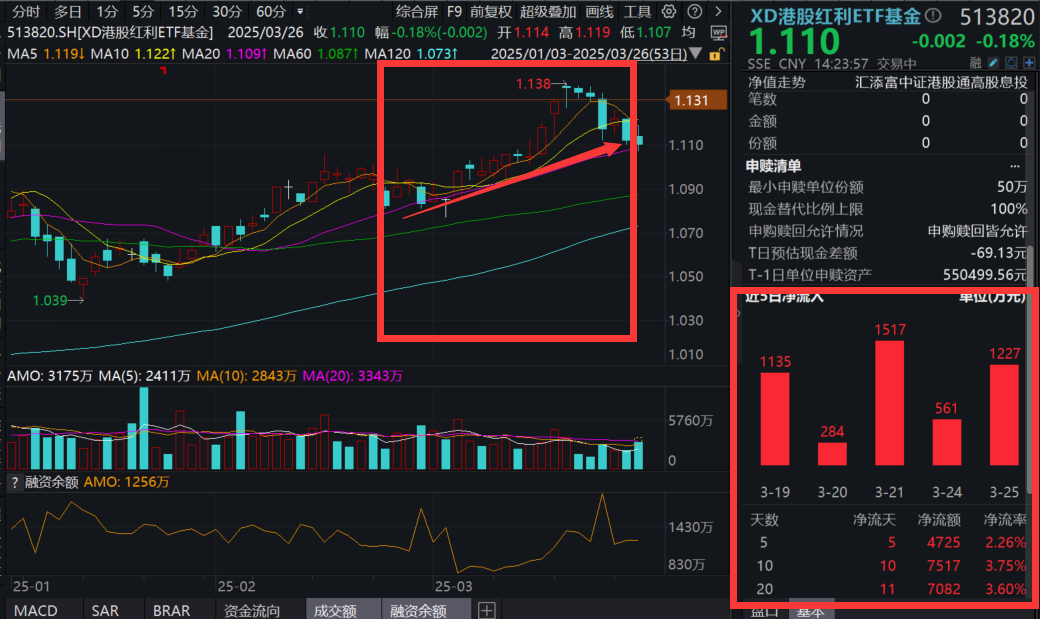
今日除息,港股红利ETF基金(513820)连续9个月分红!四月日历效应:高股息相对占优!低利率环境,“长钱”看好港股红利
Jie Mian Xin Wen· 2025-03-26 07:13
今日除息,港股红利ETF基金(513820)连续9个月分红!四月日历效应:高 股息相对占优!低利率环境,"长钱"看好港股红利 3月26日,"可月月评估分红"的港股红利ETF基金(513820)又带上了"XD"前缀,这是除息的标志,月底(3月31日)即可收息。从上次除息日 (2.25)至今的表现来看,基金填权能力强劲! 盘中,港股红利ETF基金(513820)冲高回落,当前跌0.18%,盘中溢价持续走阔。基金已连续11日累计获资金净流入超7000万,最新规模突 破20亿元。 华泰证券表示,险资或普遍加大红利股配置力度:1)稳定现金收益率。代表现金收益(利息、股息和少量租金)的净投资收益率是险资投资收 益的中枢,2023年以来利率快速下行压低利息贡献,红利股有助于增厚股息贡献。2)降低利润波动。红利股本身波动性相对较低,且如果计入 FVOCI则不影响利润。认为险资红利策略有3条重要选股标准:稳定的DPS、较低的估值、一定水平的股息率。(来源于华泰证券20250221《险资红 利策略的三道主线》) 机构指出,当前在"避险需求+日历效应+长线配置需求"等多重利好因素驱动型,高股息配置逻辑边际走强!"股息富翁"港股红利 ...
行领导一起背锅
表舅是养基大户· 2025-03-25 13:32
先聊个和今天市场没啥关系的事儿哈,上周五,总局印发了《商业银行代销管理办法》,为什么要聊这个呢,我一说可能大家就记起来了。 去年6月初的时候,市场一则关于 银行不得再继续代销私募基金 的传言发酵,对市场的冲击非常大,当天小盘股大跌2%以上,我当时也聊了,说这个传 闻"不可能发生,更不应该发生",原文我删了,大家也不用回头找了,但草稿箱里还有,开头这么说的,下图。 你可以理解为,当时的这个传闻,就是借着,这回这个办法的征求意见稿的名头,传播的。 很多人问,能不能解读一下这个办法,我觉得简单来说,核心就是4件事。 1、 银行可以继续卖私募 ,方法沿用现在的,通过TOF或者私募管理人担任投顾的模式; 2、银行代销出现的风险事件太多了,爆出来的很多,没爆出来的更多,在这个办法中,相比过往的文件, 不再有银行不承担代销产品的风险管理责任的 说法 ,换句话说,以后银行不能轻飘飘地说,自己只是代销的,风险都是管理人造成的了——这导致银行对代销的准入、退出等全生命周期,会变得更 加谨慎。 3、私募管理人,做银行准入的最低门槛,是 规模不低于3亿、成立不少于3年、且3年内没有接受过惩罚 ,这意味着,过去那种明星公募基金经理,出 ...
中金:海外洞见,低利率环境下的红利投资
中金点睛· 2025-03-17 23:51
Core Viewpoint - The article reviews the performance of the dividend style in 2024, analyzes the timing effects of the dividend style in a low interest rate environment from an overseas perspective, introduces dividend stock selection strategies and event effects, and provides an outlook on the future performance of the dividend style in the current low interest rate environment [1][10]. Group 1: Dividend Performance in 2024 - The dividend style showed strong performance in 2024, with excess returns relative to the CSI All Share Index from 2021 to 2024, indicating a stable return profile [3]. - Since the end of May 2024, there has been a degree of internal differentiation within the dividend style, with financial and utility sectors maintaining stability while cyclical sectors experienced some pullback [3]. - Insurance funds have increased their allocation to dividend assets, as evidenced by the top holders of dividend ETFs [3]. Group 2: Timing of Dividend Style - The analysis draws on experiences from the US, UK, Germany, and Japan to assess how dividend and growth styles perform in low interest rate environments [4][14]. - Both dividend and growth styles performed well in low interest rate environments, with annualized returns of 21%, 11%, 8%, and 10% in the US, UK, Germany, and Japan respectively [4][15]. - Growth style is more sensitive to interest rate changes, with dividend style potentially having an advantage during periods of rising low interest rates [4][17]. Group 3: Dividend Stock Selection Strategy - A constrained dividend selection strategy, limiting industry and market capitalization deviations to within 5% of the CSI Dividend Index, achieved a stable excess return of 4.74% in 2024 and an annualized excess return of 7.65% since 2010 [6][33]. - Companies announcing high dividend plans typically achieve excess returns around the announcement date, with a notable effect observed in the period leading up to the ex-dividend date [6][38]. Group 4: Outlook for Dividend Style - The overall outlook for the dividend style in a low interest rate environment is positive, with expectations of absolute returns driven by interest rate trends and the influx of medium to long-term capital [7][37]. - The anticipated decline in interest rates in 2025 may favor growth style, but the expansion of medium to long-term capital inflows could further boost the dividend style [7][36].

野村东方国际:日本低利率下消费品股价估值复盘
野村· 2025-03-13 15:48
Investment Rating - The report does not explicitly provide an investment rating for the industry Core Insights - The Japanese stock market experienced significant valuation increases during three notable periods post the 1990s bubble burst, with PE ratios reaching as high as 159 times [2][4] - The analysis of the 1990s low-interest environment reveals a clear distinction between periods driven by fundamentals and those driven by valuation changes, particularly in the consumer sector [5][20] - The food and beverage sector showed relative stability despite a slight revenue decline, indicating a shift in consumer behavior towards essential goods [8][25] Summary by Sections Historical Context - The report outlines the four phases of Japan's declining interest rates from the early 1990s to the late 1990s, highlighting the impact on various consumer sectors [6][7] - The initial phase saw a 40% drop in the market, while subsequent phases experienced varying degrees of recovery and decline across sectors [7][14] Sector Performance - In the 1994-1995 recovery period, all sub-sectors showed improvement, with retail profits soaring by 180% and significant revenue increases across various industries [13][17] - The food and beverage sector's revenue grew by 4% during the 1996-2000 period, but profits declined by 13%, reflecting a challenging environment [15][17] - The electrical equipment sector outperformed others, with a revenue increase of 5% and profit growth of 7% during the same period [17] Valuation Dynamics - The report emphasizes the shift from fundamental-driven performance in 1994-1995 to valuation-driven performance in 1996-2000, with significant declines in PE ratios across most consumer sectors [20][21] - Essential goods like food and beverages maintained stable valuations, contrasting sharply with the volatility seen in discretionary sectors [25] Consumer Behavior Trends - The report notes that during the economic recovery, discretionary spending surged, particularly in the wholesale and retail sectors, with substantial increases in both revenue and profit [24] - Essential sectors demonstrated resilience, with minimal fluctuations in valuations compared to more volatile discretionary sectors [25]