品牌建设

Search documents
鱼跃医疗20251026
2025-10-27 00:31
Summary of Yuyue Medical's Conference Call Company Overview - **Company**: Yuyue Medical - **Date**: October 26, 2025 Key Financial Metrics - **Revenue**: - Total revenue for the first three quarters: 6.9 billion CNY, a year-on-year decrease of 8.21% [2][3] - Q3 revenue: 1.886 billion CNY, a year-on-year increase of 9.63% [2][3] - **Net Profit**: - Net profit attributable to shareholders: 1.466 billion CNY, a year-on-year decrease of 4.28% [3] - Net profit after deducting non-recurring items: 1.169 billion CNY, a year-on-year decrease of 8.21% [3] - **Cash Flow**: - Net cash flow from operating activities: 1.504 billion CNY, a year-on-year increase of 8.77% [2][3] - **Dividend**: - First-time quarterly dividend planned: 2 CNY per 10 shares [2][3] Market Performance - **Overseas Market Growth**: - Overseas market revenue growth exceeded 30% in the first three quarters [2][5] - North America showed the highest growth at 110% [4][12] - **Domestic Market Growth**: - Domestic revenue growth was significant, with respiratory machines growing over 30% [5][9] Product Development and R&D - **R&D Investment**: - Focused on wearable technology, digital talent recruitment, and CGM product branding [2][5] - Plans to continue increasing R&D and brand investment in 2026 [5][19] - **Wearable Devices**: - Blood pressure watch and health ring expected to launch in early 2026 [4][7] - Future products include sleep wristbands and hearing aids, expected between late 2026 and 2027 [4][7] Strategic Initiatives - **Acquisition Strategy**: - Actively pursuing acquisition opportunities in CXM, diabetes, and respiratory sectors [4][8] - Identified potential targets with technological advantages or solid fundamentals [8] - **Global Expansion**: - Plans to relocate InnoGen's European manufacturing to China, expected to be implemented in 2026 [5][4] Competitive Landscape - **Market Position**: - Yuyue Medical's electronic blood pressure monitors lead the domestic market in shipment volume [6][7] - The company aims to expand its presence in overseas markets, particularly in the blood pressure monitor segment [6][7] Future Outlook - **Market Trends**: - Anticipates continued growth in the CGM market, with a goal to become the market leader in China by the end of next year [11][28] - **Financial Strategy**: - Plans to maintain a flexible approach to expenses while focusing on long-term profitability [19][28] - **Clinical Promotion**: - Establishing a clinical committee in Europe to enhance academic promotion and customer engagement [24] Additional Insights - **Sales and Marketing**: - Increased sales expenses due to competitive pressures, with a focus on maintaining market share [18][19] - **Regulatory Approvals**: - Progress in obtaining product registrations in various international markets, including Brazil and Russia [14][15][17] This summary encapsulates the key points from Yuyue Medical's conference call, highlighting financial performance, market dynamics, product development, strategic initiatives, and future outlook.

“一盏灯可以做100年” 三代人见证灯具市场发展变迁
Yang Shi Xin Wen Ke Hu Duan· 2025-10-26 05:35
Core Insights - The Yiwu Global Trade Center, a key project in Yiwu, Zhejiang, has officially opened, featuring over 3,700 vendors, with a significant proportion being second-generation entrepreneurs, injecting new vitality into the market [1] Group 1: Market Overview - The Yiwu Global Trade Center is the sixth-generation market, showcasing a modern approach to trade and commerce [1] - The center has attracted a diverse range of vendors, including a notable presence of second-generation business owners, which reflects a shift towards innovation and continuity in family businesses [1] Group 2: Entrepreneurial Journey - Jin Ling, a prominent vendor in the center, has been in the lighting business for 20 years, having taken over from her mother-in-law and successfully expanded the family business [1][3] - Jin Ling emphasizes the importance of marketing and establishing a competitive edge in today's market, acknowledging her initial struggles and the support she received from her mother-in-law [3][5] Group 3: Business Strategy - Jin Ling has adapted her business strategy over the years, shifting from price competition to focusing on unique products and brand development since 2012 [9] - She has created two new brands tailored to her children's strengths, indicating a strategic approach to succession planning and market positioning [8] Group 4: Next Generation - Jin Ling's son, Jin Yunxi, represents the younger generation's energy and innovative thinking, expressing a desire to not only continue but also expand the family business [13][15] - He acknowledges the advantages of starting with an established business and aims to prove his capabilities in the competitive market [15]


做品牌,中小卖家如何“以巧取胜”?
商业洞察· 2025-10-24 09:31
Core Insights - The article emphasizes the shift in cross-border e-commerce from a price-driven model to one focused on branding and consumer experience, particularly for small and medium-sized sellers [2][16]. Group 1: Market Dynamics - The current landscape of international trade is characterized by uncertainty, leading to a demand for higher quality and better consumer experiences, making low-price competition unsustainable [2][16]. - Small and medium-sized sellers face resource limitations, which necessitate a more strategic approach to branding and market positioning [2][16]. Group 2: Seller Case Studies - Iris, a former banker, learned the importance of branding through her experiences in e-commerce, ultimately focusing on niche markets with less competition [5][6]. - After initial failures, Iris pivoted to creating a product that captures emotional value, such as a "memory box," which allows for differentiation and avoids price wars [6][7]. - Dai Rui identified a gap in the home improvement tools market, focusing on aesthetics and user experience to create visually appealing and functional products [9][10]. - Lin Xuan, with experience in e-commerce, recognized the power of branding through logos to differentiate products in a saturated market, leading to increased customer trust and repeat purchases [13][14][15]. Group 3: Branding Strategies - The article highlights the significance of small actions in building a brand, such as product design, quality improvements, and effective packaging, which contribute to a stronger brand identity [6][10][12]. - The concept of "trust replication" is introduced, where a recognizable logo fosters customer loyalty across different product categories, enhancing repeat purchase rates [14][15]. Group 4: Conclusion - The narrative concludes that small, thoughtful actions in branding and product development can lead to significant changes in business trajectories, allowing small sellers to carve out their own market niches [16][17].

波司登(03998.HK):品牌引领积势蓄能 降温加码旺季销售
Ge Long Hui· 2025-10-24 05:07
Group 1: Core Insights - The company launched the "Master Puff" series during Paris Fashion Week, enhancing brand visibility and international influence through collaborations with renowned designers and celebrities [1] - The company reported a revenue of 25.9 billion yuan for FY25, reflecting a year-on-year growth of 11.6%, with a net profit of 3.51 billion yuan, up 14.3% [2] - The company is expected to maintain a robust growth trend in FY26, driven by seasonal demand and improved sales performance [3] Group 2: Brand Development - The company is focusing on brand building by collaborating with Italian designer Pietro Ferragina and appointing Kim Jones as the creative director for the new AREAL high-end urban line [1] - The company plans to open a new concept store in Shanghai, enhancing consumer experience through differentiated store design [1] Group 3: Sales and Revenue Breakdown - The main brand's revenue from down jackets reached 21.67 billion yuan, accounting for 83.7% of total revenue, with a year-on-year growth of 11.0% [2] - The OEM processing segment saw a revenue increase of 26.4% to 3.37 billion yuan, benefiting from changes in tariff policies [2] - Women's clothing revenue decreased by 20.6% to 650 million yuan due to a sluggish market environment [2] Group 4: Operational Efficiency - The gross margin for FY25 was 57.3%, a decrease of 2.3 percentage points, attributed to a higher proportion of lower-margin wholesale and OEM business [3] - The company achieved a net profit margin of 13.6%, an increase of 0.3 percentage points year-on-year [3] - The cash flow from operating activities was 3.982 billion yuan, indicating a healthy financial status [3]

特一药业:2025年前三季度净利增近10倍
Zhong Zheng Wang· 2025-10-24 02:55
Core Insights - The company reported a significant increase in revenue and net profit for the first three quarters of 2025, with revenue reaching 692 million yuan, a year-on-year growth of 51.86% [1] - Net profit attributable to shareholders surged to 65.22 million yuan, marking an astonishing increase of 985.18% [1] - The net profit after excluding non-recurring gains and losses was 62.81 million yuan, reflecting a staggering growth of 2508.06% [1] Financial Performance - Basic earnings per share rose from 0.01 yuan to 0.13 yuan, an increase of 1200% [1] - Operating cash flow net amount reached 192 million yuan, up 599.53% year-on-year [1] Business Strategy - The company completed the establishment of its self-operated sales team in 2025, leading to a gradual recovery in sales of its core product, cough relief tablets [1] - Marketing reforms have shown significant results, contributing to the overall performance growth [1] Investment and Shareholder Confidence - The company invested heavily in brand building, with sales expenses amounting to 236 million yuan, a year-on-year increase of 149.72% [1] - The company actively promoted a share repurchase plan, having repurchased 13.73 million shares, accounting for 2.68% of the total share capital, with a total repurchase amount exceeding 100 million yuan [1]

特一药业前三季度净利增长985% 营销组织架构完成全面升级
Zheng Quan Shi Bao Wang· 2025-10-23 14:26
Core Insights - The company reported significant growth in revenue and net profit for the first three quarters of 2025, with revenue reaching 692 million yuan, a year-on-year increase of 51.86%, and net profit at 65.22 million yuan, up 985.18% [1] - The growth is primarily attributed to a notable increase in sales of traditional Chinese medicine products [1] Financial Performance - In Q3 2025, the company achieved revenue of 201 million yuan, reflecting a year-on-year growth of 41.49%, while net profit for the quarter was 27.21 million yuan, an increase of 719.47% [1] - The company's core product, "Te Yi" cough tablets, sold 331 million pieces in the first half of 2025, recovering to 61.29% of the sales volume compared to the same period in 2023 [2] Marketing and Organizational Changes - The company has completed a comprehensive upgrade of its marketing organizational structure, creating new departments such as self-operated sales, online marketing, third-party sales, brand marketing, and market supervision [2] - The restructuring has led to an increase of over 100 frontline sales personnel, with plans to continue recruiting based on market development needs [2] - The company aims to enhance the market development of potential traditional Chinese medicine products and strengthen its multi-product tier strategy [2]
波司登(03998):品牌引领积势蓄能,降温加码旺季销售
Soochow Securities· 2025-10-22 10:02
Investment Rating - The investment rating for the company is "Buy" (maintained) [1] Core Views - The report highlights that Bosideng's main brand is experiencing high-quality growth, with expectations for strong sales during the peak season [7] - The company is focusing on brand building and differentiated channel operations, including the launch of new products at Paris Fashion Week and the opening of a new concept store in Shanghai [7] - Financial forecasts indicate steady revenue growth, with total revenue projected to reach 25.9 billion yuan in FY2025, representing a year-on-year increase of 11.6% [7] Financial Summary - Total revenue (in million yuan) for FY2024A is projected at 23,214, increasing to 25,902 in FY2025A, 28,512 in FY2026E, 31,420 in FY2027E, and 34,626 in FY2028E, with year-on-year growth rates of 38.39%, 11.58%, 10.08%, 10.20%, and 10.20% respectively [1] - Net profit attributable to shareholders (in million yuan) is expected to grow from 3,074 in FY2024A to 3,514 in FY2025A, 3,938 in FY2026E, 4,393 in FY2027E, and 4,897 in FY2028E, with corresponding year-on-year growth rates of 43.74%, 14.31%, 12.06%, 11.57%, and 11.45% [1] - The report anticipates an EPS of 0.27 yuan for FY2024A, increasing to 0.30 yuan in FY2025A, 0.34 yuan in FY2026E, 0.38 yuan in FY2027E, and 0.42 yuan in FY2028E [1] Operational Insights - The main brand's revenue for FY2025 is projected at 21.67 billion yuan, with a year-on-year growth of 11.0%, accounting for 83.7% of total revenue [7] - The report notes a significant increase in wholesale and self-operated business revenues, with wholesale up by 24.3% and self-operated by 5.2% [7] - The company has added 253 retail outlets, bringing the total to 3,470 by the end of FY2025 [7] Profitability Metrics - The gross margin for FY2025 is expected to be 57.3%, a decrease of 2.3 percentage points year-on-year, primarily due to a higher proportion of lower-margin wholesale and OEM business [7] - The net profit margin for FY2025 is projected to be 13.6%, reflecting a slight increase of 0.3 percentage points year-on-year [7] - Operating cash flow is expected to be 39.82 billion yuan, indicating a healthy financial position [7]
贵州辣椒产业高质量发展跑出加速度
Xin Hua Cai Jing· 2025-10-22 06:46
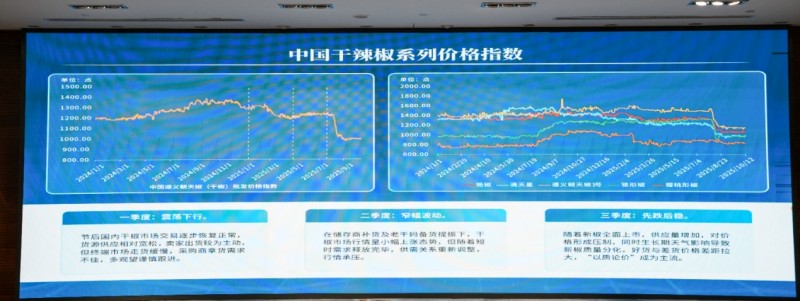
Core Insights - The Guizhou chili industry has transformed into a key pillar for rural revitalization and global market connection, leveraging its ecological advantages and digital tools for high-quality development [1] Industry Development - The China Chili City has evolved from a simple trading venue to a national-level chili market, with a trading volume of 350,000 tons and a transaction value of 7 billion yuan in 2024, surpassing 460,000 tons and 10 billion yuan when including off-market transactions [1] - The digital platform "Mai La Wang" has introduced diverse service models such as listing and bidding transactions, significantly improving efficiency across the supply chain [2] - The "Chili Pure" brand, developed using local chili, has gained market recognition, with over 100 live streaming teams promoting Guizhou chili online [2] Price Index and Market Impact - The "China Dried Chili Price Index," launched in 2018, has been operational for over seven years, covering major chili varieties and ensuring the interests of 1.4 million chili farmers [3] - The index has shifted farmers' mindset from being compelled to grow to actively choosing to cultivate, stabilizing planting areas and supporting sustainable industry growth [3] Future Outlook - Future plans for the chili index include expanding data collection to new regions and optimizing coverage of mainstream trading varieties, enhancing its service capabilities [5] - The ongoing digital empowerment and financial support aim to integrate chili culture with tourism, establishing a model that can be replicated in other agricultural sectors [5] - The Guizhou chili industry's rise reflects the development of modern, efficient mountain agriculture, with expectations for continued growth and value maximization [5]
3年突破1亿美元,亿级科技硬件品牌的出海方法论|出海参考
Tai Mei Ti A P P· 2025-10-22 05:50
Core Insights - The article emphasizes that consumer electronics companies are becoming the backbone of the new generation of global brands, with companies like Xiaomi, OPPO, Anker, and Insta360 leading the way in innovation and market presence [1][19] - Defining product categories and achieving significant sales scale are identified as key capabilities for new consumer electronics brands going global [2][19] Group 1: Company Innovations and Market Strategies - Insta360 has redefined the categories of sports and panoramic photography through innovative product development, achieving over 1 billion in sales, marking a significant milestone for the company [1] - JisuLife, Heybike, and HOVERAir have all successfully defined their respective product categories and achieved over 100 million in revenue, demonstrating effective market strategies [2] - JisuLife transitioned from a multi-product approach to focusing solely on small fans, leading to significant technological advancements and market success [3][4] Group 2: Product Development and User Engagement - HOVERAir's innovative approach to product development focuses on creating a "flying camera" rather than just a drone, successfully adapting to local market regulations and consumer needs [5][10] - Heybike's entry into the e-bike market involved extensive user and market analysis, leading to a tailored product offering that meets diverse consumer needs in Europe [6][12] - The combination of data analysis and field research has proven effective for companies like JisuLife in understanding user needs and enhancing product development [10][11] Group 3: Brand Building and Emotional Value - Building a brand involves creating emotional value for consumers, as demonstrated by Heybike's marketing strategies that focus on storytelling and user experiences rather than just sales promotions [14][15] - Companies are encouraged to engage with consumers beyond product sales, fostering a deeper connection through community involvement and brand experiences [18][19] - The ability to define a product category and provide emotional value is seen as a critical capability for new global brands to stand out in the market [19]

平台配送费为何由商家承担
经济观察报· 2025-10-21 10:09
Core Viewpoint - The article discusses the shift in the burden of delivery fees from consumers to merchants in the context of intense competition among small and medium-sized businesses in the delivery service industry [1][2][10]. Delivery Fee Dynamics - In the digital economy, various instant delivery platforms are thriving, leading merchants to adopt aggressive promotional tactics, including discounts and absorbing delivery costs to attract customers [2][10]. - Globally, delivery fees are typically paid by consumers, with models in countries like the US and UK emphasizing consumer awareness of delivery costs through membership systems [4]. - In China, however, delivery fees are increasingly borne by merchants, particularly small and medium-sized ones, as platforms encourage them to absorb these costs to boost sales [5][10]. Theoretical Background of Delivery Fees - Delivery fees have evolved from being a straightforward cost to a complex variable in market competition, influenced by logistics, labor costs, and platform algorithms [7][8]. - The rise of instant delivery services has further complicated the structure of delivery fees, which now include various factors such as rider costs and peak time surcharges [8]. Merchant Behavior Regarding Delivery Fees - Merchants are often compelled to absorb delivery fees to improve their visibility and competitiveness on platforms, leading to a reliance on discounts rather than quality improvements [10][11]. - This behavior creates a "path dependency trap," where merchants focus on short-term gains at the expense of long-term brand building and customer loyalty [11][12]. Long-term Strategies for Merchants - To escape the cycle of competing on price, merchants should focus on enhancing product quality and brand recognition, moving away from the reliance on delivery fee absorption [15]. - Large chain brands exhibit resilience against price wars due to established supply chains and brand equity, allowing them to maintain order volumes without resorting to aggressive pricing strategies [11]. Recommendations for Industry Improvement - The article suggests a multi-faceted approach to address the over-competition in delivery fees, including platform governance, regulatory oversight, merchant upgrades, and consumer education [14][16]. - Platforms should shift towards a value-oriented algorithm that prioritizes quality and service stability over immediate sales metrics, thereby reducing the pressure on merchants to absorb delivery costs [14]. - Consumers should be educated to recognize the value of quality service over the lowest price, fostering a culture of rational consumption [16]. Regulatory Perspective - Regulators are encouraged to enhance fair competition rules and transparency in cost allocation, ensuring that delivery fee structures are clear and equitable [17].