绿色化

Search documents
洞悉全球钢铁供需:优质钢材贸易商的选型智慧
Sou Hu Cai Jing· 2025-12-19 11:15
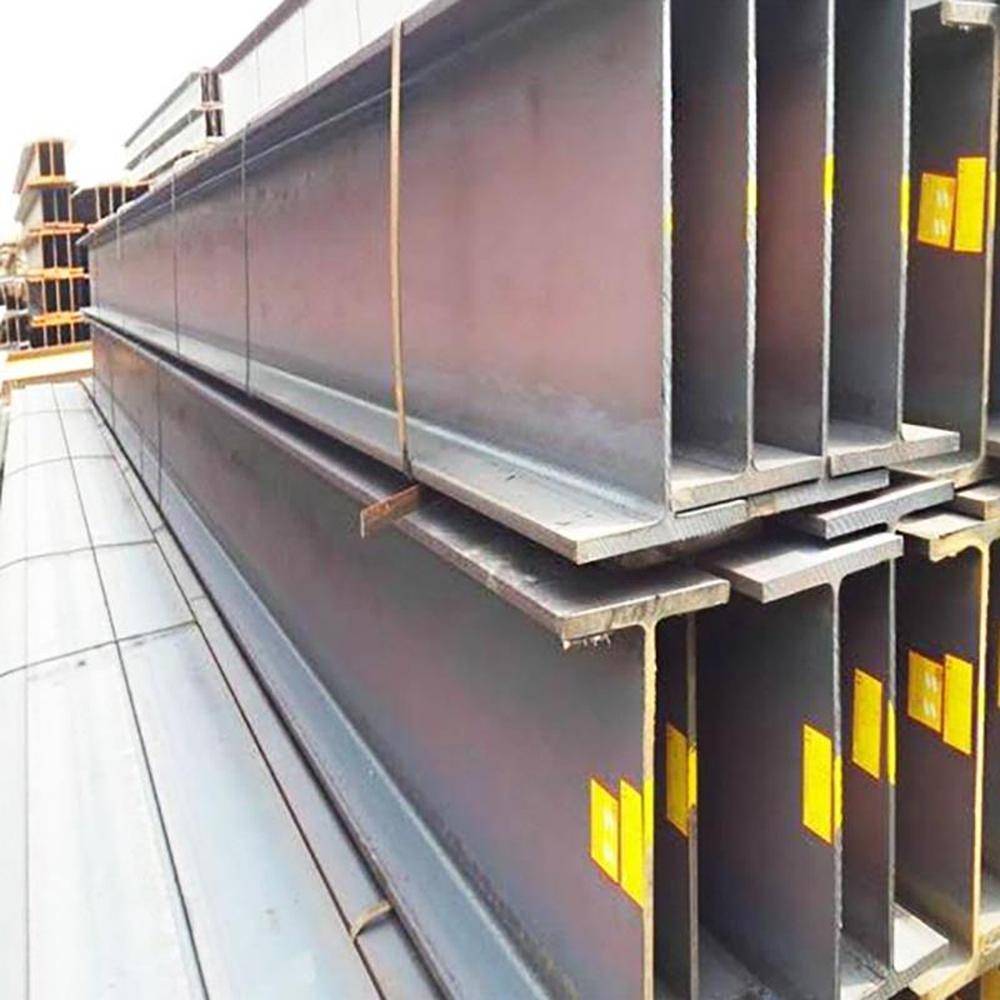
Core Insights - The article emphasizes the importance of steel as a foundational element in modern industry, highlighting the need for efficient sourcing and procurement in the context of global economic integration [2] - It discusses the various types of steel products and their specific applications, underscoring the necessity for companies to understand these characteristics for effective trade [3] - The significance of industry standards and quality assurance systems in global steel trade is outlined, indicating that a reliable steel trading company must have a robust quality control framework [4] - The current state of the global steel market is characterized by supply-demand balance and intensified regional competition, necessitating careful consideration of multiple factors when selecting a steel trading company [5] - Future trends in steel trade are moving towards green, intelligent, and efficient supply chains, with companies needing to adapt to these changes to remain competitive [6] - "Steel Friend" is presented as a comprehensive steel trading company that connects Chinese steel resources with global markets, offering a wide range of products and a strong quality assurance process [7] - The company also provides customized solutions and technical support, aiming to be a reliable partner for clients in navigating the complexities of international logistics and product specifications [8] Industry Analysis - Steel trade involves a diverse range of products, from carbon steel to high-performance stainless steel, each with unique properties and applications [3] - Quality is deemed the lifeline of global steel trade, with strict standards set by various national and international organizations to ensure product integrity [4] - The global steel market is influenced by geopolitical factors, raw material price fluctuations, and tightening environmental regulations, which can impact pricing and supply [5] - Companies are encouraged to evaluate suppliers based on resource integration capabilities, international trade expertise, and technical strength to ensure effective procurement [5] - The future of steel trade is expected to focus on sustainability and technological advancements, with companies that embrace these trends likely to succeed [6]

中国重汽重卡年产销30万辆背后的智造跃迁
Xin Lang Cai Jing· 2025-12-19 09:38
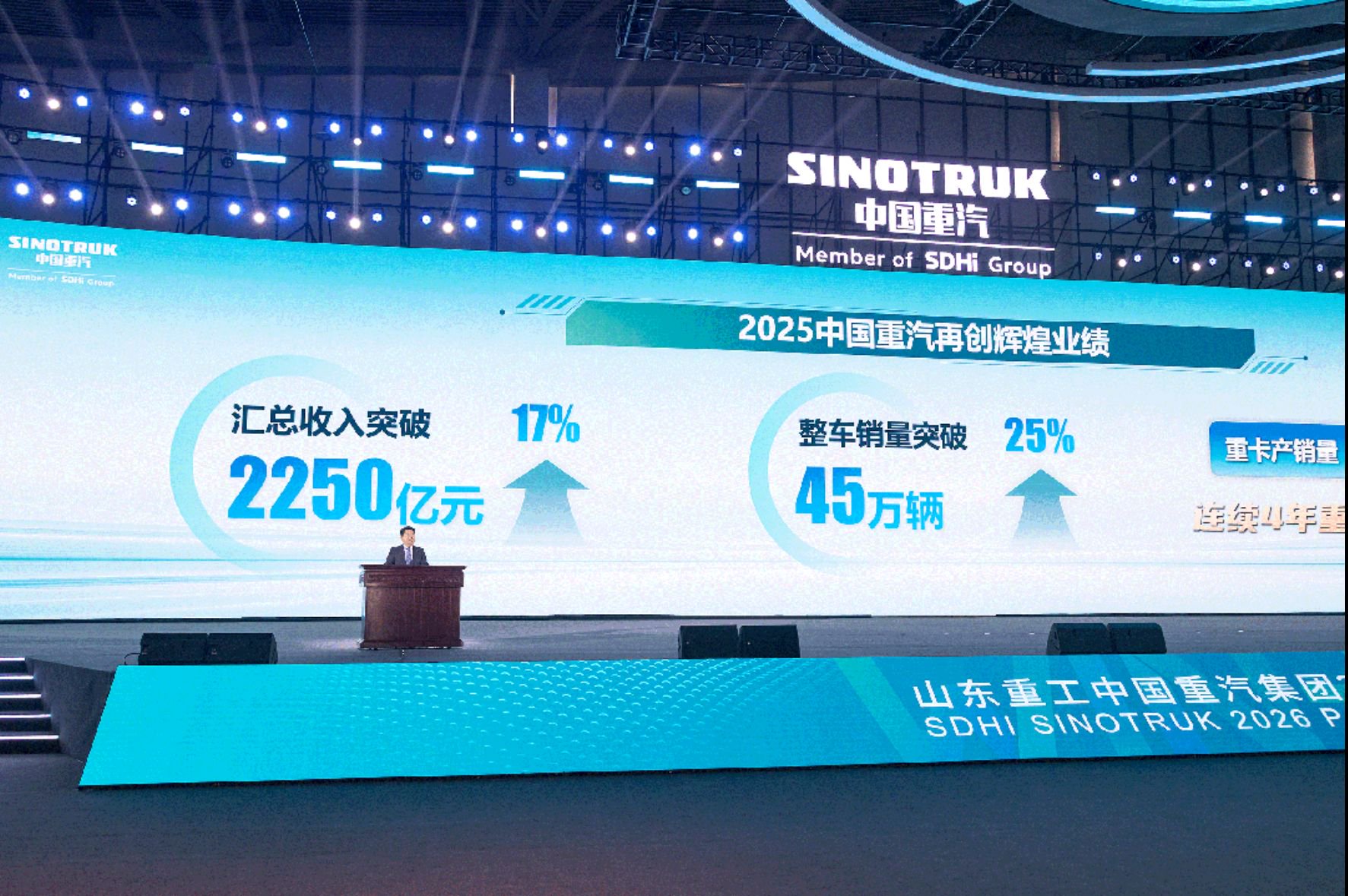
Core Insights - In 2025, China's commercial vehicle industry achieved a historic breakthrough, with China National Heavy Duty Truck Group (CNHTC) surpassing 300,000 heavy truck sales, marking its fourth consecutive year as the domestic industry leader and its first time ranking first globally in heavy truck sales [1][3] Group 1: Financial Performance - CNHTC's total revenue is expected to exceed 225 billion yuan, representing a 17% year-on-year increase, while total vehicle sales are projected to surpass 450,000 units, reflecting a 25% growth [3] - In the domestic market, heavy truck sales are expected to reach 150,000 units, a 33% increase, while light truck sales are projected at 120,000 units, up 29% [3] - The company has shown remarkable growth in the new energy sector, with expected sales increases of 230% for new energy heavy trucks and 390% for light trucks [3] Group 2: Export Performance - CNHTC exported over 150,000 heavy trucks this year, marking an 11% increase and maintaining its position as the top exporter of heavy trucks in China for 21 consecutive years [4] - In September, the company set a new record for monthly exports, exceeding 15,000 units [4] - The company has diversified its export product categories, with after-market parts sales increasing by 53% [4] Group 3: Competitive Advantage - CNHTC has developed a robust core competitiveness system, highlighted by the launch of the "Xiao Zhong 1.0" intelligent service system, which utilizes advanced AI technology to enhance customer service across the vehicle lifecycle [6] - The introduction of L2+ intelligent driving assistance technology improves operational efficiency, reducing labor costs by 20%-50% and increasing vehicle utilization by 20% [6] - The company has achieved a daily production capacity of 1,300 vehicles, ensuring high-quality and timely delivery to customers [6] Group 4: Future Development Plans - CNHTC aims to achieve a total revenue of over 400 billion yuan and vehicle sales exceeding 800,000 units by 2030, supported by a commitment to R&D and the "Talent Plan" [8] - The company will focus on six strategic directions: product, channel, policy, brand, service, and ecosystem, to maintain its leadership in commercial vehicle sales and market share [8] - The chairman emphasized that reaching the top is just the beginning, and the company is committed to high-quality development in the commercial vehicle industry [8]

城市制造业高质量发展研究报告(2025年)
中国信通院· 2025-12-19 08:43
Group 1: Manufacturing Industry Development Overview - The manufacturing industry in China is transitioning to a high-quality development phase, emphasizing innovation and efficiency over mere expansion[8] - Major cities are identified as key innovation hubs, contributing significantly to technological advancements and industrial upgrades[9] - The average labor productivity of industrial enterprises in strong manufacturing cities increased by 21.7% compared to the previous year, with total profits accounting for 47.3% of the national total[10] Group 2: Regional Distribution and Characteristics - The distribution of strong manufacturing cities remains stable, with 36 in the eastern region, 10 in the central region, and only 2 each in the northeastern and western regions[26] - Strong manufacturing cities collectively completed an export total of 14.3 trillion yuan, representing 59.6% of the national total[11] - The number of national-level manufacturing innovation centers in strong manufacturing cities accounts for 69.7% of the national total, indicating a concentration of innovation resources[10] Group 3: Challenges and Opportunities - Despite achievements, challenges include widening development gaps, low efficiency in technology transfer, and structural contradictions in foreign trade[11] - The shift towards smart, green, and integrated manufacturing is seen as a new direction for industrial upgrades, expanding growth opportunities in urban areas[18] - The report highlights the need for cities to enhance their manufacturing capabilities and foster a collaborative ecosystem among enterprises, academia, and research institutions[11]
山东重工中国重汽集团2026年合作伙伴大会在济南举办
Zhong Zheng Wang· 2025-12-19 07:00
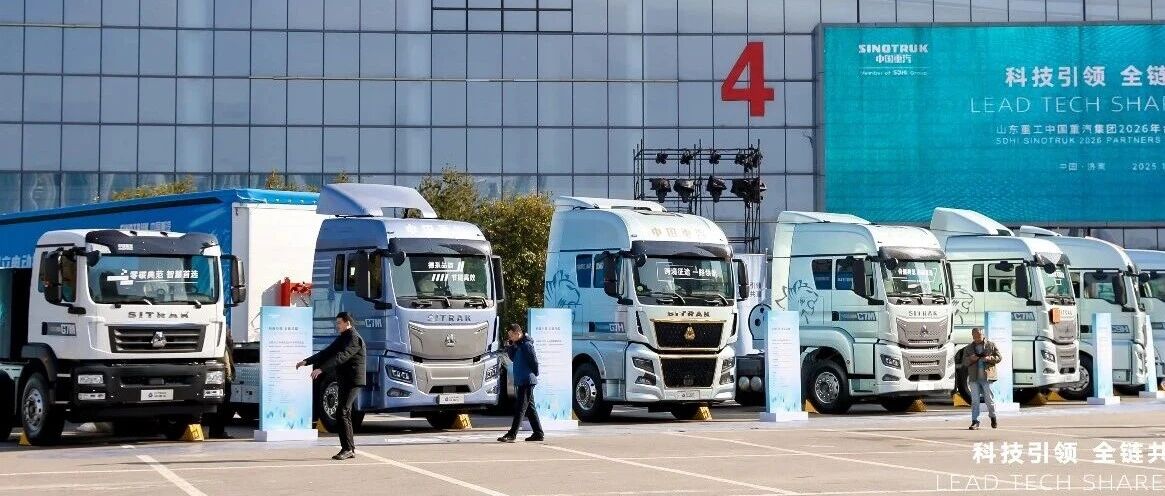
Core Insights - The Shandong Heavy Industry China National Heavy Duty Truck Group held its 2026 Partner Conference in Jinan, focusing on "Technology Leading All-Chain Win-Win" [1] - The company recognized outstanding partners for their contributions in 2025, projecting a total revenue of 225 billion yuan, a 17% year-on-year increase, and vehicle sales exceeding 450,000 units, a 25% increase [1] - The company aims to achieve a total vehicle sales target of 800,000 units and a consolidated revenue of over 400 billion yuan by 2030, emphasizing a strategic transformation towards green, digital, and international development [2] Group 1 - The conference featured over 3,000 partners and highlighted the company's achievements in 2025, including a record production and sales of heavy trucks exceeding 300,000 units [1] - The company reported a significant increase in domestic market performance, with heavy truck sales expected to rise by 33% to 150,000 units and light truck sales by 29% to 120,000 units [1] - The company introduced the "Xiao Zhong 1.0" high-level intelligent service system, which utilizes AI technology for various operational needs, enhancing the vehicle lifecycle management [2] Group 2 - In terms of exports, the company achieved a historic milestone with heavy truck exports exceeding 150,000 units, an 11% increase, maintaining its position as the top exporter for 21 consecutive years [2] - The company expanded its export product categories, with light truck exports increasing by 161% and aftermarket parts sales rising by 53% [2] - The conference showcased over 200 commercial vehicle products and components, demonstrating the company's technological strength and innovation [3]
【智研咨询】两片罐行业市场运行状况、重点企业分析及投资发展潜力预测报告
Sou Hu Cai Jing· 2025-12-19 05:41
Core Viewpoint - The two-piece can market in China has shown a fluctuating upward trend since 2015, with a projected demand increase driven by rising beer canning rates and the expansion of the carbonated beverage market [3][8]. Industry Overview - Two-piece cans are a type of metal can introduced in the mid-20th century, consisting of a can body and a lid, primarily made from aluminum and iron, with aluminum being the dominant material due to its lightweight advantages [3][5]. - Compared to three-piece cans, two-piece cans offer better sealing, higher production efficiency, and reduced material consumption, although they require higher material performance and production equipment standards [5][6]. Demand and Market Size - From 2019 to 2024, the demand for two-piece cans in China is expected to grow from 51.24 billion cans to 61.74 billion cans, with a compound annual growth rate (CAGR) of 3.8% [8][14]. - The market size of the two-piece can industry in China is projected to increase from 22.96 billion yuan in 2019 to 27.77 billion yuan in 2024, with a CAGR of 5.23% [8][14]. Industry Development - The two-piece can industry has experienced a recovery since 2019, driven by the upgrading of environmental policies and advancements in production technology [8][14]. - The market is expected to reach a demand of 62.79 billion cans by 2025, supported by the continuous rise in beer canning rates and the ongoing expansion of the carbonated beverage market [8][14]. Competitive Landscape - Prior to 2008, the two-piece can market in China was dominated by foreign companies. However, local companies like Baosteel Packaging and Orijin have rapidly gained market share following the exit of foreign competitors [9][14]. - The industry has seen increased consolidation and competition since 2016, leading to the exit of weaker small and medium enterprises, which has further increased market concentration [9][14]. Future Trends - The two-piece can industry is expected to continue advancing in lightweight technology, integrating IoT and AI for smart manufacturing, and enhancing sustainability through increased use of recycled materials [9][14]. - There will be a shift towards flexible customization in can design to meet brand differentiation and consumer personalization demands [9][14].

再设立全新目标 中国重汽全系列商用车2030年要实现销售80万辆 | 头条
第一商用车网· 2025-12-19 02:11
Core Viewpoint - China National Heavy Duty Truck Group aims to achieve a total commercial vehicle sales target of 800,000 units and an export target of 300,000 units by 2030, with specific sales goals for 2026 set at 340,000 units domestically, including 170,000 heavy trucks and 150,000 light trucks [1][12]. Group 1: 2025 Achievements - In 2025, China National Heavy Duty Truck's heavy truck production and sales exceeded 300,000 units, maintaining its position as the leading heavy truck manufacturer in China for four consecutive years and becoming the world's number one heavy truck brand [3]. - The company expects a total revenue of over 225 billion yuan in 2025, representing a 17% year-on-year increase, with total vehicle sales projected to surpass 450,000 units, a 25% increase from the previous year [4][10]. Group 2: Export Performance - Heavy truck exports are projected to exceed 150,000 units in 2025, marking an 11% year-on-year growth, while light truck exports saw a significant increase of 161% [4]. - The company has established a strong export presence, accounting for a substantial share of China's heavy truck exports for 21 consecutive years [4]. Group 3: Technological and Strategic Developments - China National Heavy Duty Truck has invested approximately 3 billion yuan annually in R&D, supported by national-level research centers and a workforce of over 3,000 R&D personnel [6][9]. - The company is focusing on six major transformations: green, digital, service-oriented, international, diversified, and high-end, aiming to lead in high-end commercial vehicle products [10][12]. Group 4: Future Goals and Market Outlook - For 2026, the company anticipates a stable demand in the commercial vehicle market, with a total market capacity of 800,000 heavy trucks and 700,000 light trucks [14]. - To achieve its sales target of 340,000 units in 2026, the company plans to invest over 3.4 billion yuan in product upgrades and enhance its supply chain collaboration [14].
年产能最高30万吨!珠江啤酒中山产能扩建升级项目顺利投产
Nan Fang Du Shi Bao· 2025-12-18 13:41
Core Viewpoint - The production launch of the capacity expansion and upgrade project of Zhongshan Zhujiang Beer is a significant step towards enhancing production capacity, technological advancement, and green low-carbon levels, contributing to the high-quality development of the beer industry in Guangdong [1][2][8]. Group 1: Project Overview - The project involves a total investment of 932 million yuan, adding 300,000 tons of brewing capacity and a new can production line with a capacity of 72,000 cans per hour [1]. - The project aims to integrate smart manufacturing and green technology, enhancing the overall production efficiency and sustainability of Zhujiang Beer [2][3]. Group 2: Technological Innovations - The project incorporates approximately 40 advanced technologies and equipment, including intelligent integrated systems and automated storage solutions, to improve production processes from brewing to logistics [2][4]. - A digital management platform will facilitate one-stop digital management, including order issuance, data collection, and intelligent analysis [3][4]. Group 3: Economic Impact - The project is expected to generate an additional annual output value of over 800 million yuan, reinforcing the foundation of the real economy in Zhongshan [5]. - Zhujiang Beer has maintained a high-quality growth trajectory, achieving beer sales of 1.2035 million tons and revenue of 5.073 billion yuan in the first three quarters, with net profit increasing by 17.05% year-on-year [6]. Group 4: Consumer Engagement and Market Strategy - The project enhances consumer experience by providing fresher products and expanding the "beer+" model, which integrates various sectors such as sports, music, and food [7]. - Zhujiang Beer has established over 500 experience stores nationwide, creating a consumer service network that promotes active consumption [7]. Group 5: Strategic Alignment - The project aligns with the "14th Five-Year Plan" for optimizing the industrial structure and enhancing the manufacturing capabilities of Zhujiang Beer, contributing to the broader goals of Guangdong's economic development [6][8].

携手合作启新程 新华网与东风股份签署深化战略合作框架协议
Xin Hua Wang· 2025-12-18 10:39
Group 1 - The core viewpoint of the news is the signing of a strategic cooperation framework agreement between Xinhua Net and Dongfeng Motor Corporation, focusing on the automotive industry's trends of "greening, intelligence, high-end, service, and internationalization" [1][4] - The partnership aims to explore innovative paths for deep integration between media and enterprises, actively serving national strategies and contributing to the construction of a strong automotive nation [1][4] - Xinhua Net will leverage its platform, content, communication channels, and technological innovation to support the development of the Chinese automotive industry and enhance brand building for companies like Dongfeng [3] Group 2 - Dongfeng Motor Corporation is a large state-owned enterprise responsible for the development of light commercial vehicles, offering a comprehensive range of products including light trucks, vans, buses, and specialized vehicles [4] - The company aims to become a leading green technology enterprise in light commercial vehicles, targeting to achieve the top sales in the new energy sector and rank second in total sales in the domestic market [4] - The cooperation will involve nine key areas, including the establishment of a media innovation center and automotive live streaming, to promote high-quality development in the automotive industry [4]


航民股份:公司聚焦纺织印染和黄金饰品两大主业升级
Zheng Quan Ri Bao Wang· 2025-12-18 09:43
Core Viewpoint - The company is focusing on upgrading its two main businesses, textile printing and dyeing, and gold jewelry, by moving towards "high-end, intelligent, green, and integrated" directions, leveraging technological innovation as a key driver [1] Group 1: Business Strategy - The company aims to enhance its operations through technological innovation [1] - The focus is on two primary sectors: textile printing and dyeing, and gold jewelry [1] Group 2: Industry Coordination - The company is coordinating industries such as thermal power and wastewater treatment to promote quality improvement and efficiency [1]

智能装备+绿色工艺全覆盖!2026济南国际化工展,3万专业观众共赴智能制造盛宴
Sou Hu Cai Jing· 2025-12-18 09:08
Core Viewpoint - The Chinese chemical industry is undergoing a profound transformation centered on "intelligent, green, and clustered" development, with the 2026 China (Jinan) International Chemical Equipment and Intelligent Manufacturing Exhibition (CIEIM 2026) set to take place from March 9 to 11, 2026, in Jinan, aiming to showcase the industry's shift towards high-end, intelligent, and green practices [1][3]. Group 1: Exhibition Overview - The exhibition will feature over 500 top global companies and attract more than 30,000 professional visitors, marking a significant milestone in the chemical industry's transition [1]. - The event will cover an exhibition area of 100,000 square meters and will integrate with the BIO CHINA exhibition, showcasing a full spectrum of "chemical + biological manufacturing" [3]. Group 2: Product Coverage - The exhibition will comprehensively cover two main areas: chemical equipment and intelligent manufacturing, emphasizing the dual themes of "intelligent + green" [4]. - The chemical technology equipment section will include a full range of devices from raw material processing to finished product delivery, highlighting key technologies for emission reduction and energy efficiency [4]. Group 3: Intelligent Manufacturing and Digitalization - The intelligent manufacturing and digitalization section will focus on cutting-edge technologies such as smart factories, industrial internet, artificial intelligence, and big data analytics, demonstrating how the chemical industry can optimize production and enhance safety through digital transformation [5]. Group 4: Forums and Industry Insights - The exhibition will host the 2026 Chemical Equipment Innovation Development Conference, featuring three major forums that will discuss topics such as digital transformation, green processes, and fluid technology applications [7]. - These forums aim to provide actionable solutions for enterprises by interpreting national policies and industry trends through real case studies [7]. Group 5: Participation Benefits - Participating in CEM CHINA 2026 offers opportunities to gain insights into policy and market trends, especially during the critical early phase of the "14th Five-Year Plan" [8]. - The exhibition serves as a platform for companies to enhance brand influence and connect with high-quality global customers [8]. Group 6: Target Audience - The audience will include users from various end industries such as petrochemicals, pharmaceuticals, food, and environmental sectors, ensuring efficient and precise business matching for exhibitors [10]. - CIEIM 2026 is positioned not only as a product and technology showcase but also as a platform for industry collaboration and innovation [10].