货币政策

Search documents
至臻方略系列之一:叙事时代下债市投研框架转型
GF SECURITIES· 2026-03-05 02:52
Group 1 - The report emphasizes the transformation of the bond market research framework in response to the changing narrative era, highlighting the need to adapt to new market dynamics and strategies [3][4] - It identifies that the bond market's sensitivity to economic data has weakened, with the focus shifting from economic indicators to narrative logic, driven by factors such as weak credit demand and a downturn in the real estate sector [3][9] - The report defines "narrative" as a concrete expression and dissemination of the main contradictions in the market at specific stages, indicating that when economic data loses its guiding power, events and policy debates become the primary narrative drivers [3][40] Group 2 - The current market narrative landscape shows a clear consensus on long-term strategies, while short-term narratives are mixed, indicating a transition phase where old narratives are losing impact and new ones are yet to emerge [3][53] - Key narratives identified include macro-strategic narratives focused on financial stability, trade and tariff narratives evolving from immediate impacts to long-term backgrounds, and monetary policy narratives emphasizing precise price control and interest rate management [3][57][61][62] - The report suggests that the bond market's research framework should shift from being an "economic forecaster" to a "market decoder," focusing on policy research, technical analysis, and institutional behavior analysis to navigate the complexities of the narrative-driven market [3][39][64]
贵金属日评-20260305
Jian Xin Qi Huo· 2026-03-05 01:20
Group 1: Investment Rating - No investment rating information provided in the report Group 2: Core Viewpoints - In the medium to long - term, the major changes unseen in a century and Sino - US competition will continue to drive up the gold price. Short - term Middle East geopolitical risks are positive for the gold price but are more phased, and the precious metals sector has high volatility. It is recommended that investors participate in trading with a bullish mindset while strictly controlling positions [4]. - After the sharp drop in late January due to the Fed's suspension of interest rate cuts and Trump's nomination of a hawkish Fed chairman candidate, the precious metals sector showed strong signs of stabilizing and rebounding in February. Affected by factors such as the chaotic international trade situation, the gloomy global economic growth outlook, the Fed's loose monetary policy and rising geopolitical risks, the precious metals sector is expected to continue to rise strongly along the upward trend line since September 2025. But geopolitical conflicts usually drive short - term increases in precious metals, and investors are advised to control positions and maintain a bullish mindset. Long - hedgers can take the opportunity to establish hedging positions, and short - hedgers should appropriately reduce hedging positions [6]. Group 3: Summary by Directory 1. Precious Metals Market and Outlook - **Intraday Market**: The military conflict between the US, Israel and Iran and Iran's blockade of the Strait of Hormuz significantly pushed up international oil prices and inflation expectations. The market worried that inflation pressure would make it difficult for central banks such as the Fed to implement loose monetary policies, which pushed up the US dollar exchange rate and US bond yields and triggered a US dollar liquidity risk. Overnight, there was a risk - free sell - off of global financial assets. But after Europe and the US announced the protection of transportation in the Strait of Hormuz, financial market volatility eased. London gold first fell below the $5000/oz mark and then rebounded above $5150/oz [4]. - **Domestic Precious Metals Market**: The previous closing price, highest price, lowest price, closing price, percentage change, open interest and change in open interest of domestic precious metal futures indexes such as the Shanghai Gold Index, Shanghai Silver Index, Guangzhou Platinum Index and Guangzhou Palladium Index are provided [5]. - **Medium - term Market**: After the sharp drop in late January, the precious metals sector rebounded in February. The ruling of the US Federal Supreme Court on February 20 and the Middle East geopolitical risks increased the demand for gold as a safe - haven asset. The precious metals sector is expected to rise along the upward trend line, but the impact of geopolitical conflicts is short - term [6]. 2. Precious Metals Market - related Charts - Multiple charts are presented, including Shanghai gold and silver futures indexes, London gold and silver spot prices, the basis of Shanghai futures indexes against Shanghai Gold Exchange T + D, gold and silver ETF holdings, the gold - silver ratio, and the correlation between London gold and other assets. All data sources are Wind and the Research and Development Department of CCB Futures [8][10][16]. 3. Major Macroeconomic Events/Data - **Geopolitical Events**: Israel and the US attacked multiple targets in Iran, and Iran retaliated by attacking US embassies in Kuwait and Saudi Arabia. The US closed relevant embassies and ordered non - emergency government personnel and their families to evacuate most parts of the Middle East. A UK air - force base in Cyprus was attacked, prompting European allies to strengthen regional defense [17]. - **Fed Officials' Views**: New York Fed President Williams said it was too early to judge the impact of the war on US inflation and growth. The US economy is less dependent on imported oil and can withstand energy price shocks. If inflation pressure eases as expected, the Fed will further cut interest rates. Minneapolis Fed President Kashkari said the Iran conflict increased the uncertainty of the US economic outlook and made the Fed's interest - rate policy more difficult to predict [17]. - **IMF View**: IMF First Deputy Managing Director Dan Katz said the impact of the Middle East war on the global economy depends on its duration and the damage to the region's infrastructure and industries, especially whether the rise in energy prices is short - term or long - term [17].
野村首席观点 | 陆挺:2026年两会前瞻
野村集团· 2026-03-04 14:20
Economic Growth Target - The government is expected to slightly lower the GDP growth target for 2026 to a range of 4.5%-5.0%, down from approximately 5.0% in 2025, with 21 out of 31 provincial-level regions adjusting their targets downward [4] CPI Inflation Target - The CPI inflation target for 2026 is anticipated to remain at around 2.0%, consistent with the previous year, despite an actual CPI inflation rate drop to 0.0% in 2025 [5] Monetary Policy - The monetary policy is expected to maintain an "appropriate easing" stance, with the central bank likely to implement a policy interest rate cut and a reserve requirement ratio cut in the second quarter of 2026 [6] Fiscal Policy - Fiscal policy is projected to play a leading role in addressing demand slowdown, with a fiscal deficit rate set at 4.0%, higher than the previous 3.0% [7] Consumption Promotion Policies - The government is likely to continue enhancing policy support for consumption, confirming the scale of fiscal subsidies and reiterating structural measures such as maternity subsidies and social security system improvements [8] Real Estate Policy - The upcoming National People's Congress is expected to reaffirm the real estate policy framework established in December 2025, with local governments primarily driving the implementation of most easing measures [9] "15th Five-Year" Plan - The final version of the "15th Five-Year" plan is expected to provide specific guidance for economic and social development from 2026 to 2030, with a focus on building a strong, independent industrial ecosystem and significantly increasing consumption [10]


金融市场流动性与监管动态周报:人民币持续升值,可跟踪资金延续净流出-20260304
CMS· 2026-03-04 13:31
Core Insights - The report highlights the continuous appreciation of the RMB, driven by a weakening USD index, narrowing China-US interest rate differentials, and increased demand for currency settlement. It anticipates a slowdown in the pace of RMB appreciation but expects it to remain strong in the short term due to high settlement demand and optimistic economic growth expectations at the beginning of the year [2][4][20]. Market Liquidity - The secondary market has seen a continuous net outflow of tracked funds, with financing funds and ETFs experiencing slight net outflows. Specifically, financing funds had a net outflow of 83.5 billion RMB, and ETFs saw a net outflow of 360.2 billion RMB [4][39]. - The liquidity indicators show a decrease in public fund issuance to 8.8 million units, while the net issuance of ETFs has increased [3][39]. Currency Policy and Interest Rates - The People's Bank of China (PBOC) conducted a net withdrawal of 461.4 billion RMB in the open market, with a significant amount of reverse repos maturing in the coming week. The report notes an increase in short-term interest rates and a decrease in long-term bond yields [4][29]. - The PBOC has lowered the foreign exchange risk reserve requirement for forward sales from 20% to 0%, aiming to reduce costs for enterprises and stimulate foreign exchange demand [13][28]. Market Sentiment - The report indicates an increase in trading activity among financing funds, with the proportion of financing transactions in the A-share market rising to 11.2% [52]. The VIX index has also increased, reflecting a decline in market risk appetite [54]. - The report identifies a preference for cyclical sectors, with significant inflows into materials, power equipment, and electronics, while ETFs primarily experienced net redemptions [61]. Investor Preferences - The report notes that sectors such as non-bank financials, construction materials, and real estate saw net inflows, while sectors like electronics, computing, and media experienced net outflows [61]. The net buying in financing funds was highest in electronics (+173.6 billion RMB), non-ferrous metals (+95.0 billion RMB), and power equipment (+81.8 billion RMB) [61].
2月海外月度观察:宽松节奏放缓,地缘冲击市场-20260304
Huachuang Securities· 2026-03-04 11:47
1. Report Industry Investment Rating - The report does not mention the industry investment rating. 2. Core Viewpoints of the Report - From January to February 2026, the global economic resilience continued, but the easing pace of overseas central banks slowed down overall. Policy expectations and geopolitical risks continuously disturbed the market, leading to increased volatility of global major asset classes. The follow - up focus should be on the evolution of geopolitical conflicts, the trend of energy prices, and the changes in the policy expectations of major central banks [2][6]. 3. Summary According to the Table of Contents 3.1 Overseas Economy: Economic Prosperity Improves, and Inflation Continues the Slowing - down Trend - **Global Economy**: The global economic growth momentum was relatively strong. In January, the global manufacturing and service PMIs remained in the expansion range, and the manufacturing prosperity of major developed countries improved. From January to February, the Baltic Dry Index rebounded after hitting the bottom, and the year - on - year growth rate of South Korea's unadjusted exports in the first 20 days of February was 23.5%. The central banks of the US, Europe, the UK, and Japan remained on hold. The US federal government was shut down again, and the US Supreme Court ruled that some tariffs of the Trump administration were illegal. In Japan, Kōshi Kishida was elected as the new prime minister and implemented a loose fiscal policy [7][8][9]. - **Developed Economies**: - **US**: The economic prosperity improved, with significant recovery in manufacturing and continued expansion in services. The labor market showed short - term resilience, but historical data was significantly revised downward. Inflation data was lower than expected, but service inflation remained resilient. Retail sales growth was lower than expected, and existing - home sales declined significantly due to bad weather, with builders' sales expectations remaining weak [25][26][27]. - **UK, Japan, and Eurozone**: The UK's economic growth recovered, while the Eurozone's manufacturing and service sectors showed a divergence in prosperity. In January, the Eurozone's manufacturing PMI expanded, and the service PMI declined slightly. The UK's manufacturing and service PMIs both increased. Japan's manufacturing and service PMIs also rose. In terms of inflation, inflation in the Eurozone declined, and inflation in Japan and the UK slowed down [51]. 3.2 Monetary Policy: The US, UK, Europe, and Japan Remained on Hold - **Fed**: In January, the Fed paused rate cuts as expected and maintained a wait - and - see stance due to inflation risks. Although there were differences among officials, there was still a possibility of rate cuts within the year. The Fed was likely to start the rate - cut window in the second half of the year [64]. - **ECB**: The euro strengthened, and tariff policy uncertainty increased. The ECB continued to keep rates unchanged and would make decisions based on future data. Attention should be paid to the impact of the euro's appreciation on export competitiveness and inflation prospects [66]. - **BOJ**: The BOJ maintained the interest rate unchanged and focused on the yen, trade policies, and imported inflation. It was expected that inflation would fall below 2% in the first half of 2026 but would rise slowly throughout the year [69]. - **BOE**: The BOE paused rate cuts dovishly. Given the trends of slowing growth and falling inflation, there was still room for rate cuts within the year [71]. 3.3 Financial Market: US Treasury Yields First Rose and Then Fell, the US Dollar Index Rebounded after Hitting the Bottom, and International Oil Prices Strengthened - **US Bond Market**: Since the beginning of the year, the trading of the US bond market was centered around domestic fundamentals, monetary policy, and geopolitical factors. Yields first rose and then fell, breaking through 4% during the session. By the end of February, the 2 - year US Treasury yield dropped 9BP to 3.38%, and the 10 - year yield dropped 21BP to 3.97% [2][74]. - **Exchange - rate Market**: The US dollar index rebounded after hitting the bottom, the yen oscillated weakly, and the euro and the pound first strengthened and then weakened, mainly following the fluctuations of the US dollar [77][78]. - **International Crude Oil**: Geopolitical tensions dominated oil prices, and the WTI crude oil price quickly rose to $74.6 per barrel [81].
元瞻经纬总量月报(2026年2月):近期宏观经济数据跟踪
Guoyuan Securities· 2026-03-04 04:25
Industrial Production and Economic Sentiment - In January 2026, the Producer Price Index (PPI) year-on-year decline narrowed to -1.4%, marking six consecutive months of improvement[11] - The PPI month-on-month increased by 0.4%, continuing a positive trend for four months[11] - Manufacturing PMI fell to 49.3% in January, influenced by seasonal factors and insufficient effective demand[24] Domestic Demand - Consumer Price Index (CPI) showed a mild recovery, with a year-on-year increase of 0.2% in January, indicating potential improvement in domestic demand[40] - During the Spring Festival, key retail and catering enterprises reported a daily sales increase of 5.7% compared to the previous year[42] - The urban unemployment rate in January was 5.2%, indicating stability in employment conditions[43] Fiscal Performance - In December 2025, general public budget revenue decreased by 24.95% year-on-year, primarily due to a high base effect from the previous year[55] - The total public budget revenue for 2025 was 216,045 billion yuan, a decrease of 1.7% year-on-year[52] - Government fund income for 2025 was 57,704 billion yuan, with a year-on-year decline of 7%[72] Financial Sector Insights - Social financing in January 2026 reached 7.22 trillion yuan, an increase of 1,662 billion yuan year-on-year[81] - M1 growth rate rebounded to 4.9%, reflecting increased economic activity and liquidity[82] - M2 growth rate was 9%, indicating overall liquidity and credit expansion in the economy[83] Risk Factors - Potential risks include unexpected declines in domestic and external demand, intensified trade frictions, and policy implementation effects falling short of expectations[5]
2026年03月04日申万期货品种策略日报-国债-20260304
Shen Yin Wan Guo Qi Huo· 2026-03-04 04:05
| | 1、央行公告称,3月3日以固定利率、数量招标方式开展了343亿元7天期逆回购操作,操作利率1.40%,投标量343亿 | | --- | --- | | | 元,中标量343亿元。Wind数据显示,当日5260亿元逆回购到期,据此计算,单日净回笼4917亿元。央行公布2026年2 月中央银行各项工具流动性投放情况。中央银行贷款方面,中期借贷便利(MLF)净投放3000亿元;公开市场业务方 | | | 面,7天期逆回购净回笼1205亿元,公开市场国债买卖净投放500亿元。 2、2026年全国两会即将启幕。全国政协十四届四次会议将于3月4日下午3时开幕,3月11日上午闭幕,会期7天。大会 | | | 主要议程包括:听取和审议全国政协常委会工作报告和提案工作情况的报告;列席十四届全国人大四次会议,听取并 | | | 讨论政府工作报告以及其他有关报告,讨论国民经济和社会发展第十五个五年规划纲要草案;审议通过全国政协十四 | | | 届四次会议政治决议等。十四届全国人大四次会议将于3月5日开幕,3月4日12时举行新闻发布会,大会发言人就大会 | | | 议程和人大工作相关问题回答中外记者提问。 | | | 3、 ...
农产品日报-20260304
Guang Da Qi Huo· 2026-03-04 03:29
1. Report Industry Investment Ratings - Corn: Bullish with a slight upward trend [1] - Soybean Meal: Sideways [1] - Edible Oils: Sideways [1] - Eggs: Sideways [1] - Pigs: Sideways with a downward trend [2] 2. Core Views of the Report - Corn prices are influenced by the surrounding commodities. Although there is a bullish sentiment in the market, high - price transactions are average. Traders are advised to set dynamic stop - profits and use put options for protection [1]. - Soybean meal prices are affected by the rise in CBOT soybeans, but demand concerns and Brazilian competition limit the increase. Traders can participate in short - term long positions [1]. - Edible oil prices are driven by the rise in crude oil and the expected decline in palm oil inventory. Traders can participate in short - term long positions and 5 - 9 reverse spreads [1]. - Egg prices are in a weak fundamental situation due to sufficient supply and seasonal low demand. Traders are advised to conduct short - term transactions [1]. - Pig prices are mostly in a state of oversupply, but low - price meat may stimulate demand. Traders are advised to conduct short - term transactions [2]. 3. Summary of Each Section 3.1 Market Information - The Chinese government will continue to implement a more proactive fiscal policy and a moderately loose monetary policy [3]. - From March 1, 2026, to December 31, 2026, China will not impose additional tariffs on certain Canadian products [3]. - Iranian Supreme Leader Ali Khamenei passed away on March 1, 2026 [3]. - Trump expects the Iran conflict to last about four weeks [3]. - The Iranian Islamic Revolutionary Guard Corps warned that if its oil and gas facilities are attacked, it will destroy the oil and gas facilities of all countries in the region [3]. - Shipping giant Maersk will divert ships due to the Middle East situation [4]. - India hopes to cut its thermal coal imports by at least 30% this year [4]. - After the Spring Festival, the inventory speed of imported cotton has slowed down slightly, while the downstream procurement has increased [4]. - OPEC+ will resume the plan to gradually cancel the additional voluntary production cuts and increase production by 206,000 barrels per day [4]. - Dozens of cargo ships are gathered in the waters of Iran, Iraq, Kuwait, and the UAE [4]. - The national alumina weekly operating rate has decreased by 1.21 percentage points to 77.17% [5]. - Saudi Arabia may raise the official selling price of crude oil to Asia in April [5]. - Crude oil prices have risen due to the US - Iran tension, with a war risk premium of $8 - $10 [6]. 3.2 Variety Spreads - The report presents various contract spreads and contract basis charts for different agricultural products, including corn, soybean, soybean meal, edible oils, eggs, and pigs [7][16]
美国汽油价格飙升,特朗普的“伊朗豪赌”开始付出代价
美股IPO· 2026-03-04 00:49
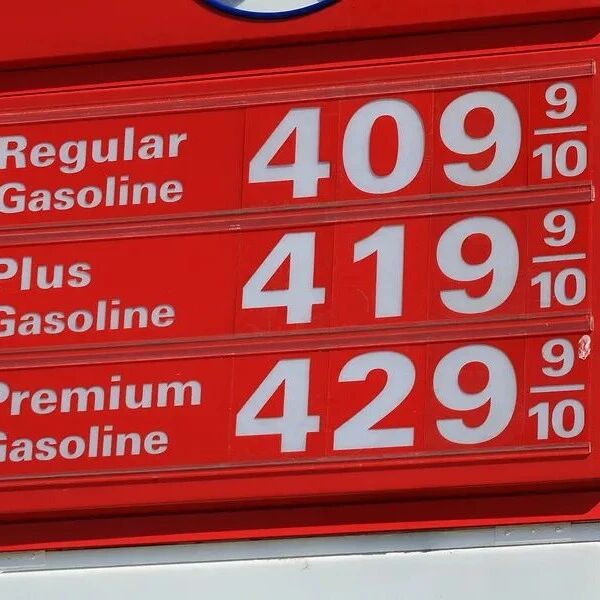
美国对伊朗的军事行动正在通过油价这一最直接的渠道,向普通美国家庭传导代价。汽油价格的快速攀升, 不仅动摇了特朗 普压制通胀的核心政治承诺,更在中期选举临近之际,为其经济议程蒙上阴影。 据美国汽车俱乐部AAA数据,普通汽油全国均价周二升至每加仑3.109美元,不仅高于拜登政府卸任时的水平,也较一周前的 2.951美元明显跳升。批发市场的压力更为突出——RBOB期货已从上周末约2.30美元飙升至2.50美元,预示零售端价格仍有 进一步上行空间。 最新数据显示,美国汽油均价突破3.1美元/加仑,分析师预计复活节周日汽油价格将升至每加仑3.25至3.50美元。这直接冲击 特朗普压制通胀的核心承诺。市场人士警告,在通胀已连续五年超过美联储2%目标的背景下,此时再叠加新的价格压力,滞胀 风险并非不可能。 通胀政治压力骤增,特朗普承诺面临考验 此轮汽油价格上涨的直接导火索,是美以联合对伊朗发动的军事打击及德黑兰随后的反击行动,由此引发全球原油供应中断预 期。 Tom Kloza进一步指出,若冲突蔓延至沙特阿拉伯、科威特等地的石油基础设施,"将带来此前从未出现过的变量",暗示当前 局势的尾部风险远不止于伊朗本身。 目前,美国 ...
美股芯片板块,集体大跌
财联社· 2026-03-04 00:37
Market Overview - The U.S. stock market indices collectively declined due to investor concerns over the escalating Middle East conflict, although indices rebounded from intraday lows [1] - Oil prices continued to rise significantly, raising worries about inflation as the conflict expanded, impacting global shipping rates and energy prices [1] - The S&P 500 index closed below its 100-day moving average for the first time since November 20, indicating a potential bearish signal [3] Sector Performance - All 11 sectors of the S&P 500 index closed lower, with the materials sector down 2.69%, industrials down 1.96%, and information technology down 1.05% [4] - Semiconductor ETFs fell by 3.77%, while global tech and biotech indices dropped by up to 2.39% [5] Stock Highlights - Major tech stocks mostly declined, with Tesla down over 2% and Nvidia down more than 1%, while Microsoft rose over 1% [6] - Target's stock surged by 6.7%, marking its largest single-day gain since April 9, as the company provided an unexpectedly positive earnings outlook amid improving demand [7] - Chip stocks faced significant declines, with SanDisk down over 8.6% and Micron Technology down 8% [8] - Drone-related stocks saw gains, with Red Cat Holdings up 7.5% and AeroVironment up 9.6% [9] - Blackstone Group's stock fell by 3.8% following large redemption requests from its flagship credit fund [10]