
利率比价关系

Search documents
银行净息差现企稳迹象,普通人理财要换思路了?|《财经》特别报道
Sou Hu Cai Jing· 2025-12-25 10:16
Core Viewpoint - The central bank is strengthening its guidance on deposit and loan interest rates to prevent excessive competition among market institutions, which could further lower effective market rates and enhance the effectiveness of monetary policy [2][3][4]. Group 1: Interest Rate Trends - Consumer loan products with interest rates below 3% are nearly extinct, and 5-year large-denomination certificates of deposit with rates above 1.55% are also disappearing [2]. - The People's Bank of China (PBOC) has set a lower limit for loan interest rates, with corporate loan rates around 2.1%-2.2% and retail loan rates, including mortgages, at about 3% [3][10]. - The PBOC aims to maintain a reasonable interest rate relationship, emphasizing the importance of the interest rate spread between deposits and loans [4][5]. Group 2: Monetary Policy and Economic Context - The central bank's focus on interest rate relationships is due to the overall low interest rate levels in China, with the policy rate at 1.4% and new loan rates around 3.1% [7][8]. - The central economic work conference indicated a continuation of moderately loose monetary policy, with potential for slight rate cuts in 2026 [8][42]. - The PBOC is expected to enhance the efficiency of monetary policy transmission by improving the relationship between various interest rates [38][41]. Group 3: Banking Sector Dynamics - The net interest margin of commercial banks has been under pressure, declining from over 2% to around 1.42% [15][18]. - Banks are facing challenges due to intense competition, leading to irrational pricing of loans and a significant drop in deposit rates [19][20]. - Recent actions by banks include the removal of long-term large-denomination certificates of deposit and a focus on stabilizing net interest margins [23][14]. Group 4: Currency and Exchange Rate Implications - The PBOC's efforts to stabilize interest rates are also aimed at maintaining the stability of the RMB against the USD, especially in light of expected interest rate cuts by the Federal Reserve [5][28]. - The RMB exchange rate has shown signs of strengthening, with expectations that it may break below 7.0 against the USD [25][29]. - The central bank's monetary policy will consider both domestic economic conditions and external influences, particularly from the US [27][31].

银河证券:预计2026年会有1-2次降息,总计调降政策利率10-20BP
Sou Hu Cai Jing· 2025-12-25 00:45
Group 1 - The core viewpoint of the articles indicates that the People's Bank of China (PBOC) is shifting its monetary policy focus from promoting further declines in social financing costs to maintaining them at low levels, due to constraints from interest rate comparisons [1] - The PBOC's monetary control will transition from a dual approach of quantity and price control to a primary focus on price control, emphasizing the need for a smooth market interest rate formation and transmission mechanism [1] - The recent increase in the 10-year government bond yield to approximately 1.85% imposes constraints on further declines in social financing costs, which are influenced by the relationships between different risk interest rates, bank asset and liability rates, and yields on various asset types [1] Group 2 - The monetary policy outlook suggests that the first quarter will see a combination of reserve requirement ratio (RRR) cuts and structural interest rate reductions, with a potential 50 basis points RRR cut expected to release around 1 trillion yuan in liquidity [2] - Structural interest rate cuts are anticipated to be more targeted, focusing on financing needs in key areas such as domestic demand expansion, technological innovation, and support for small and medium-sized enterprises [2] - A comprehensive interest rate cut is expected to be contingent on external and internal stability, with potential triggers including increased structural unemployment and risks in the real estate and financial markets, leading to an estimated total policy rate reduction of 10-20 basis points throughout the year [2]

银行净息差现企稳迹象,普通人理财要换思路了?
Xin Lang Cai Jing· 2025-12-23 11:45
Core Viewpoint - The central bank is strengthening its guidance on deposit and loan interest rates to prevent excessive competition among market institutions, which could further lower effective market rates and enhance the effectiveness of monetary policy [1][41]. Group 1: Interest Rate Trends - Consumer loan products with interest rates below 3% are nearly extinct, and 5-year large-denomination certificates of deposit with rates above 1.55% are also disappearing [1][41]. - The lower limit for corporate loan rates is approximately 2.1%-2.2%, aligning closely with the after-tax adjusted yield of government bonds of the same maturity, while the lower limit for retail loan rates, including mortgages, is around 3% [3][53]. - The average weighted interest rate for new corporate loans and personal housing loans is around 3.1%, which is historically low [48][55]. Group 2: Monetary Policy and Economic Context - The central bank emphasizes maintaining a reasonable interest rate relationship, considering it one of the five key interest rate relationships that require attention [4][44]. - The overall interest rate level in China is at a historical low, with the central bank's policy rate at 1.4% and the 1-year and 5-year Loan Prime Rates (LPR) at 3% and 3.5%, respectively [9][48]. - The central economic work conference indicates that the monetary policy will continue to implement a moderately loose stance, with potential for slight rate cuts in the first half of 2026 [10][49]. Group 3: Banking Sector Dynamics - The net interest margin of commercial banks has been under pressure, declining from over 2% to around 1.42% as of the third quarter of 2025, which is a historical low [18][56]. - Banks are facing challenges in maintaining a sustainable net interest margin due to intense competition and the phenomenon of "involution" in the lending market [20][22]. - Recent reports indicate that banks are stabilizing their loan rates, with some banks encouraging slight increases in loan rates as part of their key performance indicators [55][56]. Group 4: Regulatory Actions and Market Reactions - The central bank has taken measures to prevent irrational downward pressure on loan rates, including discouraging banks from issuing loans at rates below the yield of government bonds [16][54]. - The "反内卷" (anti-involution) initiative aims to address the rapid decline in loan rates while ensuring that deposit rates do not fall excessively [3][15]. - The market is observing a shift in the pricing strategies of banks, with a focus on improving market pricing capabilities and stabilizing asset yields [24][56].
山西证券研究早观点-20251208
Shanxi Securities· 2025-12-08 01:48
Group 1: Coal Industry Analysis - The report discusses the credit risk outlook for the coal industry in 2026, highlighting that the "anti-involution" policy may lead to a rebound in coal prices, although the credit market remains relatively insensitive to these price changes [6] - It is expected that the domestic supply of thermal coal will contract due to the anti-involution policy, leading to a tight balance in supply and demand for 2026, with a price forecast around 750 RMB/ton [6] - Coking coal demand is anticipated to slightly decrease, but the price is expected to stabilize between 1500-1600 RMB/ton due to strong downstream demand from steel production [6] Group 2: Derivative Research on Tai Rui Convertible Bonds - Tai Rui's convertible bonds are rated AA- with a balance of 336 million RMB, and the company has seen a significant increase in overseas revenue, which now constitutes 55.74% of total income [8][9] - The company has a strong financial structure with a debt ratio of 49.93% and a cash balance of 758 million RMB, indicating good liquidity and potential for continued profitability [9] - The report suggests that the reasonable valuation for Tai Rui's convertible bonds is between 148-162 RMB, based on the current market conditions and the company's strategic positioning [9] Group 3: Derivative Research on Xineng Convertible Bonds - Xineng's convertible bonds are also rated AA- with a balance of 880 million RMB, focusing on distributed photovoltaic power generation, which has shown stable revenue and a high gross margin of 60.17% [14][16] - The company has a strong cash flow with a net cash flow from operating activities of 185 million RMB in Q3 2025, reflecting excellent collection capabilities [17] - The reasonable valuation for Xineng's convertible bonds is estimated to be between 123-129 RMB, making it an attractive low-risk investment option [17] Group 4: Fixed Income Market Outlook - The report emphasizes the importance of maintaining reasonable interest rate relationships for macroeconomic balance and resource allocation, indicating that the central bank's policy rates will increasingly influence market rates [10][12] - It highlights the relationship between short-term and long-term interest rates, suggesting that the yield curve may steepen due to ongoing anti-involution policies and inflation expectations [15] - The overall outlook for the bond market in 2026 suggests that while policy rates will have a stronger influence, the long-end of the yield curve may remain crowded, limiting the downward potential for long-term rates [15]
2026年债市展望:从利率比价视角看当前债市
Shanxi Securities· 2025-12-05 11:51
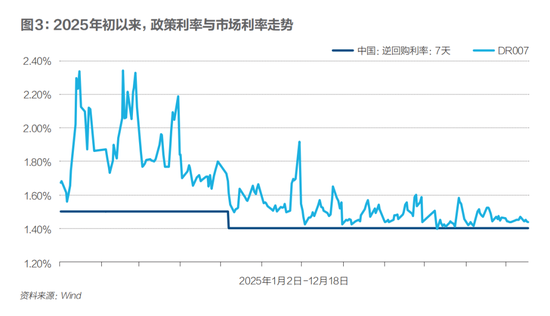
Report Summary 1. Report Industry Investment Rating - Not mentioned in the provided content. 2. Core Viewpoints - Interest rates and their price - ratio relationships are important for macro - economic equilibrium and resource allocation. Different financial instruments form price - ratio relationships, and through the arbitrage mechanism, funds flow to higher - return areas, guiding investment and financing activities and resource allocation [2]. - Maintaining a reasonable interest rate price - ratio relationship is necessary for the smooth transmission of monetary policy. In the real world, the price - ratio relationship may be imbalanced, hindering the effectiveness of monetary policy [3]. 3. Summary of Related Catalogs Five important interest rate price - ratio relationships - **Relationship between central bank policy rates and market rates**: In a normal situation, short - term money market rates revolve around the policy rate center. In early 2025, the DR007 rate deviated from the 7 - day reverse repurchase rate, but now the price - ratio relationship is reasonable. In the future, the guiding role of policy rates on market rates will be strengthened [4]. - **Relationship between commercial banks' asset - end and liability - end rates**: Deposit rates are the main liability cost, and loan rates are the main asset yield. Before 2024, their trends deviated, narrowing the net interest margin. After 2024, the pressure was relieved, stabilizing the relationship and increasing the space for counter - cyclical monetary policy adjustment [5]. - **Relationship between different types of asset yields**: There are differences between loan rates and bond yields. Bond yields are more market - oriented and may deviate from loan rates. For the same entity, the cost of bond financing and loan rates should not differ too much [5]. - **Relationship between different - term rates**: The difference between short - term and long - term rates reflects the term premium. Currently, the term spread of Treasury bond yields is still narrow, and the yield curve may face steepening pressure. The odds of long - bond rate decline are relatively limited [6]. - **Relationship between different - risk rates**: The difference in financing costs of different credit - rated entities reflects the risk premium. It is unreasonable and unsustainable for corporate financing rates to be lower than Treasury bond yields [6]. 2026 Bond Market Outlook - The guiding role of policy rates on market rates will be strengthened. The long - end bond positions are still crowded, and the long - bond rate decline odds are limited, suitable only for trading - oriented funds. Short - term varieties are more valuable and suitable for allocation - oriented funds [6].
利率比价关系视角,债市怎么看?
Shenwan Hongyuan Securities· 2025-11-23 09:45
Group 1 - The effectiveness of the transmission of policy interest rates to the financial market and the real economy has significantly improved, but there is still room for improvement in the transmission to bond yields [2][7][10] - A reasonable interest rate comparison relationship is essential for the transmission of monetary policy, and different types of interest rates should maintain a reasonable relationship without long-term significant deviations [7][10] - The transmission of funding rates to bond yields has shown an overall improvement trend since 2025, but there remains considerable room for improvement in this area [7][10] Group 2 - The current representative interest rate comparison indicates that the government bond yield has returned to a relatively reasonable range, with limited short-term downward space [10][11] - The downward adjustment of deposit rates is likely to outpace that of loan rates, suggesting that institutional investors may consider early positioning [14][18] - The relative comparison of loan rates and bond rates shows limited short-term compression space for bond yields, emphasizing the need to focus on the certainty of mid-to-short-term credit bond arbitrage value [19][20] Group 3 - The static value of ultra-long-term bonds is highlighted for bank institutions, while the current configuration value of loan rates is not apparent [27][30] - For public funds, the cost-effectiveness of mid-to-short-term credit bonds is relatively higher, as the long-term bond yields face limited downward expectations and upward space [27][33] - The bond market is expected to continue a narrow fluctuation trend, with a recommendation to focus on the certainty of mid-to-short-term credit bond arbitrage value [34]
政策双周报(1106-1121):保持合理的利率比价关系,财政力度要给足-20251121
Huachuang Securities· 2025-11-21 15:23
Report Industry Investment Rating No information provided regarding the report industry investment rating. Core Viewpoints of the Report The report focuses on the policy trends from November 6th to November 21st, 2025, covering macro - economic, fiscal, monetary, financial regulatory, and real - estate policies. It emphasizes the importance of promoting private investment, developing new - quality productivity, ensuring sufficient fiscal strength, maintaining reasonable interest - rate parity, and optimizing financial regulations and real - estate policies [1][2][3][4]. Summary by Directory Macro - economic Tone - The State Council issued policies to stimulate private investment, including 13 targeted measures such as encouraging private capital participation in key projects and removing unreasonable restrictions [1][8]. - The State Council Executive Meeting proposed enhancing the adaptability of consumer supply and demand to release consumption potential and promote economic circulation [1][9]. - Developing new - quality productivity was emphasized, with an article in "Qiushi" magazine highlighting its strategic position in the "15th Five - Year Plan" period [1][10]. Fiscal Policy - The fiscal policy should be sufficient in strength, precise in implementation, and coordinated in policy. The Ministry of Finance plans to use various tools and strengthen cooperation with finance to support public services and private investment [2][12]. - The investment scope of the securities settlement risk fund was expanded to include key - term treasury bonds [2][13]. - The Ministry of Finance successfully issued 4 billion euros of sovereign bonds in Luxembourg, with strong international investor participation [2][13]. Monetary Policy - The third - quarter monetary policy report adjusted the policy tone to "cross - cycle and counter - cycle adjustment". There is limited space for significant liquidity loosening [3][16]. - Maintaining a reasonable interest - rate parity is crucial for the smooth transmission of monetary policy, and financial industry "involution - style competition" should be restricted [3][17]. - There may be new liquidity management tools, and the rapid issuance of government bonds may replace loans in the short term [3][19]. Financial Supervision - The Asset Management Association of China drafted a guidance on the style management of thematic investment funds, and the CSRC optimized the ETF registration process [4][21]. - The National Financial Regulatory Administration will release a revised "Administrative Measures for Commercial Bank Merger and Acquisition Loans", and the first joint - stock bank financial asset investment company was established [4][22]. - Many large - scale insurance companies launched "Good Start" products, with a focus on dividend - type insurance [4][22]. - CICC plans to merge Dongxing Securities and Cinda Securities [4][22]. Real - estate Policy - The central bank aims to implement financial policies for affordable housing and improve the basic real - estate financial system [5][26]. - Beijing completed its 2025 affordable housing construction and acquisition tasks [5][26]. - Guangzhou plans to increase the acquisition of existing commercial housing, with relaxed requirements for eligible properties [5][27].
LPR连续六个月“按兵不动”银行净息差迎阶段性企稳
Zheng Quan Shi Bao· 2025-11-20 18:59
Core Viewpoint - The People's Bank of China (PBOC) has maintained the Loan Prime Rate (LPR) for both 1-year and 5-year terms at 3.0% and 3.5% respectively for the sixth consecutive month, reflecting a stable interest rate environment amid ongoing pressures on bank net interest margins [1] Group 1: LPR and Interest Rates - The LPR remains unchanged due to the lack of adjustment in the 7-day reverse repurchase rate, which serves as the pricing anchor for the LPR [1] - As of the end of Q3, the net interest margin for commercial banks in China stands at 1.42%, unchanged from the previous quarter, indicating a stabilization in the downward trend of interest margins [1] - The recent report from China International Capital Corporation (CICC) suggests that the stabilization of interest margins is supported by measures such as deposit rate reductions and improvements in the liability structure of banks [1] Group 2: Regulatory Environment - Recent regulatory efforts aim to stabilize loan pricing and prevent irrational competition among financial institutions, with a focus on maintaining sustainable banking operations [2] - The PBOC's report emphasizes the importance of maintaining reasonable interest rate relationships to ensure effective functioning of the market-oriented interest rate system [2] - Analysts suggest that the central bank should use self-regulatory mechanisms and window guidance to ensure that loan and deposit rates reflect policy rate adjustments while maintaining risk pricing and interest margin stability [2] Group 3: Financing Costs - The average interest rate for newly issued corporate loans in October was 3.1%, down approximately 40 basis points year-on-year, while the rate for personal housing loans was also 3.1%, down about 8 basis points [3] - The PBOC is actively guiding localities to participate in pilot programs aimed at reducing comprehensive financing costs for enterprises, benefiting numerous small and medium-sized enterprises [3] - The decline in financing costs for both enterprises and residents indicates a relatively loose monetary condition and ample funding supply, meeting the effective financing needs of the real economy [3]
格林大华期货早盘提示:国债-20251119
Ge Lin Qi Huo· 2025-11-19 01:39
Report Industry Investment Rating - Not provided Core Viewpoints - China's October economic data shows that fixed - asset investment and export growth are lower than market expectations, while social consumer goods retail sales growth slightly exceeds expectations. The growth of industrial added value above designated size and service industry production index is not as expected. Real estate sales and prices continue to decline. New social financing and credit scale in October are lower than market expectations. The central bank will continue to optimize intermediate variables of monetary policy. Treasury bond futures may fluctuate slightly more in the short - term, and the impact of stock indices should be continuously monitored. [3][4] Summary by Directory Market Review - On Tuesday, most of the main contracts of treasury bond futures opened higher and fluctuated horizontally throughout the day. The 30 - year treasury bond futures main contract TL2512 rose 0.06%, the 10 - year T2512 rose 0.03%, the 5 - year TF2512 rose 0.03%, and the 2 - year TS2512 rose 0.01% [3] Important Information - Open market: On Tuesday, the central bank conducted 407.5 billion yuan of 7 - day reverse repurchase operations, with 403.8 billion yuan of reverse repurchases due, resulting in a net investment of 3.7 billion yuan [3] - Funding market: On Tuesday, the overnight interest rate in the inter - bank funding market rose slightly compared to the previous trading day. DR001's weighted average was 1.53% (previous day: 1.51%), and DR007's weighted average was 1.52% (unchanged from the previous day) [3] - Cash bond market: On Tuesday, the closing yields of inter - bank treasury bonds fluctuated narrowly compared to the previous trading day. The 2 - year treasury bond yield decreased by 0.01 BP to 1.43%, the 5 - year increased by 0.53 BP to 1.59%, the 10 - year increased by 0.12 BP to 1.81%, and the 30 - year decreased by 0.10 BP to 2.14% [3] - According to ADP Research, in the four weeks ending November 1st, US companies laid off an average of 2,500 people per week, an improvement from the previous week's average reduction of 11,250 people [3] - According to CME's "FedWatch", the probability of the Fed cutting interest rates by 25 basis points in December is 48.9%, and the probability of keeping rates unchanged is 51.1%. By January next year, the probability of a cumulative 25 - basis - point cut is 49.7%, the probability of keeping rates unchanged is 31.9%, and the probability of a cumulative 50 - basis - point cut is 18.4% [3] Market Logic - China's October economic data shows mixed performance. Fixed - asset investment and export growth are lower than expected, while social consumer goods retail sales growth slightly exceeds expectations. Industrial added value and service industry production index growth are not as expected. Real estate sales and prices continue to decline. New social financing and credit scale in October are lower than market expectations. The central bank will optimize monetary policy intermediate variables. The Wande All - A index fell 0.15% on Tuesday with slightly reduced trading volume. Treasury bond futures may fluctuate slightly more in the short - term, and the impact of stock indices should be monitored [3][4] Trading Strategy - Traders should conduct band - trading operations [4]
流动性周报:如何理解社会融资条件相对宽松?-20251117
China Post Securities· 2025-11-17 10:28
1. Report Industry Investment Rating No relevant content provided. 2. Core Viewpoints of the Report - In the fourth quarter, the bond market may move in a volatile manner. The short - end has high allocation and trading value, and the inter - bank certificate of deposit rate is in a high - allocation - value range with the possibility of an unexpected decline at the end of the year. The long - end has some room for repair due to the previous expansion of the term spread. With the increasing expectation of easing, a more optimistic view on the subsequent bond market can be taken [2][9]. - To maintain relatively loose social financing conditions, it is necessary to maintain the growth rates of social financing and money supply, and pay attention to the red - line level around 8%. If the growth rates fall below this level, it may trigger monetary easing [2][4][10]. - The current interest - rate comparison relationships concerned by the central bank are relatively reasonable, which is a prerequisite for further reducing policy rates. After the large - scale repurchase in November, the necessity for the central bank to increase bond purchases and cut the reserve requirement ratio is low. The conditions for another reduction of policy rates are mature. For the bond market, the yield may maintain a narrow - range oscillation. A reduction in policy rates will bring an opportunity for the yield curve to shift downward, but the short - end has a more solid foundation for decline, while the long - end still faces strong cashing - out pressure [3][4][15]. 3. Summary According to the Directory 3.1 How to Understand the Relatively Loose Social Financing Conditions? - **Bond Market Outlook**: In the fourth quarter, the bond market may move in a volatile way. The short - end has high value, and the long - end has repair space. With the increasing easing expectation, the subsequent bond market can be viewed more optimistically [2][9]. - **Social Financing and Money Growth Rates**: Credit growth decline is not a major concern, but a further decline in social financing and money growth rates needs attention. The 8% growth - rate range reflects economic growth and price - expectation targets, and a fall below it may trigger monetary easing. The social financing growth is affected by the government bond issuance rhythm, and non - bank deposits maintain high volatility [10]. - **Interest - Rate Relationships and Policy Implications**: The current interest - rate comparison relationships are relatively reasonable. To maintain relatively loose social financing conditions, policy rates and related interest - rate levels can be further reduced to hedge economic pressure from a "cross - cycle" perspective [12]. - **Central Bank Operations**: After the large - scale repurchase in November (the combined scale of 3 - month and 6 - month repurchases reached 500 billion, and the stock scale rose to a new high of 6.3 trillion), the necessity for the central bank to increase bond purchases and cut the reserve requirement ratio is low [14].