供应链金融

Search documents
乐享课堂:什么是预付款融资模式?如何助力企业解决资金难题?
Sou Hu Cai Jing· 2025-07-18 01:23
Core Concept - The prepayment financing model in supply chain finance effectively transforms the credit of core enterprises into financing capabilities for downstream SMEs, addressing funding bottlenecks in the procurement phase and promoting a healthy supply chain ecosystem [1][2]. Summary by Sections What is Prepayment Financing in Supply Chain Finance - Prepayment financing is a crucial model where core enterprises with strong credit sign procurement contracts with suppliers. When suppliers lack funds to initiate production, they can leverage the core enterprise's credit to apply for prepayment from financial institutions, which ensures the completion of orders and forms a closed funding loop [2]. Operational Process of Prepayment Financing - The model resolves funding bottlenecks for suppliers during procurement and ensures the proper use of funds through the involvement of financial institutions [3]. Differences and Connections with Other Financing Models - Prepayment financing, accounts receivable financing, and inventory financing are all essential models in supply chain finance, relying on core enterprise credit to integrate logistics, information flow, and capital flow. They can complement each other based on different operational stages and funding needs [5][6]. Advantages of Prepayment Financing - This model helps downstream SMEs with limited capital but stable orders to expand operations, supports growing businesses with strong relationships with core enterprises, and alleviates financial pressure for companies with long procurement cycles [8]. Suitable Enterprises for Prepayment Financing - It is particularly suitable for SMEs with stable orders but limited funds, growing companies with good relationships with core enterprises, and businesses facing long procurement cycles but with promising sales prospects [8]. Credit Risks and Benefits - The model mitigates funding shortages for downstream enterprises, allowing timely procurement of quality products, while core enterprises benefit from early cash flow and enhanced cooperation with suppliers. Financial institutions gain stable interest income with manageable risks [9].
京皖签约意向性协议金额超50亿
Bei Jing Qing Nian Bao· 2025-07-17 19:07
Core Insights - The 2025 Beijing-Anhui Supply Chain Promotion Conference was held, marking the first provincial and municipal co-hosted event of the 3rd China International Supply Chain Promotion Expo, focusing on artificial intelligence and resulting in 14 cooperation agreements with an intention amount exceeding 5 billion yuan [1][2]. Group 1: Event Overview - The conference aimed to strengthen regional cooperation and link industrial chain resources between Beijing and Anhui, creating an efficient platform for government-business-research collaboration [2]. - The event featured a series of activities including dialogues with academicians, enterprise exchanges, AI project releases, and cooperation signings [1][2]. Group 2: Industry and Policy Promotion - Both regions promoted their advantageous industries and policies, with Beijing's Haidian District launching the "Zhongguancun AI North Latitude Community" project to build a globally influential AI industry ecosystem [3]. - Anhui's Hefei City released a list of 36 specific AI application scenarios across five major fields, indicating a market opportunity worth hundreds of billions [3]. Group 3: Collaboration Potential - Representatives from Beijing and Anhui highlighted the strong complementary nature of their industries, particularly in AI, suggesting a unique regional cooperation model [4][5]. - Companies like Hai Tian Rui Sheng, a Beijing-based AI data service provider, emphasized the importance of high-quality data in supporting AI development for partners in Anhui [5]. Group 4: Educational and Research Collaborations - Anhui's iFlytek and Beijing's educational institutions have established numerous collaborations, focusing on areas such as child brain development and AI in programming education [5].
渣打链博会首发“渣打环球链”解决方案 助力企业构建跨境供应链
Xin Jing Bao· 2025-07-17 06:14
Core Viewpoint - Standard Chartered Bank launched the "Standard Chartered Global Chain" during the third China International Supply Chain Promotion Expo, providing a comprehensive cross-border financial solution aimed at Chinese enterprises expanding globally and those with a global presence, addressing key operational pain points such as settlement, financing, cash flow management, and risk prevention [1][2] Group 1: Product Features - The "Standard Chartered Global Chain" integrates supply chain financial solutions into customer business scenarios, offering unique features such as scenario-based, global, digital, and full lifecycle support [1] - The solution provides comprehensive financial support covering the entire process from project establishment, procurement financing, sales settlement to cash flow management, enabling enterprises to seize opportunities and develop steadily in the context of a diversified, green, and digital global supply chain reconstruction [1][2] Group 2: Target Applications - The solution is tailored for various typical application scenarios, including: - Initial phase of "going global": providing trade financing tools such as cross-border guarantees and letters of credit to assist enterprises in overseas project bidding, factory establishment, and equipment procurement [2] - Daily operations: offering cross-border cash management solutions, supply chain financing services, and multi-currency settlement platforms to optimize operational efficiency [2] - Local integration development: providing financing support in compliance with local regulations in RMB and other currencies for enterprises operating in emerging markets [2] - Digital upgrade: utilizing technologies like API, blockchain, and smart online banking platforms to enhance management efficiency and supply chain visibility [2] - Risk prevention and sustainable development: supporting enterprises in accounts receivable management, trade compliance, and ESG assessment to improve long-term stability of the supply chain [2] Group 3: Strategic Implications - The launch of the solution marks an expansion of Standard Chartered's service boundaries in the supply chain finance sector, extending from traditional trade financing services to full lifecycle support for enterprises' cross-border operations [2] - The bank aims to deepen collaboration among products, technology, and network to facilitate high-quality development of more Chinese enterprises in the global market [2]
激活农牧业“沉睡资产” 通辽构建“农畜贷”金融综合服务体系纾困肉牛产业
Jin Rong Shi Bao· 2025-07-17 03:20
Core Viewpoint - The financial institutions in Tongliao City are actively working to address the challenges faced by the meat cattle industry, particularly in terms of financing and collateral, by implementing innovative financial services and products to support sustainable development in agriculture [1][3][4]. Financial Support for Meat Cattle Industry - As of the end of May, the loan balance for the meat cattle industry in Tongliao City reached 24.654 billion yuan, with 9.125 billion yuan disbursed this year, accounting for 13.24% of the total loan balance in the city [2]. - The People's Bank of China Tongliao Branch has introduced policies to guide financial institutions in meeting the financing needs of the meat cattle industry, including the inclusion of large agricultural tools as collateral [3]. Technological Integration in Financing - The integration of technology and finance is emphasized, with the development of a "Smart Livestock Loan" model that utilizes IoT devices and AI technology to monitor livestock health and establish asset identification [4][6]. - A digital platform has been established to achieve full lifecycle traceability of meat cattle, with 95,800 cattle already included in the digital archive [6]. Risk Management and Monitoring - The financial institutions are implementing a dual safeguard system combining technology and control for collateral management, utilizing various monitoring systems to ensure the integrity of pledged assets [5][9]. - The establishment of a rural revitalization financial service station aims to facilitate the registration and monitoring of live cattle collateral, enhancing the oversight of pledged livestock [6]. Support for Grain Industry - The financial support extends to the grain industry, with a focus on integrating supply chain finance to enhance the financing capabilities of small and medium-sized enterprises within the corn industry [10]. - A credit guarantee fund has been established with a total of 1.28 billion yuan to support grain purchasing and processing enterprises, resulting in the issuance of loans totaling 2.2 billion yuan [9]. Innovation in Financial Products - Financial institutions in Tongliao are encouraged to develop differentiated financial products tailored to the specific needs of the meat cattle and grain industries, following the principle of "suitability by institution" [7][10]. - The introduction of intellectual property pledge loans aims to support agricultural technology enterprises, facilitating a shift from asset-heavy to knowledge-based financing models [10].
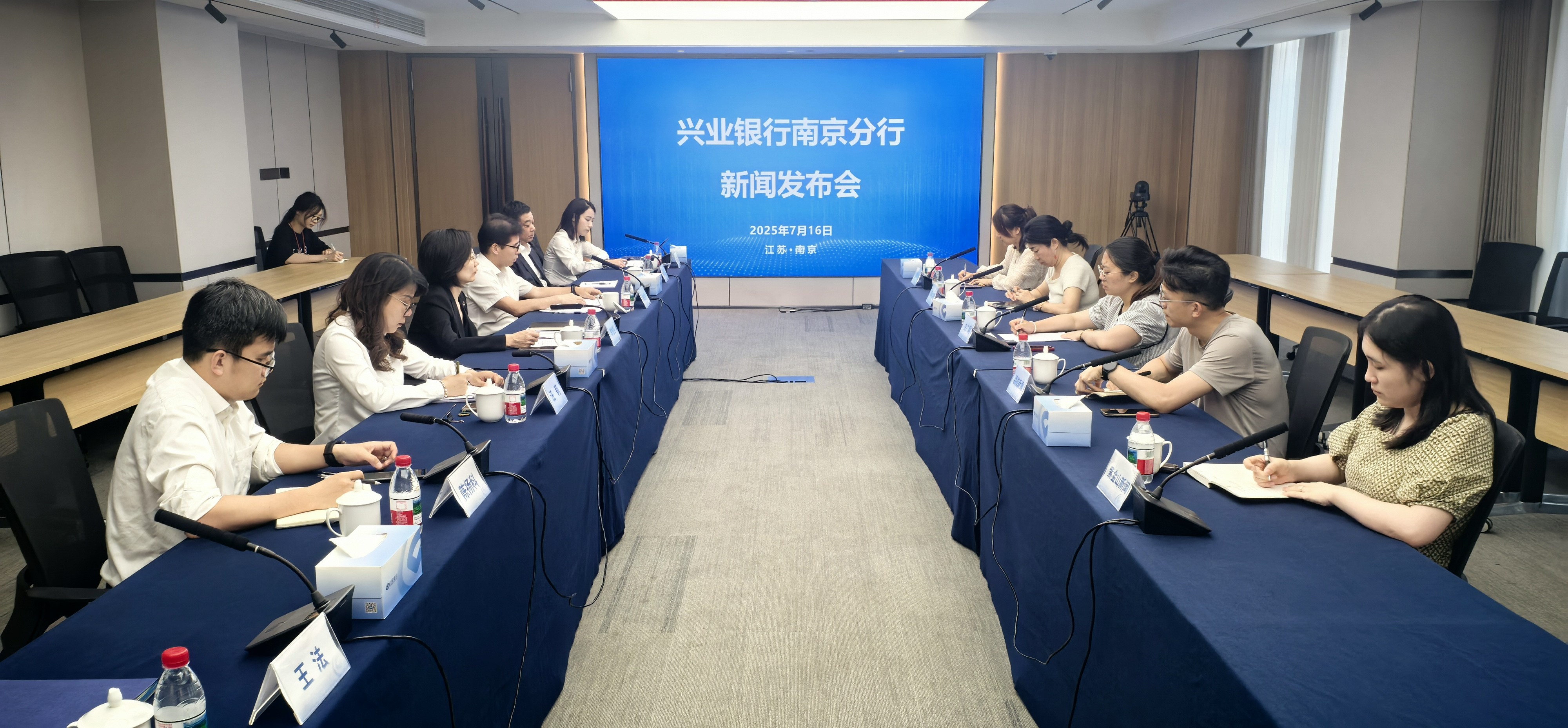
蝉联“优秀档”的背后 看兴业银行南京分行民企服务的“破圈”密码
Jiang Nan Shi Bao· 2025-07-17 01:36
Core Viewpoint - The implementation of the "Private Economy Promotion Law" in China marks a significant transformation for over 92% of enterprises, particularly emphasizing the role of private enterprises in Jiangsu's economy, which contributes significantly to GDP, tax revenue, R&D investment, and employment [1] Group 1: Financial Support for Private Enterprises - The People's Bank of China Jiangsu Branch released a report showing that Industrial Bank's Nanjing Branch has excelled in providing financial services to private enterprises, achieving the highest rating for four consecutive quarters [1][2] - As of March 2024, the loan balance for private enterprises at Industrial Bank exceeded 1.7 trillion yuan, reflecting a growth of over 55% since 2022, serving nearly 520,000 private enterprises [2] Group 2: Tailored Financial Solutions - Industrial Bank's Nanjing Branch has developed a three-step approach to support private enterprises, including thorough industry research, direct communication with enterprises, and the introduction of financial incentives [6][7] - The branch has successfully increased its loan balance for private enterprises to 844.77 billion yuan, with a year-to-date growth of 7.1%, and a 9.5% increase in loans specifically for private enterprises [5] Group 3: Innovative Financing Strategies - The bank has engaged in collaborative financing efforts, forming a syndicate with other banks to support large-scale projects, such as providing 18.6 billion yuan in credit for HT Company's international shipping contracts [8][10] - This syndicate financing model has allowed the bank to navigate complex cross-border financing challenges, successfully issuing significant international guarantees [11] Group 4: Supply Chain Financial Innovations - The bank has capitalized on the growing demand for supply chain finance, launching the "Changlian Platform" to facilitate financing for upstream private enterprises [12][13] - By innovating financial products, such as converting electronic debt certificates into bank bills, the bank has significantly reduced financing costs for suppliers [15] Group 5: Comprehensive Financial Services - Industrial Bank has established a comprehensive service model for private enterprises, integrating various financial products and services to support their growth at different stages [20][21] - The bank's proactive approach includes risk-sharing mechanisms and a focus on sectors like new energy and intelligent manufacturing, enhancing its support for private enterprises [20][21]


乐享课堂:存货融资模式——用库存撬动资金链
Sou Hu Cai Jing· 2025-07-16 01:29
Core Concept - The inventory financing model serves as an effective tool in supply chain finance to address the dilemma of companies having stock but lacking cash, by converting inventory into financing collateral, thus releasing funds tied up in inventory [1] Group 1: Definition and Mechanism - Inventory financing refers to the process where a financing enterprise uses goods in trade as collateral to apply for loans from financial institutions, while transferring the collateral to a third-party warehouse for safekeeping [2] - The essence of inventory financing is to activate inventory assets, turning excess stock that occupies significant capital into immediately usable liquidity to address urgent financial needs [2] Group 2: Key Roles in Inventory Financing - Financing demand enterprises are the core driving force behind the development of the inventory financing model, as they often require substantial funding for operations but lack traditional collateral like real estate [3] - Funding providers, typically banks, ensure the stable operation of the financing system by assessing the value and liquidity of pledged inventory to determine reasonable financing limits and interest rates [4] - Third-party logistics companies act as trust builders among parties, overseeing and safeguarding pledged inventory to ensure its safety and integrity, thus facilitating smooth financing processes [5] Group 3: Main Types of Inventory Financing - Static pledge involves enterprises pledging their own or third-party owned inventory as collateral, with the goods frozen during the financing period, suitable for clients without other suitable collateral [6] - Dynamic pledge allows enterprises to pledge inventory while maintaining a minimum value threshold, enabling them to withdraw excess goods for sale or production, ideal for businesses with stable inventory [7] - Warehouse receipt pledge involves enterprises pledging their inventory and using the income generated as the primary repayment source, suitable for large commodity traders where goods are standardized [8] Group 4: Competitive Advantages of Inventory Financing - The model enhances liquidity by converting tied-up inventory funds into cash, significantly improving cash flow and operational efficiency, thus strengthening the enterprise's ability to withstand market risks [9] - It lowers financing barriers for small and medium-sized enterprises that lack traditional collateral, allowing them to leverage their core operating assets for funding [10] - The model provides operational flexibility, enabling enterprises to adjust production and sales strategies based on market demand without being restricted by frozen funds [11] - The mechanism of redeeming goods in batches alleviates financial pressure, allowing enterprises to manage funds and inventory more efficiently, thus enhancing operational management and core competitiveness [12]
青岛住房“以旧换新”政策升级;招商蛇口斩获深圳单价“新地王”| 房产早参
Mei Ri Jing Ji Xin Wen· 2025-07-15 00:24
Group 1: Housing Policy in Qingdao - Qingdao has introduced a new housing policy to support "old-for-new" housing exchanges, allowing second-hand homes under 20 years old to be replaced with new homes of greater area or total price [1] - The policy includes independent evaluations of old home prices by three agencies, with a city-level financial subsidy of 30,000 yuan per unit for buyers [1] - This initiative aims to alleviate the "difficulties in selling old homes" for buyers and promote a healthy cycle in the real estate market, benefiting both the housing market and residents [1] Group 2: Land Acquisition by China Merchants Shekou - China Merchants Shekou won a residential land bid in Shenzhen for 2.155 billion yuan, setting new records for floor price and premium rate in the city [2] - The land acquisition is expected to enhance the company's regional presence and brand influence, reflecting the recognition of core location values by leading real estate firms [2] Group 3: China State Construction's ABS Plan - China State Construction's 30 billion yuan asset-backed securities (ABS) plan has been approved, aimed at optimizing its financing structure and accelerating capital turnover [3] - This approval is anticipated to boost confidence in the supply chain finance model and promote a healthy financial cycle within the industry [3] Group 4: Vanke's Bond Repayment - Vanke announced the repayment of its 30 billion yuan green medium-term notes, with a scheduled repayment date of July 21, 2025, and an interest rate of 3.0% [4] - Timely repayment reflects Vanke's financial stability and is expected to enhance market credibility, contributing positively to the overall real estate sector [4] Group 5: Greenland Hong Kong's Stock Performance - Greenland Hong Kong's stock has surged over 90% in six consecutive trading days, driven by the company's recent licensing updates for virtual asset-related businesses [5] - This surge indicates a market re-evaluation of the digital transformation value in the real estate sector, providing new debt resolution pathways for firms [5]


央行:加大对民营中小微企业金融支持力度
news flash· 2025-07-14 08:16
Core Viewpoint - The People's Bank of China (PBOC) is committed to enhancing financial services for private and small to medium-sized enterprises (SMEs) by increasing the input of financial resources and implementing a moderately loose monetary policy [1] Group 1: Financial Policy Measures - The PBOC plans to utilize structural monetary policy tools such as re-loans for agricultural support and small enterprises, as well as re-loans for technological innovation and transformation [1] - There will be a focus on promoting the standardized development of supply chain finance [1] - The PBOC aims to strengthen financial support for private SMEs [1]
药企“出海”无忧 建行江苏省分行服务药企抢滩国际市场
Jin Rong Shi Bao· 2025-07-14 03:12
Group 1 - The pharmaceutical industry in Jiangsu province is increasingly adopting a "go global" strategy, with banks like China Construction Bank (CCB) providing innovative financial services to support this initiative [1] - CCB Jiangsu branch is enhancing financial products and services to support the entire lifecycle of pharmaceutical companies, facilitating efficient cross-border transactions [1] - Eddy Pharmaceutical, a listed company focused on HIV drug development, is expanding into the African market while improving its domestic procurement processes through digital upgrades [2][3] Group 2 - CCB Yangzhou branch has formed a dedicated team to assist Eddy Pharmaceutical in optimizing its payment processes, leading to significant improvements in fund turnover efficiency [3] - In March 2025, Eddy Pharmaceutical successfully processed a payment of 10 million yuan through CCB's supply chain products, ensuring stable raw material supply and enhancing its reputation in the supply chain [3] - CCB Jiangsu branch has provided over 50 million yuan in credit support to Eddy Pharmaceutical, facilitating its international expansion efforts [3] Group 3 - Yuyue Group is actively expanding its international market presence, with CCB Zhenjiang branch providing substantial financial support, including a 3 billion yuan loan for acquisitions [4] - As of March 2025, CCB Zhenjiang branch has granted a total credit of 2.64 billion yuan to Yuyue Group, enabling the company to overcome barriers in overseas markets [4] - Yuyue Group's subsidiary, Juyue Medical, has secured a credit line of 60 million yuan from CCB Zhenjiang branch, further supporting its operational needs [4] Group 4 - CCB Lianyungang branch has been closely monitoring a well-known pharmaceutical group, assisting in resolving a cross-border RMB transaction that had been pending for nearly a year due to compliance issues [6][7] - The bank conducted a rapid compliance review and successfully processed the transaction within 48 hours, thereby maintaining the company's international business reputation [6][7] - This collaboration exemplifies CCB's commitment to supporting pharmaceutical companies in their international endeavors through effective cross-border RMB services [7]



车企“60天账期”满月,隐形账期待解
21世纪经济报道· 2025-07-11 12:39
Core Viewpoint - The article highlights the ongoing challenges faced by small and medium-sized enterprises (SMEs) in the automotive supply chain, particularly regarding payment terms and the emergence of "invisible" payment periods that extend beyond the nominal payment terms set by large enterprises [1][3][4]. Group 1: Payment Terms and Challenges - The Ministry of Industry and Information Technology has opened a platform to address complaints regarding payment delays from key automotive companies, indicating a regulatory response to the issue [1]. - While some material suppliers have benefited from the new "60-day payment term" policy, other sectors like equipment and infrastructure still experience lengthy payment cycles, sometimes exceeding one year [1][3]. - The concept of "invisible payment periods" has emerged, where the time from delivery to payment confirmation can be significantly longer than the nominal terms, creating cash flow challenges for SMEs [3][4][5]. Group 2: Causes of Delayed Payments - Large enterprises often delay payment confirmations for several reasons, including tight cash flow, complex acceptance processes in large projects, and strategic decisions to enhance their own financial metrics [5][6][8]. - Some companies engage in "layered transactions" to circumvent regulatory requirements, effectively extending payment periods while appearing to comply with nominal terms [5][8]. Group 3: Impact on SMEs - SMEs face significant difficulties in obtaining financing due to the lack of formal payment confirmations, which hampers their ability to secure loans from banks [18][19]. - The cash flow cycle for listed SMEs in China has shown a deterioration, with accounts receivable periods increasing from 116 days to 135 days, indicating worsening cash flow conditions despite some improvements in overall cash flow cycles [13][14]. Group 4: Regulatory and Policy Responses - Recent regulations, such as the "Payment Protection for SMEs" and guidelines from the central bank, aim to ensure timely payments from core enterprises to protect SMEs' cash flow [14][15]. - The article suggests that learning from international practices, such as penalties for delayed payments in the UK and EU, could enhance the accountability of large enterprises in China [15][16]. Group 5: Future Considerations - The article emphasizes the need for core enterprises to recognize the benefits of optimizing payment terms for their operational efficiency and the stability of the supply chain [21]. - It calls for more detailed and enforceable regulations to ensure transparency and predictability in payment terms across the supply chain [21].