
双碳战略

Search documents
南方电网重组产业公司:整合房地产业务,布局电动汽车等战新板块
2 1 Shi Ji Jing Ji Bao Dao· 2026-01-14 12:40
Core Viewpoint - The establishment of the Southern Power Grid Industry Development Group marks a strategic move to enhance asset management and explore new industrial development models, aiming to create a "second growth curve" for the company [2][4]. Group 1: Company Structure and Business Focus - The newly formed Southern Power Grid Industry Development Group is a result of the merger between the original Southern Power Grid Industry Development Group and Dingyuan Asset Company, focusing on asset operation management and industrial investment [2][3]. - The original Southern Power Grid Industry Development Group, established in September 2018 with a registered capital of 3 billion RMB, had a diverse business portfolio including services in new energy vehicles, industrial internet, general aviation, digital grid, knowledge economy, and emergency services [3]. - Dingyuan Asset Company, founded in March 2017 with a registered capital of 2.77 billion RMB, specializes in revitalizing existing land, asset management, and industrial property management [3]. Group 2: Strategic Initiatives and Future Directions - The establishment of the Southern Power Grid Industry Development Group is seen as a strategic initiative to scale up and cluster new industries, enhancing asset efficiency and promoting innovation in technology and business models [4][5]. - The company aims to leverage digital technology to empower traditional power equipment manufacturing and services, thereby improving overall competitiveness in the industry [5]. - The Southern Power Grid is accelerating its expansion into upstream and downstream sectors of the energy industry, with the launch of the Southern Power Grid Carbon Service Company, which will focus on carbon trading and management [6][8]. Group 3: Policy Alignment and Market Trends - The establishment of the Southern Power Grid Carbon Service Company aligns with national policies aimed at promoting high-quality development in the power grid sector, including targets for renewable energy generation and infrastructure [5][8]. - The company is positioned to play a key role in the national carbon market, with predictions of increased trading activity and potential price fluctuations in carbon credits as new industries are integrated into the market [7].
深耕高炉耐火材料细分赛道专精特新“小巨人”:瑞尔竞达北交所过会 | A股融资快报
Quan Jing Wang· 2026-01-14 11:59
Core Viewpoint - Mingguang Ruierjingda Technology Co., Ltd. has received approval for its public offering and listing on the Beijing Stock Exchange, marking a significant step in its growth trajectory as a key player in the iron-making refractory materials sector [1][2]. Group 1: Company Overview - Ruierjingda focuses on the research, production, and sales of refractory materials for blast furnaces, positioning itself as a "guardian of blast furnaces" by providing comprehensive technical solutions throughout the product lifecycle [2][3]. - The company has established a strong market presence, with its products widely used by major domestic steel enterprises such as Baowu Steel Group and Shougang Group, as well as international clients in countries like Russia, South Korea, and Turkey [3][4]. Group 2: Financial Performance - From 2022 to 2024, the company's revenue is projected to grow steadily to 476 million yuan, with a significant increase in net profit, demonstrating strong profitability and resilience [4]. - The core business of functional consumption materials accounts for approximately 60% of revenue, serving as a stable engine for the company's growth [2][3]. Group 3: Innovation and Market Position - Ruierjingda holds 70 patents, including 16 invention patents, showcasing its robust research and development capabilities, which contribute to its leading gross margin of 39.72% in 2024, significantly above the industry average [3][4]. - The company is committed to green and intelligent upgrades, with fundraising efforts directed towards developing carbon capture technologies and energy-saving materials, aligning with the industry's shift towards low-carbon development [4][5].


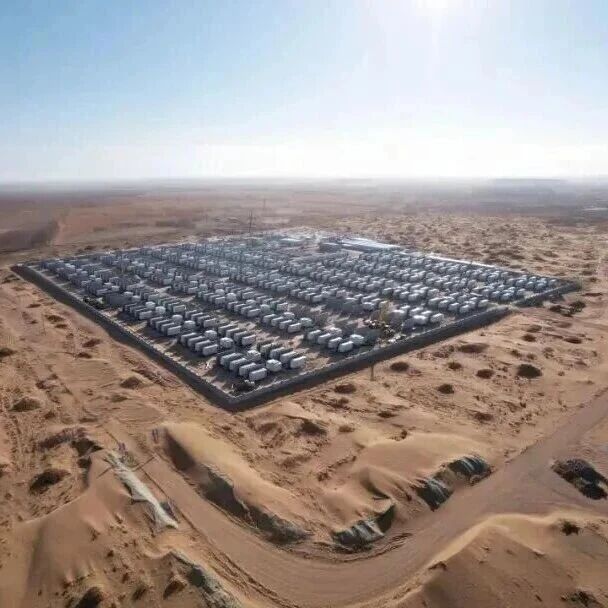
500MW/2000MWh!奇点能源首个GWh级项目成功并网
中关村储能产业技术联盟· 2026-01-14 02:59
Group 1 - The core viewpoint of the article highlights the successful grid connection of the Inner Mongolia Tengkou 500MW/2000MWh energy storage project, marking a significant milestone for the company as its first GWh-level project [2][3][13] - The project utilizes the company's newly developed Galaxy-1 modular prefabricated cabin, featuring a total installed capacity of 500MW/2000MWh, with 400 units of Galaxy-1-4G and 100 units of eLink-HV35 integrated transformer [5][6] - The successful implementation of the project demonstrates the reliability and excellence of the Galaxy-1 product in large-scale applications, contributing to the stability and safety of the regional power grid [8][11] Group 2 - The energy storage project enhances the ability to smooth out fluctuations from intermittent renewable energy sources like wind and solar, significantly improving grid regulation and operational safety [11] - The project is expected to increase the consumption of renewable energy in the region, reducing waste from wind and solar energy, and accelerating the transformation of the energy structure in Inner Mongolia [11][13] - The company plans to continue innovating in the energy storage sector and aims to make a substantial impact on China's energy revolution [13]
林武在日照调研时强调 推动科技创新和产业创新深度融合 不断培育壮大新动能新优势
Da Zhong Ri Bao· 2026-01-14 00:58
Group 1 - The provincial secretary emphasized the need to integrate technological and industrial innovation to enhance enterprise quality and efficiency, aiming to cultivate new advantages and momentum [1] - The focus is on strengthening R&D cooperation in emerging fields and key technologies, particularly in robotics and automotive sectors, to open up market opportunities [1] - The importance of precise service for key enterprise projects and improving resource guarantee levels to support enterprise growth was highlighted [1] Group 2 - The development of high-quality residential projects is being promoted to meet diverse housing needs and establish a new model for real estate development [2] - There is a strong push to stimulate consumption and support major project investments to stabilize investment scales in key areas, thereby invigorating private investment [2] - The implementation of industrial economic initiatives is prioritized to optimize and upgrade industries, while ensuring social stability and safety [2]
实现 “绿电消纳 + 应急保供” 双赋能
Xin Lang Cai Jing· 2026-01-13 16:42
Core Viewpoint - The successful implementation of the flexible interconnection demonstration project in the mountainous area of Taihu County aims to address the operational challenges of the distribution network while promoting low-carbon energy solutions [1][2] Group 1: Project Overview - The project utilizes a "flexible direct interconnection + energy storage + intelligent terminal" collaborative operation system to achieve dual objectives of green energy consumption during normal times and emergency power supply during crises [1] - The project targets three typical distribution areas, establishing a three-layer architecture of "terminal perception - edge decision - collaborative control" [1] Group 2: Operational Benefits - During normal operations, the energy storage module plays a crucial role in dynamically balancing load energy among distribution areas, significantly alleviating transformer overload and enhancing the capacity for distributed photovoltaic energy consumption [2] - In case of grid faults, the project can switch to a dual-mode mechanism that provides emergency power supply for at least 680 households for no less than 2 hours, reducing the impact range of faults by over 80% [2] Group 3: Future Directions - The project has significantly improved the reliability of power supply in mountainous areas and completed a digital transformation of its operation and maintenance model, setting a benchmark for new power system construction [2] - The company plans to further deepen the integration of "flexible interconnection" and "source-network-load-storage collaboration" technologies to upgrade the distribution network towards a more intelligent, flexible, and low-carbon direction [2]
行业洞察 | “风光”驱动,西部领航——中国新能源产业城市竞争力TOP50揭晓
Xin Hua Cai Jing· 2026-01-13 16:28
Core Insights - The article highlights the significant transformation of China's renewable energy industry under the "dual carbon" strategy, with a focus on the 2025 ranking of cities based on their competitiveness in the renewable energy sector [1][6]. Summary by Categories City Rankings - The top three cities in the 2025 China Renewable Energy Industry Competitiveness Ranking are: 1. Jiuquan, Gansu Province - 82.13 points 2. Wuxi, Jiangsu Province - 78.92 points 3. Zhangjiakou, Hebei Province - 78.82 points - Other cities in the top ten include Suzhou, Beijing, Yancheng, Tianjin, Shanghai, Shenzhen, and Hohhot, with scores ranging from 78.67 to 78.31 [1][3][8]. Regional Insights - The western region of China is a key player in the renewable energy competitiveness ranking, with 17 cities in the top 50, including Jiuquan, Hohhot, Urumqi, and others [5]. - Jiuquan stands out due to its rich wind and solar resources, with a total wind energy resource of 200 million kilowatts and a solar thermal resource of 20 billion kilowatts, making it a national clean energy base [6][7]. Industry Development - Wuxi has developed a comprehensive renewable energy industry, with 321 large-scale enterprises and an industrial output value exceeding 180 billion yuan in the first three quarters of 2025 [7]. - Zhangjiakou, as a national renewable energy demonstration zone, has achieved a significant increase in installed capacity, reaching over 43 million kilowatts, which is 88% of the city's total power capacity [7][8]. Traditional Energy Cities - Traditional energy cities like Ordos and Yulin are showing rapid improvement in their rankings, indicating a shift from coal-based to green energy solutions [9]. - The article emphasizes that while natural conditions are currently crucial for the development of the renewable energy industry, future success will depend on factors like industrial integration and innovation capabilities [9].


【干货分享】中国中高压变频器行业市场运行态势及发展趋势预测报告(智研咨询)
Sou Hu Cai Jing· 2026-01-13 04:13
Core Insights - The core viewpoint of the article emphasizes the significant role of medium and high-voltage variable frequency drives (VFDs) in industrial production, driven by China's "dual carbon" strategy and policy support, leading to a rapid growth in the industry [2][11]. Group 1: Industry Overview - Medium and high-voltage VFDs are crucial for adjusting motor speed and operational status to meet various process requirements, commonly used in fans, water pumps, and compressors [2][6]. - The market size of China's medium and high-voltage VFD industry is projected to grow from 10.8 billion yuan in 2017 to 21.6 billion yuan in 2024, with a compound annual growth rate (CAGR) of 10.41% [2][11]. - The demand for medium and high-voltage VFDs is expected to remain stable due to ongoing industrial upgrades and increasing digitalization needs [2][11]. Group 2: Industry Chain - The upstream of the medium and high-voltage VFD industry includes raw materials and components such as transformers, IGBTs, capacitors, resistors, cabinets, PCB materials, and heat sinks [8]. - The midstream involves the manufacturing of medium and high-voltage VFDs, while the downstream encompasses application fields including power, petrochemicals, building materials, coal, and metallurgy [8]. Group 3: Key Components - Medium and high-voltage VFDs typically consist of several key components: input transformer, rectifier unit, DC intermediate circuit, inverter unit, and control unit [6][7]. - The input transformer converts high voltage from the grid to a suitable level for the rectifier unit, providing electrical isolation and reducing grid harmonics [7][9]. Group 4: Market Dynamics - The rapid growth in China's industrial power generation, from 6,275.82 billion kWh in 2017 to 9,418.1 billion kWh in 2024, reflects a CAGR of 5.97%, driving the demand for medium and high-voltage VFDs [11]. - The total electricity consumption in society is also on the rise, increasing from 6,307.7 billion kWh in 2017 to 9,852.1 billion kWh in 2024, with a CAGR of 6.58% [11]. Group 5: Related Companies - Relevant listed companies in the medium and high-voltage VFD sector include Invt (002334), Huichuan Technology (300124), Hekang New Energy (300048), and others [3].
重组完美收官!宏创控股635亿并购核心资产1月13日股份上市,中国宏桥A股再添新势力
Zheng Quan Shi Bao Wang· 2026-01-13 01:40
Core Insights - The transaction marks the largest private enterprise restructuring in A-share history, with a transaction scale of 63.518 billion yuan, and signifies the strategic return of China Hongqiao's core aluminum assets to the A-share market [1] - The newly issued shares amount to 11.895 billion, with a potential market capitalization of 361.059 billion yuan based on the closing price of 27.7 yuan per share on January 9, 2026 [1] - The addition of Hongchuang Holdings to the A-share market enhances the representation of private capital in the high-end manufacturing sector [1] Company Overview - Hongtu Industrial, the core asset injected, is a leading global player in the aluminum industry with an annual production capacity of 6.459 million tons of electrolytic aluminum and 19 million tons of alumina, projecting revenues of 149.289 billion yuan and a net profit of 18.144 billion yuan in 2024 [2] - The company has notable technological and green advantages, including the world's first full series of 600kA large prebaked anode electrolytic cells and a high green electricity ratio achieved through hydropower resource transfer [2] - The transaction aligns with the "dual carbon" strategy and supports the construction of a green aluminum industry cluster, demonstrating the company's commitment to social responsibility through industrial poverty alleviation [2] Strategic Implications - The listing allows Hongchuang Holdings to transition from a single aluminum deep processing focus to a full industry chain layout, significantly improving asset scale and sustainable operational capacity [3] - For China Hongqiao, the completion of core asset integration creates a dual-platform development model (Hong Kong and A-share), enhancing overall competitiveness and allowing A-share investors to benefit from growth dividends [3] - The company aims to leverage its full industry chain advantages to promote green development and high-end transformation, strengthening its position as a global leader in the aluminum industry and enhancing China's influence in global aluminum standards and resource allocation [3]

内蒙古创建节约型机关5588家
Xin Lang Cai Jing· 2026-01-12 20:05
Group 1 - The core viewpoint of the article emphasizes the commitment of public institutions in Inner Mongolia to the "dual carbon" strategy during the 14th Five-Year Plan, focusing on mechanism innovation, demonstration creation, and energy-saving renovations to contribute positively to the green transformation of the economy and society [1][2]. Group 2 - Public institutions in the region have strengthened mechanism innovation by initiating near-zero carbon pilot projects, stimulating internal energy-saving motivation, and innovatively utilizing market mechanisms, with a total contract energy management project amount exceeding 1.8 billion yuan since 2022, covering over 1,100 public institutions [2]. - Cumulatively, over 55 megawatts of distributed photovoltaic systems have been built, resulting in a total carbon reduction of 230,000 tons [2]. - The region has established 5,588 energy-saving agencies, 61 demonstration units for energy-saving public institutions, 8 green low-carbon public institutions, 10 water efficiency leaders, and 6 energy efficiency leaders, with 40 water-saving agencies and 20 water-saving public institutions at the district level [2]. - A total investment of over 18 million yuan has been made during the 14th Five-Year Plan for basic water and energy-saving renovations in party and government agencies, including the renovation of over 90,000 energy-saving lamps and nearly 6,000 water-saving devices, achieving an annual electricity saving capacity of 3.36 million kilowatt-hours and water savings of over 360,000 tons [2]. Group 3 - The agency has innovated promotional practices by integrating "energy-saving + cultural tourism" and "energy-saving + public welfare," organizing activities to support rural revitalization efforts, securing 1 million yuan in special assistance funds for Wulanchabu City [3].
穗恒运A:公司围绕“电、热、氢、储”进行业务布局
Zheng Quan Ri Bao Zhi Sheng· 2026-01-12 14:09
Core Viewpoint - The company, Suihengyun A, is positioning itself as a comprehensive operator in the energy and new energy sectors, aligning with national energy development trends and the "dual carbon" strategic goals [1] Group 1: Business Strategy - The company is focusing on business layout around "electricity, heat, hydrogen, and storage" [1] - It is actively seeking suitable development opportunities within the energy industry chain [1] - The company aims to identify quality investment targets to cultivate new profit growth points [1]
