太空数据中心

Search documents
DeepSeek上新模型;摩尔线程部分新股遭弃购丨新鲜早科技
2 1 Shi Ji Jing Ji Bao Dao· 2025-11-28 01:56
Group 1: Technology Developments - DeepSeek launched a new mathematical reasoning model, DeepSeekMath-V2, which achieved gold medal levels in major math competitions, showcasing the feasibility of self-verifying reasoning paths [2] - Quark AI glasses were released by Alibaba, featuring advanced hardware and dual operating systems, with prices starting from 1,899 yuan [4] - Tianfu Communication announced its capability for mass production of 800G and 1.6T high-speed optical engines, with ongoing investments in R&D for performance optimization [6] Group 2: Corporate Restructuring and Acquisitions - HP announced a global layoff plan affecting 4,000 to 6,000 employees, approximately 10% of its workforce, to streamline operations and enhance productivity through AI [3] - ByteDance is in negotiations to sell its subsidiary, Shanghai Mutong Technology, to Saudi Arabia's Savvy Games Group, with the deal's outcome uncertain [5] - Haichang New Materials plans to acquire a 51% stake in Shenzhen Xinwei Communications for approximately 234.6 million yuan, gaining control over the company [15] Group 3: Market Trends and Responses - The National Development and Reform Commission highlighted the rapid growth of humanoid robots, which are expanding at over 50% annually, while cautioning against market saturation and product redundancy [7] - Hongmeng Zhixing reported a surge in online attacks against the company, asserting that it will pursue legal action against those spreading false information [8] - The Chinese Electronic Technology Standardization Institute clarified that existing 3C certified power banks will remain valid despite rumors of new standards coming into effect [10] Group 4: Financial Activities - Muxi Co. announced its IPO plans, aiming to raise 3.904 billion yuan, potentially becoming the second domestic GPU company listed on the A-share market [13] - Moer Thread reported a significant number of shares were abandoned during its IPO, with over 29302 shares worth approximately 334.86 million yuan not subscribed [14] - Wuwen Chip completed nearly 500 million yuan in A+ round financing, attracting investments from various state-owned and market-oriented funds [16]


AI算力上太空!“港股芯片”持续吸金
Xin Lang Ji Jin· 2025-11-28 01:52
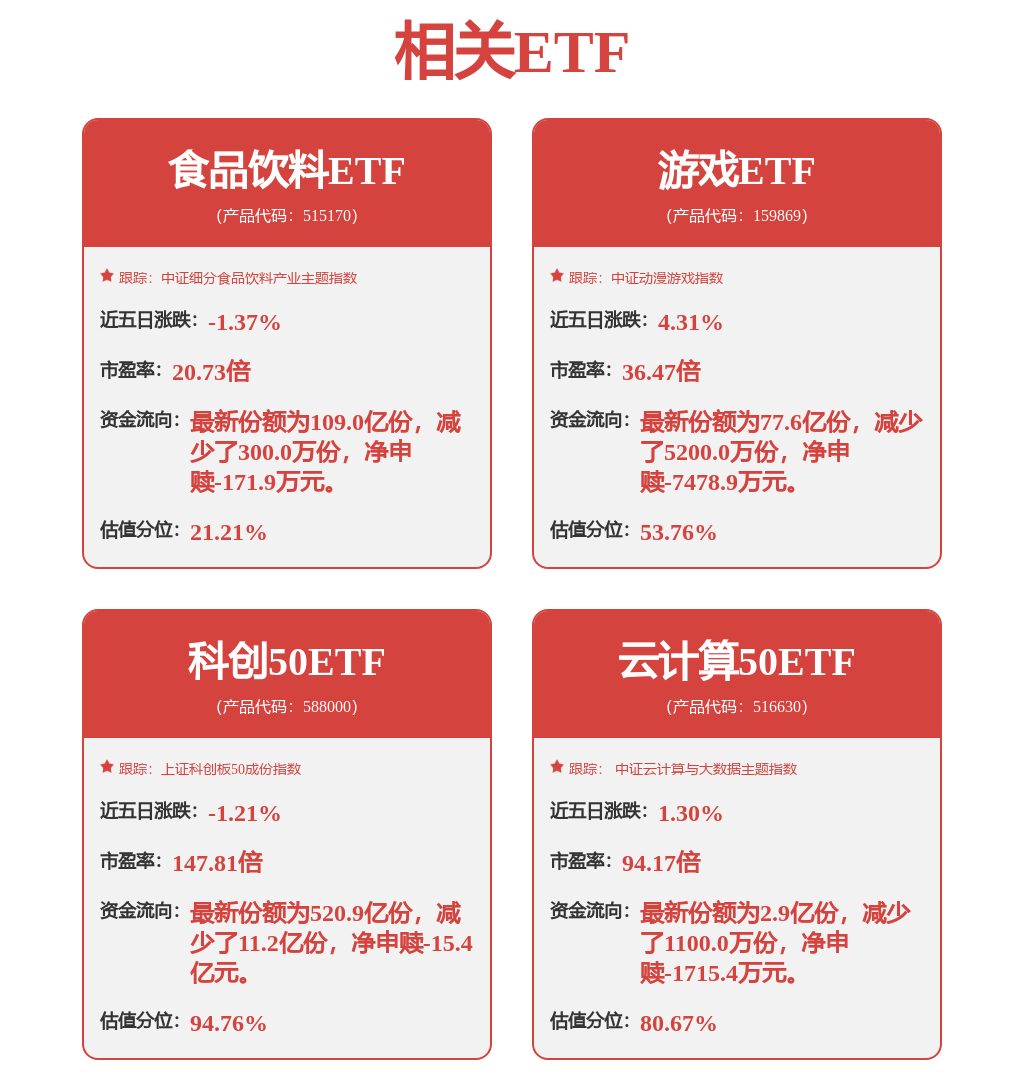
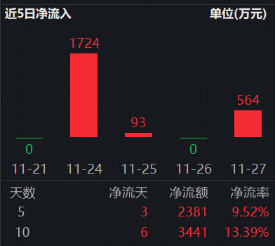
Group 1 - Beijing plans to construct and operate a large-scale centralized data center system with over 1 GW power capacity in a 700-800 km orbit to support AI computing in space [1] - The data center system will consist of subsystems for space computing, relay transmission, and ground control, with construction divided into three phases from 2025 to 2035 [1] - East Wu Securities highlights that companies with comprehensive AI stack capabilities will benefit from the growing demand for computing power, indicating a robust market space for computing infrastructure [1] Group 2 - The Hong Kong stock market's semiconductor industry chain showed resilience, with the first ETF focused on the "Hong Kong chip" industry gaining 0.55% [2][4] - The ETF (159131) is composed of 70% hardware and 30% software, heavily investing in semiconductor, electronics, and computer software sectors, with significant weights in companies like SMIC and Xiaomi [4] - The ETF aims to capture the momentum of the AI hard technology sector in Hong Kong, excluding major internet companies for a sharper focus [4]
北京开展布局太空数据中心
Xin Lang Cai Jing· 2025-11-28 00:21
Core Viewpoint - The Beijing Municipal Science and Technology Commission and the Zhongguancun Science City Management Committee have released a plan for the construction of a space data center, aiming to establish a centralized large-scale data center system in the 700 to 800 kilometers dawn-dusk orbit, capable of accommodating a million-class server cluster for space-based data relay transmission and computing services [1] Group 1 - The plan involves the construction and operation of a centralized large-scale data center system [1] - The proposed data center will be located in the 700 to 800 kilometers dawn-dusk orbit [1] - The system is designed to accommodate a million-class server cluster [1] Group 2 - The data center will provide space-based data relay transmission services [1] - The center will also offer computing services [1]
北京开展布局太空数据中心 太空数据中心要来了
Xin Lang Cai Jing· 2025-11-27 15:11
Core Viewpoint - The Beijing Municipal Science and Technology Commission and the Zhongguancun Science City Management Committee have released a plan for the construction of a space data center, aiming to establish a centralized large-scale data center system in the 700 to 800 km dawn-dusk orbit, capable of accommodating a million-class server cluster for space-based data relay transmission and computing services [1] Group 1 - The plan involves the construction and operation of a centralized large-scale data center system [1] - The proposed data center will be located in the 700 to 800 km dawn-dusk orbit [1] - The system is designed to accommodate a million-class server cluster [1] Group 2 - The data center will provide space-based data relay transmission services [1] - It will also offer computing services [1]
北京拟将大规模AI算力搬上太空
Zhong Guo Xin Wen Wang· 2025-11-27 12:26
Core Viewpoint - Beijing plans to construct and operate a centralized large-scale data center system with over 1 gigawatt (GW) power on a 700-800 kilometer orbit to facilitate the deployment of large-scale AI computing power in space [1][2] Group 1: Industry Context - The rapid development of AI is driving an explosive demand for computing power, which is constrained by energy and heat dissipation factors in ground data centers, making space deployment a promising solution [1] - The space data center is identified as a strategic intersection of commercial aerospace and artificial intelligence, potentially leading to a new industrial chain and business loop supported by reusable rockets, computing constellations, and data application scenarios [1] Group 2: Development Plan - The data center system will consist of space computing, relay transmission, and ground control subsystems, with construction divided into three phases: - From 2025 to 2027, key technologies related to energy and heat dissipation will be developed, and the first phase of the computing constellation will be constructed [2] - From 2028 to 2030, advancements in on-orbit assembly and construction technologies will aim to reduce costs and build the second phase of the computing constellation [2] - From 2031 to 2035, large-scale satellite production and network launch will be conducted to establish a large-scale space data center [2] Group 3: Collaborative Efforts - The Beijing Starry Future Space Technology Research Institute and its subsidiary, Beijing Orbit Chuangguang Technology Co., are leading the initiative, gathering advantages from the commercial aerospace industry chain to form an innovative consortium focused on space data center construction and application [2] - The consortium has already made breakthroughs in several key technologies and completed the development of the first-generation experimental satellite "Chuangguang No. 1," which is undergoing assembly tests and is expected to be launched by the end of this year or early next year [2]
马斯克画的上天大饼,中国人已经在做了
3 6 Ke· 2025-11-25 01:45
Core Insights - Elon Musk's ambitious plan to build AI data centers in space is gaining traction, with China already making significant advancements in this area [1][27] - The competition for computational power in AI is intensifying, with major tech companies investing heavily in data center infrastructure [7][14] Group 1: Space Data Centers - Musk's vision includes launching AI satellites to create a space-based data center, which could provide energy and computational power far exceeding Earth's capabilities [11][13] - The proposed space data centers would utilize solar energy, taking advantage of the higher efficiency of solar panels in space compared to Earth [11][17] - The cooling challenges faced by terrestrial data centers could be mitigated in space due to the extreme cold of the environment, allowing for more efficient heat dissipation [12][22] Group 2: Investment and Infrastructure - Major tech companies, including Amazon and Google, are exploring similar concepts for space data centers, indicating a broader industry trend towards off-Earth computational solutions [14][16] - Amazon's Project Kuiper and Google's Project Suncatcher are examples of initiatives aimed at integrating AI capabilities with space infrastructure [14][16] - The estimated capital expenditure for AI infrastructure by major tech firms in the next few years is projected to reach $1.2 trillion [7] Group 3: Challenges and Considerations - The primary challenge for space data centers is the high cost of launching equipment into space, which needs to be reduced significantly for the concept to be economically viable [25][27] - Concerns regarding the maintenance and upgrade of hardware in space, as well as protection against cosmic radiation, are significant hurdles that need to be addressed [22][23] - The timeline for achieving operational space data centers is debated, with some experts suggesting it may take a decade or more to become feasible [23][25] Group 4: China's Advancements - China has already launched its "Star Computing Plan," which includes a constellation of satellites designed for computational tasks, demonstrating a proactive approach in the space computing race [27] - The first satellite constellation launched by China includes 12 satellites capable of processing data in orbit, showcasing the potential for advanced computational capabilities in space [27]

马斯克画的上天大饼 中国人已经在做了
Xin Lang Ke Ji· 2025-11-25 01:23
Core Insights - Elon Musk's ambitious plan to build AI data centers in space reflects a significant shift in the competition for computational power, with China already making strides in this area [1][27] - The demand for AI infrastructure is driving massive investments from tech giants, with projected capital expenditures reaching $1.2 trillion over the next three to five years [6][9] Group 1: Space Data Centers - Musk's proposal includes launching AI satellites to create a space-based data center, which he claims could generate 100 GW of solar energy annually, equivalent to a quarter of the average annual electricity consumption in the U.S. [12][13] - The efficiency of solar energy in space is significantly higher than on Earth, with solar radiation intensity being 1.36 times greater in orbit [10] - The cooling requirements for data centers in space can be met more efficiently due to the extreme cold of space, allowing for effective heat dissipation without traditional cooling systems [11][12] Group 2: Investment and Infrastructure - Major tech companies are investing heavily in AI infrastructure, with a total projected investment of $6.7 trillion in data centers by 2030, driven largely by AI workloads [6][9] - Musk's xAI is collaborating with Saudi Arabia to build a $25 billion data center with a capacity of 500 MW, surpassing the capacity of xAI's existing center in Tennessee [6][7] Group 3: Challenges and Considerations - The primary challenge for space data centers is the cost of launching equipment into space, with current costs around $1,400 per kilogram, although future projections suggest this could drop to between $67 and $100 per kilogram [24][25] - Concerns about cosmic radiation and the harsh environment of space necessitate robust engineering solutions to protect sensitive equipment [21][22] Group 4: Competitive Landscape - Other tech giants, such as Amazon and Google, are also exploring space-based data centers, with Amazon's Blue Origin and Google's Project Suncatcher aiming to leverage solar energy in space for AI processing [14][16] - China's advancements in space computing, including the launch of a satellite constellation for computational tasks, indicate that the race for space-based AI infrastructure is intensifying [27]
当前时点如何看商业航天?
2025-11-25 01:19
Summary of Commercial Aerospace Industry Conference Call Industry Overview - The satellite internet industry relies on downstream capital expansion for revenue growth, with a peak performance expected around 2027 or 2028 due to the issuance of 6G licenses and the replacement of base stations, which will enhance satellite network applications in remote areas [1][2][3] - The profitability model in commercial aerospace is heavily dependent on cost control, with significant differences in launch costs between domestic and international players. A major milestone is anticipated with the first flight of a large-thrust reusable rocket by the end of 2025, which is expected to commercialize by around 2028, significantly reducing costs [1][2][3] Key Insights and Arguments - The International Telecommunication Union (ITU) has set clear requirements for satellite launches, with most orbital applications concentrated in 2019-2020. By 2027, experimental satellites must be launched, achieving a new measurement of 10%-50% [1][3] - The commercial aerospace sector is influenced by multiple factors, including interest from major international companies like Nvidia and Google in space data centers, and the end-of-year fund performance assessments that may shift capital from high to low positions [1][4] - The first flight of the large-thrust reusable rocket in late 2025 is a significant event for China's commercial aerospace sector, symbolizing a major step forward despite limited short-term impacts on cost reduction and rocket capacity improvement [1][5] Emerging Trends - The satellite industry is experiencing several catalytic factors, including movements from AI-related companies overseas, high domestic capital discount rates, and positive internal changes within the satellite industry [1][6] - In the communication sector, companies like Canqin Technology, which produces ceramic filters, and Haige Communication, which has a broad market layout and unique advantages in the chip sector, are highlighted as key investment opportunities [2][7] Related Industries - The construction industry is also entering the commercial aerospace field, with companies like Shanghai Port Bay investing in perovskite battery technology for satellite solar wings and energy management systems. The company has secured approximately 34 million RMB in new orders as of mid-2025 [2][8] - Perovskite batteries show promise in commercial aerospace due to their potential for increased efficiency and reduced costs. The company has successfully launched 16 satellites powered by its energy systems, with over 40 products operating reliably [2][9]
马斯克画的上天大饼,中国人已经在做了|硅谷观察
Xin Lang Ke Ji· 2025-11-24 23:52
Core Viewpoint - Elon Musk's ambitious plans for space-based AI data centers highlight a competitive landscape where companies are racing to establish advanced computing capabilities beyond Earth, with China already making significant strides in this area [2][28]. Group 1: Space-Based AI Data Centers - Musk's vision includes launching AI satellites to create a super AI data center in space, with plans to deploy these satellites within five years [6][14]. - The energy demands of data centers are driving the need for innovative solutions, with Musk's proposed space-based centers potentially offering superior energy efficiency compared to terrestrial options [12][26]. - The operational costs of space data centers could be significantly lower than those on Earth, with estimates suggesting they could be one-tenth of terrestrial data center costs [26]. Group 2: Competitive Landscape - Major tech companies like Amazon and Google are exploring similar concepts, with Amazon's Blue Origin and Google's Project Suncatcher aiming to establish space-based data processing capabilities [15][18]. - The competition is intensifying, as various companies are investing in technologies to reduce launch costs and improve the feasibility of space data centers [26][20]. - China's advancements in space computing, including the launch of a satellite constellation for on-orbit processing, position it as a frontrunner in this emerging field [29][30]. Group 3: Technical Challenges and Innovations - The construction of space data centers faces significant technical challenges, including radiation protection and the need for robust hardware capable of withstanding harsh space conditions [23][24]. - Innovative cooling solutions, such as radiative cooling in the vacuum of space, could address some of the limitations faced by terrestrial data centers [13][12]. - The successful deployment of AI satellites will depend on advancements in chip production and the ability to transport necessary equipment to space efficiently [14][26].
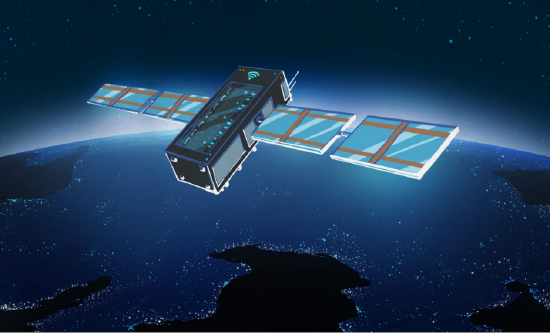
降维打击,把数据中心建在太空,马斯克高调宣布,中国公司悄然亮剑,无需冷却也不缺能源!
Sou Hu Cai Jing· 2025-11-18 13:50
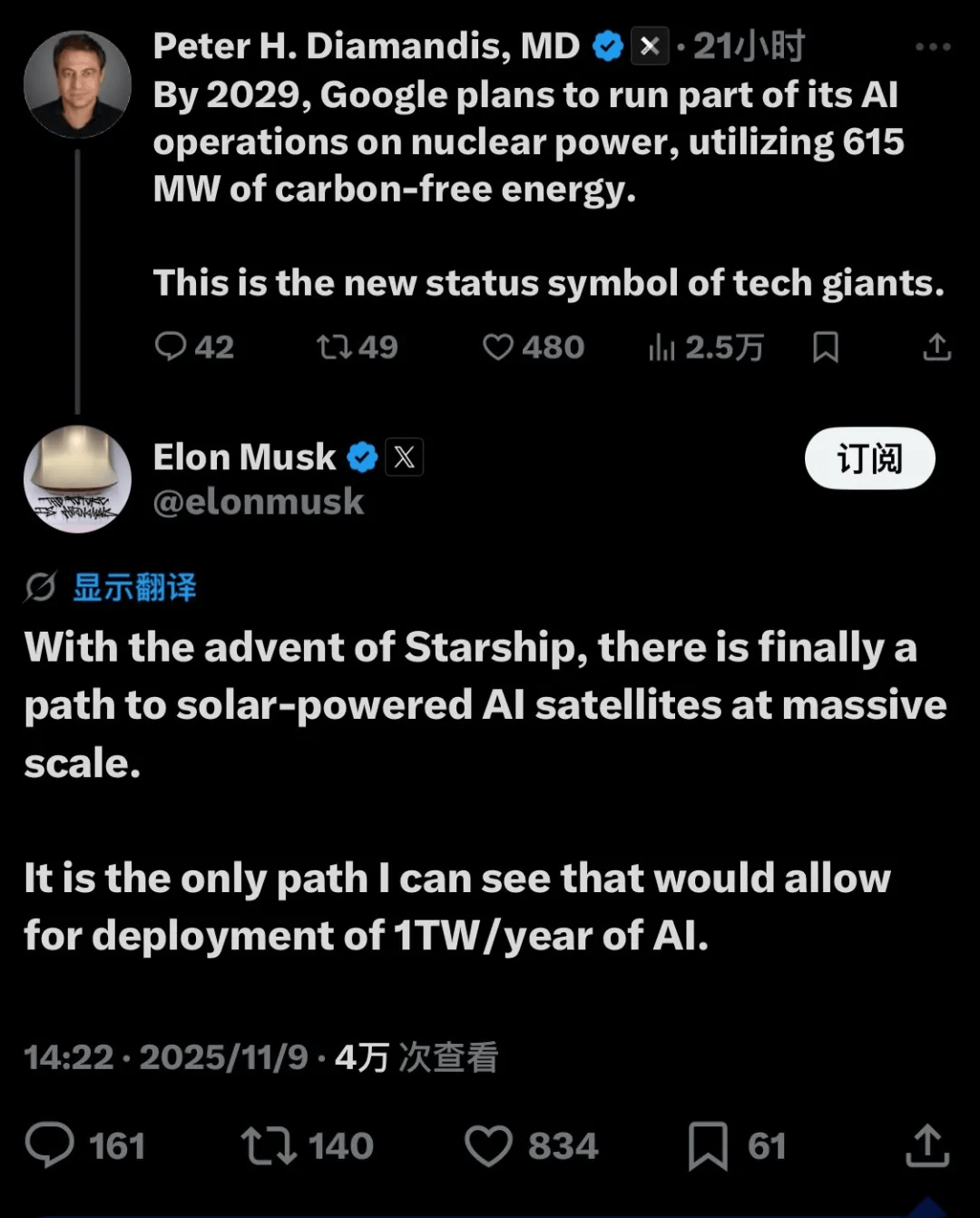
Group 1 - Elon Musk stated that the advent of Starship opens the path for large-scale deployment of solar-powered AI satellites, which he believes is the only way to achieve 1 terawatt (1TW) of AI computing power annually [1] - The energy supply shortage is a critical bottleneck for AI data center construction, with FTI Consulting predicting that energy demand for data centers in the U.S. will nearly double by 2027 [3] - The construction of data centers in space is becoming a viable option for many Silicon Valley tech companies due to power limitations on Earth [4] Group 2 - StarCloud successfully launched a satellite equipped with NVIDIA H100 chips and Google Gemini models, which will provide 100 times the GPU computing power compared to previous space computing facilities [4] - StarCloud plans to build a 5-gigawatt orbital data center powered by large solar and cooling battery panels, which will not require water for cooling or rely on batteries [4] - Google is considering a project named "Project Suncatcher" to establish the first space data center, planning to launch prototype satellites by 2027 in collaboration with Planet [5] Group 3 - The first space computing satellite constellation was successfully launched by Guoxing Aerospace and Zhijiang Laboratory, consisting of 12 satellites capable of processing data in orbit [7] - The U.S. has launched over 10,000 satellites, with significant contributions to the ongoing conflict in Ukraine, and there are expectations for accelerated launch progress in China in the coming years [7]