
平台经济

Search documents
从圈到群:长三角区域一体化战略如何深化
Sou Hu Cai Jing· 2025-11-08 04:46
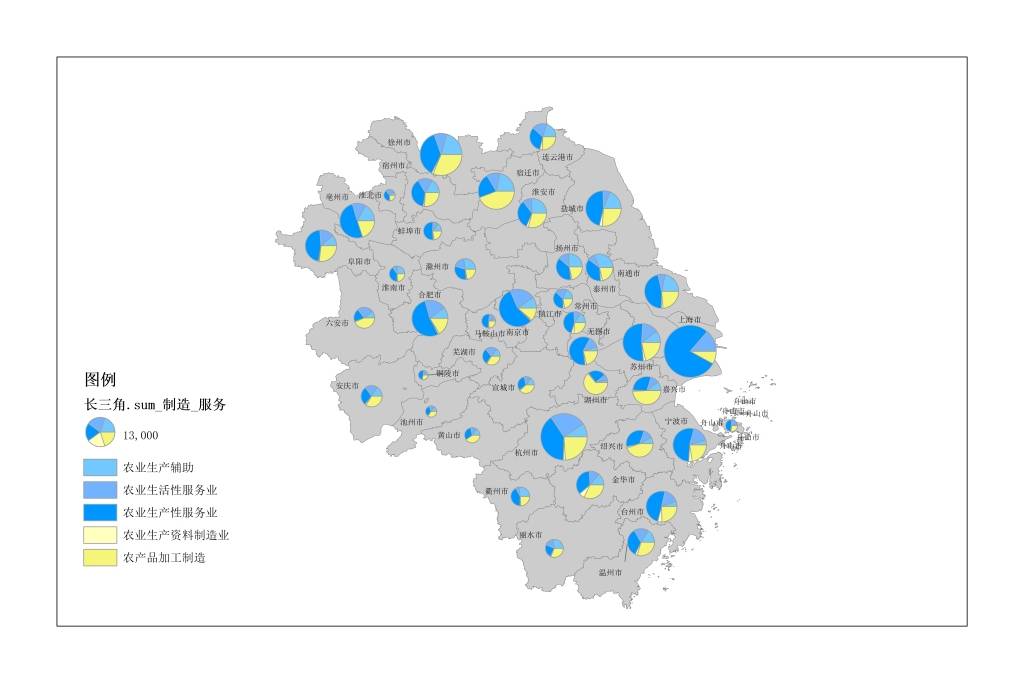
Core Insights - The release of the "Action Plan for Establishing and Improving the System and Mechanism for the Coordinated Development of Urban Agglomerations" marks a new phase in the integrated development of the Yangtze River Delta, focusing on urban agglomeration and coordinated development as the core driving force [1] Group 1: Urban Agglomeration and Economic Impact - The Yangtze River Delta region has a permanent population of approximately 238 million and a GDP of 33.17 trillion yuan, accounting for 24.6% of the national total [2] - The overall capability of urban agglomerations largely depends on the strength of core cities or urban circles, with stronger central cities attracting more population and fostering a positive cycle [2][3] - The plan emphasizes the need to "unleash and empower" core urban circles to activate the potential of the world-class urban agglomeration [2] Group 2: Industrial Development and Future Trends - There is a need to strengthen the synergy between "productive services and advanced manufacturing," leveraging the complementary relationship between modern services and advanced manufacturing [3] - The evolving consumption patterns led by younger demographics, such as live streaming and short videos, are reshaping the flow dynamics in central cities [3] Group 3: Competition and Integration - The unique structure of the Yangtze River Delta, with its six urban circles and large population, provides a natural environment for orderly competition among different urban circles [4] - The "Action Plan" aims to break down barriers and create a unified market through infrastructure connectivity and unified market rules, enhancing fair competition [4] Group 4: Cross-Department Coordination - Effective cross-department cooperation frameworks in areas like economic statistics and public service guarantees are essential for addressing coordination challenges in urban circle development [5] - The current transportation coordination between cities like Shanghai and Suzhou shows significant room for improvement, indicating a need for better integration [5] Group 5: Urban-Rural Integration - The construction of a unified urban agglomeration includes not only the integration of urban circles but also the collaboration between cities and counties [6] - Strategies for rural integration must consider the varying development levels of counties, focusing on enhancing public services and income levels for residents [6] Group 6: Implementation and Future Directions - The key to advancing integration in the Yangtze River Delta lies in execution, with urban circles serving as engines for coordinating population, land, and industry [9] - Achieving a tangible sense of "urban circle integration" for residents and predictable systems for businesses is crucial for transforming planning into reality [9]

平台经济应为AI注入“良善”之魂
Huan Qiu Wang· 2025-11-05 09:10
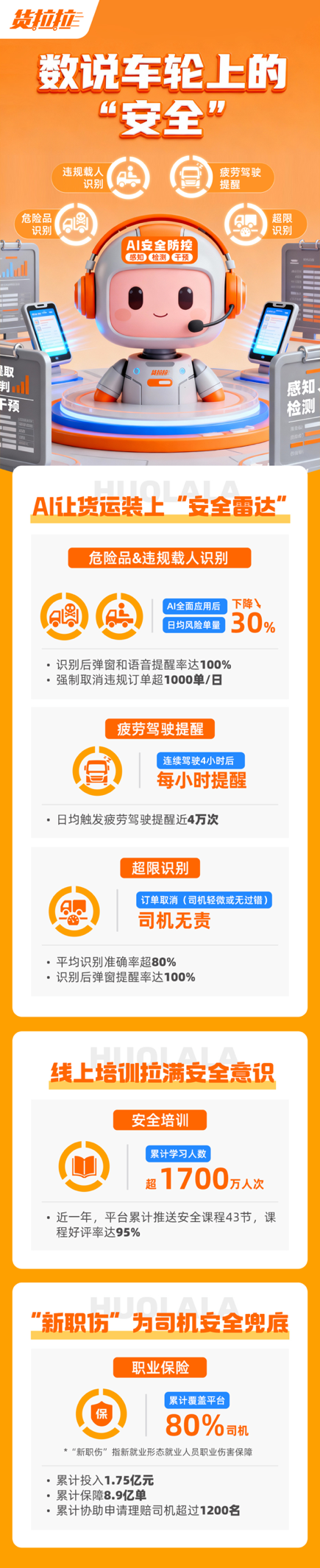
Core Viewpoint - The recent move by Huolala to disclose its AI safety and accountability algorithms represents a significant step towards transparency in the platform economy, addressing the long-standing "algorithm dilemma" faced by new employment form workers, particularly truck drivers [1][4]. Group 1: AI and Employment - The digital economy now accounts for over 40% of GDP, with more than 80 million new employment form workers, making the use of AI a matter of "who it serves" rather than "whether to use it" [4]. - For platforms, AI serves as a tool for efficiency and risk management, while for drivers, it should act as a partner for safety and fairness [4][5]. Group 2: Safety and Accountability - Safety and accountability are critical areas for AI optimization, as fatigue driving and hazardous material transport pose significant risks for truck drivers [5]. - A survey by the China Logistics and Purchasing Federation revealed that 44.34% of drivers desire more humane fatigue driving management, and 28.13% often face demands for overloading [5]. Group 3: Huolala's AI Practices - Huolala's AI practices address these pain points by implementing fatigue reminders after four hours of continuous driving and alerting drivers about hazardous materials in real-time [5][7]. - The platform has shifted from a one-sided algorithm notification system to a collaborative approach, involving drivers in the development of AI accountability measures [7]. Group 4: Technological Evolution - The transformation from a "control logic" to a "coexistence logic" in platform economics is crucial for maturity, as it integrates drivers' voices into the technological framework [7][9]. - The goal is to turn drivers' needs for safety and fair accountability into identifiable features within AI systems and collaborative mechanisms [9][10].
中经评论:让平台经济承载更多民生温度
Zhong Guo Jing Ji Wang· 2025-11-04 23:28
Core Points - Meituan is launching a nationwide pension insurance subsidy program for delivery riders starting in November, where the platform will cover half of the insurance costs for riders who meet certain income criteria [1][4] - The program aims to address the lack of pension insurance among riders, many of whom come from rural areas and may not have adequate retirement savings [1][4] - The initiative is part of a broader trend in the industry, with competitors like JD and Ele.me also exploring social security options for their riders [1][4] Group 1 - The program allows riders to purchase pension insurance if they have earned above the local social security contribution base for at least three months in the past six months [1] - For example, in Beijing, the minimum contribution base is 7,162 yuan, with the monthly pension insurance cost being 1,432.4 yuan, where Meituan subsidizes 716.2 yuan [1] - The implementation of this program is significant as it represents a nationwide effort to provide social security for riders, addressing long-term financial security concerns [1][4] Group 2 - The complexity of providing social security for riders is highlighted by the fact that over 7 million riders are registered on Meituan, with only about 10% being full-time [2] - Many riders view delivery work as a temporary job, leading to challenges in determining where and how their social security contributions should be made [2] - The financial burden on companies is substantial, with annual costs potentially reaching billions of yuan for these subsidies [3] Group 3 - The push for social security for riders is driven by market competition, as companies seek to retain riders and ensure service reliability during peak times [4] - Government policies are also influencing this trend, with regulatory bodies promoting the protection of rights for new employment forms and increasing participation rates in social security [4] - Meituan's approach of allowing voluntary contributions with platform subsidies is seen as a practical solution that respects rider preferences while encouraging participation [4]
让平台经济承载更多民生温度
Jing Ji Ri Bao· 2025-11-04 22:07
Core Viewpoint - The initiative to provide pension insurance subsidies for delivery riders is a significant step towards enhancing the welfare of gig economy workers, driven by market competition and regulatory support [1][5]. Group 1: Company Initiatives - Meituan will start offering pension insurance subsidies for delivery riders starting in November, covering half of the insurance costs for those who meet certain income criteria [1]. - The minimum social insurance contribution base in Beijing is 7,162 yuan, with the monthly pension insurance payment being 1,432.4 yuan, where Meituan will subsidize 716.2 yuan [1]. - Other companies like JD and Ele.me are also taking steps to provide social insurance for their riders, but Meituan's nationwide rollout is a notable milestone [1]. Group 2: Importance of Pension Insurance - Many riders come from rural areas and have basic health insurance, but the lack of pension insurance poses a long-term risk for their retirement [2]. - The existing social safety net in China is insufficient to cover the vast number of gig workers, making pension insurance crucial for their future security [2]. Group 3: Challenges in Implementation - There are over 7 million riders on Meituan's platform, but only about 10% are full-time, complicating the process of providing social insurance [3]. - Many riders view gig work as a temporary solution, leading to a lack of interest in long-term benefits like pension insurance [3]. - The financial burden of providing these benefits is significant for companies, with annual costs potentially reaching billions [4]. Group 4: Market and Regulatory Dynamics - The competition in the food delivery market has intensified, making rider retention and service reliability critical, with pension subsidies acting as a stabilizing factor [5]. - Government policies are increasingly focused on protecting the rights of gig workers, with various departments promoting social insurance for new employment forms [5]. - The design of Meituan's pension insurance plan respects rider autonomy while lowering barriers to participation, encouraging more riders to enroll [5].
钟睒睒四登首富!农夫山泉凭什么?
Sou Hu Cai Jing· 2025-11-01 15:54
Core Insights - Zhong Shanshan's wealth has increased by 190 billion RMB, reaching 530 billion RMB, making him the richest person in China for the fourth time, surpassing the second richest, Zhang Yiming, by 60 billion RMB [1][10]. Wealth Growth and Rankings - In the latest Hurun Rich List, Zhong Shanshan ranks first with a wealth of 530 billion RMB, reflecting a 56% increase [3]. - The second place is held by Zhang Yiming with 470 billion RMB, showing a 34% increase [3]. - Other notable figures include Ma Yun's family at 210 billion RMB and Lei Jun at 330 billion RMB, with respective increases of 27% and 65% [3]. Business Development Phases - **Entrepreneurial Enlightenment (1988-1995)**: Zhong transitioned from a journalist to a businessman, initially facing failures before finding success in curtain fabric trading and becoming a distributor for Wahaha [4]. - **Foundation Phase (1996-2009)**: He founded Nongfu Spring in 1996, breaking into the bottled water market and establishing a strong brand despite facing controversies [5][6]. - **Diversification Phase (2010-2019)**: Zhong expanded into the pharmaceutical sector by acquiring a controlling stake in Wantai Biological Pharmacy, focusing on HPV vaccine development [7]. - **Wealth Explosion Phase (2020-2025)**: His wealth surged due to the success of Nongfu Spring and Wantai Biological, with significant revenue growth from both companies [8][9]. Financial Performance - In the first half of 2025, Nongfu Spring reported revenues of 25.62 billion RMB, a 15.6% increase year-on-year, with a net profit of 7.62 billion RMB, up 22.2% [10][11]. - The tea beverage segment, particularly the "Oriental Leaf" brand, has become the largest revenue source, contributing 10.09 billion RMB, a 19.68% increase [12][13]. Market Challenges - Despite the recovery in bottled water sales, the tea beverage segment's growth rate has slowed significantly compared to previous years, indicating increased competition [12][14]. - The beverage market is facing challenges from rising competition and changing consumer preferences, which may limit Nongfu Spring's profitability [14][15]. Leadership and Governance - Zhong Shanshan's centralized decision-making style has been effective in the early stages but poses risks as the company grows, particularly concerning succession planning [16][17]. - The potential lack of involvement from his son in daily operations raises concerns about future leadership stability [17].

“一超多强”“百花齐放”——网经社电子商务中心主任曹磊谈上海电商格局
Sou Hu Cai Jing· 2025-10-31 14:25
Core Insights - The current e-commerce landscape in Shanghai is characterized by a dominant player, Pinduoduo, alongside several strong competitors and a multitude of smaller players, creating a diverse market ecosystem [2][7]. Group 1: Shanghai's E-commerce Growth - Shanghai's e-commerce sector is experiencing explosive growth, with total e-commerce transactions exceeding 3.27 trillion yuan (approximately 0.5 trillion USD) in the first nine months of 2025, marking a year-on-year increase of 12.7% [2]. - The live-streaming retail sales in Shanghai reached 369 billion yuan (approximately 56 billion USD), reflecting a significant year-on-year growth of 23.6% [2]. - Factors contributing to this growth include Shanghai's status as a fashion consumption hub, a robust manufacturing base, a concentration of quality brands, and supportive government policies [2]. Group 2: E-commerce Structure - The e-commerce structure in Shanghai can be summarized as "one super, many strong, and a long tail of diversity," with Pinduoduo as the leading player, followed by strong competitors like Xiaohongshu and Dewu, and a large number of small e-commerce entities [2][7]. - Pinduoduo reported a revenue growth rate of 7% for Q2 2025, with quarterly revenue reaching 104 billion yuan (approximately 15.5 billion USD) [7]. - The presence of numerous small e-commerce businesses enriches the market ecosystem, allowing for specialization in niche markets and regional services [7]. Group 3: Government Support and Policy Initiatives - The Shanghai government has implemented a three-year action plan aimed at fostering high-growth enterprises, targeting the establishment of over 1,000 such companies by 2027 [5]. - The plan includes nurturing 400 potential gazelle companies, 300 gazelle companies, 200 potential unicorns, and 100 unicorns, with a goal of creating at least two unicorns valued over 10 billion USD [5]. - Additional measures to optimize the business environment include enhancing financing accessibility for small and medium enterprises through initiatives like "park instant loans" and supply chain finance [5]. Group 4: Live-streaming E-commerce Development - Shanghai has emerged as a core hub for live-streaming e-commerce, with transaction volumes surpassing 850 billion yuan (approximately 127 billion USD) in Q1 2025, representing a 32% year-on-year increase [15]. - The city accounted for 18.7% of the national total in live-streaming e-commerce, benefiting from its high-end consumption, brand concentration, and digital infrastructure [15]. - Notably, Douyin's local life business segment achieved a GMV of over 120 billion yuan (approximately 18 billion USD) in 2024, showcasing the digital transformation of offline industries [16]. Group 5: Cross-border E-commerce Development - Shanghai's cross-border e-commerce has expanded significantly since the early 2010s, supported by national initiatives like the "Belt and Road" and "Internet Plus" strategies [18]. - The city was one of the first to establish a cross-border e-commerce comprehensive pilot zone in 2016, which has accelerated its growth [18]. - The Shanghai government aims to cultivate 100 cross-border e-commerce brands and establish 10 live-streaming bases by 2025, targeting an annual growth rate of over 20% in cross-border e-commerce import and export volumes [19].




报告:北京、上海等四城构成平台经济“超强阵营”
Zhong Guo Xin Wen Wang· 2025-10-31 12:02
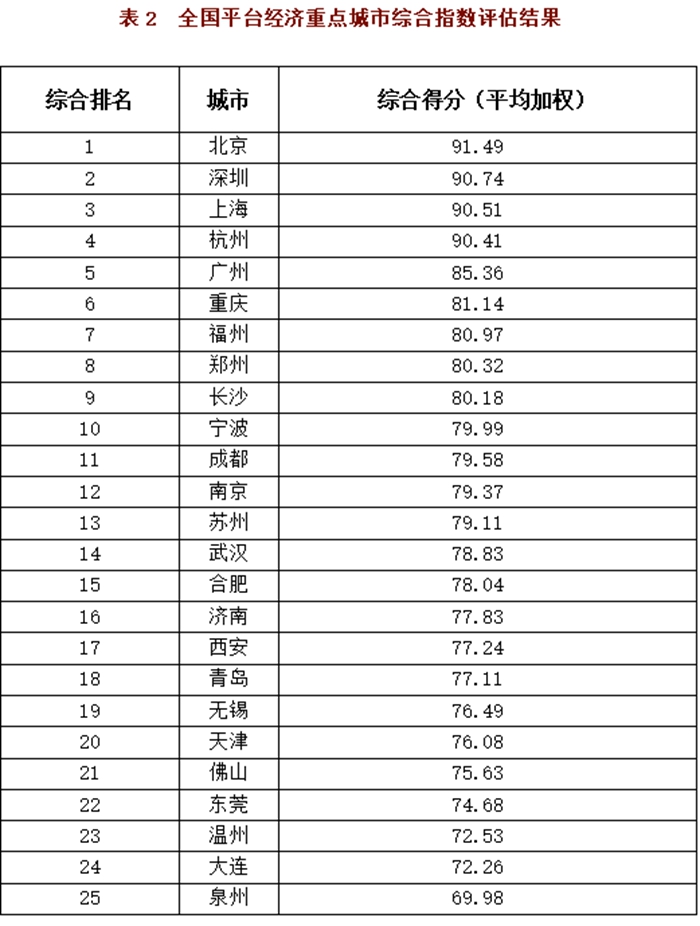
Core Insights - The report highlights that platform economy is a key engine for shaping the core competitiveness of digital China and driving high-quality economic development [1] - Beijing, Shenzhen, Shanghai, and Hangzhou form a "super strong camp" in platform economy development, leading in most indicators and ranking in the first tier [1] Summary by Categories Comprehensive Ranking - The report presents a comprehensive ranking of cities based on their platform economy scores, with Beijing leading at 91.49, followed by Shenzhen (90.74), Shanghai (90.51), and Hangzhou (90.41) [2] - Other notable cities include Guangzhou (85.36) and Chongqing (81.14), with a total of 25 cities evaluated [2] Infrastructure Development - Beijing, Shanghai, and Shenzhen rank in the top three for infrastructure, characterized by national computing power hub layout, low-latency networks, and intelligent port logistics, creating a hard-to-replicate "hard power" [2] - Hangzhou ranks fourth, showcasing its leading digital platform infrastructure and high penetration of e-commerce live streaming [2] Industry Development Potential - Shenzhen and Beijing exhibit absolute advantages in industrial scale, while Hangzhou and Fuzhou excel in industrial proportion, significantly contributing to local GDP [3] - Cities like Hefei and Changsha show strong growth rates, indicating emerging forces challenging traditional structures [3] Market Dynamics - Beijing leads in the number of platform enterprises and unicorn index, establishing a large cluster of market entities [3] - Hangzhou excels in market activity, with daily live e-commerce transactions exceeding 10 billion, indicating a thriving market [3] - Shanghai and Shenzhen create a healthy ecosystem characterized by "giant leadership + small and medium-sized collaboration" [3] Core Factors - Beijing ranks high in talent, capital, technology, and data, demonstrating perfect synergy of these elements and solidifying its position as a national innovation center [3] - Shenzhen and Hangzhou show outstanding performance in capital investment and technological innovation, while cities like Nanjing and Wuhan benefit from talent advantages [3] Evaluation Methodology - The report evaluates 25 key cities in platform economy based on five primary indicators and 18 secondary indicators, revealing a competitive landscape characterized by factor aggregation and distinct tiers [3]
“平台+服装产业”双向赋能 解码“柔性制造”里的“数智化”
Hang Zhou Ri Bao· 2025-10-31 05:48
Group 1 - The core concept of the news highlights the innovative model of the fashion industry in Yishan Town, which integrates digital innovation and flexible manufacturing to respond to market changes [1] - Yishan Town has established a comprehensive fashion ecosystem that includes design, sampling, production, and sales, attracting nearly 3,700 enterprises and over 8,000 designers and pattern makers [1] - In the first half of this year, the online retail sales of the clothing industry in Hangzhou reached 30.738 billion yuan, representing a year-on-year growth of 15% [1] Group 2 - The "live streaming + brand" revolution in Hangzhou is driving a transformation in the clothing industry, with over 500 cross-border e-commerce companies and a transaction volume of 5.26 billion yuan, up 21.85% year-on-year [2] - The industry aims to transition from being a "traffic highland" to a "quality peak," emphasizing the importance of dual empowerment through platforms and industries for the future of Hangzhou's women's clothing [2]
广西进一步规范平台企业经营行为
Guang Xi Ri Bao· 2025-10-30 02:21
Core Insights - The article discusses the administrative guidance meeting held by the Guangxi Market Supervision Administration for the 2025 "Double Eleven" online promotional event, aimed at regulating platform enterprises' business behaviors and promoting healthy development of the platform economy in Guangxi [1] Group 1: Economic Impact - The platform economy has become a crucial support for smooth production and sales cycles, rural revitalization, and stimulating consumer activity in Guangxi [1] - By the end of 2024, the e-commerce scale in the region is expected to exceed 540 billion yuan [1] - From 2021 to 2025, the average annual growth rate of e-commerce transaction volume in the region is projected to be 18.76% [1] - The average annual growth rate of online retail sales is expected to be 14.72%, while the growth rate for physical goods online retail sales is projected at 19.14% [1] - Live streaming sales are anticipated to grow at an average annual rate of 7.4% [1] Group 2: Regulatory Measures - The Guangxi Market Supervision Administration has identified issues such as "false advertising," "induced consumption," "data fraud," "price hikes followed by discounts," and "substandard goods" as persistent illegal activities during promotional events [1] - Platform enterprises are required to take on primary responsibilities and adhere to compliance standards, prohibiting practices such as restricting merchants from participating in promotions on other platforms and implementing "choose one" or "big data discrimination" [1] - Companies must enhance algorithm compliance management to prevent rule abuse and protect consumer and merchant rights [1] - Platforms are urged to proactively identify potential issues during promotional periods, such as logistics congestion and increased after-sales service demands, and to prepare emergency plans to ensure service quality [1]
多方协力 加快发展多层次多支柱养老保险体系
Jin Rong Shi Bao· 2025-10-30 00:25
Core Viewpoint - The Chinese government emphasizes the importance of a robust social security system, particularly in the area of pension insurance, as part of its "14th Five-Year Plan" [1] Group 1: Pension Insurance System Development - The basic pension insurance coverage has reached 1.072 billion people, an increase of over 73 million since the end of the "13th Five-Year Plan," with the participation rate rising from 91% to over 95% [1] - The government aims to accelerate the development of a multi-tiered and multi-pillar pension insurance system to meet the diverse needs of the elderly population and ensure the sustainability of the pension system [1] Group 2: Characteristics of the Pension Insurance Pillars - The three pillars of the pension insurance system include: the first pillar (basic pension insurance), the second pillar (supplementary pension insurance), and the third pillar (personal pension systems and other commercial pension financial services) [1] - Current discussions highlight that the three pillars are not equally developed, with the first pillar being crucial for the existence of the second and third pillars [3] Group 3: Demographic and Labor Market Considerations - Over 50% of pension recipients are from the rural residents' pension insurance scheme, indicating the need to include this demographic in pension reform discussions [2] - The expansion of flexible employment due to digital and platform economies necessitates a reevaluation of traditional pension coverage strategies [3] Group 4: Role of Financial Institutions - Financial institutions play a vital role in providing diverse and innovative pension financial products, enhancing the second and third pillars as supplementary support beyond basic guarantees [4] - Key capabilities for financial institutions in this multi-tiered pension system include risk management, long-term investment stability, and integrated service offerings [4]