智能化

Search documents
从“煤尘中指挥”到“屏幕前装车”
Xin Lang Cai Jing· 2026-02-09 21:23
春节临近,国家能源集团乌海能源公司骆驼山洗煤厂依旧是一片忙碌景象。装煤现场,一排排重型卡车 整齐列队,静待装煤。现场听不见高声指挥,也看不见匆忙奔走的人影,伴随着智能语音系统的清晰提 示声,煤炭顺着下料口倾泻而下,簌簌地滑入车厢。如今在这个洗煤厂,智能无人装车系统正彻底改变 着传统作业的面貌。 记者走进洗煤厂集控中心二楼,装车现场尽收眼底。装车调度员蔺振国坐在操作台前,目光从容地扫过 多个分屏画面——车辆识别、精准定位、煤流量曲线、实时吨位统计……数据无声流动,秩序一目了 然。今年的春节,将是蔺振国成为"智能化装车员"后在岗度过的第一个春节。 "以前,每个通道都得有人盯着,冬天人在寒风里一站就是几个小时,夏天又是煤尘又是暴晒,还得近 距离指挥车辆,安全压力也大。"蔺振国回忆道。如今,随着智能无人装车系统在乌海能源公司多个洗 煤厂投运,传统的人工挥旗、呐喊指挥的场景已成为历史。装车调度员从煤尘飞扬的现场,转移到了明 亮洁净的集控中心;指挥方式,也从利用对讲机和手势,变成了利用鼠标、键盘和智慧大脑系统。 (来源:内蒙古日报) 转自:内蒙古日报 □本报记者 郝飚 通讯员 贾梦怡 "你看,现在装一车,误差可以控制在极 ...
跨越23年,“国民小车”焕新归来
Xin Lang Cai Jing· 2026-02-09 15:10
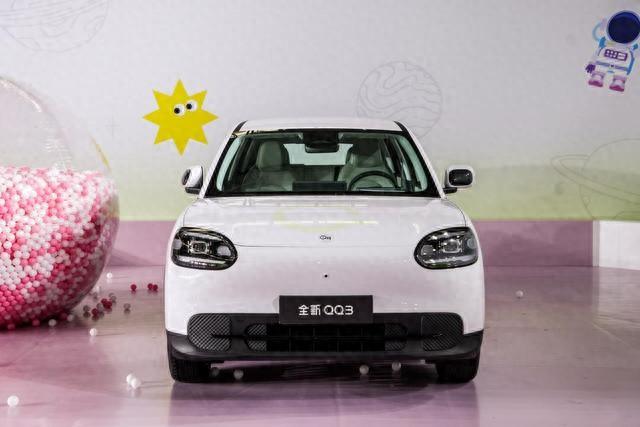
Core Viewpoint - Chery QQ, a significant name in China's automotive history, is making a comeback with the launch of the all-new QQ3, an AI-driven electric sedan, marking its return after 23 years since its inception in 2003 [1][3]. Group 1: Product Launch and Features - The all-new QQ3 is now available for blind booking, with promotional offers including a chance to win one of 99 vehicles by sharing stories on social media [1]. - The QQ3 is built on a native intelligent electric platform and has undergone global quality verification, emphasizing comprehensive safety standards [5]. - The vehicle features advanced technologies such as "Falcon Intelligent Driving" and "Lingxi Intelligent Cabin," along with unique elements like an electric front trunk and voice recognition capabilities [5]. Group 2: Historical Significance and Market Impact - Since its launch in 2003, the original QQ has sold 1.54 million units and has been popular in over 100 countries, establishing itself as a "king of small cars" [3]. - The QQ brand has been a pioneer in the small car segment, known for its vibrant colors, smiley face design, and cultural impact, including multiple Guinness World Records [3]. Group 3: Brand Philosophy and Vision - The chairman of Chery, Yin Tongyue, expressed the brand's mission to provide young people in China with a car that brings joy and serves as a means of self-expression [5]. - The new QQ family aims to redefine the concept of small cars through innovation in electrification and intelligence, promoting a lifestyle that resonates with consumers [5].

10万一台?中产的豪车情怀不香了
Feng Huang Wang Cai Jing· 2026-02-09 12:53
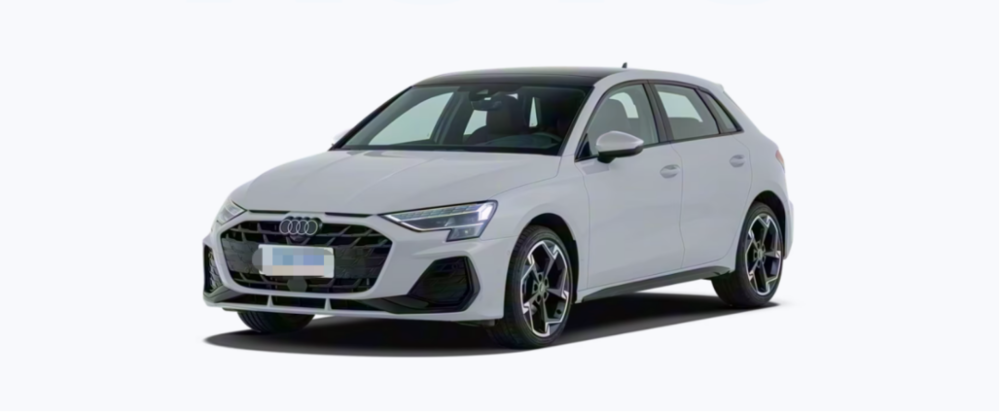
Core Viewpoint - The luxury car era is facing a significant transformation, highlighted by the drastic price reductions of models like the Audi A3, which has fallen into the 100,000 yuan range, signaling a deeper crisis in the automotive industry [1][2][20]. Group 1: Audi's Sales and Pricing Strategy - Audi A3, a popular entry-level luxury compact sedan, has seen its prices drop significantly, with some dealers offering it for as low as 99,000 yuan, compared to its previous starting price of around 190,000 yuan during its peak sales years [2][6]. - In 2025, Audi's sales in China are projected to decline by 5% year-on-year, returning to levels seen seven to eight years ago, with total sales expected to be 617,500 units [6][20]. - The drastic price cuts across various Audi models, including the A4L and Q3, indicate a broader trend of price reductions in response to declining sales and increased competition [5][6]. Group 2: Dealer Challenges and Market Conditions - Over 52% of car dealers in China are reportedly operating at a loss, with Audi dealers facing significant financial pressure, leading to the closure of multiple 4S stores [7][12]. - Reports indicate that some Audi dealerships have closed unexpectedly, with customers unable to access previously purchased services, highlighting the instability within the dealer network [8][12]. - A dealer mentioned that selling one car results in a loss of 30,000 to 50,000 yuan, exacerbating the financial strain on dealerships and leading to a cycle of closures and reduced market presence [12][20]. Group 3: Strategic Missteps and Market Position - Audi's slow transition to electric vehicles has been a critical factor in its declining market position, with the brand lagging behind competitors in the rapidly growing electric vehicle segment [13][17]. - The introduction of the Q4 e-tron and Q6L e-tron has not met market expectations, with low sales figures indicating a failure to capture consumer interest in the electric vehicle market [14][17]. - Audi's strategic inconsistencies, such as reversing plans to phase out internal combustion engines, have eroded consumer trust and further complicated its market positioning [19][20]. Group 4: Industry Implications - The decline of traditional luxury car brands like Audi reflects a broader shift in consumer preferences towards electric and smart vehicles, indicating a potential end to the era of luxury cars defined by brand prestige and mechanical quality [21][22]. - The ongoing price wars and declining brand value suggest that without significant changes in strategy, including a focus on electrification and localization, Audi risks losing its foothold in the evolving automotive landscape [22].
把握汽车行业主线价值,智能汽车ETF(159889)收涨超2%
Mei Ri Jing Ji Xin Wen· 2026-02-09 12:40
Core Viewpoint - The automotive industry is focusing on three main themes: smart technology, overseas expansion, and AI integration, with significant growth expected in these areas by 2026 [1] Group 1: Smart Technology - The trend of equal access to intelligent driving in China is gradually establishing, with high-level autonomous driving penetration expected to continue increasing due to the L3 autonomous driving policy and technological iterations by 2026 [1] - Key components to watch include intelligent driving chips and cockpit domain controllers [1] Group 2: Overseas Expansion - The penetration rate of new energy vehicles in Europe is continuously rising, and domestic automotive parts companies are expected to leverage overseas production capacity, cost, and technological advantages for expansion [1] Group 3: AI Integration - The Robotaxi industry is accelerating, with multiple Robotaxi models set for large-scale production and expanding operational areas [1] - Tesla's Optimus Gen3 is expected to achieve mass production by 2026, while domestic automakers are rapidly developing humanoid robots, creating new growth opportunities for local automotive parts companies [1] - Liquid cooling technology, which is relevant for vehicle thermal management and server systems, presents an opportunity for domestic automotive parts companies to enter the supply chain of overseas manufacturers [1] Group 4: ETF Information - The Smart Automotive ETF (159889) tracks the CS Smart Automotive Index (930721), which selects listed companies involved in autonomous driving, vehicle networking, terminal perception, and platform applications to reflect the overall performance of related securities [1]
【行业观察】竞争升级下2026年汽车制造行业发展怎么看?
Xin Lang Cai Jing· 2026-02-09 12:08
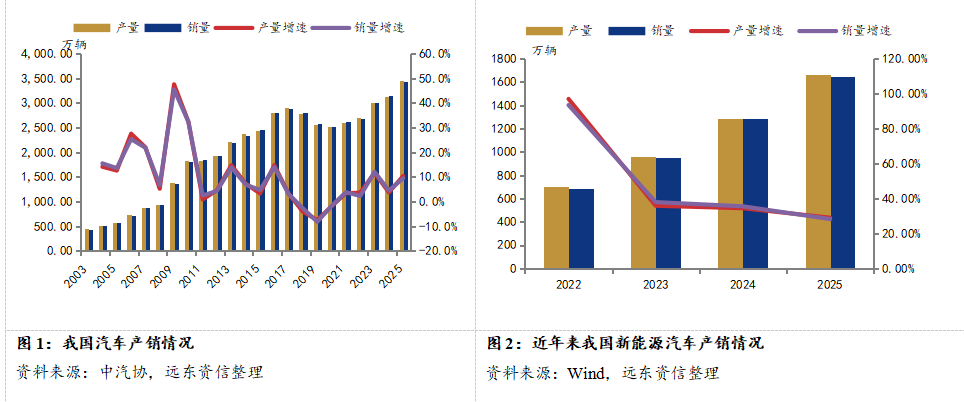
Group 1 - The automotive manufacturing industry in 2025 is characterized by a dual policy environment that supports consumption while regulating market competition, guiding the industry towards high-quality transformation [1][6][7] - The industry achieved record highs in production and sales, with total production reaching 34.53 million units and sales at 34.40 million units, marking a year-on-year increase of 10.4% and 9.4% respectively [2][8] - New energy vehicles (NEVs) and exports are the core engines driving supply and demand growth, with NEV production and sales increasing by 29% and 28.2% year-on-year [2][10] Group 2 - The bond issuance in the automotive sector totaled 61.02 billion yuan in 2025, with over 70% being sci-tech bonds, indicating a stable credit level across the industry [3][20][21] - Financial performance shows a significant decline in net profits, with a 30.47% year-on-year decrease in net profits for the first three quarters of 2025, leading to many companies reporting losses [4][25] - The average gross margin for sample companies remains stable at around 12%, while the average net margin dropped to -3.5% in the same period, indicating operational challenges [4][26] Group 3 - The outlook for 2026 highlights four key themes: stable production and sales growth, accelerated smart technology adoption, deepening global ecological expansion, and intensified competition [5][38] - The industry is expected to maintain high production and sales levels, with NEVs continuing to be the main growth driver, although the growth rate may slow down [5][39] - The competitive landscape is shifting towards a "value war," with industry consolidation accelerating as weaker companies face challenges in maintaining profitability [5][41]



2026,新茶饮加盟还能干吗?
3 6 Ke· 2026-02-09 11:11
Core Insights - The new tea beverage market in China has shifted from rapid expansion to intense competition, with many franchisees facing significant challenges and losses as the market matures [1][2][5][7]. Group 1: Market Dynamics - The tea beverage market experienced explosive growth from 2019 to 2023, with annual growth rates exceeding 30% and the number of tea shops surpassing 500,000 by 2024 [1][2]. - The shift from "incremental competition" to "stock competition" has led to a saturated market, where many franchisees are struggling to achieve profitability [1][2][5]. - In 2024, the number of new tea shops opened was 127,700, while over 140,000 closed, resulting in a net decrease in store numbers [2][4]. Group 2: Franchisee Experiences - Franchisees like 阿浪 and 小猪 have reported significant difficulties, with many unable to recoup their investments and facing operational losses [1][2][3]. - 阿浪's experience highlights the challenges of maintaining profitability, with winter months leading to drastic revenue drops [3]. - 小猪's initial success with rapid store openings turned into struggles, with several new locations failing to break even [2][3]. Group 3: Brand Adjustments - Brands are beginning to adjust their strategies in response to market pressures, including encouraging franchisees to transfer stores among themselves to avoid closures [8][9]. - Some brands, such as 霸王茶姬, are shifting from fixed franchise fees to revenue-sharing models to support franchisees [8][9]. - The introduction of smart equipment aims to reduce labor costs and improve operational efficiency, although the high initial investment remains a concern [9]. Group 4: Industry Outlook - The tea beverage industry is undergoing a significant restructuring, with many smaller brands facing extinction and larger brands adapting to survive [4][6][7]. - The rapid expansion phase is over, and the focus is now on cost control and operational efficiency, leading to a "cost revolution" within the industry [8][9]. - The future will require brands and franchisees to renegotiate their relationships in a more transparent profit environment, emphasizing cost management and control [9].

传统产业升级“加速器”:新质生产力的三大内在逻辑与四大实践路径
Xin Lang Cai Jing· 2026-02-09 10:49
Core Viewpoint - Traditional industries are a crucial part of China's economy and modernization efforts, and their transformation and upgrading are essential for adapting to technological revolutions and enhancing supply chain resilience [1][3]. Group 1: Internal Logic of Empowering Traditional Industries - Revolutionary breakthroughs in key technologies drive the iteration of production paradigms, with digital, intelligent, and green technologies transforming traditional production methods [3][10]. - The application of data, technology, and talent as new production factors can optimize and upgrade traditional industry structures, enabling a shift from experience-driven to data-driven production [3][10]. Group 2: Value Creation Model Reconstruction - New quality productivity fosters cross-industry integration, breaking traditional boundaries and creating new business models, such as smart manufacturing and smart agriculture [4][11]. - The deep integration of traditional industries with modern services enhances the value chain, extending it into high-value areas like R&D and lifecycle management [4][11]. Group 3: Pathways for Transformation and Upgrading - Focusing on high-end development, the industry should strengthen foundational innovation and enhance the supply capacity of high-end products, aiming for international competitiveness [5][12]. - Emphasizing intelligent transformation, the industry should accelerate the construction of new infrastructure and support digital and intelligent upgrades in traditional sectors [6][13]. - Promoting green transformation involves establishing a clean and low-carbon production system, enhancing resource recycling, and implementing green manufacturing practices [7][14]. Group 4: New Ecosystem of Cross-Industry Cooperation - Deepening integration between traditional industries and digital economies can foster new business models, such as platform economies and supply chain finance [8][15]. - The development of service-oriented manufacturing should be promoted, transitioning from pure manufacturing to a model that combines manufacturing with services [8][15]. - Encouraging cross-application of technologies like AI and big data can enhance traditional industries' quality and efficiency through collaborative innovation [8][15].

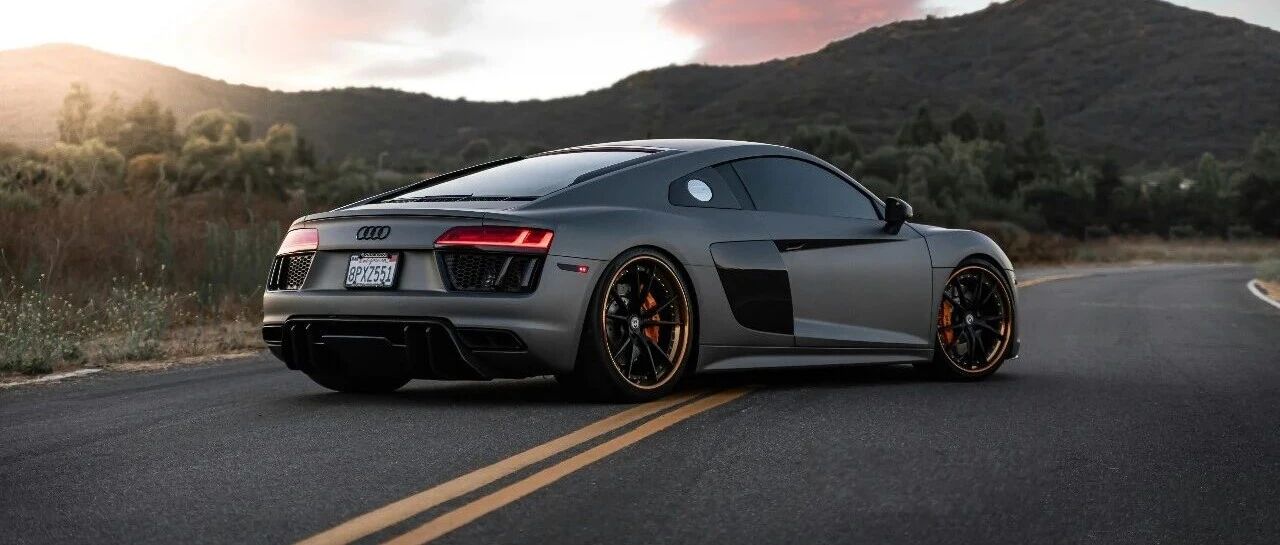
奥迪只要10万了
36氪· 2026-02-09 10:45
Core Viewpoint - The article discusses the significant price drop of the Audi A3, questioning whether it can still be considered a luxury car when its price has fallen to the level of more affordable models [4][46]. Group 1: Price and Sales Trends - The Audi A3, which previously had a starting price of around 19 million yuan, is now available for as low as 11.5 million yuan, with some dealers offering it for as low as 9.9 million yuan [13][15]. - Sales of the Audi A3 have drastically declined, with only 54,700 units sold in 2024, marking a five-year low, and a 22% increase in sales expected in 2025 due to aggressive pricing strategies [13][21]. - The overall luxury car market in China is experiencing a downturn, with a 9.6% decline in sales for luxury brands in 2025, and Audi's total sales in China fell by 5% to 617,500 units [21][22]. Group 2: Competitive Landscape - The price drop of the Audi A3 has led to increased competition with models like the Volkswagen Golf, which shares the same platform and engine but is priced lower [24][31]. - Other competitors in the same price range, such as the BYD Qin PLUS and Nissan Sylphy, offer better space and practicality, making them more appealing to family-oriented consumers [31][32]. - The Audi A3's lack of advanced technology and higher maintenance costs compared to competitors are significant drawbacks that affect its market position [31][32]. Group 3: Consumer Sentiment - Consumers like the A3 for its aesthetic appeal and driving experience, but many do not view it as a luxury vehicle anymore, focusing instead on practicality and personal preference [46][47]. - The emotional value associated with owning an Audi is still present, but the perception of luxury has diminished as the price has dropped significantly [30][46].
悍高集团(001221) - 001221悍高集团投资者关系管理信息20260209
2026-02-09 10:32
Group 1: Business and Product Overview - The company's core product system includes basic hardware, storage hardware, kitchen and bathroom hardware, and outdoor furniture, with a focus on high-quality development across all segments [3] - Basic hardware serves as the main growth driver, maintaining strong market competitiveness and steadily increasing market share [3] - The company emphasizes a product design philosophy that integrates aesthetics and practical functionality, ensuring continuous innovation and optimization of existing products [3][4] Group 2: Production and Supply Chain - The company has achieved full automation in production processes, significantly reducing labor costs and enhancing product quality consistency [8] - A comprehensive risk management mechanism for raw material price fluctuations has been established, including price stabilization agreements with core suppliers [9] Group 3: Sales Channels and Distributor Management - The company implements refined management of its distributor system, providing full-process support to enhance distributor capabilities and market competitiveness [10][11] - Plans to increase market share include focusing on product strategy, optimizing distributor operations, expanding into overseas markets, and enhancing production capacity [11] Group 4: Investor Relations Activity - The investor relations activity involved 40 institutions with 59 participants and 38 individual investors, held from January 17 to February 9, 2026, at the company's headquarters [2] - The event did not involve any major information disclosures [11]
独家丨原宁德时代执行总裁朱威,出任地平线总裁
雷峰网· 2026-02-09 10:15
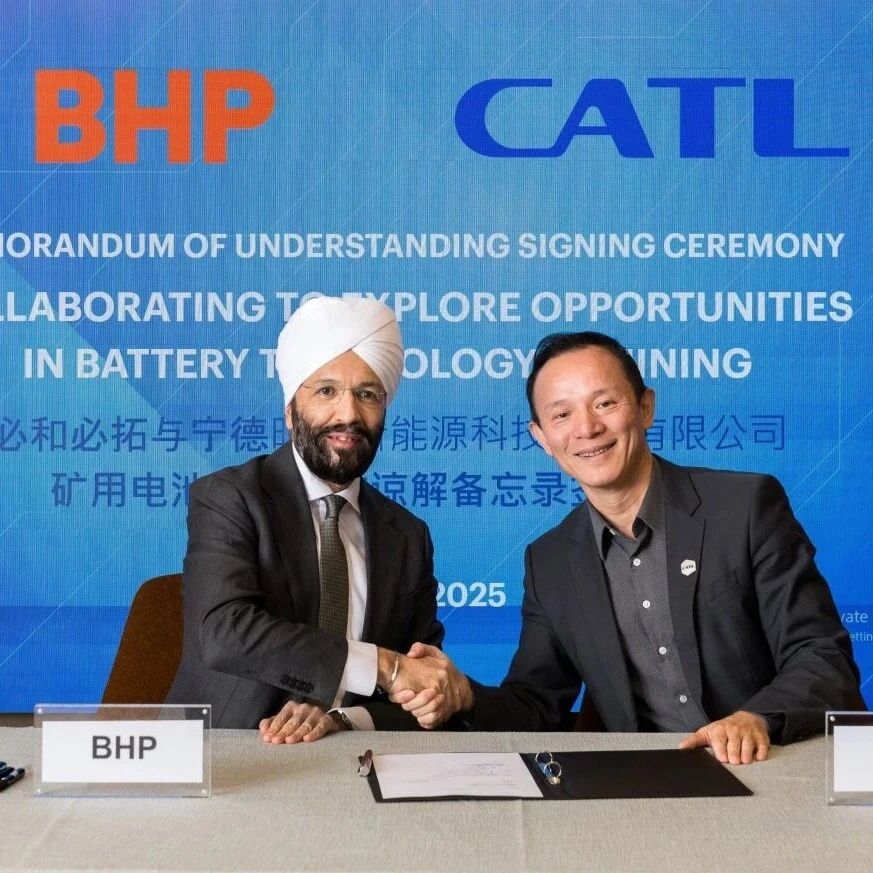
Core Viewpoint - The appointment of Zhu Wei as the new president of Horizon Robotics is expected to enhance collaboration between Horizon and CATL, leveraging Zhu's extensive experience in smart driving and new energy sectors to drive the integration of intelligent automotive systems and electric vehicle technologies [2][5]. Group 1: Leadership Changes - Zhu Wei, former executive president of CATL, will take over as president of Horizon Robotics, while former president Chen Liming will transition to vice chairman, focusing on major strategic decisions and governance improvements [2][7]. - Zhu Wei holds a degree in precision instruments from the University of Science and Technology of China and an MBA from Yale, bringing a wealth of experience from his eight years at CATL, where he managed passenger vehicle and overseas energy storage businesses [2]. Group 2: Strategic Collaborations - CATL and Horizon have maintained a long-standing capital and business collaboration, which is expected to strengthen further with Zhu Wei's leadership [3][4]. - In June 2025, a joint venture named Zhaofu Intelligent was established by Hello, Ant Group, and CATL, focusing on L4 autonomous vehicle operations, with Horizon providing key chips and systems, while CATL's battery technology supports energy needs, creating a synergistic "smart driving + energy" ecosystem [5]. Group 3: Leadership Contributions - Chen Liming, who has been with Horizon since September 2021, previously held significant roles at Bosch, where he contributed to the establishment of the Bosch chassis control systems R&D center in China [7]. - Under Chen's leadership, Horizon evolved from a "technical team" to a "regular army," laying the groundwork for the company's scaling and operational stability [7].