奔驰汽车

Search documents
奔驰中国换帅,告别“段建军时代”
Hua Er Jie Jian Wen· 2026-02-14 11:32
Core Viewpoint - The departure of段建军, the first local CEO of Mercedes-Benz in China, marks the end of an era, raising questions about the company's localization strategy. However, the transition to Daniel Lescow is seen as a strategic move to adapt to the evolving market dynamics in China, particularly in the context of increasing competition and the shift towards electrification and digitalization [2][3][4]. Group 1: Leadership Transition -段建军's resignation is attributed to personal reasons, with Daniel Lescow set to take over as CEO on March 1.段建军's tenure was characterized by a focus on brand marketing and maintaining sales resilience despite challenges [2][3]. - Lescow is recognized for his deep understanding of the Chinese market and has previously contributed to the transformation of the Smart brand, showcasing his ability to navigate both local and global business landscapes [3][4]. Group 2: Market Dynamics - The automotive market in China is undergoing significant changes, with a penetration rate of new energy vehicles exceeding 50%. This shift necessitates a more robust approach to innovation and resource allocation [3][4]. - Mercedes-Benz's sales in China saw a decline of approximately 19% year-on-year, with a total of about 575,000 vehicles delivered in the previous year. The company aims to focus on value chain optimization and improving local profitability moving forward [6]. Group 3: Strategic Focus - The company plans to launch over 15 new and updated models in China by 2026, marking its most aggressive product rollout in history. This reflects a shift in localization strategy from merely marketing to integrating R&D and supply chain considerations [7][8]. - Lescow's leadership is expected to enhance communication with the headquarters, allowing for quicker decision-making and resource allocation to meet the urgent demands of the Chinese market [9]. Group 4: Future Outlook - The transition from段建军 to Lescow symbolizes a new phase in Mercedes-Benz's localization strategy, emphasizing the need for a blend of Chinese technological advancements and German engineering excellence [8][9]. - The automotive landscape in China is increasingly competitive, and Lescow's primary task will be to accelerate the development of intelligent products that resonate with Chinese consumers while maintaining the brand's high standards [10].

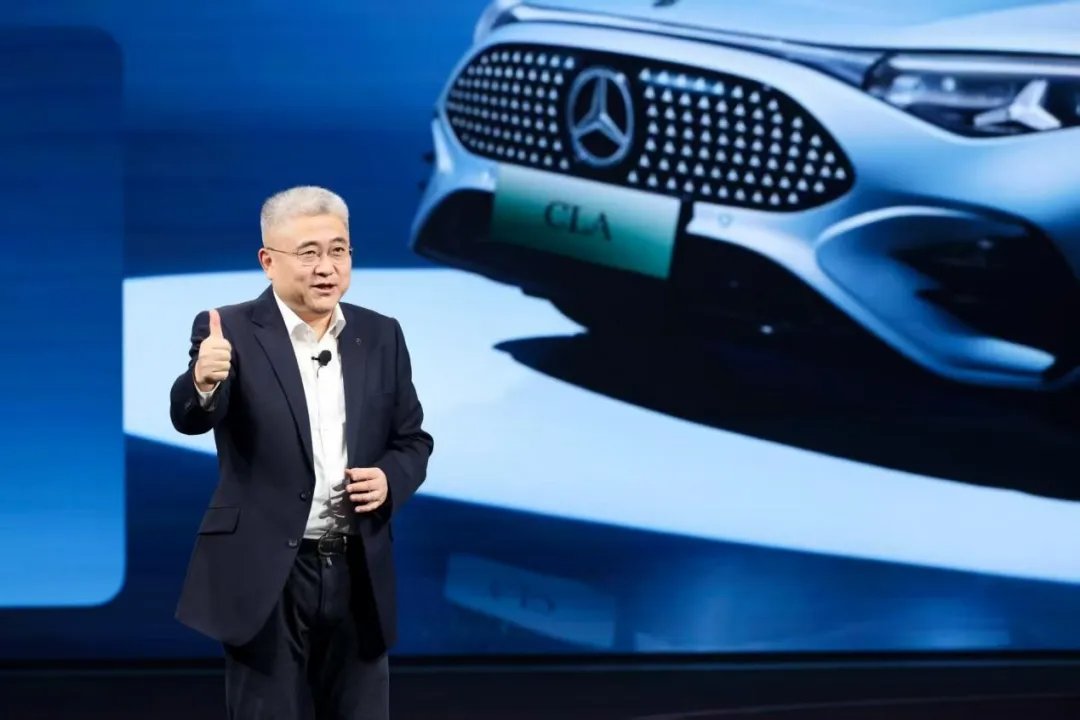
奔驰中国管理层调整落定:段建军将离任,李德思接任CEO,张明霞与康毅跨体系履新
Jing Ji Guan Cha Bao· 2026-02-14 08:16
Core Insights - Mercedes-Benz (China) announced a management restructuring involving the sales company and the smart joint venture, indicating a strategic shift in leadership to enhance operational efficiency and execution of electric vehicle transformation in China [1][2] Group 1: Management Changes - Duan Jianjun, the current CEO of Beijing Mercedes-Benz Sales Service Co., will step down for personal reasons and transition to a strategic advisor role until April 30 [1] - Li Desi, the current Executive Vice President of Sales, will take over as CEO of the sales company on March 1 [1] - Zhang Mingxia, the current Global Chief Marketing Officer of smart, will become the Executive Vice President of Sales at Mercedes-Benz Sales Company starting April 1 [1] - Kang Yi, responsible for sales and marketing at Mercedes-Benz Automotive Finance Co., will be appointed as the Global Chief Marketing Officer of the smart joint venture and will also serve as the Chairman of the Supervisory Board for smart Europe [1] Group 2: Strategic Implications - The cross-functional adjustments across the sales company, financial company, and joint venture brand reflect Mercedes-Benz's efforts to strengthen business collaboration and enhance execution capabilities for electric vehicle transformation in China [2]
奔驰公布2025年财报数据,营收超万亿人民币,净利润锐减48.8%
Jin Rong Jie· 2026-02-13 08:20
Core Insights - Mercedes-Benz reported a significant decline in financial performance for 2025, with revenue dropping to €132.21 billion, a 9.2% decrease from €145.6 billion in 2024 [1][3] - The adjusted EBIT fell to €8.2 billion, down from €13.7 billion in 2024, while net profit plummeted by 48.8% to €5.33 billion [1][3] - The company anticipates that revenue for 2026 will remain at the same level as in 2025 [3] Financial Performance - Revenue for 2025: €132.21 billion, down 9.2% from €145.6 billion in 2024 [1][3] - Adjusted EBIT for 2025: €8.2 billion, compared to €13.7 billion in 2024 [1][3] - Net profit for 2025: €5.33 billion, a decrease of 48.8% from the previous year [1][3] - Free cash flow from industrial operations: €5.4 billion, down from €9.2 billion in 2024 [1][3] - Net working capital: €32.2 billion, slightly up from €31.4 billion at the end of 2024 [1] Sales Performance - Total sales for 2025: 2.16 million units, a 10% decline year-on-year [3] - Sales of pure electric vehicles: 197,300 units, down 4% [3] - Sales of Mercedes-Benz cars: 1.8 million units, down 9% [3] - Sales of Mercedes-Benz vans: 359,100 units, down 11%, with electric van sales increasing by 46% to 28,500 units [3] - Regional sales: Europe at 634,600 units (down 1%), North America at 320,600 units (down 12%), and China at 551,900 units (down 19%) [3] Strategic Initiatives - The company is focusing on a significant technological and product push, planning to launch over 40 new models within three years [3] - In China, Mercedes-Benz achieved over 2.4 million OTA upgrades in 2025 and has implemented advanced driver assistance systems across 17 core models [4] - Collaboration with ByteDance has led to a 97% active usage rate of the AI-powered MBUX virtual assistant [4] - A partnership with Momenta has resulted in the rollout of advanced driver assistance systems, with 9 new models set to feature these systems in 2026 [4]
奔驰发布财报:2025年现金流达54亿欧元
Cai Jing Wang· 2026-02-13 02:37
Core Insights - Mercedes-Benz Group reported a projected adjusted EBIT of €8.2 billion for the fiscal year 2025, down from €13.7 billion in 2024 [1] - The company anticipates revenues of €132.2 billion in 2025, a decrease from €145.6 billion in 2024 [1] - Free cash flow from industrial operations is expected to be €5.4 billion in 2025, compared to €9.2 billion in 2024 [1] Financial Projections - For the fiscal year 2026, the group expects revenues to remain stable compared to the previous year [1] - The EBIT for 2026 is projected to be significantly higher than the previous year's level [1] - Free cash flow from industrial operations is anticipated to be slightly lower than the 2025 fiscal year [1] Asset Management - The net working capital for industrial operations is reported at €32.2 billion, an increase from €31.4 billion at the end of 2024 [1]
2.13犀牛财经早报:新基金发行火热 公募备战节后行情
Xi Niu Cai Jing· 2026-02-13 01:45
Group 1: Fund Issuance and Market Trends - In January 2026, the number of new fund issuances reached 169, the highest level since March 2023, with several funds selling out in one day and some triggering proportionate allotment due to oversubscription [1] - The number of newly established public FOFs (funds of funds) in 2026 has reached 31, a year-on-year increase of 244.44%, driven by strong demand for stable value-added products and continuous innovation in product offerings [1] Group 2: Bond Market and Investment Products - The issuance of pure bond funds has significantly declined in 2026, with only a few new pure bond funds launched, while "fixed income +" funds continue to dominate the new bond fund market [2] - The demand from residents and institutions for "fixed income +" funds is expected to support their development, although the industry faces challenges such as pressure on bond market yields and increased competition [2] Group 3: Corporate Developments - Mercedes-Benz is recalling 11,895 vehicles in the U.S. due to a potential fire risk from high-voltage batteries [3] - Dream Dragon Ice Cream reported a revenue of 65.175 billion yuan for the fiscal year 2025, but net profit plummeted by 48.4% to 2.533 billion yuan [3] - Lantu Motors announced plans to list on the Hong Kong Stock Exchange on March 19, 2026, with approximately 885.38 million H-shares [4] - Zhengzhou Bank's president resigned after one year due to personal reasons [4] Group 4: Financial Challenges and Risks - Baili Technology is facing overdue debts and is in communication with creditors to resolve the situation, which may impact its financing capabilities [5] - ST Haihua announced a projected revenue of 336 million yuan for 2025, with a net profit loss of approximately 70 million yuan, putting its stock at risk of delisting [5] - ST Zhongdi's stock experienced abnormal fluctuations, with a projected revenue of 180 to 220 million yuan for 2025, alongside significant expected losses [7] Group 5: Fundraising and Market Positioning - Fulongma plans to raise up to 1.005 billion yuan through a stock issuance to enhance its competitiveness in the environmental services market [8] - Xinlitai has submitted an application for H-share issuance and listing on the Hong Kong Stock Exchange [9]
因电池存在起火风险 奔驰将在美国召回超1万辆汽车
Jing Ji Guan Cha Wang· 2026-02-12 20:53
Group 1 - The core issue is that Mercedes-Benz is recalling 11,895 vehicles in the U.S. due to potential internal faults in high-voltage batteries, which pose a fire risk [1] - The National Highway Traffic Safety Administration (NHTSA) recommends that vehicle owners park their cars outdoors, limit charging, and visit dealers for free battery replacements [1]
记者手记丨转型“十字路口”的德国汽车业
Xin Hua Wang· 2026-02-01 02:00
Core Viewpoint - The German automotive industry, a crucial pillar of the economy, is at a transformative crossroads with the advent of electric vehicles, necessitating collaboration with Chinese counterparts to leverage respective strengths in engineering and innovation [1][2][3][4] Industry Overview - The automotive sector contributes approximately 20% to Germany's overall industrial value, with around 721,400 employees, representing 13% of total industrial employment [1] - In 2024, the car ownership rate in Germany is projected to be 590 vehicles per 1,000 people, highlighting the country's strong automotive presence [1] - The automotive and automotive parts export value is expected to reach €264.1 billion in 2024, accounting for 17% of Germany's total exports [2] Market Dynamics - In 2025, Germany is projected to produce 4.15 million passenger cars, with 3.17 million designated for export, indicating a strong reliance on international markets [2] - The German automotive market is increasingly competitive, with significant market shares held by non-German brands, including Chinese electric vehicles [2] Collaborative Opportunities - German and Chinese automotive companies are increasingly engaging in joint research and development projects, focusing on areas such as smart technology and software capabilities [3] - German firms are expected to invest approximately €7 billion in China in 2025, a significant increase from previous years, reflecting a growing trend of bilateral investment [3] Historical Context - The automotive industry has evolved significantly since Karl Benz patented the three-wheeled automobile in 1886, marking the beginning of modern automotive engineering [1][4] - The merger of Benz and Daimler's companies laid the foundation for a major automotive powerhouse, illustrating the importance of strategic partnerships in the industry [4] Future Outlook - The global automotive industry is experiencing a shift towards electrification and digitalization, with German manufacturers enhancing cooperation with China to navigate these changes effectively [4]
转型“十字路口”的德国汽车业
Xin Hua She· 2026-01-30 09:26
Core Insights - The German automotive industry, a crucial pillar of the economy, is at a transformative crossroads with the advent of electric vehicles [1][2] - Germany's automotive sector contributes approximately 20% to the overall industrial value added and employs around 721,400 people, accounting for 13% of total industrial employment [1] - The export of automobiles and parts represents 17% of Germany's total exports, with a projected export value of €264.1 billion in 2024 [2] Group 1 - The production of passenger cars in Germany is expected to reach 4.15 million units by 2025, with 3.17 million units designated for export [2] - The automotive industry in Germany is facing increased competition from other European and Asian brands, including Chinese electric vehicle manufacturers [2][3] - There is a growing opportunity for collaboration between Chinese and German automotive industries, leveraging each other's strengths in engineering and product innovation [3] Group 2 - German automotive companies are focusing on enhancing their engineering capabilities, particularly in chassis, power systems, and overall vehicle performance, which are foundational for long-term technological development [3] - Chinese automotive firms are rapidly innovating in electric and intelligent systems, aligning closely with market demands and accelerating product iterations [3] - Investment from German companies in China is projected to increase significantly, with an estimated €7 billion in new investments in 2025, reflecting a trend of mutual engagement between the two countries [3]
全联车商:希望奔驰主机厂正面回应经销商诉求,对相关商务政策尽快作出优化调整
Sou Hu Cai Jing· 2026-01-28 08:50
Core Viewpoint - The China Automobile Dealers Association has raised concerns regarding the operational challenges faced by authorized Mercedes-Benz dealers, including high inventory levels, severe price inversion, long rebate redemption cycles, excessive business assessment pressures, and lack of a network exit compensation mechanism [1][2]. Group 1: Issues Faced by Dealers - Dealers report high inventory levels and significant price inversion, which are impacting their operations [1]. - The association has suggested controlling dealer inventory ratios to below 1, optimizing rebate mechanisms, and setting reasonable assessment targets to alleviate pressure on dealers [1]. - Despite initial communication from Mercedes-Benz acknowledging the issues, subsequent feedback indicated that these problems remain unresolved [1]. Group 2: Communication with Mercedes-Benz Management - The association has sent multiple letters to the global management team of Mercedes-Benz, urging them to address the systemic issues faced by dealers in China [2]. - Recommendations include optimizing business policies to curb price inversion, handling dealer exits with fairness, and ensuring a balance between short-term market pressures and long-term brand value [2]. - Mercedes-Benz management has expressed a commitment to listen to dealer concerns and work towards practical solutions [2]. Group 3: Industry Context and Future Actions - 2026 marks the 40th anniversary of the Mercedes-Benz brand in China, highlighting the importance of addressing dealer concerns to maintain brand reputation and market health [3]. - The association emphasizes the need for the entire automotive industry to address competitive practices that hinder healthy development and calls for collective action towards high-quality growth [3]. - The association remains committed to representing dealer interests and advocating for a fair and sustainable business environment [3].
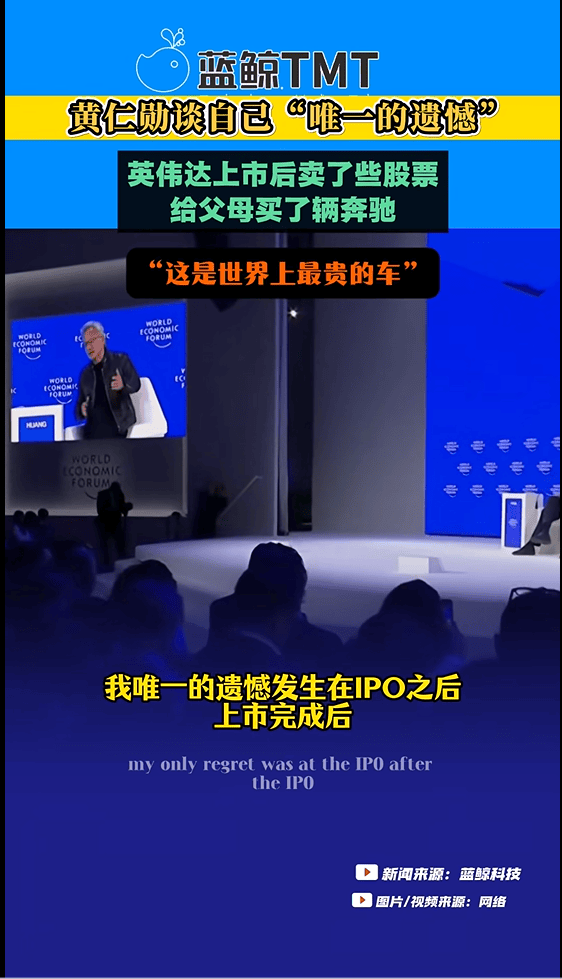
黄仁勋谈“唯一的遗憾”:在英伟达市值仅3亿美元时,卖股票为父母买了辆奔驰
Sou Hu Cai Jing· 2026-01-21 18:45
Group 1 - The core discussion at the World Economic Forum in Davos involved NVIDIA's CEO Jensen Huang expressing regret over selling part of his stock when the company's market value was only $3 billion to buy a Mercedes for his parents, which he now considers "the most expensive car in the world" [1] Group 2 - On January 20, NVIDIA's stock experienced a significant decline, opening down 2.41% and closing at $178.07, which is a drop of $8.16 or 4.38% from the previous trading day [3] - The total trading volume for NVIDIA reached 223 million shares, with a single-day trading value of $40.1 billion [4] - Following this decline, NVIDIA's market capitalization fell to $4.33 trillion, losing approximately $190 billion in value, equivalent to nearly 1.3 trillion yuan, marking the largest single-day drop in nearly two months [4]