核心CPI

Search documents
积极信号!统计局最新公布
Sou Hu Cai Jing· 2025-10-15 02:38
Group 1 - The core CPI excluding food and energy prices increased by 1.0% year-on-year, marking the first return to a 1% increase in nearly 19 months, with the growth rate expanding for the fifth consecutive month [1][4] - In September 2025, the national consumer price index (CPI) decreased by 0.3% year-on-year, with urban areas down 0.2% and rural areas down 0.5% [1][4] - Food prices fell by 4.4%, significantly impacting the CPI decline, while non-food prices rose by 0.7% [1][2] Group 2 - In September, the prices of food, tobacco, and alcohol decreased by 2.6% year-on-year, contributing approximately 0.74 percentage points to the CPI decline [1][2] - Specific food items saw significant price drops: fresh vegetables down 13.7%, eggs down 11.9%, and pork down 17.0% [1][4] - The average CPI for January to September 2025 was down 0.1% compared to the same period last year [1] Group 3 - The PPI (Producer Price Index) decreased by 2.3% year-on-year, with the decline narrowing by 0.6 percentage points compared to the previous month [7] - The industrial producer purchase prices also fell by 3.1% year-on-year, with a 0.1% increase month-on-month [4][7] - The prices of coal processing and black metal smelting industries showed signs of stabilization, with coal processing prices up by 3.8% month-on-month [5][7]
国家统计局公布重要数据
Zhong Guo Zheng Quan Bao· 2025-10-15 02:35
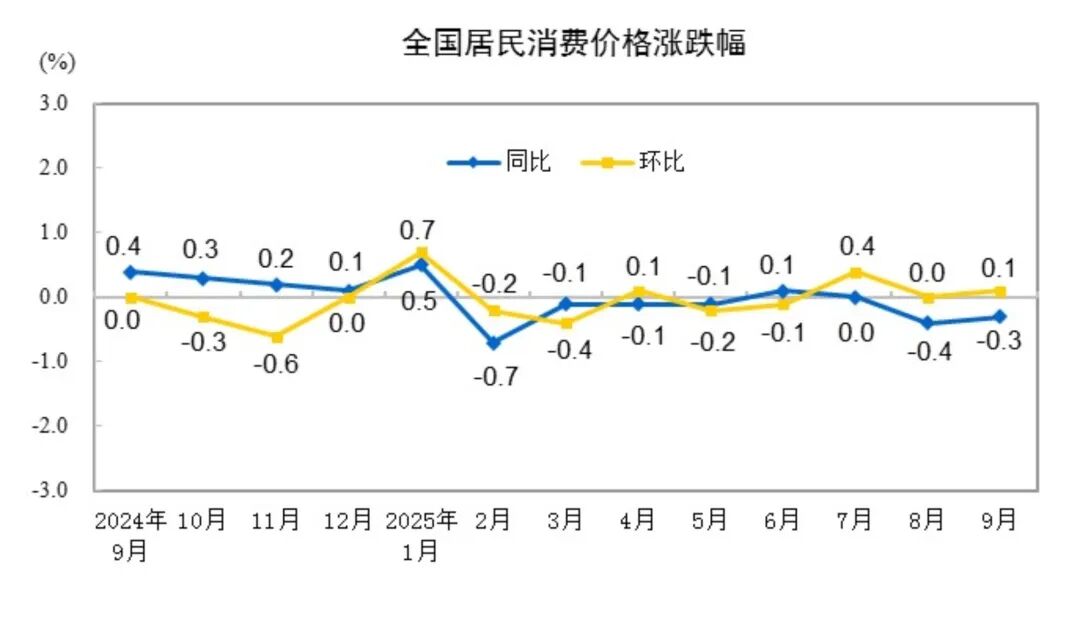
Group 1: Consumer Price Index (CPI) Insights - In September, the Consumer Price Index (CPI) showed a month-on-month increase of 0.1%, reversing from the previous month where it was flat [1][3] - Year-on-year, the CPI decreased by 0.3%, but the decline was narrower by 0.1 percentage points compared to the previous month [6] - The core CPI, excluding food and energy, rose by 1.0% year-on-year, marking the first return to a 1% increase in nearly 19 months [6] Group 2: Producer Price Index (PPI) Insights - The Producer Price Index (PPI) remained flat month-on-month for the second consecutive month [7] - Year-on-year, the PPI decreased by 2.3%, with the decline narrowing by 0.6 percentage points from the previous month [11] - Factors contributing to the PPI trends include improved supply-demand structures in certain industries and the impact of international oil prices on domestic oil-related industry prices [9][10]

积极信号!统计局最新公布
证券时报· 2025-10-15 02:24
Core Viewpoint - The article discusses the trends in China's Consumer Price Index (CPI) and Producer Price Index (PPI), highlighting a decline in CPI and a narrowing decline in PPI, indicating a complex economic environment with varying price movements across different sectors [2][5][7]. CPI Analysis - In September 2025, the national CPI decreased by 0.3% year-on-year, with urban areas down 0.2% and rural areas down 0.5% [2]. - Food prices fell by 4.4%, significantly impacting the CPI, while non-food prices increased by 0.7% [2]. - The core CPI, excluding food and energy, rose by 1.0%, marking the first return to this level in 19 months [5]. - Specific food price declines included fresh vegetables down 13.7%, eggs down 11.9%, and pork down 17.0%, collectively influencing the CPI negatively [2][5]. PPI Analysis - The PPI decreased by 2.3% year-on-year, but the decline was narrower than the previous month, indicating some stabilization in industrial prices [7]. - The PPI's performance was influenced by improved supply-demand structures in certain industries, with coal processing prices up 3.8% and black metal smelting prices up 0.2% [6][7]. - The article notes that the construction of a unified national market is helping to optimize market competition and reduce price declines in various sectors [7]. Price Movements - In September, the CPI increased by 0.1% month-on-month, with food prices rising by 0.7% and non-food prices slightly declining [3][4]. - The article highlights that the prices of services decreased due to seasonal factors, such as the end of summer and the timing of the Mid-Autumn Festival, which affected travel and accommodation costs [4]. Conclusion - Overall, the article presents a mixed picture of the economic landscape in China, with declining CPI driven by food prices and a stabilizing PPI reflecting improvements in certain industrial sectors [5][7].

核心CPI同比涨幅连续5个月扩大,“反内卷”带动相关行业价格改善
Di Yi Cai Jing· 2025-10-15 02:16
Core Insights - The Consumer Price Index (CPI) and Producer Price Index (PPI) have shown a narrowing decline in September, benefiting from low base effects and the effectiveness of anti-involution and consumption promotion policies [1][3]. CPI Analysis - In September, the CPI increased by 0.1% month-on-month, while the year-on-year decline was 0.3%, a reduction of 0.1 percentage points from the previous month [1]. - The core CPI, excluding food and energy, rose by 1.0% year-on-year, marking the first return to a 1% increase in nearly 19 months [1][3]. - Food prices fell by 4.4%, contributing significantly to the overall CPI decline, with the tail effect accounting for approximately -0.8 percentage points of the CPI change [3]. PPI Analysis - The PPI remained flat month-on-month for two consecutive months, with a year-on-year decline of 2.3%, narrowing by 0.6 percentage points from the previous month [1][5]. - Factors contributing to the PPI's performance include improved supply-demand structures and the impact of international oil price declines on domestic oil-related industries [5]. - Certain industries, such as coal processing and black metal smelting, saw reduced year-on-year price declines, contributing to a decrease in the overall PPI decline by approximately 0.34 percentage points [5]. Industry Trends - The modernization of the industrial system and the release of consumption potential have led to price increases in related industries, with aircraft manufacturing prices rising by 1.4% and electronic materials by 1.2% year-on-year [6]. - Policies aimed at boosting consumption are showing effects, with significant price increases in high-quality and upgraded consumer goods, such as a 14.7% rise in arts and crafts products [6]. - Analysts predict that the year-on-year decline in PPI may narrow to below -2.0% in the fourth quarter due to various supportive policies and market conditions [6].
2025年9月份核心CPI同比涨幅持续扩大PPI同比降幅继续收窄
Guo Jia Tong Ji Ju· 2025-10-15 02:06
Group 1: CPI Analysis - The Consumer Price Index (CPI) increased by 0.1% month-on-month in September, while year-on-year it decreased by 0.3% [1][2] - Core CPI, excluding food and energy, rose by 1.0% year-on-year, marking the fifth consecutive month of growth [1][3] - Food prices increased by 0.7% month-on-month, with seasonal price rises in fresh vegetables, eggs, fresh fruits, lamb, and beef, while pork and aquatic products saw price declines [2][3] Group 2: PPI Analysis - The Producer Price Index (PPI) remained flat month-on-month, with a year-on-year decline of 2.3%, but the rate of decline narrowed by 0.6 percentage points compared to the previous month [4][5] - Improvements in supply-demand structure led to price stabilization in certain industries, such as coal processing and black metal smelting, which saw price increases [4][5] - Input factors, particularly the decline in international oil prices, contributed to lower prices in domestic oil-related industries [4][5]
统计局:9月核心CPI近19个月以来涨幅首次回到1%
Jing Ji Guan Cha Wang· 2025-10-15 02:06
经济观察网国家统计局公布数据显示,9月份,扣除食品和能源价格的核心CPI同比上涨1.0%,涨幅连 续第5个月扩大,为近19个月以来涨幅首次回到1%。 ...
国家统计局:9月CPI同比下降0.3%!食品和能源价格同比下降,金饰品价格大涨!专家:消费市场运行总体平稳
Mei Ri Jing Ji Xin Wen· 2025-10-15 02:03
Group 1: CPI Analysis - The Consumer Price Index (CPI) increased by 0.1% month-on-month in September, reversing from the previous month’s flat performance, with food prices rising by 0.7% [2] - Year-on-year, the CPI decreased by 0.3%, but the decline was narrower by 0.1 percentage points compared to the previous month, primarily due to the tail effect [3] - Core CPI, excluding food and energy, rose by 1.0% year-on-year, marking the fifth consecutive month of growth and the first time in 19 months that it returned to a 1% increase [3] Group 2: PPI Analysis - The Producer Price Index (PPI) remained flat month-on-month for two consecutive months, with improvements in supply-demand structure stabilizing prices in certain industries [4] - Year-on-year, the PPI decreased by 2.3%, but the decline was reduced by 0.6 percentage points compared to the previous month, influenced by macroeconomic policies and market competition [5] - Specific industries such as coal processing and black metal smelting showed reduced price declines, contributing positively to the PPI [5]

9月CPI同比降幅收窄至0.3%,核心CPI涨幅连续第五个月扩大
Sou Hu Cai Jing· 2025-10-15 02:03
Group 1 - In September, China's Consumer Price Index (CPI) decreased by 0.3% year-on-year, with the decline narrowing by 0.1 percentage points compared to August [1] - The decline in CPI is primarily attributed to the tail effect, with the tail effect contributing approximately -0.8 percentage points to the CPI change, while new price changes contributed about 0.5 percentage points [1] - Food prices fell by 4.4% year-on-year, with pork prices decreasing by 17% and fresh vegetable prices down by 13.7% [1] Group 2 - Non-food prices increased by 0.7% in September, with service prices rising by 0.6%, remaining stable compared to the previous month [2] - The core CPI, excluding food and energy, rose by 1.0% year-on-year, marking the first return to a 1% increase in nearly 19 months [2] - Industrial consumer goods prices, excluding energy, increased by 1.8%, with notable price increases in gold and platinum jewelry at 42.1% and 33.6%, respectively [2] Group 3 - The low price level trend observed since the beginning of the year is attributed to a prolonged adjustment in the real estate market and a decline in consumer confidence [4] - External factors, such as significant drops in international oil prices, have also influenced domestic CPI [4] - The "old-for-new" policy is expected to support price increases in automobiles and home appliances [4] Group 4 - Looking ahead, the CPI is expected to rise in October due to the significant drop in the price base from the previous year and the continued impact of policies like "old-for-new" [5] - Three main factors are expected to keep CPI under pressure: oversupply and weak demand, increased regulation on low-price competition, and weak internal consumption dynamics [5]
国家统计局:9月PPI环比持平 同比降幅继续收窄
Guo Jia Tong Ji Ju· 2025-10-15 02:01
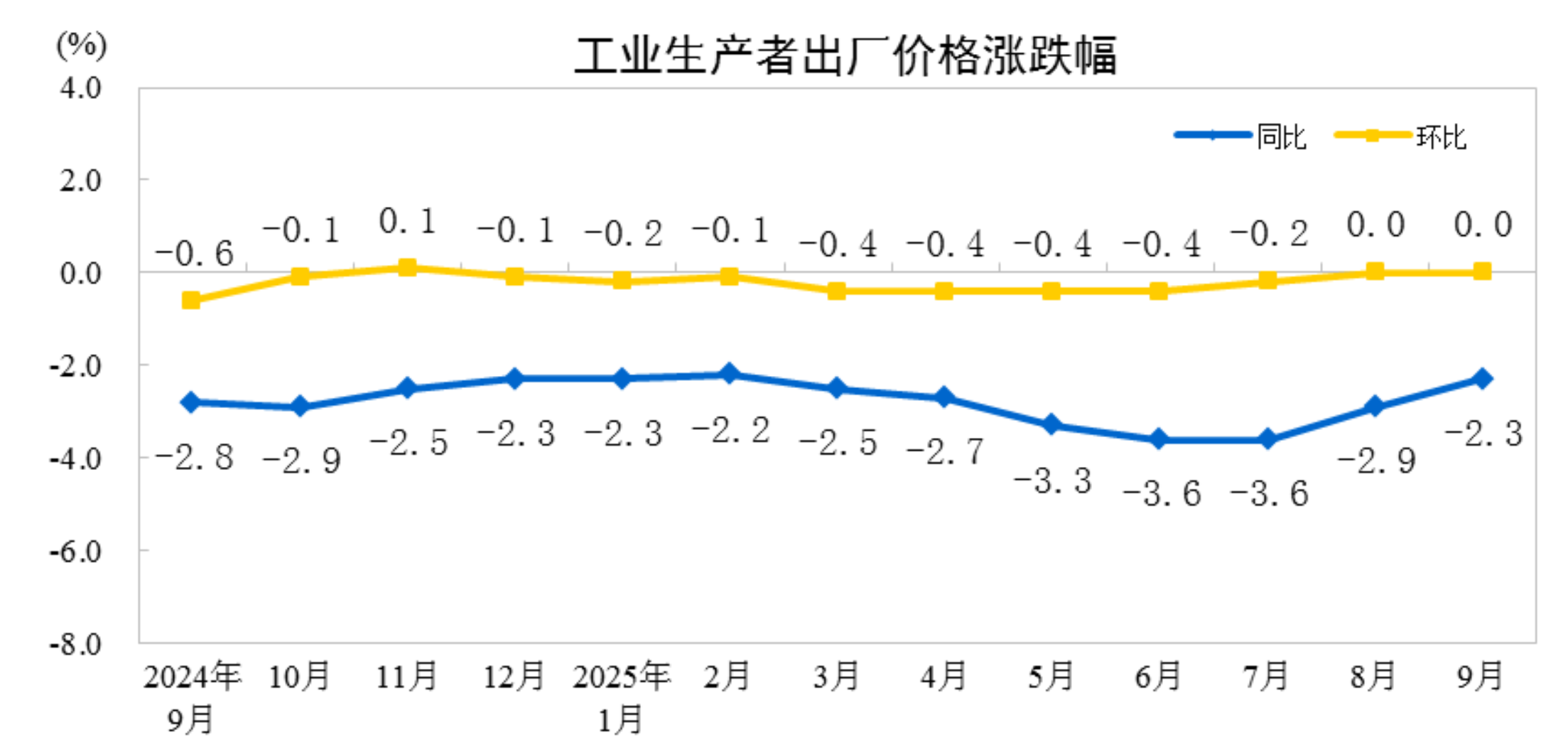
9月份,工业生产者出厂价格中,生产资料价格下降2.4%,影响工业生产者出厂价格总水平下降约1.81个百分点。其中,采掘工业价格下降9.0%,原材料工 业价格下降2.9%,加工工业价格下降1.7%。生活资料价格下降1.7%,影响工业生产者出厂价格总水平下降约0.45个百分点。其中,食品价格下降1.7%,衣 着价格下降0.3%,一般日用品价格上涨0.7%,耐用消费品价格下降3.9%。 一、工业生产者价格同比变动情况 工业生产者购进价格中,燃料动力类价格下降8.1%,化工原料类价格下降5.5%,农副产品类价格下降5.4%,建筑材料及非金属类价格下降4.5%,黑色金属 材料类价格下降2.9%,纺织原料类价格下降1.7%;有色金属材料及电线类价格上涨6.6%。 国家统计局数据显示,2025年9月份,全国工业生产者出厂价格同比下降2.3%,降幅比上月收窄0.6个百分点,环比继续持平。工业生产者购进价格同比下降 3.1%,降幅比上月收窄0.9个百分点,环比上涨0.1%。1—9月平均,工业生产者出厂价格比上年同期下降2.8%,工业生产者购进价格下降3.2%。 2025年9月份工业生产者出厂价格同比降幅继续收窄 2025年9月 ...
9月金饰品价格同比上涨42.1%
财联社· 2025-10-15 01:59
Core Insights - The core CPI excluding food and energy prices rose by 1.0% year-on-year in September, marking the fifth consecutive month of increase and the first time in 19 months that the growth rate returned to 1% [1] - The prices of industrial consumer goods excluding energy increased by 1.8%, also showing a continuous expansion for five months [1] Industrial Consumer Goods - The prices of gold and platinum jewelry surged by 42.1% and 33.6% respectively, indicating significant demand and price pressure in the luxury goods sector [1] - Prices for household appliances, daily necessities, and communication tools rose by 5.5%, 3.2%, and 1.5% respectively, with all categories experiencing an increase in their growth rates [1]