
绿色消费

Search documents
盛秋平副部长出席国新办发布会介绍推进绿色消费有关情况
Shang Wu Bu Wang Zhan· 2026-01-06 14:08
Core Viewpoint - The Chinese government is promoting green consumption as a key strategy for economic transformation and sustainable development, emphasizing the importance of a green lifestyle and consumption patterns to achieve carbon reduction goals and enhance the quality of life [3][4][6]. Group 1: Green Consumption Policies - The State Council has released a notification on implementing green consumption actions, which outlines 20 measures across seven areas to promote green consumption [2][4]. - The government aims to replace old consumer goods with new, energy-efficient products, targeting 18.3 million vehicles and 192 million home appliances for replacement from 2024 to 2025, with a projected sales boost of 3.92 trillion yuan [4][9]. - The initiative includes enhancing the supply of green products, such as promoting green agricultural products and energy-efficient appliances, to meet consumer demand [4][39]. Group 2: Green Supply Chain and Recycling - The government is focusing on building a green supply chain and promoting circular economy practices, including the use of recyclable packaging and efficient logistics [10][11]. - A comprehensive recycling system is being established, with pilot cities and enterprises identified to enhance the collection and processing of waste products [11][15]. - The promotion of green consumption is supported by financial incentives and subsidies for consumers purchasing energy-efficient products [6][25]. Group 3: Consumer Engagement and Awareness - The government is encouraging consumer participation in green consumption through awareness campaigns and community activities, aiming to foster a culture of sustainability [5][12]. - Initiatives like the "green consumption season" and various promotional events are designed to engage consumers and promote the adoption of green products [12][30]. - The establishment of a green consumption points system is being explored to incentivize consumers for purchasing eco-friendly products [25][27]. Group 4: Quality Standards and Certification - The government is enhancing the quality standards for green products, with 40 green product evaluation standards and 66 energy and water efficiency standards already published [18][19]. - A unified certification system for green products is being developed to ensure that consumers can easily identify and trust eco-friendly products [44][45]. - The market for organic products is expanding, with significant growth in the number of certified organic products and a focus on meeting consumer demand for high-quality, sustainable goods [45][46].
1月6日晚间央视新闻联播要闻集锦
Yang Shi Xin Wen Ke Hu Duan· 2026-01-06 13:58
Group 1 - The Yangtze River Economic Belt development strategy is a significant decision made by the central government led by Xi Jinping, emphasizing ecological priority and green development over the past decade [5][1]. - The strategy has resulted in substantial achievements, promoting ecological protection and a comprehensive green transformation of economic and social development across 11 provinces and cities along the Yangtze River [5][1]. Group 2 - Shenzhen is enhancing its export competitiveness by leveraging technology, with high-tech products like robots and 3D printing accelerating their entry into international markets [12][2]. - The country is implementing multiple measures to promote green consumption, as highlighted in a recent press conference by the State Council Information Office [13][3].
绿色消费积分或能“当钱花” 商务部:加大绿色消费政策支持
Zhong Guo Jing Ying Bao· 2026-01-06 13:43
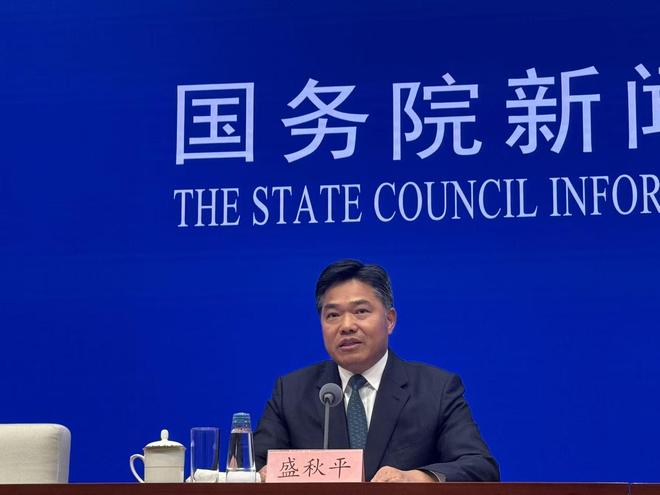
上述举措涉及吃、穿、用、住、行等多个领域,覆盖生产、消费、流通、回收、再利用等各环节。盛秋 平表示,开展绿色消费是践行绿色低碳发展理念、深入实施提振消费专项行动、加快经济社会发展全面 绿色转型的重要抓手,也是顺应消费升级趋势、培育消费新增长点的有力举措。 据了解,商务部将强化政府引导作用,加大绿色消费政策支持。 培育消费新增长点 盛秋平表示,开展绿色消费既能推动生产生活方式绿色变革、促进产业结构优化升级,也能助力减少碳 排放、实现低碳目标,为"十五五"时期经济社会高质量发展作出贡献。 中经记者 孟庆伟 北京报道 今后,消费者购买绿色产品、使用低碳服务所获得的消费积分,或将实现线上线下通兑通用,发挥类 似"当钱花"的作用。 2026年1月6日下午,国新办举行新闻发布会,介绍推进绿色消费有关情况。商务部副部长盛秋平表示, 商务部将支持行业协会探索建立线上线下通兑通用的绿色消费积分体系,引导零售企业、电商平台等规 范开展积分采集,鼓励消费者通过购买绿色产品、使用低碳服务获取积分,用于兑换商品折扣或服务优 惠。 近日,商务部、国家发展改革委等九部门联合印发《关于实施绿色消费推进行动的通知》(以下简称 《通知》),围绕 ...

九部门联手发力绿色消费,鼓励推广绿色积分换优惠
Di Yi Cai Jing· 2026-01-06 13:21
Core Viewpoint - The Chinese government has launched a comprehensive initiative to promote green consumption, aiming to enhance the supply of green products and accelerate the transition to a green economy through various measures outlined in the recent notification by multiple departments [1][2][3]. Group 1: Green Consumption Policies - The notification includes 20 specific measures across various sectors such as agricultural products, home appliances, and hospitality, focusing on creating a robust green consumption incentive mechanism [2][3]. - The government aims to achieve the replacement of 18.3 million vehicles under the old-for-new policy by 2025, with nearly 60% being new energy vehicles, and 192 million home appliances, with 90% meeting first-level energy efficiency standards [1][2]. - The old-for-new policy is projected to drive sales of consumer goods amounting to 3.92 trillion yuan, benefiting approximately 494 million consumers [1]. Group 2: Green Product Supply and Market Growth - The market for green products is expanding steadily, with increasing consumer acceptance of green, low-carbon, and environmentally friendly consumption [3][5]. - The notification emphasizes the need to enhance the supply of green agricultural products and promote green home appliances and vehicles [2][6]. - The government is also focusing on developing a green supply chain and encouraging the use of green packaging and procurement practices [4][5]. Group 3: Consumer Engagement and Behavior - The notification encourages the establishment of a green consumption points system to incentivize consumers, allowing them to earn points for engaging in environmentally friendly behaviors [4][5]. - Innovative platforms, such as the Wuhan carbon benefit platform, are being developed to reward individuals for low-carbon actions, demonstrating a growing trend in consumer engagement with green practices [5][6]. - The rise in consumer awareness regarding green consumption is prompting businesses to adapt their production and service models to align with sustainable practices [6][7]. Group 4: Regulatory and Environmental Measures - The government has introduced 40 green product evaluation standards and 66 energy and water efficiency standards to ensure compliance and promote green consumption [8][9]. - Efforts are being made to reduce plastic pollution through regulations that encourage the use of reusable and recyclable materials in the e-commerce sector [9][10]. - The Ministry of Commerce is actively monitoring the use and recycling of plastic products, with a reported 26.31% increase in the use of environmentally friendly alternatives in the first half of 2025 [10].
市场监管总局:将更新升级绿色消费领域国家标准
Xin Lang Cai Jing· 2026-01-06 13:19
姚雷介绍,目前,我国已发布绿色产品评价标准40项,能效、水效标准66项。发布18批47类能效标识产 品目录,备案企业2.6万余家、产品型号400万个。这些备案结果被用于各地"以旧换新"政策落实中的数 据验证,覆盖了7600万名消费者购买的1.88亿台节能产品。 姚雷表示,下一步,市场监管总局将加快更新升级一批国家标准,并支持国内相关方面深度参与绿色领 域国际标准化活动;完善能效水效标识制度,继续支撑"以旧换新"政策落实中的数据验证。(央视新 闻) 今天(1月6日)下午,国务院新闻办召开新闻发布会,市场监管总局认证监督管理司司长姚雷表示,将 加快更新升级绿色消费领域国家标准,完善能效水效标识制度。 ...
市场监管总局:将持续增加绿色有机产品供给
Xin Lang Cai Jing· 2026-01-06 13:18
Group 1 - The core viewpoint is that the Chinese government aims to enhance the supply of green and organic products, facilitating consumer choices through "blind selection" and "preferred selection" [1] - China has become the world's third-largest organic consumption market, with the number of organic product certification marks expected to exceed 6.66 billion by 2025 [1] Group 2 - The market regulation authority will continue to improve policies supporting green transformation and establish market mechanisms to promote green consumption [2] - The authority plans to expand certification coverage, optimize product supply, and strengthen certification supervision to ensure effectiveness [2] Group 3 - In terms of green products, 122 types of products closely related to consumers, such as electronics, furniture, and building materials, have been certified, with nearly 40,000 valid certification certificates issued and over 8,000 certified enterprises [3] - For organic products, 47 categories including grains, vegetables, fruits, and dairy products have been certified, with over 32,000 valid certification certificates issued and 18,000 certified enterprises [3]
“绿色消费20条”来了!与你我生活密切相关
Xin Hua She· 2026-01-06 13:04
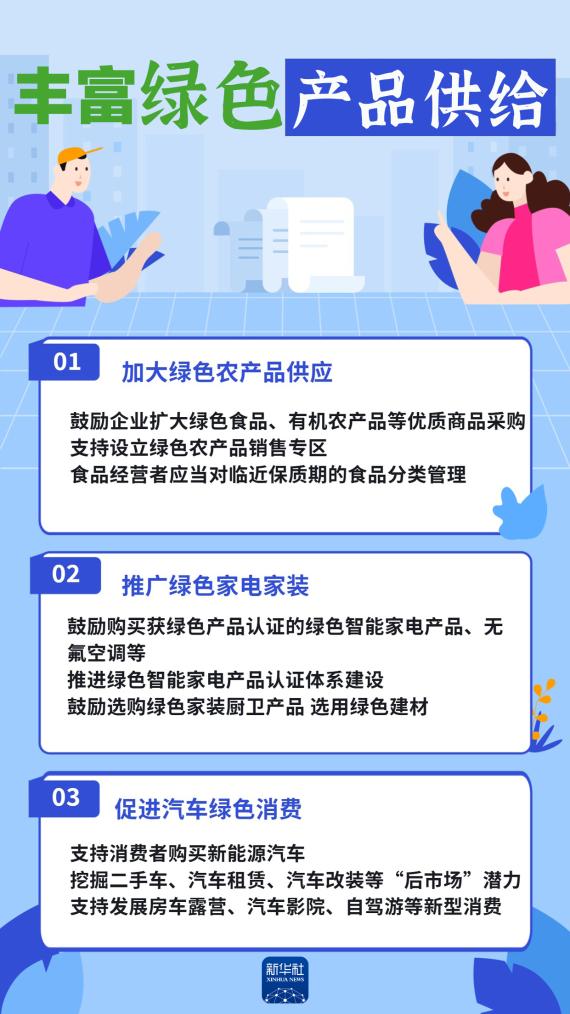
Core Viewpoint - The Ministry of Commerce and nine other departments have issued a notice on implementing green consumption promotion actions, outlining a systematic arrangement for green consumption during the 14th Five-Year Plan period, covering various aspects of daily life and the entire green consumption chain [1] Group 1: Green Product Supply - Increase the supply of green agricultural products by encouraging enterprises to expand procurement of quality goods like organic products and establishing dedicated sales areas for green agricultural products [2] - Promote green home appliances and home decoration by encouraging the purchase of certified green smart appliances and green building materials [2] - Support green automotive consumption by promoting the purchase of new energy vehicles and exploring the potential of the second-hand car market [2] Group 2: Green Service Consumption - Develop green dining by promoting the use of biodegradable packaging and small portion meals, and cultivating green restaurants [3] - Foster green accommodation by promoting eco-friendly hotels and biodegradable cleaning products [3] - Advance green housekeeping by encouraging the use of eco-friendly cleaning supplies and online booking for shared housekeeping services [3] Group 3: New Green Consumption Models - Build green supply chains by promoting green procurement and encouraging carbon footprint evaluations in supply chains [4] - Promote a green consumption points system to incentivize consumers and provide benefits for green consumption [4] - Innovate in green sharing services, encouraging shared transportation, space, and goods [4] Group 4: Green Recycling - Reduce the use of single-use plastic products by encouraging retailers to minimize plastic bag usage and support bamboo alternatives [5] - Promote the recycling and reuse of waste items, focusing on furniture, electronics, and textiles, and encouraging reverse logistics systems [5] - Develop second-hand goods circulation by exploring "Internet + second-hand goods" models and supporting community flea markets [5] Group 5: Consumption Environment - Promote energy-saving facilities by encouraging the use of efficient lighting and air conditioning systems [6] - Spread the concept of green consumption and low-carbon lifestyles through community activities and consumer education [6] - Strengthen public awareness campaigns by integrating green consumption into national environmental promotion efforts [6] Group 6: Consumption Foundation - Cultivate green circulation entities by supporting green certification and encouraging leading enterprises to drive upstream and downstream green development [7] - Participate in global rule-making by aligning national green consumption standards with international ones [7]
持续激发绿色消费潜力 多部门详解新举措
Xin Hua Wang· 2026-01-06 12:45
Core Viewpoint - The Ministry of Commerce and nine other departments have issued a notice to implement a green consumption promotion action plan, outlining 20 measures across seven areas to systematically arrange green consumption work during the 14th Five-Year Plan period [1] Group 1: Green Consumption Initiatives - The promotion of green consumption is a key strategy for achieving green low-carbon development, enhancing consumption, and accelerating the comprehensive green transformation of the economy and society [1] - By the end of 2025, the total number of certifications for agricultural products in China is expected to exceed 88,000, with standardized production areas for green food reaching 20.5 million acres [2] - The "old-for-new" policy for consumer goods is seen as a significant opportunity to promote green consumption, with plans to replace 18.3 million cars and 192 million home appliances by 2025, where nearly 60% of the cars will be new energy vehicles [3] Group 2: Economic Impact and Supply Chain - Green consumption is identified as a critical force for economic structural transformation and the cultivation of new growth points, with significant reductions in logistics costs and carbon emissions through the implementation of green supply chains [4] - The standardization rate of pallets has reached 37.8%, with an estimated saving of 250 million disposable pallets, equivalent to protecting 50 million trees and reducing carbon emissions by over 2 million tons [4] - The use of environmentally friendly alternatives has increased by 26.31% in the first half of 2025, reflecting positive outcomes in reducing single-use plastic products [4] Group 3: Waste Management and Circular Economy - The construction of "waste-free cities" is being promoted, aiming to transform waste materials from a societal burden into urban resources, with plans to support around 200 cities in this initiative during the 14th Five-Year Plan period [5] - Efforts will be made to enhance the construction of sorting centers for waste disposal, encouraging local governments to provide policy support for these developments [5] Group 4: Multi-Stakeholder Participation - Promoting green consumption requires the participation of multiple stakeholders, including government, enterprises, and consumers, to form a collaborative effort [6] - The government plans to update national standards and support domestic participation in international standardization activities in the green sector [6] - There will be a focus on enforcing regulations against violations in the areas of green products, energy efficiency labeling, and food waste [6]
以旧换新惠及消费者4.94亿人次
Mei Ri Jing Ji Xin Wen· 2026-01-06 12:42
Core Viewpoint - The Chinese government is promoting green consumption as a key strategy for achieving high-quality economic and social development during the 14th Five-Year Plan period, aiming to enhance consumer awareness and reduce carbon emissions through various initiatives [1][5]. Group 1: Green Consumption Initiatives - The Ministry of Commerce, along with nine other departments, has issued a notice to implement green consumption actions, outlining 20 measures across seven areas to promote green consumption throughout the supply chain [3][4]. - The government plans to replace 18.3 million old cars with new ones, with nearly 60% being electric vehicles, and to replace 192 million home appliances, with 90% meeting high energy efficiency standards, generating a sales boost of 3.92 trillion yuan and benefiting 494 million consumers [1][6]. Group 2: Challenges and Solutions - Despite the growth in green product supply and innovative consumption models, challenges remain, including inconsistent standards for green products and a lack of consumer awareness [3][4]. - The government aims to enhance the green consumption environment by promoting energy-saving devices, optimizing the use of green electricity, and encouraging community-based green consumption activities [4][8]. Group 3: Green Supply Chain Development - The government is focusing on building a green supply chain and promoting digital consumption to enhance the efficiency of resource use and reduce costs [6][7]. - The standardization rate of pallets has reached 37.8%, with an estimated saving of 250 million disposable pallets, equivalent to protecting 50 million trees and reducing carbon emissions by over 2 million tons [7]. Group 4: Promotion of Green Lifestyle - The Ministry of Commerce is actively promoting green lifestyles through various events and initiatives, encouraging consumers to adopt sustainable habits in their daily lives [8]. - The government has established a regulatory framework to reduce single-use plastic products and promote alternatives, fostering a culture of green consumption [8].

推行绿色消费积分、拓宽绿色消费贷款应用场景……绿色消费推进行动“路线图”出炉
Mei Ri Jing Ji Xin Wen· 2026-01-06 12:40
Core Viewpoint - The Ministry of Commerce and nine other departments issued a notice to implement green consumption initiatives, outlining 20 specific measures across various sectors to optimize the green consumption environment [1][2]. Group 1: Green Consumption Incentives - The notice encourages financial institutions to increase support for green consumption loans and collaborate with trade enterprises to expand loan application scenarios [1][2]. - The concept of "green consumption points" is introduced to incentivize consumers to engage in green purchasing and low-carbon services, allowing them to earn points for discounts or benefits [4][5]. Group 2: Supply Chain Green Development - The notice promotes green development across the entire supply chain, advocating for practices such as shared delivery and the use of environmentally friendly products [2]. - It encourages companies to evaluate their supply chain carbon footprints and adopt low or no volatile organic compounds (VOCs) products [2]. Group 3: Policy and Regulatory Framework - The notice emphasizes the need for a conducive policy environment to ensure the effective implementation of green initiatives, including a system of rewards for compliant entities and penalties for those exceeding pollution limits [5]. - The upcoming Central Economic Work Conference will prioritize "dual carbon" goals and comprehensive green transformation as key tasks for 2026 [2]. Group 4: Energy Structure and Investment Opportunities - The report from Founder Securities suggests focusing on three main investment areas: new energy systems, green technology innovations, and industrial leaders capable of low-carbon transitions [3]. - The emphasis on optimizing energy structures and deep industrial restructuring is expected to drive significant investment opportunities in these sectors [3]. Group 5: Environmental Efficiency Measures - The notice encourages businesses to adopt energy-efficient equipment and smart control systems to enhance energy management and reduce carbon emissions [5]. - It also supports the use of green electricity to assist in carbon reduction efforts [5].