财富管理

Search documents
多地银行“开门红”营销提前开打,息差压力下揽储需求有所减弱
Feng Huang Wang· 2025-12-03 06:25
Core Insights - The banking sector is experiencing a significant transformation from traditional deposit and loan services to comprehensive financial services, with the "New Year Opening" marketing campaign reflecting this shift in search of new growth points in a changing market environment [1][3] Group 1: Early Marketing Initiatives - Many banks have started their "New Year Opening" marketing campaigns earlier than usual, with some initiating efforts as early as late November to secure quality clients and boost middle-income business [2][3] - Banks are conducting internal meetings to set sales targets for asset management products, indicating a proactive approach to marketing [2][3] Group 2: Pressure on Net Interest Margin - As of the end of Q3, the banking industry's net interest margin has dropped to 1.42%, remaining at a historical low, prompting banks to adjust their product offerings to manage interest margins more effectively [3][4] - Some banks have begun to withdraw long-term deposit products to strengthen interest margin control, with expectations of further declines in deposit rates [3] Group 3: Shift in Marketing Focus - There is a noticeable reduction in the demand for deposit acquisition among some banks, leading them to focus more on wealth management services [4][5] - Marketing strategies have evolved from traditional giveaways to more pragmatic approaches, such as fee discounts and cash rebates, to attract clients [4][5] Group 4: Wealth Management as a Priority - Wealth management has become a key focus for many banks, with initiatives like the "Wealth Growth Plan" being introduced to incentivize client participation [5] - The emphasis on wealth management reflects the increasing importance of retaining and growing client assets in the context of declining interest rates and net interest margins [5]


南方基金党委书记陈莉: 借助AI深度赋能塑造服务国家战略核心能力
Zheng Quan Shi Bao· 2025-12-02 18:15
陈莉认为,基金行业的数字化转型是一个漫长持续的过程,需要持续投入资源,不断创新迭代。目前头 部基金公司的数智化建设主要聚焦在平台建设和AI场景应用方面,未来既需要进一步提升平台的广度 和质量,也需要强化AI的全方位应用,力争做到覆盖业务更加全面、使用体验更加智能、场景融合更 有深度,实现更高层次的业务和科技融合。 陈莉认为,公募基金做好"投资于物"和"投资于人"的关键在于锻造系统性投研能力,建立基于国家重点 战略方向的长期投研框架,这不仅体现在资产配置的广度,更体现在对国家战略意图的深刻理解。陈莉 强调,基金公司需要不断加强平台化、一体化、多策略投研体系建设,聚焦前沿科技、新型消费、绿色 低碳、区域协调、民生保障等重点领域,形成更具深度的产业洞察力和对一线需求的感知力,更好识别 技术革新的爆发点。 陈莉表示,公募基金服务民生的关键在于全面围绕投资者最佳利益谋篇布局,融入公募基金行业全业务 链条,进一步彰显金融服务的适配性、可及性。比如,主动型产品需要具有鲜明的投资风格和提升客户 体验的创新设计;被动型产品需要注重高质量指数研发和高跟踪精度把控,提供丰富完善的指数产品 库;配置型产品需要注重产品的收益风险特征, ...
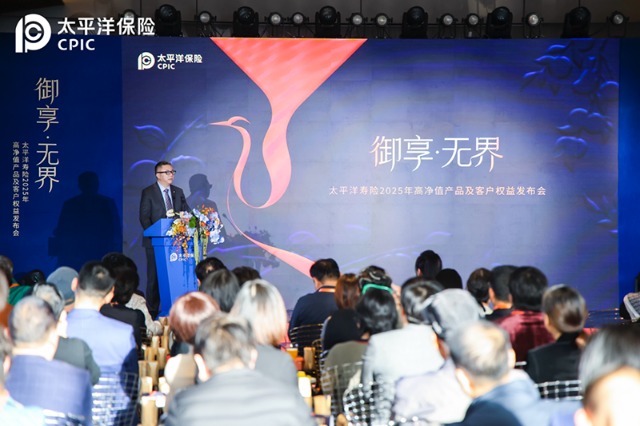
财富之上,成就新时代“丰盛人生” 中国太保寿险举办2025年高净值产品及客户权益发布会
Shang Hai Zheng Quan Bao· 2025-12-02 09:16
Core Insights - China Pacific Insurance (CPIC) launched new high-end products and upgraded customer club rights, focusing on high-net-worth clients' core needs in wealth management, risk defense, and service enhancement [1][6] Group 1: Wealth Management and Economic Insights - Renowned economist Ma Guangyuan emphasized the importance of respecting economic cycles in wealth management, stating that the essence of wealth is cyclical and that long-term and professional investment strategies are crucial in navigating uncertainties [2] - The current wealth cycle in China is undergoing significant changes, necessitating the construction of optimal asset portfolios that include professional financial assets like insurance and banking [2] Group 2: Customer-Centric Approach - CPIC prioritizes customer needs by providing professional insurance products for family risk protection and leveraging its asset-liability management capabilities to share investment returns with clients [3] - The company has adapted to profound internal and external changes by exploring diverse customer needs and redefining its role beyond traditional insurance services, aiming to help clients achieve a "prosperous life" in the new era [3] Group 3: High-Net-Worth Client Focus - The event highlighted a shift in high-net-worth clients' core needs from "growth" to "inheritance" in wealth management and from "ownership" to "experience" in lifestyle pursuits, with a move towards personalized services [6] - CPIC introduced two new products: the Taibao Hongfu Tainian (Yuxiang Version) annuity insurance and the Taibao Shengshi Hongyun (Yuxiang Version) whole life insurance, designed to meet the stable asset growth and inheritance needs of high-net-worth families [6] - The upgraded "1+6" private rights system offers 24/7 dedicated concierge services and covers six areas: health, retirement, education, career, life, and art, providing clients with access to CPIC's quality investment ecosystem and global service resources [6]


薛洪言:银行五年期定存密集退场,释放了什么信号?
Xin Lang Cai Jing· 2025-12-02 07:56
Core Viewpoint - The recent trend of commercial banks in China reducing long-term deposit products, particularly five-year fixed deposits, reflects a significant transformation in the banking industry's operational logic due to ongoing pressure from narrowing net interest margins and the need to optimize liability structures [1][2][4]. Group 1: Market Dynamics and Industry Changes - The reduction of five-year deposit products is driven by multiple market factors and signifies a profound shift in the banking industry's operational logic [2]. - Continuous narrowing of net interest margins due to multiple cuts in the Loan Prime Rate (LPR) has pressured banks' asset-side yields, leading to a reevaluation of long-term deposits as potential liabilities rather than profit contributors [2][4]. - The adjustment in deposit products is a response to the changing financing needs of the economy, which favors shorter-term, diverse risk profiles, thus reducing the efficiency of long-term liabilities [3]. Group 2: Financial Management and Risk Control - From an asset-liability matching perspective, banks are focusing more on supporting the short-term turnover needs of the real economy, which diminishes the utility of long-term liabilities and increases the risk of maturity mismatches [3]. - The shift towards shorter liability durations is a proactive measure for banks to manage interest rate risks and enhance the resilience of their balance sheets [3]. - This adjustment also aims to improve the efficiency of financial resource allocation, allowing banks to better match funding supply with actual demand in the economy [3]. Group 3: Competitive Strategies and Product Innovation - The current adjustment in deposit products indicates a transformation in competitive strategies within the banking sector, moving away from simple price wars to product and service innovations [3][4]. - Banks are increasingly focusing on wealth management services and innovative product offerings to meet diverse customer needs, which may lead to a more sustainable development path for smaller banks [5][6]. - The transition from scale expansion to refined operations is essential for banks to maintain competitiveness in a market characterized by high cost pressures and the need for differentiated services [6][7]. Group 4: Impact on Consumers and Financial Literacy - The reduction of long-term deposit options will significantly impact consumers' investment habits and asset allocation strategies, pushing them to explore more complex financial products [8][10]. - Different consumer segments will likely respond differently to the changes, with some seeking higher returns in capital markets while others may prefer defensive asset allocations [8][9]. - This shift necessitates an increase in financial literacy among consumers, as they will need to navigate a more complex financial landscape and make informed decisions regarding their investments [9][10]. Group 5: Future Outlook and Industry Evolution - The overall adjustment in deposit products is a practical choice for banks to address operational pressures and optimize asset-liability management, reflecting a broader industry shift towards quality and efficiency [4][11]. - As banks move away from reliance on high-cost liabilities, their competitive edge will increasingly depend on their ability to manage assets and liabilities effectively, offer differentiated services, and provide comprehensive financial solutions [11][12]. - The transformation initiated by the reduction of long-term deposits may lead to a more mature and rational financial behavior among consumers, shifting from passive savings to proactive asset management [10][12].
打造买方投顾新模式!这家头部券商发力“企业家办公室”,构建“人-家-企-社”生态格局
Mei Ri Jing Ji Xin Wen· 2025-12-02 05:08
Core Insights - The changing interest rate environment in China is significantly impacting wealth management strategies, prompting a shift from single-asset investments to diversified and comprehensive asset allocation [1][3] - The decline in risk-free returns is driving investors to seek new asset allocation paths, indicating an upgrade in wealth management concepts [1][3] - The wealth management market in China has substantial room for growth, as property income remains significantly lower than in mature markets [3] Group 1: Market Trends - The structural change in the interest rate environment is reshaping the risk-return characteristics of investments, leading to a transformation in wealth management practices [3] - Investors are increasingly focusing on long-term returns and personalized needs, moving away from simplistic, product-driven wealth management models [3][4] Group 2: Company Strategy - Guotai Junan is leveraging its comprehensive financial advantages to develop a new wealth management model centered around the "Entrepreneur Office" concept [1][4] - The company aims to integrate six core capabilities: asset allocation, family inheritance, cross-border investment, green finance, comprehensive enterprise services, and non-financial ecosystem services [4][5][6][7][8][9] Group 3: Service Capabilities - The asset allocation capability focuses on in-depth research and dynamic management of investment portfolios to align with clients' risk-return objectives [4] - The family inheritance capability addresses the pain points and needs of entrepreneurial clients regarding generational wealth transfer [5] - The cross-border investment capability is evolving to meet the increasing demand for global asset allocation among clients [6] - The green finance service capability aims to enhance sustainable finance offerings in line with ESG themes [7] - The comprehensive enterprise service capability provides a range of services, including equity incentives and human resource cost optimization [8] - The non-financial ecosystem service capability fosters a platform for resource and knowledge sharing among entrepreneurs [9] Group 4: Industry Outlook - The wealth management industry is entering a new development phase centered on professional capabilities and service ecosystems, with Guotai Junan positioning itself as a co-creator of value in this transformative era [10]

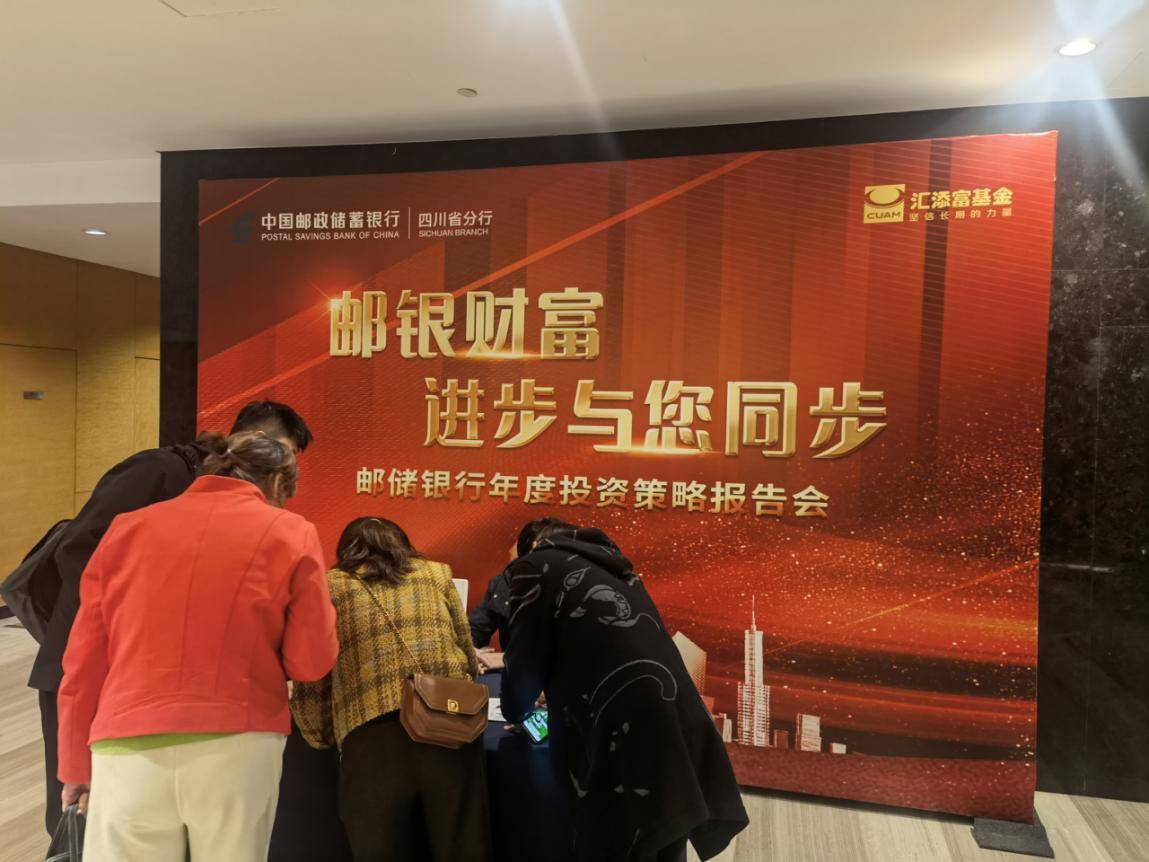
邮储银行四川省分行年度投资策略报告会顺利举办
Sou Hu Cai Jing· 2025-12-02 02:42
- 363 a-d p E to 2 5 11 HUAWEL 当前,邮储银行在全国已建设运营超过500家财富中心,10家私行中心,培养理财经理、贵宾理财经理、财富顾问共计5万余名,为客户提供专业财富管理服 务;依托强大的研发能力,搭建了全品类、全策略财富管理产品体系,助力客户资产保值增值;加快数字化转型引领和赋能发展,客户关系管理系统 (CRM)与财富管理系统不断迭代升级,运用数字化技术深入洞察财富管理需求,让财富管理服务飞入千家万户。 此次投资策略报告会的举办,是邮储银行四川省分行践行投资者教育职责、提升财富管理服务水平的重要举措。未来,邮储银行将持续整合专业资源,为广 大客户提供更优质、更专业的金融服务,助力投资者实现资产的稳健增值。 11月28日,中国邮政储蓄银行四川省分行携手汇添富基金管理股份有限公司,成功举办"邮银财富·进步与您同步——邮储银行年度投资策略报告会"活动。 邮储银行四川省分行个人金融部总经理戴蓉、成都分行副行长罗乐出席本次报告会。会上,戴蓉总经理作开场致辞,向到场客户表达欢迎与感谢,并强调邮 储银行在投资者教育与财富管理服务方面的责任与初心。汇添富基金首席投资顾问任远昌担任主讲嘉宾,引 ...

从顺周期到逆周期:金融股上涨背后的新动力与新叙事
Shang Hai Zheng Quan Bao· 2025-12-01 19:23
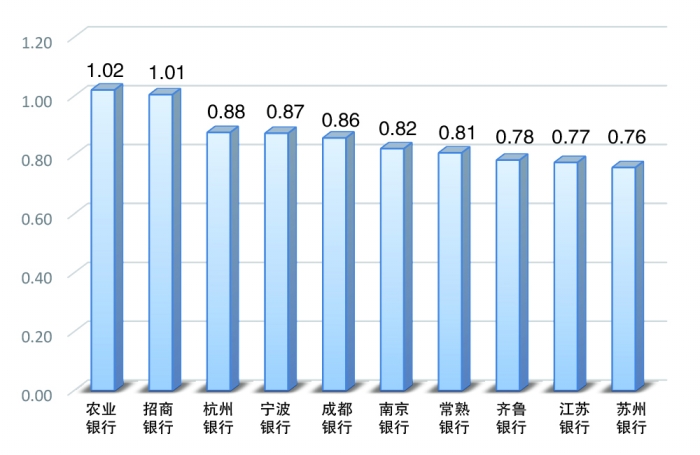
Core Viewpoint - The financial sector in China is experiencing a counter-cyclical stock price performance despite complex domestic and international economic conditions, with a strategic focus on wealth management and healthcare services becoming the new investment narrative [2][3]. Group 1: Financial Sector Performance - The valuation levels of the banking, insurance, and securities sectors have significantly improved this year, with the price-to-book (PB) ratios increasing by 19.30%, 8.51%, and 5.76% respectively compared to the beginning of the year [3]. - State-owned large banks and city commercial banks have seen the largest increases in valuation, with PB ratios rising by 25% and 12.96% respectively [3]. Group 2: New Growth Opportunities - Traditional banking and insurance business growth is slowing, prompting financial institutions to seek new performance growth avenues, particularly in wealth management, pension finance, and technological innovation [5]. - Insurance companies are actively expanding into wealth management and healthcare services, with products like dividend insurance and the development of retirement communities [5][6]. Group 3: Competitive Advantages - Banks possess a "first-touch advantage" in wealth management, allowing them to gather customer financial data effectively and offer a wide range of products [6]. - Securities firms are shifting their revenue focus from brokerage services to asset-heavy businesses, indicating a need for adaptation in the competitive landscape [6]. Group 4: Evolving Valuation Logic - The valuation logic for financial stocks is shifting from a purely cyclical perspective to a dual-driven model of "stability + growth," emphasizing the importance of differentiated and specialized development [6][7]. - The insurance sector is experiencing a golden development period, with new narratives in wealth management and healthcare driving higher quality growth [7]. Group 5: Future Outlook - The increasing demand for wealth management and healthcare services among residents suggests that financial institutions will need to focus on their core competencies and develop unique offerings to enhance their valuation [9]. - China Ping An is highlighted as a leader in the healthcare and pension strategy, integrating services to enhance its financial business, with a significant portion of its clients benefiting from its healthcare ecosystem [8][9].


南华期货股份有限公司(02691) - 聆讯后资料集(第一次呈交)
2025-12-01 16:00
香港聯合交易所有限公司與證券及期貨事務監察委員會對本聆訊後資料集的內容概不負 責,對其準確性或完整性亦不發表任何意見,並明確表示概不就因本聆訊後資料集全部 或任何部分內容而產生或因倚賴該等內容而引致的任何損失承擔任何責任。 Nanhua Futures Co., Ltd. 南華期貨股份有限公司 (於中華人民共和國註冊成立的股份有限公司,中文公司名稱為「南華期貨股份有限公司」, 在香港以橫華國際名義開展業務) 的聆訊後資料集 警告 本聆訊後資料集乃根據香港聯合交易所有限公司(「聯交所」)及證券及期貨事務監察委員會(「證監會」) 的要求而刊發,僅用作提供資訊予香港公眾人士。本聆訊後資料集為草擬本,其內所載資訊並不完整, 亦可能會作出重大變動。 閣下閱覽本文件,即代表 閣下知悉、接納並向南華期貨股份有限公司(「本公司」)、其獨家保薦人、整 體協調人、顧問、或承銷團成員表示同意: 倘於適當時候向香港公眾人士提出要約或邀請,有意投資者務請僅依據與香港公司註冊處處長註冊的 本公司文件作出投資決定;文件的文本將於發售期內向公眾人士提供。 (a) 本文件僅為向香港公眾人士提供有關本公司的資料,概無任何其他目的。投資者不應根據 ...
超级富豪的烦恼,百亿财富莫名消失了
Sou Hu Cai Jing· 2025-12-01 13:07
Core Viewpoint - The article discusses the financial downfall of Hermès' fifth-generation heir, Pouech, who lost a significant portion of his wealth due to fraudulent activities by his trusted financial advisor, highlighting the vulnerabilities of wealthy individuals in financial management and trust issues [1][8]. Group 1: Financial Mismanagement - Pouech entrusted $15 billion worth of Hermès stock (5.76% of total shares) to his financial advisor, Eric Freymond, in 1999, demonstrating a high level of trust [3]. - Freymond isolated Pouech from family and friends, creating a vacuum where only he had access to Pouech's financial situation [3]. - Pouech signed financial documents without reviewing them, due to his inability to understand complex financial reports [4]. Group 2: Fraudulent Activities - Freymond engaged in long-term deception, falsifying financial statements and inducing Pouech to convert shares into untraceable Swiss "bearer shares," allowing him to sell the stock over 20 years for personal gain [5]. - By 2022, Pouech discovered he could not even withdraw 1 million francs, leading to the revelation of the fraud [6]. Group 3: Legal Challenges - Pouech's attempts to sue Freymond in Switzerland were dismissed due to insufficient evidence, as the court ruled that Pouech was aware of the situation and had signed the documents [6]. - After Freymond's death in 2025, which was ruled a suicide, Pouech faced the loss of any chance to recover his funds [7]. Group 4: Wealth and Trust Issues - The article illustrates that wealthy individuals often lack understanding of business operations and financial management, leading to over-reliance on professionals [10][13]. - It emphasizes the risks associated with placing trust in professionals who may exploit that trust for personal gain [14][15]. - The narrative suggests that wealthy individuals should implement checks and balances in their financial dealings to prevent exploitation [19].
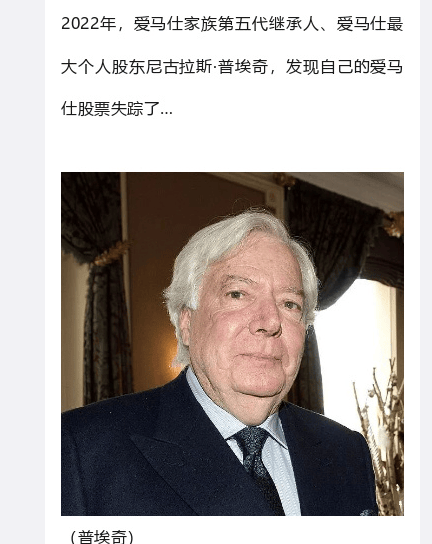
爱马仕继承人被骗 150 亿美元:从全球富豪到“身无分文”,世纪悬案正在上演
Sou Hu Cai Jing· 2025-12-01 11:58
Core Viewpoint - The case of Nicolas Puech, the fifth-generation heir of the Hermès family, reveals a complex financial scandal involving the mismanagement of assets and the mysterious disappearance of significant wealth, leading to his current financial distress despite previously holding a fortune exceeding $15 billion [1][3][5]. Group 1: Background of Nicolas Puech - Nicolas Puech is a reclusive member of the Hermès founding family, known for his simple lifestyle and lack of interest in financial matters, which led him to rely heavily on a private wealth manager, Eric Freymond [3][5]. - Puech inherited approximately 6 million shares of Hermès, valued at over $15 billion, after the death of his mother and sister, making him one of the largest individual shareholders [3][5]. Group 2: Relationship with Wealth Manager - Puech's long-term relationship with Freymond, who managed all his financial affairs, began to deteriorate around 2022 due to a suspicious transfer of 1 million Swiss francs, leading Puech to question Freymond's integrity [5][8]. - Puech discovered that his shares, which he believed were securely held in his name, had been transferred to Switzerland as "bearer shares," making them nearly impossible to trace [5][10]. Group 3: Legal Actions and Investigations - In September 2023, Puech filed three lawsuits against Freymond, accusing him of abuse of trust and asset misappropriation, claiming that his Hermès shares had mysteriously vanished [8][10]. - Following Freymond's death in July 2025, which was ruled a suicide, the investigation into the asset mismanagement became more complicated, as many key documents and electronic records were signed by Freymond [10][11]. Group 4: Current Financial Status - Puech has publicly stated that he is now financially destitute, unable to afford basic living expenses, and reliant on friends for support, despite his previous immense wealth [11]. - Reports indicate that Puech's lifestyle has drastically changed, as he now travels on budget flights and struggles to maintain his properties [11].