
可再生能源

Search documents
今年全球可再生能源发电量首次超过煤炭
Xin Lang Cai Jing· 2025-12-19 22:31
Group 1: Renewable Energy Breakthrough - The core viewpoint of the article is that global renewable energy growth is unstoppable, with renewable energy surpassing traditional energy sources in 2025, primarily led by China [1] - In 2025, global renewable energy generation exceeded coal for the first time, with solar and wind energy growth covering the new electricity demand in the first half of the year [1] - China produces approximately 80% of the world's solar cells, 70% of wind turbines, and 70% of lithium batteries, maintaining a significant cost advantage [1] Group 2: Other Scientific Breakthroughs - The other nine scientific breakthroughs include advancements in gene editing for rare diseases, new drugs for gonorrhea, and significant findings in cancer cell behavior [2] - Notable achievements also include the construction of a telescope in Chile aimed at advancing new astronomy, research on the Denisovans, and breakthroughs in heat-resistant rice [2] Group 3: Future Scientific Events - The article anticipates major breakthroughs in AI-driven scientific research in 2026, with the potential for significant scientific advancements achieved with minimal human intervention [3] - In the biomedical field, two clinical trials for personalized gene therapies for rare genetic diseases are expected to start, along with a cancer detection trial that could identify around 50 types of cancer through a single blood test [3] - Space exploration will be active in 2026, with China's Chang'e 7 mission targeting the lunar south pole and NASA's Artemis 2 mission planned for a crewed lunar flyby [3][4]
2025年度十大科学突破
Xin Lang Cai Jing· 2025-12-19 18:23
Group 1 - The core viewpoint of the article is that global renewable energy is experiencing unprecedented growth, with China leading this significant transition, as highlighted by the recognition of "Global Renewable Energy Growth" as the top scientific breakthrough of 2025 by *Science* magazine [1] - In 2025, global renewable energy generation surpassed coal for the first time, with solar and wind energy growth rates sufficient to meet the new electricity demand in the first half of the year [1] - China's strong industrial system is identified as the main driver of this trend, producing approximately 80% of solar cells, 70% of wind turbines, and 70% of lithium batteries globally, while also maintaining a cost advantage [1] Group 2 - The article mentions that China's thriving green technology exports are transforming other regions, including Europe and countries in the Global South [1] - Other scientific breakthroughs recognized by *Science* magazine include advancements in gene editing for rare diseases, new treatments for gonorrhea, and significant progress in xenotransplantation [2] - Research on the Denisovans and heat-resistant rice, led by Chinese research teams, is also highlighted among the top breakthroughs [2]
Forget Stocks – For 2026 I'm Investing in These Two Metals
Yahoo Finance· 2025-12-19 15:20
Core Viewpoint - Stocks are popular among ordinary investors, but commodities like copper and silver are seen as better investment opportunities for the new year, with both metals experiencing significant price increases in 2025 and potential for further growth in 2026 due to supply and demand dynamics [1][2]. Group 1: Investment Opportunities - Copper can be invested in through the Global X Copper Miners ETF (NYSEMKT: COPX), which is up 80% this year [1]. - Silver can be invested in via the iShares Silver Trust (NYSEMKT: SLV), which has more than doubled this year, up 119% [2]. - Both metals reached new all-time highs in 2025, with expectations for continued price increases in 2026 [2]. Group 2: Demand Factors - Industrial demand is a significant driver for both copper and silver, as they are essential for AI infrastructure, electric vehicles, and renewable energy applications [3]. - The construction of data centers requires substantial amounts of copper and silver, contributing to increased demand [4]. Group 3: Supply Factors - There is a supply shortage of both copper and silver this year, which is bullish for their prices [5]. - The U.S. Department of the Interior has added silver and copper to its list of critical minerals in response to the growing demand for these metals in AI data center construction [5]. Group 4: ETF Details - The Global X Copper Miners ETF has net assets of approximately $3.5 billion and holds 41 stocks, with its largest positions including Lundin Mining (5.6%), KGHM Polska Miedz (5.1%), Boliden AB (5%), Southern Copper (4.7%), and Freeport-McMoRan (4.7%) [8].
12月19日晚间央视新闻联播要闻集锦
Yang Shi Xin Wen Ke Hu Duan· 2025-12-19 14:04
海南自贸港封关首日,多项业务实现突破。 今年前11个月,我国电子商务持续激发消费活力。 习近平总书记指出,要加快建设北京国际科技创新中心和高水平人才高地,着力打造我国自主创新的重 要源头和原始创新的主要策源地。党的十八大以来,北京充分发挥科技创新策源作用,与天津、河北强 化协同,带动京津冀区域科技创新水平不断跃升。 日本民众举行抗议活动,反对高市早苗的错误言论。国际人士表示,必须高度警惕日本复活军国主义的 危险动向。 内容速览 李强主持召开国务院常务会议。 今日摘要 【新思想引领新征程】协同聚力 京津冀科技创新开启新征程 系列报道《学习贯彻党的二十届四中全会精神》今天来看:黑龙江、浙江、广东、中国社科院深入基层 一线宣讲,推动四中全会精神落地生根。 习近平总书记指出,要加快建设北京国际科技创新中心和高水平人才高地,着力打造我国自主创新的重 要源头和原始创新的主要策源地。党的十八大以来,北京贯彻落实总书记重要指示精神,全力推动国际 科技创新中心建设,充分发挥科技创新策源作用,与天津、河北强化协同,凝聚合力,带动京津冀区域 科技创新水平不断跃升。 连日来,黑龙江、浙江、广东、中国社会科学院深入基层一线,开展分众化 ...
氪星晚报|拼多多回应欧盟“黎明突袭”询问;麦当劳中国:门店数量已超过7500家,全国餐厅将陆续启用生物基新包装;全国首个高海拔岩洞式算力舱智算中心投运
3 6 Ke· 2025-12-19 11:03
Group 1: Company Updates - ShuoBeide denied rumors about securing a mass production order for phased array antennas from SpaceX's Starlink, stating the information is not true [1] - Zhongyuan Neipei's subsidiary signed a strategic cooperation framework agreement with Ningbo Puzhi Future Robotics for humanoid robot-related business, with the Shanghai subsidiary expected to become a core supplier [2] - Pinduoduo announced an upgrade to its governance structure, implementing a co-chairman system with Zhao Jiazhen and Chen Lei serving as co-chairmen and co-CEOs [3] - Pinduoduo responded to EU inquiries regarding Temu, highlighting its rapid market growth and the understandable scrutiny it faces [4] - McDonald's China reported over 7,500 stores nationwide and plans to implement bio-based new packaging, aiming to reduce approximately 5,800 tons of petroleum-based plastic annually [5] - Anta officially integrated over 1,000 offline stores into Taobao Flash Sale, with plans to expand to over 4,000 stores by 2026 [6] - Lenovo is reportedly maintaining close communication with ByteDance regarding AI phone collaborations, focusing on smart terminal cooperation [7] Group 2: Industry Developments - TikTok's CEO announced the establishment of a new joint venture for data security in the U.S., with ByteDance retaining control over e-commerce and advertising operations [8] - A new venture capital fund was established in Wuhan with a total investment of 200 million RMB, focusing on private equity and venture capital management [9] - Japan's Toyama Prefecture plans to build the country's largest data center hub with a total power capacity of 3.1 gigawatts, aiming to become a global data center leader [10] - South Korea plans to begin nuclear fusion power generation tests as early as 2030, advancing its timeline by nearly 20 years [11] - The journal "Science" named global renewable energy growth as the top scientific breakthrough for 2025, indicating a significant shift led by China [12] - The first high-altitude rock cave computing power cabin in China has been put into operation, featuring an investment of 350 million RMB and capable of performing 60 billion billion floating-point operations per second [13] - Disney's "Zootopia 2" has become the largest box office success in China, surpassing 3.6 billion RMB and highlighting the strategic value of the Chinese film market [14]

《科学》杂志发布2025年度十大科学突破,“全球可再生能源增长势不可当”获评年度头号突破
Xin Hua She· 2025-12-19 06:21
Group 1 - The core viewpoint of the article is that global renewable energy growth is unstoppable, with significant advancements expected in 2025, primarily led by China [1] - In 2025, global renewable energy generation is projected to surpass coal for the first time, driven by rapid growth in solar and wind energy, which is sufficient to meet the new electricity demand in the first half of the year [1] - China continues to expand its dominance in solar cells, wind turbines, and lithium battery storage, solidifying its leadership in global renewable energy production and related technologies [1] Group 2 - Approximately 80% of the world's solar cells, 70% of wind turbines, and 70% of lithium batteries are produced in China, which holds a significant cost advantage [1] - China's thriving green technology exports are transforming other regions, including Europe and countries in the Global South [1] - Other scientific breakthroughs recognized by the journal include advancements in gene editing for rare diseases, new treatments for gonorrhea, and significant progress in xenotransplantation [2]
Science发布2025十大科学突破,中国占据半壁江山——可再生能源、龙人头骨、异种器官移植、耐高温水稻
生物世界· 2025-12-19 04:08
Group 1: Renewable Energy Development - China's rapid development in renewable energy has been recognized as the top scientific breakthrough of 2025, with significant contributions in solar and wind energy [4][5][9] - Global renewable energy generation has surpassed coal, with solar and wind energy growth covering the entire increase in global electricity consumption from January to June 2025 [6] - China plans to reduce carbon emissions by up to 10% over the next decade, primarily through the expansion of wind and solar energy rather than reducing energy usage [6][8] Group 2: Genetic Editing and Rare Diseases - A customized lipid nanoparticle-based base editing therapy successfully treated a rare genetic disorder in a child, demonstrating significant advancements in gene editing for rare diseases [12][14] Group 3: Antibiotics for Gonorrhea - Two new antibiotics, gepotidacin and zoliflodacin, have been approved by the FDA for treating gonorrhea, addressing the growing antibiotic resistance of Neisseria gonorrhoeae [15][17] Group 4: Cancer Research - Research has revealed a new biological signaling axis involving neurons and cancer cells, providing insights into cancer metastasis and potential new treatment targets [18][23] Group 5: Astronomy and Data Collection - The Rubin Observatory will conduct continuous scans of the visible sky every three days for ten years, generating unprecedented amounts of data and detailed 3D maps of the universe [24][26][28] Group 6: Human Evolution - A study successfully extracted ancient DNA from the "Dragon Man" skull, linking it to Denisovans and enhancing understanding of East Asian human diversity and evolution [29][31][33] Group 7: AI in Scientific Research - Large language models (LLMs) have shown exceptional capabilities in various scientific fields, leading to significant advancements and a shift in research paradigms [34][37] Group 8: Particle Physics - A breakthrough in calculating the magnetic properties of the muon particle using lattice gauge theory has provided new insights into particle physics, despite ruling out certain new physics possibilities [38][41] Group 9: Xenotransplantation - Milestones in xenotransplantation have been achieved with genetically modified pig kidneys surviving in human patients for extended periods, moving closer to addressing organ shortages [42][44][45] Group 10: Heat-Resistant Rice - Research has identified a natural gene switch in rice that enhances heat tolerance, significantly improving yield under high-temperature conditions [46][48][50]

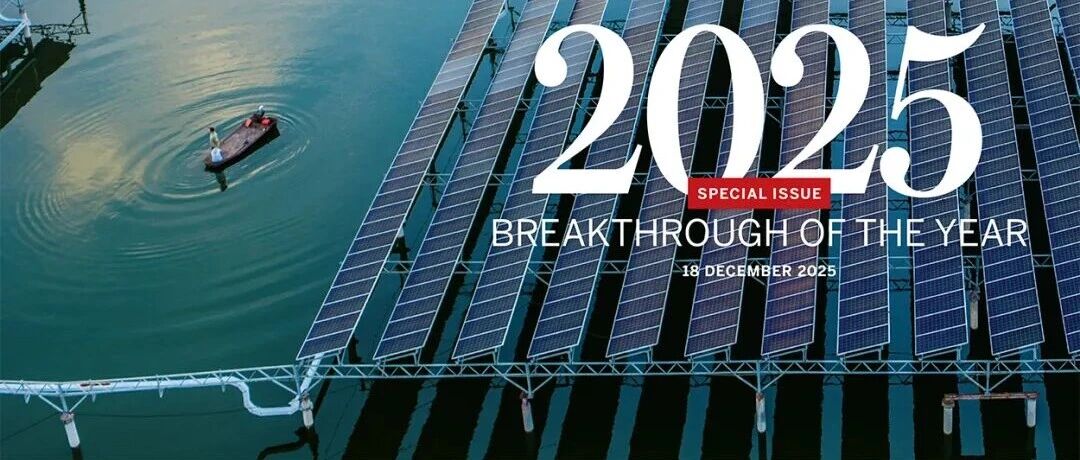
《科学》杂志发布2025年度十大科学突破
Xin Hua She· 2025-12-19 03:59
Group 1 - The core viewpoint of the article is that global renewable energy growth is unstoppable, with significant advancements expected by 2025, primarily led by China [1] - In 2025, global renewable energy generation is projected to surpass traditional energy sources, marking a major transition in the energy sector [1] - In 2023, global renewable energy generation exceeded coal for the first time, with solar and wind energy growth rates sufficient to meet the new electricity demand for the first half of the year [1] Group 2 - China is expanding its presence in solar cells, wind turbines, and lithium battery storage, solidifying its leadership in global renewable energy production and related technologies [1] - Approximately 80% of solar cells, 70% of wind turbines, and 70% of lithium batteries are produced in China, which holds a significant cost advantage [1] - China's thriving green technology exports are transforming other regions, including Europe and countries in the Global South [1]
【科技日报】《科学》杂志评出2025年度十大突破
Ke Ji Ri Bao· 2025-12-19 03:14
Group 1: Renewable Energy Development - Global renewable energy, led by China, is rapidly growing, with solar and wind energy dominating the increase in power generation, surpassing fossil fuels in total output [2] - China is a key player in this transition, significantly expanding solar panel, wind turbine, and lithium battery storage systems, solidifying its global leadership [2] - The low-cost manufacturing in China has facilitated the rapid adoption of small rooftop photovoltaic systems, providing reliable and economical energy for millions of households in Europe, South Asia, and the Global South [2] Group 2: Genetic Research and Medical Advances - Customized gene editing has been successfully applied in treating a rare genetic disease in a human patient, marking a significant milestone for personalized gene therapy [3] - Two new drugs for gonorrhea have been approved by the FDA, representing the first new treatments for the disease in decades, with significant efficacy and safety profiles [4] - A key gene, QT12, has been identified by Chinese researchers to help rice withstand high nighttime temperatures, leading to a 78% increase in yield under such conditions [13] Group 3: Archaeological and Scientific Discoveries - The discovery of the Harbin ancient human remains has confirmed them as Denisovans, providing insights into their appearance and lineage [9] - The construction of the Vera C. Rubin Observatory in Chile will enable unprecedented astronomical observations, potentially leading to discoveries of new celestial bodies and insights into dark matter and energy [8] Group 4: Advances in Physics and Transplantation - The final measurement of the muon magnetic anomaly has achieved unprecedented precision, enhancing the understanding of particle physics [11] - Significant breakthroughs in xenotransplantation have been made, with genetically engineered pig organs showing extended viability in human patients, moving closer to clinical application [12] Group 5: AI in Scientific Research - Large language models (LLMs) have demonstrated remarkable capabilities in scientific research, achieving breakthroughs in mathematics, chemistry, and biology, thus enhancing research efficiency and discovery [10]

《科学》杂志评出2025年度十大突破
Ke Ji Ri Bao· 2025-12-19 02:44
Group 1: Renewable Energy Development - Global renewable energy, led by China, is rapidly growing, with solar and wind energy dominating the increase in power generation [2] - China's large-scale development of solar panels, wind turbines, and lithium battery storage systems has solidified its leading position in the global renewable energy market [2] - The proliferation of low-cost rooftop photovoltaic systems in China is providing reliable and economical energy solutions for millions of households in Europe, South Asia, and the Global South [2] Group 2: Genetic Research and Medical Advances - Customized gene editing has been successfully applied in clinical settings for the first time, paving the way for treatments of other rare diseases [3] - Two new drugs for gonorrhea have been approved by the FDA, marking the first new treatments for the disease in decades, with significant efficacy and safety profiles [4] - Research has shown that neurons can transfer mitochondria to cancer cells, enhancing their energy metabolism and promoting cancer metastasis, particularly in brain metastases [5] Group 3: Archaeological and Scientific Discoveries - The discovery of the Harbin ancient human remains has confirmed that they belong to the Denisovans, solving a long-standing mystery regarding their appearance [7] - The Vera C. Rubin Observatory in Chile will revolutionize astronomical observations by scanning the entire sky every three days for ten years, potentially discovering new celestial bodies and studying cosmic phenomena [6] Group 4: Advances in AI and Computational Research - Large language models (LLMs) have demonstrated remarkable capabilities in scientific research, achieving significant breakthroughs in mathematics and chemistry [8][9] - AI systems have rapidly identified new drug candidates for liver fibrosis and replicated complex biological mechanisms, showcasing the potential of AI in accelerating scientific discovery [9] Group 5: Transplantation Innovations - Key breakthroughs in xenotransplantation have been achieved, with genetically modified pig organs showing extended viability in human patients, bringing the field closer to clinical application [11] Group 6: Agricultural Biotechnology - Chinese researchers have identified the QT12 gene, which helps rice withstand high nighttime temperatures, leading to significant improvements in yield and quality under heat stress conditions [12]