
智能驾驶

Search documents
2026年全球及中国高级驾驶辅助系统(ADAS)行业政策、产业链、市场规模、重点企业及趋势研判:政策与需求双重驱动下,ADAS市场空间广阔[图]
Chan Ye Xin Xi Wang· 2026-02-09 01:21
Core Insights - The Advanced Driving Assistance System (ADAS) enhances driving safety and comfort by utilizing various sensors to perceive the environment and detect potential hazards, leading to increased penetration in vehicles, especially with the rise of electric and smart connected cars [1][11] - The market size of China's ADAS industry is projected to grow from 21.6 billion yuan in 2020 to 122.7 billion yuan by 2025, with a compound annual growth rate (CAGR) of 41.54% [1][12] - By the first seven months of 2025, the penetration rate of passenger cars equipped with combined driving assistance systems in China is expected to reach 62.6%, an increase of 40 percentage points compared to the same period in 2021 [1][11] Industry Overview - ADAS is defined as a proactive safety technology that combines various sensors and navigation data to enhance driving safety and comfort, including features like adaptive cruise control and lane departure warning [3][4] - The industry is categorized into two main types: information assistance and control assistance [3] Industry Policies - The Chinese government has implemented supportive policies for the ADAS industry, including promoting the integration of navigation systems in agricultural machinery and establishing quality certification systems for smart connected vehicles [6][7] - New mandatory national standards for ADAS safety requirements are being developed to enhance product capabilities and safety [7] Industry Value Chain - The ADAS industry value chain consists of upstream core component suppliers, midstream system integrators, and downstream vehicle manufacturers [6] - The automotive industry is a crucial pillar of the national economy, with production and sales recovering post-2020, reaching 30.16 million units in 2023, and projected to exceed 34.5 million units by 2025 [6][8] Current Development Status - The ADAS industry is evolving with advancements in technology, including multi-sensor fusion and AI algorithms, leading to more integrated and intelligent systems [9][16] - Globally, the ADAS market is expected to grow from $17.5 billion in 2020 to approximately $54.5 billion by 2025, with a CAGR of 26.54% [10][11] Competitive Landscape - The ADAS industry in China features a tiered competitive structure, with international giants like Bosch and Continental leading the market, while domestic companies like Huayu Automotive and Desay SV maintain strong positions through innovation and localized services [12][13] - Huayu Automotive reported a revenue of 130.85 billion yuan in the first three quarters of 2025, reflecting a year-on-year growth of 9.51% [14] - Desay SV achieved a revenue of 4.15 billion yuan in the first half of 2025, marking a significant year-on-year increase of 55.49% [15]



周观点 | 地补出台+需求见底 建议关注汽车板块【国联民生汽车 崔琰团队】
汽车琰究· 2026-02-09 00:38
Market Performance - The automotive sector outperformed the market this week, with a gain of +0.66% from February 2 to February 8, ranking 11th among Shenwan sub-industries, while the CSI 300 index declined by -0.61% [2] - Within the sub-sectors, commercial passenger vehicles, passenger cars, automotive parts, automotive services, motorcycles, and others increased by 4.33%, 1.11%, 0.53%, 0.39%, and 0.01% respectively, while commercial freight vehicles decreased by -0.58% [2] Investment Recommendations - The core investment focus for the month includes companies such as Geely Automobile, Xpeng Motors, BYD, Bertel, Top Group, New Spring Co., and Chuanfeng Power [3] - For passenger vehicles, the recommendation is to pay attention to the bottom opportunities in demand, particularly for Geely, Xpeng, and BYD, with a suggestion to also consider Jianghuai Automobile [6][21] - In the automotive parts sector, recommendations include intelligent driving companies like Bertel, Horizon Robotics, and Kobot, as well as new force industry chains such as H chain (Xingyu Co., Huguang Co.) and T chain (Top Group, New Spring Co., Shuanghuan Transmission) [6][24] Industry Trends - Li Auto plans to enter the humanoid robot sector, aiming to strengthen its embodied intelligence brand positioning, with a focus on Tesla's production progress and technological iterations as a core theme [4][13] - The automotive sales are expected to stabilize and rebound due to the gradual implementation of the 2026 vehicle replacement subsidy policy and the launch of new models after the Spring Festival [5][14] - The January sales figures showed weak terminal demand, with BYD selling 210,000 units (down 30% year-on-year), Geely selling 270,000 units (up 1% year-on-year), and five new forces collectively selling 130,000 units (up 18% year-on-year) [5][14] Policy Impact - The 2026 vehicle replacement subsidy policy will provide incentives based on vehicle price, with new energy vehicles receiving 12% of the vehicle price (up to 20,000 yuan) and fuel vehicles receiving 10% (up to 15,000 yuan) [16] - The policy aims to stimulate demand and improve the structure of subsidized models, with a focus on activating mid-to-high-end replacement demand [20][21] Robotics Sector - The entry of leading companies into the humanoid robot market is expected to accelerate, with significant developments anticipated in 2026, including the mass production of Tesla's Optimus V3 [25][26] - The focus on key hardware components such as dexterous hands and lightweight materials is expected to drive innovation and market growth in the robotics sector [26][27] Motorcycle Market - The motorcycle market is experiencing growth, particularly in the mid-to-large displacement segment, with leading companies like Chuanfeng Power and Longxin General expected to benefit from increasing demand [36] - The sales data for December showed a year-on-year increase of 1.8% for motorcycles over 250cc, with a total of 69,000 units sold [32][33] Commercial Vehicle Market - The heavy truck market is projected to recover due to the continuation of the vehicle replacement subsidy policy, with sales in December reaching approximately 95,000 units, a year-on-year increase of 13% [37][39] - The subsidy policy is expected to stimulate demand for low-emission vehicles, with an average subsidy of 80,000 yuan for scrapping and updating eligible trucks [37][38]
比亚迪官宣“领汇”品牌,特斯拉第三代机器人将亮相
CMS· 2026-02-08 10:42
Investment Rating - The report maintains a "Recommendation" rating for the automotive industry, indicating a positive outlook for the sector [3]. Core Insights - The automotive industry experienced an overall increase of +0.5% from February 1 to February 7, with various companies reporting significant delivery numbers for January, including Geely with 260,000 units (+14% month-on-month), Chery with 200,000 units (120,000 units exported), and Xiaomi with over 39,000 units (+70% year-on-year) [1][2][6]. - Key developments include BYD announcing its new brand "Linghui" focused on B-end markets, Tesla's third-generation robot set to debut with a production target of one million units, and Waymo completing a $16 billion funding round [6][19][20]. Market Performance Overview - The automotive sector's secondary segments mostly saw gains, with the automotive services sector leading at +0.9%, while passenger and commercial vehicle segments rose by +0.5% and +0.4%, respectively [2][9]. - Individual stock performance varied, with notable gains for Kailong Gaoke (+72.8%), Xingmin Zhitong (+21.3%), and Yinlun Co. (+17.1%), while Spring X Precision (-13.6%) and Jingjin Electric (-10.2%) faced significant declines [12][14]. Industry Dynamics - The report highlights the automotive industry's growth potential, particularly in electric vehicles and autonomous driving technologies, with companies like Xpeng and WeRide making strides in new vehicle launches and strategic partnerships [19][22][24]. - Investment recommendations focus on companies with strong sales performance or potential blockbuster vehicles, such as BYD and Great Wall Motors, as well as commercial vehicle manufacturers like Yutong Bus and China National Heavy Duty Truck [6][19].


调整或已到位,把握配置区间。风格之辩:成长优于价值,大盘优于小盘,科技+顺周期仍是主线。:风格之辩——策略周聚焦
Huachuang Securities· 2026-02-08 09:41
Group 1 - The report highlights three main market concerns: the nearing end of industry rotation, significant suppression of risk appetite, and the transition to stock game before the Spring Festival [1][9][21] - The current market is entering a mid-to-long-term capital allocation phase, with the A-share bull market exhibiting high Sharpe characteristics, driven by improving fundamentals and stable free cash flow generation [2][21] - The report emphasizes that quality growth is superior to pure high-dividend value, with a focus on cyclical and real estate sectors, while large-cap stocks are favored over small-cap stocks due to tightening liquidity [3][35][41] Group 2 - The technology and cyclical sectors remain the main investment themes, with expectations of PPI turning positive, which will enhance EPS pricing and support growth in sectors like computing hardware, energy storage, AI applications, and smart driving [4][36] - The report categorizes growth into two types: high-growth sectors such as electronics and media, and sectors with performance elasticity under low bases, including steel, construction materials, and high-end manufacturing [33][38] - The report notes that the remaining liquidity is tightening, which may put pressure on high-valuation factors, indicating that the influence of valuation factors will diminish in the coming year [35][41]
千亿景林持仓曝光!大幅减持英伟达,重仓谷歌、Meta、拼多多
券商中国· 2026-02-07 09:44
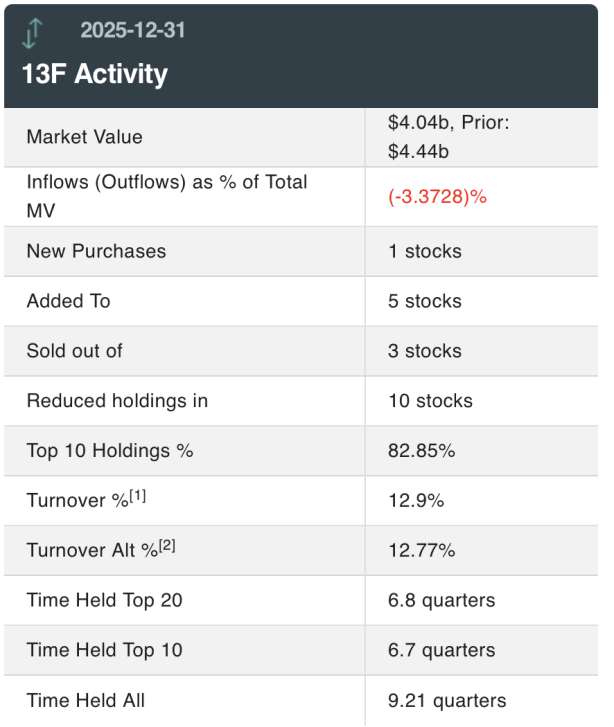
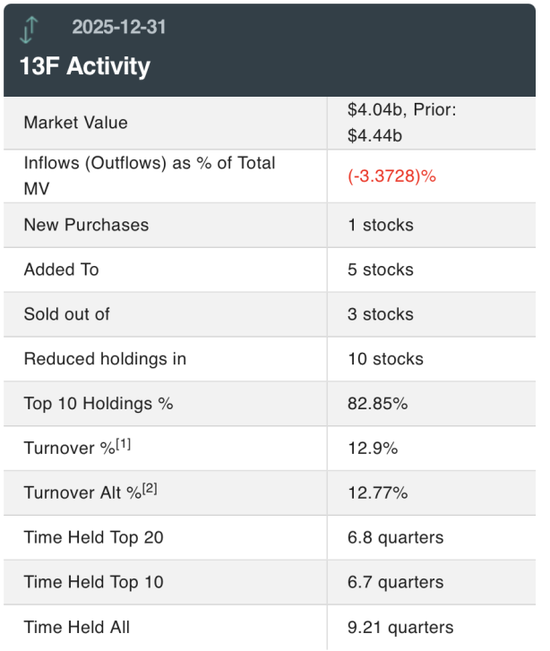
Core Viewpoint - Jinglin Capital has significantly adjusted its US stock holdings in the fourth quarter, reducing its position in Nvidia while increasing investments in Google, Pinduoduo, and Intel [1][5]. Group 1: Holdings Overview - As of the end of the fourth quarter, Jinglin's total US stock holdings amounted to $4.04 billion, a decrease of 3.37% from the previous quarter [2]. - The top ten holdings include Google, Meta, Pinduoduo, NetEase, Manbang, Futu, Nvidia, Alibaba, Intel, and Yaduo [2]. Group 2: Major Increases in Holdings - The largest increase in holdings was in Google, where the number of shares rose to 2.69 million, reflecting a 52.81% increase, making it the largest position at 20.82% of the portfolio [4]. - Jinglin also initiated a position in Broadcom with 245,800 shares, representing 2.1% of the portfolio, and increased holdings in Pinduoduo, Intel, and Futu [4]. Group 3: Major Reductions in Holdings - The most significant reduction was in Nvidia, where Jinglin sold 1.5409 million shares, a decrease of 64.78%, reducing its portfolio share to 3.86% [5]. - Additionally, Jinglin reduced its stake in Meta by 22,910 shares, resulting in an 18.68% decrease in holdings [5]. Group 4: Investment Strategy Insights - Jinglin's partner and fund manager, Gao Yuncheng, highlighted the importance of companies in emerging sectors like AI, new energy, and smart driving, emphasizing the ongoing transformation across industries [5][6]. - The core holdings are characterized by strong customer loyalty, pricing power, and distinct product differentiation, focusing on companies with stable valuations and cash flows [6].





理想汽车OTA 8.3推送:VLA模型进化与路口通行记忆功能上线
Feng Huang Wang· 2026-02-07 09:29
Core Insights - Li Auto has officially launched the OTA 8.3 version update, focusing on enhancing user experience for the upcoming Spring Festival travel and daily vehicle convenience, introducing 23 new features and 12 experience optimizations [1] Group 1: Smart Driving Enhancements - The VLA (Visual Language Action) driver model has received algorithm upgrades for lane change decision-making and accuracy, along with new capabilities for intersection speed and lane memory [1] - The system allows vehicles to learn drivers' habits at specific intersections, improving commuting efficiency on frequently used routes [1] - For closed park scenarios, the AD Max model now includes a parking fee reminder feature when exiting, in collaboration with Alipay, enhancing the exit experience [1] Group 2: Charging and Energy Management - The new version introduces a real-time display of Li Auto's supercharging station status, allowing users to view not only the number of available charging stalls but also live photos of the station to assess queue conditions [1] - For pure electric models (MEGA and i series), a remote charging preheat/cool feature has been added, enabling users to adjust battery temperature via the app to enhance charging power and efficiency [1] Group 3: Cabin Entertainment and Personalization - The OTA update includes local audio-visual playback functionality, supporting direct reading of mainstream audio and video formats from USB drives [2] - A Unity game virtual controller has been introduced, allowing passengers to connect their phones to the vehicle's system as a controller without needing to purchase a physical one [2] - The previously anticipated "art frame" feature is now available for the 22/23 models of the Li L series, enabling daily generation of AI static or dynamic wallpapers [2] - All models have added a "warm" unlocking sound similar to that of the i series, providing users with more diverse auditory interaction options [2]


千亿私募巨头 第一大重仓股变了!
Zhong Guo Ji Jin Bao· 2026-02-07 06:01
【导读】景林资产四季度减持英伟达,增持谷歌、拼多多 私募巨头景林资产海外主体景林资产管理香港有限公司(以下简称景林香港公司),近日向美国证券交 易委员会(SEC)提交了截至2025年四季度末的美股持仓数据。 根据13F文件,截至2025年12月31日,景林香港公司四季度末在美股市场合计持仓总市值为40.45亿美 元,较三季度末的44.41亿美元下降了8.92%。 从调仓动向来看,去年四季度景林香港公司新买进了1只证券,加仓了5只证券,同时清仓了3只证券, 减持了10只证券。其中,景林香港公司大幅削减了对英伟达的持仓,同时将谷歌母公司Alphabet提升至 第一大重仓股。 记者从渠道获悉,景林资产认为,AI对各行各业的渗透和改造才刚刚开始,未来的巨头现在可能还是 刚起步的AI原生公司。 | 2025-12-31 | | | --- | --- | | 13F Activity | | | Market Value | $4.04b, Prior: $4.44b | | Inflows (Outflows) as % of Total | (-3.3728)% | | MV | | | New Purchases ...

千亿私募巨头,第一大重仓股变了!
Xin Lang Cai Jing· 2026-02-07 05:47
Core Viewpoint - Jinglin Asset has reduced its holdings in Nvidia while increasing its positions in Google and Pinduoduo, reflecting a strategic shift in its investment focus towards companies with strong growth potential in the AI sector [1][9]. Holdings Summary - As of December 31, 2025, Jinglin Asset's total market value in US stocks was $4.045 billion, down 8.92% from $4.441 billion at the end of the previous quarter [2][10]. - The company made one new purchase, added to five stocks, sold out of three stocks, and reduced holdings in ten stocks during the fourth quarter [2][10]. - The top ten holdings accounted for 82.85% of the total portfolio, indicating a concentrated investment strategy [2][11]. Major Adjustments - Significant reductions included 1.5409 million shares of Nvidia, which represented over 60% of its previous holdings, and 229,100 shares of Meta, dropping it from the top position to the second [3][11]. - Conversely, Jinglin Asset increased its stake in Alphabet (Google) by 929,700 shares, making it the largest holding [4][11]. - The firm also initiated a position in Broadcom, acquiring 245,800 shares, highlighting its focus on companies closely tied to AI technology [3][11]. Sector Focus - The AI industry remains a core focus for Jinglin Asset, with the belief that the penetration and transformation of AI across various sectors are just beginning [7][8]. - The company continues to express confidence in the Chinese consumer and e-commerce sectors, as evidenced by the increased holdings in Pinduoduo, which saw an addition of 611,300 shares [6][15]. - In the transportation sector, there was a notable reduction in holdings, including a significant cut in shares of the autonomous driving company WeRide and a complete exit from Uber, indicating a cautious stance in this area [6][15]. Investment Strategy - Jinglin Asset emphasizes a balanced investment approach, focusing on companies with strong customer loyalty, pricing power, and product differentiation [17]. - The firm aims to build a globally diversified investment portfolio by selecting companies with reliable valuations and cash flows, adapting to the high volatility in the market [8][17].
趋势研判!2026年中国智能驾驶域控制器市场政策、产业链全景、发展现状及未来发展趋势分析:爆发增长迈向千亿市场,融合自主驱动产业进阶[图]
Chan Ye Xin Xi Wang· 2026-02-07 01:18
Core Insights - The article emphasizes the significance of the Automotive Domain Controller (ADCU) as the "brain" of vehicles, integrating various functions essential for advanced autonomous driving [1][5] - The ADCU market is experiencing explosive growth, with projections indicating a rise from 9.8 billion yuan in 2020 to 167.4 billion yuan by 2024, and further growth expected to reach 447.6 billion yuan by 2026 [1][6] Industry Overview - The ADCU is a core component in the evolution of intelligent connected vehicles, transitioning from distributed to centralized electronic architectures [2][5] - Recent government policies have provided robust support for the industry, focusing on reliability, standardization, AI integration, and technology transfer [1][5] Market Dynamics - The ADCU market is projected to grow at a compound annual growth rate (CAGR) of 103.1% from 2020 to 2024, driven by multi-sensor fusion and the acceleration of in-house development by vehicle manufacturers [6][8] - The overall intelligent driving domain electronic market is expected to grow from 1636.7 billion yuan in 2020 to 2595.1 billion yuan by 2025, with a CAGR of 9.66% [5][6] Product Classification - ADCUs are categorized into four types based on functionality and application scenarios, including driving safety controllers, integrated driving and parking controllers, cockpit and driving integrated controllers, and basic parking controllers [3][4] Industry Chain Analysis - The ADCU industry chain consists of upstream components like chips and sensors, midstream integration and system development, and downstream vehicle manufacturing, with a focus on passenger vehicles and emerging commercial vehicle markets [7][8] - The demand for ADCUs is primarily driven by the intelligent driving automotive sector, with significant growth in new energy vehicles [8] Future Trends - The industry is expected to evolve towards deep integration of architectures, self-sufficiency in the supply chain, and innovative application scenarios [9][11] - Key trends include the transition to a collaborative model of central computing and regional control, the deepening of domestic substitution in the supply chain, and the expansion of diverse application scenarios and business models [10][12]

打造智能驾驶通信高速公路
He Nan Ri Bao· 2026-02-06 23:04
据介绍,天海电子的数字化、智能化转型并非简单的"机器换人",而是人与机器的高效协同:机器人承 担重复性高、精度要求严格的工序,有效降低人为误差;技术工人则专注于程序调试与细节把控,将实 操经验与智能设备深度融合。这一模式使得生产成本显著降低、生产效率大幅提升,产品关键环节实现 100%在线监测,产品合格率稳定保持在99%以上。 当前,智能驾驶已成为行业热点。在智能驾驶产业链中,车载以太网线束作为核心零部件发挥着关键作 用,万兆以太网已从"可选项"升级为"必需品"。与此同时,汽车厂商对电子零部件的技术含量、可靠性 及集成化水平提出了更高要求。 "我们精准对接市场需求,推出了万兆以太网总成新产品,并同步新增了2条以太网线束自动化生产 线。"天海电子高速事业部研发经理张震华介绍,"该产品相当于智能驾驶通信的'高速公路',为智能驾 驶提供高可靠性、高性能、低成本、轻量化的通信解决方案。" 2月2日,在位于鹤壁经济技术开发区的天海汽车电子集团股份有限公司(以下简称"天海电子")生产车 间内,天海电子高速事业部的万兆以太网总成产品自动化生产线正井然有序地运转。与传统车间的嘈杂 迥然不同,这里数十台搭载高精度视觉系统的机械 ...