耐心资本

Search documents
监管引导“耐心资本”,险资入市空间再释
Dongguan Securities· 2025-12-07 10:19
事 保险行业 超配(维持) 监管引导"耐心资本" ,险资入市空间再释 保险行业事件点评 2025 年 12 月 7 日 分析师:李嘉俊(SAC 执业证书编号:S0340525040001) 电话:0769-23320072 邮箱:lijiajun@dgzq.com.cn 件 点 评 事件: 12 月 5 日,国家金融监督管理总局发布《关于调整保险公司相关业务风险因子的通知》(以下简称《通 知》)。进一步优化险资长线长投、优化资产配置,降低相关业务资本占用,从而有望支持资本市场长期 稳定。 点评: 《通知》背景:"一揽子金融政策支持稳市场稳预期"的政策靴子落地。5月,金融监管总局在国新 办新闻发布会上提出,为巩固经济回升向好的基本面,推出八项增量政策,其中包括(1)调整优化 监管规则,进一步调降保险公司股票投资风险因子,支持稳定和活跃资本市场;(2)制定实施银行 业保险业护航外贸发展系列政策措施。本次《通知》为调降保险公司股票投资风险因子及护航外贸发 展政策的正式落地。 行 业 研 究 《通知》内容:一系列结构性宽松政策。(1)对保险公司持仓时间超过三年的沪深300指数成分股、 中证红利低波动100指数成分股的 ...
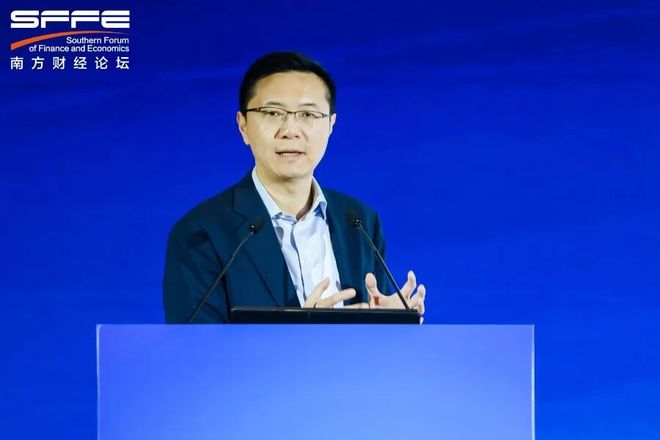
清华田轩:用包容创投、“不太积极”的二级市场激发科技创新
2 1 Shi Ji Jing Ji Bao Dao· 2025-12-07 09:49
Core Viewpoint - The speech by Tian Xuan emphasizes the need for a more inclusive venture capital market and a "not too aggressive" secondary market to support high-level technological self-reliance in China's capital market [1]. Group 1: Front-End Inclusivity - The primary focus of financial support for technological innovation is to create a truly inclusive venture capital market, which is centered around the introduction and expansion of "patient capital" [4]. - Since 1998, the development of China's venture capital industry has been relatively niche, but the concept of "patient capital" has been repeatedly highlighted in several important policy documents, underscoring its role in nurturing new productive forces [4]. - A healthy innovation ecosystem must first embrace "atypical" entrepreneurs who possess unique traits necessary for disruptive innovation, which is characterized by "creating something from nothing" [4]. - Research indicates that venture capital firms that exhibit higher tolerance for entrepreneurial failure foster companies that demonstrate significantly higher innovation quantity and quality upon going public [5]. Group 2: Back-End Safeguarding - As innovative companies transition from startup to growth and public listing, the capital market environment must undergo a critical transformation, advocating for a "not too aggressive" secondary market to effectively encourage long-term, high-quality technological innovation [7]. - Strong anti-hostile takeover provisions, such as dual-class share structures and staggered board arrangements, serve as important "moats" to protect companies from short-term acquisition threats, allowing management to invest in long-term R&D projects [8]. - Maintaining moderate stock liquidity is crucial; excessive liquidity can attract speculative capital that pressures companies to prioritize short-term profits over long-term innovation [8]. - The introduction of genuine long-term institutional investors is essential, as they can identify long-term value and encourage companies to focus on core operations, thereby enhancing the efficiency of innovation resource allocation [8]. Group 3: Systemic Innovation - The integration of an inclusive venture capital market and a safeguarding secondary market forms a cohesive "dual" ecosystem, addressing the survival of innovation from "0 to 1" and the amplification of innovation outcomes from "1 to N" [9]. - The overarching mission of comprehensive reform in China's capital market is not merely to pursue short-term market activity but to establish a financial ecosystem that genuinely understands and supports long-term technological innovation [9].

清华田轩:用包容创投、“不太积极”的二级市场激发科技创新
21世纪经济报道· 2025-12-07 09:41
Core Viewpoint - The article emphasizes the need for a more inclusive venture capital market and a "not overly aggressive" secondary market to support high-level technological self-reliance and innovation in China's capital market [1]. Group 1: Front-End Inclusion - The primary focus of financial support for technological innovation is to create a truly inclusive venture capital market, which is centered around the introduction and expansion of "patient capital" [3]. - The concept of "patient capital" has been repeatedly highlighted in several important policy documents from the central government, underscoring the role of venture capital in nurturing new productive forces [3]. - A healthy innovation ecosystem must first embrace "atypical" entrepreneurs who possess unique traits necessary for disruptive innovation, which requires a long-term capital base to support them [4]. Group 2: Back-End Safeguarding - As innovative companies transition from startup to growth and public listing, a critical shift in the capital market environment is necessary [6]. - A "not overly aggressive" secondary market can effectively motivate listed companies to engage in long-term, high-quality technological innovation, countering the pressure for short-term performance [6]. - Strong anti-takeover provisions, such as dual-class share structures, can protect management from short-term acquisition threats, allowing them to invest in long-term R&D projects [7]. - Maintaining moderate stock liquidity is crucial, as excessive liquidity can attract short-term traders, pressuring companies to prioritize immediate profits over long-term innovation [7]. - The introduction of genuine long-term institutional investors is essential, as they can help companies focus on core operations and enhance the efficiency of innovation resource allocation [8]. Group 3: Systemic Innovation - The integration of an inclusive venture capital market and a supportive secondary market forms a cohesive "dual" ecosystem that addresses both the survival of innovation seeds and the amplification of innovation outcomes [8]. - The ultimate mission of comprehensive reform in China's capital market is not merely to pursue short-term market activity but to establish a financial ecosystem that understands and supports long-term technological innovation [8].

视频 丨 宣泰医药方云:制药行业周期长,需要耐心资本陪伴
Zhong Guo Jing Ying Bao· 2025-12-07 02:49
Group 1 - The founder and director of Xuantai Pharmaceutical, Fang Yun, emphasized that the pharmaceutical industry has a long investment and return cycle, characterizing it as a typical long-cycle industry [2] - Fang Yun expressed a desire to collaborate with patient capital, highlighting that the company's return rate is not low, but the time required for returns is longer, necessitating capital with a long-term vision [2]

双创融合孕育新质 耐心资本深耕未来 2025科创投资大会在安徽合肥举行
Sou Hu Cai Jing· 2025-12-06 15:05
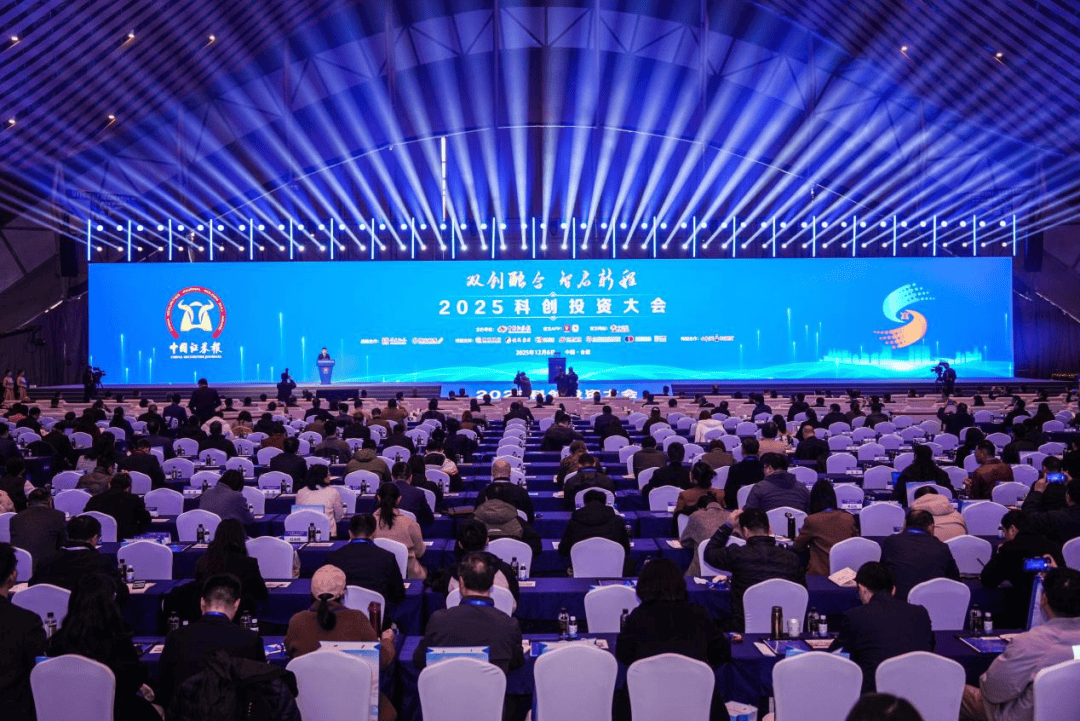
12月6日,由中国证券报主办的"双创融合 智启新程——2025科创投资大会"在安徽合肥举行。时值"十四五"决胜收官与"十五五"谋篇关键节点,近千位来 自政、产、投、研等领域代表齐聚江淮,共同探讨以耐心资本培育未来产业、以科技创新与产业创新深度融合驱动高质量发展的实践路径,为推动"科技 —产业—金融"良性循环凝聚智慧、汇聚合力。 2025科创投资大会在安徽合肥举行 科技创新与产业创新深度融合,呼唤资本更好发挥好纽带作用。新华社副总编辑任卫东致辞表示,私募股权、创投机构要以"科技"为引擎,引导资本投 向"最先一公里";以"金融"为活水,浇灌企业茁壮成长;以"融合"为路径,构建共创共赢的科创生态。新华社将充分发挥旗下中国证券报等媒体的专业优 势,讲好时代故事,做中国科创力量的"记录者"与"展示者",为科创投资、双创融合营造积极的舆论氛围。 战略引领 耐心资本育未来 "十五五"规划建议清晰擘画了未来五年国家现代化建设与产业体系构建的战略蓝图,也为资本市场赋能科技创新、培育新质生产力指明了战略方向。 在主题演讲中,国务院发展研究中心原党组书记马建堂重点解读了"十五五"规划建议的三条主线:坚持高质量发展,为基本实现社会主 ...
清华田轩:用“包容创投”与“不太积极”的二级市场激发科技创新
2 1 Shi Ji Jing Ji Bao Dao· 2025-12-06 13:25
Core Viewpoint - The speech by Tian Xuan emphasizes the need for a more inclusive venture capital market and a "not overly aggressive" secondary market to support high-level technological self-reliance in China's capital market [2][4]. Group 1: Venture Capital Market - The primary focus of financial support for technological innovation is to create a truly inclusive venture capital market, which is essential for nurturing "patient capital" [2][3]. - Since 1998, the venture capital industry in China has developed, and the concept of "patient capital" has been repeatedly highlighted in key policy documents, underscoring its role in cultivating new productive forces [2][3]. - Understanding and accepting the characteristics of entrepreneurs is fundamental to building an inclusive ecosystem, which includes recognizing diverse traits among successful innovators [2][3]. Group 2: Innovation and Market Dynamics - Disruptive innovation requires entrepreneurs to possess unique and unconventional thinking, which is essential for breaking existing frameworks and generating innovative ideas [3]. - A healthy innovation ecosystem must be supported by long-term capital, as evidenced by research showing that venture capital firms with a higher tolerance for failure produce companies with superior innovation outcomes [3][4]. - The transition from startup to growth and public listing necessitates a shift in the capital market environment to support long-term, high-quality technological innovation [4]. Group 3: Secondary Market Mechanisms - A "not overly aggressive" secondary market can effectively encourage listed companies to focus on long-term technological innovation, despite the pressures of short-term performance [4][5]. - Strong anti-takeover provisions, such as dual-class share structures, can protect companies from short-term acquisition threats, allowing management to invest in long-term R&D projects [4][5]. - Maintaining moderate stock liquidity is crucial, as excessive liquidity can attract speculative capital that pressures companies to prioritize short-term profits over long-term innovation [5]. Group 4: Systemic Financial Ecosystem - The integration of an inclusive venture capital market and a supportive secondary market forms a cohesive "dual" ecosystem that addresses both the survival of innovative ideas and the amplification of innovation outcomes [5][6]. - The ultimate mission of comprehensive reform in China's capital market is to create a financial ecosystem that understands and supports long-term technological innovation, fostering great technology companies that can define the future [6].
优化长期股票持仓风险因子要求,引导险资发挥耐心资本优势
Soochow Securities· 2025-12-06 13:09
Investment Rating - The industry investment rating is maintained as "Add" [1] Core Insights - Insurance funds' equity investments have significantly increased by 1.5 trillion yuan in the first three quarters of 2025, reaching a total of 5.59 trillion yuan, which is the highest proportion since 2014 at 15.5% [2] - The long-term outlook suggests that as the proportion of participating insurance and other floating income products increases, the risk appetite and equity allocation of insurance funds will also rise [2] - The valuation of the insurance sector remains low, with expected PEV ratios between 0.60-0.95 and PB ratios between 1.15-2.06 as of December 5, 2025, indicating significant upside potential [2] Summary by Sections Investment Strategy - The report emphasizes the need for insurance companies to enhance their long-term investment management capabilities, as guided by the new regulations from the China Banking and Insurance Regulatory Commission [5] - The new regulations aim to lower risk factors for long-term holdings, encouraging insurance companies to invest more in the stock market and support technology innovation [5][6] Market Conditions - The demand in the market remains strong, with expectations of continued optimization in liability costs due to the transformation of participating insurance products [2] - The ten-year government bond yield has risen to approximately 1.85%, which may alleviate pressure on the investment returns of fixed-income assets for insurance companies [2] Regulatory Changes - The new regulations include a reduction in risk factors for stocks held longer than three years, which is expected to encourage insurance companies to adopt a long-term holding strategy [5][6] - The adjustments in risk factors are designed to stabilize the market and promote the growth of patient capital [5]





《关于调整保险公司相关业务风险因子的通知》点评:股票风险因子差异化下调,推动险资进一步发挥耐心资本优势
EBSCN· 2025-12-06 11:24
2025 年 12 月 6 日 行业研究 股票风险因子差异化下调,推动险资进一步发挥耐心资本优势 ——《关于调整保险公司相关业务风险因子的通知》点评 非银行金融 增持(维持) 作者 分析师:王一峰 执业证书编号:S0930519050002 010-57378038 wangyf@ebscn.com 分析师:黄怡婷 执业证书编号:S0930524070003 010-57378023 huangyiting@ebscn.com 行业与沪深 300 指数对比图 资料来源:Wind 相关研报 长周期考核权重升至 70%,利好险资加大入 市力度——《进一步加强国有商业保险公司 长周期考核的通知》点评(2025-07-12) 保险权益投资空间拓宽,长期资金入市有望 提速——《关于调整保险资金权益类资产监 管比例有关事项的通知》点评(2025-04-09) 进一步明确长周期考核要求,提升中长期资 金入市力度——《关于推动中长期资金入市 工作的实施方案》点评(2025-01-23) 要点 另一方面,政策鼓励下今年以来险资入市力度显著增强,25Q3 末行业(人身险公 司+财产险公司)股票配置比例达 10%,环比+1.2pc ...

培育壮大耐心资本、支持科技创新 金融监管总局调整保险公司相关业务风险因子
Zhong Guo Zheng Quan Bao· 2025-12-06 04:32
Core Viewpoint - The recent adjustments by the Financial Regulatory Administration aim to enhance the long-term investment management capabilities of insurance companies, improve asset-liability matching, and better utilize insurance funds to support the real economy and promote the healthy development of capital markets [1][2]. Summary by Relevant Sections Long-term Investment Management Capability - The risk factor for stocks in the CSI 300 index and the CSI Dividend Low Volatility 100 index, held for over three years, has been reduced from 0.3 to 0.27. This adjustment is based on a weighted average holding period over the past six years [2]. - For ordinary shares listed on the Sci-Tech Innovation Board held for over two years, the risk factor has been lowered from 0.4 to 0.36, based on a four-year weighted average holding period [2]. - The premium risk factor for export credit insurance and overseas investment insurance has been decreased from 0.467 to 0.42, while the reserve risk factor has been reduced from 0.605 to 0.545 [2]. - Insurance companies are encouraged to enhance internal controls and accurately measure investment holding periods to continuously improve long-term investment management capabilities [2]. Reshaping Investment Behavior - The adjustments are designed to support the real economy by fostering patient capital and encouraging investment in technology innovation through differentiated risk factors for specific stock indices [3]. - The changes in risk factors for export credit insurance are intended to increase support for foreign trade enterprises and align with national strategies [3]. - The adjustment of risk factors will improve capital efficiency, allowing insurance companies to occupy less capital for the same investment scale, thereby enhancing solvency ratios and freeing up funds for further investments or other business activities [3][4]. Impact on Investment Strategies - The adjustments are expected to reshape investment behaviors within insurance companies, increasing the cost of short-term trading while rewarding long-term allocation of quality assets [4]. - This shift will encourage a transition from trading-oriented strategies to allocation-focused strategies, emphasizing fundamental research and value investing [4]. - The targeted reduction in risk factors for the Sci-Tech Innovation Board provides institutional incentives for insurance funds to participate in technological innovation [4].
陈文辉:养老金、长期寿险的积累将助力形成壮大耐心资本
Xin Lang Cai Jing· 2025-12-06 03:11
Core Viewpoint - The aging crisis is fundamentally a financial issue that requires significant pension accumulation, which can be achieved through financial tools to promote the development of emerging and pension industries, ultimately creating a sustainable solution to the aging problem [3][6][7]. Group 1: Financial Tools and Investment - Accumulating funds through financial instruments can facilitate the growth of new industries and the pension sector, leading to value preservation and appreciation, which in turn supports the pension system [3][6]. - The accumulation of pensions and long-term life insurance is essential for forming substantial patient capital, which is currently primarily provided by pensions and long-term life insurance [3][6]. Group 2: Industry Development - Addressing the aging issue will stimulate the development of various emerging industries, including the rise of socialized pension industries, the transformation of traditional labor-intensive industries, and the flourishing of health care and wellness sectors [3][6]. - Both the development of new industries and the transformation of traditional industries require long-term capital and diverse financial support, including equity investments, loans, bonds, and insurance, alongside a well-functioning capital market [3][6]. Group 3: Sustainable Solutions - The aging phenomenon is seen as an inevitable historical progression and a sign of social advancement, which, if managed properly through the development of pensions and long-term life insurance, can yield long-term returns and enhance the consumption capacity of the elderly population [4][7]. - A well-structured approach to aging can create a beneficial commercial cycle, making the solution to aging sustainable, with a significant role for pension finance and the broader financial industry [4][7].