
中国速度

Search documents
新华鲜报|“横竖”都是世界第一!贵州花江峡谷大桥正式通车
Xin Hua She· 2025-09-28 05:49
Core Points - The Guizhou Huajiang Grand Canyon Bridge officially opened on September 28, becoming the world's highest bridge at a height of 625 meters above water, surpassing the Beipanjiang First Bridge by nearly 60 meters [1] - The bridge features a main span of 1420 meters, making it the longest span for mountain bridges globally, significantly reducing travel time across the canyon from over two hours to approximately two minutes [1] - Construction of this "super project" took just over three years, showcasing China's rapid infrastructure development capabilities [1] Construction and Engineering Innovations - The bridge's construction faced significant challenges due to complex terrain and extreme weather conditions, including wind speeds reaching typhoon levels [3] - The construction team utilized advanced technologies such as a "smart cableway hoisting system" and a Doppler laser radar wind measurement system to ensure precision and safety during the building process [3] - The project achieved multiple technical breakthroughs in wind resistance design and high-altitude construction, resulting in 21 patented technologies and contributions to national bridge construction standards [3] Significance and Recognition - The completion of the Huajiang Grand Canyon Bridge is seen as a benchmark for China's innovative capabilities in bridge construction, particularly in challenging environments [5] - Guizhou province, known for its mountainous terrain, has constructed over 32,000 bridges, dominating the global rankings for the highest bridges [5] - The province has received the Gustave Lindenthal Medal, often referred to as the Nobel Prize of bridge engineering, four times, highlighting its leadership in the field [5]


百余名德国青年走进郑州:“中国速度”何以收获跨国点赞?
Zhong Guo Xin Wen Wang· 2025-09-26 06:13
Core Insights - The visit of over 100 international students from German universities to the Zhengzhou Airport Economic Comprehensive Experimental Zone highlights the rapid modernization and advanced industrial capabilities of the region, showcasing China's development speed [1][3][6] Group 1: Student Impressions - German students expressed amazement at the rapid urban modernization and the scale of development in Zhengzhou, with one student stating it was hard to believe such progress could be made in a short time [3][5] - The students were particularly impressed by the INNOPORT competition aimed at attracting global talent, with one student expressing a desire to start a business in the area due to the opportunities available [3][6] Group 2: Industrial Insights - The visit included a tour of the BYD factory, where students observed highly automated production lines that produce electric vehicles at a rate of one every 58 seconds, showcasing world-class efficiency and automation [5][6] - The students also experienced a flight training center and the busy operations of the China-Europe Railway Express, gaining a deeper understanding of the breadth and depth of Chinese industries [6] Group 3: Future Collaborations - The Zhengzhou Airport Zone aims to create an international platform for collaboration, as evidenced by the design of the Central Plains International Exhibition Center by German architects, symbolizing ongoing partnerships [6] - The exchange program is seen as a valuable opportunity for both China and Germany to combine strengths in digital applications and high-end manufacturing, potentially leading to future collaborations [6]

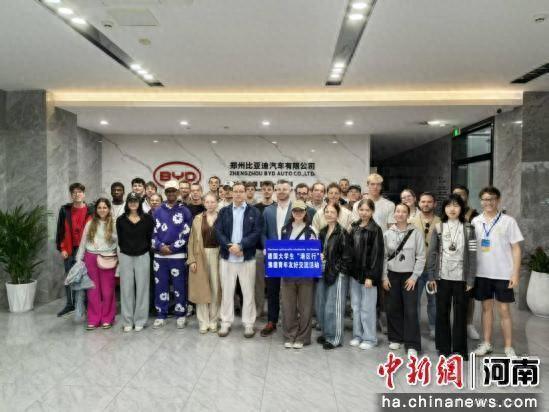
实力圈粉德国青年 郑州航空港收获跨国点赞
Huan Qiu Wang· 2025-09-25 09:02
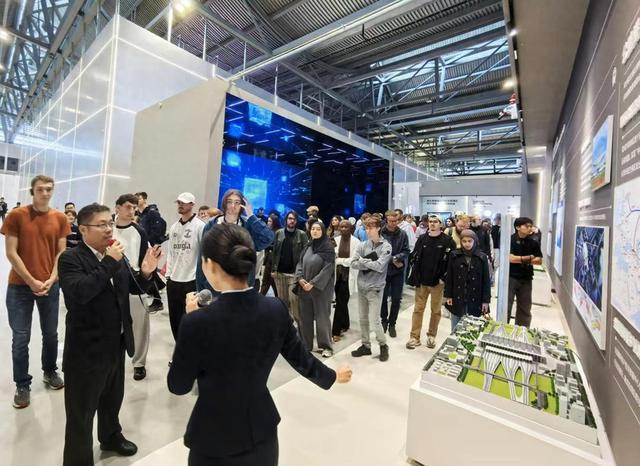
Group 1 - The third National Skills Competition was held in Zhengzhou Aviation Port, attracting over 100 international students from German universities, showcasing their interest in China's development [1][3] - The event featured an interactive experience of a future city, where German students were impressed by the rapid modernization and technological advancements in Zhengzhou Aviation Port [3][5] - The students expressed a strong interest in the INNOPORT competition, indicating aspirations to start their own businesses in China [3][5] Group 2 - The National Achievement Exhibition showcased various advanced technologies, including football robots and industrial robots, which captivated the German students [5][6] - Visits to local companies such as BYD and the Zhengzhou International Land Port highlighted China's advancements in aviation training, new energy vehicle manufacturing, and logistics [5][6] - The Zhengzhou Aviation Port is positioned as a key platform for Sino-German economic cooperation, with facilities designed by German architects symbolizing this partnership [6]
【跨国公司在中国】松下:中国正成为全球创新的“试炼场”
Jing Ji Guan Cha Bao· 2025-09-22 05:16
Core Insights - Panasonic is undergoing a strategic transformation, focusing on innovation and adapting to consumer needs in China, which is seen as a testing ground for global innovation [1][2] - The company plans to streamline its organizational structure, with a new setup expected to launch in April 2026, creating three independent business units [1] - Panasonic's performance in Northeast Asia has shown significant growth, with sales and operating profit both increasing by over 100% year-on-year for the 2024 fiscal year [1] Business Strategy - The home appliance business is being redefined as a profitable segment, with Chinese experiences serving as a foundation for global success [2] - The strategy has shifted from "China for China" to "China for Global," aiming to leverage China's design, manufacturing, and export capabilities [2] - Panasonic aims for a 10% operating profit margin for the home appliance business by the 2027 fiscal year [2] Competitive Differentiation - To succeed in the competitive Chinese home appliance market, Panasonic is focusing on a differentiation strategy that combines Japanese craftsmanship with local market demands [3] - The company is enhancing its product development processes to reduce time-to-market and improve cost efficiency [5] R&D and Innovation - Panasonic has established R&D teams in China to develop products tailored to local consumer needs, achieving significant sales growth in small appliances [4] - The collaboration between Japanese and Chinese teams has led to reduced development cycles and cost savings for new products [5] Supply Chain and Localization - Panasonic is leveraging China's robust supply chain, with 80% of its global suppliers based in China, to enhance its competitive edge [6] - The company is increasing its local supplier base and aims to integrate more Chinese suppliers into its global supply chain [8] Market Position and Future Outlook - Panasonic's business in China has evolved, with home appliances and residential equipment accounting for one-third of its operations, while electronic components and automation continue to grow [9] - The company is committed to increasing its local R&D investment by 20-30% annually to support customized product development [10] - Panasonic views China as a critical market for future growth, particularly in automation and AI technologies [7][11]
“中国设计”,拯救日产
3 6 Ke· 2025-09-19 02:38
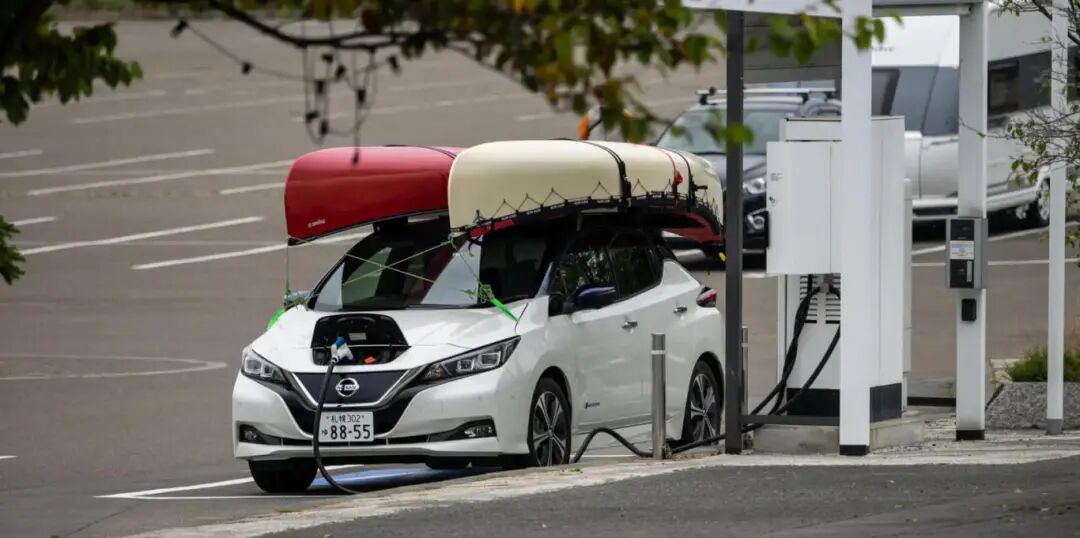
Core Insights - Nissan is facing significant challenges in the automotive market, particularly in the electric vehicle (EV) sector, where it has lost its pioneering position to competitors like Tesla and BYD [1][3] - The company's financial health is precarious, with a projected operational loss of 180 billion yen for the April to September period and over $5 billion in debt maturing next year [1][3] - Nissan's product lineup is aging and slow to innovate, leading to a decline in market competitiveness, with global sales down 8% year-on-year in the first half of 2024 [3][10] Group 1: Financial and Operational Challenges - Nissan announced a restructuring plan in May, which includes cutting 20,000 jobs and closing seven factories to reduce fixed and variable costs by 250 billion yen each [1] - The company is under pressure from high debt levels, with over $5 billion due next year, exacerbating its financial difficulties [1] Group 2: Product Development Issues - The Leaf model, once a flagship, has seen stagnation in technological advancements, using outdated charging standards and battery cooling systems compared to competitors [3][6] - Nissan's fuel vehicle lineup also suffers from outdated platforms, with the Frontier pickup based on a 2004 design, while competitors have updated their models multiple times [3][6] Group 3: Strategic Initiatives for Recovery - Under new CEO Ivan Espinosa, Nissan has initiated a comprehensive self-rescue plan, focusing on shortening product development cycles from 52 months to 37 months for new models [4][6] - The company is restructuring its global design system to concentrate resources and improve efficiency, aiming to reduce design time by 40% and overall development costs by 25% [6][13] Group 4: Market Adaptation and Innovations - Nissan plans to launch a new version of the Sentra sedan in the U.S. in late 2024 and a plug-in hybrid version of the popular Rogue SUV in early 2026 [8] - The company is also innovating its design language, with new models like the Hyper Urban crossover and GT-R Hyper Force concept showcasing a more aggressive design approach [8][10] Group 5: Learning from Competitors - Nissan is looking to emulate the rapid product development seen in the Chinese market, where brands like NIO and Zeekr can develop new models in as little as 24 months [11][13] - The company has begun adopting efficient processes from its Shanghai studio, which has significantly reduced design time compared to other global studios [11][13] Group 6: Recent Performance and Future Outlook - In August, Dongfeng Nissan achieved over 10,000 units in sales and deliveries, indicating a recovery in market acceptance and consumer trust [15] - The new N7 electric sedan, developed under a rapid timeline, exemplifies Nissan's commitment to leveraging Chinese innovation for global product development [15]

FT中文网精选:德国汽车正在模仿“中国速度”
日经中文网· 2025-09-15 02:56
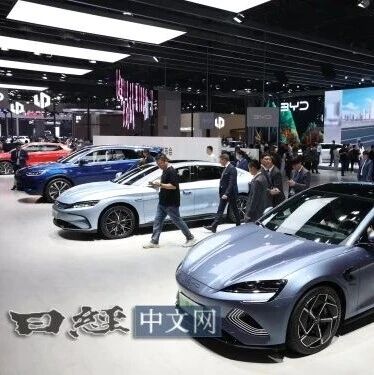
Core Viewpoint - The article discusses the contrasting speeds of infrastructure and automotive development between China and Germany, highlighting the phenomenon of "Chinese speed" in comparison to Germany's slower pace in these sectors [6]. Group 1: Infrastructure Development - In Germany, the development and launch of a new car typically require five to six years, which is significantly slower than the rapid pace observed in China [5]. - German citizens express frustration over the slow progress in infrastructure projects such as bridges, roads, and airports, often comparing it unfavorably to the speed at which similar projects are completed in China [6]. Group 2: Automotive Industry - Chinese automotive brands, such as BYD and Xpeng, are able to develop new products and bring them to market much faster than their German counterparts, raising questions among German automotive executives about the reasons behind this disparity [6]. - Even companies like Xiaomi, which are not traditionally automotive manufacturers, have successfully launched new car models like the YU7 amidst significant challenges, indicating a shift in market dynamics that confounds established German carmakers [6].
记者手记:从一发火箭看航天人的“中国速度”
Xin Hua She· 2025-08-26 08:31
Core Viewpoint - The successful launch of the Long March 8 carrier rocket highlights the rapid advancements and efficiency of China's space industry, showcasing a high-density launch capability in its inaugural year [1][2]. Group 1: Launch Efficiency - The Long March 8 carrier rocket's first flight has initiated a high-density launch schedule, responding to urgent national satellite internet project needs [1]. - The parallel working model adopted for the Long March 8 rockets allows for simultaneous assembly and testing, significantly reducing launch preparation time by approximately one week compared to traditional methods [2][3]. Group 2: Infrastructure Development - The construction of a new vertical testing platform will enable parallel testing of two rockets, increasing the annual launch capacity from 10 to 20 missions, thereby meeting future high-density launch demands [3]. - The new vertical testing platform's construction cycle has been halved compared to the first platform, with completion expected by October, reflecting improved project management and efficiency [5]. Group 3: Operational Strategy - The operational strategy emphasizes thorough pre-launch planning to mitigate potential issues, ensuring that construction activities do not interfere with rocket safety and functionality [4]. - The construction team has implemented measures such as "two-shift" work schedules to enhance construction speed and efficiency, contributing to the overall acceleration of the launch preparation process [5].

新疆喀交会“朋友圈”扩容 “吸睛”海外人士
Zhong Guo Xin Wen Wang· 2025-08-16 14:55
Group 1 - The 15th Xinjiang Kashgar Central Asia South Asia Commodity Fair is showcasing a variety of products, highlighting the appeal of "Made in China" [1][2] - The fair features over 20 types of local agricultural products from Kashgar, including new varieties of fruits, which are now efficiently delivered to Central Asian countries through cold chain logistics [1] - The ongoing construction of the China-Kyrgyzstan-Uzbekistan railway will shorten the railway distance from China to Europe and the Middle East by approximately 900 kilometers, saving 8 to 9 days in transit time [1] Group 2 - The technology exhibition area is attracting significant attention, with demonstrations of humanoid robots and "robot dogs," indicating advancements in high-tech products [2] - The fair has expanded its international presence, with 181 foreign enterprises from 40 countries and regions participating, including dedicated pavilions for Tajikistan, Kazakhstan, Uzbekistan, and India [2] - The evolution of products from low-value to high-tech over the past decade reflects the rapid development of various industries in China, with Chinese companies eager to share their growth experiences [2]
振翅的凤凰——这十年,我们在一起
Xin Hua Wang· 2025-08-12 06:18
Core Insights - The construction of the Daxing International Airport is likened to a "phoenix" rising, symbolizing a significant achievement in engineering and infrastructure development in China [1] - The project involved extensive documentation, capturing over 76,601 images and 25,615 videos over a span of 300 days, highlighting the dedication and effort of nearly 10,000 Chinese workers [1] Group 1 - The construction of Daxing International Airport represents a "national-level" super project, showcasing China's rapid development capabilities [1] - The narrative emphasizes the collective effort and resilience of the workers involved, portraying them as the hidden strength behind the project's success [3] - The documentation serves not only as a record of the construction process but also as a testament to the spirit and determination of the workforce [1][3]
4年投入15.2万亿元,交通投资保障公众便利出行|“十四五”成绩单
Hua Xia Shi Bao· 2025-07-22 09:00
Core Points - The article highlights the significant achievements in China's transportation sector over the past five years, emphasizing the construction of a comprehensive transportation system and the rapid development of infrastructure [2][3] - The "14th Five-Year Plan" has led to substantial investments and improvements in transportation, with a focus on integrating various modes of transport and enhancing efficiency [6][7] Group 1: Infrastructure Development - By the end of 2024, China's railway operating mileage is expected to reach 162,000 kilometers, an increase of approximately 16,000 kilometers since the end of the 13th Five-Year Plan, with high-speed rail accounting for 10,000 kilometers of this increase [1] - The total length of highways will reach 5.49 million kilometers, with an increase of about 290,000 kilometers, including 30,000 kilometers of expressways [1] - The number of port berths for vessels over 10,000 tons has increased to 2,971, with an addition of 379 berths [1] Group 2: Investment and Economic Impact - Transportation fixed asset investment during the first four years of the "14th Five-Year Plan" reached 15.2 trillion yuan, a year-on-year increase of 23.3% [1] - Logistics costs for the entire society are expected to save over 400 billion yuan in 2024, with transportation costs reduced by approximately 280 billion yuan [1] Group 3: Technological Advancements - The CR450 high-speed train has been introduced, capable of operating at speeds of 400 kilometers per hour, with a maximum experimental speed exceeding 450 kilometers per hour [5] - The CR450BF train features improved safety, energy efficiency, and comfort, with a 24% reduction in energy consumption compared to previous models [5] Group 4: International Cooperation - China is actively promoting international transportation connectivity, having signed over 270 bilateral and multilateral cooperation agreements covering various transport sectors [8] - The China-Europe Railway Express has reached 229 cities in Europe and over 100 cities in Asia, enhancing global trade and connectivity [8]