
二代接班

Search documents
市值大跌200多亿,珀莱雅赴港上市谋突围
Xin Lang Cai Jing· 2025-11-03 02:05
Core Insights - The core viewpoint of the articles highlights the challenges faced by Proya, a leading domestic beauty brand, as it experiences a significant decline in revenue and profit, coinciding with its application for a Hong Kong IPO [1][2]. Financial Performance - In Q3 2025, Proya reported a revenue of 1.736 billion yuan, a year-on-year decrease of 11.63%, and a net profit of 227 million yuan, down 23.64%, marking the largest quarterly decline in recent years [1]. - The company's revenue growth trajectory reversed significantly starting in 2025, with Q1 and Q2 showing single-digit growth rates, the lowest in five years [11]. - The main brand, Proya, which accounts for 74.27% of total revenue, saw its revenue slightly decline by 0.08% to 3.979 billion yuan in the first half of 2025, marking its first negative growth in five years [12]. Marketing and Sales Strategy - Proya's high marketing expenses are a key factor affecting its profitability, with sales expenses reaching 3.525 billion yuan in the first three quarters of 2025, resulting in a sales expense ratio of 49.66% [14]. - The company heavily relies on online channels for sales, but the diminishing internet traffic dividends and increasing competition have led to rising customer acquisition and sales costs [14]. - Proya's marketing strategy has focused on rapid brand recognition through celebrity endorsements and extensive advertising, often at the expense of long-term product development [6][14]. Industry Context - The decline in Proya's performance reflects broader challenges in the domestic beauty industry, including increased costs due to changes in internet platform rules and intensified competition from international brands [15]. - The shift from a "traffic-driven" model to a "product-driven" approach is a critical challenge not only for Proya but for the entire domestic beauty sector [15].

10亿级美妆企业换帅后暴跌
Xin Lang Cai Jing· 2025-10-31 12:48
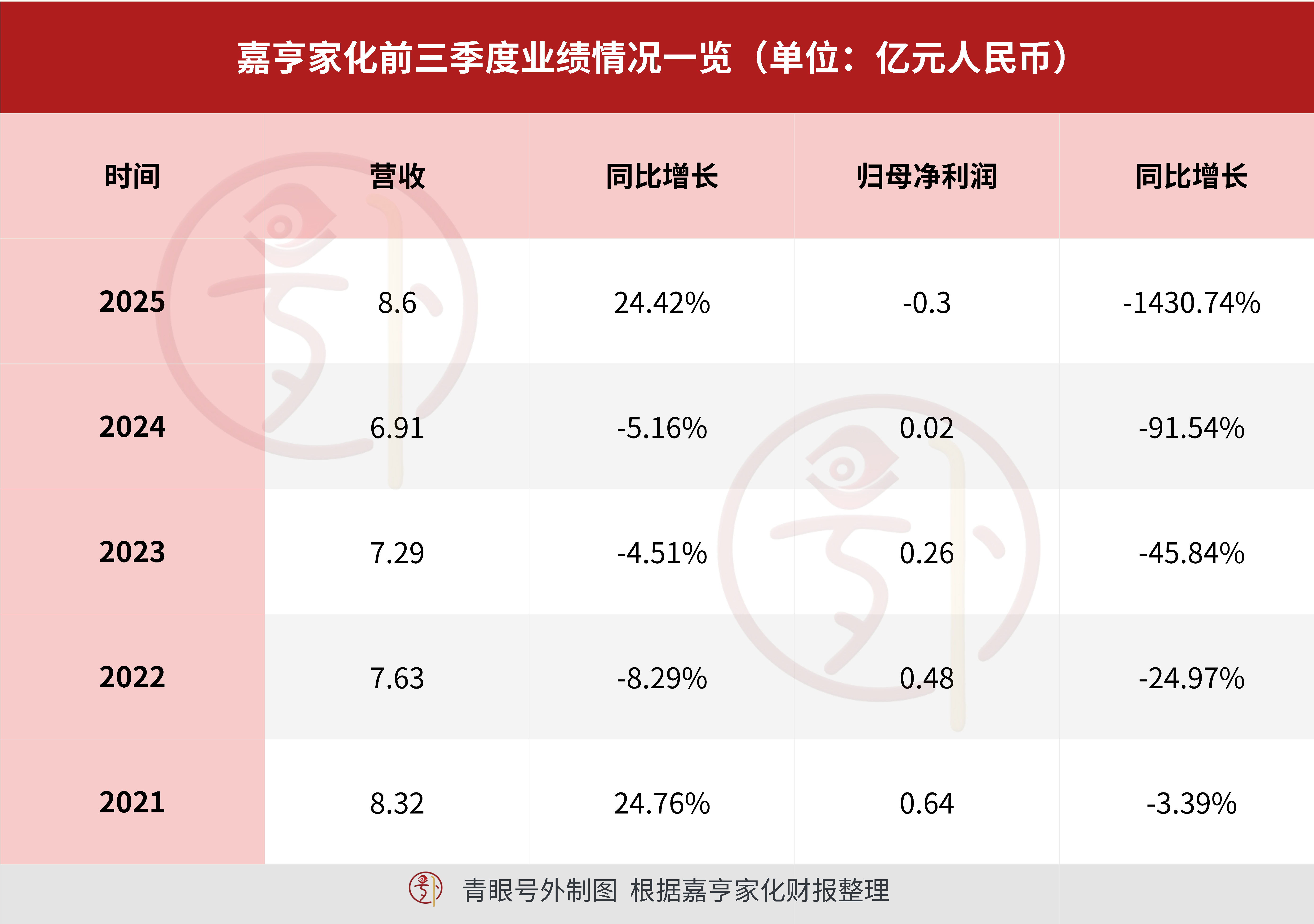
Core Viewpoint - Jiaheng Jiahua's Q3 2025 financial report shows a significant revenue increase but a substantial net profit loss, indicating challenges in profitability despite higher sales [1][4]. Financial Performance - For the first three quarters of 2025, Jiaheng Jiahua reported revenue of 860 million yuan, a year-on-year increase of 24.42%, but a net profit loss of 29.5 million yuan, a decline of 1430.74% [1][4]. - In Q3 2025, the company achieved revenue of 346 million yuan, up 28.66% year-on-year, but net profit was only 2.63 million yuan, down 65.6% [4]. - The non-recurring net profit also worsened, from a loss of 0.92 million yuan in the same period last year to a loss of 30.68 million yuan this year [4]. Leadership Transition - The Q3 report is the first since the leadership transition to the second generation, with the founder's son, Zeng Huanbin, taking over key positions [2][3]. Historical Context - This year marks the highest revenue for Jiaheng Jiahua in the past five years, yet it is also the first year to report a net profit loss in the same period [10]. - The company has experienced a consistent decline in net profit over the years, with the current year's drop being the most severe [10]. Operational Challenges - The decline in net profit is attributed to changes in product sales structure, increased fixed costs, and rising management expenses due to business expansion efforts [10][11]. - The subsidiary, Huzhou Jiaheng, has been a recurring factor in the company's financial struggles, with cumulative losses reaching 139 million yuan since its inception [11][19]. Industry Comparison - The broader beauty OEM industry is facing challenges, with several companies reporting revenue declines and profit losses, indicating increased competition and cost pressures [20][25]. - Despite the difficulties, some leading companies like Qingsong Co. have managed to achieve revenue and profit growth through focused strategies [26][27].


300万创一代集体老去,企二代能否顶上?
3 6 Ke· 2025-10-29 12:10
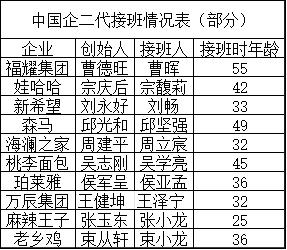
Core Viewpoint - The recent announcement of the succession at Fuyao Glass, with 55-year-old Cao Hui taking over as chairman from his father, Cao Dewang, highlights the ongoing generational transition in Chinese family businesses, raising questions about the ability of the second generation to lead effectively [1][2]. Group 1: Succession Trends in Chinese Family Businesses - A significant wave of succession is occurring in Chinese family businesses, with over 80% of private enterprises being family-owned and many reaching critical transition points [2][4]. - The All-China Federation of Industry and Commerce predicts that over 3 million private enterprises will face succession challenges in the coming years, with the rise of the 90s generation as successors [2][4]. - The average founding generation of China's top 100 family businesses was born between 1950 and 1960, indicating a pressing need for succession planning [2][4]. Group 2: Challenges and Strategies in Succession - Founders often prefer to pass control to their children due to deep-rooted cultural values and a desire to maintain family legacy, as well as concerns about external management [4][5]. - The lack of a well-established pool of professional managers in China leads to a preference for family members, as founders worry about the potential risks of hiring external managers [4][5]. - Many family businesses operate under a "personal rule" rather than a structured governance model, complicating the transition to professional management [5]. Group 3: Case Studies of Successful Succession - Cao Hui's journey within Fuyao Glass involved extensive hands-on experience, including six years in the workshop and six years in sales, before becoming the general manager in 2006 [9][10]. - Liu Yonghao's daughter, Liu Chang, and Zong Qinghou's daughter, Zong Fuli, also underwent rigorous training outside their family businesses before taking on leadership roles, demonstrating a trend of preparing successors through real-world experience [10][12]. - The success rate of family businesses transitioning to the second generation is only about 30%, highlighting the challenges faced by successors in maintaining competitiveness and managing internal dynamics [12][13]. Group 4: Importance of Early Planning and Trust - Only about 16% of family businesses have a clear succession plan, with less than 3% implementing it effectively, indicating a significant gap in preparedness [14]. - Founders are often reluctant to relinquish control, leading to rushed transitions that can pose risks to the business [14]. - Establishing clear ownership structures and governance frameworks is crucial to prevent disputes and ensure smooth transitions [16][17].

二代接班,宗馥莉错失的“时间窗口”
3 6 Ke· 2025-10-27 12:08
Core Viewpoint - The transition of leadership in Chinese family-owned businesses, exemplified by Fuyao Glass's new chairman, reflects broader challenges in succession planning and the need for modernization in the face of evolving market conditions [1][2]. Group 1: Leadership Transition - Fuyao Glass announced the succession of 55-year-old Cao Hui as the new chairman, taking over from his father, Cao Dewang, after 36 years in the company [1]. - The transition is seen as a response to the challenges faced by many family-owned businesses in China, particularly as founders age and the market becomes more competitive [1][2]. - The phenomenon of succession is common among the approximately 3 million family-controlled small and medium-sized enterprises in China, many of which were established in the 1990s and are now facing leadership transitions [1]. Group 2: Challenges of Succession - The difficulties in succession are not merely financial but involve complex social relationships that blend tradition, legal authority, performance, and personal charisma [2]. - The concept of "power dynamics" in succession is critical, as successors must navigate existing power structures and establish their authority [5][12]. - Many second-generation leaders face the challenge of overcoming the "cognitive barriers" established by their predecessors, which can hinder their ability to implement change [5][12]. Group 3: Market Evolution and Business Model Transformation - The shift towards digitalization and new business models is essential for the survival of traditional manufacturing firms, which must adapt to online channels and smart manufacturing technologies [1][6]. - Successful transitions often involve a symbolic "patricide," where successors must challenge and redefine the legacy of their predecessors to establish their own leadership [6][11]. - The emergence of new business areas, particularly in e-commerce and digital marketing, provides opportunities for second-generation leaders to innovate without the constraints of traditional practices [9][10]. Group 4: Case Studies and Examples - The case of Wang Xiaolong taking over at Laoxiangji illustrates a successful transition where the new leader implemented digital management strategies and sought inspiration from international practices [8]. - The experience of companies like Wahaha highlights the difficulties faced by successors in navigating entrenched power structures and the need for a clear vision to drive transformation [5][6]. - The rise of brands like Yuanqi Forest demonstrates the potential for innovation in traditional sectors, emphasizing the importance of adapting to market trends while maintaining operational efficiency [10].
惊天反转:辞职41天,宗馥莉重新启用“娃哈哈” |深氪
36氪未来消费· 2025-10-23 14:12
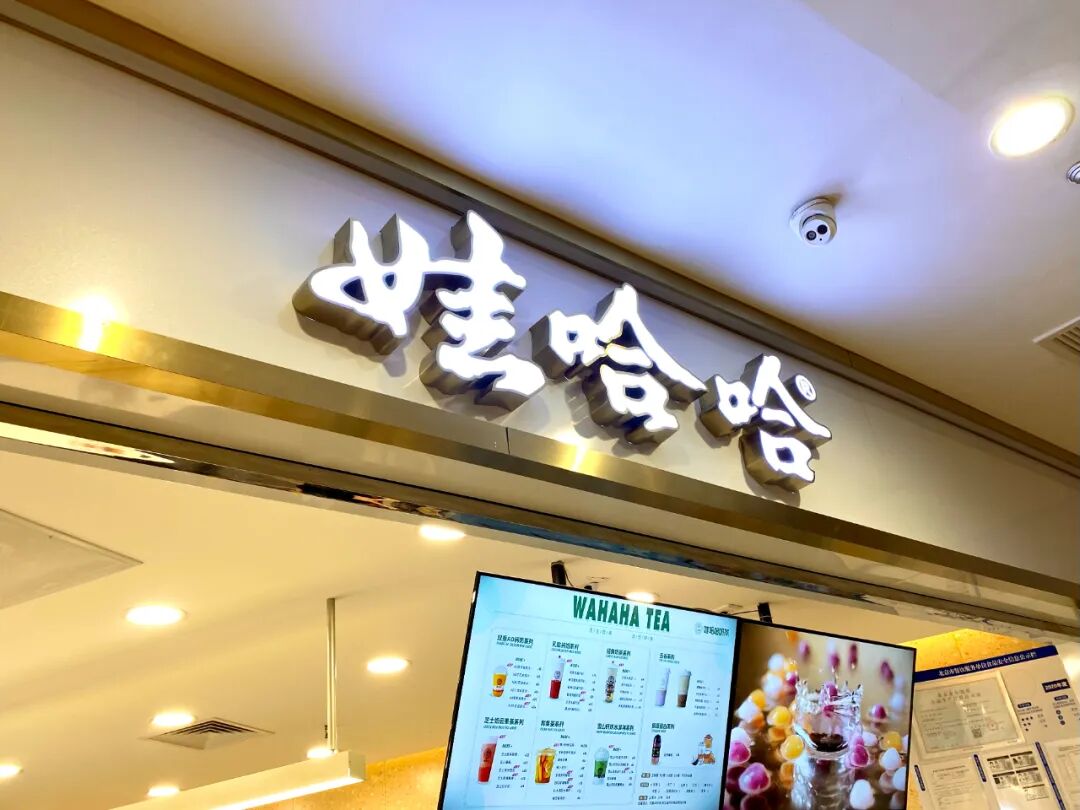
Core Viewpoint - The internal power struggle within Wahaha has taken a significant turn, with the announcement that the company will continue to use the "Wahaha" brand until 2026, despite previous plans to transition to a new brand "Wah Xiaozong" [3][4][26]. Group 1: Internal Dynamics and Leadership Changes - The internal conflict following the resignation of Zong Fuli has led to a major restructuring within Wahaha and its affiliated Hongsheng Group, with significant changes in management and operational strategies [8][10]. - Zong Fuli's leadership has been marked by attempts to clarify ownership and control issues, particularly in the context of the company's historical ties to state ownership and the complexities of transitioning power from her father, Zong Qinghou [10][11][22]. - The company has faced challenges in maintaining its market position, with stagnant revenues around 50 billion since 2014, while competitors like Nongfu Spring have seen significant growth [9][10]. Group 2: Brand and Market Strategy - Zong Fuli's strategy includes a comprehensive overhaul of the company's management structure and distribution channels, aiming to rejuvenate a brand that has struggled to innovate and adapt to market changes [8][39]. - The shift from a traditional distribution model to a more controlled channel strategy is evident, as Zong Fuli seeks to enhance the company's ability to launch new products and respond to market demands [41][45]. - The recent decline in sales of key products, such as AD Calcium Milk, indicates the challenges faced in executing this new strategy, with significant drops in market share reported [56][57]. Group 3: Legal and Ownership Issues - The ongoing disputes over the use of the "Wahaha" trademark highlight the complexities of ownership and control within the company, particularly as Zong Fuli attempts to assert her authority amid resistance from state stakeholders [25][30]. - The legal battles surrounding employee stock ownership and the implications of contract changes have led to unrest among former employees, complicating the transition of power and control within the company [23][54]. - The potential for a split between Wahaha and Hongsheng Group raises questions about the future of the brand and its market presence, as both sides navigate the legal and operational challenges ahead [30][62].

79岁的“玻璃大王”曹德旺正式交棒 千亿福耀正式开启“曹晖时代”
Sou Hu Cai Jing· 2025-10-20 02:30
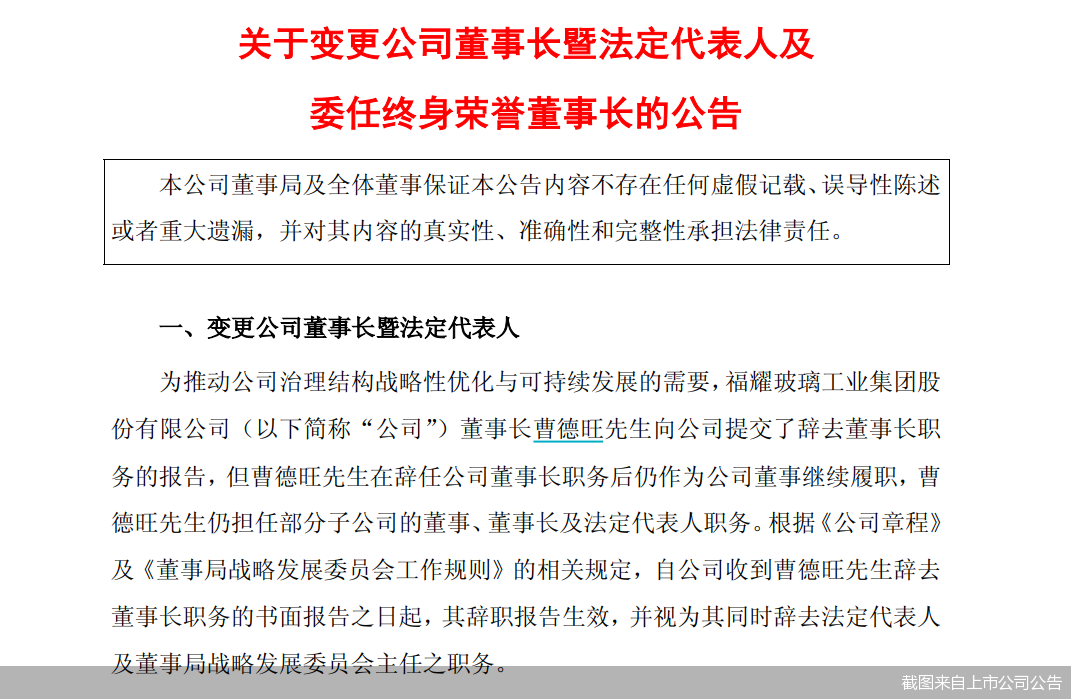
Core Viewpoint - Fuyao Glass has announced a leadership transition as founder Cao Dewang steps down as chairman, passing the baton to his son Cao Hui, marking a significant moment for the company valued at 174.5 billion yuan [1][3]. Group 1: Company Overview - Fuyao Glass is one of the earliest Chinese manufacturing enterprises capable of competing globally, established in 1987 in Fujian, and has become a leader in the automotive glass sector [7]. - The company has a complete production chain, producing everything from raw materials to finished glass products, and serves prestigious clients like Mercedes-Benz, BMW, and Tesla, with annual sales exceeding 60 billion yuan and a market share of 34% [7]. - Fuyao employs over 37,000 people globally and is recognized as a "hidden champion" in the industry [7]. Group 2: Leadership Transition - The timing of the leadership transition coincides with Fuyao's impressive performance, reporting a net profit of 7.06 billion yuan for the first three quarters of the year, a year-on-year increase of 28.9% [3][8]. - Cao Dewang, at 79 years old, has chosen to step down while remaining as a board member and honorary chairman, ensuring a smooth transition [3][8]. - The transition is viewed as a well-prepared and stable handover, contrasting with the turmoil often seen in family business successions in China [6][10]. Group 3: Successor Profile - Cao Hui, the new chairman, has over 20 years of experience within Fuyao, having worked his way up from the production line to the vice chairman position [9]. - He has played a crucial role in expanding the company's overseas operations, with revenue from international markets reaching 17.56 billion yuan in 2024, accounting for nearly half of the group's total revenue [9]. - The market's positive reaction to the leadership change indicates confidence in Cao Hui's ability to lead the company forward [9]. Group 4: Implications for Family Businesses - The transition from founder-driven to system-driven management is a significant shift, showcasing a successful model for family business succession in China [10]. - The case of Fuyao Glass illustrates that with adequate preparation, second-generation leaders can effectively take over and maintain company stability [10].

曹德旺也交班了,曹晖能打破民企二代魔咒?
Sou Hu Cai Jing· 2025-10-17 03:25
Core Viewpoint - The transition of leadership at Fuyao Glass marks the beginning of a new era under the management of Cao Hui, the son of the founder, Cao Dewang, who has officially resigned as chairman after a decade-long succession plan [2][5]. Group 1: Leadership Transition - Cao Dewang, aged 79, has submitted his resignation as chairman of Fuyao Glass, transitioning the company into the "Cao Hui Era" [2]. - Despite stepping down, Cao Dewang will remain involved as a director and honorary chairman, providing strategic guidance [2]. - Cao Hui, aged 55, has been with Fuyao since 1989, starting from the grassroots level and accumulating extensive experience within the company [5]. Group 2: Cao Hui's Experience and Role - Cao Hui has held various key positions, including general manager of Fuyao North America, where he successfully led a lawsuit against anti-dumping measures, increasing local sales by 30% [5][7]. - After a brief departure to establish his own company, he returned to Fuyao, eventually becoming vice chairman and now chairman of the board [7]. - His diverse roles in society, including being a member of the National Committee of the Chinese People's Political Consultative Conference, reflect his growing influence [7]. Group 3: Company Performance - Fuyao Glass has seen significant growth, with revenue increasing from 23.6 billion to 39.25 billion yuan from 2021 to 2024, a rise of 66.3% [8]. - Net profit after tax surged from 3.15 billion to 9.595 billion yuan during the same period, nearly tripling [8]. - The company's high-end glass products, particularly in the electric vehicle sector, now account for over 30% of revenue, with a gross margin 10-15 percentage points higher than standard products [8][10]. Group 4: Global Expansion and Future Challenges - Fuyao's international revenue share has grown from 20% in 2016 to over 35% in 2024, with high capacity utilization in U.S. factories [10]. - The company faces the challenge of maintaining its growth trajectory under new leadership, amidst a trend of second-generation successors struggling to uphold their family businesses [10].

曹德旺之子接棒董事长 福耀玻璃迈向曹晖时代
Bei Jing Shang Bao· 2025-10-16 13:46
Core Viewpoint - The resignation of Cao Dewang as chairman of Fuyao Glass marks a significant transition in leadership, with his son, Cao Hui, taking over the role, raising questions about the company's future direction and performance under new leadership [2][5][11]. Group 1: Leadership Transition - Cao Dewang, known as the "Glass King," has stepped down from his position as chairman of Fuyao Glass, with his son, Cao Hui, elected as the new chairman [2][5]. - Cao Dewang's resignation was anticipated, as he had originally planned to serve until January 2027, but chose to retire early at the age of 79 [5][11]. - Cao Hui, aged 55, has been involved in the company for decades, serving as vice chairman since 2015, indicating a planned succession [10][11]. Group 2: Company Performance - Fuyao Glass has experienced rapid growth under Cao Dewang's leadership, with revenue increasing from 0 to approximately 40 billion yuan [2][11]. - The company reported a revenue of about 333.02 billion yuan for the third quarter of 2025, reflecting a year-on-year growth of 17.62%, and a net profit of approximately 70.64 billion yuan, up 28.93% [11]. - Historical financial performance shows consistent growth, with revenues of approximately 281 billion yuan, 331.6 billion yuan, and 392.5 billion yuan from 2022 to 2024, alongside corresponding net profits [11]. Group 3: Market Position - Fuyao Glass is the largest automotive glass supplier globally, holding nearly 34% of the market share, with products used by renowned automotive brands [7][11]. - The company operates 61 subsidiaries and employs around 37,000 people, showcasing its extensive operational scale [7][11]. - Fuyao Glass has established production bases in 12 countries, including the U.S., Russia, and Germany, highlighting its international presence [7][11].
曹德旺之子接棒董事长,福耀玻璃迈向曹晖时代
Bei Jing Shang Bao· 2025-10-16 13:34
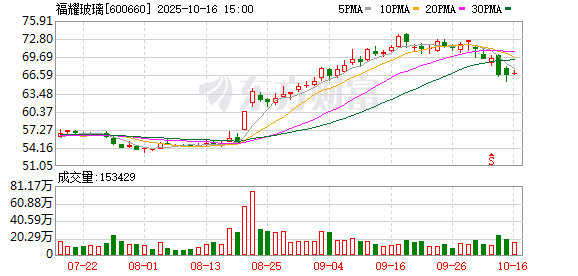
Core Points - The resignation of Cao Dewang as chairman of Fuyao Glass and the succession by his son, Cao Hui, marks a significant transition for the company, which is the largest automotive glass supplier globally, with one-third of the market share [1][4][10] - The company has experienced rapid growth under Cao Dewang's leadership, increasing its revenue from zero to 40 billion yuan, and investors are keen to see if Cao Hui can continue this upward trajectory [2][10] Group 1: Leadership Transition - Cao Dewang submitted his resignation ahead of the originally scheduled term, which was set to end in January 2027, citing his age and the readiness of his son to take over [4][10] - Cao Hui, aged 55, has been involved in the company for decades, serving as vice chairman since 2015, indicating a planned succession [1][9] - The market reaction to Cao Dewang's resignation was largely unsurprised, as the transition had been anticipated due to his advancing age [4][10] Group 2: Company Performance - Fuyao Glass reported a revenue of approximately 333.02 billion yuan for the third quarter of 2025, reflecting a year-on-year growth of 17.62%, with a net profit of about 70.64 billion yuan, up 28.93% [10] - The company has shown consistent financial growth, with revenues increasing from approximately 281 billion yuan in 2022 to 392.5 billion yuan in 2024 [10] - Fuyao Glass has a balanced revenue stream, with about half coming from domestic operations and the other half from international markets [11] Group 3: Market Position - Fuyao Glass is recognized as the largest automotive glass supplier globally, with a market share of nearly 34%, and has established production bases in multiple countries [6][10] - The company serves a wide range of prestigious automotive brands, including Bentley, Rolls-Royce, and BMW, highlighting its strong market presence [6][10] - The stock price of Fuyao Glass has been on the rise, closing at 66.88 yuan per share with a total market capitalization of 174.5 billion yuan as of October 16 [12]
二代接班没有“大女主”
Bei Jing Shang Bao· 2025-10-12 15:13
Core Viewpoint - The resignation of Zong Fuli marks a significant turning point in her relationship with Wahaha, indicating a deeper rift rather than a temporary setback [1][2]. Group 1: Company Dynamics - Zong Fuli's resignation appears to be a well-considered decision rather than a spontaneous act, influenced by ongoing power struggles and disputes over company control and personal wealth [2][3]. - The ongoing conflicts surrounding Wahaha's control have highlighted the challenges faced by second-generation successors in family businesses, particularly in the context of corporate governance and succession planning [2][3]. - The narrative of Zong Fuli's leadership transition has evolved dramatically over the past 500 days, revealing the complexities and challenges of inheriting a family business [2][3]. Group 2: Industry Context - The transition of leadership in family-owned enterprises like Wahaha reflects broader trends in China's economic landscape, where traditional manufacturing is undergoing significant transformation [3][4]. - The shift from a focus on growth and scale to efficiency and refined operations presents new challenges for second-generation leaders, who must navigate both internal and external pressures [3][4]. - The experience of Wahaha serves as a cautionary tale for other entrepreneurs facing generational transitions, emphasizing the importance of clear governance structures and succession planning to avoid potential pitfalls [4][5].