
云原生

Search documents
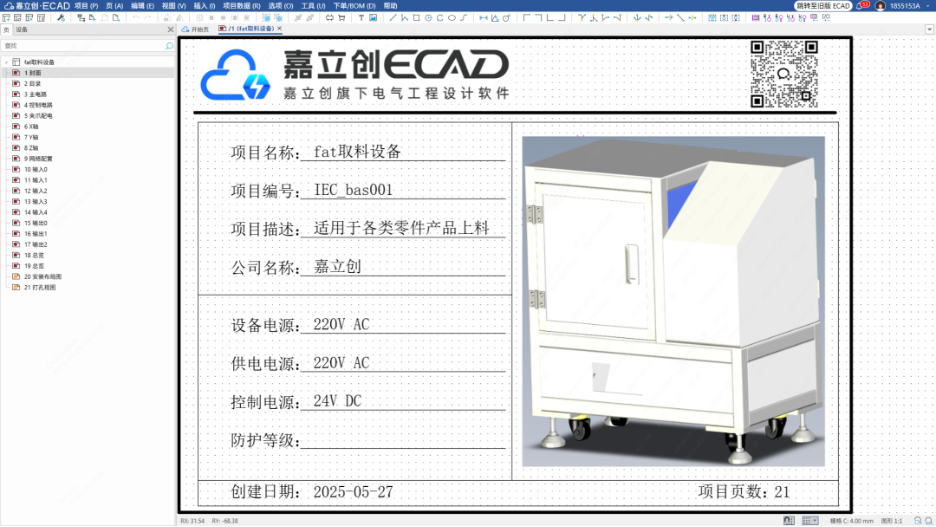
深水区的工业软件突围:嘉立创ECAD与硬件创新的“去门槛化”
Jin Rong Jie Zi Xun· 2025-12-31 03:45
Core Insights - The launch of 嘉立创's ECAD electrical design software marks a significant shift in the industrial software landscape, transitioning from expensive "production materials" to accessible "infrastructure" [1][13] - 嘉立创's strategy integrates software, hardware, and marketplace, allowing for a seamless design-to-manufacturing process, which enhances efficiency and reduces costs for engineers [9][10] Group 1: Industry Transformation - The industrial software sector, particularly in electrical design, has been hindered by high licensing fees and fragmented collaboration methods, making it difficult for small and medium enterprises to digitize [2][5] - 嘉立创's ECAD introduces a "cloud-native" approach that redefines the electrical design paradigm, enhancing efficiency through features like automatic wiring and intelligent placement, allowing engineers to focus on logical design rather than manual tasks [3][5] Group 2: Collaborative Revolution - The cloud-based architecture of ECAD facilitates real-time collaboration among engineers, eliminating common issues like version conflicts and data loss, and establishing a unified data foundation [5][10] - The integration of a standardized symbol and component library, which currently includes 280,000 items, creates a strong network effect, enhancing the overall design process [5][7] Group 3: Standardization and Global Competitiveness - ECAD's built-in compliance with IEC international electrical standards enhances the competitiveness of Chinese manufacturing in global markets, serving as a foundational tool for industry collaboration [7][10] Group 4: Business Model Innovation - 嘉立创's business model contrasts with traditional software companies that rely on licensing fees; instead, it positions software as an entry point to a comprehensive manufacturing and supply chain ecosystem [9][10] - This model not only reduces software costs for enterprises but also minimizes the complexities associated with BOM matching and procurement, creating a robust ecological moat [10][12] Group 5: Ecosystem Development - The launch of ECAD signifies 嘉立创's evolution from an electronic-level to an electrical-level software ecosystem, covering the entire lifecycle of hardware innovation [11][12] - The ecosystem's value is reflected in data security, a thriving open-source hardware community, and talent cultivation through partnerships with over 400 universities, establishing a strong foundation for future hardware innovation [12]

研判2025!中国负载均衡器行业分类、产业链及市场规模分析:凭借软件定义与云原生架构创新突破,推动国产化替代进入规模化应用与份额提升新阶段[图]
Chan Ye Xin Xi Wang· 2025-12-17 01:41
Core Insights - The Chinese load balancer industry is undergoing rapid technological iteration and accelerated domestic substitution, driven by digital transformation, cloud computing becoming mainstream, and the surge in demand for 5G and edge computing scenarios. The market size is expected to reach approximately 18.65 billion yuan in 2024, reflecting a year-on-year growth of 6.88% [1][6]. Industry Overview - Load balancers are network devices, software, or services that intelligently distribute network or application traffic across multiple servers. They ensure balanced server load distribution and enhance system performance, availability, and fault tolerance [2][3]. Industry Development History - The development of the Chinese load balancer industry has evolved through four key stages, closely aligned with the rise of the internet, cloud computing, and digital transformation [3]. Industry Supply Chain - The upstream of the load balancer industry includes processors, chips, network interface modules, and various software and system components. The midstream involves the manufacturing of load balancers, while the downstream applications span finance, IT, telecommunications, government, public services, IoT, edge computing, and healthcare [4][5]. Market Size - The load balancer market in China is expanding, with a projected market size of approximately 18.65 billion yuan in 2024, marking a 6.88% increase year-on-year. This growth indicates a strong demand for traffic scheduling and high availability solutions, as domestic manufacturers advance in software-defined and cloud-native architectures [6][7]. Key Companies' Performance - The market is characterized by a dual oligopoly in hardware led by Deepin Technology and Sangfor Technologies, with cloud services dominated by Alibaba Cloud, Tencent Cloud, and Huawei Cloud. Sangfor has penetrated government and financial sectors, while Deepin excels in customized services for telecom operators and large enterprises [7][8]. Industry Development Trends 1. **Integration of Cloud Native and AI Technologies**: Load balancers are transitioning from traditional hardware to intelligent cloud-native solutions, utilizing AI-driven algorithms for dynamic resource allocation [10]. 2. **Accelerated Domestic Substitution**: Domestic manufacturers like Sangfor and Huawei are gaining market share through the use of domestic chips and operating systems, supported by policy and market demand [11]. 3. **Diversified Market Demand**: Emerging technologies such as 5G, IoT, and AI are driving the growth of load balancer demand across various sectors, including finance, healthcare, and education [12].



山东中创软件商用中间件股份有限公司关于变更募集资金投资项目的公告
Shang Hai Zheng Quan Bao· 2025-12-15 19:17
Core Viewpoint - Shandong Zhongchuang Software Commercial Middleware Co., Ltd. (hereinafter referred to as "Zhongchuang") has announced changes to its fundraising investment projects, including adjustments to total investment scale, implementation methods, locations, investment structures, and construction periods, which require shareholder approval [2][32]. Group 1: Fundraising Basic Information - Zhongchuang was approved to publicly issue 21,262,845 shares at a price of RMB 22.43 per share, raising a total of RMB 476.93 million, with a net amount of RMB 399.36 million after deducting issuance costs [3]. - The funds were deposited into a special account for fundraising management, and a tripartite supervision agreement was signed with the sponsoring institution and the commercial bank [3]. Group 2: Fundraising Investment Project Overview - The company adjusted the investment amounts for its fundraising projects based on the actual net amount raised and the status of each project, with a total of RMB 16.73 million invested by June 30, 2025, leaving RMB 23.59 million unspent [4]. Group 3: Specific Changes and Reasons for Fundraising Investment Projects - The company plans to adjust the total investment and funding allocation for the "Application Infrastructure and Middleware R&D Project" due to market demand changes and technological advancements [6]. - The implementation method and location for the project have changed from purchasing property to expanding leased space to expedite project progress [6][7]. - The internal investment structure will be adjusted to focus more on new product R&D and technology development, reducing hardware and personnel investments due to the increasing application of AI in software development [8][9]. Group 4: R&D Technology Center Upgrade Project - The investment total for the "R&D Technology Center Upgrade Project" has been adjusted from RMB 130 million to RMB 83 million, with changes in investment structure and implementation period [16]. - The project aims to enhance middleware capabilities to meet the demands of new hardware and improve performance optimization [26]. Group 5: Marketing Network and Service System Construction Project - The investment total for the "Marketing Network and Service System Construction Project" has been adjusted from RMB 60 million to RMB 48 million, with changes in internal investment structure and implementation period [20]. - The project aims to enhance service response speed and market coverage by establishing service centers in new regions [19][30]. Group 6: Necessity and Feasibility of Changes - The changes are necessary to align with national strategies for digital infrastructure security and to enhance the company's competitive edge in the middleware market [21][25]. - The company has a strong technical foundation and a stable customer base, ensuring the feasibility of the adjusted projects [24][31].
基于 SGlang RBG + Mooncake 打造生产级云原生大模型推理平台
AI前线· 2025-12-12 00:40
Core Insights - The article emphasizes the rapid evolution of large language model (LLM) inference services into core enterprise infrastructure, focusing on the balance of performance, stability, and cost in building high-performance inference systems [2] - It discusses the transition from monolithic to distributed architectures in LLM inference, highlighting the need for external KVCache to alleviate memory pressure and enhance performance in high-demand scenarios [2][4] Distributed KVCache and Mooncake - Mooncake is introduced as a leading distributed KVCache storage engine designed to provide high throughput and low latency for inference frameworks like SGLang [3] - The article outlines the challenges in managing distributed KVCache systems in production environments, which necessitate the development of RoleBasedGroup (RBG) for unified management of caching and inference nodes [4] RoleBasedGroup (RBG) Design and Challenges - RBG is presented as a Kubernetes-native API aimed at AI inference, facilitating multi-role orchestration to ensure stable and high-performance operations [4][12] - The article identifies five fundamental challenges in deploying large model inference services, including the need for strong state management and performance optimization [12][15] SCOPE Framework - The SCOPE framework is introduced, focusing on five core capabilities: Stability, Coordination, Orchestration, Performance, and Extensibility, which are essential for managing LLM inference services [16][18] - RBG's design allows for rapid architecture iteration and performance-sensitive operations, addressing the complexities of multi-role dependencies and operational efficiency [15][24] Benchmark Testing and Performance Metrics - Benchmark tests demonstrate significant improvements in KVCache hit rates and inference performance, with L3 Mooncake cache achieving a 64.67% hit rate and reducing average TTFT to 2.58 seconds [32][48] - The article highlights the importance of a multi-tier caching architecture in enhancing performance for applications like multi-turn dialogue and AI agents [44] Conclusion and Future Outlook - The integration of RBG and Mooncake is positioned as a transformative approach to building production-grade LLM inference services, emphasizing the need for deep integration of high-performance design with cloud-native operational capabilities [43][44] - The article concludes with a call for community collaboration to advance this paradigm and lay the foundation for the next generation of AI infrastructure [43]

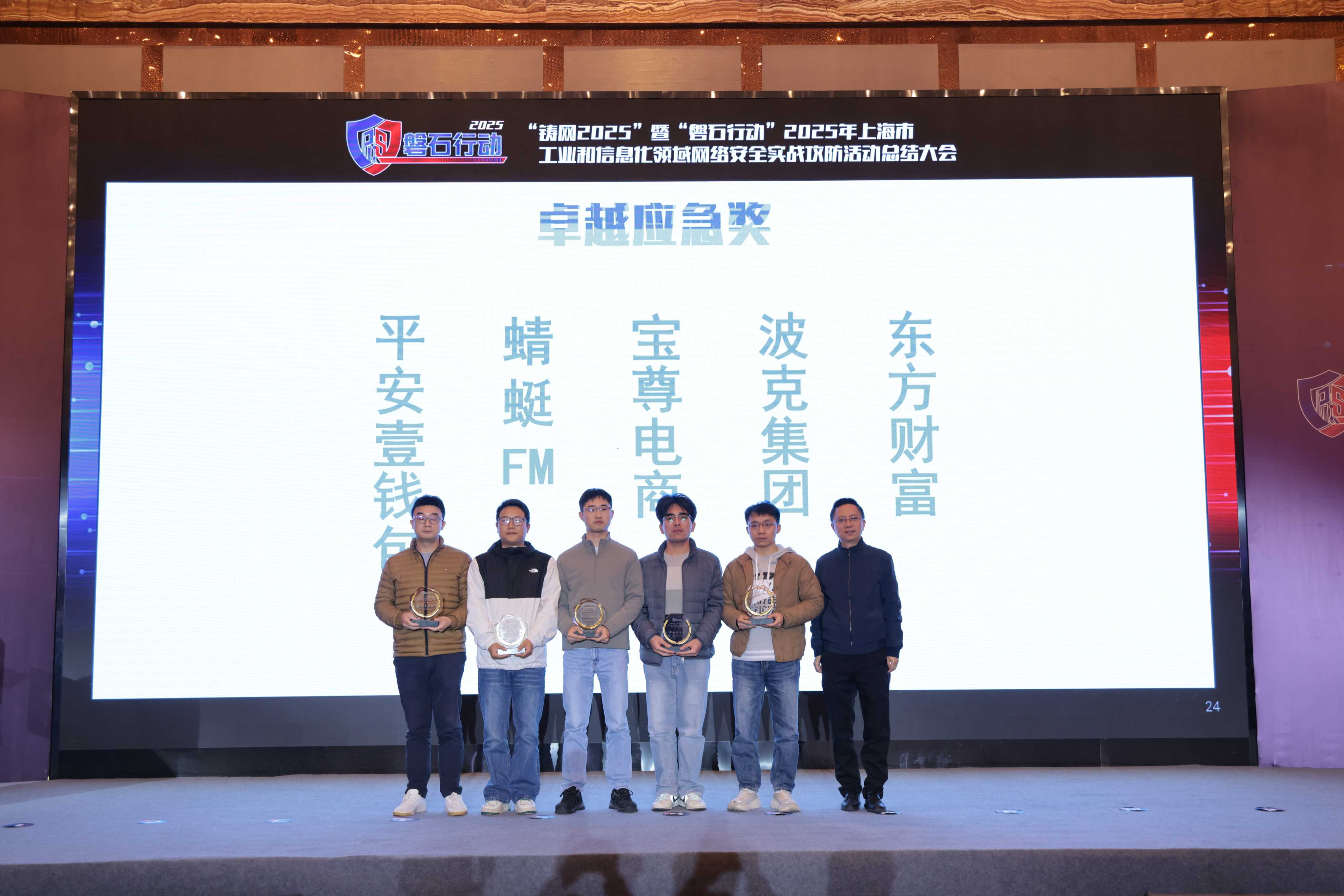
喜讯!平安壹钱包荣获上海2025网络安全“磐石行动”卓越应急奖
Sou Hu Wang· 2025-12-11 14:35
Group 1 - The "Panshi Action" network security practical offensive and defensive activity has been successfully held for five years, with this year's event introducing a new competition format and focusing on three key areas: AI security, ransomware prevention, and phishing prevention [3] - The event gathered 58 top attacking teams and 187 defending teams, with nearly 4,000 participants [3] - Ping An Yibao demonstrated exceptional emergency response capabilities during the practical defense exercise, successfully tracing the real identity of attackers and efficiently handling attack incidents, earning the "Outstanding Emergency Award" [3] Group 2 - Ping An Yibao is a comprehensive service platform under Ping An Group, providing digital services across various fields including financial payments, points rights, public consumption, shopping, and employee benefits [5] - In recent years, high-quality information security defense has become one of Ping An's digital competitive advantages, with continuous investment in technology to enhance security management and ensure the safety of financial services for millions of customers [6] - The company has established an information security committee to promote reforms from top to bottom, actively exploring cutting-edge fields such as AI, zero trust, and cloud-native technologies, while also focusing on training technical talent [6]
不再为告警“救火”:AIOps 如何重塑腾讯音乐的智能运维体系
Sou Hu Cai Jing· 2025-12-10 11:37
Core Insights - The article discusses how companies can leverage AI to enhance operational efficiency and quality while driving intelligent operations, focusing on Tencent Music's practices in AIOps [1][2] - The upcoming AICon event aims to explore the integration of AI into business operations, emphasizing the creation of scalable and commercializable AI systems [1][36] Group 1: AI Integration in Operations - Tencent Music has multiple applications catering to different user groups, supported by a collaborative development team focused on foundational capabilities like microservices and observability [2] - The company is exploring innovative AI applications to improve user experience while integrating AI with existing technology frameworks to enhance engineering systems [2][3] - The exploration of AI is centered around three traditional elements: quality, efficiency, and cost, with a focus on generating tangible value through AI [3] Group 2: AIOps Implementation - The AIOps framework is structured around perception, decision-making, and execution, aiming to leverage AI capabilities for measurable outcomes [3] - The DevOps framework is crucial for continuous integration, delivery, and operations, allowing developers to focus on coding while standardizing other processes [6] - The SRE system aims to ensure the effectiveness and controllability of changes during deployment, alongside the continuous improvement of the SLA system to maintain business quality [6][7] Group 3: Alarm Management and AI Optimization - The company has significantly reduced the number of alarm calls from over 3,000 to around 200 per month by enhancing the effectiveness of monitoring data and implementing the 3-Sigma algorithm [11][15] - AI is utilized to analyze alarm types and root causes, with a workflow that includes problem analysis, plugin invocation, and knowledge base integration to generate solutions [20][21] - A comprehensive classification of alarms has been established, with AI automatically tagging them, revealing that business logic errors account for approximately 40% of issues [25][27] Group 4: Data and Customization - A complete data banking system has been developed to unify data collection and analysis, enhancing root cause analysis capabilities within the AIOps framework [30] - The company is focusing on standardizing business systems, particularly return codes, to improve operational efficiency and response to alarms [28] - Custom alarms for specific business lines are being developed, with an emphasis on ensuring AI understands their meanings and can provide comprehensive solutions [28][30] Group 5: Future Directions in AIOps - Future initiatives include enhancing intelligent Q&A systems, automating execution based on AI conclusions, and upgrading algorithms to improve alarm accuracy [32][35] - The strategic approach for AIOps development is to integrate cloud-native and intelligent analysis to create a more advanced and valuable AI system [35]

网宿科技(300017) - 300017网宿科技投资者关系管理信息20251205
2025-12-05 08:12
Group 1: Company Overview and Operations - The company has over 20 years of experience in the CDN business, with more than 2,800 CDN nodes globally [2] - The company is transforming its CDN nodes into edge computing nodes that support storage, computing, transmission, and security functions [2] - The company has established an edge computing platform (ECP) and launched multiple edge computing products [2] Group 2: Research and Development - In 2024, the company's R&D investment is projected to be 447 million CNY, accounting for 9.07% of its revenue [3] - Future R&D efforts will focus on core businesses, particularly CDN, edge computing, and security [3] Group 3: Market Expansion and Strategy - The company is expanding its CDN and security products internationally, targeting industries such as live streaming, e-commerce, and gaming [3] - A subsidiary was established in Dubai to enhance business expansion in the Middle East, aligned with the Belt and Road Initiative [3] Group 4: AI and Technological Development - The company is focusing on edge computing as a critical infrastructure for AI, developing an edge AI platform with a four-layer capability matrix [3] - The company is closely monitoring developments in large models, intelligent agents, and AI applications to adapt its technology solutions to customer needs [3] Group 5: Management and Governance - The management's stock reduction in May was due to personal financial needs, with subsequent plans not implemented and progress disclosed [3]

Datadog (NasdaqGS:DDOG) 2025 Conference Transcript
2025-12-02 20:17
Summary of Datadog Conference Call Company Overview - **Company**: Datadog (NasdaqGS: DDOG) - **Event**: 2025 Conference on December 02, 2025 Key Points Industry and Market Environment - Datadog operates in the cloud monitoring and observability software industry, which is experiencing a shift towards modernization and cloud migration [3][5][7] - The buying environment is described as constructive, with a focus on modernization of software stacks and cloud migration, which is expected to be a long-term tailwind for Datadog [4][7] Financial Performance - Datadog reported a strong quarter with broad-based growth, particularly in its core business, excluding AI-native revenues [3][4] - The company has seen an increase in new customer acquisitions and larger contracts, contributing to a strong net retention rate [3][4] - AI-native customers now represent 12% of total revenues, indicating successful penetration into this fast-growing segment [9][10] Product Suite and Adoption - Datadog's product suite includes core infrastructure monitoring, APM, log management, and digital experience, with parallel strength across these areas [8][9] - The digital experience segment has crossed $300 million in revenue, showcasing significant adoption [8] - Customers are increasingly consolidating their observability needs onto Datadog's platform, moving away from point solutions [8][9] Customer Dynamics - Datadog maintains a high gross retention rate of over 98% among large customers, indicating strong customer loyalty [22][24] - The company has over 500 AI-native customers, with more than 100 spending over $100,000 annually, and 15 spending over $1 million [14][15] - Contract structures for cloud-native and AI-native customers typically involve annual commitments, with opportunities for longer-term contracts as usage increases [16][17] Competitive Landscape - Datadog faces competition from companies like Chronosphere and open-source alternatives, but maintains a strong market position due to its comprehensive observability platform [27][29] - The acquisition of Chronosphere by Palo Alto Networks raised concerns, but Datadog believes it can coexist with competitors by offering a more complete solution [27][28] Pricing Strategy - Datadog employs a volume-based pricing model, which allows for lower unit prices as customers scale, while maintaining margins through a diverse customer base [30][31] - The company actively helps clients optimize their usage to avoid unexpected costs, enhancing customer satisfaction [31] Future Growth Opportunities - Datadog is focusing on expanding its Cloud SIEM and service management offerings, which are expected to drive significant revenue growth in the coming years [32] - The company has made strategic acquisitions in product analytics and data monitoring, positioning itself for future growth [32] Margin Guidance - Datadog aims to maintain long-term margins in the mid-20s while investing in growth opportunities, indicating a balanced approach to expansion and profitability [34][35] Conclusion - Datadog is well-positioned in the observability market, with strong financial performance, a growing customer base, and a comprehensive product suite that addresses the needs of modern cloud-native and AI-native companies [3][4][9][10]

电科数字:华讯网络是华为云的高级别合作伙伴,专注于云原生及AI容器解决方案
Ge Long Hui· 2025-11-28 07:45
格隆汇11月28日丨电科数字(600850.SH)在投资者互动平台表示,华讯网络是华为云的高级别合作伙 伴,专注于云原生及AI容器解决方案。华讯网络基于华为云Stack(HCS)等环境,具备企业级AI容器 云平台的快速交付能力,提供从算力资源整合、容器化应用部署到智能运维管理的全流程服务,助力客 户构建高效、弹性的AI应用运行环境,为其AI应用提供全面的容器技术支撑与解决方案。 ...

电科数字(600850.SH):华讯网络是华为云的高级别合作伙伴,专注于云原生及AI容器解决方案
Ge Long Hui· 2025-11-28 07:42
格隆汇11月28日丨电科数字(600850.SH)在投资者互动平台表示,华讯网络是华为云的高级别合作伙 伴,专注于云原生及AI容器解决方案。华讯网络基于华为云Stack(HCS)等环境,具备企业级AI容器 云平台的快速交付能力,提供从算力资源整合、容器化应用部署到智能运维管理的全流程服务,助力客 户构建高效、弹性的AI应用运行环境,为其AI应用提供全面的容器技术支撑与解决方案。 ...