
促消费政策

Search documents
1月核心CPI同比上涨0.8% 物价运行呈低位温和回升态势
Shang Hai Zheng Quan Bao· 2026-02-11 17:59
除了春节错月因素,能源价格同比降幅扩大也是CPI同比涨幅回落的原因之一。1月能源价格同比下降 5.0%,对CPI同比的下拉影响比2025年12月增加约0.06个百分点。其中,汽油价格同比下降11.4%,降幅 比2025年12月扩大3.0个百分点。 扣除食品和能源价格的核心CPI温和上涨,体现出居民消费需求持续恢复。数据显示,1月核心CPI同比 上涨0.8%,环比上涨0.3%,环比涨幅为近6个月最高。 "促消费政策推动耐用消费品价格走高,是近期核心CPI涨幅较高的主要支撑。"东方金诚首席宏观分析 师王青对上海证券报记者表示。数据显示,扣除能源的工业消费品价格同比上涨2.6%,涨幅比2025年 12月扩大0.1个百分点。 1月,PPI环比上涨0.4%,涨幅比2025年12月扩大0.2个百分点,实现了连续4个月上涨。PPI同比下降 1.4%,降幅比2025年12月收窄0.5个百分点,实现连续2个月同比降幅收窄。 究其原因,民生银行首席经济学家温彬对上海证券报记者表示,主要是重点行业产能治理成效持续显 现、部分行业供需结构有所改善、新质生产力培育壮大带动相关行业价格上涨等。 物价运行呈低位温和回升态势。国家统计局2月 ...
节前探店|特产“链”动消费活力
Sou Hu Cai Jing· 2026-02-11 16:30
市井烟火里,藏着最鲜活的经济答案。年关岁末,新华社记者走进实体门店,于细微处捕捉市场脉搏,感受中国经济的真实温度。 在宁夏银川后海路一家经营多年的特产店,店主正忙着打包发往外地的滩羊礼盒,他告诉记者,从腊月初一开始,门店便全面进入销售旺季,客流与销量持 续攀升。 策划:张宋红 记者:马丽娟、任玮、唐紫宸、张泽钰 技术:于卓 新华社音视频部制作 记者在采访中也了解到,滩羊热销背后,离不开全国促消费政策的精准赋能。今年元旦春节双节期间,农业农村部部署开展"品特产 寻年味"消费促进活 动,2026全国网上年货节同步启幕,从国家层面搭建起产销对接平台,为特色农产品打开销路。宁夏在启动"奔腾宁夏·'码'上购"网上年货促销活动的同时, 线下同步发放消费券、举办特色年货大集,让政策红利直达买卖双方。随着快递服务迈入"小时级"时代,宁夏特产更是突破地域局限,从西北小城走向全国 大市场。 一方风物,链起一条产业。流动的特产,氤氲着浓浓年味。从银川街头的特产小店到全国各大城市的消费终端,藏在烟火气里的消费活力,正汇聚成推动经 济持续向好的强劲动力,让这个年关暖意更浓、底气更足。 除了老顾客,本地市民囤年货、外地游客选伴手礼、企业 ...


节前探店丨特产“链”动消费活力
Xin Hua Wang· 2026-02-11 11:50
Core Insights - The article highlights the vibrant economic activity in China during the year-end period, particularly through local specialty stores that are experiencing a surge in sales due to various consumer demands [1]. Group 1: Economic Activity - The specialty store in Yinchuan, Ningxia, has entered a peak sales season since the beginning of the lunar calendar, with increasing foot traffic and sales [1]. - Demand from local residents stocking up for the New Year, tourists purchasing gifts, and businesses buying in bulk for employee benefits has contributed to the rising sales figures [1]. Group 2: Government Initiatives - The surge in sales is supported by national consumer promotion policies, such as the "Taste of the New Year" campaign initiated by the Ministry of Agriculture and Rural Affairs during the New Year and Spring Festival [1]. - The launch of the 2026 National Online New Year Goods Festival has created a platform for connecting production and sales, enhancing the market for specialty agricultural products [1]. Group 3: Local Promotions - Ningxia has implemented the "Running Ningxia: 'Code' Shopping" online New Year promotion, alongside offline initiatives like distributing consumer vouchers and hosting specialty goods fairs to ensure policy benefits reach both buyers and sellers [1]. - The advancement of express delivery services into an "hour-level" era has allowed Ningxia's specialties to transcend regional limitations, expanding their market reach nationwide [1]. Group 4: Consumer Trends - The article emphasizes that the lively consumption atmosphere, from local specialty shops to major urban consumption terminals, reflects a strong driving force for sustained economic growth, contributing to a more optimistic outlook for the year-end [1].

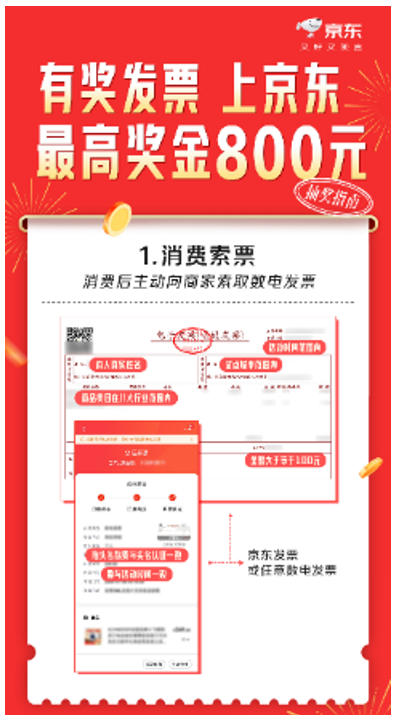
上传发票抽现金 最高奖 800 元!京东率先接入全国有奖发票活动
Zhong Jin Zai Xian· 2026-02-10 09:30
"中了!20 元红包直接到账,刚在京东买的年货,上传发票点几下就抽中了!"宜昌市民王女士没想 到,自己买年货开了张发票,还获得了国家发的"奖金"。 为进一步激发消费需求、释放消费活力,财政部、商务部、国家税务总局联合部署,全国50个城市近日 陆续开展有奖发票活动试点。全国消费者进行零售、餐饮、住宿、文旅等线下线上消费,获得试点城市 商家开具的单张金额 100 元及以上、开票日期在活动期间的实名数字化电子普通发票,即可参与抽奖, 奖金最高800元。 2月10日,太原、宜昌等城市率先开启有奖发票活动,武汉、北京、上海、天津等城市也将于近日陆续 启动。京东作为第一波接入政策的电商平台,2月10日起同步上线有奖发票抽奖服务。 消费者无论在其它渠道消费,还是在京东消费,只要符合各地规则都可参加活动。在其它渠道消费,可 上京东App搜"有奖发票",或者从我的-钱包进入"有奖发票"活动专区,上传符合规则的发票,系统便会 快速完成校验和抽奖。在京东自营下单,京东自动开票,还支持用户一键选择关联的发票,直接参与抽 奖。 消费者参加活动,全程无需多平台切换、无需重复填报。中奖奖金以现金形式直接发放到用户的京东钱 包余额,可以消费 ...


上传发票抽现金最高奖800元!京东率先接入全国有奖发票活动
Jin Rong Jie· 2026-02-10 08:02
此外,为了让京东用户"参与即有收获",京东在国家政策基础上带来额外福利:凡在京东参与活动的用 户都将获得京东福利券包,至高128元。 2月10日,宜昌市民王女士就在京东内进入有奖发票活动页面,上传了当日在京东秒送购入年货后开具 的电子发票,点击上传发票按钮,抽奖界面便弹出了 20元中奖提示,奖金瞬间到账。王女士成为宜昌 首批中奖用户,"有了这个福利,我们消费和开发票的动力更足了。" 线下参与有奖发票活动同样便捷。2月10日,太原京东MALL内,游客孙先生购入一款破壁机后,实付 599元。在店员的简单指导下,在京东上传电子发票,直接抽中50元。他中奖的消息瞬间吸引了周围不 少消费者,大家纷纷围过来询问开票流程和参与方式,店员一边解答,一边演示操作步骤,现场参与氛 围火热。 字原乐 有奖发票 上 最高奖金 1.消费索票 消费后主动向商家索取数电发票 2008 6 - 2 - 1 - BINNYIER · · DARKE8 官方版专门日本 NO LINE BOOK AN ROOM AND THE COLLECTION OF 4.5 图名表团在川大厅业质量A 2563 发器大于5千100元 240 6-481 n - ...
去年轻工业经济运行态势总体平稳
Sou Hu Cai Jing· 2026-02-04 22:47
Core Insights - The light industry in China is projected to achieve a stable economic performance in 2025, with a year-on-year increase in added value of 5.3% and total operating revenue reaching 23 trillion yuan [1] Group 1: Economic Performance - In 2025, the added value of the light industry above designated size is expected to grow by 5.3%, with operating revenue reaching 23 trillion yuan [1] - The overall production in the light industry is stable, with significant growth in specific sectors such as electric vehicles, batteries, and plastic furniture manufacturing, which are expected to see an increase of over 20% in added value [1] - The household appliance manufacturing sector is projected to grow by 4.6% in added value, with production of water dispensers and washing machines increasing by 12.6% and 4.8% respectively [1] Group 2: Market Expansion - The retail sales of 11 categories of light industry goods are expected to reach 867.19 billion yuan in 2025, reflecting a year-on-year growth of 7.8% [1] - The share of light industry goods in the total retail sales of consumer goods is projected to increase to 17.3%, up by 1.1 percentage points from 2024 [1] Group 3: Policy Impact - The policy of replacing old consumer goods with new ones has been strengthened, leading to a continuous release of consumption potential, with retail sales of household appliances and audio-visual equipment growing by 11% [2] - The market for high-efficiency appliances is experiencing rapid growth, with over 129 million appliances replaced under the old-for-new policy, 90% of which are of the highest energy efficiency rating [2] - The implementation of various economic stabilization and consumption promotion policies is expected to enhance the resilience and potential of the light industry, supporting a stable economic operation and accelerating transformation and upgrading [2]
去年轻工业经济运行态势总体平稳 规上增加值同比增长百分之五点三
Ren Min Ri Bao· 2026-02-04 22:06
Core Insights - The light industry in China is projected to achieve a 5.3% year-on-year increase in value-added output in 2025, with total operating revenue reaching 23 trillion yuan [1] - The overall economic performance of the light industry is stable, supported by the implementation of consumer stimulus measures [1][2] Group 1: Economic Performance - In 2025, the value-added output of the light industry is expected to grow by 5.3%, with operating revenue reaching 23 trillion yuan [1] - The retail sales of 11 categories of light industry goods are projected to be 86,719 billion yuan, reflecting a year-on-year growth of 7.8% [1] - The proportion of light industry goods retail sales in total social retail sales is expected to increase by 1.1 percentage points to 17.3% compared to 2024 [1] Group 2: Production and Market Trends - The production of electric vehicles, batteries, and plastic furniture is expected to see an increase in value-added output exceeding 20%, while household appliances are projected to grow by 4.6% [1] - The production of specific products such as water dispensers and washing machines is expected to grow by 12.6% and 4.8%, respectively, with continued growth in electric water heaters, air conditioners, refrigerators, and microwaves [1] - The policy of replacing old consumer goods is expected to enhance consumption potential, with retail sales of household appliances and audio-visual equipment growing by 11% [2] Group 3: Future Outlook - The light industry is anticipated to maintain its resilience and stable development, driven by a series of economic stabilization and consumption promotion policies [2] - The trend of upgrading consumption is evident, with over 129 million household appliances being replaced under the old-for-new policy, and 90% of these being high-efficiency models [2]
国泰海通|计算机:政策注入消费动能,看好三方收单“铲子”公司
国泰海通证券研究· 2026-02-04 14:28
投资建议: 我们认为, 26 年开年之际促消费政策频发,扩内需战略持续推进,将加速消费信心提振,推动消费需求扩张。第三方收单公司有望受益于线下 消费复苏。 风险提示。 政策波动风险;政策落地不及预期;消费复苏不及预期。 报告导读: 26 年开年之际促消费政策频发,扩内需战略持续推进, 将加速消费信心提 振,推动消费需求扩张 ,第三方收单公司有望受益。 国办重磅政策提振服务消费。 2026 年 1 月 29 日,国务院办公厅印发《加快培育服务消费新增长点工作方案》,旨在优化和扩大服务供给,促进服务消费 提质惠民。《工作方案》提出三方面支持政策。一是聚焦交通服务、家政服务、网络视听服务、旅居服务、汽车后市场服务、入境消费等重点领域,从优化服 务供给、推进先行先试、创新消费场景、加强人才培养等方面发力,激发发展活力。二是聚焦演出服务、体育赛事服务、情绪式体验式服务等潜力领域,从健 全激励机制、优化安全管理、培育优质品牌、建设平台载体等方面着手,培育发展动能。三是通过健全标准体系、加强信用建设、强化财政金融支持等,加强 对培育服务消费新增长点的支持保障。 2026 年"国补"继续,"两新"政策优化。 2025 年 1 ...

政策预期升温 股指“长牛”趋势明确
Qi Huo Ri Bao· 2026-02-04 03:23
Group 1: Market Overview - The market risk appetite was negatively impacted by rising geopolitical tensions, the confirmation of the Federal Reserve Chair nomination, and the dense disclosure of financial reports from China and the US, leading to significant adjustments in precious metals and equity markets [1] - On February 3, the Shanghai Composite Index rebounded, with IC and IM both rising over 2%, while IF and IH saw intraday increases of over 1% [1] Group 2: Economic Indicators - In January, China's manufacturing PMI fell to 49.3% from 50.1%, and the non-manufacturing PMI decreased to 49.4% from 50.2%, both dropping below the expansion threshold, attributed to the approaching Spring Festival [1] - The decline in PMI for labor-intensive industries indicates a weakening production side, with significant drops in consumer goods and high-energy industries' PMIs, down 2.1 and 1 percentage points to 48.3% and 47.9%, respectively [1] - The new orders index fell by 1.6 percentage points to 49.2%, and the non-manufacturing business activity index decreased by 0.8 percentage points to 49.4%, with construction activity notably affected by seasonal factors [1] Group 3: Policy Measures - The government has been actively implementing policies to address insufficient domestic demand, including structural interest rate cuts and targeted financial tools to lower financing costs for key sectors [2] - A comprehensive consumer promotion policy system has been established, focusing on "two new" policies, with an initial fund of 62.5 billion yuan already in place to stimulate the market through subsidies and interest discounts [2] - The removal of restrictions on service industry access is expected to optimize the consumption supply structure, contributing to economic stability [2] Group 4: International Economic Context - In December, the US CPI rose by 2.7% year-on-year, with core CPI increasing by 2.6%, indicating persistent inflation, while non-farm payrolls added only 50,000 jobs, significantly below the expected 180,000 [3] - The US unemployment rate slightly decreased to 4.4%, with the economy showing support from a revised GDP growth rate of 4.4% for Q3, the fastest since 2021 [3] - The Federal Reserve paused interest rate cuts in January, maintaining rates at 5.25% to 5.5%, with market expectations for the first rate cut pushed to June [3]
政策注入消费动能,看好三方收单“铲子”公司
GUOTAI HAITONG SECURITIES· 2026-02-03 13:32
Investment Rating - The report assigns an "Accumulate" rating for the industry [5]. Core Insights - The report highlights that the frequent consumer stimulus policies at the beginning of 2026 and the ongoing strategy to expand domestic demand are expected to boost consumer confidence and drive consumption demand expansion. Third-party payment companies are likely to benefit from the recovery of offline consumption, with recommended stocks including Newland and Newguo, and related stock Lakala [5]. Summary by Sections Policy Support - On January 29, 2026, the State Council issued a significant policy document aimed at optimizing and expanding service supply to enhance service consumption quality and benefits for the public. The document focuses on key areas such as transportation services, housekeeping services, online audio-visual services, tourism services, automotive aftermarket services, and inbound consumption, emphasizing the need for innovation in consumption scenarios and talent cultivation [5]. - The 2026 "National Subsidy" continues, with optimizations in the scope, standards, and implementation mechanisms of subsidies compared to 2025. The first batch of 62.5 billion yuan in special bonds to support the replacement of old consumer goods has been allocated to local governments ahead of peak consumption seasons [5]. Economic Strategy - An article published in "Qiushi" magazine on December 16, 2025, emphasizes that expanding domestic demand is a strategic move essential for economic stability and security. It calls for a comprehensive internal demand system to be established, focusing on consumption demand supported by income, investment demand with reasonable returns, and financial demand constrained by principal and debt [5]. Earnings Forecast - The earnings forecast for recommended stocks is as follows: - Newland: Stock price 26.97 yuan, market cap 27.32 billion yuan, EPS forecast for 2024A is 1.00 yuan, 2025E is 1.26 yuan, and 2026E is 1.55 yuan, with PE ratios of 27, 21, and 17 respectively [6]. - Newguo: Stock price 26.76 yuan, market cap 15.18 billion yuan, EPS forecast for 2024A is 0.41 yuan, 2025E is 1.04 yuan, and 2026E is 1.32 yuan, with PE ratios of 65, 26, and 20 respectively [6].