
全栈自研

Search documents
2027年超越Rubin:这家国产GPU用七年深蹲,交出一份敢写日期的路线图
3 6 Ke· 2026-01-26 11:22
当大部分同行还在用"对标"作为宣传话术时,这家公司直接把超越Hopper、Blackwell、Rubin的时间点写进了2025-2027年的日历。底气何来?答案是:过 去七年没走捷径。 在AI芯片发布会"人均对标英伟达"的语境下,一份真正敢把超越日期写进标题的架构路线图,本身就构成了新闻。 天数智芯的答卷第一部分,是一份以团队自身大量测试为依据,刚撰写出炉的性能白皮书。其天枢架构支持从高精度科学计算到AI精度计算,AI芯片在 执行注意力机制相关计算时,算力的实际有效利用效率达到90%。更重要的是,测试显示,其效率较当前行业平均水平提升60%,在DeepSeek V3场景平 均比Hopper架构高约20%性能。这并非实验室峰值理论值,而是指向实际效能的有效算力。 答卷的第二部分,是新发布的边端产品——彤央系列。四款产品实测稠密算力覆盖100T到300T。其中,入门型号TY1000在计算机视觉、自然语言处理、 DeepSeek 32B 大语言模型、具身智能VLA模型及世界模型等多个场景的实测中,性能已超越行业标杆英伟达AGX Orin。 "如果第一步的超越都需要用'未来式'来描绘,那后面的蓝图就只是海市蜃楼。"一 ...

2027年超越Rubin:这家国产GPU用七年深蹲,交出一份敢写日期的路线图
36氪· 2026-01-26 11:16
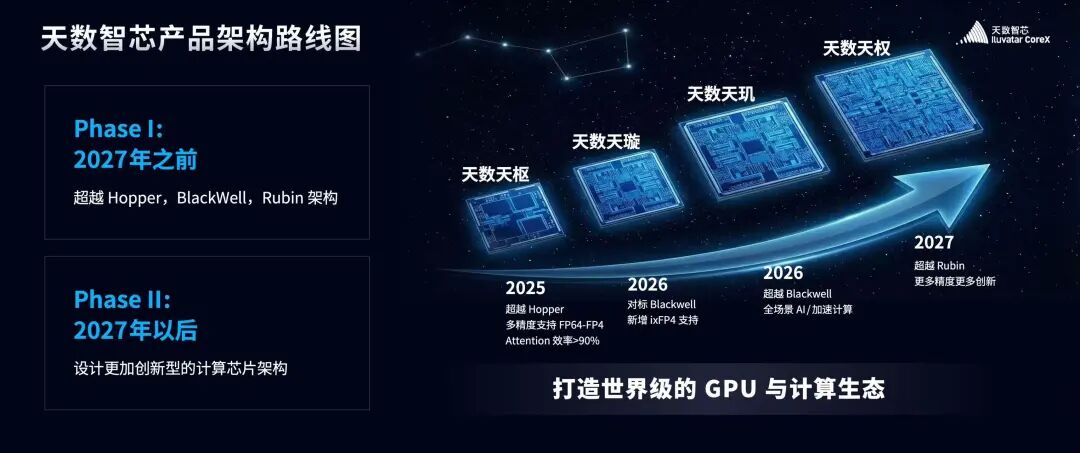
"他们不是在预测未来,他们是在汇报进度。"一位与会者说。 这份路线图,或许正是那块厚实跳板 第一次发出的、清晰可闻的蓄力声。 当大部分同行还在用"对标"作为宣传话术时,这家公司直接把超越Hopper、Blackwell、Rubin的时间点写进了2025-2027年的日历。底气何来?答案是:过 去七年没走捷径。 在AI芯片发布会"人均对标英伟达"的语境下,一份真正敢把超越日期写进标题的架构路线图,本身就构成了新闻。 1月26日,天数智芯公布了其2025至2027年的四代架构路线图。与寻常的未来可期不同,它像一份产品手册般精确: 2025年天数天枢超Hopper,2026年天 数天璇架构对标Blackwell,同样在2026年,天数天玑架构超越Blackwell,2027年天数天权超Rubin ,2027年之后将转向突破性计算芯片架构设计。未来3 年,天数智芯将基于此次发布的四代架构,陆续发布多款产品,持续提升计算性能。 更不同寻常的是,这份这份未来宣言的第一行,已被验证。在天数智芯路线图中的最近一代架构——2025年推出的天枢,在关键的大模型场景—— DeepSeek V3上,平均性能已比英伟达Hopper架构 ...

“全栈自研”芯片企业撤回上市申请 科创板7天内两IPO项目终止
Quan Jing Wang· 2026-01-21 07:38
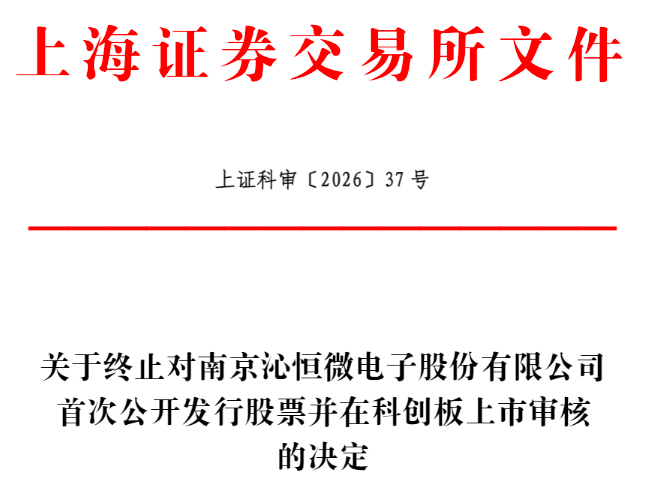
"全栈自研"芯片企业撤回申请 1月20日,上交所官网信息显示,沁恒微的科创板IPO审核状态变更为"终止"。这家专注于接口芯片与互 连型MCU设计的集成电路企业,历时约半年的上市进程就此结束。 根据招股书,沁恒微定位为基于自研专业接口IP、内核IP构建一体化芯片的设计企业,强调以"先打IP 地基、再建芯片高楼"为技术路径,在微处理器内核、USB、蓝牙、以太网等关键领域坚持深度自研, 形成"一核三接口"的自主IP体系。2022年至2025年上半年,公司营业收入从2.38亿元增至近4亿元,扣 非净利润由约4895万元增至近8000万元,业绩呈现增长趋势。 2026年开局不到一个月,科创板IPO市场已接连出现项目终止审核。1月14日与1月20日,亚电科技和沁 恒微先后主动撤回发行上市申请,成为年内科创板首批"告退"企业。 短短一周内,两单科创板项目接连终止,引发了市场对投行业务执业质量、项目筛选及内核风控能力的 关注。在注册制持续深化、"申报即担责"监管导向不断强化的背景下,中介机构作为"看门人"的责任正 面临更严格的考验。 据悉,沁恒微项目的保荐代表人为范杰、张晨曦。公开信息显示,范杰为华泰联合证券投资银行业务线 ...
智驾与汽车Agent进展
2026-01-21 02:57
Summary of Key Points from Conference Call Industry Overview - The conference call discusses advancements in the automotive industry, particularly focusing on AI integration in vehicles and the development of autonomous driving technologies. The key players mentioned include traditional automakers and tech companies like Xiaomi, Huawei, and Nvidia. Core Insights and Arguments 1. **AI Cabin Assistants**: AI cabin assistants enhance user experience by providing immersive interactions and can increase purchase intent by 10%-15% when compared to traditional systems, with consumers willing to pay an additional 3,000 to 5,000 yuan for such features [1][5]. 2. **Full-Ecosystem Companies**: Companies like Xiaomi and Huawei have a competitive edge in automotive smart experiences due to their superior UI, UE, and UX design capabilities, allowing them to attract consumers more effectively than traditional automakers [1][7]. 3. **Integration of AI and Autonomous Driving**: The fusion of AI with autonomous driving technology is crucial for the development of Robot Taxis. Technologies such as VRA, VRM, and WM enhance environmental perception and decision-making capabilities [1][8]. 4. **Challenges in Advancing Autonomous Levels**: Transitioning from L2+ to L4/L5 remains challenging due to complex real-world environments and stringent legal regulations, which currently recognize only human drivers as legal operators [1][11]. 5. **Self-Developed Chips**: Automakers are increasingly developing their own chips to enhance algorithm and chip capabilities, reducing reliance on third-party suppliers and strengthening their competitive position [2][13]. 6. **Market Competition**: The competition among autonomous driving solution providers has intensified, with traditional automakers having advantages in ADAS/L2/L3 levels, while new entrants excel in Robot Taxi operations [2][22]. 7. **Consumer Preferences**: Consumers currently prefer hardware over software in vehicle purchases, although there is a growing willingness to pay for software features [20][21]. 8. **Platformization of Solutions**: There is a trend towards platformization among autonomous driving solution providers, which may lead to the elimination of smaller players in the market [18][19]. 9. **Potential for New Applications**: Automakers are exploring new directions such as AI glasses and embodied intelligent robots, which align with the evolving consumer needs for immersive experiences in vehicles [24][25]. Additional Important Content - **Market Dynamics**: The emergence of large models in AI is reshaping the competitive landscape, leading to a "survival of the fittest" scenario among autonomous driving firms [12]. - **Regulatory Environment**: The current legal framework poses significant barriers to the widespread adoption of higher-level autonomous driving technologies [11]. - **Consumer Sentiment**: While there is a strong interest in smart driving technologies, actual purchasing intent remains lower in markets outside of China, particularly in Europe [21]. - **Long-Term Commercialization**: The commercialization of embodied robots is expected to take 5 to 10 years, with many current projects still in experimental stages [28]. This summary encapsulates the key points discussed in the conference call, highlighting the advancements, challenges, and market dynamics within the automotive industry.

告别供应链“拿来主义”:喜相逢收购旷时,开启智能驾驶“定义硬件”新时代
Cai Fu Zai Xian· 2026-01-20 03:04
Core Insights - The current smart driving supply chain exhibits a prevalent "borrowed" mentality, where many solution providers merely purchase generic radar chips and perform simple module packaging, lacking control over underlying signal processing logic [1] - The acquisition of Kuangshi Technology by Xixiangfeng signifies a departure from this "borrowed" approach, paving the way for a technology-independent path from "hardware adaptation" to "hardware definition" [1] Group 1 - Kuangshi Technology's core competitiveness lies in its deep customization capabilities for RF front-end and signal processing units, allowing it to optimize based on Xixiangfeng's operational needs [1] - The ability to define radar transmission waveforms and reception algorithms based on specific pain points, such as high angular resolution for urban congestion and strong anti-interference for high-speed scenarios, sets Kuangshi Technology apart [1] Group 2 - The transition from "integration" to "definition" creates a high and wide technological moat, making it difficult for competitors to replicate Kuangshi Technology's proprietary algorithms tailored for Xixiangfeng's scenarios [2] - Full-stack self-research leads to significant cost optimization by eliminating intermediary markups, allowing for direct production from chip fabrication to complete machine assembly, thus reducing hardware BOM costs [2] - This dual advantage of cost and performance positions Xixiangfeng favorably in future commercial competition, enabling it to offer superior perception solutions at more competitive prices [2]
理想i8背后的硬实力:揭秘“中国心”年度十佳的自研高压SiC电驱动系统
Bei Jing Ri Bao Ke Hu Duan· 2026-01-19 09:46
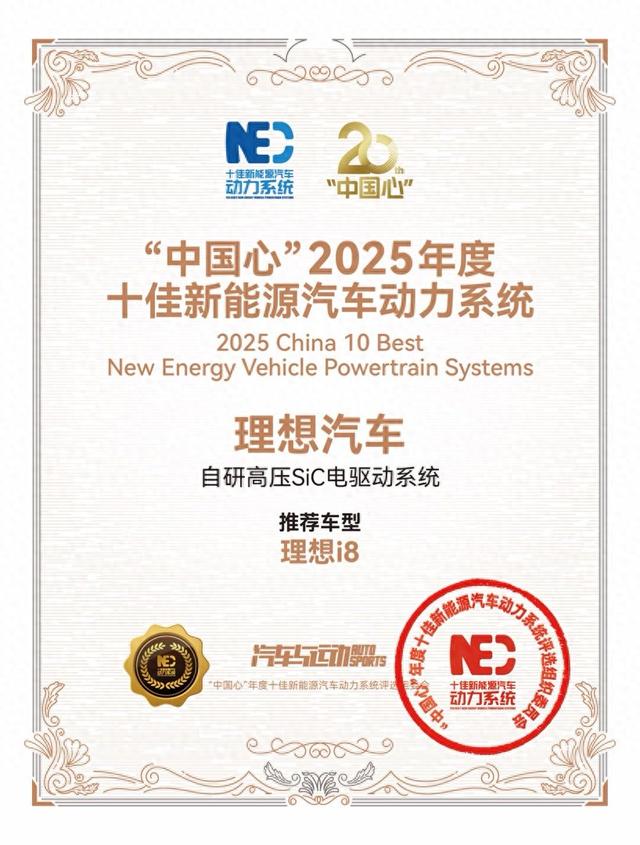
Core Viewpoint - Li Auto's self-developed high-voltage SiC (Silicon Carbide) electric drive system has been recognized as one of the top ten power systems in the 2025 "China Heart" awards, showcasing the company's strong R&D capabilities in core electric technology [1][10]. Group 1: Award and Recognition - The "China Heart" annual top ten new energy vehicle power system selection is conducted by a panel of experts, ensuring professionalism and authority in the evaluation process [3]. - Li Auto's high-voltage SiC electric drive system stood out among numerous models, receiving expert recognition for its excellent technical indicators and balanced performance, efficiency, comfort, and reliability [4][6]. Group 2: Technical Development - Li Auto has achieved full-stack self-research in its electric drive system, covering everything from silicon carbide power chips to control software, which grants the company significant control over core components [4][8]. - The Li Auto i8, equipped with this award-winning system, combines structural advantages of pure electric technology with family-oriented space and comfort needs, achieving an industry-leading 93.08% efficiency under CLTC conditions and enhancing range by 30 kilometers [6]. Group 3: Industry Implications - The recognition of Li Auto's technology reflects a broader trend in the automotive industry, indicating a shift in the value chain competition from efficient integration of end products to autonomous definition of core technologies [10]. - The company's initiative to donate its self-developed high-voltage SiC electric drive system to six top domestic universities supports the cultivation of talent in the automotive engineering field, demonstrating Li Auto's commitment to sustainable development in the industry [8][10].

打破边界,长城归元平台压根没想过“随大流”
财联社· 2026-01-19 08:06
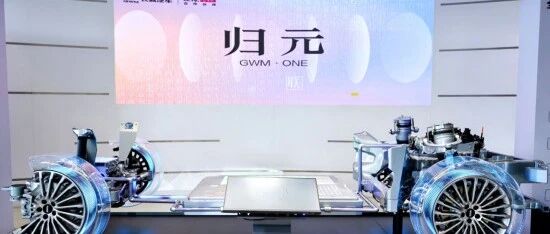
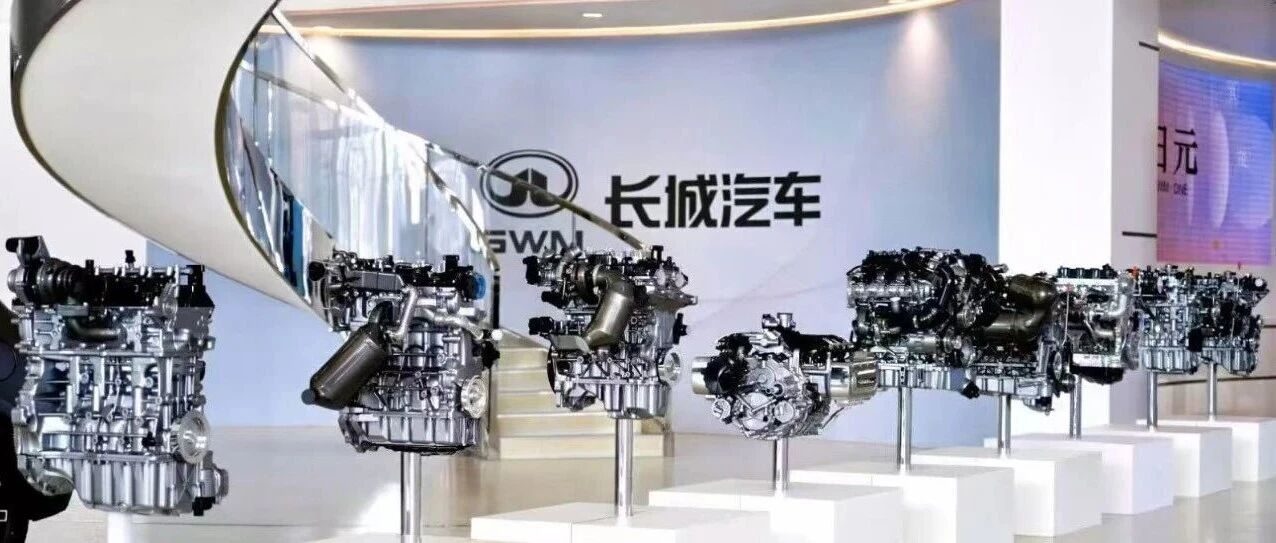
中国汽车工业飞速发展,新能源汽车市场渗透率持续攀升,行业竞争开始进入 "架构博弈"的关键 阶段。长城汽车凝聚多年造车积淀与全产业链技术储备,正式发布全球首个原生AI全动力平台 ——归元平台。这一平台借鉴"活字印刷"智慧,以全动力兼容、原生AI赋能、全栈自研为核心 优势,破解用户用车痛点,重塑了汽车产业竞争逻辑,并为中国汽车从"规模领先"向"价值引 领"转型注入了关键动力。 架构革新,构建全场景适配能力 中国汽车工业技术发展速度值得肯定,但诸多车企在架构打造方面喜欢 "随大流",动力形式 碎片化、智能功能割裂、研发周期冗长等现实情况,依然束缚着架构的进一步升级。长城此次 发布的归元平台以SOA为核心的底层革新,从根本上重构了汽车的技术逻辑。传统汽车"分布 式功能架构"下各系统壁垒森严、数据难以互通的局限,归元平台创新性地将整车颗粒化为 300多个可复用的功能单元,借鉴"活字印刷术"的古老智慧,通过全栈标准化的服务契约体 系,实现了跨车型自由调用、跨场景无缝协同。 归元平台被称为 "汽车界的活字印刷术",主要是因为其底层逻辑与"活字印刷术"具有一定的 相通性。这一平台依托SOA架构构建底层语言,将原子化能力贴上2 ...

长城归元平台,汽车界的“活字印刷术”
第一财经· 2026-01-19 03:45
Core Viewpoint - The rise of China's automotive industry brings both speed and hidden risks, with Great Wall Motors launching the "Guiyuan" platform that aims to redefine the relationship between technological innovation and user value, embodying the company's commitment to "technology is inherently good" [1][12]. Group 1: Innovation and Technology - The Guiyuan platform innovates by breaking traditional mechanical thinking of "power + chassis + body," creating the world's first native AI all-power platform, likened to the "movable type printing" in the automotive industry [3][5]. - The platform decomposes the vehicle into over 300 reusable functional units, allowing for cross-model and cross-scenario collaboration through a standardized service contract system, enhancing user experience [3][5]. - The architecture of the Guiyuan platform is designed to be "removable, configurable, and evolvable," representing a unique "living car manufacturing technique" that transcends the single concept of a platform [5][13]. Group 2: User Experience and Value - The Guiyuan platform addresses evolving consumer expectations by offering comprehensive power coverage, including plug-in hybrid, intelligent hybrid, pure electric, efficient fuel, and hydrogen power, thus moving beyond the limitations of traditional vehicle power strategies [7][9]. - The platform features significant upgrades, such as the "Super Hi4" system, which includes an 800V high-voltage electrical architecture and a 2.0T efficient hybrid engine, achieving a WLTC comprehensive range of 1393 kilometers, the highest in its class globally [9][10]. - The platform's intelligent and safety upgrades utilize advanced electronic architectures and AI to enhance user interaction and safety, shifting from passive to proactive safety measures [10][12]. Group 3: Cost Efficiency and Sustainability - The Guiyuan platform is designed to meet user demands for cost-effective ownership, with a focus on reducing maintenance costs and increasing the resale value of vehicles through high reliability and low operational costs [12][15]. - The platform's development is rooted in a long-term strategy of self-research and full industry chain collaboration, positioning Great Wall Motors as a strong player in the transition from a manufacturing power to a manufacturing stronghold in the automotive sector [13][15]. Group 4: Cultural and Industry Impact - The launch of the Guiyuan platform signifies a profound innovation in the development philosophy of the Chinese automotive industry, reflecting the deep cultural heritage and manufacturing strength of China [15]. - The platform not only aims to enhance user experience but also serves as a new paradigm for innovation in the automotive industry, encouraging a shift away from blind imitation of Western technologies [5][15].
从“中国心”奖项看理想汽车(LI.US/2015.HK):核心技术自研如何撑起中国车企的全球竞争力
Ge Long Hui A P P· 2026-01-19 01:49
Core Insights - The Chinese electric vehicle (EV) industry is transitioning from a focus on range and battery capacity to a phase emphasizing core technology advancements, with a market penetration rate reaching 46.1% and over 10 million units sold in the first nine months of 2025, reflecting a year-on-year growth of over 30% [1] - The "China Heart" 2026 Annual Power Day highlighted the success of Li Auto's self-developed high-voltage SiC electric drive system, which won the "Top Ten New Energy Vehicle Power Systems" award, showcasing the company's strategic shift from market follower to technology leader [1][2] - Li Auto's full-stack self-research strategy has led to significant breakthroughs in electric drive technology, emphasizing the importance of understanding underlying technologies rather than merely integrating existing components [3] Technical Autonomy and System Innovation - Li Auto's high-voltage SiC electric drive system represents a departure from traditional practices by achieving full-chain self-research from silicon carbide power chips to the complete electric drive system [2] - The innovative hexagonal cell structure in chip design reduces conduction resistance, enhancing overall system efficiency, while the new internal window structure in power module design minimizes footprint and optimizes hidden friction [2][3] User Experience and Value Creation - The successful conversion of advanced technology into user-perceived value is evident in the Li Auto i8, which boasts an industry-leading electric drive efficiency of 93.08% and a CLTC range of 720 kilometers, significantly reducing charging frequency for users [5][6] - Innovations such as a 97.8 kWh battery enabling 500 kilometers of range with just 10 minutes of charging and specialized lubricants for low temperatures enhance user experience and address real-world driving concerns [6][7] Ecosystem Building and Industry Leadership - Li Auto's commitment to fostering an innovative ecosystem is demonstrated through partnerships with academic institutions and investments in research funds, promoting long-term foundational research in smart vehicles and AI [8] - The company's collaborative approach with local suppliers not only enhances its own technology but also drives the growth of the domestic supply chain, exemplifying a model where leading companies uplift the entire industry [9][10] Conclusion - The recognition of Li Auto's high-voltage SiC electric drive system signifies a broader awakening of technological confidence within the Chinese automotive industry, emphasizing the necessity for companies to master core technologies to compete globally [11] - The future evaluation of automotive value may shift towards the extent of self-developed core technologies and their impact on the supply chain, calling for more Chinese companies to anchor their strategies in technology for accelerated growth in the global EV market [12]
突破3万月销、NPS提升 极氪2025诠释“中式豪华”质变逻辑
Zheng Quan Ri Bao· 2026-01-14 15:48
Core Insights - In 2025, the Chinese electric vehicle market is entering a deep integration phase amid fierce competition, with Zeekr achieving significant milestones in delivery volume, user reputation, high-end product leadership, and globalization [1] Sales Breakthrough and Market Position - In December 2025, Zeekr delivered 30,267 vehicles, marking its first monthly sales exceeding 30,000 units, a historical high with a year-on-year growth of 11.3% and a month-on-month increase of 4.9% [2] - For the entire year, Zeekr's cumulative deliveries reached 224,133 units, leading the Chinese high-end luxury electric vehicle market, with an average vehicle price exceeding 300,000 yuan and a maximum price nearing 900,000 yuan [2] - Zeekr's growth amidst a slowing overall market is attributed to its unwavering focus on the luxury segment, leveraging core technology and service experience to earn consumer trust [2] Product Matrix and Technological Edge - The highlight of Zeekr's product strategy in 2025 is the "9 Series Luxury Dual Flagships"—Zeekr 9X and Zeekr 009, which not only achieved sales leadership but also disrupted the long-standing dominance of foreign brands in the high-end market above 500,000 yuan [3] Zeekr 9X: Redefining Large SUV Value - From November to December 2025, Zeekr 9X became the sales champion in the large SUV market above 500,000 yuan, with an average price of 538,000 yuan [4] - The vehicle's pre-sale saw over 42,000 orders within an hour, and over 10,000 locked orders within 13 minutes of launch, indicating strong product appeal [4] - Approximately 80% of Zeekr 9X buyers came from traditional luxury brands like Mercedes-Benz and BMW, with over 70% opting for the top configuration, showcasing its status as a preferred choice among high-net-worth individuals [4] Zeekr 009: Defining a New Paradigm for Luxury MPVs - Zeekr 009 has maintained its position as the annual sales champion for MPVs priced above 400,000 yuan in China for two consecutive years, extending its success to markets in Hong Kong, Thailand, and Malaysia [5] - The vehicle's owner list includes business leaders and celebrities, reinforcing its high-end brand image [5] - The success of both flagship models is underpinned by Zeekr's commitment to a "full-stack self-research" technology strategy, including advanced energy systems and intelligent evolution [5] Rebuilding User Relationships - Zeekr's Net Promoter Score (NPS) has significantly improved, ranking it among the "strong confidence" brands in the automotive sector, with flagship models like Zeekr 9X leading in NPS rankings [6][7] - The brand has transformed its user relationship approach by proactively communicating product updates and enhancing service standards through measurable commitments [7] - Zeekr's long-term strategy emphasizes protecting the interests of existing users while introducing new technologies, establishing a reputation for value retention and brand loyalty [8] Globalization and Brand Elevation - In January 2026, Zeekr showcased its 9 Series dual flagships at CES, marking a new phase in its globalization strategy focused on "technology brand image output" [9] - Zeekr has expanded its operations to over 50 countries and regions, becoming a leading Chinese luxury brand with deliveries across all five continents [9] - The brand's strong performance in overseas markets and recognition from authoritative media have bolstered domestic consumer confidence, creating a positive feedback loop [9] Conclusion - The year 2025 represents a transformative period for Zeekr, achieving both quantitative and qualitative breakthroughs, with a solid foundation in the domestic market and a growing global presence [10] - Zeekr's success illustrates that luxury is defined by the ability to consistently deliver exceptional products and experiences, fostering a trustworthy relationship with users [10]