内需不足

Search documents
6月中国铁矿石进口爆表,钢材出口爆涨!创历史纪录
Sou Hu Cai Jing· 2025-07-17 06:43
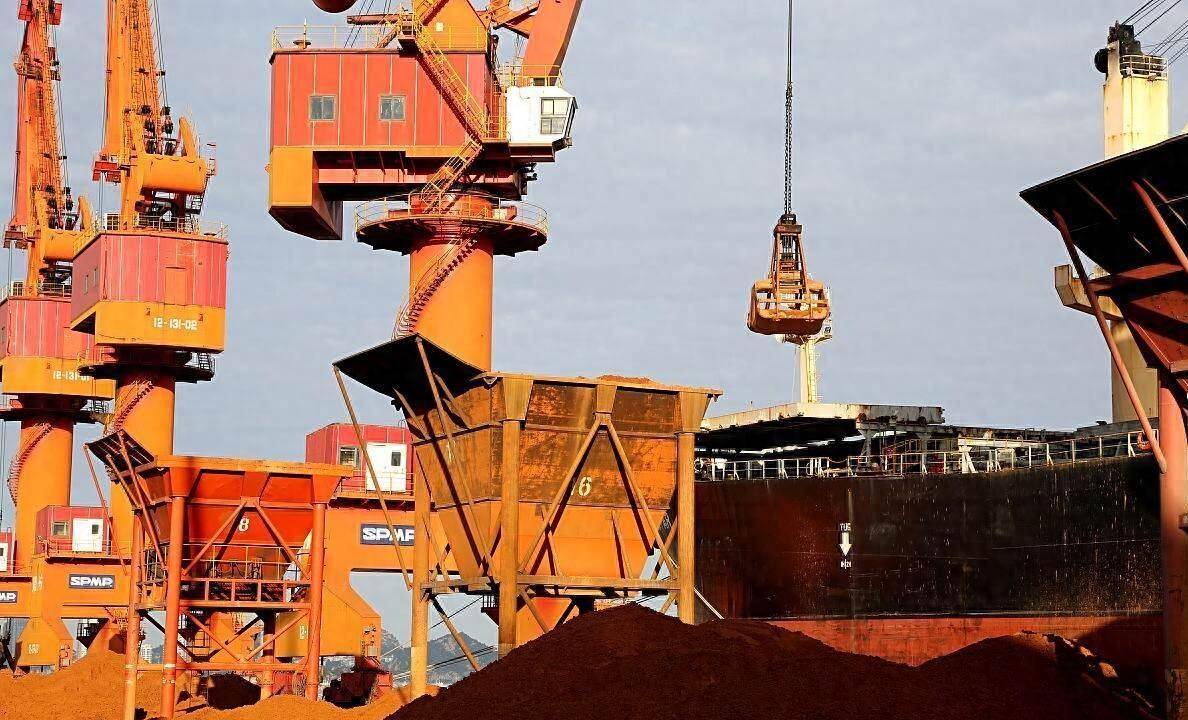
Group 1: Steel Import and Export Dynamics - In June, China's iron ore imports surged to 105.95 million tons, marking a record high for the year and an 8% increase from May, driven by mining companies aiming to meet quarterly targets [1] - The price of iron ore fell to approximately $94 per ton, providing an opportunity for domestic steel mills to increase procurement and reduce production costs [1] - China's steel exports reached a record 58.15 million tons in the first half of the year, a significant increase of 9.2% year-on-year, attributed to competitive pricing compared to other countries [4] Group 2: Inventory and Domestic Market Challenges - As a result of increased imports, iron ore inventory at major Chinese ports reached 133.6 million tons by the end of June, a 0.5% increase from the previous month, raising concerns about potential oversupply [2] - Domestic steel production is increasingly reliant on exports due to weak domestic demand, with real estate investment down 10.7% and new construction area down 22.8% [8] - Steel imports fell to 470,000 tons in June, a year-on-year decrease of 18%, reflecting a reduced dependence on foreign resources [5] Group 3: Trade Policies and Market Risks - Trade tensions have introduced uncertainty for Chinese steel exports, with Vietnam imposing a 23.8% anti-dumping tax on Chinese hot-rolled coils, leading to a 26% drop in exports to Vietnam in the first half of the year [6] - The number of trade remedy investigations against Chinese steel products has doubled to 18, indicating a rise in global protectionism [6] - Despite the challenges, emerging market demand, particularly from countries along the Belt and Road Initiative, has provided support for Chinese steel exports [4]

中国经济内外部挑战的基本逻辑和前景展望
2025-07-16 06:13
Summary of Conference Call Industry or Company Involved - The discussion primarily revolves around the impact of the U.S. tariff policy, specifically the "reciprocal tariffs" introduced by the Trump administration, and its implications for the U.S. economy and global trade dynamics. Core Points and Arguments 1. **Introduction of Reciprocal Tariffs**: The reciprocal tariffs were implemented on April 2, 2024, and have been evolving since then, with ongoing discussions about potential negotiations between the U.S. and China [1][2][3]. 2. **Tariff Calculation Methodology**: The tariffs are calculated based on the trade deficit the U.S. has with other countries, with a specific formula provided by the U.S. Trade Representative's office. For instance, the trade deficit with China was $295.4 billion against imports of $438.9 billion, resulting in a tariff rate of approximately 67% [2][3]. 3. **Tariff Rates on Other Countries**: Besides China, the U.S. has imposed tariffs on other countries, such as 40% on Vietnam and around 50% on Lesotho, indicating a broad application of these tariffs [3]. 4. **Underlying Economic Logic**: The rationale behind these tariffs is argued to be flawed, as the U.S. trade deficit is more a reflection of domestic demand exceeding supply rather than unfair trade practices by other countries [4][5][6]. 5. **Historical Context of the Dollar**: The discussion highlights the historical evolution of the international monetary system, particularly the transition from the Bretton Woods system to the current fiat currency system, which has allowed the U.S. to maintain a trade deficit by printing dollars without physical backing [8][9][10]. 6. **Consequences of Trade Deficits**: The U.S. has benefited from its trade deficits by acquiring goods and services globally at a low cost, but this has led to domestic issues such as deindustrialization and widening income inequality [11][12][16][17]. 7. **Potential Solutions for the U.S.**: Suggestions include abandoning dollar hegemony and establishing a supranational currency to address income inequality and the negative impacts of globalization [18][19][20]. 8. **Impact on U.S. Economy**: The implementation of reciprocal tariffs has led to a significant decline in investment confidence in the U.S., as evidenced by the Syntex investment confidence index [25]. The tariffs have also created uncertainty in the global economic outlook, affecting investment willingness [25][27]. 9. **Financial Market Reactions**: The financial markets have reacted negatively to the tariffs, with a notable decline in the U.S. dollar's strength and rising bond yields, indicating a loss of confidence in the U.S. as a safe haven [26][27][32]. 10. **Future Globalization Trends**: The current global trade dynamics are shifting, with the potential for a new form of globalization that may depend heavily on China's economic choices and domestic policies [23][24]. Other Important but Possibly Overlooked Content 1. **Domestic Economic Pressures**: The U.S. faces significant internal pressures, including rising inflation and a potential debt crisis as the trade deficit is compressed [37][38]. 2. **China's Economic Strategy**: China is encouraged to enhance domestic consumption and investment to mitigate the impacts of U.S. tariffs and maintain economic stability [23][24][50]. 3. **Long-term Economic Outlook**: The long-term sustainability of the U.S. economic model, heavily reliant on trade deficits and dollar dominance, is questioned, with implications for future economic policies [32][57]. This summary encapsulates the key points discussed in the conference call, providing insights into the implications of U.S. tariff policies and the broader economic context.
央行加大货币政策调控强度,应对内需不足、物价低位双重挑战
Sou Hu Cai Jing· 2025-06-30 01:43
Core Viewpoint - The People's Bank of China (PBOC) is adjusting its monetary policy to enhance its effectiveness and responsiveness to the current complex economic environment, indicating a more proactive approach in policy implementation [1][3]. Economic Analysis - The meeting highlighted the increasingly complex and severe external environment, with weakened global economic growth and rising trade barriers. Internally, it emphasized insufficient domestic demand and the new challenge of persistently low prices, providing a more detailed analysis compared to previous meetings [3][4]. Policy Adjustment - The monetary policy committee stressed the importance of maintaining ample liquidity and guiding financial institutions to increase credit supply. It aims to align the growth of social financing and money supply with economic growth and price level expectations, reflecting a coordinated approach between monetary policy and economic development goals [4][5]. - Recommendations were made to strengthen the central bank's policy interest rate guidance and improve the market-based interest rate transmission mechanism, with a focus on reducing overall financing costs [4]. Structural Policy Tools - The meeting called for specific measures to deepen financial supply-side structural reforms, urging large banks to enhance their role in supporting the real economy while smaller banks focus on their core responsibilities. This indicates a clear understanding of the differentiated roles of various financial institutions [5]. - Emphasis was placed on effectively implementing various structural monetary policy tools, particularly in supporting technology innovation and boosting consumption. The meeting also highlighted the need to stabilize the capital market through mechanisms like stock repurchase and loan facilitation [5]. - In the real estate sector, the focus shifted from merely stabilizing the market to consolidating its stability, with calls to enhance the vitality of existing properties and land, reflecting a slight adjustment in policy focus [5].

全面解读4月经济:不只是关税
GOLDEN SUN SECURITIES· 2025-05-19 13:33
Economic Overview - In April 2025, industrial added value increased by 6.1% year-on-year, down from 7.7% in the previous period, while retail sales grew by 5.1%, a decrease from 5.9%[1] - Fixed asset investment for January-April rose by 4.0% year-on-year, slightly down from 4.2%, with real estate investment declining by 10.3%[1][2] Consumption Trends - Retail sales in April fell short of expectations, with a year-on-year growth of 5.1%, down 0.8 percentage points from the previous value and below the market expectation of 5.5%[3][12] - The consumption of gold and silver jewelry, cultural office supplies, and building materials saw the highest growth rates, while automotive consumption remained volatile[3][14] Investment Insights - Real estate investment saw a significant decline, with a year-on-year drop of 10.3%, compared to a previous decline of 9.9%[5][18] - Manufacturing investment increased by 8.8% year-on-year, down from 9.1%, indicating a slight decrease in corporate investment willingness[5][26] Supply and Production - Industrial production growth was recorded at 6.1%, a decrease of 1.6 percentage points from the previous period, but still above market expectations of 5.2%[5][38] - The service sector's production index fell by 0.3 percentage points to 6.0% year-on-year[39] Employment and Economic Outlook - The urban survey unemployment rate in April was 5.1%, down 0.1 percentage points, consistent with seasonal trends[44] - Looking ahead, the second quarter is expected to maintain economic resilience, with GDP growth projected around 5%, but pressures are anticipated to increase in the second half of the year[2][10][11]
需求不足是怎么样炼成的:不怕高税率,就怕没回路
Sou Hu Cai Jing· 2025-05-09 04:46
Group 1 - The core argument is that the trade war has shifted the focus from external demand to internal demand, making the latter the cornerstone for winning the trade war, emphasizing the need for certainty in internal demand [3][5] - The issue of insufficient internal demand is linked to the high tax burden on private enterprises, which leads to low profitability and potential market exit, thereby reducing the tax base and overall income [4][9] - The comparison with Western developed countries highlights that despite high tax systems, they do not face demand shortages due to a greater allocation of tax revenue towards social welfare rather than administrative costs, leading to a more balanced distribution of resources [7][9] Group 2 - The high administrative costs in the domestic economy are identified as a direct cause of insufficient demand, indicating that tax revenue must be effectively redistributed to stimulate consumption [9] - The article suggests that the current economic model is unsustainable, as low corporate profits lead to cost-cutting measures that can spiral into a decline in the middle-income group, creating a negative feedback loop [4][9]

一季度京沪消费均下滑,北京3月大降近10%!最有钱的人买不动了?
Sou Hu Cai Jing· 2025-04-27 09:57
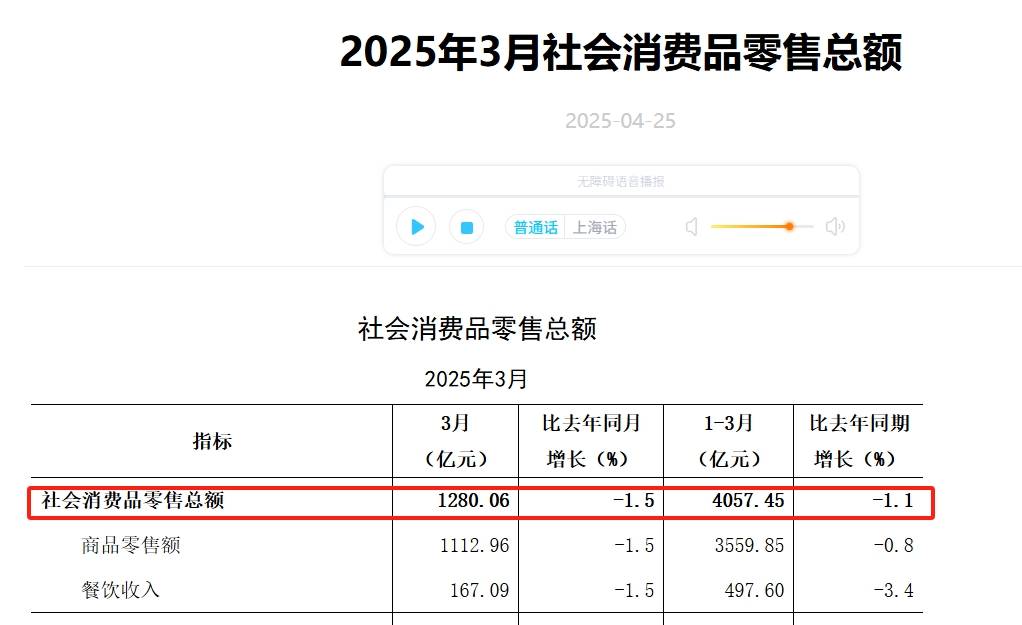
Core Insights - In Q1 2025, China's total retail sales of consumer goods reached 12.5 trillion yuan, with a year-on-year growth of 4.6%, and March saw a consumption growth rate of 5.9, indicating a potential recovery in domestic consumption [1] - However, major cities like Shanghai and Beijing are experiencing consumption decline, raising concerns about the overall economic recovery [1] Group 1: Shanghai's Consumption Data - In Q1 2025, Shanghai's total retail sales of consumer goods amounted to 405.7 billion yuan, ranking first among major cities, but the consumption growth rate was negative at -1.1% [4] - In March, Shanghai's retail sales fell by 1.5%, which was lower than the overall quarterly performance, indicating a significant decline in consumer spending [4] Group 2: Beijing's Consumption Data - Beijing's total retail sales of consumer goods in Q1 2025 were 345.9 billion yuan, with a further decline in March reaching -3.3% [5] - March's consumption total in Beijing was 104.9 billion yuan, showing a sharp year-on-year decline of 9.9%, nearly breaching the 10% mark [5] Group 3: Factors Contributing to Consumption Decline - The large consumption base in Shanghai and Beijing makes them more sensitive to internal demand shortages, leading to significant impacts from minor economic fluctuations [7] - The automotive market's performance is weak, with March sales in Beijing and Shanghai dropping by 20.2% and 18.5%, respectively, compared to a national growth of 5.5% [9] - The decline in real estate prices since late 2021 has negatively impacted consumer confidence, particularly among high-net-worth families in these cities [9] - Income growth in Shanghai and Beijing is lagging behind the national average, with Q1 2025 growth rates of 4.6% and 5%, respectively, compared to the national average of 5.5% [10] Group 4: External Influences on Consumption - Factors such as foreign capital withdrawal, reduced business dining, and restrictions on official receptions have also contributed to the consumption decline in Beijing and Shanghai [12] - In Q1 2025, restaurant consumption in Shanghai and Beijing fell by 3.4% and 3.8%, respectively, while national restaurant income increased by 4.7%, highlighting the local consumption challenges [12] Group 5: Implications for National Economy - The consumption decline in Beijing and Shanghai is significant, as their recovery is crucial for the overall confidence in China's domestic demand [14]
彭森:一定要提振消费,为消费正名,中国经济要走消费繁荣的道路
Sou Hu Cai Jing· 2025-03-25 11:19
Core Viewpoint - The emphasis on boosting consumption is crucial for China's economic prosperity, as the country needs to shift towards a consumption-driven growth model [5][6]. Economic Situation - China's economy has stabilized and is on a sustainable growth path, with a recovery trend that is irreversible [5]. - Achieving the GDP doubling target set for 2035 under the "14th Five-Year Plan" will require significant effort [5]. - Reform and opening-up remain key to China's future and high-quality development, with a focus on market-oriented reforms [5]. Challenges - The primary challenge facing China's economy is insufficient domestic demand, which is largely due to weak consumer spending [6]. - Traditional views favoring production over consumption have led to policies and systems that are not conducive to consumer spending, resulting in suppressed consumption [6]. Consumption Comparison - Current consumption rates in China are significantly lower than those in developed countries, with China's overall consumption rate at 55% compared to around 80% in the U.S. [6]. - The final consumption rate in China is only 38%, while it is generally around 60% in Western countries, indicating a 25 percentage point gap [6].