卡脖子技术

Search documents
重大战略!最新解读来了
中国基金报· 2025-08-10 12:39
Core Viewpoint - The article discusses the significance of the "Guiding Opinions on Financial Support for New-Type Industrialization," which aims to inject financial resources into China's new industrialization efforts, focusing on 18 targeted support measures [1]. Group 1: Positive Impacts of the Opinions - The Opinions provide financial "lifeblood" to promote new industrialization by increasing the supply of financial resources, especially medium- and long-term funding [13]. - It emphasizes the need for a comprehensive financial product and service system, including support for technology transfer and encouraging intellectual property pledge financing [13]. - The Opinions serve as an action guide for financial support to the manufacturing sector and are crucial for enhancing China's production capabilities [13][14]. Group 2: Structural Changes in New-Type Industrialization - New-type industrialization is expected to undergo three structural transformations: technology-driven breakthroughs, deep restructuring of traditional industries, and regional resource reallocation [17]. - The financial structure for manufacturing will become more rational, with a focus on advanced manufacturing and improved collaboration within the industrial chain [17][18]. - The Opinions aim to establish a mature financial system by 2027 that supports high-end, intelligent, and green development in manufacturing [17][18]. Group 3: Role of Capital Markets - Capital markets are identified as key platforms for supporting new industrialization by providing long-term, low-cost funding for technology-intensive manufacturing enterprises [21]. - The article highlights the importance of a multi-tiered capital market system to meet the long-term funding needs from research and development to industrialization [21][22]. - Capital markets can help improve corporate governance and transparency, which is essential for aligning with international standards [21][22]. Group 4: Investment End Reform and Long-Term Assessment - The Opinions stress the need for investment end reform and long-term assessment mechanisms to shift focus from short-term profits to strategic direction and technological breakthroughs [25][27]. - Challenges in emerging industries include long technology conversion cycles and insufficient early-stage capital supply, which the reform aims to address [26][28]. - Long-term assessment mechanisms will enhance the willingness of long-term capital to invest in cutting-edge fields, facilitating the transition from laboratory results to industrial applications [25][27]. Group 5: Preventing "Involution" in Competition - The Opinions emphasize the need to prevent "involution" in competition by guiding financial resources towards innovative and high-tech enterprises [33][34]. - Financial institutions are encouraged to implement differentiated credit policies and optimize supply through industry self-regulation [33][34]. - The "anti-involution" approach aims to shift competition from price-based to technology-based, enhancing overall industry quality and reducing systemic risks [33][35]. Group 6: Investment Opportunities in Emerging Industries - The article identifies key investment opportunities in sectors such as innovative pharmaceuticals, AI applications, and industrial internet, driven by policy support and market demand [41][42]. - Focus areas include high-end manufacturing, smart equipment, and digital infrastructure, which are expected to benefit from financial support and technological breakthroughs [41][42][43]. - The emphasis on green finance tools will aid enterprises in their transition towards sustainability, enhancing resource utilization [18][41].


安融评级首席经济学家周沅帆 :支持科创、消费等关键领域 金融要在三方面下功夫
Zhong Guo Jing Ying Bao· 2025-08-09 06:13
Group 1 - The Central Political Bureau of the Communist Party of China emphasizes the need for sustained macroeconomic policies, including proactive fiscal policies and moderately loose monetary policies to enhance policy effectiveness [1] - The meeting highlights the importance of accelerating government bond issuance and improving fund utilization efficiency, while maintaining ample liquidity in monetary policy to lower overall financing costs [1] - The focus for the second half of the year includes addressing key areas such as "bottleneck" technologies and promoting domestic demand growth under the "dual circulation" strategy [2][4] Group 2 - The meeting introduces the concept of "effective, orderly, and powerful" clearing of local financing platforms, with a timeline set for completion by June 2027 [2] - The number of local financing platforms has significantly decreased from over 15,000 to around 3,000, indicating a clear progress in the clearing process [2] - Future efforts will focus on increasing the speed and intensity of clearing, while ensuring that the process is orderly and does not lead to a resurgence of past issues [3] Group 3 - The economic growth in the first half of the year is attributed to several factors, including active fiscal policies, effective management of local government debt, and a series of industrial policies that have spurred productivity [4] - The narrowing gap in the urban-rural structure and between different regions is also noted, with significant investment opportunities in rural infrastructure and healthcare [4] - Financial support is needed in three key areas: market-oriented interest rates, loan securitization, and asset securitization, particularly in the real estate sector [5]
首个国资基础研究公益基金会来了
3 6 Ke· 2025-08-05 01:05
Core Points - Shanghai has released measures to support enterprises in enhancing basic research and promoting high-quality development, focusing on financial subsidies, funding matching, and tax incentives [1][2] - The measures aim to strengthen the role of enterprises in technological innovation and increase their investment in basic research [1][2] Financial Support - Enterprises investing over 100 million yuan annually in basic research will receive a one-time financial subsidy of 10 million yuan; those investing between 50 million and 100 million yuan will receive 5 million yuan; and those investing between 10 million and 50 million yuan will receive 2 million yuan [2] - Support for the establishment or donation to basic research public welfare funds is also included, with a matching support of 50% of the fund's investment for projects supported in Shanghai [2] National and Local Initiatives - The Shanghai State-owned Assets Supervision and Administration Commission has established the Shanghai Qiyuan National Assets Innovation Fund, the first public welfare fund for basic research initiated by national assets [3] - The fund focuses on supporting basic and applied research with disruptive potential, particularly in strategic areas like chips and quantum technology [3][4] "Explorer Program" - The Shanghai Municipal Science and Technology Commission has launched the "Explorer Program" to attract more leading technology enterprises to participate in basic research [5][6] - The program aims to convert engineering challenges faced by industries into basic scientific problems, facilitating collaboration between enterprises and research institutions [6][7] - The program has expanded from 2 to 22 cooperating enterprises, covering various fields such as integrated circuits and biomedicine [6] Collaboration and Innovation - The "Explorer Program" encourages enterprises to focus on key research issues and guide local research teams in targeted basic research, promoting a collaborative approach [7] - The measures also empower enterprises with greater decision-making authority in basic research and support the sharing of scientific instruments and facilities [7]
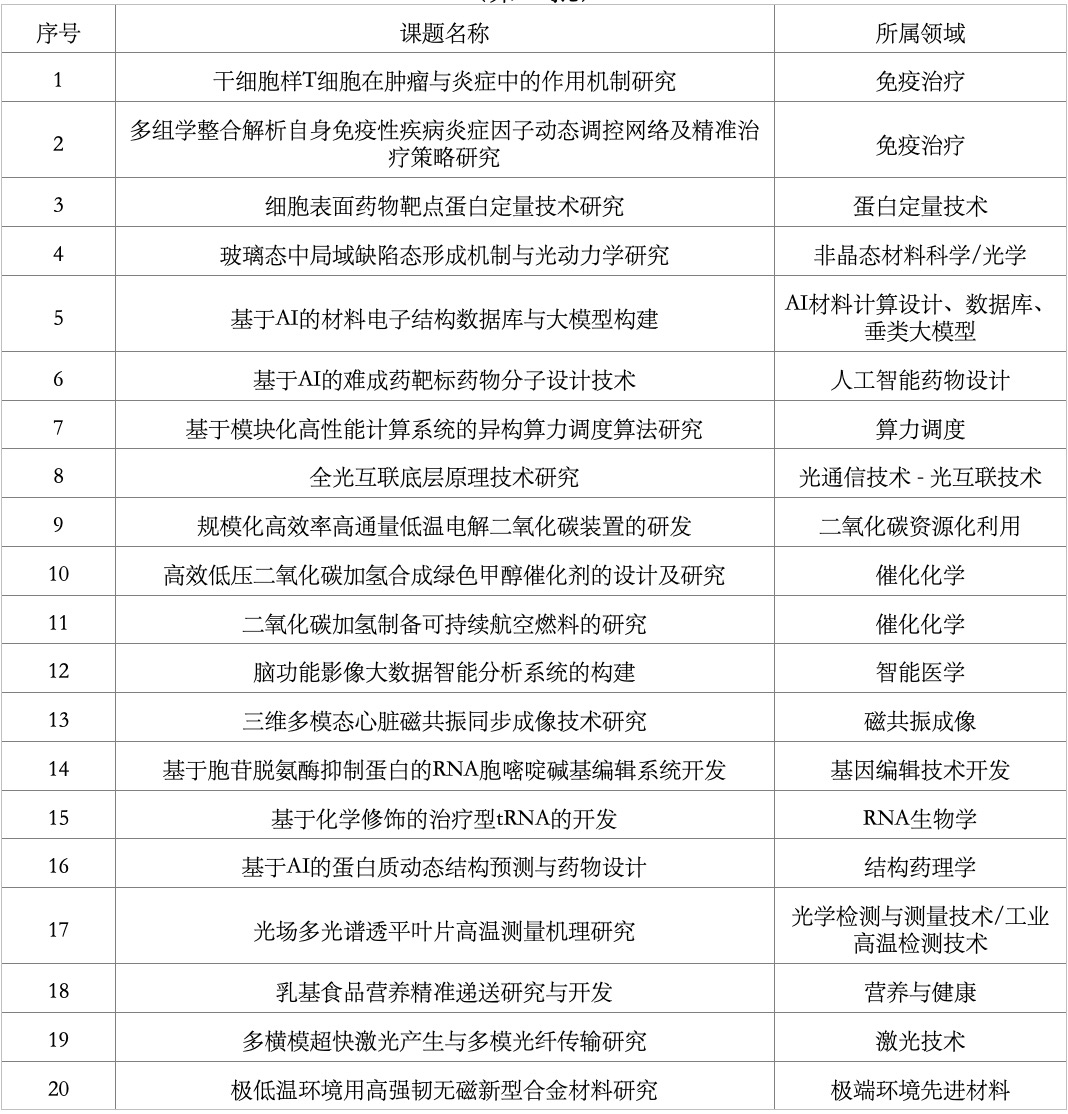
上海成立国资创新策源公益基金会,首批发布20个基础研究需求
Di Yi Cai Jing· 2025-07-30 13:23
Core Viewpoint - The establishment of the Qiyuan Public Welfare Foundation aims to support high-risk, high-value fundamental research and concept verification, particularly focusing on youth innovation in Shanghai [1][2]. Group 1: Foundation Overview - The Qiyuan Public Welfare Foundation is the first public welfare foundation for basic research initiated by national state-owned assets, with contributions from 16 state-owned enterprises in Shanghai [2]. - The foundation's mission is to "gather state-owned capital strength, stimulate innovation vitality, and promote the creation of an original technology source" [2]. Group 2: Focus Areas - The foundation will concentrate on four key areas: 1. Tackling critical issues aligned with national strategic needs and Shanghai's leading industries, supporting innovative projects with disruptive potential [2]. 2. Exploring frontier disciplines such as quantum technology and brain science, focusing on high-risk, controversial projects [2]. 3. Connecting various resources to facilitate the transformation from laboratory research to industrial application [2]. 4. Supporting young talents with innovative potential through early-stage funding [2]. Group 3: Future Initiatives - The foundation plans to transform corporate innovation challenges into funding lists and convert public investment into industrial value through collaborative efforts [3]. - During the unveiling ceremony, 20 basic research needs from Shanghai's state-owned enterprises were publicly announced, and cooperation agreements were signed with various academic and research institutions [3]. Group 4: Research Topics - The foundation has identified a list of research topics, including: 1. Mechanisms of stem cell-like T cells in tumors and inflammation [5]. 2. AI-based drug molecule design technology [5]. 3. Research on catalysts for sustainable aviation fuel production from carbon dioxide [5]. 4. Development of RNA cytosine base editing systems [5]. 5. Research on high-strength, non-magnetic new alloy materials for extreme environments [5].
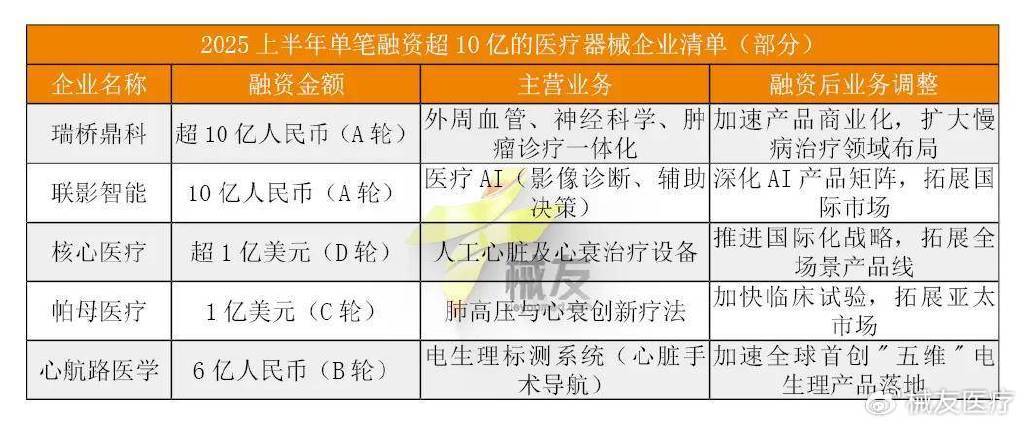
医疗器械领域2025上半年10大融资,这些公司凭什么狂揽近百亿?
Sou Hu Cai Jing· 2025-07-17 06:21
Core Insights - The capital market has shown strong confidence in the medical industry in the first half of 2025, with significant financing and stock price surges for various companies [1] - Notable companies have successfully attracted large investments, indicating a trend towards innovative medical technologies and solutions [22] Financing Highlights - 瑞桥鼎科 raised over 1 billion RMB in Series A funding, focusing on chronic disease treatment through advanced medical technology and rapid product iteration [2] - 联影智能 also secured 1 billion RMB in Series A funding, specializing in medical AI with over 100 product certifications, enhancing diagnostic capabilities [4] - 核心医疗 raised 100 million USD in Series D funding, recognized for its artificial heart solutions and comprehensive treatment offerings [8] - 帕母医疗 obtained 100 million USD in Series C funding, targeting therapies for pulmonary hypertension and heart failure [10] - 心航路医学 raised 600 million RMB in Series B funding, developing advanced cardiac electrophysiology systems for safer surgeries [12] - 康诺思腾 secured 500 million RMB in Series C funding, focusing on surgical robots with self-developed technology [14] - 图湃医疗 raised 500 million RMB in Series E funding, aiming to reduce costs for high-end ophthalmic equipment [16] - 汕头超声 raised 430 million RMB through its IPO, transitioning from industrial to medical ultrasound applications [18] - 微创医疗 raised 458 million HKD, utilizing capital from divesting subsidiaries to support its medical robotics business [20] Investment Trends - The investment landscape is increasingly favoring companies that can overcome critical technological barriers, such as artificial hearts and surgical robots, or those that address cost issues in healthcare through low-cost devices and AI assistance [22]
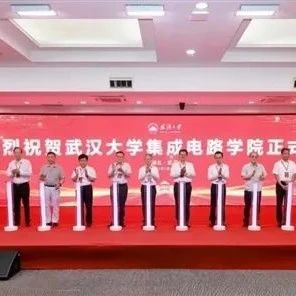
武汉大学成立集成电路学院!
国芯网· 2025-07-10 12:58
Core Viewpoint - The establishment of the Integrated Circuit College at Wuhan University aims to address national strategic needs and tackle "bottleneck" technology challenges in the semiconductor industry [2]. Group 1: Establishment of Integrated Circuit College - Wuhan University officially inaugurated its Integrated Circuit College, with Academician Liu Sheng appointed as the dean [2]. - The college is designed to provide high-quality technological and talent support for the integrated circuit field, aligning with the university's goal of becoming a world-class institution in 5-10 years [2]. - The establishment is seen as a strong response to the country's strategic demands and the need to overcome critical technology challenges [2]. Group 2: Strategic Collaboration - Longsys Storage signed a strategic cooperation agreement with Wuhan University to explore new models of "industry-education integration" and cultivate talent with both theoretical knowledge and engineering skills [2]. - The focus areas for technological breakthroughs include EDA tools, high-end chip design, advanced packaging, and third-generation semiconductor devices [2].
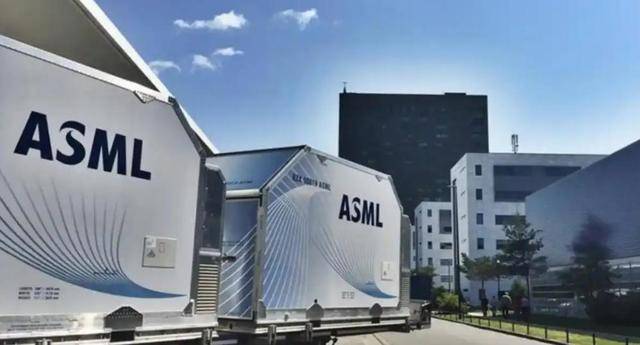
欧洲卡中国光刻机脖子,中国却在意欧洲稀土需求,这是为什么?
Sou Hu Cai Jing· 2025-07-03 10:09
Core Viewpoint - The article highlights the critical dependence of the European Union on China's rare earth exports, which account for 80% of its supply, and contrasts this with past Western actions against China regarding technology exports [1][3][5] Group 1: Dependence on Rare Earths - The EU relies heavily on China for rare earth elements, with 80% of its supply coming from China, which is essential for various industries including electric vehicles, advanced military equipment, and renewable energy [1][3] - Rare earths are described as the "vitamins" of modern industry, crucial for the functionality of electric motors, radar systems, and wind turbines [3][5] Group 2: Historical Context - The article reflects on the past when Western countries imposed technology bans on China without hesitation, particularly in the context of advanced technologies like lithography machines and semiconductor components [7][9] - Huawei's experience is cited as a significant example of the abrupt closure of global supply chains for Chinese companies, leading to a push for self-reliance in technology development [9][11] Group 3: Environmental Considerations - The environmental impact of rare earth mining in China is discussed, highlighting the ecological damage caused by past extraction methods and the significant investments made to improve environmental standards [14][15] - The article points out the irony that those benefiting from cheap rare earths often ignore the environmental costs borne by China, emphasizing the inequity in the global supply chain [17] Group 4: Supply Chain Challenges - Western countries are attempting to establish alternative supply chains for rare earths, but face significant challenges, particularly in the processing and refining stages, which are complex and environmentally risky [19][20] - China's comprehensive and integrated rare earth industry, developed over decades, presents a formidable barrier for other countries trying to replicate its success [20] Group 5: Changing Dynamics - The article suggests that China's current rare earth policies should not be viewed merely as retaliation but as a necessary adjustment to a shifting global power dynamic, emphasizing the need for mutual respect in international trade [21][23] - The new approach to rare earth exports requires transparency and fair pricing, reflecting a shift from previous unilateral practices to a more balanced framework for cooperation [23][25]
康达新材(002669) - 2025年5月8日投资者关系活动记录表
2025-05-08 11:56
Financial Performance - In Q1 2025, the company achieved a net profit of 6.37 million yuan, a 125.70% increase compared to the same period last year, indicating a significant recovery in performance [3][12] - The revenue scale increased substantially during the reporting period, leading to a turnaround from loss to profit [5][12] - The company aims to enhance market expansion and product development to further improve operational efficiency and profitability [10][12] Shareholder Relations - The company received a total of 243,528,000 yuan from the sale of shares in Cai Jing Optoelectronics by the end of 2024, and an additional 162,352,000 yuan in Q1 2025, which does not affect revenue accounts [1][7] - There are plans to consider dividend distribution based on market conditions and company performance [5][12] - The company is committed to improving investor relations and enhancing information disclosure to align market perception with intrinsic value [11][12] Strategic Development - The company is focusing on expanding its capabilities in high-end electronic information materials and adhesive new materials, aiming to create a second growth engine [10][12] - Future growth will be driven by strategic investments in emerging industries and new productive forces, aligning with national development strategies [12] - The company plans to strengthen its market position in the electronic information materials sector, particularly in ITO targets and low-temperature co-fired ceramics [8][10] Challenges and Risks - The company has faced challenges in its merger and acquisition projects, with a total profit of 40 million yuan from the acquisition of Jin Cai Technology over two years, against a performance commitment of 90 million yuan [3][12] - A goodwill impairment of 29.48 million yuan was recorded for Jin Cai Technology due to cautious assessments during the commitment period [4][12] - Market conditions have led to reduced orders and delayed deliveries, impacting profitability in the electronic information materials and electronic technology sectors [12]

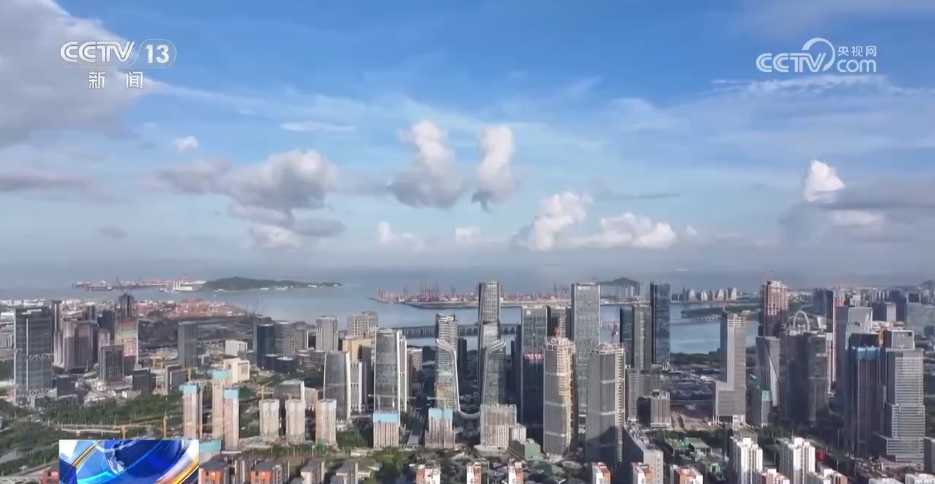
创业“礼包”让敢闯敢试创业者底气更足 深圳多举措精准发力稳企业
Zhong Guo Chan Ye Jing Ji Xin Xi Wang· 2025-05-06 00:40
Group 1 - The central government emphasizes "stabilizing enterprises" as a key economic focus for the first time, alongside stabilizing employment, markets, and expectations [1] - In 2024, Shenzhen registered 562,000 new business entities, averaging nearly 50,000 new entities per month, leading the country in entrepreneurial density [1] - Shenzhen's Baoan District introduced a "zero rent" policy for office space, attracting eight companies within a month of its announcement [1] Group 2 - Small and micro technology enterprises in Shenzhen can apply for various subsidies, including up to 85,000 yuan in startup subsidies and 5 million yuan in guaranteed loans [2] - Shenzhen has opened 30 state-owned enterprise scenarios for AI companies to validate their technologies, successfully connecting 109 enterprises [3][4] - The city is planning to release a second batch of 50 selected application scenarios to provide more testing opportunities for private enterprises [4] Group 3 - Shenzhen's initiatives include not just policies but also opportunities, transforming the city into a testing ground for innovative products [6] - The city offers housing support for job-seeking graduates, including a "15 days rent-free" policy, attracting over 20,000 applicants [7] - By 2024, the number of national high-tech enterprises in Shenzhen is expected to exceed 25,000, with over 90% being private enterprises [7]

厚植营商、科创、人才“沃土”!深圳全链赋能 激发创新活力
Yang Shi Wang· 2025-04-29 08:35
Group 1 - The central government emphasizes "stabilizing enterprises" as a key focus in economic work for the first time, alongside stabilizing employment, markets, and expectations [1] - Guangdong province, leading in private economy, faces development challenges, prompting local governments to implement targeted measures to support enterprises [1] Group 2 - Shenzhen has registered 562,000 new business entities last year, averaging nearly 50,000 new entities per month, making it the city with the highest entrepreneurial density among major cities in China [2] - The city has introduced "zero rent" policies for small and micro technology enterprises, with Bao'an District offering 17,800 square meters of office space and over 390 workstations with 3 to 12 months of rent-free office space [2][4] Group 3 - Eight companies have already settled in the "zero rent" space, showcasing innovative products such as a singing card and robotics undergoing product validation [4] - Small and micro technology enterprises in Shenzhen can apply for various startup subsidies up to 85,000 yuan and guaranteed loans up to 5 million yuan, alongside access to major technological infrastructure and discounted computing services [5] Group 4 - Shenzhen is addressing the challenge of connecting technological innovation with market application by providing practical testing opportunities for robotics in real-world scenarios, such as at the Bao'an Airport [6][8] - The city has opened 30 state-owned enterprise scenarios for AI companies, successfully connecting 109 enterprises for practical applications [8][9] Group 5 - Shenzhen's approach to talent acquisition includes providing housing support for job-seeking graduates, such as a "15 days rent-free" policy, attracting over 20,000 applicants and serving nearly 8,000 graduates [12] - The city's talent integration service platform allows for rapid residency processing, enabling new residents to access education, healthcare, housing, and social security benefits [13] Group 6 - By 2024, the number of national high-tech enterprises in Shenzhen is expected to exceed 25,000, with over 90% being private enterprises, and the added value of strategic emerging industries is projected to account for 42.3% of GDP [13]