
同股不同权

Search documents
融资前差点丢了公司!多亏这位法律军师的 “股权救命课”
Sou Hu Cai Jing· 2025-09-23 14:54
Core Insights - The article discusses the challenges faced by a founder of an AI medical company regarding equity dilution and control after securing a Pre-A round investment [2][3] - It highlights the importance of a well-structured equity plan to maintain decision-making power while attracting investment [3][4] Group 1: Investment Challenges - The founder, referred to as Chen, is concerned about losing control of the company due to a proposed 20% equity stake for investors, which would dilute his ownership from 45% to 36% [2] - Chen realizes that the current equity structure does not account for "control rights," which could lead to a loss of decision-making power if partners side with investors [3] Group 2: Legal and Strategic Solutions - Lawyer Duan provides a dual perspective solution, suggesting the introduction of "dual-class shares" to separate economic rights from voting rights, allowing Chen to retain 51% voting power despite a reduced economic stake [3][4] - The proposed structure allows Chen to maintain control over major decisions, ensuring that he can still influence the company's direction even with diluted ownership [4] Group 3: Successful Outcome - The revised equity structure received approval from all stakeholders, leading to a successful Pre-A round financing that increased the company's valuation from 50 million to 120 million [4] - By mid-2024, the company is set to initiate a B round of financing, with a valuation doubling to 250 million, showcasing the effectiveness of the new equity structure [4]
前三季度港股IPO集资额升228%,556亿稳居全球集资首位
2 1 Shi Ji Jing Ji Bao Dao· 2025-09-23 11:27
Group 1 - The Hong Kong IPO market has seen unprecedented subscription enthusiasm this year, with record oversubscription rates, including a leading 7558 times for a major company [1] - Deloitte's report indicates that Hong Kong is expected to maintain its position as the global leader in new stock fundraising, with 66 new listings and a total fundraising amount of HKD 182.3 billion in the first three quarters of this year, representing a 47% increase in the number of new stocks and a 228% increase in fundraising compared to the same period last year [1][2] - The report forecasts that the strong momentum in the Hong Kong IPO market will continue into the last quarter of this year, with over 80 new listings expected in 2025, raising between HKD 250 billion to HKD 280 billion [1][2] Group 2 - The influx of overseas funds into Hong Kong is anticipated to support several large IPOs in the fourth quarter, driven by the Federal Reserve's interest rate cuts, creating a favorable valuation environment [2][3] - In the first three quarters of this year, six large IPOs are expected, including five A+H shares and one spin-off project, along with four other large IPOs [2] - The China Securities Regulatory Commission has introduced measures to support leading domestic companies in listing in Hong Kong, which, along with the Hong Kong Stock Exchange's initiatives, is expected to attract more innovative companies to the market [4] Group 3 - The average first-day return for new stocks in Hong Kong this year is 33%, significantly higher than the 9% recorded in the same period last year, indicating improved market performance [4][5] - A total of 98% of new stocks this year received oversubscription, with 87% achieving oversubscription rates exceeding 20 times [5] - The healthcare and pharmaceutical sectors have seen the highest number of IPOs, while the manufacturing sector has led in fundraising amounts, driven by significant projects like CATL [6] Group 4 - The diversity of the IPO market in Hong Kong is highlighted by its representation across various sectors, including industrial, financial, consumer, healthcare, technology, media, telecommunications, and renewable energy, reflecting a mature and balanced market ecosystem [7] - The attractiveness of the Hong Kong market to foreign capital is increasing due to the variety of sector allocation opportunities available [7]

中概股回归有望加速 港股市场活力或持续提升
Zheng Quan Ri Bao· 2025-09-21 23:55
Core Viewpoint - The Hong Kong government is taking steps to support the return of Chinese concept stocks (Chinext) to the Hong Kong market, including optimizing the "dual-class share" listing regulations, which is expected to enhance the attractiveness and liquidity of the Hong Kong stock market [1][4]. Group 1: Market Conditions and Regulations - As of September 21, there are 412 Chinese concept stocks with a total market capitalization of approximately $1.34 trillion, with 339 companies listed on NASDAQ valued at about $712 billion [2]. - The tightening of IPO and delisting policies on NASDAQ may accelerate the return of Chinese concept stocks, with new minimum fundraising requirements set at $25 million for companies primarily operating in China [2]. - The Hong Kong Stock Exchange (HKEX) has implemented various reforms, including a dedicated "Tech Company" channel to facilitate the return of Chinese concept stocks [4]. Group 2: Opportunities for Return - The return of Chinese concept stocks is expected to follow four main pathways: secondary listings, privatization followed by relisting, spin-off listings, and direct applications for dual primary listings [5]. - High-quality Chinese concept stocks, particularly those with stable profit models and international influence, are more likely to meet the listing requirements on the HKEX [2][5]. - The potential return of 27 Chinese concept stocks could add over HK$1.4 trillion in market capitalization to the Hong Kong market, with an expected increase of HK$19 billion in daily trading volume [5]. Group 3: Impact on Market Structure - The return of Chinese concept stocks is anticipated to enhance the vitality and scale of the Hong Kong market, with a focus on technology and new economy sectors [5]. - The optimization of the "dual-class share" system is expected to create a more favorable and competitive listing environment for Chinese concept stocks [4][5]. - The inclusion of more high-growth potential companies that do not currently meet high market capitalization or revenue standards is likely to improve the overall market structure and attractiveness of the Hong Kong stock market [4][5].
中概股回归有望加速
Zheng Quan Ri Bao· 2025-09-21 15:37
Group 1 - The Hong Kong government is taking steps to support the return of Chinese concept stocks (Chinext stocks) to the Hong Kong market, including optimizing the "dual-class share" listing regulations [1][4] - As of September 21, there are 412 Chinese concept stocks with a total market capitalization of approximately $1.34 trillion, with 339 of these listed on NASDAQ [2] - 15% of top-quality Chinese concept stocks account for over 90% of the total market value of all Chinese concept stocks, indicating a strong potential for these companies to list in Hong Kong [2] Group 2 - The NASDAQ has tightened its IPO and delisting policies, which may accelerate the return of Chinese concept stocks to Hong Kong [2] - The Hong Kong stock market has seen significant improvements in liquidity, exemplified by the successful listing of Hesai Technology, which raised approximately HKD 4.16 billion [3] - The Hong Kong Stock Exchange has implemented various reforms to create a favorable environment for the return of Chinese concept stocks, including a dedicated "Tech Company" channel for consultations [4] Group 3 - The optimization of the "dual-class share" system is expected to create a more friendly and competitive listing environment for Chinese concept stocks [4][5] - The return of Chinese concept stocks is anticipated to follow four main pathways: secondary listings, privatization followed by relisting, spin-off listings, and direct applications for dual primary listings [5] - The return of these stocks is projected to enhance the vitality and scale of the Hong Kong market, with estimates suggesting that 27 Chinese concept stocks could return, representing a total market value exceeding HKD 1.4 trillion [5]
非银行业周报20250921:当前利率环境利好险企-20250921
Minsheng Securities· 2025-09-21 10:02
Investment Rating - The report maintains a positive investment rating for the insurance and securities sectors, highlighting the favorable current interest rate environment and supportive policies [5][38]. Core Insights - The issuance of zero-coupon convertible bonds by China Pacific Insurance is expected to significantly reduce financial burdens and enhance capital strength, supporting long-term development [1]. - The Hong Kong government's policy report emphasizes the consolidation of its status as an international financial center, with initiatives to strengthen the stock market and develop a leading bond market [2][3]. - The report suggests that the ongoing optimization of Hong Kong's stock and bond market regulations will expand investment opportunities for non-bank institutions from the mainland [4][38]. Summary by Sections Market Review - Major indices showed mixed performance, with the Shenzhen Component Index and ChiNext Index rising, while the Shanghai Composite Index fell by 1.30% [8]. - The non-bank financial sector experienced a decline, with the insurance index showing relative resilience [8]. Securities Sector - The report notes a significant increase in trading activity, with a total transaction volume of 12.45 trillion yuan in the A-share market, reflecting a year-on-year increase of 344.52% [15]. - The report highlights a robust performance in the underwriting of IPOs and refinancing, with cumulative IPO underwriting reaching 630.28 billion yuan [15]. Insurance Sector - The report indicates a positive trend in insurance premium growth, with China Pacific Insurance reporting a 13.2% year-on-year increase in premium income [36]. - The report suggests a focus on key insurance companies such as Sunshine Insurance, China Pacific Insurance, and China Life Insurance for potential investment opportunities [39]. Liquidity Tracking - The report details the central bank's operations, including a net injection of 5,923 billion yuan into the market, indicating a supportive liquidity environment [27]. Industry News and Company Announcements - The report includes significant announcements from various companies, such as the completion of bond issuances by several securities firms, indicating active capital market participation [36].

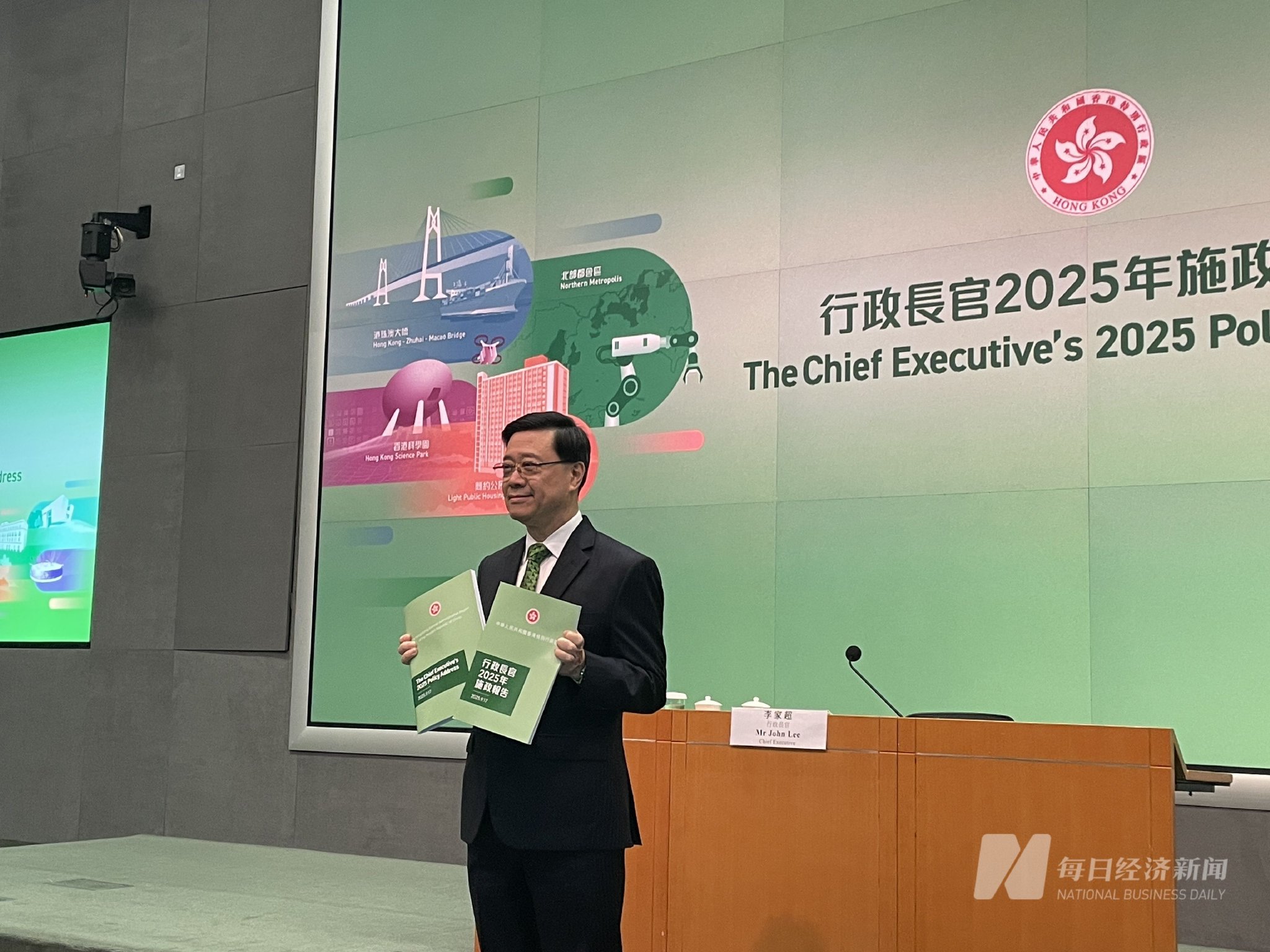
各界解读香港特区行政长官2025年施政报告:“新资本投资者入境计划”门槛放宽,或可带动豪宅及非住宅物业交投
Mei Ri Jing Ji Xin Wen· 2025-09-18 11:45
Group 1: Policy Initiatives - The Hong Kong government aims to leverage its advantages of being "backed by the motherland and connected to the world" to attract more international institutions, including the Asian Infrastructure Investment Bank for Belt and Road Initiative projects [1] - The Chief Executive's policy address emphasizes the development of AI as a core industry for Hong Kong's future, promoting deep integration of AI across various sectors [1] Group 2: Financial Market Developments - The Hong Kong Stock Exchange's CEO stated that the measures proposed in the policy address will enrich the variety of products in securities, fixed income, currency, commodity, and carbon markets, promoting market diversification [1] - The policy address includes plans to optimize the "New Capital Investor Visa Scheme," increasing the allowable investment in non-residential properties from HKD 10 million to HKD 15 million, while maintaining the residential property investment limit at HKD 10 million [4][5] Group 3: Real Estate Market Impact - The relaxation of the investment threshold for residential properties is expected to attract more talent and new capital to Hong Kong, creating more business and investment opportunities [5] - The increase in the allowable investment for non-residential properties is anticipated to further stimulate the luxury and non-residential property markets [5][6] Group 4: Capital Market Enhancements - The policy address proposes measures to enhance the capital market, including improving the listing mechanism and exploring a shortened stock settlement cycle to T+1, which aligns with global capital market trends [6][7] - Suggestions to deepen the capital market and enhance liquidity include extending trading hours for Hong Kong stocks and reducing stamp duty on RMB transactions to attract more international investors [7][8] Group 5: Regulatory Support - The Hong Kong Securities and Futures Commission supports the measures in the policy address, which aim to strengthen the stock market and optimize the listing system, reinforcing Hong Kong's position as a preferred listing destination [8] - The collaboration between the Securities and Futures Commission and the Hong Kong Monetary Authority aims to create a comprehensive roadmap for the fixed income and currency markets, enhancing Hong Kong's appeal to global investors [8]


制度创新激活港股新生态 “A+H”扩容,中概股回归趋势强化
2 1 Shi Ji Jing Ji Bao Dao· 2025-09-17 23:21
Group 1: Hong Kong Capital Market Developments - Hong Kong Chief Executive John Lee announced measures to support technology companies from mainland China in raising funds in Hong Kong, enhancing financial support for national technological development [1] - The Hong Kong IPO market has seen a resurgence, with 62 new listings raising a total of HKD 144.16 billion this year, surpassing the total fundraising of the past two years [1][2] - The "A+H" listing trend is accelerating, with 11 A-share companies achieving dual listings, covering sectors like hard technology, new consumption, and biomedicine [1][2] Group 2: A+H Listing Expansion - A-share companies accounted for the top five fundraising amounts in the Hong Kong IPO market this year, with a total of HKD 916.89 million raised [2] - CATL's IPO raised HKD 410.06 million, marking the largest IPO in Hong Kong in nearly four years, with significant oversubscription [2] - As of September 17, 2025, there are 161 A+H listed companies, with over 51 A-share companies in the pipeline for Hong Kong listings [2][3] Group 3: Innovative Listing Methods - New listing methods such as share swap mergers and privatization followed by introduction listings are becoming popular, simplifying the process and reducing costs [3][4] - Zhejiang Huhangzhou announced a share swap merger with Zhenyang Development, aiming for A+H dual listing [3] - New Hope Group plans to privatize New Hope Energy and list on the Hong Kong Stock Exchange through an introduction method [3] Group 4: Support for Technology Companies - The Hong Kong Stock Exchange launched the "Tech Company Fast Track" to facilitate the listing process for technology and biotech companies [6] - The recent listing of Hesai Technology marked the largest IPO in the global lidar industry and the largest return of a Chinese concept stock to Hong Kong in four years [6] - The Chief Executive's commitment to optimizing the "dual-class share" listing regulations is expected to further facilitate the return of Chinese concept stocks [6][7] Group 5: Regulatory Considerations - Current regulations for companies with different voting rights structures are seen as stringent, with calls for further relaxation to attract high-growth tech companies [7][8] - Recommendations include easing requirements for companies with a market cap over HKD 100 billion and allowing for more flexible voting rights structures [8][9] - Experts suggest that relaxing dual-class share restrictions could enhance Hong Kong's international competitiveness and alleviate delisting pressures on Chinese concept stocks [8][9]



制度创新激活港股新生态:“A+H”扩容,中概股回归趋势强化
2 1 Shi Ji Jing Ji Bao Dao· 2025-09-17 13:11
Group 1 - The Hong Kong government aims to enhance financial support for technology companies from mainland China through initiatives like the "Tech Company Special Line" to facilitate their financing in Hong Kong [1] - The Hong Kong IPO market has seen a significant surge in activity, with 62 new listings raising a total of 1,441.58 billion HKD this year, surpassing the total fundraising of the past two years [1][2] - The "A+H" listing trend is accelerating, with 11 A-share companies achieving dual listings, particularly in emerging sectors such as hard technology, new consumption, and biomedicine [2] Group 2 - The top five fundraising companies in the Hong Kong IPO market this year are all A-share companies, collectively raising 916.89 billion HKD, which accounts for over 50% of the total IPO fundraising [2] - CATL's IPO raised 410.06 billion HKD, marking the largest IPO in Hong Kong in nearly four years, with an oversubscription rate of 15.2 times for international placements and 151.2 times for retail investors [2] Group 3 - The trend of A-share companies listing in Hong Kong is driven by favorable policies, global capital reallocation, and the need for financial security and competitiveness [3] - Companies listing in Hong Kong can build an "A+H" dual financing platform, enhancing their international credibility and brand image while allowing for offshore fund usage without domestic currency restrictions [3] Group 4 - Innovative listing methods are emerging, such as share swap mergers and "privatization + introduction listing," which simplify the listing process and reduce risks and costs [5] - New opportunities for "A+H" listings are being created, as seen with Zhejiang Huhangyong's announcement of a share swap merger with Zhenyang Development [3][5] Group 5 - The Hong Kong Stock Exchange has implemented reforms to facilitate IPOs for technology companies and the return of Chinese concept stocks, including the introduction of the "Tech Company Special Line" [6] - The successful listing of Hesai Technology marked the largest IPO in the global lidar industry and the largest return of a Chinese concept stock to Hong Kong in four years, raising over 41.6 billion HKD [6] Group 6 - The Hong Kong government is considering optimizing the "dual-class share" listing regulations to further facilitate the return of Chinese concept stocks [7] - Current regulations for companies with different voting rights structures are seen as stringent, with suggestions for easing requirements to attract high-growth technology companies back to Hong Kong [8]
香港2025施政报告:锚定国家战略,擘画发展蓝图
Guotai Junan Securities· 2025-09-17 12:51
Economic Development - The 2025 Policy Address emphasizes "improving people's livelihoods" and "economic development" as its main themes, proposing several breakthrough policies to consolidate Hong Kong's status as an international financial center[6] - The government aims to foster emerging industries such as advanced manufacturing, life sciences, new energy, artificial intelligence, and data science to create high-quality jobs and enhance overall economic efficiency[5][7] Capital Market Initiatives - The government plans to assist mainland tech companies in financing through the "Tech Enterprise Channel" and improve the main board listing system and issuance mechanisms for structured products[8] - Initiatives include optimizing regulations for "same share, different rights" listings and exploring a T+1 settlement cycle to attract more overseas companies to list in Hong Kong[8] Currency and Bond Market Development - The Hong Kong Monetary Authority (HKMA) will introduce a new "Renminbi Business Funding Arrangement" to enhance liquidity in the offshore RMB market, supported by a currency swap agreement with the People's Bank of China[11] - Plans to upgrade financial infrastructure and promote offshore Chinese government bonds as collateral to expand the application of RMB assets in the bond market[9] Financial Technology Advancements - The HKMA will continue to advance the Ensemble project, promoting tokenized deposit products and facilitating the issuance of tokenized bonds[13] - The report highlights the importance of regulatory sandboxes to encourage banks to strengthen risk management capabilities and the establishment of a risk prevention system in the digital asset sector[13]
特区行政长官李家超最新重磅发声 事关香港股市、楼市以及黄金等!
Zheng Quan Ri Bao Wang· 2025-09-17 07:15
Financial Market Enhancements - The Hong Kong government aims to shorten the stock settlement cycle to T+1 and promote more overseas companies to list in Hong Kong [2][3] - The Hong Kong Securities and Futures Commission (SFC) is actively working to include Real Estate Investment Trusts (REITs) in the "mutual market access" scheme to enhance liquidity [2][5] - The government plans to assist mainland technology companies in financing in Hong Kong through the "Tech Enterprise Line" [3] Bond Market Development - The Hong Kong government is focused on solidifying its position as a bond center by enhancing financial infrastructure and creating a centralized platform for managing various assets [4] - Discussions are ongoing with mainland institutions to launch offshore Chinese government bond futures in Hong Kong [4] - The SFC is exploring the feasibility of an electronic bond trading platform and promoting the establishment of a commercial repurchase market [4] Currency Market Growth - To increase the liquidity of the offshore RMB market, the Hong Kong Monetary Authority (HKMA) will establish new RMB funding arrangements to support enterprises [5] - The number of accounts for mainland investments in Hong Kong wealth products has increased significantly, from 25,000 to 110,000 since the launch of "Cross-Border Wealth Management Connect 2.0" [5] Gold Market Expansion - The government has accepted recommendations to develop the gold market, aiming to establish a regional gold reserve hub with a target of over 2,000 tons in three years [7] - Plans include building a central clearing system for gold transactions and inviting the Shanghai Gold Exchange to participate [7] Housing Supply Strategy - According to the Long-Term Housing Strategy, the demand for private housing over the next decade is projected to be 126,000 units, with sufficient land supply to meet this demand [8] - The government plans to prepare approximately 2,600 hectares of "ready-to-develop" land over the next decade to ensure healthy land reserves [8]