品牌全球化

Search documents
中国品牌浪潮:从世界工厂到全球心智占领
Sou Hu Cai Jing· 2026-01-14 02:49
Core Insights - The article discusses the transformation of Chinese brands from being known as "Made in China" to becoming global brand leaders through emotional connections and cultural exports, highlighting four key characteristics of this shift [1][10][14]. Group 1: Brand Globalization - The speed of brand globalization has significantly increased, with the time required to establish brand recognition in overseas markets reduced from ten years to just 3-5 years [14]. - Enhanced infrastructure, including cross-border e-commerce platforms and social media marketing, has facilitated this rapid expansion, shifting the approach from a "prolonged battle" to a "lightning war" [14][15]. Group 2: Evolution of Export Categories - The scope of exports has evolved from physical products to include cultural IP and services, with IP product exports growing at a rate of 8%, surpassing the average growth of consumer goods exports [15][19]. - This evolution signifies a transition for Chinese brands from being mere suppliers to becoming co-creators of value through deeper interactions with consumers [15][19]. Group 3: Deepening Export Models - The export model has shifted from simple trade to a comprehensive global supply chain layout, indicating that Chinese brands are moving from being participants in the global market to becoming network builders [16]. - Companies are now integrating R&D and production globally, enhancing their competitiveness and embedding themselves within local economic ecosystems [16]. Group 4: Consumer Connection Channels - Brands are moving away from reliance on third-party platforms like Amazon, adopting a multi-channel operation system that includes DTC (Direct-to-Consumer) models [17]. - This transition allows brands to directly reach consumers, gain insights into their needs, and accumulate user assets more effectively [17]. Group 5: Regional Market Opportunities - The Asia-Pacific market is experiencing rapid demand growth, particularly in beauty and fashion sectors, due to localized innovation and cost advantages [22]. - In contrast, the North American and European markets prioritize technology, design, and sustainability, making consumer electronics and high-end appliances more likely to gain acceptance [23]. - Latin America presents opportunities for high-cost performance products like smartphones and white goods, while the Middle East and Africa focus on basic needs, with daily necessities and communication devices achieving scale through cost optimization [24]. Group 6: Strategic Paths for Exporting Companies - Companies are forming three strategic paths based on their strengths: - A-class "Scale Guardians" like Haier focus on global supply chain integration and localized operations to enhance value in existing markets [21]. - B-class "Value Heights" brands like Miniso leverage IP collaborations and localized co-creation to build emotional connections with consumers [21]. - C-class "New Star Disruptors" like Huaxizi utilize "super products + cultural symbols" strategies to rapidly capture market attention and occupy niche segments [21]. Group 7: Case Studies - Haier has successfully established a localized operational system, achieving overseas revenue of 143.81 billion yuan in 2024, marking a 5.43% increase [33]. - Miniso's overseas revenue grew by 41.9% to 6.68 billion yuan in 2024, with a focus on flagship stores in prime locations to enhance brand experience [38]. - Huaxizi has entered over 110 countries, with significant sales in Japan, leveraging unique product designs and cultural narratives to build brand recognition [42][43].





扩张与挑战交织,霸王茶姬发布2025年终回顾
Nan Fang Nong Cun Bao· 2026-01-10 00:34
Core Insights - Bawang Chaji has experienced significant expansion and challenges in 2025, with a focus on global growth and brand reputation issues [2][3][21] Expansion and Growth - By the end of 2025, Bawang Chaji expanded its store presence to 8 countries across 2 continents, including China, Malaysia, Indonesia, the Philippines, Vietnam, Thailand, Singapore, and the United States [10] - The overseas market membership in the Asia-Pacific region grew by 177% year-on-year in 2025 [12] - The annual tea procurement volume exceeded 10,000 tons, covering six major tea categories and over 100 cooperative tea factories [14] - The product "Boyar Jue Xuan" became a phenomenon, with over 30 million customers ordering two or more cups in a year, and cumulative sales reaching 1.25 billion cups from January 2022 to June 2025 [19][20] Challenges and Controversies - Bawang Chaji faced significant challenges, including a food safety incident involving a staff member's improper handling of ingredients, which led to a public backlash and damage to the brand's reputation [23][27] - The company also encountered controversy regarding caffeine content in its products, prompting legal action to defend its reputation [28][29] - Following these controversies, Bawang Chaji's stock experienced a significant drop of 14.5% on December 26, 2025, resulting in a market value loss of approximately $200 million [35][36] Financial Performance - In the third quarter of 2025, Bawang Chaji reported a total GMV of 7.93 billion yuan, with net revenue of 3.208 billion yuan, reflecting a year-on-year decline of 9.4% in revenue and a 22.3% drop in net profit [44][46] - The decline in domestic market performance was attributed to intensified competition in the food delivery sector, affecting customer retention [47][48] - Despite domestic challenges, the overseas market showed strong growth, with GMV surpassing 300 million yuan in the third quarter, marking a year-on-year increase of 75.3% [56]

2025年第53周:美妆行业周度市场观察
艾瑞咨询· 2026-01-10 00:08
Group 1 - The investment focus of Chinese beauty brands is shifting towards upstream pharmaceutical sectors to enhance raw material research and development capabilities, as seen with Proya's investment in Beijing Huaguan Biotechnology [3] - The overall trend in the Chinese beauty industry indicates that leading companies are investing in upstream technologies and new brands to build an ecological closed loop and enhance competitiveness [3] Group 2 - The oral care market is experiencing continuous upgrades, with Q1 2025 sales reaching 1.72 billion yuan, a year-on-year increase of 27.7%, driven by innovative products that meet diverse consumer needs [5] - New products include usmile whitening toothpaste, ice spring mouthwash, BOP teeth whitening strips, and others that utilize advanced technology for oral health [5] Group 3 - Starbucks is transitioning its strategy from sporadic collaborations to a systematic approach in the beauty sector, appointing a former E.L.F. executive to enhance its marketing efforts and address growth stagnation in North America [6] - This strategic shift reflects a trend of blurred brand boundaries in response to consumer upgrades, aiming to transform Starbucks into a lifestyle symbol [6] Group 4 - Sephora has introduced six domestic beauty brands, including Yeoseo and BABI, to adjust its product selection logic amid performance pressures, despite some consumer concerns about diluting its high-end positioning [7][8] - The introduction of these brands aims to attract younger consumers and shift from a "channel brand" to a "user brand," although it faces challenges in consumer perception [7][8] Group 5 - Huaxizi has become the first Chinese beauty brand to enter Ulta Beauty, marking a significant breakthrough in the U.S. market and showcasing the international competitiveness of Chinese beauty brands [9] - The brand combines traditional Chinese craftsmanship with modern technology, focusing on cultural and quality exports, and has products available in over 110 countries [9] Group 6 - Lin Qingxuan is set to become the first "high-end domestic skincare stock" listed on the Hong Kong Stock Exchange, with a projected revenue of 1.052 billion yuan in the first half of 2024, reflecting a year-on-year growth of 98.3% [10] - The company has a strong product line, including the best-selling camellia oil, and plans to use IPO funds for brand building and channel expansion, targeting Southeast Asian markets [10]

毛戈平携手路威凯腾 全球化发展提速
Zheng Quan Ri Bao Wang· 2026-01-08 12:45
Core Insights - 毛戈平化妆品股份有限公司 has signed a strategic cooperation framework agreement with L Catterton to enhance global market expansion, acquisitions, strategic investments, capital structure optimization, and talent introduction [1][3] - The company reported strong performance in Q4 2025, driven by consumer recovery and brand upgrades, with a clear global growth trajectory [1] - 毛戈平's online penetration continues to rise, complementing offline high-end counters, forming a "dual engine" for growth [1] Financial Performance - In H1 2025, 毛戈平's makeup business revenue reached 1.422 billion yuan, a year-on-year increase of 31.1%, while skincare revenue was 1.087 billion yuan, up 33.4% [1] - The company is actively expanding high-value product categories, launching two premium perfume series, which are crucial for its global strategy [1] Product Development - 毛戈平 continues its "high-end + differentiation" strategy, with new skincare series "琉光赋活" targeting higher-priced and more loyal consumer segments [2] - The new lip product, air warehouse lip glaze 808, has gained popularity on social media, enhancing the brand's influence in the lip category [2] Brand Strategy - 毛戈平 is deepening its differentiation in Oriental aesthetics through significant marketing events, such as the "Belt and Road" themed event and innovative product launches that blend cultural elements with beauty products [2] - The opening of the first flagship store in Hong Kong has shown promising operational data, indicating potential for further expansion into Southeast Asia and beyond [2] Strategic Partnership - L Catterton, managing approximately $39 billion in equity capital, will assist 毛戈平 in expanding overseas high-end retail channels and forming a global beauty investment fund [3] - The partnership reflects 毛戈平's commitment to entering the global high-end market, enhancing its international presence and influence [3]

消费存储的「冠军」之路:雷克沙用三十年重新定义高端持久战
3 6 Ke· 2026-01-06 09:34
Core Viewpoint - The semiconductor storage market is experiencing a significant price surge due to upstream production cuts and a dramatic increase in AI storage demand, leading to a shift in manufacturers' strategies from inventory reduction to supply acquisition [1][3] Group 1: Market Dynamics - The semiconductor storage market is currently in a volatile phase characterized by structural supply-demand adjustments, with many manufacturers resorting to speculative practices to secure short-term profits [5] - The industry faces a paradox of severe product homogenization, making it difficult for manufacturers to create premium pricing opportunities [5] - Lexar's strategic partnership with the Argentina national team is seen as a bold move to enhance brand visibility and emotional resonance with consumers [9][10] Group 2: Lexar's Strategic Positioning - Lexar aims to combat cost fluctuations through high-end value positioning and emotional connection with users, as articulated by CEO Zhong Mengchen [3][8] - The company benefits from a robust support system provided by its parent company, Jiangbolong Electronics, which offers a complete industrial chain capability [7][8] - Lexar's 30-year history in the storage industry has established a strong reputation for innovation and reliability, allowing it to command a premium in a competitive market [7][9] Group 3: Technological Advancements - Lexar is proactively addressing the storage needs of the AI era by developing solutions that meet the demands for extreme performance, low latency, and high durability [13][14] - The introduction of the "AI Storage Core" strategy aims to provide innovative storage solutions that cater to the evolving requirements of AI applications [13][14] - Lexar's products are designed to enhance user experience by focusing on core pain points, such as data security and performance, particularly in high-demand scenarios like sports technology [14][16] Group 4: Globalization and Localization - Lexar's partnership with the Argentina national team reflects a strategic move towards achieving "mind globalization" for Chinese technology brands [9][10] - The company emphasizes localized operations, integrating into local cultures and languages to build trust with consumers across various regions [16] - Lexar's approach illustrates a shift from merely exporting products to embedding itself within local markets, enhancing its brand presence and consumer loyalty [16]
国际高端存储品牌雷克沙官宣成为阿根廷国家队全球合作伙伴 开启品牌全球化新纪元
Zheng Quan Shi Bao Wang· 2026-01-06 06:47
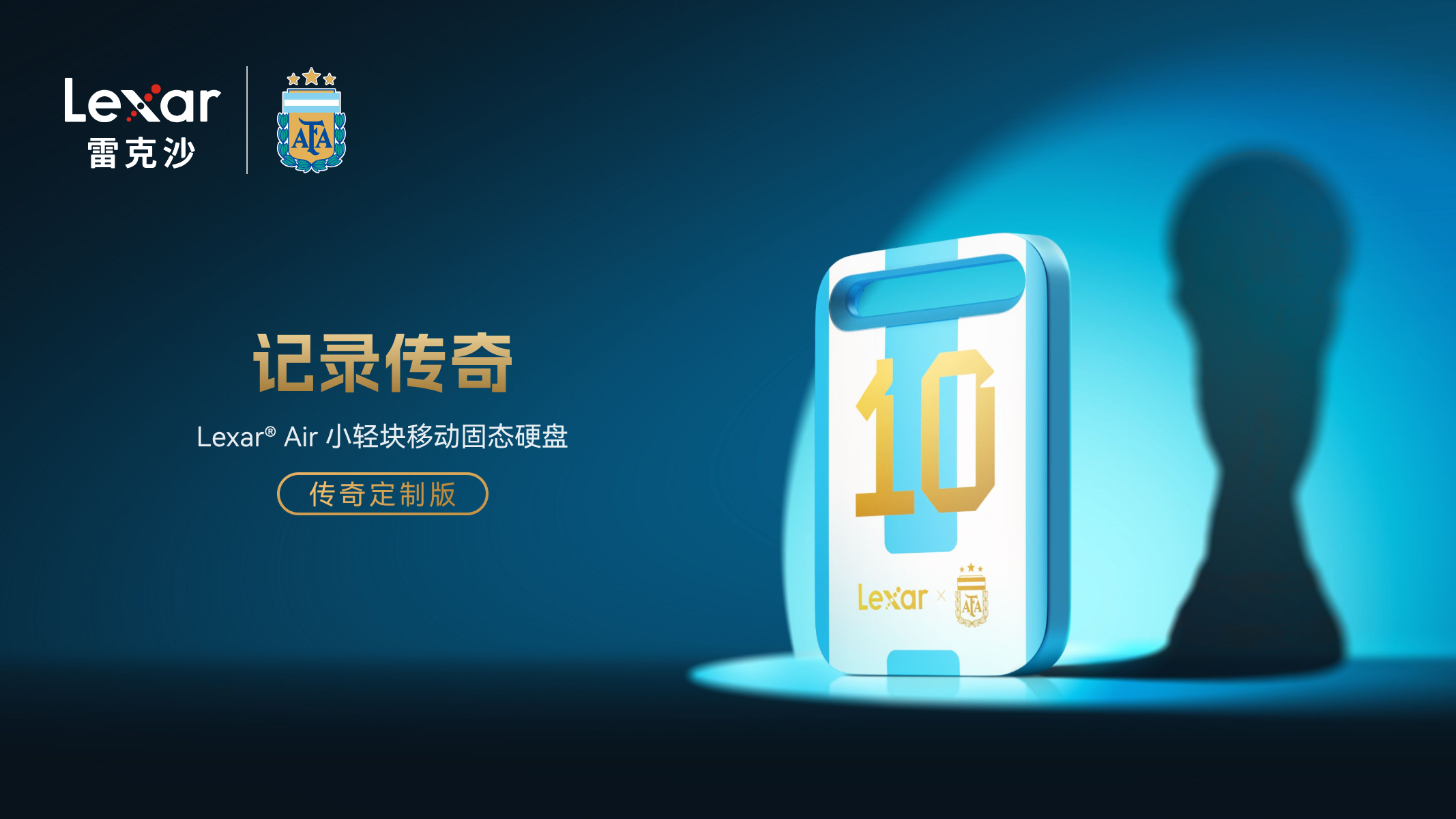
Core Viewpoint - The partnership between Lexar and the Argentina national football team marks a significant step in Lexar's global branding strategy and symbolizes the upgrade of China's storage industry from "technology export" to "brand globalization" [1][7]. Group 1: Partnership Details - Lexar has officially become the first global partner of the Argentina national football team for the year 2026, enhancing its international brand image [1]. - The collaboration is based on a shared vision of leadership, professionalism, and global excellence between Lexar and the Argentina Football Association [4]. Group 2: Company Background - Lexar is a leading global brand under the Chinese semiconductor storage giant, Jiangbo Long, which has a comprehensive capability in semiconductor storage product development, manufacturing, and sales [4]. - Jiangbo Long is the second-largest independent memory company globally and the largest in China, with Lexar ranking second in B2C revenue among global brands in 2023 [4]. Group 3: Market Expansion - Since its acquisition by Jiangbo Long in 2017, Lexar has expanded its presence to over 70 countries across six continents, with products available in major retail channels like Costco and BestBuy, as well as on e-commerce platforms like Amazon and Shopee [5]. - The partnership aligns well with the global distribution of Argentina's millions of fans, enhancing Lexar's market reach [5]. Group 4: Product Innovation - At CES 2026, Lexar launched co-branded storage products with the Argentina national team, including the Lexar Air portable SSD and the SL500 SSD limited edition, aimed at football fans [6]. - Lexar also showcased flagship products such as the world's first 2TB UHS-I microSD card and the Lexar TouchLock series SSD, which features advanced security technology [6]. Group 5: Strategic Implications - The collaboration signifies a shift from "Made in China" to "Brand from China," aligning with Jiangbo Long's international strategy of building a dual-circulation business model [7]. - Lexar aims to leverage this partnership to enhance consumer trust in its brand quality and drive growth in the consumer storage market [6].
首个布局大湾区,陆铭逸:大湾区如何成为中国品牌全球化的核心策源地?
Sou Hu Cai Jing· 2026-01-05 03:17
Group 1 - The Greater Bay Area (GBA) is positioned as a key engine for the globalization of Chinese brands, leveraging policy advantages, industrial clusters, and open hub characteristics [2][3] - WPP Media, as the first multinational marketing communication group to establish a presence in the GBA, plays a crucial role in facilitating the transformation of brands going global [2][6] - The GBA's unique competitive advantage lies in the perfect integration of diverse capabilities, including Hong Kong's capital flow, robust manufacturing base, leading innovation speed, and cultural influence [5][6] Group 2 - The strategic positioning of the GBA is transforming into a unique competitive advantage for companies, supported by government initiatives that enhance confidence in investment, R&D, and talent acquisition [3][5] - WPP Media has developed an "end-to-end" service model to assist brands in their global expansion, focusing on opportunity insights, market entry planning, execution, and performance tracking [8][9] - The application of AI technology has become a significant enabler for WPP Media, enhancing efficiency in consumer insights, execution speed, and global collaboration [13][15] Group 3 - The shift from product export to brand globalization is evident in the GBA, with a growing focus on long-term brand storytelling rather than short-term sales [11][18] - WPP Media's service capabilities are continuously optimized to meet the evolving needs of clients, emphasizing comprehensive communication strategies and long-term brand narratives [11][12] - Successful case studies, such as the global launch of the game "Black Myth: Wukong," illustrate the importance of cultural insights and localized communication strategies in brand globalization [5][15] Group 4 - The current global economic environment presents challenges for corporate growth, but companies are increasingly recognizing the importance of balancing short-term efficiency with long-term brand building [16][18] - The trend of prioritizing long-term strategic planning is becoming more pronounced among clients, particularly in industries like 3C digital, automotive, and gaming [18][20] - Looking ahead to 2026, there is optimism in the global marketing and media industry, driven by clearer connections between marketing activities and business outcomes [20][21]

海尔携手巴黎圣日耳曼发布新年TVC在13国上线
Jin Tou Wang· 2026-01-04 03:25
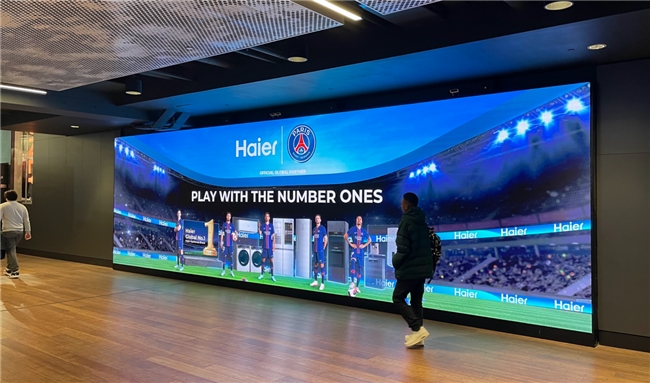
Core Viewpoint - Haier's collaboration with Paris Saint-Germain (PSG) exemplifies the company's effective use of sports marketing to enhance its global brand presence and drive its globalization strategy [1][3][7]. Group 1: Partnership and Brand Alignment - The partnership between Haier and PSG began in September 2025, marking Haier as PSG's global official partner, which garnered significant industry attention [3]. - 2025 was a landmark year for PSG, as the team won its first UEFA Champions League title and achieved a "five crowns" honor, showcasing its dominance in football [3]. - The New Year TVC reflects the synergy between the two brands, illustrating Haier's brand philosophy of "walking with champions" through the connection of PSG players' on-field efforts and Haier's home appliance lifestyle [3]. Group 2: Sports Marketing Strategy - Haier's commitment to sports marketing dates back to 2003, starting with a partnership with the UK’s Shark Rugby Team, and has since expanded to various sports including tennis, football, volleyball, and more [5]. - The company has developed a comprehensive sports interaction system that utilizes events, brand displays, and community engagement to break cultural barriers and effectively communicate its brand values [5]. - This long-term dedication to sports marketing has significantly enhanced Haier's global brand recognition and competitive position, leading to substantial market share in regions such as Southeast Asia, Europe, Australia, Pakistan, and the Middle East [5]. Group 3: Future Globalization Strategy - The New Year TVC marks the culmination of Haier's 2025 sports marketing efforts and signals the beginning of a new phase in its globalization strategy for 2026 [7]. - Haier's deep collaboration with PSG serves as a model for Chinese brands aiming for global expansion, emphasizing the importance of quality and cultural connection [7]. - The company plans to continue advancing its globalization strategy, aiming to showcase the strength of Chinese brands on the world stage [7].
年终盘点 | 新茶饮“红海”中求生存:抢滩北美市场、产品从“喝”拓展到“吃”
Di Yi Cai Jing· 2025-12-25 11:37
Group 1: Industry Trends - The new tea beverage industry is experiencing a dual path of expansion and internal competition, with brands seeking global presence while innovating product offerings to differentiate themselves in a saturated market [1][2] - The market size for new tea beverages in China is expected to exceed 200 billion yuan in 2025, indicating significant growth potential despite increasing competition [2] - The trend of "solidifying" and "dessertifying" beverages is emerging, with products like solid mango sago and various dessert teas gaining popularity among consumers [3][4] Group 2: Market Dynamics - The competition in the tea beverage market is shifting from incremental growth to a focus on existing market share, leading to a proliferation of similar stores in close proximity [2] - Brands are increasingly introducing differentiated products, such as salty milk tea and dessert-style offerings, to attract consumers and stand out in a crowded market [2][3] - The popularity of solid dessert drinks is linked to a growing consumer preference for visually appealing and ingredient-rich products, reflecting a shift towards "light health" trends [4] Group 3: International Expansion - The North American market is becoming a preferred destination for Chinese tea brands, moving away from the previously favored Southeast Asian markets due to intense competition [7][8] - Companies like Mixue Ice City and Bawang Chaji are establishing their first stores in the U.S., indicating a strategic shift towards markets with higher consumer spending power [6][7] - Successful internationalization requires a comprehensive approach involving the entire supply chain, rather than just individual brands attempting to enter foreign markets [8]

潮牌出海的新变量:俞诗宇与 AI 驱动的全球化实验
Sou Hu Cai Jing· 2025-12-24 19:36
Core Insights - The article discusses the evolution of Chinese brands from merely selling products to establishing a strong brand identity in the global market, particularly in the fashion and streetwear sectors [2] - It highlights the challenges faced by Chinese original brands in gaining visibility and premium pricing in international markets, despite China's significant role in global manufacturing [2][3] Market Background - The global streetwear and fashion market is in a phase of continuous expansion, with projections indicating it will reach several hundred billion dollars by 2024 [3] - North America remains a competitive and influential region for brand development, but there are structural issues, such as the low penetration of Chinese designer brands in overseas markets [3] - The bottleneck is identified as being in branding and efficiency rather than manufacturing capabilities [3] Company Overview - Cosmic Talenter, led by entrepreneur Yu Shiyu, aims to address these challenges through a platform-based approach, utilizing AI to reduce systemic costs for Chinese fashion brands entering global markets [3][6] - The company launched its core platform, PSYLOS1, in Toronto in 2022, focusing on mid-to-high-end fashion brands and achieving a customer average order value exceeding $200 [7] Business Structure - The company operates with a three-tier business structure: 1. **PSYLOS1**: A global platform for fashion brands, helping them launch and scale in overseas markets with AI-driven trend analysis and content generation [7] 2. **Globalization Empowerment**: Providing systematic support for established brands with annual sales exceeding $500 million, enhancing brand positioning and premium pricing [10] 3. **HOOOD**: An internal innovation platform exploring interactive and community-driven shopping experiences, focusing on user engagement [11] AI Integration - AI is embedded as a core organizational capability rather than a standalone tool, aiding in trend analysis, product selection, and content creation [13][15] - The value of AI is emphasized as enabling teams to focus more on judgment and creativity rather than merely operational tasks [15] Ecosystem Development - Cosmic Talenter is building a comprehensive ecosystem through resource integration, strategic investments, and a diverse expert team with extensive experience in brand operations and capital management [18] - The business model combines platform services, brand collaborations, and innovative ventures, with a focus on long-term stability rather than short-term growth [18] Industry Significance - The company's efforts aim to provide a sustainable growth system for Chinese fashion brands, shifting competition from supply chain efficiency to cultural expression and technological foundation [19] - The exploration of new pathways for Chinese brands to establish themselves in high-end global markets is seen as a critical endeavor [20]