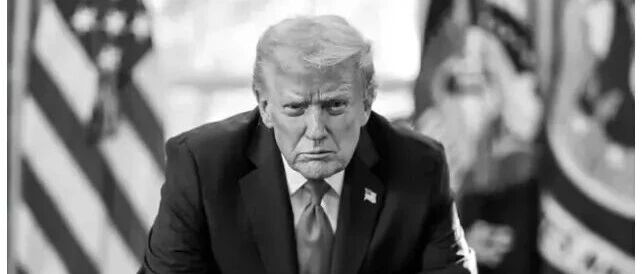
唐罗主义

Search documents
动荡、混乱并极具破坏性
Xin Lang Cai Jing· 2026-01-21 10:20
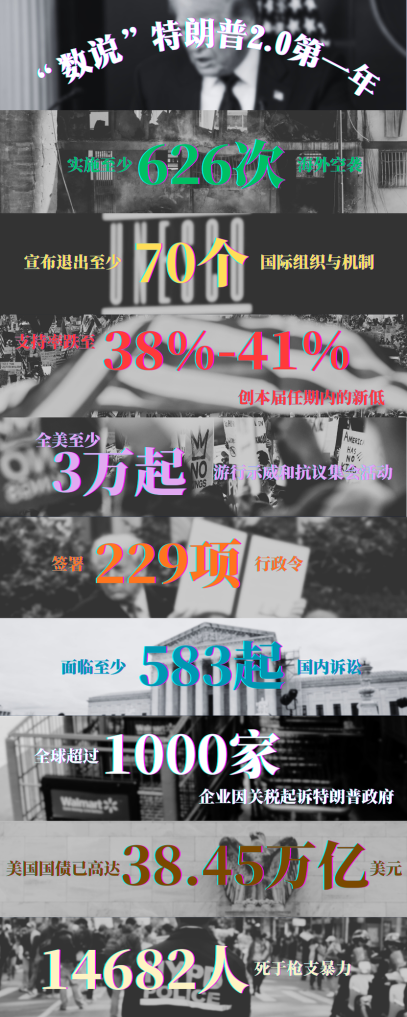
Core Viewpoint - The article discusses the tumultuous and chaotic year of Trump's administration, highlighting the polarization in American society and the impact of unilateral actions on global stability and international order [2]. Group 1: Administrative Actions - Trump signed over 229 executive orders within a year, addressing issues such as immigration, federal spending, and citizenship rights, leading to over 500 lawsuits against his administration [3]. - The administration's reliance on executive orders reflects the expansion of presidential power amid a backdrop of intense partisan conflict and a weakening of congressional functions [3]. Group 2: Foreign Relations and Diplomacy - Trump's administration engaged in coercive diplomacy, exemplified by the confrontation with Ukraine, which involved cutting military aid and pressuring for agreements [4]. - The administration's approach to international conflicts, including threats and sanctions, has been criticized for escalating tensions rather than fostering peace [4]. Group 3: Trade Policies - The administration implemented record-high tariffs on global trade partners, significantly impacting the multilateral trade system and prompting retaliatory measures from other countries [6][7]. - The tariffs have been described as a major disruption to international trade norms, leading to a growing sentiment of "de-risking" from the U.S. among various nations [7]. Group 4: Domestic Issues - Trump's immigration policies have led to significant social unrest, with protests erupting in major cities due to aggressive enforcement measures [9]. - The administration's economic policies, particularly the "big and ugly" tax and spending bill, have exacerbated wealth inequality, with the wealth of the top 15 individuals increasing by 33% while unemployment reached a four-year high [10]. Group 5: Governance and Political Climate - The year saw a historic government shutdown lasting 43 days, driven by partisan disputes over healthcare spending, highlighting the dysfunction within American democracy [12]. - The administration's absence from key international forums has been interpreted as a reflection of its unilateralist stance, undermining multilateral cooperation [13]. Group 6: Military and Security - The deployment of National Guard troops in response to civil unrest has raised concerns about the militarization of domestic law enforcement and the political motivations behind such actions [11]. - The administration's aggressive military posture, including threats against various countries, has been characterized as a return to imperialistic tendencies [14].

国际观察丨月月惊奇,桩桩怪象——特朗普2.0政府一年间
Xin Lang Cai Jing· 2026-01-20 20:57
Core Viewpoint - The article discusses the tumultuous and destructive first year of Trump's second term, highlighting the polarization in American society and the impact of his unilateral actions on global stability and international order [1]. Group 1: Administrative Actions - Trump signed a record of over 40 executive orders on his first day, totaling 229 executive orders by January 15, covering various issues such as immigration and federal spending [6]. - The term "executive order governance" is used to describe Trump's administration, indicating a significant expansion of presidential power and a weakening of Congress's role [4][6]. Group 2: Foreign Policy and Diplomacy - Trump's administration has been characterized by coercive diplomacy, exemplified by the "century quarrel" with Ukraine, where military aid was suspended to pressure Ukraine into signing agreements [7]. - The administration's approach to international relations has been marked by threats and sanctions, which have not led to peace but rather increased conflict risks [7]. Group 3: Economic Policies - Trump's imposition of tariffs on global trade partners has reached the highest levels in nearly a century, severely impacting the multilateral trade system and prompting retaliatory measures from other countries [12]. - The "big and beautiful" tax and spending bill signed on Independence Day has been criticized for benefiting the wealthy while cutting food and medical assistance for the poor, exacerbating income inequality [18]. Group 4: Social Unrest and Immigration - The administration's strict immigration policies have led to significant social unrest, with protests escalating into violence in cities like Los Angeles [15][17]. - Public sentiment has turned against Trump's immigration policies, with a majority of Americans believing the administration has gone too far [17]. Group 5: Political Climate - The year has seen increasing political violence, with incidents affecting both parties, raising concerns about the normalization of such violence in American society [20]. - The federal government experienced a record 43-day shutdown due to partisan conflicts, highlighting the dysfunction within American democracy [22]. Group 6: International Relations - The U.S. has been absent from key international events, symbolizing a retreat from multilateralism and a disregard for global governance responsibilities [23]. - The release of the national security strategy report reflects a dismissive attitude towards allies, indicating a shift in transatlantic relations and a focus on unilateral actions [26].
乱象闹剧 月月上演
Xin Lang Cai Jing· 2026-01-20 17:50
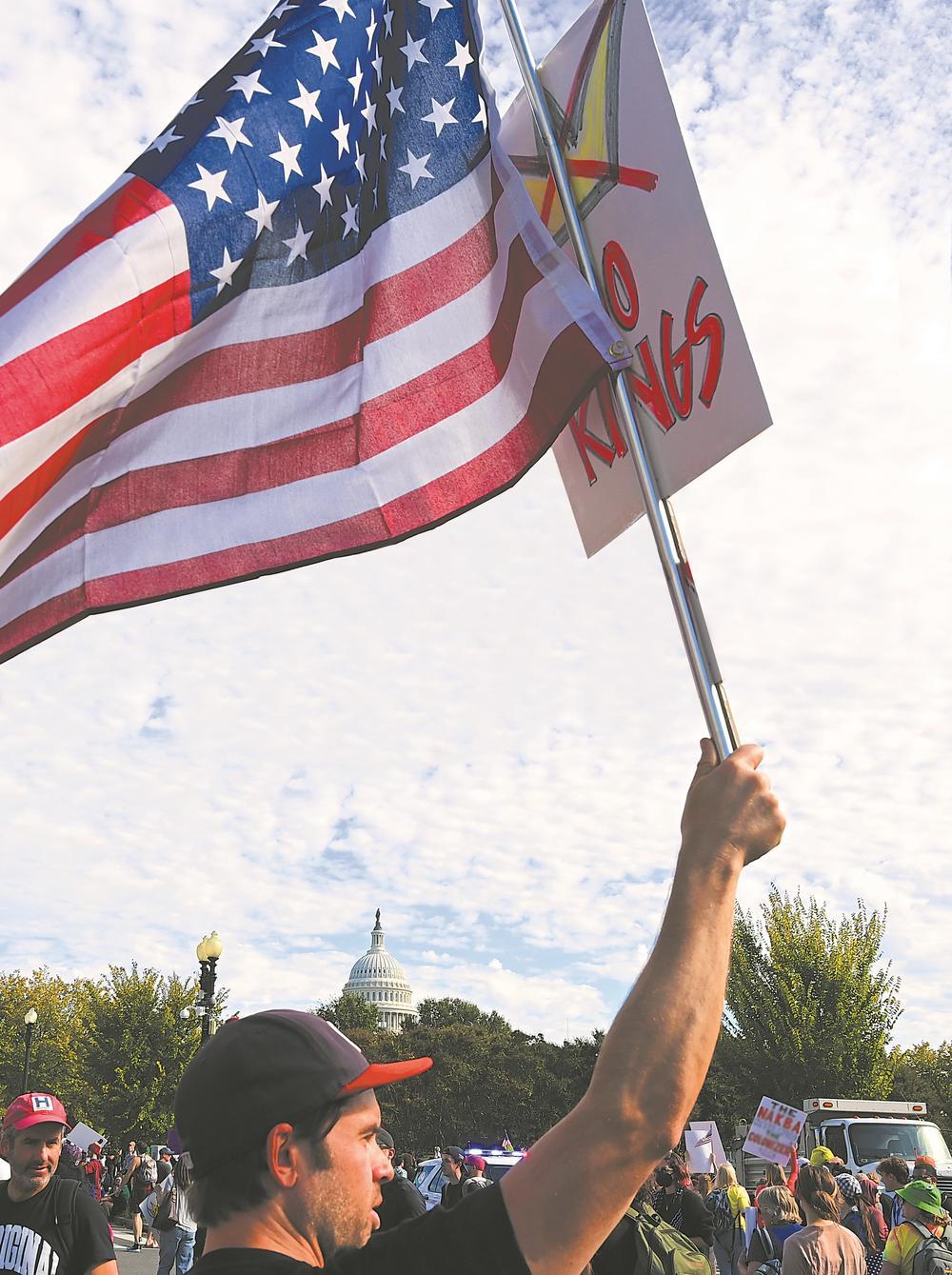
Core Viewpoint - The first year of Trump's second term has been characterized by chaos and disruption, with significant impacts on both domestic and international fronts, leading to increased polarization and instability in the U.S. and beyond [3][4]. Group 1: Domestic Policy and Governance - Trump's administration has relied heavily on executive orders, with 229 signed in the first year, marking the highest number for a U.S. president since Franklin D. Roosevelt [19]. - The political landscape has been marked by intense partisan conflict, leading to a significant weakening of congressional functions and a perception of a breakdown in the system of checks and balances [4]. - The administration's immigration policies have sparked widespread protests and unrest, particularly in major cities like Los Angeles, reflecting a growing discontent among the populace [9]. Group 2: Foreign Policy and International Relations - The administration's approach to foreign policy has been described as coercive, exemplified by the "century quarrel" with Ukraine, which showcased a strategy of using pressure tactics in diplomacy [5]. - Trump's ambitions for territorial expansion have been highlighted by aggressive statements regarding Greenland and Panama, indicating a return to imperialistic attitudes [6]. - The U.S. has withdrawn from at least 70 international organizations and mechanisms, signaling a retreat from global engagement and cooperation [16]. Group 3: Economic Impact - The imposition of tariffs has reached the highest levels in nearly a century, adversely affecting global trade dynamics and prompting retaliatory measures from other nations [7]. - The "Big and Beautiful" tax and spending bill has been criticized for exacerbating wealth inequality, with many Americans feeling economically vulnerable [10]. Group 4: Social Unrest and Political Violence - The year has seen a dramatic increase in political violence, with incidents like the assassination of conservative activist Charlie Kirk raising alarms about the normalization of such violence in American society [12]. - Over 30,000 protests and demonstrations have occurred nationwide, reflecting widespread dissatisfaction with the administration's policies and actions [18]. Group 5: Governance Challenges - A record 43-day government shutdown occurred, highlighting the dysfunction within the political system and its detrimental effects on the economy and public services [13]. - The administration's unilateral actions have led to a perception of the U.S. as increasingly isolated on the global stage, with significant absences from key international forums [14].
1年内近600次单方面对外军事打击,特朗普重返白宫一周年:“只有你想不到,没有他做不到”
Xin Jing Bao· 2026-01-20 00:22
在对外政策上,美国的变化同样明显。特朗普不再区分盟友与对手,而是从"美国优先"出发,对全球发 起"关税战"。在军事层面,据统计在不到一年时间内,特朗普已下令在他国领土发起近600次单方面军 事打击行动。同时,美国对西半球的关注度显著上升,从提出"购买格陵兰岛"、收回巴拿马运河、将墨 西哥湾改名为美国湾,到强掳委内瑞拉总统马杜罗,系列做法既让国际社会感到震惊,也引发了外界对 未来国际规则和秩序的担忧。 站在重返白宫一周年的时间节点看,特朗普第二任期的走向已经不再是"会不会出人意料",而是"这种 做法会把美国和世界带向哪里"。特朗普是否正在形成一种更具攻击性的对外战略?美国是否正在重新 收缩其全球角色?中美关系又将如何在这一背景下继续演变? 新京报记者 谢莲 编辑 胡杰 校对 刘军 1月20日,美国总统特朗普重返白宫满一周年。从2025年1月20日迄今的一年内,"特朗普2.0"在美国国 内引发"血雨腥风",在全球范围内掀起"惊涛骇浪",今年6月将满80岁的特朗普几乎从未远离过全球聚 光灯。 这一年来,从强力推进政府机构改革、大规模驱逐移民,到对全球发起"关税战";从退出多项国际组织 和协议,到对委内瑞拉采取军事干 ...
美媒爆料:特朗普私下“密集谈论”加拿大
Xin Lang Cai Jing· 2026-01-19 15:07
(来源:环球时报) 转自:环球时报 #特朗普被爆将加拿大视为下个目标#【美媒爆料:特朗普私下"密集谈论"加拿大】#特朗普被爆私下密 集谈论加拿大#据美国全国广播公司18日报道,在格陵兰岛问题僵持不下之际,美国总统特朗普将加拿 大视为下一个目标。多名美国高官和前高官透露,特朗普私下里正加大力度关注西半球的这个目标。他 最近几周在与助手的私下谈话中加强了对加拿大的批评,因为他日益担心,加拿大和格陵兰岛一样,同 样难以抵御来自美国对手的攻击。上述美国官员表示,特朗普对加拿大的主要批评之一是加拿大的国防 开支,他最近几天在私下里反复提及此事。他们表示,从特朗普的角度来看,这意味着加拿大无法在北 极地区抵御美国对手的威胁。其中一名高官称:"在北极军事能力方面,加拿大当然需要提升自己的水 平。考虑到今天的威胁,目前的能力是不可接受的,维持现状不行"。加拿大正在增加国防开支,但仍 未达到北约成员国国防开支占GDP2%的目标。"世界不认为加拿大是国防领域的主要力量,"这名美国 高官称。"特朗普真的很担心美国在西半球继续处于劣势,并且正专注于解决这个问题,"另一名美国高 官称。特朗普尤其强调加拿大需要增加国防开支。不过,美国官 ...

从抢油到夺岛:解析特朗普的“唐罗主义”
对冲研投· 2026-01-19 02:52
Core Viewpoint - The article discusses the impact of the upcoming midterm elections on U.S. foreign policy and domestic issues, emphasizing that geopolitical concerns will become a significant topic driven by electoral dynamics, despite potential short-term volatility [1][14]. Group 1: Midterm Elections and Domestic Issues - The probability of the Republican Party losing the House in the 2026 midterm elections is nearly 80%, according to Polymarket [1]. - Economic issues, particularly the cost of living, are critical for the midterm elections, with challenges in reducing living costs due to long-term housing shortages and high mortgage rates [1]. - Trump's previous policies, such as tariffs and healthcare reforms, contradict efforts to lower living costs, complicating his electoral strategy [1]. Group 2: Trump's Political Strategy - Trump is portrayed as a self-interested politician who prioritizes his approval ratings and seeks to avoid the pitfalls of his first term, where he faced impeachment after midterm losses [4]. - His approach includes leveraging foreign policy to regain electoral support, using tactics that resonate with public concerns, such as immigration and national security [4][5]. - The "Trump Doctrine" combines U.S. national interests with Trump's personal political gains, often leading to high-profile but short-term actions that may not align with long-term strategic benefits [5][6]. Group 3: Geopolitical Actions and Consequences - Trump's foreign policy actions, such as interventions in Venezuela and Greenland, are designed to boost his political standing but may not yield sustainable benefits for U.S. interests [9][11]. - The U.S. has seen a rise in Trump's approval ratings due to his actions in Venezuela, with a notable increase to 42% in early January, marking a seven-month high [9]. - However, the lack of a long-term strategy in these interventions poses risks, including potential instability in Venezuela and challenges in energy cooperation [9][12]. Group 4: Future Implications - The article predicts that geopolitical issues will be a focal point in the lead-up to the midterm elections, potentially leading to significant asset price volatility [14]. - Short-term successes from Trump's "Trump Doctrine" may strengthen the dollar and impact stock markets, but the long-term consequences could undermine U.S. credit and lead to increased global asset price fluctuations [15].
华泰宏观:如果美国对北约成员加征关税
Jin Rong Jie· 2026-01-19 00:34
Core Viewpoint - The report from Huatai Macro indicates that potential tariff increases by the U.S. on eight NATO countries could raise the U.S. weighted average tariff rate from the current 11.0% by an additional 1.1 to 2.2-2.8 percentage points [1] Group 1 - If the U.S. imposes a 10% tariff on February 1 and a 25% tariff on June 1, the weighted average tariff will increase by 1.1 and 2.2-2.8 percentage points respectively [1] - Tariffs are viewed as a lever for Trump's "Tariffism," but the more significant impact is the U.S. government's claim over Greenland, which may accelerate the breakdown of the existing global order based on rules [1] - The U.S. government's actions are expected to provide "short-term stimulus and medium to long-term elevation" to European defense spending [1] Group 2 - Attention is drawn to the upcoming Davos meeting and the Munich Security Conference in February, where statements from the Trump administration may be significant [1]
从抢油到夺岛:解析特朗普的“唐罗主义”(国金宏观赵宏鹤)
雪涛宏观笔记· 2026-01-18 14:05
Core Viewpoint - Geopolitical issues will become a significant topic driven by the midterm elections, with short-term volatility expected but a strengthening narrative of great power competition in the medium to long term [2] Summary by Sections Midterm Elections and Economic Concerns - Polymarket indicates an approximately 80% chance that the Republican Party will lose the House in the 2026 midterm elections [4] - Trump's acknowledgment of the necessity to win the midterm elections to avoid impeachment highlights the importance of economic issues, particularly the cost of living, which remains challenging due to long-term housing shortages and high mortgage rates [4][7] Trump's Strategy and "Trumpism" - Trump prioritizes personal interests, using foreign policy to regain electoral support if domestic issues fail [7] - His approach, termed "Trumpism," combines U.S. national interests with personal political gains, portraying himself as a protector of American security [8][9] Short-Term Tactics vs. Long-Term Strategy - Trump's preference for quick, impactful actions often leads to superficial successes without addressing deeper strategic issues, as seen in the limited return of U.S. manufacturing despite trade wars [9][10] - The recent Venezuelan situation exemplifies this, where immediate control over Maduro boosted Trump's political standing but lacked a sustainable long-term strategy [10][12] Geopolitical Implications - The strategic value of Greenland aligns with Trump's "Trumpism," but the high costs and local opposition complicate potential U.S. acquisition [15] - The situation in Iran reflects a retreat from U.S. strategic interests, with Trump's actions driven more by political necessity than by a coherent long-term strategy [16] Market Impact and Future Outlook - Geopolitical issues are expected to lead to significant asset price volatility in the coming year, influenced by Trump's short-term tactics [17] - The potential for a stronger dollar and fluctuations in U.S. and non-U.S. stock markets, as well as resource prices, should be monitored as Trump seeks to leverage geopolitical events for political gain [17]

类权益周报:走向慢牛-20260118
HUAXI Securities· 2026-01-18 13:42
Group 1 - The equity market experienced a return to rationality, with the Wande All A index closing at 6770.79 on January 16, 2026, reflecting a 0.49% increase from January 9, while the China Convertible Bond index rose by 1.08% during the same period [1][9] - The adjustment of the financing margin ratio from 80% to 100% by the exchanges on January 14 indicates a regulatory intent to guide orderly market operations, which may help reduce potential volatility in the medium to long term [12][16] - The market sentiment has gradually returned to rationality, with implied volatility significantly decreasing and the focus shifting back to mainline sectors such as semiconductors and non-ferrous metals [19][20] Group 2 - Despite a cooling of speculative sentiment, a bull market remains a consensus, with the Wande All A index fluctuating around the 5-day moving average and staying above the 10-day moving average, indicating a healthy slow bull market [39][41] - The performance of the pre-increase index continued to rise while the pre-loss index saw a significant decline from January 14 to 16, suggesting that high-performance and high-elasticity sectors are likely to become key market themes [43][44] - The electronic sector is identified as a potential next rotation point, with significant gains observed in power semiconductors and semiconductor equipment during the same period [48] Group 3 - Convertible bond valuations have significantly stretched, with the valuation center for bonds at a parity of 80 yuan reaching 54.59% as of January 16, 2026, indicating that the market has priced in a considerable amount of linear extrapolation of the underlying stock's continued rise [25][28] - The historical valuation percentiles for convertible bonds have reached extreme levels, with most price levels showing valuations at historical highs, suggesting a potential risk of valuation compression if the underlying stocks enter a phase of fluctuation [28][60] - The upcoming decisions regarding strong redemption for convertible bonds are concentrated, with a significant number of bonds facing redemption choices in January, which could impact market dynamics [63][64]
加拿大紧急转向中国!卡尼4天访华破冰,背后是美国霸权压力倒逼
Sou Hu Cai Jing· 2026-01-15 16:55
Group 1 - The core message of the news is that Trump's announcement of high tariffs on countries doing business with Iran is not just a trade dispute but a strategic move in geopolitical maneuvering, particularly aimed at reinforcing U.S. dominance in the Middle East [1][3][5] - The new tariffs add pressure on Chinese export companies, which had previously benefited from reduced tariffs in U.S.-China trade relations, indicating a potential increase in operational challenges for these businesses [5][10] - The U.S. strategy reflects a broader "Trumpism" approach, characterized by unilateral actions to assert American authority, which may lead to increased tensions in international relations [7][22] Group 2 - The geopolitical landscape is shifting, with Canada responding to U.S. pressures by seeking closer ties with China, marking a significant change in its foreign policy approach [15][20] - Canadian Prime Minister's visit to China is seen as a move to mitigate the economic impact of U.S. tariffs and to explore cooperative opportunities, highlighting the necessity for Canada to diversify its international partnerships [17][22] - The overall trend indicates that countries are beginning to recognize the need for alternative strategies in response to U.S. unilateralism, as evidenced by Canada's pivot towards China [24]