啤酒高端化

Search documents
“双11”线上赚吆喝,啤酒业却仍“增利难增收”?5家头部酒企掌门人揭秘破局关键
Mei Ri Jing Ji Xin Wen· 2025-11-17 10:40
Core Insights - The recent "Double 11" shopping festival saw significant sales growth in the beer market, with brands like Tsingtao, Budweiser, and Yanjing leading in sales on platforms like JD.com and Tmall [1][2] - Despite the online sales boom, the overall growth rate of beer manufacturers is slowing down, indicating a challenging environment for profit growth amidst fierce competition [1][5] - Industry leaders are focusing on product innovation and exploring new consumption scenarios to adapt to changing consumer demands and market dynamics [2][3][4] Industry Trends - The beer market is experiencing new growth characteristics influenced by economic conditions, demographic changes, and evolving consumer habits, particularly among Gen Z, single-person households, and the elderly [2][5] - Companies are launching regional specialty products and expanding their product lines to include non-beer beverages, aiming to capture new growth opportunities [2][4] - The shift towards high-end products remains a key focus, with companies like Carlsberg China emphasizing refined management and long-term strategies to meet consumer expectations for quality [3][6] Market Challenges - The beer industry faces pressures from overcapacity, demand slowdown, and price declines, leading to a competitive landscape where traditional consumption scenarios are weakening [5][7] - Companies are urged to innovate and adapt to new consumption environments, such as outdoor and urban settings, to remain relevant [5][6] - Financial reports indicate that major A-share beer companies experienced a total revenue of approximately 61.5 billion yuan and a net profit of about 9.3 billion yuan in the first three quarters, with some companies facing revenue declines [6][7] Future Outlook - Despite current challenges, the Chinese beer market is still viewed as having significant long-term growth potential, being the largest beer market globally [6][7] - Industry leaders stress the importance of collaboration and long-term investment in product innovation, quality enhancement, and consumer education to navigate the evolving market landscape [7]

中高端啤酒,正在成为年轻人的“精神食粮”
3 6 Ke· 2025-11-13 12:11
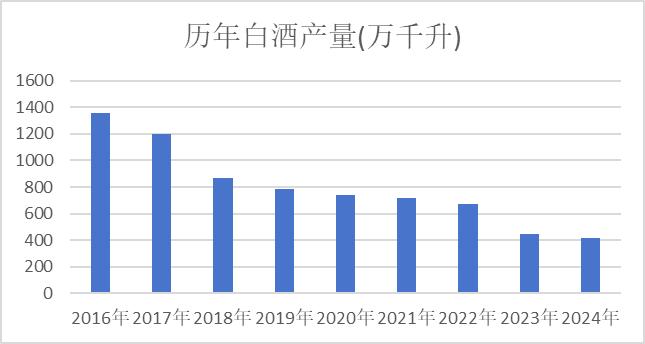
Core Insights - The overall alcohol market is experiencing a decline, with both the baijiu and beer industries facing significant challenges, including a projected 1% decrease in global beer sales in 2024 [1][9] - Despite the downturn, the high-end beer segment is witnessing growth, with high-end and super high-end beers in China and the U.S. showing positive growth rates of 1% and 2% respectively in 2024 [2][9] Industry Overview - The baijiu industry has seen a continuous decline in production, dropping from 13.58 million kiloliters in 2016 to approximately 4.14 million kiloliters in 2024, with projections indicating it may fall below 4 million kiloliters in 2025, marking a 20-year low [4][7] - High-end baijiu prices have also plummeted, with notable brands like Moutai and Wuliangye hitting record lows in wholesale prices [7][8] - The beer industry is similarly struggling, with a 0.6% decline in production for major Chinese breweries in 2024, amounting to 35.21 million kiloliters, which is about 70% of the peak production in 2013 [9] High-End Beer Growth - High-end beer is driving revenue growth for breweries, with companies like Yanjing Beer reporting that mid-to-high-end products accounted for 70.11% of their sales, achieving a revenue growth of 9.32% [9][12] - The trend towards high-end beer consumption is largely driven by younger consumers, who are increasingly willing to pay for quality and unique experiences [12][14] Consumer Behavior - A significant portion of young consumers (over 77%) prefer the concept of "quality over quantity" in their beer choices, indicating a shift in consumption patterns [13] - The younger demographic is motivated by both quality and status, viewing high-end beer as a lifestyle choice rather than just a beverage [14][15] Market Dynamics - The high-end beer market is projected to grow, with the industry’s high-end rate expected to reach 30% by 2026 [19][20] - However, not all companies are successfully transitioning to high-end products, as seen with Budweiser and Tsingtao, which have faced challenges in maintaining sales and profitability in this segment [21][22] Challenges in High-End Transition - The transition to high-end products requires strong brand recognition, effective distribution channels, and cultural resonance with consumers, which many domestic brands struggle to achieve [22][23] - The competition in the high-end market is intensifying, and companies must innovate and connect with younger consumers to succeed [18][24]


重庆啤酒20251106
2025-11-07 01:28
Summary of the Conference Call for Chongqing Beer Industry Overview - The beer industry is experiencing a slight decline in overall sales for 2025, but specific brands such as Carlsberg, Fenghua Xueyue, Lebao, and Wusu are showing growth [2][6] - The company is focusing on high-end product development, with a significant emphasis on products priced above 4 RMB [2][9] Key Points and Arguments Brand Performance - Carlsberg continues to grow in the South China market [2][6] - Fenghua Xueyue has achieved double-digit growth after nationwide promotion [2][6] - Lebao remains the company's second-largest product, continuing its growth trend [2][6] - Wusu brand is maintaining high-end pricing and positive growth both inside and outside Jiangsu, with an estimated sales volume of 730,000 to 740,000 tons in 2024 and expected growth in 2025 [2][7] Market Dynamics - The company is segmented by geographic latitude, with significant growth in Xinjiang, where market share exceeds 90% [10][11] - The South China region is outperforming the Central region [11] Cost and Margin Outlook - A decrease in costs is expected to significantly contribute to gross margins in 2025, although the rate of decline is anticipated to narrow in 2026 [2][13] - The company typically locks in pricing and volume for the next year by January, with preliminary indications suggesting continued cost reduction in 2026, albeit at a lower rate than in 2025 [13] Product Innovation and New Channels - The company is actively exploring new retail channels and product innovations, launching over 30 new products in 2025, including tea-flavored beer and low-alcohol variants [4][14] - The introduction of one-liter canned products is a key focus for 2026 [4][14] Consumer Trends and Challenges - The decline in the economy segment (priced below 4 RMB) is noted, but it represents a small portion of total sales (approximately 3%) [9] - The overall consumption environment is under pressure, impacting mainstream product categories [3][8] Financial Health and Dividend Policy - The company maintains a 100% dividend policy, with a strong cash flow position supporting this strategy [4][19] - The depreciation from the new Foshan factory, which began operations in August 2024, is expected to increase from 40 million RMB in 2024 to over 90 million RMB in 2025, impacting costs [4][19] Future Outlook - The company remains cautious about 2026, with no clear recovery signs yet, but anticipates potential adjustments based on demand recovery [5][14] - Despite concerns over profit declines, the company is viewed as having a strong defensive position in the A-share market, with expectations for gradual improvement in the dining scene [20] Additional Important Insights - The company is adapting to new retail trends, including instant retail and O2O models, to enhance marketing and brand development [3] - The impact of the recent alcohol regulations on sales has been managed effectively, with strategies in place to stabilize sales [17][18]
第三季度净利跌近13%,业绩被燕京赶超,重庆啤酒怎么了?
Nan Fang Du Shi Bao· 2025-11-04 11:17
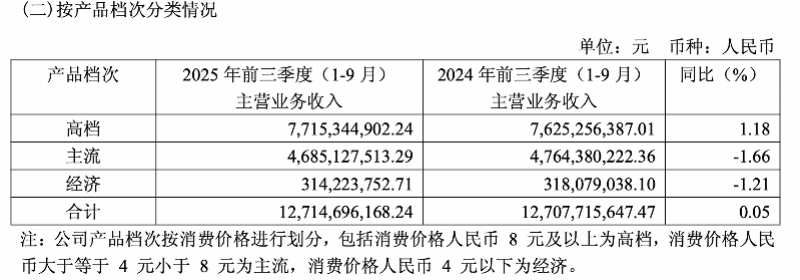
Core Viewpoint - Chongqing Beer reported a decline in both revenue and net profit for the third quarter, indicating a potential loss of market position as it was surpassed by Yanjing Beer in terms of performance [1][6]. Financial Performance - For the first three quarters, Chongqing Beer achieved revenue of 13.059 billion yuan, a slight decrease of 0.03% year-on-year, while net profit attributable to shareholders was 1.241 billion yuan, down 6.83% year-on-year [1]. - In the third quarter alone, revenue was 4.22 billion yuan, a year-on-year increase of 0.41%, but net profit fell to 376 million yuan, a decline of 12.71% [1][2]. - The company has experienced a continuous decline in net profit for two consecutive quarters, with the second quarter net profit recorded at 392 million yuan, also down approximately 12.7% year-on-year [1][4]. Sales Volume and Product Segmentation - Chongqing Beer sold 2.6681 million kiloliters of beer in the first three quarters, reflecting a modest growth of 0.42%, which is below the overall industry growth rate [1]. - The revenue from high-end products (priced above 8 yuan) was 7.715 billion yuan, showing a year-on-year increase of approximately 1.18%, while revenue from mainstream (4 to 8 yuan) and economy (below 4 yuan) products declined by 1.66% and 1.21%, respectively [2][3]. Market Competition and Strategy - The company has increased its marketing expenses to stimulate sales, with third-quarter sales expenses reaching 704 million yuan, a year-on-year increase of 13.7% [4]. - Despite the increased spending, the financial results indicate that these efforts have not reversed the declining trend in performance [4]. - The competitive landscape has intensified, with external factors such as rising costs and market recovery challenges impacting profitability [3][4]. Industry Trends - The high-end beer segment in China is facing challenges, with foreign brands experiencing a slowdown in growth due to reduced nightlife consumption channels and increased competition from domestic brands [5]. - Yanjing Beer has outperformed Chongqing Beer, achieving revenue of 13.433 billion yuan and a net profit of 1.770 billion yuan in the first three quarters, marking increases of 4.57% and 37.45% year-on-year, respectively [6]. Future Outlook - As the fourth quarter approaches, Chongqing Beer is expected to refine its strategies, focusing on non-on-premise channels to attract new consumers, particularly younger demographics [7]. - The company is also exploring cross-category opportunities in the beverage sector to supplement its beer offerings [7].

重庆啤酒(600132):2025年三季报点评:短期利润承压,股息价值凸显
Huachuang Securities· 2025-10-31 12:53
Investment Rating - The report maintains a "Strong Buy" rating for Chongqing Beer, with a target price of 67 yuan [2][9]. Core Views - The company reported a total revenue of 13.06 billion yuan for the first three quarters of 2025, which is approximately flat year-on-year. The net profit attributable to shareholders decreased by 6.8% to 1.24 billion yuan [2][9]. - The report highlights that despite short-term profit pressure, the value of dividends is becoming more prominent. The company is expected to improve profitability in the coming year due to various factors including cost management and tax rate stabilization [9]. Financial Performance Summary - For Q3 2025, the company achieved a total revenue of 4.22 billion yuan, a slight increase of 0.4% year-on-year, while the net profit attributable to shareholders fell by 12.7% to 380 million yuan [2][9]. - The report projects total revenue for 2024 to be 14.645 billion yuan, with a slight decline of 1.1% year-on-year, and anticipates a recovery in net profit growth starting in 2025 [5][9]. - The company’s gross margin improved by 1.7 percentage points to 50.9% in Q3 2025, attributed to cost optimization and product mix upgrades [9]. Market and Product Insights - The report notes that high-end products are performing well, with a 3.7% increase in sales for premium products, while mainstream and economy products saw declines of 3.2% and 10.5% respectively [9]. - The company is actively expanding its high-end product offerings and exploring new channels to capture growth, particularly in underperforming regions [9]. Future Outlook - The report suggests that the company’s profitability is expected to improve in the coming years due to sustained cost advantages and a focus on high-margin products [9]. - The earnings forecast for 2025-2027 has been adjusted to 1.154 billion yuan, 1.264 billion yuan, and 1.346 billion yuan respectively, reflecting a positive outlook for the company's financial performance [9].
青岛啤酒(600600)2025年三季报业绩点评:产品结构持续优化 盈利能力延续提升
Xin Lang Cai Jing· 2025-10-29 12:32
Core Viewpoint - The company reported a revenue of 29.37 billion yuan for the first three quarters of 2025, representing a year-on-year increase of 1.4%, with a net profit attributable to shareholders of 5.27 billion yuan, up 5.7% year-on-year [1][2]. Financial Performance - In Q3 2025, the company achieved a revenue of 8.88 billion yuan, a slight decrease of 0.2% year-on-year, while the net profit attributable to shareholders was 1.37 billion yuan, reflecting a year-on-year increase of 1.6% [1]. - The net profit margin for Q3 2025 was 15.4%, an increase of 0.3 percentage points year-on-year, with a gross margin of 43.6%, up 1.4 percentage points year-on-year [2]. Product and Market Strategy - The company has optimized its product structure, with an increase in the sales proportion of mid-to-high-end products, where the main brand Qingdao Beer and high-end products saw sales growth of 4.3% and 6.8% year-on-year, respectively [1]. - The company is focusing on fine-tuning its operations to strengthen its position in mainstream channels while accelerating the development of emerging channels, with online business continuing to grow [1]. Growth Outlook - The company is optimistic about its long-term growth prospects due to two main factors: the stable competitive landscape in the beer industry and the ongoing trend towards premiumization, which is expected to enhance profitability [2]. - The company is actively innovating and diversifying its product offerings, targeting personalized, health-oriented, and high-end products to expand its consumer base and create new demand [2]. Investment Recommendations - Revenue projections for 2025 to 2027 are expected to grow by 1.4%, 3.3%, and 2.7% year-on-year, with net profit growth of 7.2%, 6.3%, and 6.3% respectively, and corresponding price-to-earnings ratios of 19, 18, and 17 times [2].
青岛啤酒Q3收入同比转跌,北上资金大幅减持
2 1 Shi Ji Jing Ji Bao Dao· 2025-10-27 12:35
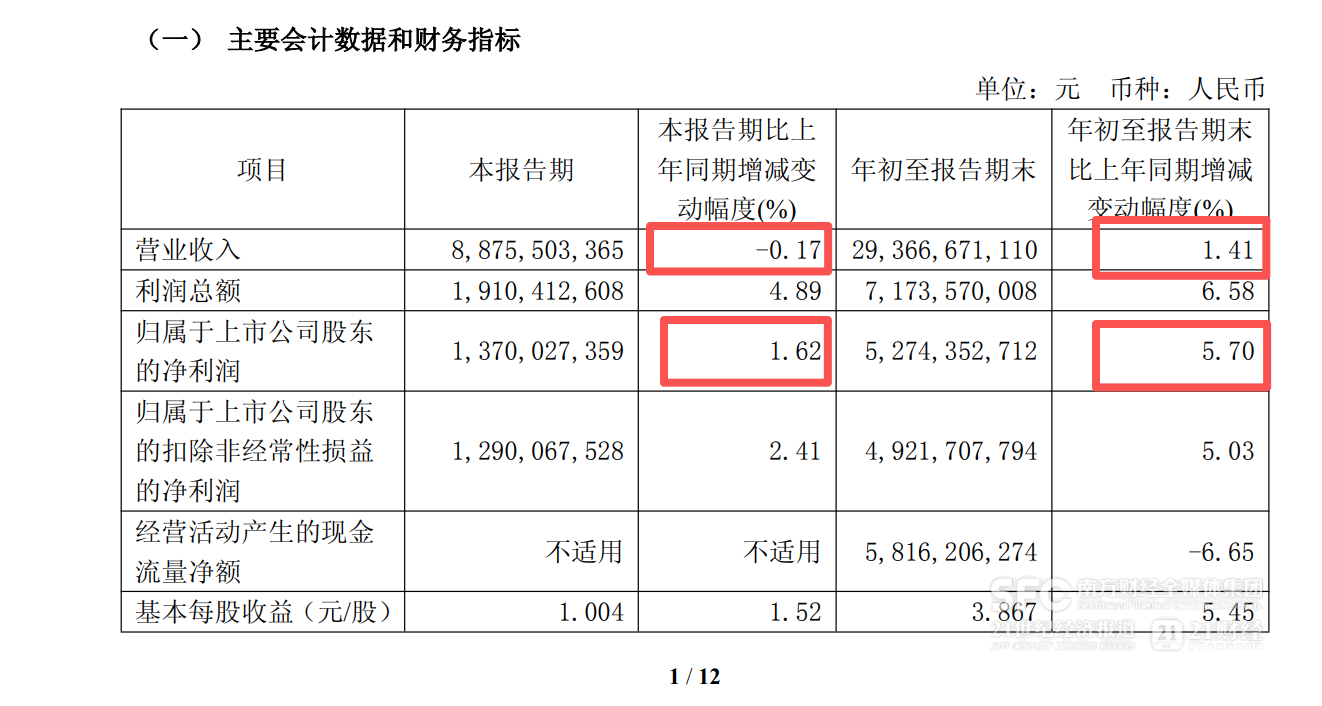
Core Viewpoint - Qingdao Beer has reported its latest performance in the beer sector, showing a slight decline in revenue but an increase in net profit, indicating resilience amid industry challenges [2][5]. Financial Performance - In Q3 2025, Qingdao Beer achieved revenue of 8.88 billion yuan, a year-on-year decrease of 0.17%, while net profit attributable to shareholders was 1.37 billion yuan, reflecting a growth of 1.62% [2][3]. - For the first three quarters, the total revenue exceeded 29 billion yuan, and net profit surpassed 5.27 billion yuan, with expectations for record annual profits [2][3]. Sales and Market Position - The company reported a slight increase in sales volume of 2.155 million kiloliters in Q3, with a year-on-year growth of only 0.3%, and a total increase of 1.6% for the first three quarters [6]. - The main brand's sales grew by 4.2% year-on-year, with mid-to-high-end products seeing a 6.8% increase, outperforming industry averages [6][7]. Strategic Initiatives - Qingdao Beer is focusing on brand strength, quality, and channel network advantages, accelerating product structure optimization, and innovating marketing strategies to enhance consumer experience and drive consumption [5]. - The company is actively expanding both domestic and international markets while maintaining a multi-channel approach to solidify its market position [5]. Shareholder Dynamics - Hong Kong Central Clearing Limited reduced its holdings from 23.34 million shares to 10.8 million shares, representing a significant decrease in ownership [8]. - As of the latest data, the top shareholders include Hong Kong Central Clearing Limited and Qingdao Beer Group, with the latter holding 32.51% of shares [9]. Stock Performance - As of October 27, Qingdao Beer’s stock price has declined by 15.9% this year [10].
北京300亿啤酒巨头利润大涨37%,成本控出来的利润,能走多远?
3 6 Ke· 2025-10-23 12:38
Core Viewpoint - Yanjing Beer is experiencing a situation of profit growth without revenue growth, with a need to enhance revenue growth rates while maintaining profitability [1][8]. Group 1: Financial Performance - In the first three quarters of 2025, Yanjing Beer reported revenue of 13.433 billion yuan, a year-on-year increase of 4.57%, and a net profit attributable to shareholders of 1.77 billion yuan, a year-on-year increase of 37.45% [1]. - The revenue for the third quarter was 4.875 billion yuan, a year-on-year increase of 1.55%, while the net profit for the same period was 668 million yuan, a year-on-year increase of 26% [1]. - Revenue growth is projected to decline from 10.38% in 2022 to 3.2% in 2024, despite net profit growth remaining strong [3][8]. Group 2: Product Strategy - Yanjing Beer has focused on high-end product development, with mid-to-high-end product revenue increasing from 7.658 billion yuan in 2022 to 8.865 billion yuan in 2024, although growth has slowed significantly [3]. - The revenue share of mid-to-high-end products increased from 62.86% in 2022 to 67.01% in 2024, indicating a shift in the product mix [3]. - The company has implemented a "big product" marketing strategy, with key products including Yanjing U8 and V10, aimed at enhancing brand image and market presence [2]. Group 3: Market Dynamics - Yanjing Beer relies heavily on the North China region, which accounted for 56.67% of total revenue in the first half of 2025, with a year-on-year growth of 5.61% [4]. - The company is looking to expand its market share in weaker regions to drive future growth [4]. Group 4: Cost Management - Despite slowing revenue growth, Yanjing Beer has maintained double-digit profit growth primarily through cost control measures [5]. - Operating costs increased only slightly by 0.57% year-on-year, while management expenses decreased by 4.59% [6]. - The workforce has also been reduced from 23,708 employees in 2022 to 19,965 by the end of 2024, contributing to cost efficiency [6]. Group 5: Future Outlook - Yanjing Beer is exploring new growth avenues, including the beverage sector with the launch of the Beiste soft drink, although its contribution to revenue remains minimal [7]. - The company faces challenges in sustaining long-term growth and must find ways to enhance revenue alongside profitability to avoid the "profit without revenue" scenario [8].
Third Space获投资;八马茶业通过上市聆讯;复朗集团总裁将辞任
Sou Hu Cai Jing· 2025-10-14 14:41
Investment Dynamics - Yonghui Supermarket has established a new trading company in Beijing with a registered capital of 10 million yuan, focusing on food internet sales, telecommunications, and internet information services, which could create additional revenue streams for the company in the long term [3] - Third Space, a luxury gym in London, secured a £75 million bank loan from OakNorth, following a previous loan of £38.5 million in June 2023, indicating investor confidence in the gym's growth potential amid increasing consumer health demands [5] - Guizhou Southern Dairy announced the suspension of its listing application on the Beijing Stock Exchange due to the need for supplementary audit matters, with projected 2024 revenue of 1.817 billion yuan and net profit of 209 million yuan, ranking 20th among 36 listed dairy companies [7] - Eight Horse Tea has passed the listing hearing at the Hong Kong Stock Exchange, aiming for a main board listing with projected revenues of 1.818 billion yuan, 2.122 billion yuan, and 2.143 billion yuan from 2022 to 2024, showing growth rates of 16.8% and 1.0% for 2023 and 2024 respectively [10][11] - Haidilao has opened a budget conveyor sushi restaurant in Hangzhou, indicating its strategy to diversify into the sushi market, leveraging its supply chain to create a differentiated product offering [13] Brand Dynamics - Luckin Coffee has launched a venue leasing cooperation across 39 cities, focusing on school locations, which is expected to enhance brand coverage in a rapidly growing coffee market [19] - LOEWE and Swiss sports brand On have collaborated to launch a limited edition Cloudsolo sneaker, which is anticipated to generate high-margin revenue for LOEWE while attracting high-net-worth customers for On [16] Personnel Dynamics - Cargill appointed Andrew MacPherson as the new CEO of Teys, coinciding with Cargill's acquisition of Teys, which is expected to enhance operational capabilities and market reach [22][23] - China Resources Beer announced a management reshuffle, appointing Jin Hanquan as executive director and president, which aims to strengthen leadership amid increasing competition in the premium beer segment [26] - The global luxury fashion group, Richemont, announced the resignation of its CEO and CFO, Chen Jiyu, who will leave on October 27, 2025, raising questions about the future leadership and performance of the group [28]




别再以为是国货了!这些品牌原来早被美国收购,难怪价钱越来越贵
Sou Hu Cai Jing· 2025-10-12 03:41
Core Insights - The article discusses the transformation of the Chinese beer market over the past 40 years, highlighting the shift from affordable local brands to the dominance of foreign brands like Budweiser, which has significantly altered consumer preferences and pricing dynamics [2][19]. Group 1: Budweiser's Entry and Strategy - Budweiser entered the Chinese market in 1995, investing $1.7 billion to establish a brewery and acquiring 80% of a local company for $50 million, marking the beginning of its expansion in China [4]. - The company adapted to local tastes by producing lighter beers with lower bitterness, using rice to replace some malt, which reduced costs and extended shelf life, allowing for widespread distribution [4][6]. - Budweiser's pricing strategy, starting at 1.5 yuan per bottle, enabled it to capture a significant share of the premium beer market in Wuhan and later across China [6]. Group 2: Market Dynamics and Competition - The Chinese beer market saw a wave of mergers and acquisitions, with major players like China Resources Snow Beer and Tsingtao Beer consolidating their positions, leading to a market dominated by five major brands by 2020, which held 92% market share [9][10]. - Despite the consolidation, the intense competition did not lead to profit growth, with even leading brands earning significantly less than their counterparts in the liquor industry [10]. Group 3: Shift to Premiumization - Starting in 2014, major beer companies collectively raised prices, recognizing the need to shift towards premium products, a strategy that benefited Budweiser, which had already established a strong presence in the high-end market [12]. - The gap in brand premiumization between domestic and foreign brands allowed Budweiser to capture high-end market opportunities while local brands struggled to reposition themselves [13]. Group 4: Emerging Trends and Future Opportunities - The craft beer segment is experiencing rapid growth, with projections indicating the market could exceed 100 billion yuan by 2025, driven by younger consumers and changing consumption patterns [15][17]. - There is potential for Chinese beer brands to expand into international markets, with examples of local craft beers entering regions like Africa, mirroring the consumption upgrade trends seen in China [17]. Group 5: Conclusion - The evolution of the beer industry in China reflects broader consumer trends, moving from cost-driven strategies to a focus on quality and brand differentiation, suggesting a sustainable path forward for the industry [19].