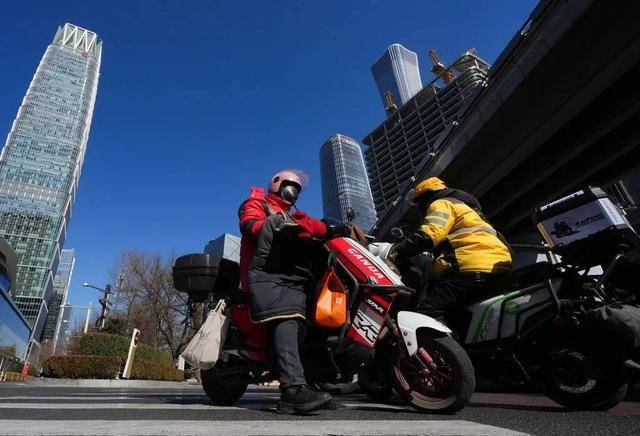
外卖价格战

Search documents
顺周期餐饮专家交流
2025-09-10 14:35
Summary of Conference Call on the Restaurant Industry and Haidilao Industry Overview - The restaurant industry experienced a year-on-year decline in 2025, primarily due to the absence of consumer subsidies that were present in the same period last year, which ranged from 0.2 to 0.3 [4][3] - The price war among delivery platforms has also impacted the industry, with Haidilao opting not to participate in significant discounts, leading to a decrease in customer traffic [5][4] - The average table turnover rate in the restaurant industry was approximately 4 times in July and August 2025, consistent with national averages [2] Haidilao's Performance and Strategies - Despite pressure on table turnover rates, Haidilao maintained stable gross margins through cost control measures [4][8] - The company anticipates that the implementation of mandatory social security policies in September could increase labor costs by about 3 percentage points, but it does not plan to raise prices [8][9] - Haidilao is focusing on optimizing store locations and sizes to enhance space utilization and investment returns [10] - The company has lowered the threshold for franchise operations, resulting in new franchise stores performing comparably to company-owned stores, indicating acceptance of the new policies [12][13] Competitive Landscape - The competitive environment in the restaurant industry has intensified, with brands like Banlu Hotpot seeking to go public, creating pressure on existing players [11] - Haidilao aims to avoid direct competition with Banlu Hotpot, which targets a higher-end market, while Haidilao focuses on the mass market [11] Cost Management and Future Outlook - The increase in social security costs is manageable and will not significantly raise overall operational costs [15] - Haidilao's external delivery business remains limited, as the product offerings are not well-suited for delivery, and the company prefers to focus on scaling its sub-brands [14] - The company has implemented innovative strategies to enhance table turnover, such as themed events and promotions, which have yielded positive results in specific periods [18] - The overall market environment is challenging for new restaurant brands, with cautious consumer spending impacting the development of new brands [17] - The average customer spending for mass-market hotpot has been declining, while the spending for banquet-style barbecue remains stable at around 100-110 yuan [17] Conclusion - The restaurant industry is navigating a challenging landscape with various pressures, including competition and changing consumer behavior. Haidilao's strategic focus on cost control, franchise expansion, and innovative marketing is aimed at maintaining its market position and improving performance in the second half of 2025 [20][21]

送外卖半年,京东净利润成绩单
Cai Jing Wang· 2025-08-15 12:51
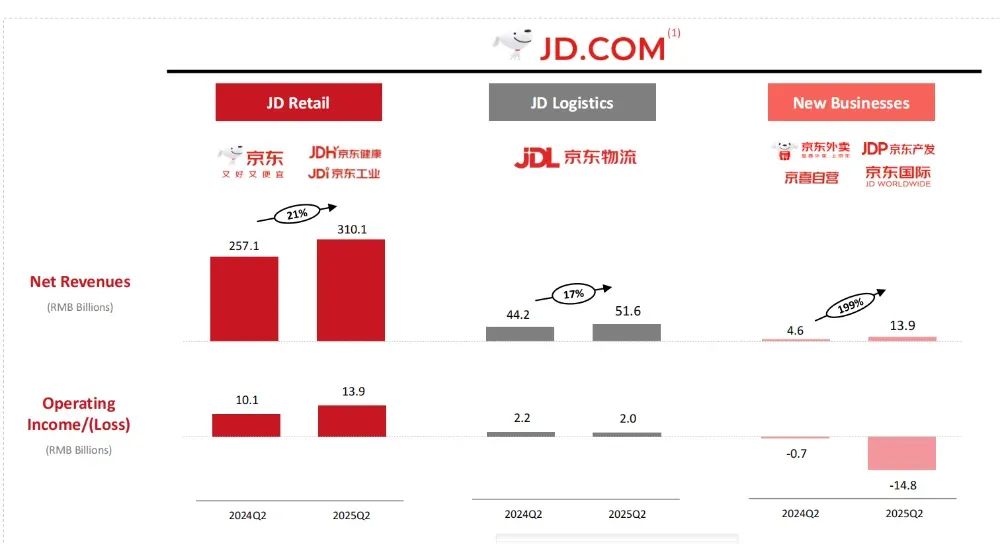
Core Insights - JD Group reported a significant loss in its food delivery segment, amounting to 14.8 billion yuan in Q2 2025, but this segment contributed to a more than 40% year-on-year increase in active user numbers and shopping frequency for its main e-commerce platform [1][9]. Financial Performance - In Q2 2025, JD Group's revenue reached 356.7 billion yuan, marking a 22.4% year-on-year growth, the highest growth rate in nearly three years [1]. - The net profit attributable to ordinary shareholders for Q2 was 6.2 billion yuan, a substantial decline of 51% year-on-year; under Non-GAAP standards, the net profit was 7.4 billion yuan, down 49% year-on-year and 42% from the previous quarter [1][2]. Business Segment Analysis - The food delivery business, categorized under "new business," saw a revenue increase of 199% year-on-year, rising from 4.6 billion yuan to 13.9 billion yuan, but the operating loss expanded from 700 million yuan to 14.8 billion yuan [6]. - JD's core retail segment generated 310.1 billion yuan in revenue during Q2, contributing 87% to the overall revenue, with an operating profit of 13.9 billion yuan, offsetting the losses from new business ventures [7]. Strategic Initiatives - JD's CEO emphasized the long-term strategic importance of food delivery and instant retail, indicating ongoing investments to enhance operational capabilities in these areas [8]. - The company has launched a new food delivery model called "Seven Fresh Kitchen," aiming to innovate the supply chain and reduce food prices while maintaining quality [14]. Market Competition - The food delivery market is highly competitive, with JD's rivals, including Taobao and Meituan, also engaging in aggressive subsidy strategies, leading to a significant increase in order volumes across the industry [3][4]. - Despite the competitive landscape, JD's management has expressed a clear stance against participating in destructive price wars, citing concerns over market sustainability [13].


京东外卖等新业务亏损147亿
21世纪经济报道· 2025-08-15 03:07
Core Viewpoint - JD Group's second-quarter financial report shows significant growth in revenue and user engagement, but also highlights substantial losses in its new business segment, particularly in food delivery services [1][4][7]. Financial Performance - The company's revenue for the quarter reached 356.7 billion yuan, a year-on-year increase of 22.4%, marking the highest growth rate in nearly three years [1]. - Active user numbers and shopping frequency both grew by over 40% year-on-year [1]. - The net profit attributable to ordinary shareholders was 6.2 billion yuan, down from 12.6 billion yuan in the same period last year [1]. - The new business segment, which includes food delivery, saw revenue surge from 4.636 billion yuan to 13.852 billion yuan, a staggering increase of 198.79% year-on-year [4]. New Business Segment Analysis - Despite the revenue growth in the new business segment, operating losses expanded dramatically from 0.695 billion yuan to 14.777 billion yuan, resulting in an operating profit margin of -106.7% [4][8]. - The management indicated that short-term profit margins may fluctuate due to industry competition and investment pace, but these investments are aimed at breaking through growth ceilings and will eventually create new growth momentum [7]. Strategic Insights - The management emphasized that the new business is not a reckless venture but is intended to create a synergistic relationship with the core retail business, enhancing cross-selling opportunities [7]. - The food delivery service is positioned as a high-frequency consumption entry point, which is expected to solidify JD's platform as a "one-stop lifestyle service entry" [7]. - JD's logistics network and supply chain capabilities are being leveraged to optimize efficiency and enhance service offerings in the food delivery sector [7][8]. Competitive Landscape - JD is committed to resisting market practices that create bubbles, such as "0 yuan purchases," and aims to maintain a healthy profit margin in its core retail business [8]. - The company has established a robust service network with nearly 200 restaurant brands achieving over one million sales and has signed contracts with over 15,000 full-time delivery riders [8].

"立秋奶茶大战"前,外卖平台集体官宣规范促销补贴
Ge Long Hui· 2025-08-01 19:46
Core Insights - Multiple platforms including Meituan, Taobao, and Ele.me have issued statements to regulate promotions and limit subsidy behaviors, aiming to foster healthy competition in the industry [1][3] - The upcoming "Autumn First Cup of Milk Tea" event, a significant promotional period, has prompted these platforms to collectively emphasize the importance of avoiding irrational competition [1][5] Group 1: Industry Response - The State Administration for Market Regulation has previously conducted talks with food delivery platforms, urging them to rationalize promotional activities and engage in healthy competition [3] - Following these discussions, platforms have shown varying degrees of marketing contraction, although large subsidies like zero-yuan purchases and one-cent purchases continue, with merchants bearing about 70% of the subsidy costs [3] Group 2: Market Trends - Recent commentary from major media outlets highlights the ongoing price wars in the food delivery sector, indicating that such competition has not led to increased consumer spending, with a reported 3.6 percentage point decline in national catering revenue growth in the first half of the year [4] - The "Autumn First Cup of Milk Tea" event has become a staple marketing initiative since 2020, with Taobao launching its campaign featuring a 22 yuan red envelope for new users and enlisting celebrity endorsement [5][7] Group 3: Promotional Activities - Taobao has initiated its promotional activities for the "Autumn First Cup of Milk Tea," including a significant discount campaign and the use of a well-known celebrity as a spokesperson [2][5][7] - The collective statements from the platforms serve as a preemptive measure to signal adherence to anti-involution policies ahead of the competitive promotional period [5]


外卖市场“三国争霸”!这一赛道或成最大赢家
天天基金网· 2025-07-08 11:32
Core Viewpoint - The new-style tea beverage sector is expected to benefit significantly from the ongoing subsidy war among major food delivery platforms, with companies like Tea Baidao, Gu Ming, and Mi Xue Group showing substantial stock price increases this year [1][2]. Group 1: Market Performance - The Hong Kong stock market saw a collective surge in new-style tea beverage stocks, with Tea Baidao rising by 11% and Gu Ming and Mi Xue Group increasing by approximately 6% [1]. - Year-to-date performance shows Gu Ming up 178%, Mi Xue Group up 168%, and Luckin Coffee up 50% [1]. Group 2: Subsidy War Dynamics - On July 5, Alibaba and Meituan released a large number of high-value takeaway coupons, including offers like "25 off 21" and "16 off 16," with some items available for "zero purchase" [1]. - Following the launch of JD.com's food delivery service, a fierce competition has emerged among Alibaba, Meituan, and JD.com, with a reported total investment of 25 billion yuan in the second quarter [1]. Group 3: Financial Implications - Goldman Sachs predicts that the current food delivery price war will last longer than expected, with Alibaba's food delivery business projected to lose 41 billion yuan over the next 12 months, JD.com 26 billion yuan, and Meituan's EBIT expected to decline by 25 billion yuan [2]. - In the capital market, Meituan's stock has dropped over 21%, JD.com nearly 6%, while Alibaba's stock has risen by 30% due to better-than-expected growth in its e-commerce business [2]. Group 4: Sector Opportunities - The new-style tea beverage sector is identified as a potential winner in the ongoing subsidy competition, benefiting from high consumer frequency and low average spending, especially during the summer sales peak [2]. - The introduction of large subsidy coupons is expected to drive user engagement and increase the popularity of tea beverages on delivery platforms [2].

外卖价格战,会「伤及」拼好饭吗?
3 6 Ke· 2025-05-16 09:23
Core Viewpoint - The intense competition in the food delivery market, driven by significant subsidies from Meituan, JD, and Taobao, has led to a price war that is reshaping consumer behavior and impacting platforms like Meituan's "Pin Hao Fan" [1][10][11] Group 1: Market Dynamics - The price war has resulted in lower delivery prices, attracting consumers who previously did not use delivery services, leading to a shift in purchasing habits among users [1][2] - Consumers are increasingly comparing prices across multiple platforms, with some finding that "Pin Hao Fan" offers higher prices for certain items compared to competitors [2][4] - The competition has affected "Pin Hao Fan" by drawing away some of its customer base, particularly in first and second-tier cities, although the impact is less pronounced in lower-tier cities [4][6][9] Group 2: Consumer Behavior - Different consumer segments exhibit varied responses to the price war, with some continuing to prefer "Pin Hao Fan" for its simplicity and low prices, while others are swayed by the competitive offers from other platforms [5][6] - The convenience of using "Pin Hao Fan" remains appealing to certain consumers, despite the ongoing price competition [5][10] Group 3: Business Impact - Merchants in second-tier cities report a slight decrease in "Pin Hao Fan" orders, but overall, the impact is not severe, indicating that the platform still retains a significant customer base [5][6][11] - The ongoing price competition is reshaping the pricing structure of the food delivery industry, with "Pin Hao Fan" potentially leading to a long-term reduction in average delivery prices [10][11] Group 4: Future Outlook - The growth of "Pin Hao Fan" and its increasing variety of offerings suggest that it may continue to attract more consumers, potentially reshaping the competitive landscape of food delivery [10][11] - The long-term implications of the price war may lead to reduced profitability for all players involved, with consumers benefiting in the short term from lower prices [11][12]
刘强东百亿砸外卖,你会抛弃美团吗?
Sou Hu Cai Jing· 2025-04-11 09:02
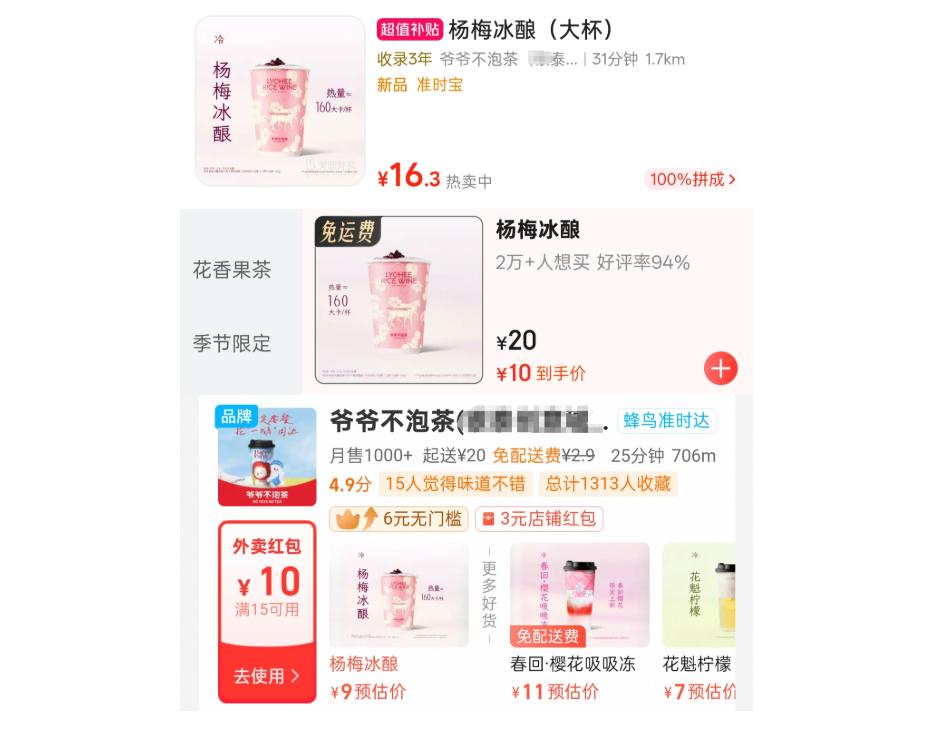
刘强东再出大招,京东外卖今日上线百亿补贴。 4月10日晚间,"京东黑板报"公众号发布消息,京东外卖于4月11日早8点正式上线百亿补贴。 据悉,京东外卖将一年内投入超百亿元,向全体用户发放补贴,覆盖平台上包括麦当劳、海底捞、汉堡 王、霸王茶姬、库迪、古茗等在内得所有餐饮门店。 当前在京东外卖平台上,两三块钱就可以买一杯咖啡或奶茶,免运费,下单后还可以返券。这一策略显 然是想通过低价来吸引用户,京东或许要做"外卖界的拼多多",将老对手的百亿补贴套路引入到自己的 外卖业务中。 自从今年2月京东"杀"入战场后,外卖行业明显越来越热闹了。 咖啡3块9,麻辣烫9块9 在日常生活中,人们点外卖不是美团就是饿了么,这两家巨头使行业呈现出"七三分"的竞争格局,其中 美团外卖占据了70%的市场份额,饿了么则占据30%左右。 头部平台几乎掌握全部的市场,这使大多数用户已经形成了"点外卖、上美团"的使用习惯。而京东外卖 作为后来者,想要撬动市场,必然要和美团、饿了么抢用户。 很明显,京东外卖现阶段的策略是砸钱搞低价,给用户提供其他两个外卖平台没有的优惠。 目前,京东外卖"秒送"频道已开启百亿补贴,主要通过"全民补贴+爆品直降"双重机 ...