
存款利率下行

Search documents
大行撤退,小行“补位”!中长期大额存单成稀缺资源:年利率“2%+”产品多被抢空,有的门槛高达1000万元
Mei Ri Jing Ji Xin Wen· 2025-12-04 16:54
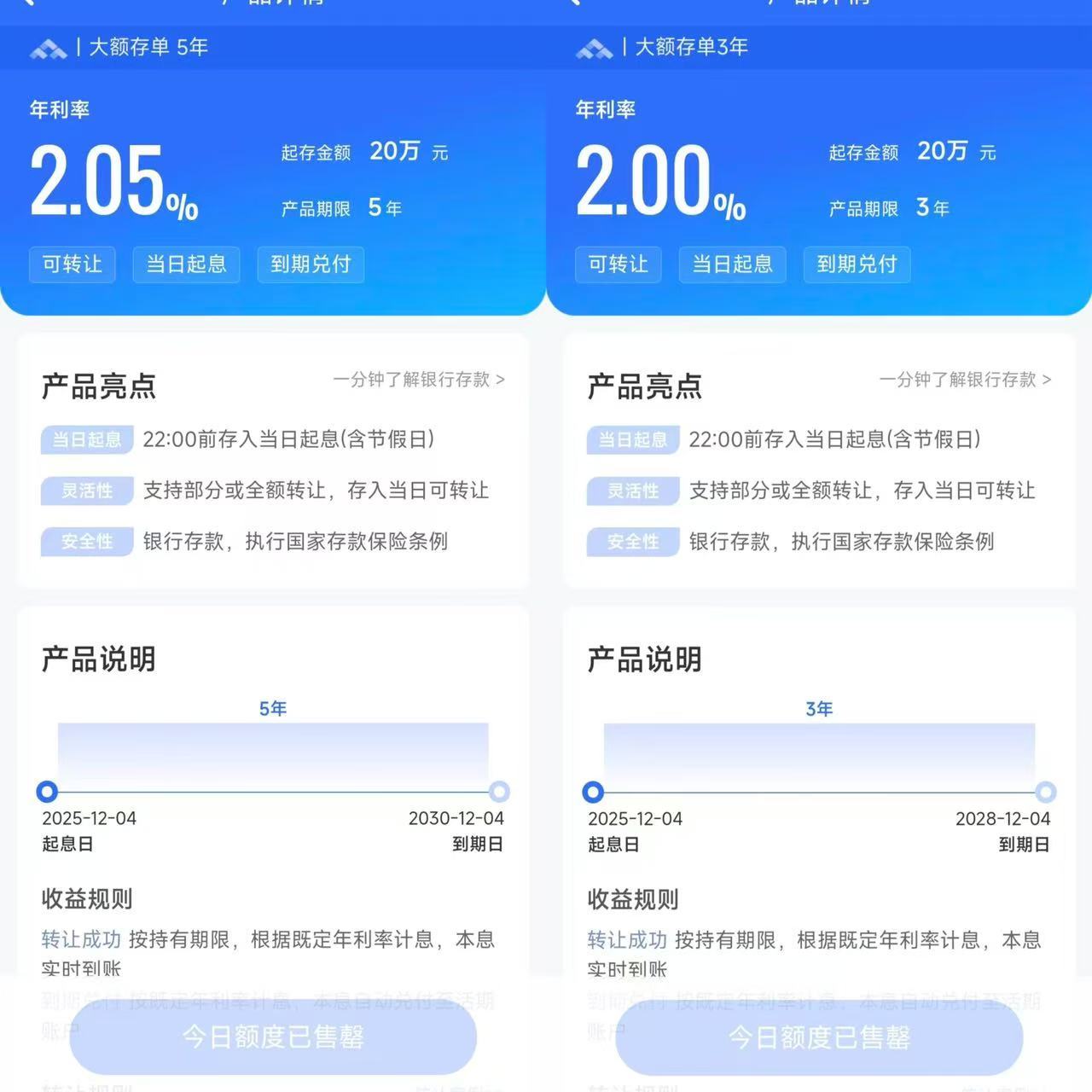
Core Viewpoint - The collective withdrawal of 5-year large denomination certificates of deposit (CDs) by six major state-owned banks has led to a significant shift in the market, with some small and medium-sized banks seizing the opportunity to promote their long-term deposit products as alternatives [1][2][18]. Group 1: Market Trends - The trend of shortening the term structure of large denomination CDs is evident, with the maximum available term generally reduced to three years and interest rates dropping to between 1.5% and 1.75% [2][20]. - Long-term, high-interest deposit products are becoming increasingly scarce, posing challenges for conservative investors who need to adjust their strategies [2][20]. Group 2: Small and Medium-Sized Banks' Strategies - Small and medium-sized banks are actively marketing their long-term deposit products, highlighting their competitive interest rates and terms in response to the withdrawal of major banks [2][4]. - Some banks are offering large denomination CDs with interest rates above 1.8%, while others have introduced alternative deposit products with similar rates but lower minimum deposit requirements [5][12]. Group 3: Customer Engagement and Marketing - Customer managers from small banks are leveraging the situation to attract clients by emphasizing the scarcity and advantages of their deposit products on social media platforms [2][4]. - The marketing efforts align with the traditional peak season for deposit gathering, allowing banks to secure a customer base seeking stable returns before the year-end [4][20]. Group 4: Interest Rate and Accessibility - Interest rates for large denomination CDs have been raised in some banks, with minimum deposit requirements reaching as high as 1 million to 1 billion [9][11]. - Despite the scarcity of high-interest large denomination CDs, some banks continue to offer competitive rates on alternative deposit products, ensuring accessibility for a broader customer base [12][15]. Group 5: Future Outlook - The overall trend indicates a tightening of supply for long-term, high-yield deposit products across various banks, with expectations of a long-term decline in deposit rates [20][21]. - Banks face the challenge of balancing deposit volume and pricing while managing risks associated with higher interest rates and liquidity [21][22].




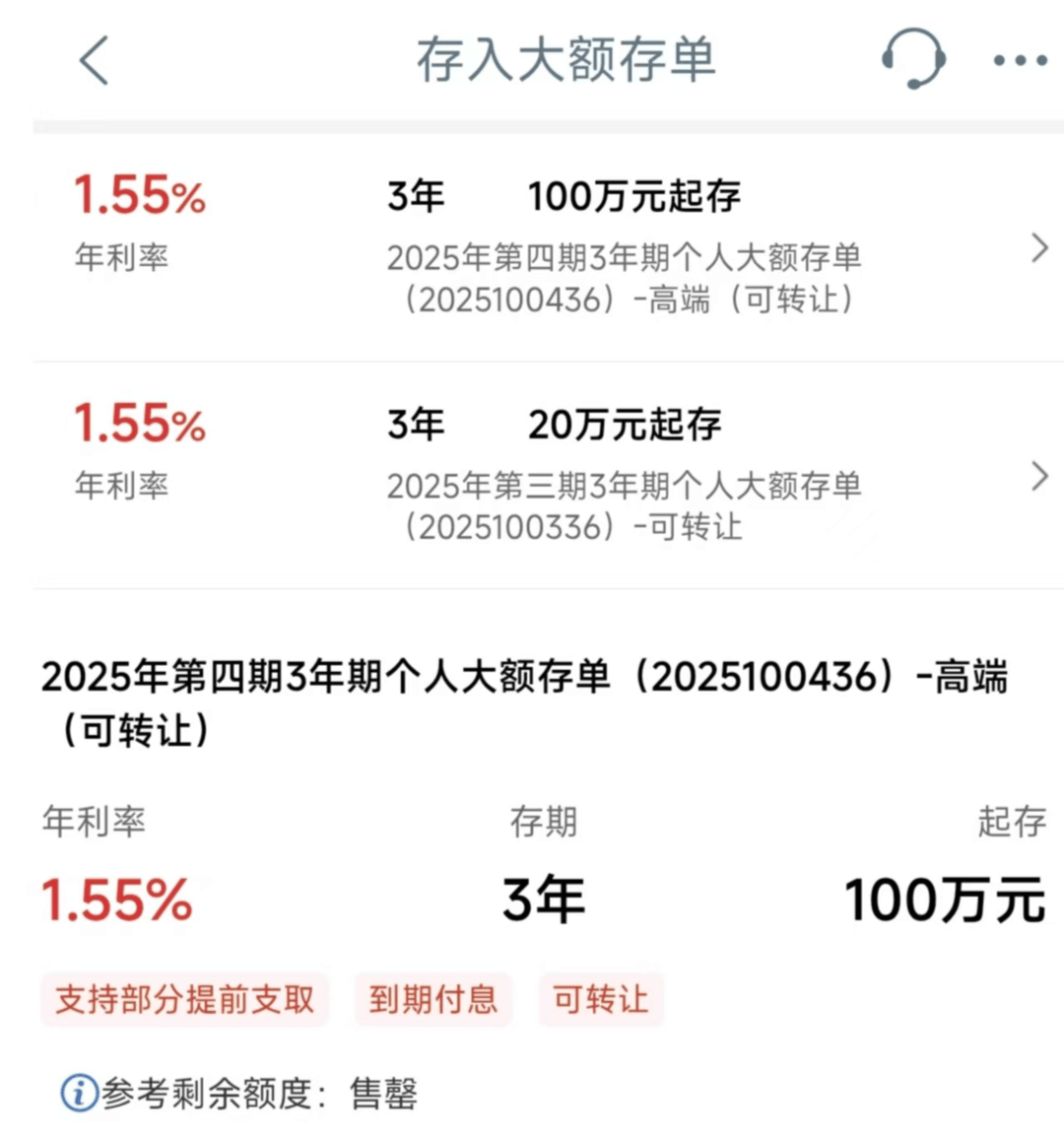
大额存单起存门槛升高,工行存100万与存20万利率相同,农行存500万利率1.55%
Sou Hu Cai Jing· 2025-12-04 03:59
Core Viewpoint - The latest issuance of 3-year large-denomination certificates of deposit (CDs) by Industrial and Commercial Bank of China (ICBC) has seen the minimum deposit requirement raised to 1 million yuan, with an interest rate of 1.55%, which is currently sold out [1][4]. Group 1: Large-Denomination CDs - The interest rate for the 3-year large-denomination CDs is set at 1.55% with a minimum deposit of 1 million yuan [2][3]. - Previously, ICBC offered a 3-year large-denomination CD with a minimum deposit of 200,000 yuan, also at an interest rate of 1.55% [1][4]. - Other banks, including China Construction Bank, Agricultural Bank of China, and Bank of China, are also offering 3-year large-denomination CDs with a minimum deposit of 200,000 yuan at the same interest rate of 1.55% [4]. Group 2: Market Dynamics and Strategies - The increase in the minimum deposit requirement for large-denomination CDs without a corresponding increase in interest rates reflects banks' proactive liability management strategies in a low-interest-rate environment [4]. - By raising the minimum deposit amount, banks are effectively tightening the supply of large-denomination CDs, aiming to optimize their liability structure and reduce reliance on high-cost deposits [4]. - The main advantages of large-denomination CDs over regular deposits, despite the current interest rate trends, include higher liquidity and flexibility, such as transferability and collateral options, making them suitable for large depositors with short-term capital needs [4].

存款还是理财?前三季度银行手续费上涨揭示财富配置新动向
Bei Ke Cai Jing· 2025-11-05 09:21
Core Insights - A discussion is emerging regarding whether to choose deposits or invest in wealth management products, as some banks see a rise in time deposit scales while others report a recovery in net fee income from non-interest sources, with some banks experiencing a doubling of this income [1][2]. Group 1: Wealth Management and Investment Trends - An increasing number of investors are moving funds from deposits to bank wealth management and fund products due to low deposit interest rates, with many seeking higher returns from these alternatives [2][5]. - The capital market's positive performance since the third quarter has led to significant increases in various wealth management products, contributing to the recovery of banks' net fee income [5][6]. - Among 42 listed banks, 26 reported a year-on-year increase in net fee income, with notable growth from Changshu Bank (364.75%) and Ruifeng Bank (162.66%) [5]. Group 2: Bank Performance and Fee Income - In the third quarter, net fee income for banks like China Merchants Bank reached 56.202 billion yuan, marking a 0.90% year-on-year increase, with wealth management fees growing by 18.76% [5]. - The growth in wealth management services is attributed to the favorable capital market conditions, with banks aiming to capitalize on the increasing wealth in society [6]. Group 3: Deposit Trends and Consumer Behavior - Despite a decline in deposit interest rates, personal time deposits have shown positive year-on-year growth across several banks, indicating a continued demand for savings [7][10]. - Some investors, particularly those with lower risk tolerance, continue to prefer time deposits as their primary investment method, even in a fluctuating market [7][8]. - A survey indicated that 62.3% of residents preferred saving over investing or spending, reflecting a cautious approach among consumers [8]. Group 4: Future Outlook - Industry experts predict that deposit interest rates will continue to decline, and the trend of moving funds from deposits to wealth management products is expected to persist [11][12]. - The outflow of funds from deposits to wealth management is driven by the faster decline in deposit rates compared to the yields on wealth management products, making the latter more attractive [13].

未来两年,不要随便存定期存款,内部人员说出3个原因
Sou Hu Cai Jing· 2025-10-28 05:51
Core Insights - The rising trend of savings among Chinese residents is driven by uncertainties such as unemployment risks and medical expenses, as well as preparations for significant expenditures like children's education and home renovations [1] Group 1: Savings Trends - In the first quarter of 2025, new bank deposits from residents reached 9.22 trillion yuan, translating to an average increase of 6,585 yuan per person, or a monthly net increase of 2,195 yuan [1] Group 2: Concerns About Fixed Deposits - Experts advise against blindly choosing fixed deposits in the coming years due to three main reasons: declining deposit rates, inflation eroding purchasing power, and poor liquidity of fixed deposits [3] - Deposit rates have been on a downward trend, with three-year fixed deposit rates dropping from 3.05% a few years ago to around 1.9% currently, significantly reducing interest earnings [5] - Structural inflation in China is affecting essential goods, leading to rising prices that diminish the real purchasing power of savings [6] Group 3: Liquidity Issues - Fixed deposits lack liquidity; early withdrawal results in interest being calculated at the current account rate, leading to potential losses for depositors [7] Group 4: Balancing Savings and Investments - While maintaining some savings is crucial for emergencies, it is also important to keep a portion of funds liquid for unforeseen needs [9] - Alternatives to fixed deposits, such as stocks, funds, and bank wealth management products, carry risks, with many retail investors facing losses [9] - Fixed deposits, despite lower returns, offer safety for principal and interest, making them a preferable option compared to high-risk investments during unfavorable market conditions [9]

存款利率又双叒下滑!银行存款存5年不如存3年
2 1 Shi Ji Jing Ji Bao Dao· 2025-10-27 06:16
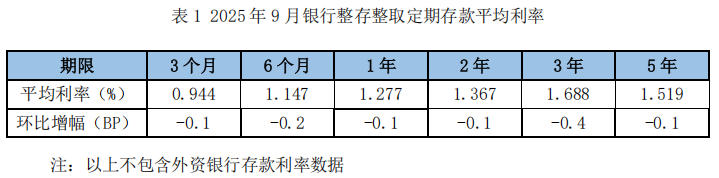
Core Insights - Deposit rates continue to decline, with average rates for various terms entering the "1 era" in 2023 [1] - The average rates for different deposit terms are as follows: 3-month at 0.944%, 6-month at 1.147%, 1-year at 1.277%, 2-year at 1.367%, 3-year at 1.688%, and 5-year at 1.519% [1] - There is a notable inversion in rates, where the 3-year average rate is higher than the 5-year average rate, indicating a shift in depositor behavior [1] Deposit Rate Trends - The downward trend in deposit rates has been consistent throughout the year, with long-term deposit rates being particularly affected [1] - The inversion of rates between the 3-year and 5-year terms highlights a significant change in the banking sector's approach to deposit products [1] Bank Strategies - Banks are lowering medium to long-term deposit rates to optimize their liability structure and manage rising costs associated with fixed-term deposits [1] - There is a strong willingness among depositors to maintain long-term deposits, which influences banks' strategies in adjusting rates [1]
大佬预言成真?2025年,手握存款的人或面临三大挑战
Sou Hu Cai Jing· 2025-10-26 22:53
Core Insights - The Chinese real estate market is undergoing significant adjustments, with property prices in major cities like Shanghai and Shenzhen experiencing substantial declines, reflecting a broader trend of "de-bubbling" in the market [3][5] - The downward trend in savings rates is evident, with a notable decrease in three-year deposit interest rates from 3.25% to 2.15%, indicating a challenging environment for savers [5][7] - By 2025, depositors may face three major challenges: declining deposit interest rates, increasing risks in high-yield investments, and the difficulties associated with entrepreneurship [5][8][9] Group 1: Real Estate Market Trends - The real estate market in China is shifting, with once-stable cities now seeing price drops, exemplified by Shanghai's average price falling from over 90,000 yuan per square meter to around 60,000 yuan, a decrease of approximately 30% [3] - Many second and third-tier cities are experiencing even steeper declines, with prices dropping to as low as 3,000 to 4,000 yuan per square meter, highlighting a significant market correction [3] Group 2: Savings and Investment Challenges - The trend of declining deposit interest rates is expected to continue, driven by an oversupply of bank deposits and weak loan demand, which pressures banks to lower rates [5][7] - As deposit interest rates decrease, many savers are considering reallocating their funds to higher-risk investments, but most lack the necessary expertise, increasing the likelihood of losses [7][8] - The stock market has seen a significant decline, with the A-share market losing approximately 26.94 trillion yuan in total market value in 2024, resulting in average losses of around 140,000 yuan per investor [8] - The performance of various investment products, including funds and bank wealth management products, has also deteriorated, with many investors facing losses of 20% to 30% [8] Group 3: Entrepreneurship Risks - The combination of falling deposit rates and a challenging job market is prompting individuals to consider entrepreneurship as a path to financial freedom, but this route is fraught with high risks [9] - Success in entrepreneurship requires exceptional skills, resilience, and thorough preparation, as many ventures fail, potentially leading to significant financial losses for those who invest their savings [9]

9月定期存款利率降幅收窄,3年期大额存单利率逆势上涨
第一财经· 2025-10-22 08:26
Core Viewpoint - The report from Rong360 Digital Technology Research Institute indicates a continued slight decline in bank deposit rates for September 2025, with specific rates for various terms being reported [3][6]. Summary by Sections Bank Deposit Rates - In September 2025, the average interest rates for fixed-term deposits across various terms are as follows: 3-month at 0.944%, 6-month at 1.147%, 1-year at 1.277%, 2-year at 1.367%, 3-year at 1.688%, and 5-year at 1.519% [3][5]. - Compared to the previous month, the rates have decreased slightly: 3-month down by 0.1 basis points (BP), 6-month down by 0.2 BP, 1-year down by 0.1 BP, 2-year down by 0.1 BP, 3-year down by 0.4 BP, and 5-year down by 0.1 BP [5][6]. Large Certificates of Deposit - For large certificates of deposit, the average interest rates in September 2025 are: 3-month at 1.134%, 6-month at 1.318%, 1-year at 1.394%, 2-year at 1.356%, 3-year at 1.729%, and 5-year at 1.610% [6][7]. - The changes compared to the previous month show mixed results: 3-month up by 0.43 BP, 6-month up by 2.53 BP, 1-year down by 1.39 BP, 2-year unchanged, and 3-year up by 5.93 BP [7]. Structured Deposits - The average term for RMB structured deposits in September 2025 is 106 days, an increase of 5 days from the previous month, with an average expected middle yield of 1.59%, down by 2 BP [7][8]. - The average expected highest yield for structured deposits is 2.09%, which has increased by 2 BP [7][8]. Bank Type Analysis - In September, the average term and expected highest yield for structured deposits vary by bank type: - State-owned banks: average term 85 days, highest yield 2.10% [8]. - Joint-stock banks: average term 87 days, highest yield 2.01% [8]. - City commercial banks: average term 197 days, highest yield 2.22% [8]. - Foreign banks: average term 405 days, highest yield 4.35% [8]. Market Trends - The downward trend in interest rates is expected to continue, influenced by the pressure on banks' net interest margins, leading to a flattening of the deposit rate curve and persistent term structure inversion [9].

9月定期存款利率降幅收窄,3年期大额存单利率逆势上涨
Di Yi Cai Jing· 2025-10-22 08:09
Core Insights - The overall trend indicates continued downward pressure on deposit rates, with a slight decline observed in September 2025 [1][5] Deposit Rates Overview - In September 2025, the average interest rates for fixed-term deposits across various tenures were as follows: 3-month at 0.944%, 6-month at 1.147%, 1-year at 1.277%, 2-year at 1.367%, 3-year at 1.688%, and 5-year at 1.519% [1] - Compared to the previous month, the rates for different tenures showed minor declines: 3-month down by 0.1 basis points (BP), 6-month down by 0.2 BP, 1-year down by 0.1 BP, 2-year down by 0.1 BP, 3-year down by 0.4 BP, and 5-year down by 0.1 BP [2] Large Denomination Certificates of Deposit (CDs) - For large denomination CDs in September 2025, the average interest rates were: 3-month at 1.134%, 6-month at 1.318%, 1-year at 1.394%, 2-year at 1.356%, 3-year at 1.729%, and 5-year at 1.610% [2] - The rates for large denomination CDs varied: 3-month increased by 0.43 BP, 6-month increased by 2.53 BP, 1-year decreased by 1.39 BP, 2-year remained unchanged, and 3-year increased by 5.93 BP, indicating a trend of rising rates among small and medium-sized banks [3] Structured Deposits - The average term for RMB structured deposits in September 2025 was 106 days, an increase of 5 days from the previous month, with an average expected middle yield of 1.59%, down by 2 BP [3] - The average expected maximum yield for structured deposits was 2.09%, which increased by 2 BP [3] Bank Type Analysis - In September, the average term and expected maximum yield for structured deposits varied by bank type: - State-owned banks: average term 85 days, expected maximum yield 2.10% (up 3 BP) - Joint-stock banks: average term 87 days, expected maximum yield 2.01% (down 2 BP) - City commercial banks: average term 197 days, expected maximum yield 2.22% (up 8 BP) - Foreign banks: average term 405 days, expected maximum yield 4.35% (up 2 BP) [4] Yield by Linked Assets - For structured deposits linked to different assets in September 2025, the average expected middle yields were: - Currency-linked: 1.63% (down 6 BP) - Gold-linked: 1.57% (down 2 BP) - Index, fund, and stock-linked: 1.93% (down 7 BP) [5] - The average expected maximum yield for index, fund, and stock-linked structured deposits was 4.94%, down by 39 BP [5]
未来5年,把存款换成这4样东西,也许会让生活变得更舒适
Sou Hu Cai Jing· 2025-10-19 23:52
Core Viewpoint - The continuous decline in bank deposit interest rates has led to a situation where savings cannot keep up with inflation, prompting a shift in investment strategies for individuals to enhance their financial comfort and security [1][12]. Group 1: Bank Deposit Rates - Recent trends show a significant drop in bank deposit interest rates, from 2.25% to 1.35%, resulting in a decrease of 900 yuan in annual interest income for a deposit of 100,000 yuan [1]. - The current deposit rates are unable to outpace inflation, diminishing the purchasing power of savings over time [1]. Group 2: Investment Recommendations - Individuals are advised to acquire a skill or trade, as this can provide job security and additional income opportunities, especially during economic downturns [3]. - Investing in gold is recommended, as its price has been rising due to global economic instability and a declining US dollar index. It is suggested to buy gold during price corrections to maximize returns [8]. - Health investment is emphasized as crucial, with recommendations for regular exercise, proper sleep, and health check-ups, reflecting a growing awareness of the importance of physical well-being [9]. - Investing in dividend-paying bank stocks is encouraged, as many A-share listed banks offer dividend yields exceeding 3%, with some over 5%, providing a better return compared to current deposit rates [12].

季末高息大额存单闪现 利率超2%产品上演“手速大战”
2 1 Shi Ji Jing Ji Bao Dao· 2025-09-25 00:42
Group 1 - The core viewpoint of the articles highlights the recent surge in demand for high-yield large-denomination certificates of deposit (CDs) with interest rates exceeding 2%, particularly from private banks, amidst a general trend of declining deposit rates in the market [1][2][3] - Private banks are leading the high-yield CD offerings, with products like those from SuShang Bank and Shanghai Huari offering rates of 2.1% and 2.35% respectively, while major state-owned banks offer lower rates around 1.4% to 1.65% [2][3] - The limited availability of these high-yield products has created a competitive environment, with many offerings selling out quickly due to their low-risk and high-return nature [3][5] Group 2 - The trend of short-term deposits is expected to continue, driven by banks' adjustments to their product structures and clients' liquidity needs, which may lead to a shortage of long-term large-denomination CDs in the future [4] - The net interest margin for commercial banks has been under pressure, with the average margin dropping to 1.42% as of the second quarter, indicating a challenging environment for banks [5][6] - Despite the pressure on net interest margins, some banks, like China Merchants Bank, maintain a competitive edge with a net interest margin of 1.88%, suggesting that effective management of deposit structures can mitigate some of the downward pressure [5][6]
