实体经济

Search documents
时报观察丨提升资本市场活水效能 让再融资回归本源
Sou Hu Cai Jing· 2026-02-10 00:29
Core Viewpoint - The recent refinancing optimization measures introduced by the Shanghai and Shenzhen stock exchanges aim to streamline processes, support high-quality enterprises, and strengthen regulation, ensuring that refinancing serves its fundamental purpose of directing funds towards the real economy and technological innovation [1][2]. Group 1: Refinancing Optimization Measures - The optimization measures include simplifying processes and enhancing support for high-quality companies, particularly those in technology and innovation sectors, by expediting review processes and relaxing financing interval requirements for unprofitable tech firms [1][2]. - The measures also emphasize strict regulation to prevent misuse of funds, holding listed companies accountable for information disclosure and ensuring that funds are directed towards main business operations [1]. Group 2: Implementation and Impact - The core of the reform is to balance support and regulation, ensuring that good companies can access funds quickly while maintaining strict oversight on the use of those funds [2]. - The effectiveness of these policies relies on the commitment of exchanges to refine rules, companies to focus on long-term returns rather than short-term financing, and intermediaries to fulfill their responsibilities as market gatekeepers [2]. - The ultimate goal is to facilitate a flow of capital towards high-quality enterprises and innovation, thereby injecting sustainable momentum into high-quality economic development [2].
曹德旺评价马云:吹牛谁都会,淘宝的市场根本没有13亿!
Sou Hu Cai Jing· 2026-02-09 12:07
Core Viewpoint - The debate between two prominent figures in Chinese business, Cao Dewang and Jack Ma, highlights the contrasting perspectives of traditional manufacturing and emerging virtual economies, raising questions about the actual consumer market potential in China [1][3]. Group 1: E-commerce Market Debate - Cao Dewang challenges Jack Ma's claim of a 1.3 billion potential user base for Taobao, stating that only 200 million have actual purchasing power, while the remaining 900 million to 1 billion lack the ability to consume [3]. - This statement has sparked significant public discourse, questioning the validity of the 1.3 billion market claim and suggesting it may be an inflated figure [3][5]. - The disparity in consumer capability, particularly in rural areas, indicates that the touted market size may not reflect true economic conditions [3][5]. Group 2: Understanding Consumer Power - The argument that all consumption is equal overlooks the nuances of consumer spending, where survival needs differ from discretionary spending [5]. - Cao Dewang's critique emphasizes the importance of distinguishing between basic survival consumption and higher-level enjoyment consumption, which reflects societal wealth and development [5]. - The ongoing poverty among a significant portion of the population limits their participation in the e-commerce market, suggesting that the 1.3 billion figure is more of an ideal than a reality [5]. Group 3: Collision of Economies - Cao Dewang's strong reaction to Jack Ma's statements stems from his deep commitment to the manufacturing sector, which he views as the foundation of national economic development [7][11]. - The rise of e-commerce, led by figures like Jack Ma, has transformed consumer behavior, particularly among younger generations, often at the expense of traditional industries [9]. - The tension between the virtual economy and the real economy reflects broader anxieties about the marginalization of manufacturing in favor of digital platforms [11]. Group 4: Future Outlook - The challenge lies in balancing the strengths of both the real and virtual economies to ensure sustainable economic growth in China [13]. - Cao Dewang's perspective represents a traditional manufacturing entrepreneur's concerns about the future of the economy, while Jack Ma symbolizes the innovative potential of the virtual economy [13]. - A harmonious relationship between manufacturing and e-commerce is essential for China's competitive edge in the global market, with each sector providing unique contributions to economic stability and innovation [13].



人民日报力挺董明珠释三大信号,雷军十亿赌约后言论全应验
Sou Hu Cai Jing· 2026-02-08 11:12
Core Viewpoint - The article highlights the contrasting approach of Dong Mingzhu, who emphasizes quality and integrity in business over the pursuit of quick profits and trends in the current commercial environment [1][16][30]. Group 1: Business Philosophy - Dong Mingzhu represents a steadfast commitment to traditional values in business, focusing on quality and long-term goals rather than short-term gains [3][30]. - She has taken significant steps to ensure product quality, such as promising ten years of free maintenance for air conditioners, which exceeds national standards [20]. - The company has invested heavily in manufacturing capabilities, including a 2 billion investment in machine tool production, demonstrating a commitment to self-reliance and quality [10][24]. Group 2: Industry Challenges - The rising copper prices have led some manufacturers to substitute copper with aluminum, which poses safety risks due to its inferior conductivity and corrosion issues [16][17]. - Dong Mingzhu's refusal to compromise on material quality reflects a broader critique of the industry's trend towards cost-cutting at the expense of safety [17][30]. Group 3: Competitive Landscape - The article discusses a long-standing rivalry with a German machine tool manufacturer, highlighting the challenges faced in maintaining quality and reliability in manufacturing [6][8]. - The competitive landscape is further illustrated by the historical bet with Lei Jun, which underscored the importance of the manufacturing sector in driving economic growth and innovation [25][28]. Group 4: Personal Commitment - Dong Mingzhu's personal involvement in business decisions, such as directly overseeing advertising strategies and ensuring product quality, reflects a deep sense of responsibility towards consumers [22][32]. - Her dedication to the workforce, including providing heat compensation for installation workers, emphasizes the importance of valuing those who contribute to the company's success [14][15].


英国专家:当欧美都在靠印钱续命时,只有中国在死磕实体经济
Sou Hu Cai Jing· 2026-02-08 10:31
Group 1 - The article challenges the traditional notion that developed countries focus on finance while developing countries concentrate on manufacturing, highlighting China's commitment to the real economy amidst Western financial practices [1][5][14] - It emphasizes that Western economies, particularly the US and UK, have become overly reliant on financialization and capital monopolization, leading to a decline in genuine value creation [3][9] - The article points out that while Western nations experience apparent GDP growth, it is largely driven by virtual economic expansion rather than real industrial investment [5][9] Group 2 - It discusses the decline of manufacturing jobs and industrial investment in Western economies, contrasting this with China's efforts to stabilize and upgrade its manufacturing and supply chains [5][9][13] - The article notes that China's advancements in high-tech sectors such as smart manufacturing and renewable energy are the result of long-term, dedicated efforts rather than short-term financial gains [7][11] - It highlights that the current global economic competition will favor countries that can create irreplaceable value through real economic activities, with China positioning itself as a long-term player in this arena [9][11][13] Group 3 - The article critiques the Western model of wealth creation, which has led to increased inequality and a struggling middle class, while asserting that China's focus on industrial upgrades and education can provide a more sustainable social safety net [13][14] - It concludes that China's slower, more challenging path in industrial development is a strategic choice aimed at achieving future autonomy and global industrial leadership [14]

宏观经济观察系列(十三):新春政策十大动向
Western Securities· 2026-02-08 05:59
Economic Goals - GDP growth targets for most provinces are set around 5%, with Sichuan and Hubei at approximately 5.5%, and Tibet exceeding 7%[8] - Guangdong's growth target is set between 4.5% and 5%[8] Diplomatic Engagements - Frequent diplomatic activities include meetings between Chinese and foreign leaders, with expectations for upcoming meetings between China and the US, Germany, and others[9] Macro Policy Direction - The macro policy emphasizes "stability while seeking progress" and aims to promote a reasonable recovery in prices, focusing on domestic circulation and the real economy[10] Investment Strategy - Investment will focus on both physical and human capital, with an emphasis on increasing the proportion of investments in people's livelihoods[13] Consumer Growth - Expanding domestic demand is prioritized, with initiatives to support consumption upgrades and new growth points in service consumption[15] Unified Market Development - Key sectors such as electricity, transportation, technology, and data are targeted for breakthroughs in the construction of a unified national market[20] Agricultural Modernization - The focus shifts to agricultural modernization, emphasizing food security and improving agricultural quality and efficiency[21] Energy Transition - The dual control of energy consumption is transitioning to carbon emissions control, with a planned investment of 4 trillion yuan in the new power system during the 14th Five-Year Plan[22] Technological Innovation - Local governments are encouraged to develop new productive forces, with a focus on building international technology innovation centers in key regions[23] Urban Development - A multi-level modern urban system is being constructed, with efforts to enhance the capital metropolitan area and promote regional coordinated development[24]
百年实业沃土上的新质生产力跃迁
Jing Ji Ri Bao· 2026-02-05 22:18
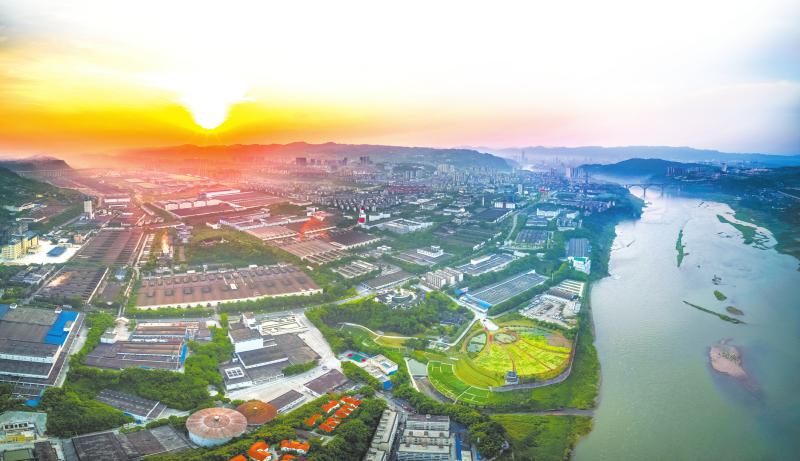
Core Insights - The article highlights the transformation of the Sanfang Industrial Park in Haimen District, Nantong City, from a historical industrial hub to a modern innovation-driven industrial base, emphasizing the integration of technology and industry [1][2][3] Group 1: Industrial Development - The Zhongxing Energy Equipment workshop has implemented a fully automated acid washing production line, increasing efficiency by 3.5 times and achieving an annual capacity of 70,000 tons with only 8 operators [1] - Weibo Textile's intelligent logistics warehouse utilizes digital twin technology, significantly enhancing order response times for major clients like Uniqlo and ZARA [1] - The overall industrial output of the Sanfang Industrial Park reached 3.812 billion yuan in the first half of 2025, marking a year-on-year growth of 13.37% [2] Group 2: Health and New Materials Sector - Jiangsu Huiju Pharmaceutical, recognized as a "little giant" enterprise, leads the industry with an integrated strategy of raw materials and formulations, serving over 300 global clients with more than 160 types of active pharmaceutical ingredients [2] - The new materials sector is experiencing robust growth, with companies like Ronghui Lithium and Xinwei Nickel Cobalt driving advancements in lithium battery materials and optical fiber technologies [2] Group 3: Strategic Development and Environment - The park is leveraging national strategies such as the Yangtze River Delta integration to cultivate a cluster of technology-driven enterprises, positioning itself as a model for industrial transformation and innovation [3] - The local government is enhancing the business environment by creating a research and development incubation chain, aiming to attract high-end resources and support the development of the real economy [3] - The revitalization of the Qinglong Port area combines historical industrial heritage with modern innovation, promoting cultural tourism and benefiting from improved transportation links to Shanghai [3]
五粮液融入四川发展大局 奋力开创高质量发展新局面
Si Chuan Ri Bao· 2026-02-05 21:47
Core Viewpoint - The article highlights the strategic initiatives and marketing efforts of Wuliangye Group to enhance its brand presence and drive high-quality development in the Chinese liquor market, particularly through innovative consumer engagement and cultural integration [5][6]. Group 1: Marketing and Consumer Engagement - Wuliangye Group launched a comprehensive marketing campaign named "Yuan Chun He Mei," featuring nationwide events and promotions to engage consumers and shareholders [5]. - The company partnered with the CCTV Spring Festival Gala for the fourth consecutive year, offering over 100 million yuan in online giveaways to promote its brand [5]. - The establishment of the Wuliangye 501 Ancient Cellar as a cultural tourism destination has attracted nearly 300,000 visitors during major holidays, showcasing the integration of liquor culture with tourism [5][6]. Group 2: Economic Contribution and Industry Leadership - Wuliangye Group is positioned as a leader in the trillion-yuan liquor market, actively contributing to local economic growth and the development of related industries such as food and textile manufacturing [5][6]. - The company has paid over 160 billion yuan in taxes during the 14th Five-Year Plan period, reinforcing its role as a pillar of local economic development [6]. - Wuliangye's brand value increased by 71.86% compared to the end of the 13th Five-Year Plan, ranking it among the top in various national and global brand assessments [6]. Group 3: Innovation and Sustainability - Wuliangye Group has achieved significant recognition in quality management, including the EFQM Global Award and multiple national certifications for lean management [6]. - The company is committed to green development, aiming for a "zero-carbon" status and improving its ESG rating through comprehensive green transformations [6]. - Wuliangye's investment in advanced manufacturing, particularly through its subsidiary Sichuan Push Ningjiang Machine Tool Co., has led to breakthroughs in high-end machine tool technology, enhancing China's competitiveness in this sector [6].

让“四川制造”名声越来越响
Xin Lang Cai Jing· 2026-02-05 19:12
Core Viewpoint - The article emphasizes the importance of strengthening the real economy and accelerating the construction of a modern industrial system in Sichuan, highlighting the province's manufacturing capabilities and growth projections for the coming years [5]. Group 1: Economic Growth and Projections - Sichuan's industrial scale ranks among the top in the country, with a projected added value of the secondary industry reaching 23,260.22 billion yuan by 2025, representing a growth of 4.9% [5]. - The added value of industrial enterprises above designated size is expected to grow by 6.5% compared to the previous year, with 33 out of 41 major industry categories experiencing growth [5]. Group 2: Focus on Future Industries - Representatives and committee members are actively discussing the development of the real economy and future industries, indicating a collaborative approach to addressing economic challenges [5]. - The dialogue includes insights from various industry experts, such as those from the aviation and solar energy sectors, showcasing a diverse range of perspectives on industrial development [5].

做大经济总量 增强发展动能
Xin Lang Cai Jing· 2026-02-05 07:53
Group 1 - The Shanghai Municipal Political Consultative Conference emphasizes the importance of accelerating the construction of "five centers" and modernizing urban governance to enhance the city's role as a leading example [1] - The focus is on boosting the economy through effective investment in advanced manufacturing, knowledge-intensive services, and computing power, while also supporting small and micro enterprises [1] - There is a call for enhancing new development momentum by revitalizing traditional industries and exploring future industrial tracks, alongside maintaining a positive trend in the information and financial services sectors [1] Group 2 - The proposal to implement the "AI+" initiative aims to create a high-density ecosystem for artificial intelligence, encouraging industry leaders to drive innovation and collaboration among upstream and downstream enterprises [2] - A talent evaluation and incentive system based on capability and contribution is suggested to attract top talent, alongside the establishment of a "research-type entrepreneur" training mechanism [2] - The goal is to make Shanghai a preferred destination for global science and technology youth by providing tailored policy services for students and entrepreneurial teams [2] Group 3 - The integration of culture, tourism, commerce, and sports is highlighted as a key driver for enhancing consumer capacity and city image, with a focus on building a more influential urban IP system [3] - The proposal includes leveraging state-owned enterprises' resources to support private enterprises in attracting world-class IP and participating in the development of major global consumer destinations [3] Group 4 - The creation of a globally attractive ecosystem for high-quality population development is proposed, focusing on reducing living and entrepreneurial costs for students and young professionals [4] - Recommendations include building youth-friendly communities and enhancing public services in healthcare, education, and governance to attract international talent [4] - There is an emphasis on stabilizing employment through job expansion and quality improvement, as well as personalized support for mid-career professionals transitioning to new roles [4]
外媒:美元时代正以一种悲剧性的方式结束,人民币为何还不出手?
Sou Hu Cai Jing· 2026-02-05 05:42
Core Viewpoint - The article discusses the impending collapse of the US dollar hegemony, highlighting the potential for a global financial crisis due to the US's $38 trillion debt, while emphasizing China's strategic approach to maintaining its economic stability without seeking to replace the dollar as the world's primary currency [1][25]. Group 1: Global Financial Landscape - The US's $38 trillion debt is a looming threat not just for America but for the global financial system, potentially leading to a financial tsunami [1]. - Observers believe that the current situation presents an opportunity for China to challenge the dollar's dominance, yet China's inaction has puzzled many financial elites [3][25]. - The article argues that the desire for a global currency often leads to trade deficits that can harm a nation's manufacturing base, as seen in the US's decline from a manufacturing powerhouse to a financial casino [7][9]. Group 2: China's Economic Strategy - China possesses a comprehensive industrial base, which is crucial for its economic stability, and it is unwilling to sacrifice this for the sake of becoming a global financial leader [11][13]. - The Chinese government is aware that the quest for global currency status can lead to deindustrialization, which it aims to avoid [13][29]. - China's establishment of the CIPS (Cross-border Interbank Payment System) is a strategic move to create an independent financial lifeline, not to replace existing systems like SWIFT, but to safeguard against extreme financial risks [15][18]. Group 3: Credit and Economic Foundations - The article emphasizes the importance of credit, contrasting the over-leveraged US dollar with the solid foundation of the Chinese yuan, which is backed by tangible economic assets [22][23]. - China's accumulation of gold and continuous upgrades to its manufacturing sector are efforts to strengthen the yuan's credibility and support its financial infrastructure [23]. - The focus is on creating a new economic network based on real exchanges rather than financial speculation, promoting a cooperative framework rather than a zero-sum game [31][35]. Group 4: Global Economic Reconfiguration - The decline of dollar hegemony is attributed to the US's own greed and unsustainable debt levels, rather than external pressures [35]. - China is not seeking to replace the US but aims to create a new economic paradigm that allows for equitable cooperation among nations [29][31]. - This new approach is seen as a departure from traditional power dynamics, aiming for a healthier and fairer global economic environment [33][35].