差异化战略

Search documents
百度云的困境:从掉队者到逆袭者,沈抖翻盘之路有多远?
Sou Hu Cai Jing· 2025-08-10 11:25
Core Insights - Baidu Cloud, now rebranded as Baidu Intelligent Cloud, has transitioned from being a laggard in the Chinese cloud computing market to a competitive player, achieving a market share increase from 8.1% in 2020 to 12.5% in 2023 [3][12] - The company achieved its first profitable quarter in Q3 2023, marking it as the first profitable cloud service provider in China [3][12] Group 1: Reasons for Initial Struggles - Baidu Cloud was established later than its competitors, launching in 2015, while Alibaba Cloud and Tencent Cloud were founded in 2009 and 2013, respectively [5] - The company's early strategy focused more on AI rather than cloud computing, which hindered its growth in the cloud sector [5][6] - Baidu Cloud faced challenges in stability and security, with a significant outage in 2019 that affected customer confidence [6] Group 2: Strategies for Recovery - Baidu Cloud shifted its strategy to focus on a differentiated approach of "AI + Cloud," leveraging its strengths in AI technology [8][21] - The company implemented significant price reductions, with CDN prices dropping by 50% and object storage prices by 30% starting in 2021, alongside launching the "Cloud Intelligence Plan" to attract new customers [9][8] - Baidu's self-developed AI chip, Kunlun, significantly reduced AI computing costs, enhancing its competitive edge in AI training and inference [10][11] Group 3: Current Challenges - Competitors like Alibaba Cloud, Tencent Cloud, and Huawei Cloud continue to invest heavily in technology and market expansion, posing ongoing challenges for Baidu Cloud [12] - Baidu Cloud's profitability in Q3 2023 was primarily driven by cost control and reduced subsidies, raising questions about its long-term sustainability [12][17] - The company remains heavily reliant on government subsidies and the bidding market, which could pose risks to its business model [17][21] Group 4: Market Position and Future Outlook - Baidu Cloud has secured significant projects in smart city initiatives, finance, and autonomous driving, indicating its growing market presence [15][20] - The company needs to diversify its business structure and reduce dependency on government support to ensure sustainable growth [17][21] - Baidu Cloud's future success will depend on its ability to maintain its AI advantages while expanding into new markets and industries [21]



46%的增长只是开始,华米科技的“复活”剧本已然开篇
美股研究社· 2025-08-06 10:23
Core Viewpoint - Huami Technology has successfully transformed its business model and brand identity, moving away from its reliance on Xiaomi and achieving significant revenue growth, marking a turnaround after years of decline [1][3][6]. Revenue Growth - In Q2 2025, Huami Technology reported revenue of $59.4 million, a year-on-year increase of 46.2%, exceeding the upper limit of its revenue guidance and marking its first overall revenue growth since 2021 [1][4]. - The company expects continued revenue growth in Q3 2025, projecting net revenue between $72 million and $76 million, representing a year-on-year increase of approximately 70% to 79% [4]. Profitability Improvement - Huami's GAAP net loss narrowed to $7.7 million, while the adjusted net loss was $6.16 million, reflecting a reduction of 28.6% and 30.2% year-on-year, respectively [4]. - The adjusted operating loss decreased to approximately $4.9 million, showing significant improvement compared to the previous year and quarter [4]. Cash Flow and Inventory Management - The company maintained a healthy cash flow, ending the period with a cash balance of $95 million, providing ample resources for future strategic initiatives and new product launches [4]. - Huami strategically increased inventory to mitigate risks associated with new product launches and tariffs, while also initiating a stock buyback plan to demonstrate long-term confidence [4]. Brand and Market Performance - Huami has focused on building the Amazfit brand ecosystem, launching the AI-enabled Zepp OS 5.0 system and enhancing integration with platforms like Strava [5]. - The Amazfit brand has seen significant growth in North America, becoming the second-largest wearable device brand during Amazon Prime Day, with sales in Europe, the Middle East, and Africa increasing by approximately 60% compared to 2024 [5]. Product Strategy - Huami employs a multi-tiered product strategy, with the Bip series targeting the budget market, the Active series aimed at professional athletes, and the T-Rex series designed for extreme conditions [9]. - The company has strengthened its technological capabilities with self-developed Huangshan series chips and innovative software features, enhancing user experience across its product range [10]. Global Marketing Strategy - Huami has established a comprehensive global marketing strategy, utilizing platforms like YouTube, TikTok, and Instagram, and leveraging endorsements from sports stars to enhance brand visibility [10]. - The competitive pricing of its flagship products, such as the T-Rex 3, has positioned Huami favorably against competitors like Garmin [10]. Industry Context - Huami's strategic shift from dependency on Xiaomi to an independent brand has been validated by its successful turnaround, becoming a rare example of overcoming adversity in the global wearable technology industry [12][13]. - The company is capitalizing on the digital transformation in the global health industry, positioning its wearable devices as essential tools for proactive health management [11].
新农股份(002942) - 2025年7月21日投资者关系活动记录表
2025-07-22 07:46
Group 1: Market Outlook and Performance - The agricultural chemical industry is experiencing a recovery, with some product prices increasing due to the end of the de-stocking cycle and policy guidance towards high-quality development [2] - In 2024, the company focused on strategic development and business strategies, leading to revenue and profit growth in both its formulation and industrial products segments [2][3] - In Q1 2025, the company saw a year-on-year increase in operating performance driven by rising sales and prices of certain products [2] Group 2: Biological Pesticides Strategy - The global biological pesticide market is projected to grow from $9.5 billion in 2022 to $16.75 billion by 2027, with a compound annual growth rate (CAGR) of 12% [4] - China's "14th Five-Year Plan" aims for a 50% elimination rate of highly toxic pesticides and a 30% promotion area for biological pesticides by 2025 [4] - The company has established a specialized R&D team for biological pesticides and is actively collaborating with universities and research institutions to drive innovation [4] Group 3: Competitive Advantage - The company adopts a "differentiation" strategy, focusing on an integrated business model centered around its flagship products, enhancing product quality and effectiveness [5] - A comprehensive distribution network covers over 20 provinces in China, supported by a professional technical marketing team to improve service capabilities [5] - The combination of product strength and service capability is aimed at building a long-term competitive advantage [5]

门窗行业借差异化掘金存量市场
Bei Jing Shang Bao· 2025-07-17 14:01
Core Insights - The window and door industry is undergoing significant transformation driven by differentiation, as companies seek to innovate and compete in a saturated market [1][5][10] - The Beijing government has introduced a plan to encourage the development of smart home products and services, which is expected to boost the industry [2][3] - Companies are focusing on creating high-end, differentiated products that integrate technology, aesthetics, and functionality to meet evolving consumer demands [3][4] Industry Trends - The industry is shifting from traditional functional products to high-end system windows that incorporate sound insulation, smart technology, aesthetic design, and energy efficiency [1][3] - Major brands like Huangpai and Lvdun are launching innovative products, such as soundproof windows and self-cleaning glass, to establish competitive advantages [3][4] - The average gross margin in the window industry is projected to decline from 25% in 2020 to 17% in 2024, indicating increased pressure on profitability [7] Market Dynamics - The window industry is experiencing intensified competition due to market saturation and price wars, prompting companies to seek differentiation as a strategic response [5][8] - The real estate sector's sluggish performance is impacting the window market, with reduced demand for large-scale projects [5][10] - The market for window replacements in existing homes is expected to grow significantly, with a projected market size of over one trillion yuan by 2025 [9][10] Strategic Directions - Companies are advised to innovate across three levels: strategic innovation focusing on product categories, commercial model innovation to address renovation needs, and alignment of product development with market demands [9] - The focus on mid-range, cost-effective windows is expected to dominate demand in the market, particularly in urban areas and rural development projects [10] - There is a growing interest in expanding into overseas markets, with Chinese window manufacturers seeing significant growth in exports, particularly in the Middle East and Africa [11]

海利得上半年净利润预增47.65%至63.47% 海外布局和产品升级驱动业绩向好
Zheng Quan Ri Bao Wang· 2025-07-11 13:02
Core Viewpoint - Zhejiang Hailide New Materials Co., Ltd. (Hailide) expects a significant increase in net profit for the first half of 2025, driven by improved market conditions and operational efficiency [1] Group 1: Financial Performance - Hailide anticipates a net profit attributable to shareholders between 280 million to 310 million yuan, representing a year-on-year growth of 47.65% to 63.47% [1] - The net profit after deducting non-recurring gains and losses is projected to be between 325 million to 355 million yuan, with a growth rate of 74.07% to 90.14% compared to the previous year [1] Group 2: Business Operations - All business segments of Hailide performed well in the first half of the year, with improvements in gross margins for industrial yarns and tire fabrics, contributing to overall profitability [1] - The company has been accelerating the construction of its Vietnam base, enhancing local operational capabilities and responsiveness to international markets [1] Group 3: Strategic Initiatives - Hailide plans to advance the second phase of its Vietnam spinning project and related polyester chip project, aiming to add an annual production capacity of 100,000 tons of differentiated polyester filament, 20,000 tons of differentiated nylon filament, and 250,000 tons of polyester chips [1] - The company is establishing a "domestic + overseas" collaborative manufacturing system to leverage advantages in cost and efficiency while replicating successful domestic management practices abroad [2] Group 4: Product Development and Market Focus - Hailide is focusing on optimizing product structure and developing high-performance materials, targeting high-value sectors such as automotive safety products, advertising materials, and new materials [2] - The company is committed to advancing R&D projects for specialty high-performance fibers like LCP and PPS, enhancing its technological capabilities in high-end materials [2][3] Group 5: Future Outlook - Hailide aims to improve the production capacity and technology of polyester industrial filament, while also increasing the utilization rates of flooring, coating, and plastic materials [3] - The company plans to strengthen strategic resource allocation to ensure sustainable and stable business development [3]

酒旅业务,能成为京东的“1.5曲线”吗
Jing Ji Guan Cha Wang· 2025-06-19 09:42
Core Viewpoint - JD.com is entering the hotel and travel market with a strategic approach, aiming to provide supply chain services to hotel operators and offering incentives such as a three-year zero commission for participating hotels [2] Group 1: JD.com's Strategy in the Hotel and Travel Market - JD.com has a history in the travel sector, having launched flight booking services in 2011 and various initiatives over the years, but its focus on this sector has been limited until now [2] - The company is positioning itself as a disruptor in the hotel and travel market, employing strategies such as zero bundling, transparent pricing, and significant commission reductions for hotels [2] - JD.com aims to create a consumption ecosystem that integrates food delivery, hotel services, and retail, leveraging its recent success in the food delivery market [4] Group 2: Market Dynamics and Competition - The hotel and travel market is highly competitive, with established players like Ctrip and Meituan dominating the space, making it challenging for new entrants to gain market share [5] - JD.com must adopt a differentiated strategy rather than trying to replicate existing models like Ctrip or Meituan, focusing on its supply chain strengths [5][6] - The company has potential advantages, including a large base of high-net-worth members and the ability to leverage data and AI for consumer insights, which could help it carve out a niche in the market [6] Group 3: Challenges Ahead - JD.com faces challenges such as insufficient brand recognition as a preferred platform for travel consumption and a lack of operational experience in managing complex hotel scenarios [6] - The company must navigate potential conflicts with major hotel brands regarding supply chain management and operational practices [6] - The outcome of JD.com's entry into the hotel and travel market remains uncertain, but it is expected to shake up the current market dynamics [6]


价格战硝烟下的价值突围,中国汽车业的三板斧生存法则
Xin Jing Bao· 2025-06-09 04:08
Core Viewpoint - The automotive industry is experiencing a price war that began in 2023 and is intensifying in 2025, leading to declining profit margins, with the automotive manufacturing profit margin dropping to 3.9% in Q1 2025, significantly lower than the average of 5.6% for downstream industrial enterprises [1] Group 1: Industry Trends - Multiple automotive companies are initiating "limited-time subsidies" as part of the ongoing price war, which is raising concerns about fair competition and the health of the industry [1] - The China Automotive Industry Association has called for an end to the price war to promote healthy development during a critical transformation period for the industry [1] Group 2: Differentiation Strategies - Some companies are shifting from price competition to differentiation strategies, focusing on user needs and niche marketing [3] - Li Auto is leveraging range extension technology to create a luxury 6-seat intelligent electric SUV, targeting family users with unique features [3] - FAW Toyota has introduced a "time value subsidy" program, increasing trade-in subsidies based on vehicle age, promoting cars as "time-friendly assets" [3] - Changan Ford has successfully implemented a differentiation and premium strategy, achieving a net profit of 2.09 billion in 2024, with an average vehicle price of 220,000, leading among joint venture brands [3][4] Group 3: User-Centric Approaches - Consumers are becoming more rational in their purchasing decisions, with a significant increase in discussions around automotive features and emotional needs [5] - FAW Toyota has established a comprehensive second-hand car certification standard and service process, enhancing user experience in vehicle replacement [5] - Changan Ford has tailored its Explorer model to meet diverse user needs, offering flexible seating configurations and ample storage space [5] Group 4: Marketing Innovations - The automotive industry is shifting towards "layered marketing," where cars are seen as lifestyle and value carriers rather than mere transportation tools [7] - Changan Ford's "Explorer Action" initiative has engaged over 65,000 participants in community service, aligning brand values with consumer sentiments [7] - Data from the 2025 Weibo Automotive Ecosystem Report indicates that the target demographic for automotive marketing is predominantly young, educated, and affluent, emphasizing the importance of value resonance over price competition [7] Group 5: Industry Challenges - The automotive industry is facing severe challenges, with some models priced as low as 34,900 and 55,800, raising concerns about quality assurance amidst drastic price cuts [8] - The industry is transitioning from a "price meat grinder" to a "value reactor," with companies focusing on differentiation, user needs, and community engagement proving to be more resilient [9]
行业首现零农残,喜茶“一根筋”死磕原料上游的背后
Bei Ke Cai Jing· 2025-06-09 01:31
Core Viewpoint - The article highlights how Heytea has successfully implemented a differentiated strategy by focusing on upstream supply chain management to achieve zero pesticide residue in its kale sourcing, thereby enhancing product quality and safety in the competitive new tea beverage industry [1][10][33]. Group 1: Supply Chain Management - Heytea has established a kale planting base in Yunnan Shiping, leveraging the region's unique climate and soil conditions to produce high-quality kale [11][19]. - The company has implemented modern agricultural facilities and biological pest control techniques to ensure zero pesticide residue, including the use of plant-based pesticides and organic fertilizers [11][19]. - Heytea's supply chain strategy includes a shift from standard procurement to customized planting, allowing for better control over raw material quality and traceability [23][25]. Group 2: Product Innovation - The introduction of the "Kale Slimming Bottle," a plant-based tea product featuring kale, has sparked a trend in the new tea beverage industry, leading to significant sales and increased consumer interest [7][10]. - The demand for kale has surged, with prices rising from a few yuan per pound in 2023 to 20-30 yuan per pound, and market share increasing from 5% to 55% [10][14]. - Heytea continues to innovate by incorporating other super plants and regional specialty ingredients into its product offerings, enhancing the brand's health-focused image [30][33]. Group 3: Industry Trends - The new tea beverage industry is evolving from a focus on volume competition to a deeper emphasis on quality, as companies like Heytea seek to differentiate themselves in a saturated market [28][33]. - The trend of "customized planting" is emerging as a key strategy for new tea beverage companies to ensure stable supply and improve product quality [15][25]. - Heytea's commitment to quality and natural ingredients reflects a broader shift in consumer preferences towards healthier and more transparent food options [29][33].

中国式出海:一部说走就走的史诗
Hu Xiu· 2025-05-18 05:36
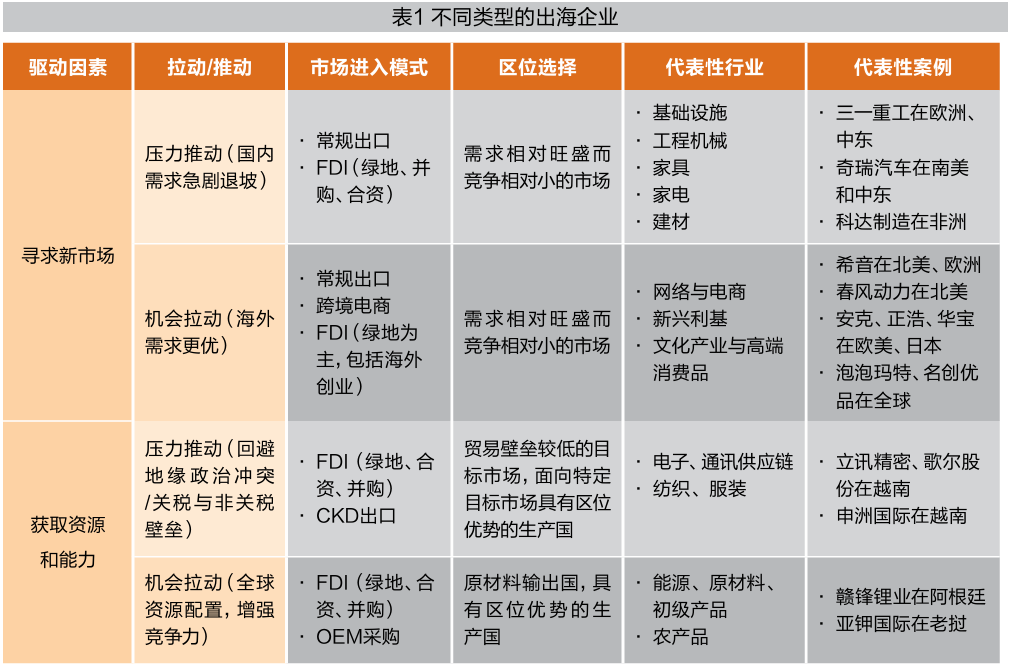
Group 1 - The current wave of Chinese companies going abroad is characterized by an unprecedented urgency and speed, with overseas revenue of A-share listed companies growing by 55.8% from 2020 to 2023, and two-thirds of these companies reporting overseas income, a historical high [2][4] - The trend of "going out" is shifting from product-based international trade to foreign direct investment (FDI), where companies are taking their operations and capabilities abroad rather than just exporting products [2][4] - Companies are categorized based on their motivations for internationalization, primarily seeking new markets or acquiring resources and capabilities to enhance competitiveness [4][5] Group 2 - The majority of companies expanding overseas are driven by domestic cyclical pressures, with a significant shift from domestic sales to exports due to a mismatch in supply and demand [7][8] - Some companies are experiencing rapid growth in overseas markets not due to domestic market shrinkage but because of attractive opportunities abroad, exemplified by brands like Pop Mart and Miniso [9][10] - Companies like SANY Heavy Industry have seen their overseas revenue triple in recent years, highlighting the importance of international markets for growth [8] Group 3 - The pressure to go abroad is intensified by geopolitical conflicts, leading companies to relocate production to maintain competitiveness and meet international demand [12][13] - Companies are also pursuing strategic resources abroad, such as lithium projects in Argentina by Ganfeng Lithium, to secure supply chains and reduce costs [13][14] - The restaurant industry has seen a dramatic increase in foreign direct investment, growing 95 times, indicating a complex mix of domestic demand decline and overseas opportunities [15] Group 4 - The speed of international expansion among Chinese companies is remarkable, with examples like Mixue Ice City opening 2,600 stores in Indonesia in just four years [16][17] - Companies like Chery Automobile have successfully balanced domestic and international growth, achieving a significant increase in export volumes [22] - The relationship between the speed of going abroad and performance is nuanced, with rapid expansion potentially leading to both opportunities and risks [19][21] Group 5 - Companies are increasingly focusing on local market responsiveness while maintaining global operational efficiency, particularly in sectors like food and retail [23][24] - The emergence of "best-value provider" strategies among Chinese manufacturers indicates a shift towards balancing cost leadership with customer value [32][33] - New entrants in the market, such as DJI and Shokz, are leveraging innovation and cultural uniqueness to compete globally, marking a new phase in China's international business landscape [36][37]
河马剧场,你看我还有机会吗?
3 6 Ke· 2025-05-16 10:31
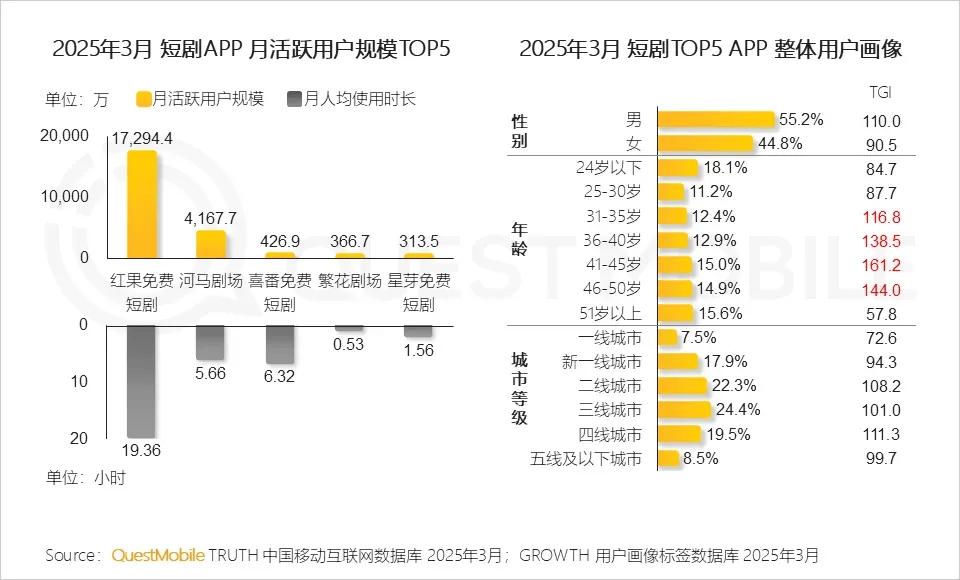
Core Viewpoint - The competition in the short drama market is intensifying, with Hongguo achieving remarkable growth and dominating the industry, while Hemama Theater faces increasing challenges and potential user attrition due to widening market gaps [1][3][5]. Group 1: Market Position and Performance - As of March 2025, Hongguo's monthly active users exceeded 173 million, while Hemama Theater's reached 41.67 million, indicating a significant gap that has widened over time [3][5]. - Hongguo's revenue capabilities are highlighted by a monthly revenue share exceeding 500 million, with over 10 copyright partners generating over 10 million each in a month, showcasing its strong monetization ability [3][5]. - Hemama Theater's recent highlights include the release of a short drama starring Liu Xiaoqing, but it lacks blockbuster hits, making it difficult for the audience to remember its presence [5][3]. Group 2: Challenges Faced by Hemama Theater - Hemama Theater is experiencing a stark contrast in resource endowments compared to Hongguo, as it lacks the backing of a major player like ByteDance, which provides significant advantages in user acquisition and cost efficiency [9][20]. - The content ecosystem disparity is evident, with Hongguo having launched over 15,000 short dramas and maintaining a high release rate, while Hemama Theater struggles with content quantity and update speed [17][19]. - Hemama Theater's mixed monetization strategy of "free + ads + membership" contrasts with Hongguo's focus on free and ad-supported models, leading to structural disadvantages in profitability [17][19]. Group 3: Strategic Directions for Hemama Theater - To survive, Hemama Theater must explore differentiated content to avoid the prevalent content homogeneity in the market, focusing on unique and recognizable productions [33][45]. - Expanding revenue structures beyond advertising and subscriptions is crucial, with potential in brand-customized dramas and collaborations with government entities for stable income sources [36][40]. - Building ecological partnerships, such as the "Hemama Partner" initiative, is essential for resource sharing and strategic alliances to compete against larger players [41][45]. Group 4: Market Growth Potential - Despite challenges, the overall growth trajectory of the short drama market offers Hemama Theater opportunities for user and revenue expansion, with projections indicating a market size nearing 91 billion RMB by 2027 [27][30]. - Hemama Theater's connection to state-owned enterprises may provide advantages in policy support and content compliance, especially in a tightening regulatory environment [30][27]. - The potential for international expansion through platforms like DramaBox could allow Hemama Theater to tap into overseas markets, diversifying its content and revenue streams [43][45].