
数字智能

Search documents
破域与重构:数字智能驱动下国家文化公园建设的江苏路径
Xin Hua Ri Bao· 2025-10-14 05:22
Core Insights - Jiangsu province is uniquely positioned with significant waterways, including the Grand Canal and Yangtze River, which provide a historical and cultural foundation for the development of national cultural parks [1] - The transition from traditional management to digital governance in cultural park management faces challenges related to physical, cognitive, and industrial boundaries [2][3] - Jiangsu is exploring innovative practices in cultural park governance, focusing on digital technology, IP operation, and multi-stakeholder collaboration to address governance challenges [3][4] Group 1: Opportunities and Challenges - The governance of national cultural parks is undergoing a critical transformation towards digital governance, highlighting the need to overcome physical, cognitive, and industrial boundaries [2] - The integration of cultural heritage sites is challenged by administrative divisions and the "data island" phenomenon, necessitating systematic solutions [2] - Cultural transmission must evolve from one-way output to interactive engagement, particularly to enhance youth recognition of traditional culture [2] Group 2: Pathways to Governance Modernization - Jiangsu's cultural narrative is being restructured through digital media, transforming cultural heritage into emotional symbols [4] - The use of IP operation is aimed at activating the cultural industry ecosystem, turning cultural resources into marketable IP symbols [4] - Digital platforms are facilitating collaborative governance, creating an inclusive governance model that engages government, market, and society [5] Group 3: Future Vision - The construction of a unified data platform for national cultural parks is essential for integrating various data sources and addressing the "data island" issue [6] - Innovative mechanisms for IP operation and industry linkage are being established to support cross-media development and global cultural product transformation [6] - The development of a digital dialogue platform for river culture is anticipated to enhance emotional connectivity and social participation in cultural parks [6][7]
现象级潮玩IP背后都有它的印记 这个小镇藏不住了
Yang Shi Xin Wen Ke Hu Duan· 2025-09-26 08:17
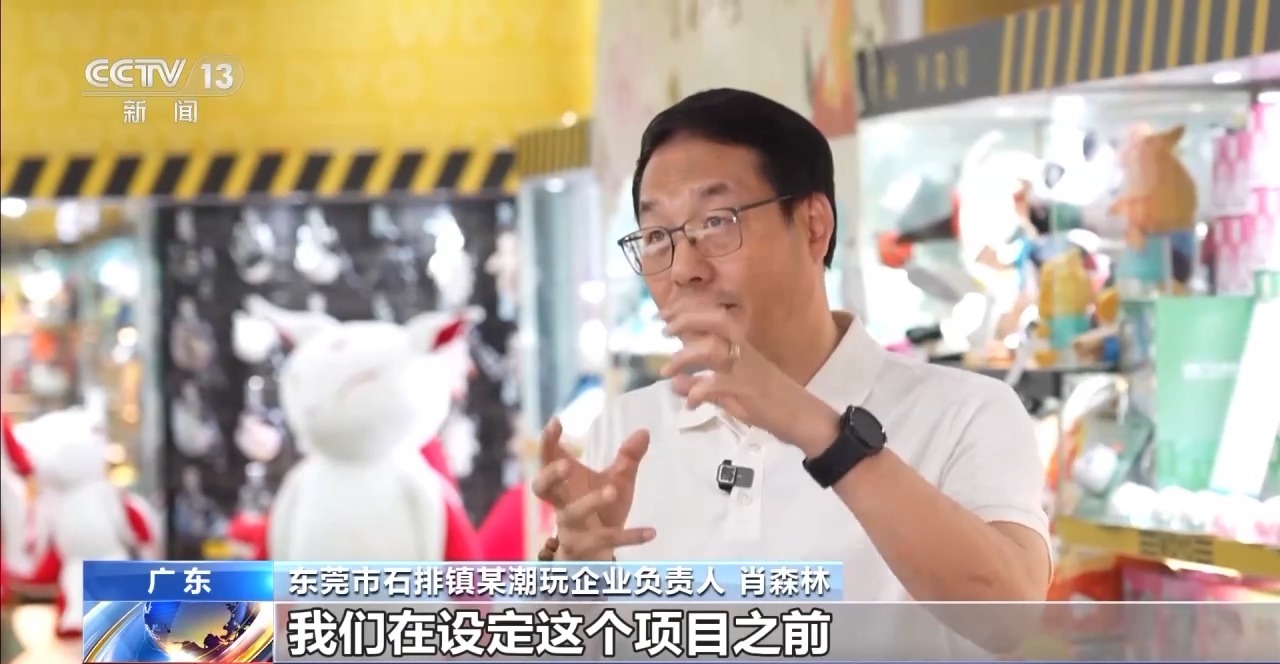
Core Insights - The潮玩 industry in Dongguan, particularly in Shipaizhen, has rapidly developed into a significant production base, with 85% of潮玩 products originating from this area, blending traditional culture with modern design [1][7][14]. Industry Overview - Shipaizhen has become a hub for潮玩 production, with a complete industry chain from design to manufacturing and sales established since the 1980s [7][8]. - The local潮玩 enterprises are increasingly incorporating Chinese cultural elements into their products, such as metal assembly toys inspired by traditional themes [5][8]. Innovation and Trends - Companies are responding to the rising demand for emotional value and trendy products by forming large design teams and rapidly launching new original IPs, including blind boxes and figurines [8][10]. - The introduction of digital and intelligent equipment has transformed潮玩 manufacturing from a labor-intensive to a technology-intensive industry, enhancing product quality and reducing labor intensity [17][27]. Production Efficiency - Shipaizhen is developing an潮玩 AI design center, which can complete prototypes within 48 hours and enter mass production within 72 hours, aiming to improve production efficiency by 20% [14]. - The local潮玩 industry has seen significant improvements in production precision, with some companies achieving accuracy levels of 0.02 mm in their manufacturing processes [23][25]. Cultural Impact -潮玩 products often reflect rich cultural narratives, such as the 千脚灯, which has gained international recognition for its craftsmanship and cultural significance [7][16]. - The integration of traditional cultural elements into潮玩 products allows young consumers to engage with and learn about their heritage in a playful manner [1][5].

调研速递|金一文化接受中财招商等12家机构调研,透露收购与业务布局要点
Xin Lang Cai Jing· 2025-09-24 10:28
Core Viewpoint - The company, Beijing Jinyi Culture Development Co., Ltd., is actively engaging with institutional investors regarding its acquisition of a stake in Kaike Weishi and its business strategies in the gold and jewelry retail sector [2]. Group 1: Acquisition and Business Strategy - The company has acquired 43.18% of Kaike Weishi's shares and obtained 14.30% of voting rights, with plans to purchase the remaining shares after the performance commitment period, subject to regulatory compliance [2]. - The company aims to conduct horizontal and vertical mergers based on Kaike Weishi, focusing on digital intelligence and related fields [2]. Group 2: Kaike Weishi's Business Operations - Kaike Weishi's business primarily comes from partnerships with banks, with non-bank collaborations accounting for less than 10%. It has business relationships with 15 out of 18 state-owned and joint-stock banks [2]. - The AI solutions provided by Kaike Weishi are mainly applied in the banking sector, including products like financial advisor assistants and intelligent customer service [2]. - The payment and clearing services offered by Kaike Weishi do not require a payment license and currently serve domestic clients, with potential plans for international market expansion [2]. Group 3: Gold and Jewelry Retail Business - The company's gold and jewelry retail operations are primarily through wholly-owned brand stores, focusing on the "Yue Wang Ancient Method Gold" brand targeting the mass and mid-to-high-end markets, using a pricing strategy based on weight processing fees [2]. - Recent restructuring of the jewelry business has been initiated to enhance efficiency and focus on expanding mid-to-high-end stores in key regions [2]. Group 4: Financial Strategies and Shareholder Structure - The company has engaged in gold hedging activities as approved by the board, adopting a strategy of closing positions without opening new ones due to the sustained high prices of gold in the first half of the year [2]. - The major shareholders include the controlling shareholder and its concerted parties, while other shareholders mainly consist of financial investors introduced during restructuring, holding less than 10% of shares [2]. Group 5: Management and Future Plans - Kaike Weishi's board consists of five members, with three nominated by the company. It operates independently but requires approval from the company for significant financial and operational decisions [2]. - The company plans to follow the procedures and disclose announcements if there are any changes to its name, which originally focused on precious metal art [2].

智能世界2035_华为
华为· 2025-09-17 05:13
Group 1 - The rapid development of AI technology marks a new era in the technological revolution, indicating that the creation and application of knowledge are no longer solely human privileges [4] - Current AI applications are primarily focused on AI assistants with question-and-answer capabilities, which are often viewed as "black boxes" [4] - The potential for AI applications in industrial and service sectors remains largely untapped [4] Group 2 - The report "Intelligent World 2035" outlines a vision for AI development, exploring how technological integration will drive the transformation of industrial and service intelligent systems [5] - It highlights the potential applications of AI in various sectors, including healthcare, education, smart homes, smart cities, and business innovation [5] - The report discusses the synergistic effects of AI with other innovative technologies and the social and economic impacts of this transformation [5] Group 3 - Achieving the vision of AI development faces numerous technical challenges beyond general artificial intelligence [7] - The construction of intelligent systems is disrupting traditional systems engineering, requiring a combination of traditional ICT models and data-driven AI technologies [7] - A balance must be achieved between the correctness of system design and resilience during operation, with ongoing updates for continuous evolution [7] Group 4 - The vision presented in the report is broad and ambitious, contrasting with the approaches of tech giants that rely on machine learning and large-scale development [8] - Realizing this vision requires unprecedented technological breakthroughs and global collaboration [8] - The report emphasizes the importance of open ecosystems and international cooperation in advancing technology in the complex and transformative field of AI [9] Group 5 - The report identifies three key opportunities for the future of AI: more effective perception of the world, smarter model algorithms, and more efficient computing chips [11][12][13] - The integration of physical and digital worlds is essential for the evolution of general artificial intelligence (AGI) [11] - The development of new computing paradigms, such as quantum computing and neuromorphic chips, is crucial for achieving significant advancements in AI capabilities [13] Group 6 - The report outlines ten major technological trends that will shape the evolution of intelligent technology and the restructuring of social forms over the next decade [16] - These trends are interconnected and collectively form a complex ecosystem that supports the large-scale, real-time, and reliable interaction and decision-making of intelligent agents [17] - The report emphasizes the need for collaboration between technical experts and industry specialists to address the unique complexities of various sectors [18] Group 7 - The future intelligent world will require a sustainable energy foundation, with intelligent technology integrated into energy network management [18] - The report stresses the importance of ethical guidelines to ensure fairness, transparency, and accountability in AI algorithms [23] - The development of a dynamic regulatory framework for AI is essential to balance innovation and safety [23]
服贸会展示能源新未来:园区不断归“零” CCUS与氢能成焦点
Zhong Guo Neng Yuan Wang· 2025-09-17 02:52
Group 1: Event Overview - The 2025 China International Service Trade Fair (CIFTIS) is being held at Shougang Park in Beijing, showcasing innovations in green energy, circular economy, and new materials [1] - The event features a focus on environmental services, with companies presenting cutting-edge technologies and solutions for green low-carbon development [1] Group 2: Key Technologies and Innovations - Solid-state batteries showcased at the event demonstrate stable power supply even after being cut, highlighting advancements in battery safety [6] - BOE's "zero-carbon house" converts sunlight into electricity, representing a revolutionary shift from energy consumption to energy production [1][4] - Huawei's liquid-cooled ultra-fast charging technology aims to address long charging times for electric vehicles, with a charging station capable of delivering "one kilometer per second" [5] Group 3: Major Industry Players - China's major oil companies, including Sinopec, PetroChina, and CNOOC, are transitioning from traditional oil and gas suppliers to comprehensive energy service providers, focusing on hydrogen energy and CCUS technologies [2][3] - Sinopec has showcased its latest achievements in hydrogen energy, CCUS, geothermal, wind and solar green electricity, and biofuels [2] - CNOOC has implemented over 400 energy-saving and low-carbon projects since the 14th Five-Year Plan, achieving energy savings of 1.04 million tons of standard coal and reducing carbon emissions by 3.15 million tons of CO2 equivalent [2] Group 4: Zero-Carbon Solutions - The "Zero-Carbon Park Solution Pavilion" features over ten companies presenting comprehensive zero-carbon solutions, including distributed photovoltaic power systems [7] - Beijing Huamao Center achieved 100% green electricity operation in 2024, reducing carbon emissions by 24,000 tons [8] - The AI-powered waste incineration system presented by Chaoyang Environmental Group addresses long-standing technical challenges in the industry [7] Group 5: Market Trends and Future Outlook - The event reflects a shift from showcasing technologies to facilitating transactions, with green technologies becoming more accessible and tradeable [9] - Companies are transforming green productivity into tradeable and replicable solutions, breaking down technologies into modular components for global buyers [9]



速览A股半年报!印包上市公司业绩超预期,奥瑞金成“显眼包”
Sou Hu Cai Jing· 2025-09-10 14:21
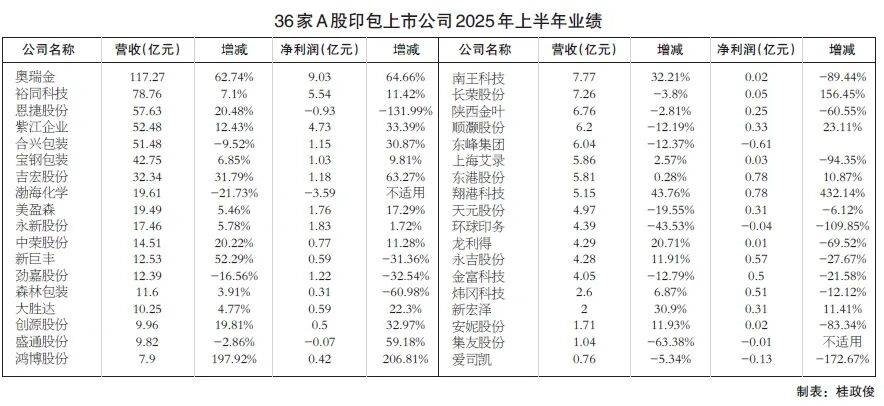
Core Insights - The overall performance of the 36 A-share printing and packaging listed companies in the first half of 2025 shows a positive trend, with 63.89% of companies achieving revenue growth and 80.56% reporting profits, indicating robust operational stability despite market challenges [1][4][14]. Revenue Performance - Total revenue for the 36 companies reached 65.916 billion yuan, marking a year-on-year increase of 13.01% [1]. - Among these, 15 companies reported revenues exceeding 1 billion yuan, with 5 companies surpassing 5 billion yuan, and 1 company exceeding 10 billion yuan [4][5]. - The top five companies by revenue are Aorijin (11.727 billion yuan), Yutong Technology (7.876 billion yuan), Enjie (5.763 billion yuan), Zijiang Enterprise (5.248 billion yuan), and Hexing Packaging (5.148 billion yuan) [4][5]. Profitability Analysis - A total of 29 companies reported profits, with 9 companies achieving net profits over 100 million yuan, contributing to 92.31% of the total profit [6]. - The top three companies by profit are Aorijin (900 million yuan), Yutong Technology (554 million yuan), and Zijiang Enterprise (473 million yuan) [6]. Performance Disparity - There is a significant disparity in performance, with 10 companies achieving over 20% revenue growth and 3 companies exceeding 50% growth [9]. - Notably, Hongbo achieved a revenue increase of 197.92%, attributed to its expansion into AI computing services [9][12]. - Conversely, 15 companies experienced a decline in net profit, with 3 transitioning from profit to loss [10]. Innovation and Technology - Companies are increasingly focusing on technological innovation to differentiate themselves in a competitive market, with R&D investments becoming a key strategy [15]. - For instance, Zijiang Enterprise reported R&D expenditures of 167 million yuan, leading to a 33.39% increase in net profit [15]. Smart Manufacturing and Sustainability - The shift towards smart manufacturing is evident, with companies like Yutong Technology implementing digital factories and automated production lines to enhance efficiency [16]. - Additionally, the industry is moving towards green transformation, with companies like Shunhao developing biodegradable materials and optimizing production processes to meet sustainability goals [17].





物流运行稳中有进,物流总额保持增长
Sou Hu Cai Jing· 2025-09-01 07:38
Core Insights - The logistics sector in China has shown steady growth in the first seven months of the year, with a total social logistics volume of 201.9 trillion yuan, reflecting a year-on-year increase of 5.2% [1] - The logistics demand in high-end manufacturing, digital intelligence, and green low-carbon sectors has become a significant driver for logistics demand upgrades [2] - International logistics has emerged as a new growth point, with substantial increases in cross-border transportation and e-commerce logistics [3] - Overall, the logistics market is expanding, and the structure is further optimizing, supported by stable and flexible policies [4] Logistics Performance - From January to July, the total logistics volume for industrial products grew by 5.7%, with logistics demand across 35 industries increasing year-on-year [1] - The logistics volume for units and residential goods increased by 6.2%, with online retail sales of physical goods growing by 6.3%, outpacing the retail sales growth of consumer goods by 1.5 percentage points [1] - The total revenue of the logistics industry reached 8.2 trillion yuan, marking a year-on-year growth of 4.9% [2] Sector-Specific Growth - In July, logistics demand for high-tech manufacturing industries grew by 9.3%, with logistics volumes for advanced products like simulation chips and 3D printing equipment exceeding 20% growth [2] - The logistics demand for new energy products, including electric vehicles and lithium-ion batteries, also saw growth rates around 20% [2] Regional Dynamics - The logistics demand in the central and western regions of China is gaining momentum, with business volume indices of 52.3 and 50.9, respectively, surpassing the national average [2] - The eastern region maintained a steady growth trend with an index of 50.3, indicating a developing pattern of regional coordination [2] International Logistics - The China-Europe Railway Express has operated 8,526 trains, reflecting a year-on-year increase of 23.2%, while international air cargo transport volume reached 38.8 million tons, up 21.5% [3] - Cross-border e-commerce has driven significant growth in international logistics, supporting the smooth operation of supply chains [3] Consumer and Energy Logistics - E-commerce logistics, particularly in rural areas, has shown strong growth, with indices of 130.9 and 131.5 for overall and rural e-commerce logistics, respectively [3] - The railway sector has effectively ensured the transportation of essential energy supplies, with coal transport reaching 1.196 billion tons in the first seven months [3]
中远海控上半年EBIT率达到23.37%领跑行业,数智绿色创新提速
Quan Jing Wang· 2025-08-29 06:12
Core Viewpoint - China COSCO Shipping Holdings Co., Ltd. (stock code: 601919.SH; 01919.HK) reported a steady growth in operational performance for the first half of 2025, despite external uncertainties, showcasing strong resilience and competitive advantages in the industry [1][2]. Financial Performance - The company achieved operating revenue of RMB 109.099 billion, a year-on-year increase of 7.78% [1]. - Earnings before interest and taxes (EBIT) reached RMB 25.494 billion, up 3.40% year-on-year, with an EBIT margin of 23.37% [1]. - Net profit amounted to RMB 20.208 billion, reflecting a 4.95% year-on-year growth [1]. - The net profit attributable to shareholders was RMB 17.536 billion, an increase of 3.95% year-on-year, indicating robust development resilience [1]. Strategic Initiatives - The company is focusing on two key transformation strategies: digital intelligence and green low-carbon initiatives [2]. - In digital transformation, China COSCO is expanding the application of artificial intelligence across various operational platforms, enhancing pricing, space allocation, empty container turnover efficiency, and fuel management [2]. - For green transformation, the company has ordered 42 methanol dual-fuel new ships and is planning to retrofit existing vessels, marking significant progress in fleet modernization [2]. Industry Positioning - China COSCO's EBIT and EBIT margin are leading within the international shipping industry, highlighting its competitive edge [1]. - The company is actively collaborating with ports and supply chain partners to establish green shipping corridors and enhance decarbonization efforts [2]. Future Outlook - The company plans to continue deepening its two major transformation strategies to address industry challenges and solidify its leading position [3].
建科院发布2025年半年报 战略转型初见成效
Zheng Quan Shi Bao Wang· 2025-08-27 14:25
Core Viewpoint - The company, Jian Ke Yuan, reported a significant decline in net profit for the first half of 2025, amounting to -53.37 million yuan, despite making notable progress in strategic transformation and business innovation [1] Group 1: Financial Performance - In the first half of 2025, Jian Ke Yuan achieved an operating income of 117 million yuan, with a net profit of -53.37 million yuan [1] - The decline in performance was attributed to three main factors: mismatch between market expansion efforts and current market conditions, rigid operating costs, and a persistent downward trend in sales collections [1] Group 2: Strategic Transformation and Business Innovation - The company is actively pursuing strategic transformation, focusing on the green technology sector, and has made breakthroughs in various areas during the reporting period [1] - Jian Ke Yuan successfully won the overall design project for the Qing Teng Town in Xiong'an New Area, with a total construction area exceeding 200,000 square meters [2] - The company secured the first batch of integrated planning, construction, and operation design consulting service projects in Shenzhen, supporting urban development [2] - In the new energy service sector, Jian Ke Yuan's project for a low-carbon operation public technology service platform received funding from Shenzhen's strategic emerging industries [2] - The company has partnered with Hangzhou Yun Shen Chu Technology Co., Ltd. to develop a digital inspection system for building safety, integrating robotics and AI technology [2] Group 3: Qualification and Market Competitiveness - Jian Ke Yuan achieved significant results in qualification platform construction, receiving recognition as one of the first "Shenzhen Green Low-Carbon Industry Enterprises" [2] - The company's subsidiary, Jian Yan Testing, became the second institution in Shenzhen to obtain comprehensive qualifications for construction quality testing [2] - The company aims to contribute to the construction of green and low-carbon cities, as emphasized by the recent Central Urban Work Conference [3]

中材国际: 中国中材国际工程股份有限公司2025年半年度报告
Zheng Quan Zhi Xing· 2025-08-26 10:14
Core Viewpoint - The report highlights the financial performance and operational achievements of China National Materials International Engineering Co., Ltd. for the first half of 2025, showcasing growth in revenue and net profit, alongside strategic advancements in engineering services and technology innovation [1][2]. Financial Performance - The company reported a total revenue of 2,167.62 million RMB, representing a 3.74% increase compared to the same period last year [2]. - The total profit reached 182.08 million RMB, up by 5.88% year-on-year [2]. - The net profit attributable to shareholders was 142.10 million RMB, reflecting a 1.56% increase from the previous year [2]. - The net cash flow from operating activities showed a significant decline, with a net outflow of 607.59 million RMB, a decrease of 168.62% compared to the previous year [2]. Industry Overview - The company is recognized as the largest global provider of cement technology equipment and engineering system integration services [3]. - The global cement engineering service market is projected to grow at an annual average of approximately 39 billion RMB from 2026 to 2030, with demand concentrated in regions along the Belt and Road Initiative [3][4]. - The domestic cement market has seen a decline in demand over the past three years, but the rate of decline has slowed, with significant projects expected to drive regional growth [4]. Business Operations - The company focuses on EPC (Engineering, Procurement, and Construction) services, providing comprehensive solutions in cement and mining engineering [6]. - The company has expanded its service offerings to include green energy and diversified engineering projects, leveraging its global brand influence and project management experience [6][7]. - The company has successfully signed contracts for various international projects, including significant contracts in Iraq, South Africa, and Cambodia, indicating a strong international presence [10]. Technological Innovation - The company emphasizes technological innovation as a key driver for industry advancement, with a reported R&D expenditure of 749 million RMB, an increase of 3.52% year-on-year [12]. - The company has developed advanced green low-carbon technologies and digital solutions, enhancing its competitive edge in the market [12][13]. - The company holds a total of 3,063 valid patents, including 975 invention patents, showcasing its commitment to innovation [18]. Market Expansion - The company has achieved a 19% year-on-year increase in new contracts signed overseas, totaling 278.39 billion RMB [10]. - The internationalization index of the company reached 47.61%, reflecting a 2.78 percentage point increase since the beginning of the year [12]. - The company has established a robust overseas service network, with over 100 foreign institutions and more than 2,300 foreign employees [21]. Competitive Advantages - The company possesses a complete industrial chain in cement technology and engineering services, which is unique in the global market [18]. - The company has a strong project execution capability, having completed numerous landmark projects in the cement industry [21]. - The company maintains a good brand reputation, recognized for its quality and service, and has established long-term partnerships with major global cement companies [22].
