
油价下跌

Search documents
SC原油继续刷新年内低点,特朗普:现在比以往任何时候都更接近达成“和平协议”
Xin Lang Cai Jing· 2025-12-15 23:14
Core Viewpoint - Oil prices continue to decline, with SC crude oil hitting a new low for the year and Brent crude falling below $60, indicating a bearish market outlook driven by geopolitical tensions and ongoing negotiations regarding the Russia-Ukraine conflict [4][17]. Market Dynamics - On Monday, WTI crude oil futures closed down by $0.62, a decrease of 1.08%, settling at $56.82 per barrel; Brent crude futures fell by $0.56, or 0.92%, to $60.56 per barrel; and INE crude futures dropped by 1.58% to 430.20 yuan [6][19]. - The market is closely monitoring the negotiations between Ukraine and U.S. representatives regarding the end of the Russia-Ukraine conflict, with reports indicating significant progress and preliminary consensus on key issues [4][20]. Geopolitical Factors - U.S. officials have stated that approximately 90% of the issues between Ukraine and Russia have been resolved, although the final 10% may prove to be the most challenging [5][18]. - Ukrainian President Zelensky acknowledged the effectiveness of the Berlin talks but noted differing positions on territorial issues between the U.S. and Ukraine [5][21]. Supply and Demand Insights - The Middle Eastern benchmark Murban crude's spot premium has continued to decline, reaching a two-week low due to ample supply and increased production prospects in the region [9][22]. - China's crude oil processing volume increased by 3.9% year-on-year in November, with new import quotas offsetting some of the impacts from refinery maintenance [9][23]. Future Outlook - The overall trend suggests a bearish sentiment for oil prices, with recommendations to consider short-selling opportunities during price rallies [5][18].


原油成品油早报-20251215
Yong An Qi Huo· 2025-12-15 02:24
1. Report Industry Investment Rating - Not provided in the report 2. Core Viewpoints of the Report - This week, oil prices declined, with a rapid weakening of global supply - demand. On - land and on - water inventories significantly increased. Dubai's monthly spread further weakened. Geopolitically, the US seized a Venezuelan oil tanker, and Russia - Ukraine negotiations continued. There were market rumors that Russia had found more ways to export crude oil. The CPC's third berth is expected to resume operation on the 17th. Global gasoline and diesel cracks declined. US refinery operations recovered to over 94%, and domestic refinery operations fluctuated. The fundamental surplus has intensified. If there are no new geopolitical changes, the surplus in the first quarter will be close to that during the pandemic. In the short term, short - allocate the monthly spread and absolute prices [4] 3. Summary by Relevant Catalog 3.1 Price Data - From December 8 - 12, 2025, WTI decreased by $0.16, BRENT by $0.16, and DUBAI by $0.04. The BRENT 1 - 2 month spread increased by $0.06, and the WTI - BRENT spread remained unchanged. Other price differences and spreads also showed corresponding changes [3] - During the same period, SC decreased by 2.10, OMAN by $0.21. The SC - BRT spread decreased by $0.09, and the SC - WTI spread decreased by $0.09. Domestic gasoline prices remained stable, with the domestic gasoline - BRT spread increasing by 12.00 [3] - Japanese naphtha CFR decreased by $5.50, and the Japanese naphtha - BRT spread decreased by $4.32. Singapore fuel oil 380CST premium increased by 0.9, and the Singapore 380 - BRT spread increased by 3.07. Other related prices also changed accordingly [3] 3.2 Daily News - Iran seized a suspected smuggling oil tanker in the Gulf of Oman, detaining 18 crew members. The ship carried about 6 million liters (about 3.7 barrels) of fuel. The US intercepted a tanker related to Iran - Venezuela oil trade a few days ago, and Iran's Foreign Ministry condemned the US action as "state piracy" [3] - Ukrainian drones attacked a Russian refinery, causing it to suspend production [4] - The US seized a tanker transporting Venezuelan oil and imposed sanctions on 6 tankers. China firmly opposes illegal unilateral sanctions and "long - arm jurisdiction" without international legal basis [4] - The US is preparing to seize more tankers transporting Venezuelan oil, and many shipping - related parties are reconsidering their routes [4] 3.3 Inventory Data - For the week ending December 5, US EIA crude oil inventory was - 181.2 barrels, strategic petroleum reserve inventory was 24.8 barrels, gasoline inventory was 639.7 barrels, refined oil inventory was 250.2 barrels, and Cushing crude oil inventory was 30.8 barrels. Refinery equipment utilization rate was 94.5% [4]
今日油价12月12日更新,92、95零售价会打破啥惯例?
Sou Hu Cai Jing· 2025-12-12 16:38
Core Viewpoint - Oil prices are on the verge of a significant drop due to potential oversupply from geopolitical developments and increased production from Iraq, which could lead to a relief for consumers at the pump [1] Group 1: Market Dynamics - Initial optimism arose from potential peace talks regarding the Russia-Ukraine conflict, but concerns about increased oil supply if sanctions are lifted have dampened this sentiment [1] - Iraq's resumption of production from major oil fields adds to the oversupply concerns in an already volatile market [1] - The market is experiencing extreme fluctuations, reflecting a mix of greed and fear among investors [1] Group 2: Price Adjustments - As of the latest data, WTI crude oil futures fell by 1.83% to $57.39 per barrel, while Brent crude dropped by 2.48% to $61.07 per barrel, indicating a collective panic in the market [5] - Domestic oil price adjustments are expected soon, with a projected decrease of 80 yuan per ton, translating to a potential drop of 0.06 to 0.07 yuan per liter for gasoline and diesel [5] - The downward trend in oil prices may continue, with further reductions anticipated if international prices remain low [5] Group 3: Economic Implications - Expectations of a Federal Reserve interest rate cut, which typically boosts oil demand, are met with skepticism due to the overwhelming supply pressures [3] - Investors are cautious ahead of the decision, as oil prices struggle within a narrow range, reflecting the uncertainty in the market [3] - The balance between supply and demand remains precarious, with geopolitical factors potentially leading to either a sharp decline or an unexpected rebound in oil prices [6]
国际油价:2026年或降至59美元,日供应过剩220万桶
Sou Hu Cai Jing· 2025-12-10 14:09
Core Viewpoint - International oil prices are experiencing their worst year since the COVID-19 pandemic, with Wall Street predicting that the sell-off is not yet over [1][2] Oil Price Forecast - Current Brent crude oil futures are priced around $62 per barrel [1][2] - Five major investment banks, including Bank of America, Citigroup, Goldman Sachs, JPMorgan Chase, and Morgan Stanley, predict an average Brent oil price drop to approximately $59 by 2026 [1][2] - Goldman Sachs holds the most pessimistic view, forecasting an average Brent oil price of $56 in 2026, while Citigroup maintains the most optimistic outlook at $62 [1][2] Supply and Demand Dynamics - The five banks anticipate a daily supply surplus of about 2.2 million barrels in the global oil market by 2026, driven by production growth outpacing demand growth [1][2]

油价新低将“驱动”美国假日消费 自驾出行料创新高
智通财经网· 2025-12-10 07:10
Group 1 - The core viewpoint of the articles highlights that with gasoline prices dropping to their lowest levels since the pandemic, a record number of Americans are expected to travel by road during the December holiday period [1][2] - Approximately 109.5 million Americans are projected to drive at least 50 miles from December 20 to New Year's Day, representing a 2.2% increase compared to the previous year [1] - The average cost of gasoline has fallen below $3 per gallon for the first time in over four years, with prices in states like Texas and Arkansas nearing $2.50 per gallon [1] Group 2 - Despite rising domestic round-trip airfare prices, which have increased by 7% to an average of nearly $900, the number of travelers choosing to drive is still expected to reach record levels [2] - Gasoline prices may continue to decline due to increased supply as U.S. refineries recover from seasonal maintenance, according to Kpler's chief oil analyst [2] - The rise in electric vehicle adoption and improvements in internal combustion engine efficiency mean that record driving mileage does not necessarily translate into a corresponding increase in gasoline demand [2]
今晚,油价可能降
Sou Hu Cai Jing· 2025-12-08 05:15
Group 1 - The core viewpoint of the article indicates that gasoline and diesel prices are set to decrease for the first time in December, following a significant drop of nearly 700 yuan per ton in November, marking the 11th price reduction of the year [1] - If the price adjustment proceeds as expected, it will result in a consecutive decline in fuel prices, effectively negating the previous increase in November [1] - This news is favorable for consumers, as it suggests a reduction in fuel costs for drivers [1]
光大期货1203热点追踪:燃料油重归弱势,价格创年内新低
Xin Lang Cai Jing· 2025-12-03 08:57
Core Viewpoint - Fuel oil prices have declined significantly, reaching a new low for the year, influenced by geopolitical developments and supply expectations [2][6]. Group 1: Market Performance - On Tuesday night, fuel oil opened weakly and continued to decline, with a maximum intraday drop of over 3% on Wednesday, fully reversing last week's gains [2][6]. - The price of fuel oil has created a new annual low, reflecting market sentiment and supply dynamics [2][6]. Group 2: Geopolitical Influences - Recent meetings between Russian President Putin and U.S. envoy Whittaker, along with discussions on a U.S.-proposed peace plan for Ukraine, have contributed to expectations of easing geopolitical tensions [2][6]. - The U.S. Secretary of State indicated some progress in discussions, but noted that "more work needs to be done," which has led to a partial reduction in geopolitical risk premium in oil prices [2][6]. Group 3: Supply Dynamics - Russian oil product exports from the Black Sea port of Tuapse are expected to increase to 1.123 million tons in December, a 21.4% rise from the initially planned 895,000 tons in November [2][6]. - The closure of the East-West arbitrage window is anticipated to reduce the inflow of low-sulfur arbitrage cargoes to Singapore in December, although local inventories remain sufficient [7]. - The influx of low-sulfur fuel oil from Southeast Asia is increasing, ensuring that Singapore maintains ample inventory levels [7]. - The high-sulfur fuel oil market is also expected to face sufficient supply due to stable demand from the Middle East [7].

低油价影响美油气业就业
Zhong Guo Hua Gong Bao· 2025-12-03 03:24
Core Viewpoint - The U.S. oil and gas industry is experiencing a continuous decline in employment due to Brent crude oil prices remaining between $60 and $70 per barrel, with predictions of prices dropping below $60 this year and remaining low through 2026 [1] Group 1: Oil Price Predictions - Wood Mackenzie forecasts that Brent crude oil prices will fall below $60 per barrel this year and may stabilize around $50 per barrel in the coming years if demand remains weak and geopolitical events do not disrupt supply [1] - Bloomberg reports that international oil prices have decreased by 12.5% this year [1] Group 2: Employment and Spending Cuts - The U.S. oil and gas industry is undergoing its largest wave of layoffs since 2022, with companies significantly reducing expenditures [1] - According to Reuters, 22 publicly listed oil companies in the U.S. have collectively cut $2 billion in spending [1] Group 3: Capital Expenditure Trends - Wood Mackenzie predicts a 4.3% decline in global oil and gas exploration capital expenditure this year, bringing it down to $341.9 billion, marking the first decrease in spending since 2020 [1] - If Brent crude prices fall below $60 per barrel, international oil giants may struggle to maintain current capital expenditure plans and fulfill dividend commitments to shareholders [1] Group 4: Industry Cyclicality - The oil and gas industry is characterized by cyclical trends, and while recent cycles have been irregular, the fundamental cyclical nature has not disappeared [1] - Many oil and gas companies are currently implementing conventional measures during this downturn, such as layoffs and cost-cutting, in anticipation of a recovery [1]
油价冰火两重天!11月28日调整后,92、95号汽油价格对比惊人!
Sou Hu Cai Jing· 2025-11-29 01:59
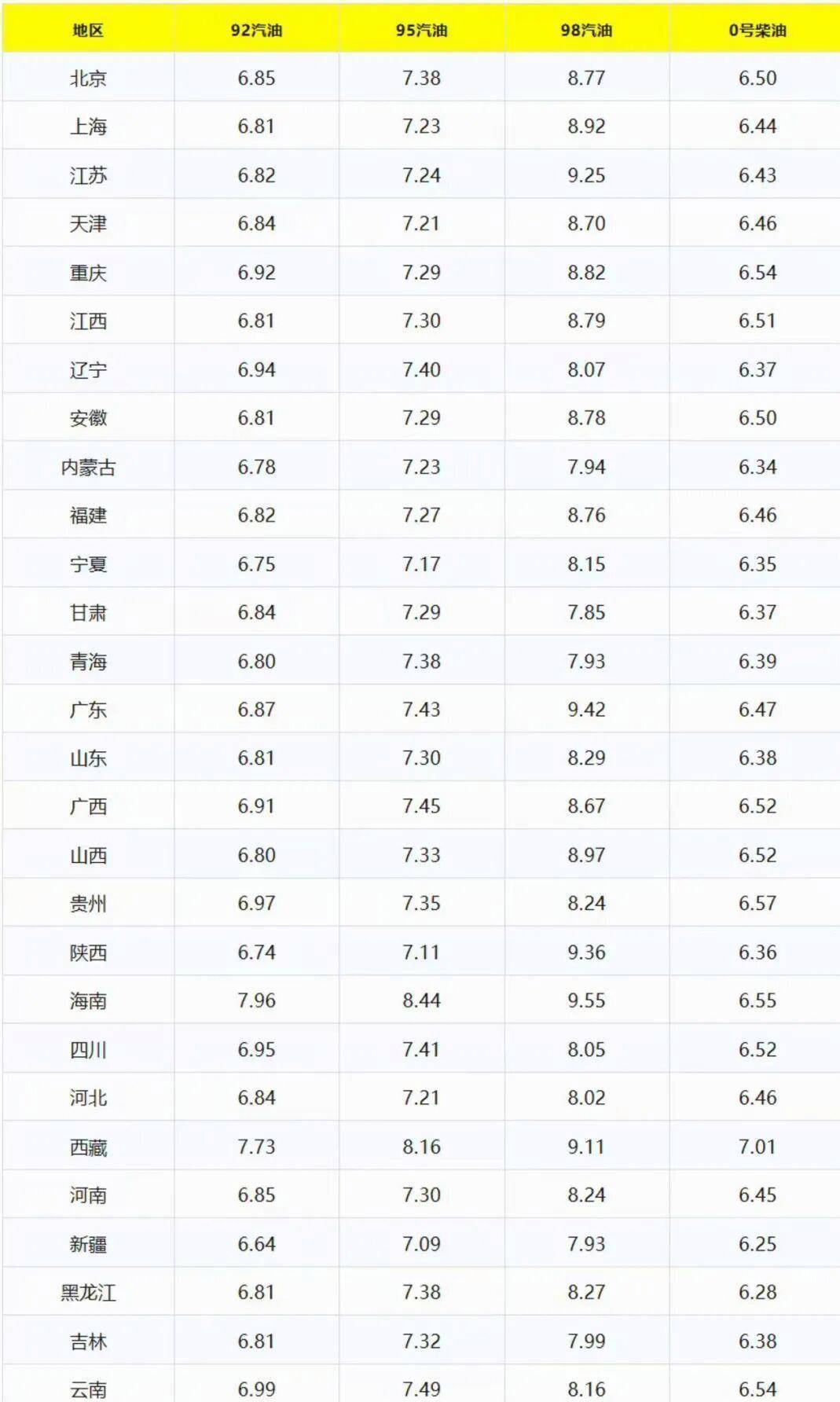
Core Viewpoint - The recent decline in oil prices is seen as a relief rather than a cause for alarm, indicating a potential turning point in the market dynamics [1] Oil Price Movement - As of November 28, 2025, WTI January futures rose to $58.85 per barrel, while Brent reached $62.65 per barrel, suggesting a slight increase but not a reversal in trend [1] - The current oil price is being influenced by a weakening dollar, with over 80% of market participants betting on a Federal Reserve rate cut in December, making oil priced in dollars appear cheaper [4] Technical Analysis - Technical indicators show that WTI crude oil is struggling below key moving averages, indicating a weak and consolidating market rather than a strong rebound [4] - The 50-day and 200-day moving averages are both trending downward, with prices clustering around $58, reflecting a weak oscillation rather than a bullish trend [4] Domestic Price Adjustments - The 24th round of domestic oil price adjustments is expected to result in a decrease of 85 yuan per ton, translating to a savings of 0.07 yuan per liter [4] - The current gasoline prices in various regions, such as Beijing (6.89 yuan for 92 gasoline) and Jiangsu (6.86 yuan for 92 gasoline), reflect the ongoing adjustments [5][6] Market Sentiment and Economic Indicators - The oil market is currently influenced by conflicting forces: a weakening dollar providing support and weak demand expectations exerting downward pressure [7] - The fluctuations in oil prices are increasingly seen as a reflection of collective economic sentiment rather than solely geopolitical factors, indicating a broader economic thermometer [7] - The future trajectory of oil prices remains uncertain, hinging on global economic conditions and consumer confidence [7]

摩根大通:严重供应过剩或将在2027年将油价打压至30美元
Hua Er Jie Jian Wen· 2025-11-27 00:17
Core Viewpoint - Morgan Stanley predicts that due to severe supply surplus, Brent crude oil prices may drop to the $30 range by 2027, highlighting significant supply-demand imbalance in the global energy market [1] - Goldman Sachs advises investors to short oil immediately, forecasting that WTI crude oil prices will average $53 per barrel in 2026 due to a daily supply surplus of 2 million barrels [2] Supply and Demand Dynamics - Major investment banks indicate that large-scale supply from OPEC+ and non-OPEC producers in the Americas continues to flood the market, contributing to downward price pressure [1] - Different institutions provide varying timelines for market rebalancing, with Morgan Stanley suggesting that Brent crude could fall to $30 by 2027, while Goldman Sachs believes the market may rebalance by 2027 after a final wave of supply in 2026 [3] Geopolitical Factors - Recent diplomatic talks between the U.S. and Ukraine may ease geopolitical tensions, potentially leading to a relaxation of sanctions against Russia, which could further increase supply pressure in an already oversupplied market [4] - Analysts are closely monitoring the developments of these negotiations, as a peace agreement could allow more Russian energy supplies to enter the global market [4]

