
流动性牛市

Search documents
光大期货金融期货日报-20260116
Guang Da Qi Huo· 2026-01-16 04:02
光大期货金融期货日报 光大期货金融期货日报(2026 年 01 月 16 日) 一、研究观点 | 品种 | 点评 | 观点 | | --- | --- | --- | | | 昨日,A 股市场高位震荡,Wind 全 A 下跌 0.16%,成交额 2.94 万亿元。中 | | | | 证 1000 指数下跌 0.2%,中证 500 指数下跌 0.05%,沪深 300 指数上涨 0.2%, | | | | 上证 50 指数下跌 0.21%。央行将下调各类结构性货币政策工具利率 25BP。 | | | | 结构性货币政策工具以定向支持社会特定融资需求为主,科技创新、普惠养 | | | | 老、碳减排等近期股市热点题材均涵盖其中。本次降息体现了央行在保持总 | | | | 量稳定的基础上,对于特定领域的进一步资金支持,在本轮流动性牛市中, | | | 股指 | 有助于引导资金进入相关板块,推升板块估值。此外,更低的融资成本有助 | 震荡 | | | 于相关板块资本性支出提升,促进企业盈利的增加,有助于长期资金提升对 | | | | 相关题材的配置。此前,沪深交易所发布通知,将融资买入证券保证金最低 | | | | 比 ...
主题活跃期如何配置?
Xinda Securities· 2026-01-11 05:55
Group 1 - The macroeconomic environment is improving, with December 2025 PMI and inflation data showing a seasonal rebound, indicating better demand and supply conditions [9][12][24] - Various commodity prices have shown signs of recovery from their lows since mid-December 2025, with non-ferrous metals, petrochemicals, and black raw materials leading the recovery [9][12] - The micro-funding environment remains ample, with institutional funds providing incremental support, and trading funds expected to gradually recover, enhancing market liquidity [12][24] Group 2 - The thematic market is very active, with potential for further index uplift if the themes can expand into relatively low sectors [16][24] - Future thematic allocations should focus on sectors with price increase expectations supported by performance, such as non-ferrous metals, power battery supply chains, and chemicals [17][24] - Other areas of interest include themes that may see policy or unexpected technological breakthroughs, such as AI applications and tourism consumption [17][24] Group 3 - The report suggests that the current market conditions may favor a bullish sentiment, with the potential for a spring market rebound if the thematic trends continue to spread [8][16] - The report highlights the importance of monitoring the performance of various sectors and themes, particularly those that are expected to benefit from policy support and technological advancements [17][24] - The report emphasizes the need for caution regarding potential volatility in the short term, especially in high-demand technology themes like commercial aerospace and satellite internet [17][24]
策略周报:春季行情可能缓步启动-20260104
Xinda Securities· 2026-01-04 05:20
Group 1 - The core conclusion indicates that the Shanghai Composite Index ended December 2025 with an "11 consecutive days of gains," primarily benefiting from a recovery in risk appetite and increased trading volume in ETFs focused on the CSI A500 [2][10] - The report suggests that the liquidity environment before the Spring Festival is likely to remain favorable, with the market expected to continue performing strongly, although some volatility may occur in January [10][17] - Historical data shows that the probability of market gains is highest in February, with seasonal patterns indicating that February, July, and November are the months with the highest likelihood of market increases [11][12] Group 2 - The report highlights that in years when the Spring Festival is later, the market may perform better before the festival compared to after, contrasting with earlier years where the opposite trend was observed [12][15] - It notes that significant fluctuations in the market during the first quarter are often influenced by major economic turning points or substantial changes in household funding [13][14] - The report emphasizes that the current market position is not low, with the Shanghai Composite Index currently at approximately the 35th percentile of the past decade, indicating a potential for gradual increases in the spring market [17][20] Group 3 - The report recommends increasing allocations to flexible assets in anticipation of the spring market, particularly in technology and cyclical sectors, which typically show significant excess returns during this period [22][24] - It suggests that the financial sector, particularly non-bank financials, may see increased earnings elasticity as resident funds flow into the market [26][24] - The report also indicates that the consumer sector may present investment opportunities, especially in new consumption models and sectors benefiting from policy catalysts [26][24]

机构资金买入力量有望增强
Xinda Securities· 2025-12-28 02:12
Group 1 - The core conclusion indicates that the buying power of institutional funds is expected to strengthen, with the Shanghai Composite Index achieving an "eight consecutive days of gains" and market trading volume recovering [2][8] - Positive factors catalyzing the year-end market rally include the rebound of US tech stocks, appreciation of the RMB, rising prices of non-ferrous metals (gold, silver, copper), and various themes in commercial aerospace [2][8] - The report emphasizes that the key factor driving the index to break through the upper range of the consolidation zone is the influx of incremental funds, particularly the gradual increase in institutional buying power [2][8] Group 2 - The appreciation of the RMB is beneficial for the return of overseas funds, with the RMB appreciating nearly 4% against the USD in 2025, and the offshore RMB/USD exchange rate breaking the "7" mark [9] - The report notes that the recent acceleration of inflows into stock ETFs indicates a significant increase in the net inflow scale of ETFs related to the CSI A500, suggesting that institutional funds are accelerating their layout [12][14] - The private equity fund management scale increased significantly by 1.04 trillion RMB in October 2025, reaching 7.0076 trillion RMB, and continued to rise to 7.0383 trillion RMB in November, indicating a potential important source of incremental funds for the market [14][15] Group 3 - The report highlights that there are currently no signs of accelerated inflows from resident incremental funds, but there is optimism for a seasonal surge in Q1, particularly in years when the Spring Festival is later [17][25] - The report suggests that the tactical foundation of the bull market remains solid, with the potential for a resonance between profit improvement and fund inflows [30][31] - The report recommends increasing allocations to value sectors and suggests that the technology sector typically shows significant excess returns during the spring market [36][37]
519倍PE的医药股上市,散户狂欢还是机构陷阱?
Sou Hu Cai Jing· 2025-12-07 17:07
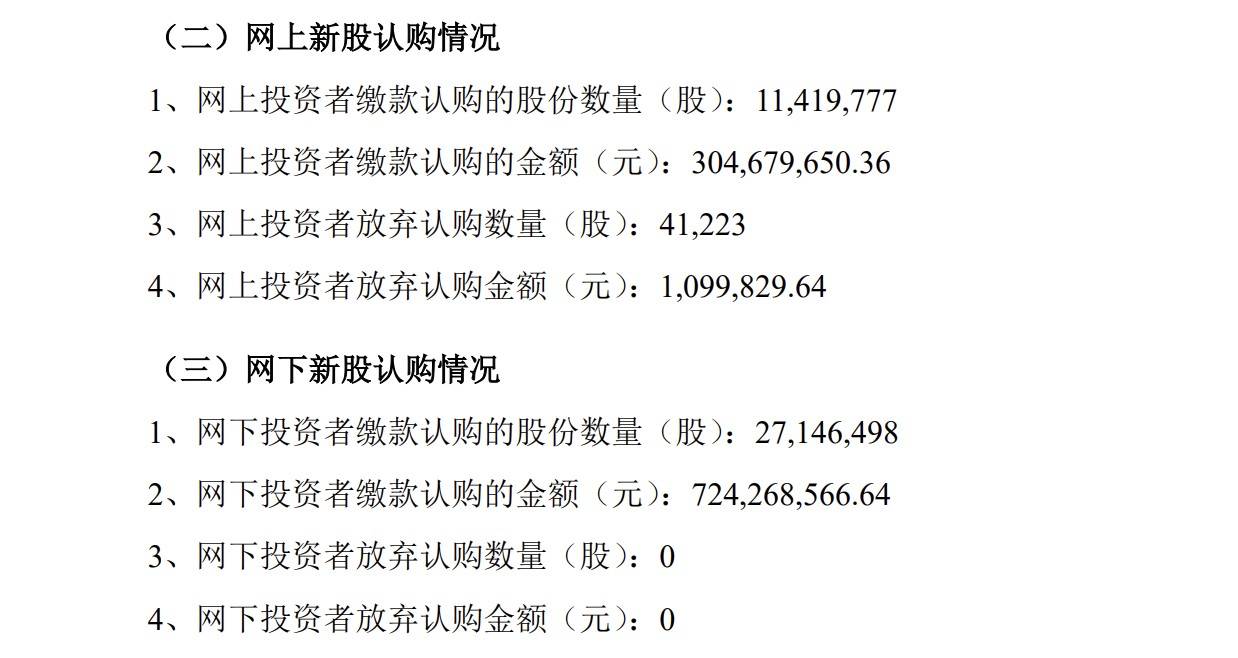
Core Viewpoint - The article discusses the high valuation of Bai'ao Saitou at a price-to-earnings ratio of 519 times upon its debut on the STAR Market, highlighting the unusual market enthusiasm despite the rarity of such high valuations in A-share history [1]. Group 1: Market Reaction and Investor Behavior - The subscription rate for retail investors was only 0.36%, indicating strong enthusiasm for the biotech stock [1]. - There is a notable divergence in buying behavior, with institutional investors focusing on a price range of 25-27 yuan, while retail investors generally purchased above 30 yuan, suggesting potential future market differentiation [4]. - The current market resembles a "liquidity bull market," where over 60% of stocks have underperformed the index, indicating that funds are concentrated in a few stocks while most are merely following the trend [4]. Group 2: Company Performance and Financial Metrics - Bai'ao Saitou achieved its first profit of 33.54 million yuan in 2024, but its R&D expenditure ratio dropped from 130% to 33%, and the workforce was reduced by 35% [6]. - Revenue from model animal sales constituted 44% of total revenue, with a price increase of only 7% over three years [6]. Group 3: Institutional Behavior and Market Trends - The article emphasizes that ordinary investors often cannot monitor market liquidity in real-time, leading to misinterpretations of market conditions, as seen in Bai'ao Saitou's first-day trading frenzy [7]. - A pattern observed in the market indicates that when uncertainty rises, large funds typically adopt a strategy of "exchanging time for space," resulting in short-term price increases followed by prolonged fluctuations [7]. - The case of Guizhou Moutai in Q2 2024 illustrates that despite significant institutional buying, the stock remained stagnant, leading to a misinterpretation of market signals by ordinary investors [9][10]. Group 4: Recommendations for Investors - Investors are advised to focus on the conversion rate of R&D investments, as continuous innovation is crucial for the competitiveness of biotech firms [16]. - Caution is warranted regarding the high valuation of 519 times PE, which necessitates sustained high growth over the coming years to justify [16]. - Monitoring institutional movements is critical, particularly during the three-month lock-up period following an IPO, as it serves as a key window for potential market shifts [16].

国投证券如何轮动?
Guotou Securities· 2025-12-07 13:46
Group 1 - The report indicates that the current market is experiencing a liquidity-driven bull market, with the Shanghai Composite Index having risen approximately 15% in the second half of the year, despite weak macroeconomic fundamentals [1][4] - The report emphasizes the importance of transitioning from a liquidity-driven market to a fundamentals-driven market for sustained growth above the 4000-point level on the Shanghai Composite Index [1][4] - Historical analysis shows that significant year-end rallies typically require low valuations and improved liquidity conditions, with only three instances in the past decade where no rally occurred during this period [2][4] Group 2 - The report highlights that the market is currently in a "high-cut low" phase, where large-cap stocks have outperformed small-cap stocks, and this trend is expected to continue until a new main theme emerges [3][4] - It is noted that the performance of cyclical value stocks is expected to be strong leading into the year-end, particularly in resource and financial sectors, with a historical win rate of 70% for value stocks during this period [3][4] - The report suggests that the technology sector may see a rebound in January, as historical data indicates that growth stocks tend to perform better after the Lunar New Year [3][4] Group 3 - The report discusses the structural rotation in the market, indicating that the technology sector has been focusing on high-certainty trends, particularly in AI hardware, while software applications have lagged [3][4] - It is mentioned that the current high levels of technology stock valuations may lead to increased sensitivity to negative news, suggesting a cautious approach to investing in this sector [3][4] - The report also notes that the performance of the A-share technology sector is closely tied to global trends in AI and the performance of U.S. tech stocks, highlighting the need for careful monitoring of external signals [3][4]
跨年前后或是做多的窗口期
Xinda Securities· 2025-12-06 13:58
Core Insights - The report indicates that the current market is experiencing a prolonged period of low trading volume, which is not necessarily a bearish signal in a bull market. Historical data shows that low trading volumes often coincide with market lows during bull markets [2][10][11] - The report highlights the significance of the year-end effect, particularly the cross-year market trend, which may start in December 2025. Historical patterns suggest that if the index is low, the cross-year rally tends to start earlier and with greater magnitude [3][18][21] - It is anticipated that there will likely be a cross-year market rally in 2026, with December 2025 serving as a potential window for positioning. The macroeconomic outlook is weak, providing room for more robust growth policies to emerge [23][24] Market Changes - The report notes that all major A-share indices rose this week, with the ChiNext 50 index increasing by 2.58% and the ChiNext index by 1.86%. In contrast, sectors such as media and real estate saw declines [32] - The report mentions that the net inflow of southbound funds (Hong Kong Stock Connect) totaled 10.303 billion yuan this week, indicating continued interest in A-shares [34] Investment Recommendations - The report suggests focusing on sectors such as non-bank financials, electric power equipment, and machinery, which are expected to benefit from a potential bull market. The non-bank financial sector is highlighted for its low valuation and potential for significant returns as resident funds flow in [30][31] - The report emphasizes the importance of monitoring policy changes and economic data, as these factors will influence market dynamics and investment opportunities in the coming months [24][25]
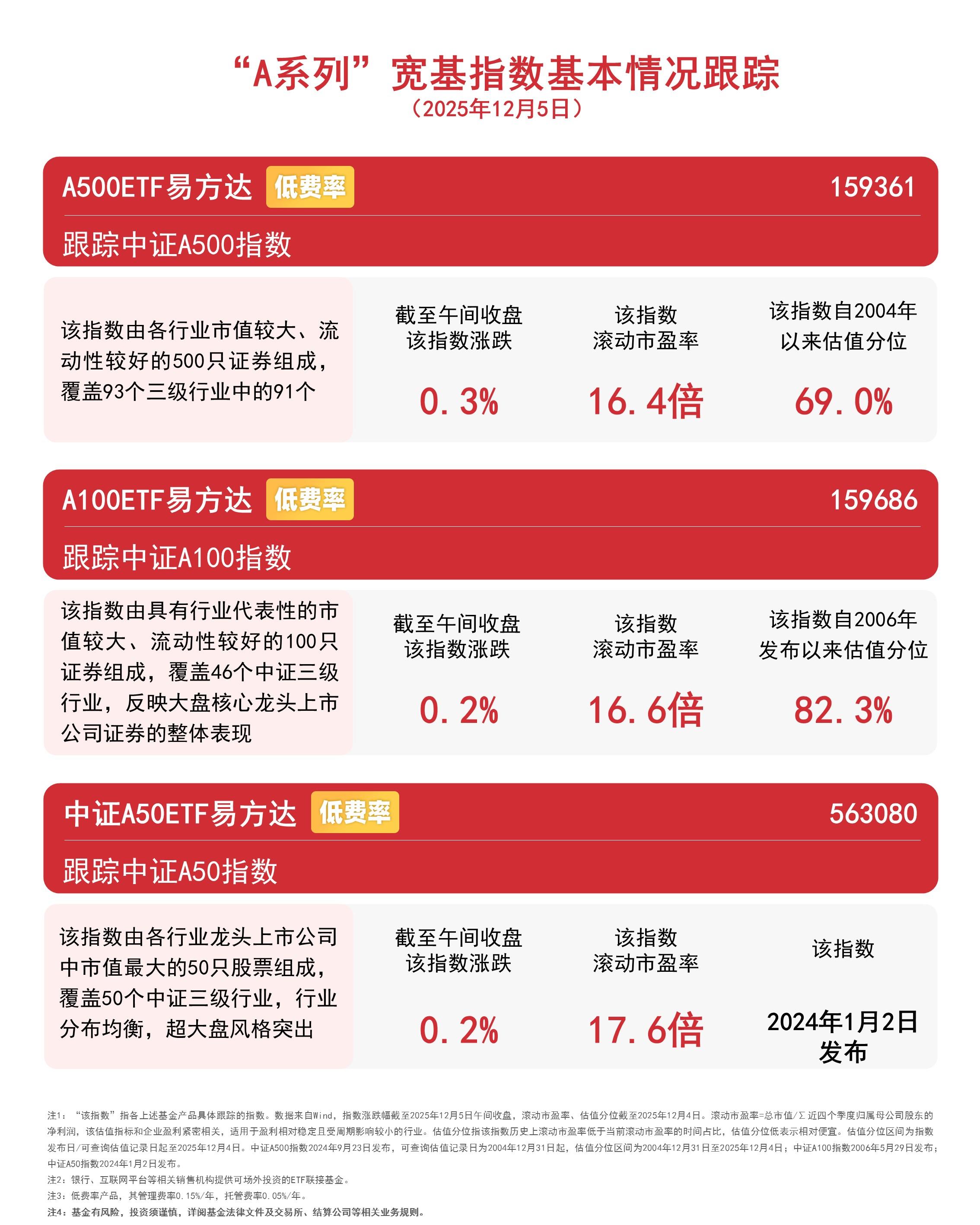
“A系列”指数窄幅震荡,A500ETF易方达(159361)半日成交额约35亿元
Mei Ri Jing Ji Xin Wen· 2025-12-05 06:06
Group 1 - The "A series" indices experienced narrow fluctuations in early trading, with the CSI A500 index rising by 0.3%, and both the CSI A100 and CSI A50 indices increasing by 0.2% [1] - The trading volume for the A500 ETF managed by E Fund reached approximately 3.5 billion yuan during the first half of the trading session [1] - According to Xinda Securities, the foundation supporting the liquidity bull market remains solid, with potential for overall profit improvement and capital inflow to extend the duration of the bull market [1] Group 2 - Strategic considerations indicate that the performance gap, weak economic data, and adjustments in overseas markets may lead to significant fluctuations during the market's wide oscillation process [1] - However, there are opportunities for upward movement driven by positive changes in policies or capital from the end of this year to early next year [1]
核心资产强势吸金,A500ETF基金(512050)连续三日资金净流入超12亿元
Mei Ri Jing Ji Xin Wen· 2025-12-05 03:23
Group 1 - The A500ETF fund (512050) has experienced a decline of 0.26% as of 9:38 AM on December 5, despite some of its holdings like Nanshan Aluminum and Jiangxi Copper performing well [1] - The fund has seen a net inflow of over 1.2 billion yuan in the last three days and a total of 2.4 billion yuan over the past ten days, indicating strong investor interest [1] - According to Xinda Securities, the foundation supporting the liquidity bull market remains solid, with potential for overall profit improvement and capital inflow to extend the bull market [1] Group 2 - The A500ETF fund (512050) offers investors a low fee rate of 0.2%, good liquidity with an average daily trading volume exceeding 5 billion yuan over the past month, and a large scale of over 20 billion yuan [2] - The fund tracks the CSI A500 Index and employs a dual strategy of industry balanced allocation and leading stock selection, covering all 35 sub-industries [2] - Investors are encouraged to consider related products such as the A500ETF fund (512050) and the A500 Enhanced ETF fund (512370) [2]
指数反弹,A500ETF易方达(159361)半日成交额达32亿元,机构称当前流动性牛市基础依然坚实
Mei Ri Jing Ji Xin Wen· 2025-12-05 00:06
Group 1 - The "A series" index opened lower today but continued to rebound, with the CSI A500 index rising by 0.3%, and both the CSI A100 and CSI A50 indices increasing by 0.5% as of the midday close [1] - The A500 ETF from E Fund (159361) recorded a trading volume of 3.2 billion yuan during the half-day session [1] - According to Xinda Securities, the foundation supporting the liquidity bull market remains solid, with potential for a resonance of overall profit improvement and capital inflow to extend the duration of the bull market [1] Group 2 - Strategic considerations indicate that the performance gap, weak economic data, and adjustments in overseas markets may lead to volatility during a wide-ranging market fluctuation [1] - However, opportunities for upward movement driven by policy or capital changes are expected to be available from the end of this year into early next year [1]
