消费并购

Search documents
刚刚,星巴克劲敌要卖了
3 6 Ke· 2025-08-25 08:34
Core Insights - Coca-Cola is evaluating the sale of Costa Coffee, with initial discussions already taking place with private equity firms, indicating a significant shift in the global coffee market [1][8][12] - Costa Coffee, originally acquired by Coca-Cola for £3.9 billion (approximately ¥34.7 billion) in 2018, is now being marked for sale at £2 billion (approximately ¥19.4 billion), reflecting a drastic reduction in value [1][9][10] - The competitive landscape in the coffee industry has intensified, with Starbucks and other fast-food chains like McDonald's and Tim Hortons posing significant challenges to Costa's market position [11][12] Company Overview - Costa Coffee was founded in London in 1971 by brothers Bruno and Sergio Costa, who aimed to provide high-quality Italian-style coffee [2][4] - The brand expanded rapidly after being acquired by Whitbread in 1995, which provided the necessary capital and support for growth [4][6] - As of the end of 2023, Costa operates over 2,700 stores in the UK and Ireland, with an additional 1,300 locations globally, generating revenues of £1.22 billion (approximately ¥12.8 billion) [6] Market Dynamics - The coffee market has seen a decline in Costa's performance, with revenues dropping from £1.3 billion in 2018 to current levels, attributed to economic pressures and increased competition [10][11] - The sale of Costa is part of Coca-Cola's strategy to focus on its core beverage business, as the coffee segment has not met initial growth expectations [11][12] - The competitive environment in China, a key market for Costa, has become increasingly challenging, with local brands gaining significant market share [12][14] Investment Opportunities - The potential sale of Costa Coffee and Starbucks China has attracted interest from various private equity firms, indicating a ripe opportunity for investment in the coffee sector [13][15] - Starbucks China, despite facing declining market share from 34% in 2019 to an expected 14% in 2024, is still valued at approximately $10 billion, showcasing the high stakes in the coffee market [14][15] - The ongoing shifts in the coffee industry reflect broader economic trends, with companies adapting to competitive pressures and seeking strategic divestitures [19][20]


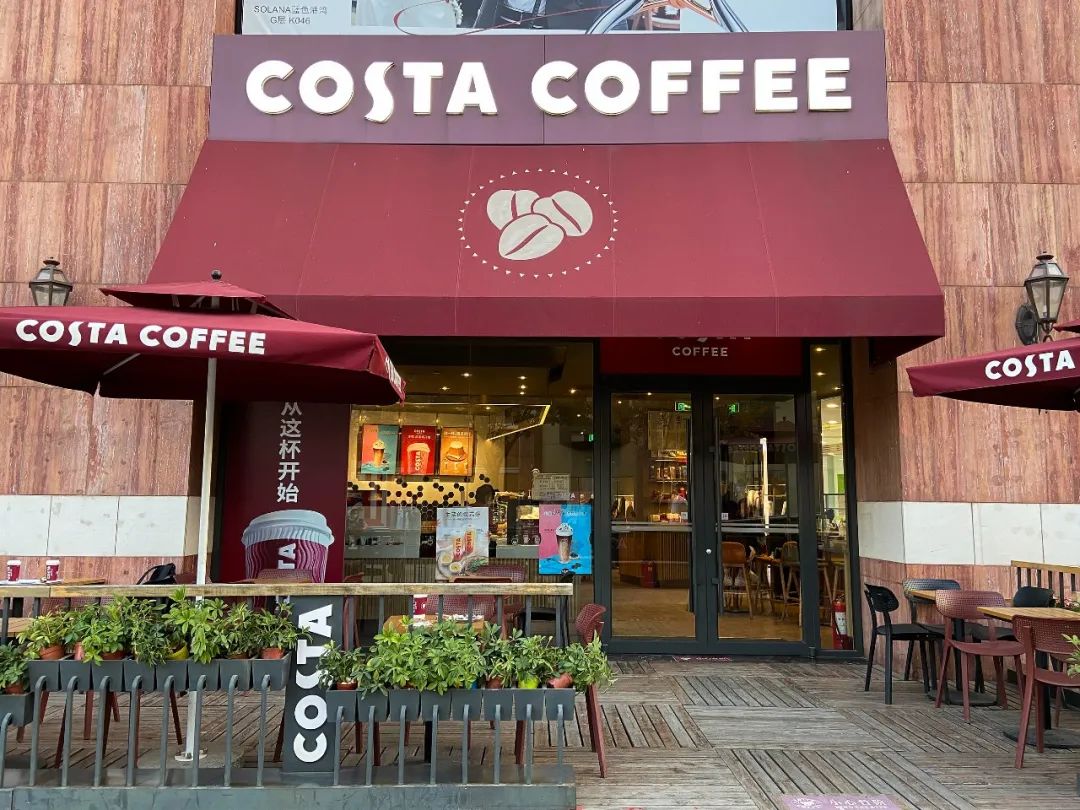
星巴克劲敌要卖了
Hu Xiu· 2025-08-25 08:04
Core Viewpoint - Coca-Cola is planning to sell Costa Coffee, with a significant price drop from its original acquisition cost, indicating a shift in strategy amid increasing competition in the coffee market [2][14][17]. Group 1: Company Developments - Coca-Cola is collaborating with Lazard to evaluate the sale of Costa Coffee, having already engaged in preliminary talks with private equity firms [2][13]. - Costa Coffee was acquired by Coca-Cola for £3.9 billion (approximately ¥34.7 billion) in 2018, but the current sale price is expected to be around £2 billion (approximately ¥19.4 billion), reflecting a 50% decrease [2][14]. - As of the end of 2023, Costa Coffee generated revenues of £1.22 billion (approximately ¥12.8 billion) and operates over 4,000 stores globally [11]. Group 2: Market Context - The coffee market has become increasingly competitive, with major players like Starbucks, McDonald's (McCafé), and Tim Hortons aggressively expanding their coffee offerings [17]. - Starbucks China is also in talks for a potential sale, with its market share dropping from 34% in 2019 to an estimated 14% in 2024, despite a valuation increase from $5-6 billion to potentially $10 billion [21][22]. - The global coffee market is undergoing significant changes, with multiple brands, including Costa and Peet's Coffee, facing strategic shifts and potential acquisitions [26][29]. Group 3: Strategic Implications - Coca-Cola's decision to divest Costa Coffee is seen as a move to focus on its core beverage business and reduce reliance on lower-margin products [17][27]. - The ongoing changes in the coffee industry reflect broader economic trends, with companies adapting to competitive pressures by shifting from "heavy asset" to "light asset" strategies [27][29]. - The current environment presents opportunities for investors looking to acquire undervalued assets in the coffee sector [28].
刚刚,星巴克劲敌要卖了
投资界· 2025-08-25 07:27
Core Viewpoint - The global coffee market is undergoing significant changes, with major players like Coca-Cola and Starbucks considering divestitures amid increasing competition and shifting market dynamics [2][10]. Group 1: Coca-Cola and Costa Coffee - Coca-Cola is reportedly evaluating the sale of Costa Coffee, having initially acquired it for £3.9 billion (approximately ¥34.7 billion) in 2018, but is now considering a sale price of only £2 billion (approximately ¥19.4 billion), indicating a significant depreciation in value [3][11]. - Costa Coffee's revenue was £1.22 billion (approximately ¥12.8 billion) in 2023, but the company has faced challenges in maintaining growth due to economic conditions and inflationary pressures [8][12]. - The competitive landscape has intensified, with rivals like Starbucks and fast-food chains such as McDonald's and Tim Hortons eroding market share, particularly in China, which is a crucial market for Costa [12][10]. Group 2: Starbucks and Market Dynamics - Starbucks China is also in talks for a potential sale, with interest from various investment firms, reflecting the competitive pressures it faces from local brands like Luckin Coffee and others [14][15]. - Starbucks' market share in China has dropped from 34% in 2019 to an estimated 14% by 2024, yet its valuation has increased significantly, with potential bids reaching up to $10 billion [15]. - The coffee market is experiencing a broader trend of consolidation and strategic realignment, as companies adapt to fierce competition and changing consumer preferences [16][17]. Group 3: Industry Trends - The coffee industry is witnessing a major reshuffling, with established brands like Costa and Starbucks reassessing their strategies in response to market pressures [13][16]. - The trend of divestitures and acquisitions is indicative of a larger shift in the consumer sector, where companies are moving from heavy asset models to lighter asset strategies to remain competitive [17].

迪卡侬也要卖了
36氪· 2025-08-20 09:31
Core Viewpoint - Decathlon is planning to sell approximately 30% of its stake in its Chinese subsidiary, with an estimated valuation of €10-15 billion (around ¥100 billion) [4][6]. Group 1: Decathlon's History and Market Presence - Decathlon was founded in 1903 by Louis Mulliez in France, evolving from a textile factory to a major sports retail brand [5]. - The company entered the Chinese market in 1994, establishing a production office in Guangzhou, and opened its first retail store in Shanghai in 2003 [6]. - By 2015, Decathlon had expanded to 166 stores in China, reaching approximately 260 stores by the end of 2017, despite recent store closures [6]. Group 2: Current Business Structure and Operations - Decathlon China operates 4 owned factories, 11 industrial procurement offices, and around 400 partner factories, contributing significantly to the global supply chain [6]. - Products sourced from Decathlon's Chinese factories account for 42.5% of the group's global market [6]. Group 3: Share Sale and Investment Dynamics - The family behind Decathlon is only willing to sell 30% of the stake, indicating the importance of the Chinese market to the company [7]. - The potential transaction is expected to be structured as a mix of "capital increase and share transfer," similar to the Starbucks China deal [10]. - Multiple international private equity and sovereign funds have signed confidentiality agreements, with some investors seeking more than 30% [11]. Group 4: Broader Market Trends - The trend of acquiring the Chinese operations of multinational companies is becoming a significant direction in consumer mergers and acquisitions [13]. - Recent examples include the acquisition of McDonald's China operations by CITIC Group for $20.8 billion, which has led to substantial growth in store numbers [13].
迪卡侬也要卖了
3 6 Ke· 2025-08-15 02:48
Group 1 - Decathlon plans to sell approximately 30% of its stake in its Chinese subsidiary, with an estimated valuation between €1 billion to €1.5 billion (approximately ¥10 billion) [1] - The sale rumors began in April 2023, but Decathlon China initially declined to comment on the matter [1][5] - Multiple international investment institutions are currently in negotiation stages for the stake acquisition [1] Group 2 - Other companies, such as Starbucks China and Haagen-Dazs China, are also reportedly involved in merger and acquisition activities, attracting interest from private equity firms [2][7] - Decathlon's history dates back to 1903, with significant growth and global expansion initiated in the 1980s [3] - The company established its presence in China in 1994, with significant growth in retail locations, reaching 260 stores by the end of 2017 [4] Group 3 - Decathlon has built a substantial supply chain in China, with 4 owned factories, 11 industrial procurement offices, and around 400 partner factories, contributing to 42.5% of the group's global market [4] - The potential transaction would mark a rare equity transfer in Decathlon's nearly 50-year history, as the company has primarily relied on family funds and operational cash flow for growth [4][6] - The negotiation for the stake sale is ongoing, with some investment institutions seeking more than 30% ownership, while Decathlon's family prefers to maintain control [6]
迪卡侬要卖了
投资界· 2025-08-14 08:16
Group 1 - Decathlon plans to sell approximately 30% of its stake in its Chinese subsidiary, with an estimated valuation between €1 billion to €1.5 billion (approximately ¥10 billion) [3][7] - The sale process has attracted interest from multiple international investment institutions, indicating a competitive environment for the acquisition [3][9] - The potential transaction is seen as a rare equity transfer in Decathlon's nearly 50-year history, as the company has primarily relied on family funds and operational cash flow for its growth [7][9] Group 2 - Decathlon's history in China began in 1994 with the establishment of a production office in Guangzhou, and it opened its first retail store in Shanghai in 2003 [6] - By 2015, Decathlon had expanded to 166 stores in China, reaching approximately 260 stores by the end of 2017, although recent years have seen a contraction in store numbers [6][7] - Decathlon has established a significant presence in China, with 4 owned factories, 11 industrial procurement offices, and around 400 partner factories, contributing to 42.5% of the group's global market procurement [6][7] Group 3 - The ongoing trend in consumer mergers and acquisitions includes major international brands like Starbucks and Häagen-Dazs exploring divestitures of their Chinese operations, reflecting a strategic shift towards local management [9][10] - The competitive landscape for acquisitions is intensifying, with notable investment firms and tech giants like Tencent and JD.com showing interest in these opportunities [10]

1200亿,哈根达斯要卖了
盐财经· 2025-08-05 10:11
Core Viewpoint - Goldman Sachs is preparing to acquire the ice cream manufacturer Froneri for an estimated valuation of €15 billion (approximately ¥120 billion), which includes the iconic Häagen-Dazs brand as a significant asset [4][5]. Company History - Häagen-Dazs was founded in 1961 by Reuben Mattus, who aimed to create a premium ice cream brand free from additives, targeting high-end markets [7][9]. - The brand quickly gained popularity, opening its first store in Brooklyn in 1973, positioning itself as a luxury product priced five times higher than regular ice cream [9]. - Over the years, Häagen-Dazs underwent multiple ownership changes, including acquisitions by Pillsbury, Diageo, General Mills, and Nestlé, leading to its current operation under Froneri [10][11][12]. Current Market Situation - Häagen-Dazs is facing significant challenges in the Chinese market, with a reduction in store numbers from over 400 to 263 and a decline in customer traffic by double digits [15][17]. - The brand's high pricing strategy is being challenged by local competitors and changing consumer preferences, leading to a decrease in demand for premium ice cream [17][18]. - General Mills reported a 5% decline in net sales for the third quarter of fiscal 2025, with international markets, particularly China and Brazil, being major contributors to this downturn [17]. Strategic Moves - General Mills is considering selling its Häagen-Dazs business in China, with potential transaction values estimated between $500 million and $800 million, as part of a strategy to divest low-profit assets [14][18]. - The trend of divesting underperforming assets is not unique to Häagen-Dazs; other brands like Starbucks and Decathlon are also exploring similar strategies in response to intensified competition in the Chinese market [20][21]. Investment Opportunities - The current environment presents a unique opportunity for investors to acquire undervalued consumer brands, as many companies are looking to offload assets amid economic challenges [24][25]. - The consumer sector is traditionally viewed as resilient, making it an attractive area for investment during economic downturns, with significant interest from private equity firms in acquiring international brands' operations in China [25][26].


刘强东豪掷180亿,“欧洲版京东”要来了?
阿尔法工场研究院· 2025-08-05 00:06
Core Viewpoint - JD.com is intensifying its competition in the global e-commerce landscape by acquiring CECONOMY, Germany's largest consumer electronics group, for approximately €2.2 billion (over ¥18 billion), marking a significant step in its international expansion strategy [5][6][10]. Group 1: Acquisition Details - JD.com announced the acquisition of CECONOMY, which operates over 1,000 stores across 12 European countries and holds a market share of over 30% in Germany through its brands MediaMarkt and Saturn [9][10]. - The acquisition aims to enhance CECONOMY's growth and maintain its independent operations while transitioning into a leading omnichannel consumer electronics platform in Europe [10][12]. - JD.com plans to leverage CECONOMY's existing management team and infrastructure to expedite its entry into the European market [10][16]. Group 2: Strategic Rationale - The acquisition provides JD.com with a robust offline channel network, allowing it to bypass complex distribution systems in Europe and gain immediate access to retail markets [16]. - CECONOMY's stores and warehouses will serve as "front warehouses" for JD.com, improving its supply chain capabilities and addressing cross-border logistics challenges [16]. - JD.com is adopting a "self-built + acquisition + cooperation" strategy for internationalization, emphasizing the importance of local operations and infrastructure [14][16]. Group 3: Competitive Landscape - JD.com is competing against major players like Alibaba, Pinduoduo, SHEIN, and TikTok in the global e-commerce arena, with a focus on differentiation through service and experience rather than price wars [18][19]. - The competitive environment is intensifying, with Pinduoduo's Temu facing growth challenges and SHEIN evolving into a major e-commerce platform [17][18]. - The article highlights a broader trend of consumer mergers and acquisitions, with various companies seeking to strengthen their market positions amid economic fluctuations [20][24].

1200亿,哈根达斯要卖了
3 6 Ke· 2025-08-04 07:40
Core Viewpoint - Goldman Sachs is preparing to acquire ice cream manufacturer Froneri for an estimated €15 billion (approximately ¥120 billion), with the deal potentially signed as early as September this year [1] Company Overview - Häagen-Dazs, founded in 1961, was created by Reuben Mattus, who aimed to produce high-quality, all-natural ice cream, targeting upscale markets [2] - The brand quickly gained popularity and expanded, opening its first store in Brooklyn in 1973, positioning itself as a luxury product priced five times higher than regular ice cream [2] Ownership Changes - Since the 1980s, Häagen-Dazs has undergone multiple ownership changes, starting with Pillsbury's acquisition for $70 million in 1983 [3] - Subsequent ownership included Diageo and General Mills, with Nestlé acquiring U.S. operations in 2002 and later forming Froneri in 2016 with PAI Partners [3][4] Current Market Challenges - Häagen-Dazs is facing significant challenges in the Chinese market, with a reduction in store numbers from over 400 at its peak to 263 currently [6] - The brand's sales are declining due to increased competition from local brands and changing consumer preferences, leading to a drop in customer traffic and profitability [7][8] Strategic Moves - General Mills is reportedly planning to sell Häagen-Dazs' operations in China, with potential buyers needing authorization and the deal estimated between $500 million to $800 million [6] - The decision to sell is part of a broader strategy to divest low-margin assets, as seen in previous sales like the Yoplait yogurt business in China [8] Industry Trends - The current environment has seen a surge in consumer brand acquisitions, with notable companies like Starbucks and Decathlon also exploring sales of their Chinese operations due to intensified competition [10][14] - The trend reflects a shift from "heavy asset" to "light asset" strategies among multinational companies in response to market pressures [10][14]
1200亿,哈根达斯要卖了
投资界· 2025-08-04 07:28
Core Viewpoint - The article discusses the impending sale of Häagen-Dazs, with Goldman Sachs preparing to acquire the ice cream manufacturer Froneri for an estimated valuation of €15 billion (approximately ¥120 billion) [3][4]. Company Overview - Froneri was established in 2016 as a joint venture between Nestlé and PAI Partners, consolidating their ice cream businesses in Europe. Subsequently, Nestlé's U.S. ice cream assets were integrated into Froneri, making Häagen-Dazs a significant asset within the company [4][6]. - Häagen-Dazs, founded in 1961, was once a leading brand globally and in China but has seen a decline in market presence and consumer interest [4][6]. Market Challenges - Häagen-Dazs is facing significant challenges in the Chinese market, with a reduction in store numbers from over 400 at its peak to just 263 currently. The brand's sales have been declining, with a double-digit percentage drop in customer traffic reported in the second quarter of fiscal year 2025 [11][12]. - The high-end ice cream market in China is experiencing a downturn, with increased competition from local brands and changing consumer preferences leading to a decrease in demand for premium products [12]. Financial Performance - General Mills, which retains global brand ownership of Häagen-Dazs, reported a 5% decline in net sales year-over-year for fiscal year 2025, with international sales down 3%. The Chinese and Brazilian markets were identified as significant contributors to this decline [12]. - The decision to sell Häagen-Dazs in China is part of General Mills' strategy to divest low-margin assets, reflecting a broader trend of companies shedding underperforming divisions [11][12]. Industry Trends - The article highlights a wave of mergers and acquisitions in the consumer sector, with several well-known brands, including Starbucks and Decathlon, also exploring sales of their Chinese operations due to intensified competition [13][15]. - The current economic climate has created opportunities for buyers with cash reserves to acquire undervalued assets in the consumer industry, which is traditionally seen as resilient during economic fluctuations [16].