现金为王

Search documents
现在到底是现金为王还是资产为王?告诉大家答案,早了解早受益
Sou Hu Cai Jing· 2025-09-14 23:41
Group 1 - The core debate in wealth management for 2024 revolves around whether to prioritize cash or diversify into assets, with individuals like Aunt Li facing dilemmas in their investment strategies [1][3] - The macroeconomic environment in 2024 is prompting a reevaluation of wealth management strategies among the public, emphasizing the need for personalized approaches based on individual circumstances [3][5] Group 2 - Cash is highlighted for its liquidity and stability, with data showing that as of 2024, household savings in China reached 143.8 trillion yuan, growing at a rate of 7.8% [5][6] - The potential income from cash holdings is illustrated, with a million yuan yielding 32,000 yuan in interest at a 3.2% annual rate, emphasizing the low risk of capital loss [5][6] - However, inflation poses a risk to cash's purchasing power, with the CPI increase at 2.4% in 2024, indicating a gradual erosion of cash value [6] Group 3 - Asset allocation is presented as a strategy to combat inflation and enhance value, with historical data showing that stocks, real estate, and gold have outperformed inflation over the past decade [7][8] - Real estate, despite recent price adjustments, has an average annual growth rate of 8.7% over the last twenty years, indicating its long-term investment value [8] - The stock market shows significant variability, with some stocks reaching new highs while others decline, underscoring the importance of stock selection and long-term investment [8] Group 4 - Gold has performed well in 2024, with prices rising from $2,000 to $2,180 per ounce, a 9% increase, reflecting its status as a safe-haven asset amid economic uncertainty [8] - The mutual fund industry has grown significantly, with total public fund assets reaching 28.7 trillion yuan by 2024, providing diverse investment options for ordinary investors [10] Group 5 - Different age groups exhibit distinct preferences for cash versus assets, with younger individuals favoring higher-risk investments, while older individuals tend to prefer cash and low-risk products [11] - Income levels also influence asset allocation strategies, with higher-income individuals diversifying more, while lower-income households tend to hold more cash [11] Group 6 - A recommended "core-satellite" investment strategy suggests maintaining 6 to 12 months of living expenses in cash while diversifying the rest into stocks, funds, and real estate [12] - The "100 minus age" rule is proposed as a guideline for asset allocation, adjusting the proportion of risk assets based on age [12] Group 7 - Investment knowledge and experience are crucial, with a recommendation for those less familiar with investing to maintain a higher cash ratio while gradually increasing asset allocation [13] - Market timing is emphasized, suggesting that increasing asset allocation during downturns and cash during booms can yield better returns [13] Group 8 - Liquidity needs, tax implications, and inflation expectations are critical factors in asset allocation decisions, with a focus on maintaining sufficient cash for upcoming large expenses [14] - Economic cycles should inform investment strategies, with risk assets performing well in expansion periods and cash becoming more valuable during contractions [14] Group 9 - Policy changes can significantly impact asset performance, necessitating regular reviews and adjustments to investment strategies based on evolving regulations [15] - Personal circumstances, such as income changes or health issues, should prompt reassessment of asset allocation [15] Group 10 - Successful wealth management often involves a combination of clear financial goals, reasonable asset allocation, and a commitment to continuous learning [16] - Technological advancements are transforming wealth management, making it more accessible and efficient [16] Group 11 - Investing in education and health is increasingly recognized as vital, with returns on knowledge investments potentially surpassing traditional financial assets [17] - Building and maintaining a strong social network can also yield unexpected opportunities and benefits [17] Group 12 - The most effective wealth managers adapt their strategies flexibly to changing environments, avoiding extremes of cash hoarding or asset liquidation [18] - Diversification is a key principle, with recommendations against concentrating investments in a single asset type [18] Group 13 - A practical investment strategy for Aunt Li involves allocating 200,000 yuan in cash for emergencies, 200,000 yuan in stable mixed funds, and 100,000 yuan in gold ETFs, balancing liquidity and growth potential [19] - This gradual approach to investing is encouraged as a learning process, emphasizing the importance of patience and strategy refinement over time [19]


1.56万亿“定时炸弹”,高盛突然预警
Zheng Quan Shi Bao· 2025-09-03 13:03
Group 1 - The core viewpoint of the report indicates that the U.S. stock market is facing multiple challenges as it enters historically weak September, with CTA funds fully invested and potentially poised to sell off significant amounts of stocks [1][3] - Goldman Sachs highlights the historical performance of the S&P 500 index in September, noting it is the worst month with an average return of -1.17%, particularly in the latter half of the month [3] - The report suggests that CTA funds' buying power has diminished significantly, dropping from $27.66 billion in July to an expected $2.96 billion in September, raising concerns about potential forced sell-offs [3] Group 2 - Despite the challenging macro backdrop, Goldman Sachs identifies structural support within the market that may act as a stabilizer, suggesting that any downturns could be relatively mild [5] - The report notes that institutional investors still have room to increase their positions, with hedge funds maintaining low net leverage, indicating a lack of strong directional bets [5] - The report emphasizes the importance of cash, highlighting that since 2019, $4.09 trillion has flowed into U.S. money market funds, significantly outpacing the inflow into U.S. equity funds [5] Group 3 - Goldman Sachs expresses optimism regarding the Chinese market, noting a significant rotation of hedge funds into emerging market stocks, particularly Chinese assets [7] - The report mentions that the CSI 300 index has surged approximately 10% since the end of July, outperforming the MSCI China index, driven by positive sentiment around advancements in artificial intelligence and measures to cut excess capacity [7] - Recent data from RatingDog indicates that China's composite PMI output index reached 51.9 in August, signaling continued expansion and improved business confidence [8]

1.56万亿“定时炸弹”!高盛,突然预警!
券商中国· 2025-09-03 12:47
Core Viewpoint - Goldman Sachs warns of potential market challenges as U.S. stocks enter historically weak September, with CTA funds fully invested and at risk of significant sell-offs [1][2] Group 1: Market Challenges - September is historically the worst month for the S&P 500, with an average return of -1.17%, and the second half of the month is particularly weak, averaging -1.38% [2] - CTA funds have reached a 100% "fully invested" status, with their purchasing power dropping from $27.66 billion in July to an expected $2.96 billion in September [2] - If the market declines, CTA funds could potentially sell off up to $217.92 billion in global stocks, with $73.69 billion in U.S. stocks [2] Group 2: Structural Buffers - Despite macro challenges, the market has internal structural strengths that may stabilize it, including relatively moderate positions among institutional investors [3] - The sentiment indicator from Goldman Sachs is negative, indicating that most investors still have room to increase their positions, which could lead to milder market declines [3] - Record long positions from dealers and low correlation between individual stocks and the market index suggest that selective stock picking could mitigate systemic risks [3] Group 3: Cash Flow Dynamics - Since 2019, $4.09 trillion has flowed into U.S. money market funds, significantly outpacing the $247 billion into U.S. equity funds, highlighting a preference for cash [4] Group 4: Outlook on Chinese Assets - Goldman Sachs sees a significant rotation towards emerging market stocks, particularly Chinese assets, as investors seek new opportunities amid global market challenges [5] - Kevin Sneader expresses optimism about the Chinese stock market, noting a 10% rise in the CSI 300 index since late July, outperforming the MSCI China index [5][6] - Recent data shows the Chinese composite PMI output index at 51.9 in August, indicating expansion, with new orders remaining high despite a decline in new export orders [6]

高盛流动性专家:美股系统性需求已枯竭,预计9月将“充满挑战”
Hua Er Jie Jian Wen· 2025-09-02 03:48
Core Viewpoint - Goldman Sachs warns that the U.S. stock market is facing significant challenges as it enters September, historically the worst-performing month, with systemic demand nearly exhausted, indicating potential for substantial sell-offs [1][2]. Group 1: Seasonal Trends and Market Dynamics - September is recognized as the worst month for the S&P 500, with an average return of -1.17% since 1928, and the latter half of the month is particularly weak, averaging -1.38% [2]. - The Commodity Trading Advisors (CTA) have reached a 100% full position, indicating a lack of buying power, with expected purchases in September dropping to only $2.96 billion from $12.56 billion in August [2][5]. - If the market enters a downturn, CTAs could be forced to liquidate positions, potentially leading to a sell-off of up to $73.69 billion in U.S. stocks [5]. Group 2: Institutional Investor Sentiment - Institutional investors have been net sellers of U.S. stocks for two consecutive months, reflecting a cautious stance as September approaches [3]. - Despite recent market rebounds, Goldman Sachs' sentiment indicators remain negative, suggesting that overall positioning is still relatively balanced with room for increased allocations [3][4]. - The current moderate positioning is expected to result in any market declines being relatively mild unless significant fundamental shocks occur [4]. Group 3: Market Structure and Stability - The internal market structure is providing stabilizing forces, with dealers in a record long gamma state, which helps absorb market volatility by buying during downturns and selling during upswings [9]. - Market correlation is at a near 30-year low, indicating a shift towards a stock-picking environment rather than a broad market movement, aligning with the trend of institutional active stock selection and retail investment in passive funds [9]. - The implied volatility of the S&P 500 is at a low level, making options pricing very attractive for hedging against potential market movements [9]. Group 4: Capital Flows and Investment Trends - Hedge funds have significantly rotated into emerging markets, particularly focusing on Chinese assets, with net inflows into these markets exceeding historical averages [7]. - Retail investors remain active in individual stock trading but continue to favor passive funds, leading to a growing divide between active and passive investment strategies [8]. - Since 2019, inflows into U.S. money market funds have reached $4.09 trillion, significantly outpacing the $247 billion into U.S. stock funds, highlighting a preference for liquidity despite rising stock indices [8].
绿城服务董事会主席杨掌法:对物业行业坚定持续地长期看好
Zheng Quan Ri Bao Wang· 2025-08-25 13:03
Core Viewpoint - The company is optimistic about the growth potential in the real estate service industry despite a decline in new residential projects, emphasizing the importance of seizing the current market opportunities to lead the next phase of development [1] Financial Performance - In the first half of 2025, the company achieved a revenue of 9.289 billion yuan, representing a year-on-year growth of 6.1% [1] - The gross profit margin increased to 19.5%, while core operating profit rose to 1.074 billion yuan, up 25.3% year-on-year [1] - The profit attributable to equity shareholders was 613 million yuan, reflecting a year-on-year increase of 22.6% [1] Business Segments - Property services remain the largest source of revenue and profit, generating 6.633 billion yuan, accounting for 71.4% of total revenue, with a year-on-year growth of 10.2% [1] - Park services contributed 1.356 billion yuan, making up 14.6% of total revenue, while consulting services generated 1.299 billion yuan, representing 14.0% of total revenue [1] Cash Management - The company's cash and time deposits increased by 26.5% year-on-year, reaching 5.45 billion yuan, indicating a strong cash reserve [2] - Accounts receivable rose to 6.8 billion yuan, a 13% increase year-on-year, with 69% of the balance being less than one year old, suggesting manageable risk [2] Strategic Focus - The company plans to enhance cash collection efforts in the second half of the year, aiming for a comprehensive collection rate not lower than the previous year and ensuring operating cash flow covers net profit by more than one time [2] - The management emphasized the need for deepening reforms and focusing on 56 core cities to increase market share and achieve a target of 4 billion yuan in new value for the year [2] Industry Outlook - The chairman noted that the recent trend of property fee reductions in some cities is a result of price competition, and the company aims to differentiate through service quality and value creation [3] - The company is committed to enhancing operational efficiency and organizational reform to strengthen its resilience and sustainable growth [3] - The industry is shifting towards a more mature and sustainable development model, focusing on core services and improving service quality [3]
21亿买7亿卖!潮汕大佬血亏13亿,香港山顶豪宅暴跌62%
Sou Hu Cai Jing· 2025-08-24 06:03
Core Insights - The belief in luxury properties as a safe investment is being challenged, as evidenced by a high-profile case where a luxury home in Hong Kong was sold for significantly less than its purchase price, resulting in a loss of 1.3 billion HKD over nine years [1][3][9] Group 1: Market Trends - Luxury property prices in Hong Kong have plummeted, with some areas experiencing a 50% drop compared to peak prices in 2021, reverting to levels not seen since the 1997 Asian financial crisis [4][6] - Ordinary residential properties have also seen a decline of about 30% since their peak in 2021, but luxury properties have suffered even more severe losses [4][6] Group 2: Individual Cases - Chen Hongtian, a prominent businessman, purchased a luxury home for 21 billion HKD and later sold it for 7.9 billion HKD, incurring a loss of 62% [3][4] - Other wealthy individuals have also faced significant losses, with one buying a luxury home for 8.38 billion HKD only to see its value drop below 6 billion HKD within a year [5][6] Group 3: Investment Sentiment - The perception of luxury homes as status symbols is shifting, with wealthy individuals now recognizing them as financial liabilities rather than assets [6][8] - There is a growing trend among affluent investors to liquidate luxury properties in favor of more stable investments, such as U.S. Treasury bonds, which offer better returns [8][9] Group 4: Future Outlook - The current situation in Hong Kong may foreshadow similar trends in mainland China's luxury property market, where liquidity issues could lead to significant declines in property values [7][8] - The shift from a belief in luxury property appreciation to a focus on cash liquidity reflects a broader change in investment strategy among the wealthy [8][9]

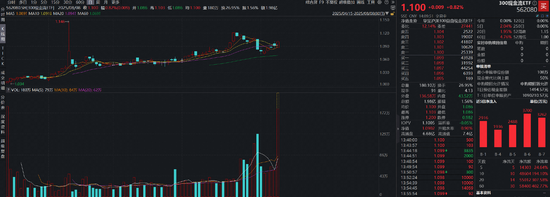
“现金牛”逆市秀肌肉!300现金流ETF(562080)连续10日净流入超4.8亿元,成交额创历史新高
Xin Lang Ji Jin· 2025-08-08 06:18
Group 1 - The core viewpoint of the articles highlights the strong inflow of funds into the 300 Cash Flow ETF (562080), which has seen a net inflow of over 480 million yuan over ten consecutive trading days, indicating a growing investor preference for cash flow strategies amid market volatility [1][3] - The 300 Cash Flow ETF tracks the CSI 300 Free Cash Flow Index, which selects 50 "cash cow" companies from the CSI 300, excluding financial and real estate sectors, making it the first ETF in the Shanghai market to adopt a free cash flow strategy [3] - Analysts suggest that in the context of increasing macroeconomic uncertainty and complex global trade dynamics, companies with stable cash flows are becoming more attractive to investors, marking a potential shift towards a "cash is king" era [3] Group 2 - The ETF has achieved a trading volume exceeding 198 million yuan, setting a new historical high since its launch, reflecting strong market interest [1] - The investment community is encouraged to consider the 300 Cash Flow ETF and its linked funds as a means to access high-quality companies with strong cash flow that can withstand economic cycles [3] - The article emphasizes the defensive value of sectors with stable cash flows in the current uncertain economic environment, suggesting that these companies are likely to provide better shareholder returns [3]
“新兴市场之父”麦朴思:约50%持仓为现金,宜观望中国市场
Ge Long Hui A P P· 2025-08-05 03:48
Group 1 - Mark Mobius maintains a "cash is king" viewpoint, with approximately 50% of his investment portfolio in cash and the other 50% in stocks [1] - The market has risen too high, making it difficult to find undervalued assets, with most company valuations being very high [1] - Holding cash can yield a good return of 4%-5% [1] Group 2 - Mobius suggests that a cautious approach towards the Chinese market is prudent until the situation regarding US-China negotiations becomes clearer [1] - Selective investments in areas such as artificial intelligence and the Chinese technology sector are recommended [1]
帮主郑重:李嘉诚40万“甩卖”400套房,是跑路还是抄作业信号?
Sou Hu Cai Jing· 2025-08-02 10:37
Core Insights - The recent sale of properties by Li Ka-shing at significantly reduced prices indicates a strategic exit from the real estate market, reflecting a broader trend of capital withdrawal from the sector [1][6] - The properties being sold are not new but rather long-held inventory, suggesting a calculated move to capitalize on remaining demand before a potential market downturn [3][4] Group 1: Property Sale Dynamics - The properties being sold include older inventory, such as the Huizhou Longpo Garden, which was originally priced at 14,000 yuan per square meter in 2019 and is now being sold for 8,632 yuan per square meter, still yielding a profit compared to the land acquisition cost [3] - The strategy employed by Li Ka-shing involves leveraging long-term land holdings to maintain profitability even when selling at steep discounts, with profit margins still exceeding 30% despite the price cuts [3] Group 2: Targeting Hong Kong Buyers - The focus on Hong Kong buyers is driven by significant price differentials, where a 400,000 yuan investment can secure a fully furnished home in Huizhou, contrasting sharply with the down payment requirements in Hong Kong [4] - There is a mismatch in demand, as mainland buyers are no longer interested in these less desirable properties, while Hong Kong middle-class residents continue to pursue dual-city living arrangements [4] Group 3: Financial Strategy and Market Trends - Li Ka-shing's divestment from mainland assets has been substantial, exceeding 200 billion yuan from 2013 to 2023, indicating a shift towards cash preservation amid rising debt levels [6] - The company's debt ratio has increased to 30%, and losses in overseas investments, such as an 18% decline in London office properties, further emphasize the need for liquidity [6] Group 4: Implications for Investors - The current market conditions serve as a warning for individual investors to avoid chasing perceived bargains, as properties in less desirable areas may continue to depreciate [6][7] - Investors are encouraged to focus on core assets that have shown resilience, such as properties in Shenzhen and Guangzhou, which have experienced minimal price declines [6][7] - The shift in investment strategy towards infrastructure and technology sectors suggests a need for investors to adapt and consider new opportunities in emerging markets and sectors [7][8]

专家再预测中国楼市走势,或大概率是正确的,提前做好这2个准备
Sou Hu Cai Jing· 2025-08-02 01:14
Group 1 - The real estate market in China is experiencing a significant downturn, with new home prices in 100 cities down by 23.7% compared to the peak in 2021, and 77% of cities seeing prices revert to levels before 2017 [1][2] - The sales volume of commercial housing in the first half of 2025 plummeted by 38.2%, marking the largest decline since the housing reform in 1998 [5] - The phenomenon of mortgage defaults is becoming increasingly common, with the number of foreclosed properties exceeding 2.85 million, a 47% increase from the previous year [6] Group 2 - The government is actively implementing policies to stabilize the housing market, including subsidies for families with newborns and increased loan limits for families with three children [7] - Mortgage rates have reached historical lows, with first-time home loan rates as low as 3.15% and public housing loan rates at 2.6%, reducing monthly payments significantly [7] - The focus for investors should shift towards maintaining cash flow and preparing for a prolonged market downturn, as the era of rapid price rebounds is over [8][10]